
That sharp, persistent smell of cat urine is notoriously difficult to get rid of, a frustrating problem for homeowners across Los Angeles and beyond. It’s not just a simple stain—it’s a chemical issue happening deep inside your carpet fibers. Understanding the science behind that lingering odor is the first step to finally removing cat urine odor from carpet for good.
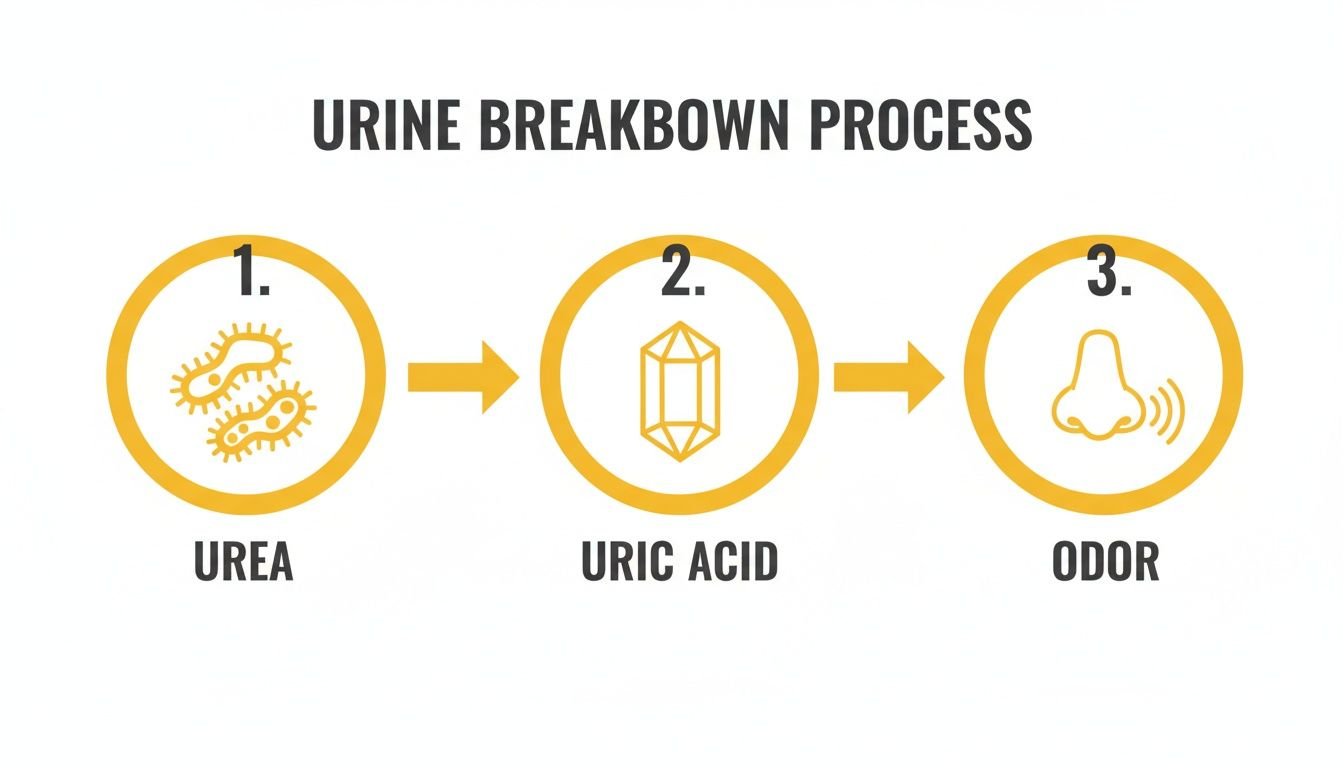
When a cat urinates, the initial ammonia smell comes from bacteria breaking down the urea. That part is unpleasant but relatively easy to clean. The real problem is a component called uric acid.
If you're facing a stubborn odor that won't go away, don't wait.
Get a Free Odor Assessment
The Science of Cat Urine: Why the Smell Lingers
The Uric Acid Problem
Uric acid is the true villain here. It forms into tiny, salt-like crystals that don't dissolve in water. These crystals latch onto carpet fibers, the padding underneath, and can even seep into the subfloor. Your standard carpet cleaner and a bit of water won't touch them.
This creates a frustrating cycle. You clean the spot, the ammonia smell goes away, and you think you’ve won. But on the next humid day, like those caused by Santa Monica's coastal fog, those uric acid crystals reactivate. The foul odor comes right back, sometimes even worse than before.
This reactivation is why a pet stain you thought was long gone can suddenly reappear months or even years later. For homeowners anywhere with fluctuating humidity, this is an incredibly common—and maddening—experience.
Beyond the Carpet Fibers
The problem rarely stays on the surface. Since urine is a liquid, gravity pulls it straight down. A small, palm-sized spot on your carpet can easily become a dinner-plate-sized area of saturation in the padding and subfloor below. This hidden moisture can go completely unnoticed.
If you're dealing with a significant accident, understanding how moisture penetrates materials is crucial. You can learn more about how to read moisture meter readings to get a better sense of what’s happening beneath the surface.
To permanently remove cat urine odor from carpet, you have to fight a chemical battle, not just clean a surface stain. This means using a product that specifically targets and breaks down uric acid. The table below compares a few common methods to show you what works and what doesn't.
DIY vs Professional Odor Removal Methods
Here's a quick comparison of common DIY solutions versus professional-grade treatments. Notice how they stack up against the real problem: uric acid.
| Method | Effectiveness on Uric Acid | Best For | Risk Level |
|---|---|---|---|
| Soap & Water | None. Cannot dissolve uric acid. | Wiping up a fresh surface spill only. | Low risk, but ineffective for odor. |
| Vinegar & Baking Soda | Very low. Can temporarily neutralize ammonia but not uric acid crystals. | Fresh, minor accidents on the surface. | Low. May mask smells for a short time. |
| Enzymatic Cleaner | High. Enzymes digest and break down the uric acid molecules. | Fresh and old stains; necessary for odor removal. | Low. The only effective DIY solution. |
| Professional Extraction | Very High. Uses commercial-grade enzymes and sub-surface tools. | Deep saturation, multiple spots, old odors. | Very low. The most reliable method. |
As you can see, only solutions designed to break down the uric acid itself will give you permanent results. Anything else is just a temporary fix.
Your Action Plan for DIY Odor Removal
Before you start pricing out new carpet, let's talk about a proven DIY process that can genuinely work on fresh or minor urine spots. This isn't about spraying a random product and hoping for the best. It's a methodical approach, and your success hinges on finding every single spot, using the right cleaner, and applying it the way a pro would.
Think of yourself as a detective. Dry cat urine is shockingly good at hiding, often leaving no visible stain on the carpet surface. This is where your most important tool comes into play: a UV blacklight.
Step 1: Become a Urine Detective with a Blacklight
You can’t clean what you can’t find. It's that simple. Dried urine contains phosphorus that glows under ultraviolet light, making a simple UV flashlight your secret weapon for uncovering every single problem area.
For this to work, you need total darkness. Wait until night, kill all the lights, and slowly scan the carpet and even the baseboards. Urine spots will pop out with a distinct yellowish-green glow. Grab some chalk or painter's tape and mark the entire perimeter of each spot you find. You'll probably be surprised by how many there are and how far they've spread.
The glowing areas show you exactly where to focus. No more guesswork.
Step 2: Blot Fresh Spots—Never Scrub
If you’re lucky enough to catch a spot while it’s still wet, your immediate action is critical. Your first instinct might be to scrub it furiously, but that’s one of the worst things you can do. Scrubbing just grinds the urine deeper into the carpet fibers and padding, spreading the problem and potentially damaging the carpet itself.
The correct technique is to blot:
- Lay a thick stack of paper towels or a clean, white, absorbent cloth over the wet area.
- Apply firm, steady pressure. Stand on the towel if you have to—your body weight is excellent for wicking moisture up and out.
- Keep replacing the towel with a fresh, dry one and repeat until you can't pull any more moisture out.
This one step removes a massive amount of urine before it has a chance to set, making your cleaning efforts far more effective.
Step 3: Use an Enzymatic Cleaner (The Non-Negotiable Tool)
After you’ve blotted and mapped out all the dry spots with your blacklight, it’s time to neutralize them. Forget standard carpet cleaners, vinegar, or baking soda. They might mask the ammonia smell for a day or two, but they do nothing to break down the uric acid crystals—the real source of that lingering, reactivated odor.
For permanently removing cat urine odor from carpet, an enzymatic cleaner is the only way to go.
These specialized products are packed with beneficial bacteria that act like microscopic Pac-Men. They specifically target and digest the organic proteins and uric acid, breaking them down into simple, odorless compounds like carbon dioxide and water. They don’t just cover the smell; they chemically eliminate its source for good.
This process is what separates a temporary fix from a permanent solution.
Step 4: Apply, Dwell, and Extract Like a Pro
How you use the cleaner is just as important as the product itself. Follow this process to the letter for the best results.
Saturate, Don't Just Spray: Be generous. The enzymatic solution has to penetrate as deep as the urine did, which means it needs to soak through the carpet backing and into the padding. Saturate the entire spot marked by your blacklight, plus a couple of inches around the perimeter.
Give It Time (Dwell Time): Enzymes need time to work. This isn't a quick spray-and-wipe job. After applying the cleaner, cover the damp area with plastic wrap or a damp towel to keep it from drying out. Let it sit for at least 12-24 hours, or whatever the product label recommends.
Extract, Don't Just Blot: This is the most-skipped and most critical step. Use a wet-dry vacuum (shop vac) to pull all the liquid—the cleaner and the neutralized urine—out of the carpet and padding. Blotting with a towel at this stage simply can't extract enough liquid from deep within the fibers.
Dry It Out Completely: Once you’ve extracted as much moisture as possible, let the area air-dry fully, which can take a few days. Pointing a fan directly at the spot will speed things up significantly. For more pro tips on drying, check out our guide on how to dry wet carpet fast.
As you get into the rhythm of treating pet accidents, you might find it helpful to learn some expert carpet stain removal techniques for other common household spills. Follow these steps, and you have the best possible chance of defeating that cat pee smell on your own.
Critical Mistakes to Avoid When Cleaning Cat Urine
When you find a pet accident, the frantic grab for whatever is under the sink can actually make the problem a hundred times worse. When it comes to removing cat urine odor from carpet, knowing what not to do is just as critical as knowing the right steps.
Certain popular cleaning methods will permanently set the urine odor, bonding it to your carpet fibers forever.
The absolute worst mistake you can make is applying heat. In a panic to sterilize the spot, many people break out a steam cleaner. This is a catastrophic error.
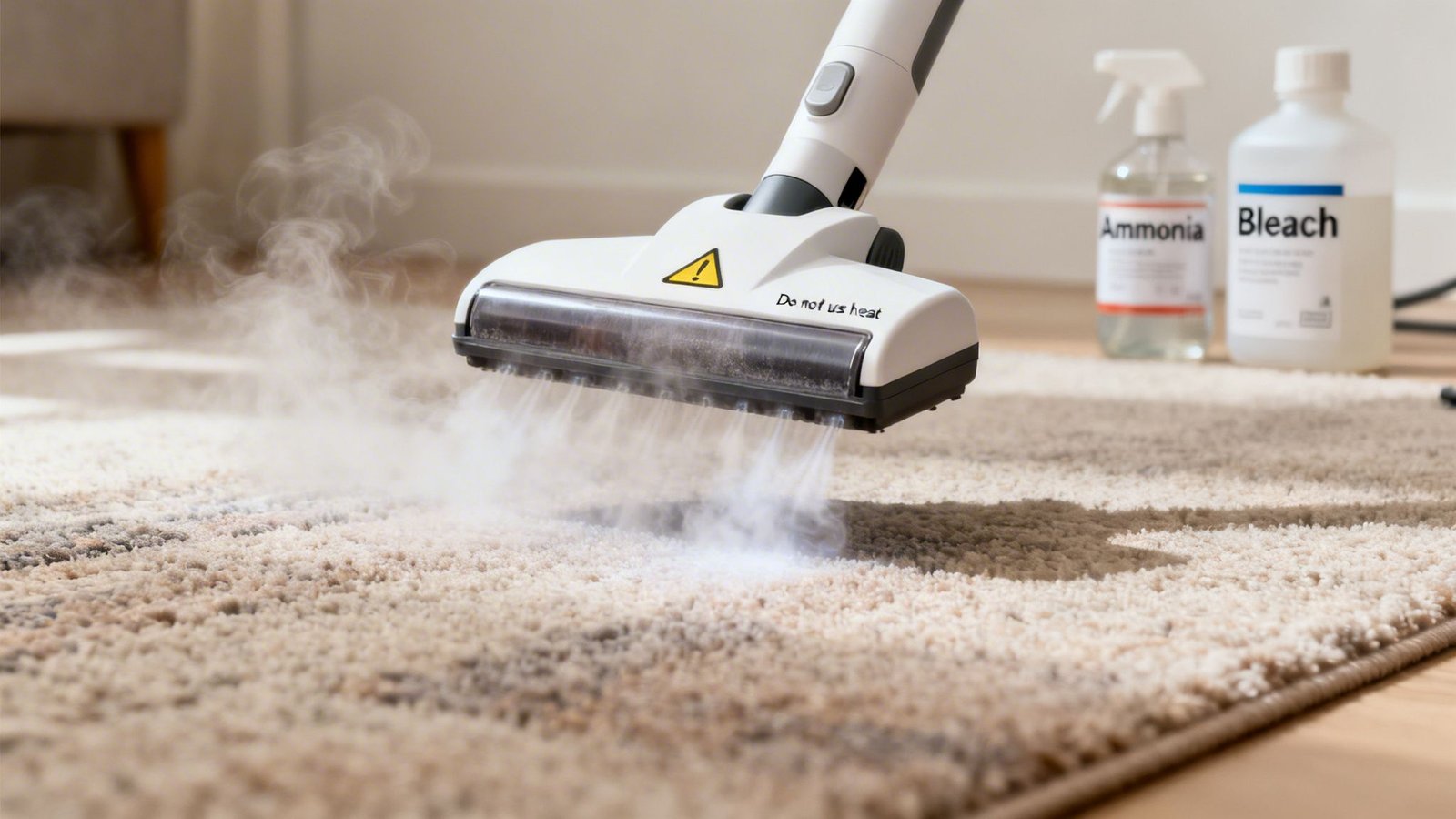
The heat from a steam cleaner—or even a hairdryer—triggers a chemical reaction that literally bonds the uric acid proteins to the carpet fibers. You’re not cleaning the stain; you’re essentially "cooking" the odor into your carpet, making it a permanent fixture.
Why Ammonia-Based Cleaners Backfire
It might seem logical to fight a powerful chemical smell with another one, which is why so many homeowners reach for ammonia-based products. This is another critical mistake that will only make your odor problem worse.
Cat urine already contains ammonia, especially as it breaks down. By adding more ammonia, you’re not cleaning—you’re reinforcing the scent. To your cat, this smells like another animal has marked its territory, triggering a powerful instinct to urinate on the exact same spot again.
Key Takeaway: Never use a product containing ammonia on a pet urine stain. You risk encouraging repeat accidents, creating a vicious cycle that’s incredibly hard to break.
Understanding what not to do is the first step. When tackling DIY odor removal, it's essential to avoid common cleaning mistakes that could inadvertently make the situation worse.
The Pitfalls of Popular Household Remedies
The internet is full of "miracle" DIY solutions, but most fail to address the underlying chemistry of cat urine and can cause their own set of problems.
Bleach: While bleach is a powerful disinfectant, it’s far too harsh for carpeting. It will permanently destroy the carpet dye, leaving you with a faded, discolored splotch that’s often more noticeable than the original stain.
Vinegar & Baking Soda: This classic combo might neutralize the surface ammonia smell and absorb some liquid, but that's all it does. Neither vinegar nor baking soda can break down the non-soluble uric acid crystals at the heart of the problem. The smell will always come back, especially on a humid day.
Hydrogen Peroxide: While it can work on some organic stains, peroxide is risky. It can easily bleach or discolor darker carpets, turning a small problem into a permanent, visible one. It's a gamble that just isn't worth taking.
These mistakes happen because people misunderstand what they're up against. Cat urine isn't just a simple stain; it's a complex chemical compound that seeps deep into carpet, padding, and subfloor.
Using the wrong approach can lead to permanent flooring damage or even encourage your pet to keep soiling the area. In severe cases, where accidents are large or have occurred repeatedly over time, the contamination can be significant enough to be classified as a biohazard. For these complex situations, understanding professional biohazard clean up protocols is essential.
When to Call a Professional for Odor Remediation
You’ve done everything right. You blotted the spot, saturated it with the best enzymatic cleaner you could find, and even rented a wet vac to pull out every last drop. For a few days, it seems like you’ve won. Then, on a humid afternoon, it’s back: that faint, unmistakable smell of stale cat urine.
This is the moment every homeowner dreads. It’s not a sign of failure, though—it’s a clear signal that the problem has gone deeper than any DIY method can reach. The urine has soaked past the carpet fibers and into the padding, and possibly even the subfloor. When you find yourself treating the same spot over and over, you’re no longer cleaning a stain; you’re fighting a hidden reservoir of uric acid crystals.
Telltale Signs It's Time for a Pro
While a single, fresh accident is often manageable, some situations are immediate red flags. These are the scenarios where even the most powerful store-bought solutions simply can't get to the root of the problem.
- The Smell Keeps Coming Back. This is the number one sign. If the odor returns days or weeks after a thorough cleaning, it means the source—the uric acid—was never fully neutralized. It’s just re-activating with ambient moisture.
- Your Blacklight Reveals a Starfield of Spots. One or two spots are one thing. But if your UV light shows a whole constellation of past accidents, you’re facing a widespread issue. Tackling a dozen separate areas one by one is a losing battle.
- You're Dealing With Old, Chronic Stains. Has the spot been there for months? Or is it an area a cat returned to repeatedly? The longer the urine sits, the deeper it soaks. At this stage, it’s a multi-layer contamination problem that requires pulling back the carpet to see what’s underneath.
From a townhome in Sherman Oaks to a rental house in Burbank, property managers and homeowners in the San Fernando Valley know that once the problem reaches this stage, professional help is the only real solution.
Book Professional Odor Removal
Beyond Carpet Cleaning: What the Pros Actually Do
Hiring a certified restoration company isn’t just about getting a bigger machine. It’s about bringing in specialized equipment and scientific processes designed to remediate contamination from the structure itself.
Key Insight: Professional odor remediation isn't just aggressive carpet cleaning; it's a structural deodorization process. The goal is to remove the source from every affected layer, from the carpet fibers down to the subfloor.
A true professional follows a multi-step approach that’s impossible to replicate with rental equipment.
Sub-Surface Extraction and Flushing
Pros use tools like the “Water Claw,” a specialized sub-surface extractor. This device injects a high-volume rinsing solution deep into the carpet and padding and then uses immense suction to pull the contaminated liquid straight out. It’s like a power wash and extraction for the layers you can’t even see.
Padding Replacement and Subfloor Sealing
In many cases of chronic contamination, the carpet pad is a lost cause. A professional will carefully pull back the carpet, cut out the saturated, damaged padding, and replace it.
If the urine soaked through to the wood or concrete subfloor, that’s the final stand. The technician will clean and treat the subfloor, then apply a special shellac-based odor-blocking primer. This permanently seals any lingering odor molecules into the subfloor so they can never again escape into your home.
Ozone, Thermal Fogging, and HEPA Filtration
For lingering airborne odors, professionals deploy advanced deodorization tools.
- Ozone Generators can neutralize stubborn smells in an unoccupied space.
- Thermal Foggers disperse deodorizing agents that mimic the behavior of smoke, penetrating into every crack and crevice.
- HEPA Air Scrubbers run continuously during the job to capture airborne particulates and odor molecules, purifying the air.
Below is a simple checklist to help you decide when to make the call.
Signs You Need Professional Odor Remediation
Use this checklist to determine if your cat urine problem has gone beyond a simple DIY fix.
| Symptom | What It Indicates | Recommended Action |
|---|---|---|
| Odor returns after DIY cleaning | The source is in the pad or subfloor. | Call a professional for sub-surface extraction. |
| Blacklight reveals 5+ spots | Widespread contamination is too extensive for spot treatment. | Get a professional assessment for the entire room. |
| Odor is present in multiple rooms | The problem is likely systemic and requires a whole-house approach. | Schedule a full inspection; consider air duct cleaning. |
| Stain is older than a month | Urine has crystallized deep in the padding and subfloor. | A pro needs to inspect under the carpet. |
| Carpet or subfloor feels damp/spongy | The padding is saturated and possibly deteriorating. | The pad will likely need to be replaced. |
| You can smell it without being near the spot | Odor is off-gassing and affecting indoor air quality. | Advanced deodorization (Ozone/HEPA) is required. |
If you're ticking multiple boxes on this list, you’re no longer in the DIY zone. Trying to fix a deep-seated odor problem on your own can often lead to more frustration and wasted money on products that can't reach the source.
These advanced methods are the only way to guarantee the permanent removal of severe cat urine odor. If you're facing a stubborn smell and are ready for a final solution, you can learn more about how a dedicated restoration professional can bring the right tools and expertise to solve the problem for good.
How to Prevent Future Pet Accidents
You’ve finally gotten the odor out. The last thing you want is to go through that whole process again. The best way to remove cat urine odor from the carpet for good is to make sure it never happens in the first place. That means shifting your attention from the stain on the floor to the source: your cat.
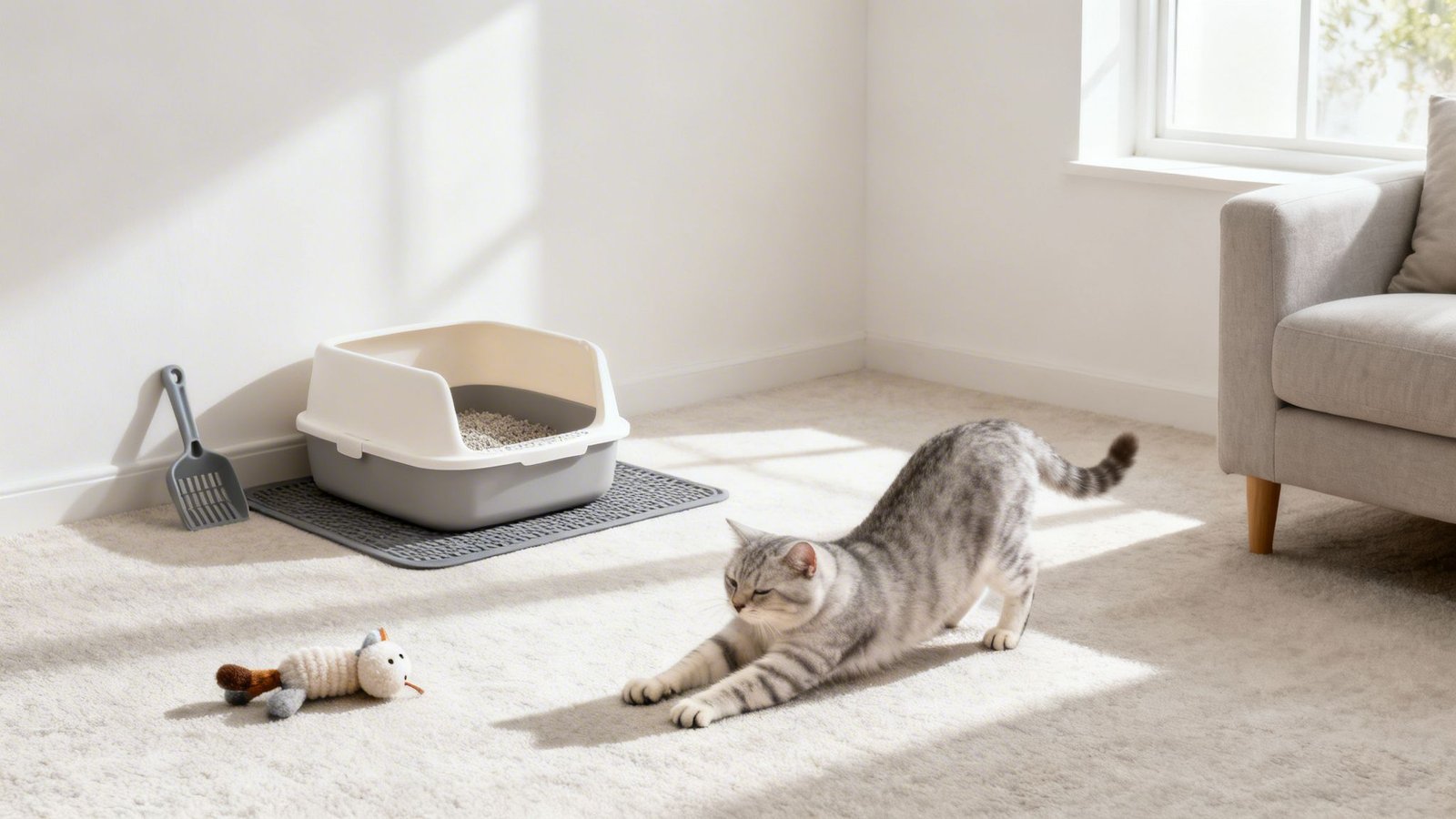
When a cat starts going outside the litter box, they aren't being vindictive. They’re trying to tell you something is wrong. The problem is almost always either medical or environmental.
Step 1: Rule Out Medical Issues First
Before you do anything else, your first call should be to the vet. A sudden change in bathroom habits is one of the biggest red flags for a medical problem.
Conditions like a urinary tract infection (UTI), bladder stones, or kidney disease often make urination painful. Your cat might start associating the litter box with that pain and seek out a softer spot—like your carpet. Getting a clean bill of health is a non-negotiable first move.
Step 2: Master the Art of Litter Box Management
Once you’ve ruled out a medical cause, it’s time to seriously evaluate your litter box setup. You’d be amazed how many inappropriate urination problems were solved just by improving the bathroom situation. Cats are naturally clean and have surprisingly high standards.
Follow these golden rules for litter box success:
- The "One-Plus-One" Rule: The gold standard is one litter box per cat, plus one extra. If you have two cats, you need three boxes. This cuts down on territorial fights and ensures a clean option is always ready.
- Location, Location, Location: Put the boxes in quiet, low-traffic spots where your cat feels secure. They shouldn't have to worry about being ambushed by another pet or startled by the washing machine. And never put them right next to their food and water bowls.
- Pristine Conditions are Mandatory: Scoop waste at least once a day. A full litter change and a deep clean of the box with mild soap and water should happen weekly for non-clumping litter and monthly for clumping types.
Expert Tip: The size and style of the box really matter. It needs to be big enough for your cat to comfortably turn around. Some cats love the privacy of a covered box, while others feel cornered and need an open-top tray.
Step 3: Reduce Stress with Behavioral Enrichment
Stress is a huge trigger for marking and urinating outside the box. Any change to their world—a new baby, a different roommate, even moving the sofa—can make a cat feel insecure and act out.
The best way to fight this is to enrich their environment. Give them vertical spaces like cat trees, provide stimulating toys they can play with alone, and stick to a consistent daily routine for feeding and playtime. A happy, confident cat is far less likely to have accidents.
Just as a lingering odor points to a bigger issue in your carpet, the same is true for the air in your home. Persistent moisture from cleaning up accidents can lead to problems far worse than smells. Learning how to prevent mold is a critical part of keeping your home healthy for everyone, pets included.
By getting ahead of your cat's health, happiness, and bathroom needs, you can finally break the cycle of accidents and keep your carpets fresh for good.
Frequently Asked Questions About Cat Urine Odor
Q: Can I use a regular carpet shampooer to remove the smell?
A: No, this can make the problem much worse. Most rental or consumer-grade carpet shampooers use hot water, which chemically bonds urine proteins to carpet fibers, permanently setting the odor. They also lack the specialized enzymatic solutions needed to break down the uric acid crystals that cause the smell to return.
Q: How long does it take for the cat urine smell to go away?
A: For a fresh spot treated correctly with an enzymatic cleaner, the odor should be gone once the area fully dries (a few days). If the urine has soaked into the subfloor, the smell will never truly go away on its own. Uric acid crystals can reactivate with humidity years later, so the odor is permanent until professionally remediated.
Q: Will just replacing the carpet get rid of the odor?
A: This is an expensive mistake many homeowners make. If the urine soaked through the old carpet and pad, the odor source is now in your wood or concrete subfloor. New carpet will simply wick the smell up from below. The subfloor must be professionally cleaned and sealed with a shellac-based primer before new flooring is installed.
Q: Is cat urine odor a health hazard for my family?
A: Yes, it can be. The high concentration of ammonia gas from old urine stains is a respiratory irritant, which is especially concerning for people with asthma, allergies, or other breathing conditions. The constant dampness can also promote bacterial growth, creating a biohazard and an unhealthy indoor environment. For property managers in Los Angeles, this can become a serious habitability issue.
Don't let stubborn odors compromise your home's health and comfort. If DIY methods have failed and the smell persists, it's time to call in the experts. Onsite Pro Restoration offers professional odor remediation services that target the source of the problem, from sub-surface extraction to subfloor sealing.
Contact Onsite Pro Restoration for a Free Odor Assessment Today