
When a pipe bursts in your home, every second counts. That frantic search for the main water shut-off valve is a high-stress moment no homeowner wants, but knowing its exact location can turn a potential catastrophe into a manageable problem. Finding where to find the main water shut off is the critical first step. Usually, you'll find it where the main water line enters your house—think basement, crawlspace, or near the front wall of your garage. A quick turn of that valve is your first and most powerful defense against severe water damage.
For immediate help with a water leak or locating your shut-off valve, call the experts at Onsite Pro Restoration. Our 24/7 emergency team is ready to respond.
[CALL (818) 336-1800 FOR IMMEDIATE HELP]
Why Knowing Your Main Water Shut Off Location Is Critical
Picture this: a pipe lets go in your Sherman Oaks home. That ticking clock isn't just a sound; it's the difference between a puddle you can mop up and thousands of dollars in structural damage. This guide is your emergency action plan, and it starts with understanding why knowing this one simple fact is non-negotiable, especially for those of us in Los Angeles dealing with older plumbing and seismic risks.
Taking control in those first few minutes can save you a fortune. Water damage isn't a minor issue—it accounts for over 23% of all U.S. property claims, with the average incident costing well over $10,000. Here in California, where aging infrastructure is a constant battle, many of the 150,000 residential water incidents reported each year could have been far less severe if the homeowner had been able to shut the water off immediately.
Being proactive is a massive advantage. It can even positively impact the factors influencing home insurance you pay. When you can stop the flow of water yourself, you dramatically limit the scope of the damage. That's the first critical step in any burst pipe cleanup scenario, empowering you to protect your property before the professionals even arrive.
Where to Find the Main Water Shut Off in a Single-Family Home
When a pipe bursts, knowing where your main water shut-off is located can be the difference between a minor cleanup and a full-blown catastrophe. For most single-family houses across Los Angeles County, from the Valley to the Westside, the valve’s location is pretty predictable based on when the home was built. Think of this as your field guide to finding it before you need it.
Where to Look First
Your home’s age is the biggest clue. If you live in an older house—like the classic Craftsman and mid-century ranch styles common in LA—your first stop should be the basement or crawlspace. Look along the front foundation wall, right where the main water line enters the house from the street. It’s almost always there.
For newer homes, especially those built after 1980, builders started centralizing the plumbing. Check the garage or a utility closet, usually right next to the water heater. You’ll find one of two types of valves:
- Gate Valve: This is the classic round, wheel-like handle. You turn it clockwise, sometimes multiple times, to shut off the water.
- Ball Valve: This is a modern, straight lever handle. It’s simple: when the lever is parallel to the pipe, water is on. When it's perpendicular, water is off.
Understanding this process shows just how critical a quick shut-off is. You're not just stopping a leak; you're stopping thousands of dollars in potential damage.
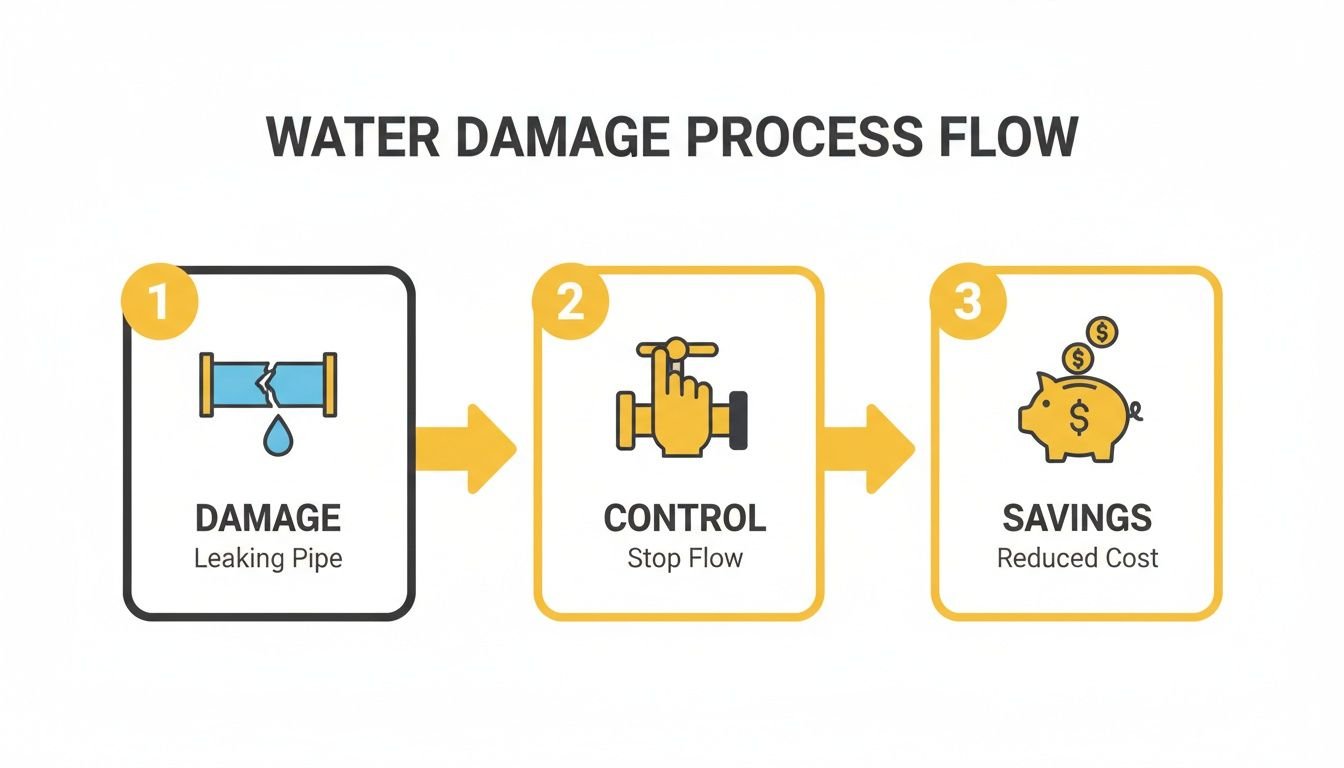
It’s a simple truth: the faster you gain control, the less financial pain you'll feel later.
Main Water Shut-Off Valve Locations by Home Construction Era in LA
We've seen it all over the years, and a home's construction date is a surprisingly accurate predictor of where you'll find that all-important valve. To help narrow your search, we put together this quick reference table based on typical LA home builds.
| Construction Era | Most Likely Location | Common Valve Type |
|---|---|---|
| Pre-1960 | Basement or crawlspace, near the front foundation wall. | Gate Valve (round handle) |
| 1960 – 1980 | Can be in the basement, crawlspace, or near the water heater. | Mix of Gate & Ball Valves |
| Post-1980 | Garage or utility closet, almost always near the water heater. | Ball Valve (lever handle) |
| Modern (2000+) | Attached garage, dedicated utility room, or exterior utility box. | Ball Valve (lever handle) |
While not a guarantee, this table should give you a solid starting point and save you precious minutes during an emergency. The numbers back this up. An LADWP survey found that in post-1980 homes, 60% of valves were in garages, while for older Craftsman homes in areas like Glendale, 82% were in basements. This is critical information, especially as water damage claims have recently jumped by 25% in Southern California, with the average repair costing a staggering $12,500.
Pro Tip: Once you find your valve, do yourself a huge favor and tie a brightly colored tag to it. This one simple action will save you from a frantic search during a high-stress emergency, a key tip we cover in our guide on how to prevent pipes from bursting.
Finding the Shut-Off in Apartments and Commercial Buildings
Living in a West Hollywood apartment or managing a commercial property in Downtown LA changes the game completely. The local shut-offs under your sinks and toilets are for minor issues, but the building’s main valve is a different beast entirely. Knowing where to find the main water shut off in these larger structures is a shared responsibility.
For both tenants and property managers, your first stop should be the building's central mechanical or utility room. You'll typically find these in the basement, on the ground floor, or tucked away in a dedicated service closet.
In high-rise buildings, you might also find smaller "riser rooms" on each floor that control the water supply for that specific level.
Protocol for Renters and Managers
Before you touch anything, remember this: turning off the main supply affects every single tenant. It’s not a decision to be made lightly.
- For Renters: Your first move should always be to contact your property manager or building maintenance. They are trained to handle these emergencies and know the protocol. Don't go rogue.
- For Property Managers: Your job is to make sure these valves are clearly labeled and accessible before an emergency happens. A quick response can prevent a single leak from turning into a massive, multi-unit disaster.
The financial stakes are incredibly high. A FEMA report highlighted that a shocking 40% of U.S. commercial water losses stem from unidentified shut-off points, costing businesses $15 billion annually. We've seen it firsthand—LA County has had a 28% spike in these claims after recent heavy rains, showing just how vulnerable our properties are. You can read the full research about these automatic shut-off valve findings.
Important Note for Property Managers: Proactive maintenance and clear labeling aren't just good practices; they're essential for mitigating liability and protecting your asset. When a disaster strikes multiple units, effective commercial water damage restoration depends on stopping the source immediately.
How to Safely Operate Your Main Water Valve
So you’ve found the valve—now what? Turning it off seems simple, but getting it wrong can create a much bigger problem, especially with the older plumbing common across Los Angeles. Knowing the right way to handle your specific valve type is the key to shutting off the water without causing more damage.
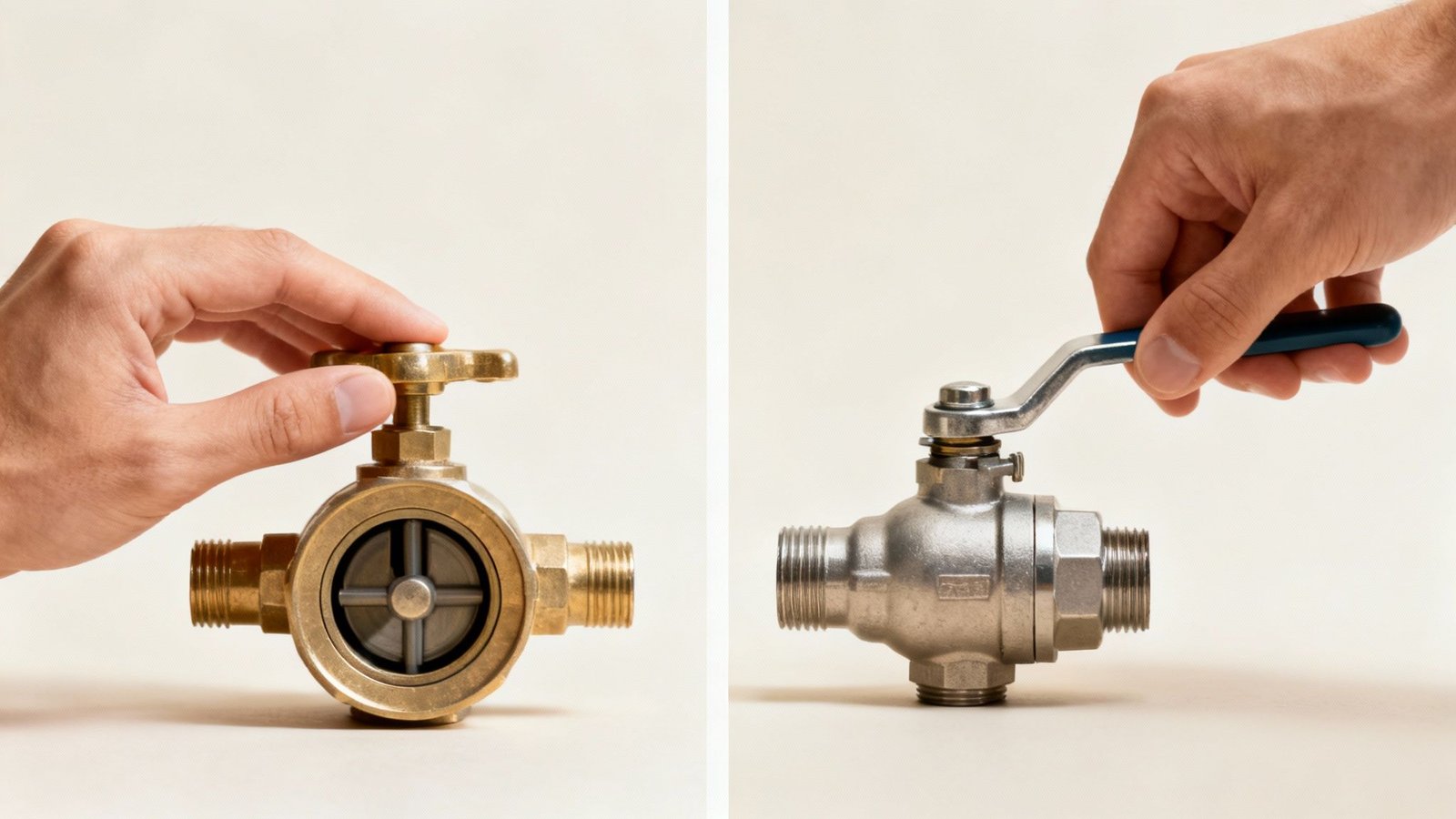
There are two main types you'll run into, and each requires a different touch.
Working a Gate Valve
A gate valve has a round, wheel-like handle. To shut off the water, you'll turn it clockwise—remember "righty-tighty"—until it comes to a gentle stop. Don't be surprised if this takes several full rotations.
Crucial Warning: Never, ever force a gate valve. If it feels stuck, seized, or just way too stiff, stop immediately. Applying too much torque can easily snap the stem inside, turning a controllable leak into a geyser that requires professional emergency water cleanup.
Working a Ball Valve
A ball valve is the modern standard and much easier to operate. It has a straight lever handle, and a single quarter-turn (90 degrees) is all you need. The valve is closed when the lever is perpendicular (at a right angle) to the pipe. It's that simple.
Pro Tips for a Safe Shut-Off
After you've closed the main valve, you'll want to release the pressure left in the system. It's a simple but important step.
- Open the Highest Faucet: Head to the highest faucet in your home, like an upstairs bathroom sink, and turn on both the hot and cold taps. You'll see the water slow to a trickle and then stop completely.
- Drain the Lowest Faucet: Next, open a faucet on the lowest level—a basement sink or an outdoor spigot works great. This helps drain the remaining water out of the pipes.
- Keep Tools Handy: It's always smart to have a pair of channel-lock pliers and a towel nearby. Sometimes those old handles are just tough to grip.
If you come across a valve that’s heavily corroded, is leaking from the handle, or just won't budge, don't risk breaking it. Take that as a clear sign to stop what you're doing and call a plumber. A seized valve is already a failing part, and forcing it can cause far more damage than whatever leak you were trying to stop in the first place.
What to Do When You Can't Find or Turn Off the Valve
It’s the moment every property owner dreads. Water is pouring out, and you either can’t find the shut-off valve or the one you found won't budge. Panic sets in, and the search for where to find the main water shut off becomes a high-stakes race against the clock. Sometimes, the valve is hidden, seized from years of corrosion, or just plain inaccessible.
When this happens, you need a clear action plan.
Your first and most important move is to call a 24/7 emergency restoration professional immediately. Don't waste another minute trying to force a stuck handle or digging through overgrown bushes. A seized valve can easily break, turning a serious leak into an uncontrollable gusher.
The single most critical action you can take with an inoperable valve is to call for professional help. Forcing a corroded valve can snap the stem, creating a far worse water emergency.
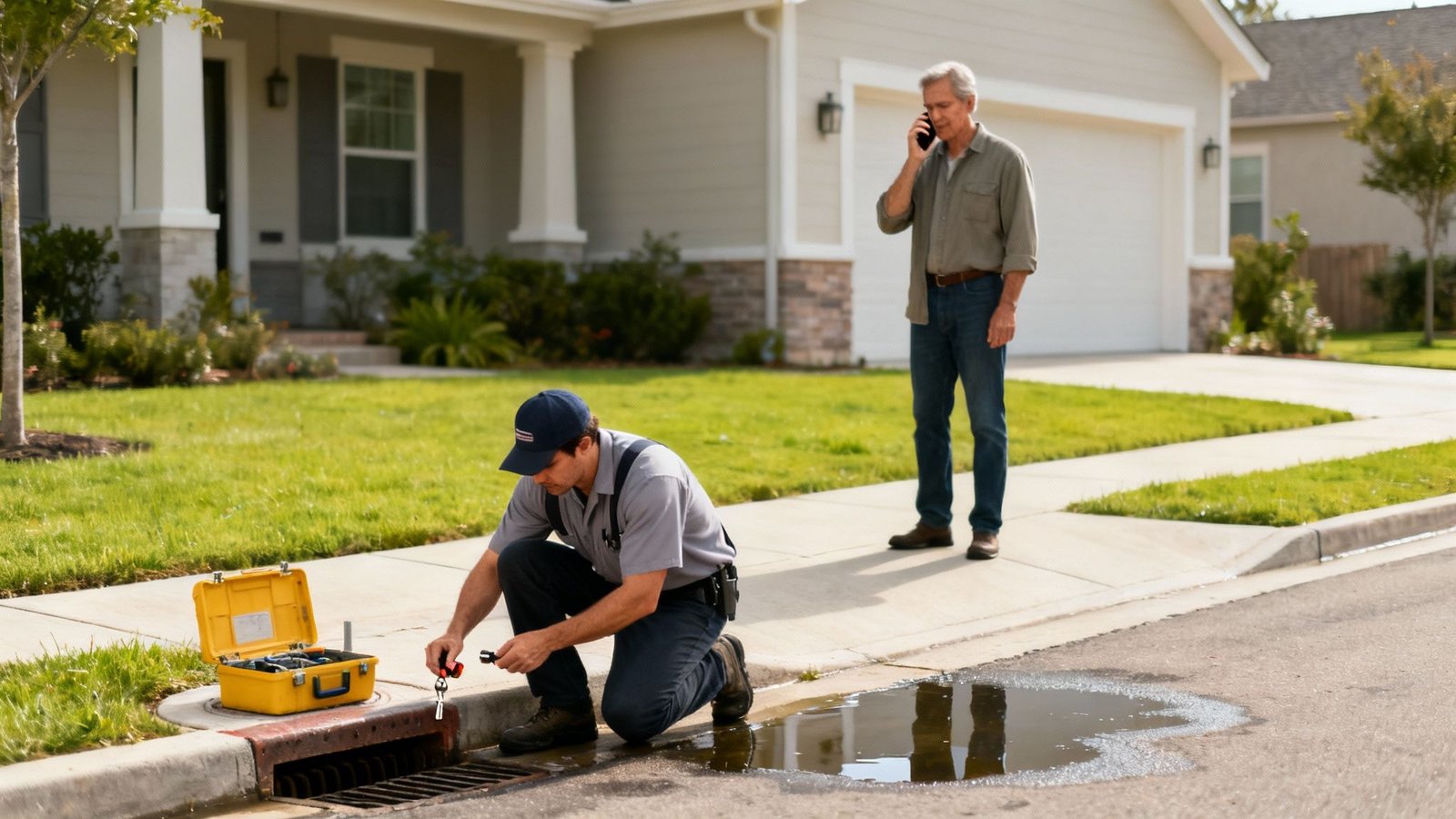
Our rapid-response teams are trained for exactly this scenario. We can quickly locate stubborn valves or, if needed, coordinate directly with the local Los Angeles utility to shut the water off at the street curb stop. This is often the fastest and safest way to stop the water flow when the on-property valve fails.
While You Wait for Help
While our technicians are en route—often arriving in about an hour—we can guide you over the phone on immediate steps to protect your property. This might include:
- Moving valuable electronics, furniture, and important documents out of the affected area.
- Using buckets, bins, or towels to contain as much water as possible.
- Shutting off the electricity to the flooded zone, but only if it is completely safe to access the breaker panel.
This immediate action, combined with our fast arrival, is essential. Once on-site, we begin professional water extraction and drying to prevent secondary damage like mold from taking hold.
If you're facing this situation, remember that reliable restoration water damage companies near you are prepared for exactly this kind of crisis. Don’t panic; make the call.
Your Top Questions About Water Shut-Off Valves Answered
When you're facing a potential water emergency, having the right answers ahead of time can make all the difference. Here are some of the most common questions we hear from Los Angeles homeowners about their main water shut-off valves.
Q: How often should I test my main water shut-off valve?
A: You should test your main shut-off valve at least once a year. Over time, valves can seize up from corrosion or mineral buildup, a common problem with LA's hard water. Gently turn it all the way closed, then open it back up. If it’s stiff or won't budge, do not force it. That’s a sign it’s time to call a plumber.
Q: Will shutting off the main water affect my water heater?
A: Yes, and this is a crucial step. After you shut off the main water supply, you must turn off your water heater to prevent it from burning out the heating elements. For an electric heater, flip its breaker in your electrical panel. For a gas heater, switch the control knob to the "pilot" setting.
Q: Is the valve at the street the same as my main shut-off?
A: No, they are two different valves. The valve by the street or curb is the "curb stop" and is utility company property, often requiring a special tool. Your main shut-off valve is on your property, between the water meter and your house, and is the one you should always use for emergencies.
Q: What should I do if my main shut-off valve is leaking?
A: A leaking shut-off valve indicates its internal seals are failing and needs to be replaced by a professional immediately. While you might temporarily slow a tiny drip by tightening the packing nut behind the handle, this is not a permanent fix. Call a plumber to avoid a larger failure.
Q: What's the fastest way to shut off water if I can't find the valve?
A: The fastest and safest way is to call a 24/7 emergency service like Onsite Pro Restoration. Our teams are trained to locate hidden valves or coordinate with the local utility to shut the water off at the street curb stop, preventing further damage while you stay safe.
Q: Can I replace a main shut-off valve myself?
A: This is not recommended for a DIY project. Replacing a main shut-off valve requires shutting the water off at the street, which often requires coordination with the utility company and specialized tools. It's a job best left to a licensed and insured plumber to ensure it's done correctly and safely.
If you're in the middle of a plumbing emergency and can't find or operate your valve, don't wait for the damage to spread. Onsite Pro Restoration is on call 24/7 to help you get the situation under control. Call us for immediate help or visit our website to schedule an inspection.
[SCHEDULE A FREE INSPECTION NOW]