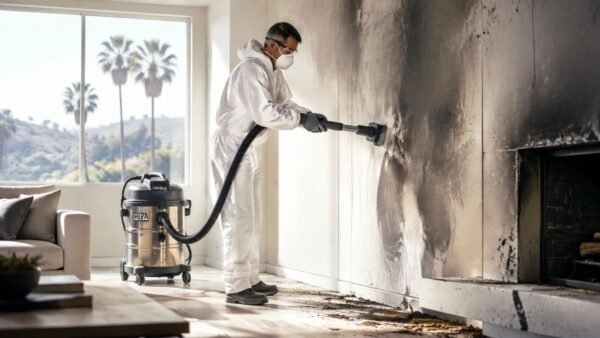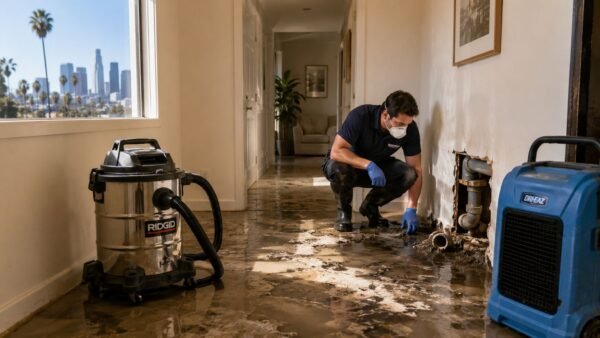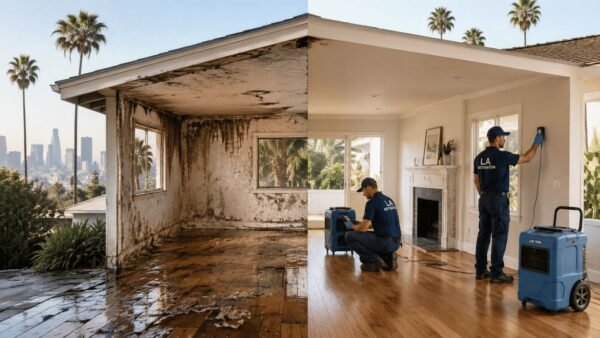

Getting rid of fire smoke odor in a house is a bigger job than just covering up the smell. It’s an intensive process that involves deep cleaning every surface, fabric, and hidden nook to physically remove the tiny soot particles causing the odor. Successfully learning how to eliminate fire smoke odor in a house requires more than just airing out rooms; it demands a systematic approach to cleaning and deodorization.
To do it right, you need a combination of thorough ventilation, washing down all hard surfaces, professionally cleaning soft goods, and often bringing in advanced tools like HEPA air scrubbers or thermal foggers to neutralize the odor molecules that have worked their way deep into your home's structure.
At Onsite Pro Restoration, we specialize in making homes safe and breathable again. If you're facing overwhelming smoke damage, don't wait.
Get a Free Estimate Now
Why Lingering Smoke Odor Is a Serious Problem
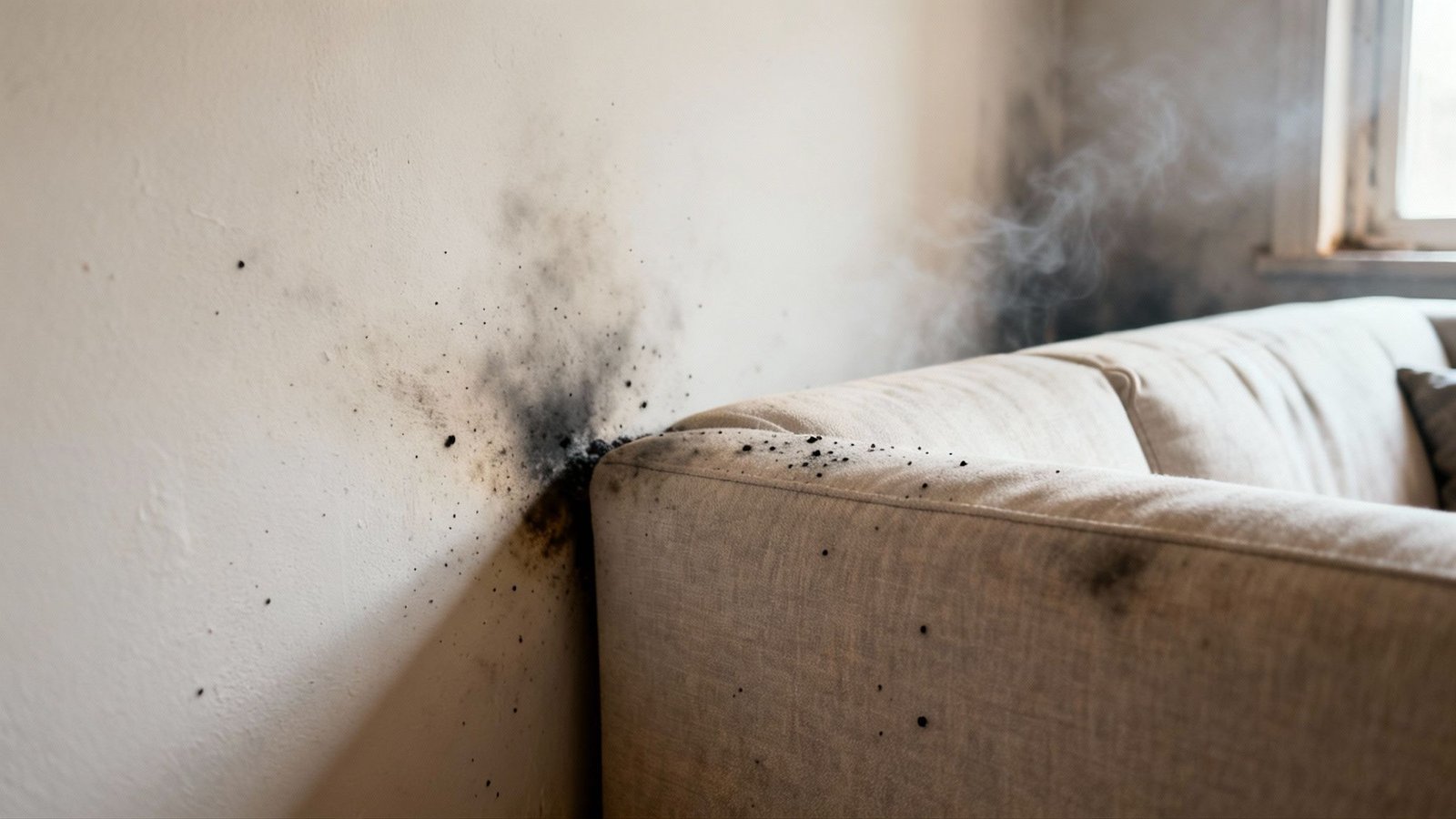
That stubborn smoky smell left behind after a fire isn’t just an unpleasant reminder—it’s a warning sign of a hidden hazard. The odor is caused by microscopic soot and ash particles that have deeply penetrated your home’s structure and everything inside it. These harmful contaminants don't just sit on the surface. They embed themselves into porous materials like drywall, carpeting, wood, and furniture, creating a constant source of that foul smell. A lingering smoke odor signals a serious problem that degrades your home's environment, from the furniture to the air ducts. Understanding its full impact on indoor air quality is the first step toward a true recovery.
The Health Risks Behind the Smell
The smell itself is a red flag. The same microscopic particles creating the odor are also releasing volatile organic compounds (VOCs) and other toxins into the air you and your family breathe.
Even short-term exposure can lead to a host of health issues, including:
- Respiratory irritation, like a persistent cough or shortness of breath.
- Headaches and dizziness.
- Worsening of existing conditions like asthma or allergies.
- Serious long-term risks, especially for children, the elderly, or anyone with a compromised immune system.
Simply spraying air freshener creates a false sense of security while the hazardous particles remain. The danger from these toxic by-products is very real, often exceeding the risks associated with even heavy mold contamination, which is why professional remediation is almost always necessary.
What This Guide Covers
Knowing how to eliminate fire smoke odor in a house is really about making your living space safe and healthy again. This guide is your roadmap, breaking down what you can realistically tackle yourself and clarifying when it's time to call in certified professionals like us at Onsite Pro Restoration.
To give you a clear picture, here's a quick overview of the core strategies we'll be diving into.
Smoke Odor Elimination At a Glance
This table summarizes the main approaches for getting smoke odor out of a home, from the first critical steps to the advanced techniques used by professionals.
| Method | Best For | Key Action |
|---|---|---|
| Initial Safety & Ventilation | Immediate (First 48 hours) | Airing out the property and removing contaminated items. |
| Surface Cleaning | Visible soot on walls, floors, and furniture | Wiping down hard surfaces and deep cleaning fabrics. |
| HVAC & Duct Cleaning | Preventing odor re-circulation | Changing filters and professionally cleaning ductwork. |
| Advanced Deodorization | Persistent, deeply embedded odors | Using professional-grade tools like ozone or hydroxyl generators. |
Each of these stages builds on the last, forming a comprehensive plan to restore your home's air quality and get your life back to normal.
Your First 48 Hours: Critical Steps After Smoke Damage
When the fire is out, the real work begins. The first 24 to 48 hours are absolutely critical—this is your window to stop soot and smoke odor from setting in permanently. Before you even think about cleaning, your focus needs to be on safety, containment, and getting your story straight for insurance. Getting this first phase right is the foundation for successfully learning how to eliminate fire smoke odor in a house.
First things first: your safety is non-negotiable. Don't even think about stepping back inside until the fire department gives you the official all-clear. Once they do, you need to suit up with personal protective equipment (PPE) before touching a single thing. Soot isn't just dirt; it's a collection of microscopic, toxic particles that are incredibly easy to inhale, which can cause serious respiratory issues.
Key Takeaway: Always wear an N95 or P100 respirator mask, protective eyewear, and gloves. This isn't being overly cautious—it's your frontline defense against the invisible hazards lingering in the air and coating every surface.
Create Immediate Ventilation
With your safety gear on, your next job is to get fresh air circulating. You need to start flushing out those airborne particles and knock down that overwhelming smell. But don't just crack a few windows. You need to be strategic. Set up box fans in windows, making sure they face outward to push the contaminated air outside. Firing up fans that just blow smoky air around the room will only drive soot deeper into drywall, carpet, and furniture.
Now for a step that so many homeowners miss in the panic.
Shut Down Your HVAC System
Go to your thermostat and turn the entire HVAC system off. If you leave it running, you're essentially creating a superhighway for smoke and soot, pumping it into every corner of your home through the ductwork. Those particles will settle inside the vents and become a recurring nightmare, releasing a puff of smoke odor every single time the heat or AC kicks on. You'll need to replace the filter later, but for now, the most important thing is to keep it completely off.
Contain and Document Everything
Next, you have to play defense and prevent cross-contamination. Close the doors to the rooms that got hit the hardest. If you have open archways, seal them off with heavy plastic sheeting and tape. This helps contain the soot and odor to one area.
This is also the moment to become a detective for your insurance claim. Grab your phone and meticulously document everything.
- Capture wide shots of each room to give a clear picture of the overall damage.
- Take close-up photos of soot-covered walls, damaged furniture, and any visible residue on your belongings.
- Document everything—even items you're sure are a total loss. Whatever you do, don't throw anything away until the insurance adjuster has seen it with their own eyes.
This documentation is the most powerful tool you have. Following these organized steps will prepare you for both the cleanup and the insurance claim that follows.
Cleaning Techniques to Get Rid of Fire Smoke Odor
Once you've made the area safe and contained the immediate mess, the real work begins. This is where you physically start removing the soot and microscopic smoke particles that are causing that stubborn, lingering odor. Getting this right means being systematic, because different materials in your home need completely different cleaning approaches.
Before you dive into scrubbing, there are a few critical first actions every homeowner should take. These steps are all about improving safety and preventing the problem from getting worse.
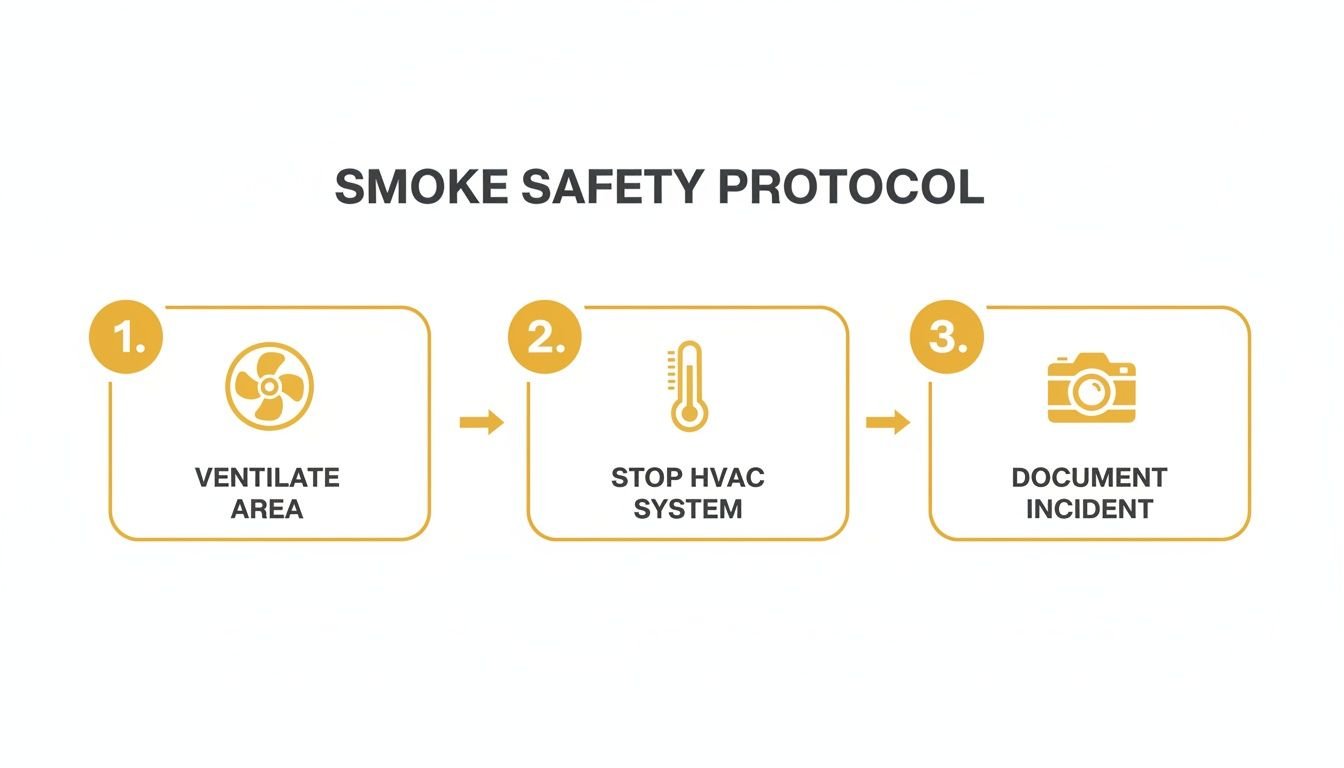
This image nails the immediate priorities. Get fresh air moving to clear out airborne particles, shut down your HVAC system so it doesn't spread soot everywhere, and take pictures of everything for your insurance claim. Following these steps creates a much safer and more controlled environment for the deep cleaning that has to happen next.
Cleaning Hard Surfaces: Walls, Ceilings, and Floors
Hard surfaces seem like they should be easy, but cleaning them the wrong way can actually make the damage worse. Soot is often greasy and acidic, so just grabbing a wet rag will smear it around, pushing the oily residue deeper into porous materials like paint or grout.
For lighter soot, your best first weapon is a specialized dry cleaning sponge, sometimes called a chemical sponge. These work without any water, literally lifting fine soot off surfaces without smearing. Use gentle, straight strokes. When one side of the sponge gets loaded with soot, just slice it off to get a fresh surface.
If you're dealing with heavier, stickier residue, you'll need to step up your game. A mixture of trisodium phosphate (TSP) and water is a classic solution that professional restorers rely on because it cuts right through the grease and grime. Just be sure to wear heavy-duty gloves and eye protection—TSP is serious stuff.
Pro Tip: Always clean walls from the bottom up. If you start from the top, dirty water will run down, creating streaks and stains that are incredibly difficult to remove later. This simple trick prevents "clean streaking" and gives you a much more uniform finish.
Even after you’ve cleaned off the visible soot, you’re still left with invisible volatile organic compounds (VOCs). Research shows that surfaces absorb these compounds like a sponge during a fire and then slowly release them back into the air. A thorough cleaning, including mopping and damp wiping, can slash airborne VOC concentrations by over 50%. This is exactly why the EPA recommends damp wiping over dry dusting—it traps the particles instead of just kicking them back into the air. For a more detailed walkthrough, our guide on how to properly clean soot off walls is packed with more expert tips.
Tackling Soft Furnishings: Carpets, Upholstery, and Curtains
Soft materials are magnets for smoke odor. Their porous fibers trap soot particles deep inside, which is why just spraying a fabric refresher is a temporary fix at best. You have to physically get the soot out.
Start with a really thorough vacuuming. Make sure you’re using a vacuum with a HEPA filter, otherwise you're just blowing those microscopic particles around the room. Use the upholstery attachment for furniture and curtains, and go slow and methodical.
For carpets and upholstery, you can also sprinkle on a generous amount of baking soda. Let it sit for a few hours (or even overnight) to absorb odors before vacuuming it all up.
But let’s be realistic—for anything more than a very light smoke exposure, DIY methods often won't cut it. Imagine a kitchen fire in a West Hollywood apartment where greasy smoke settles into the living room sofa. A home vacuum just isn’t going to reach the deeply embedded particles. This is when you absolutely need professional steam cleaning or hot water extraction to flush out the soot and odor molecules that are trapped deep in the fibers.
Don't Overlook the Hidden Spots
Smoke is insidious. It gets everywhere. The places you can’t immediately see are often where odors hide out and fester, leading to that frustrating smell that keeps coming back. You have to be just as diligent about cleaning these overlooked areas.
- Inside Cabinets and Drawers: Empty them completely. Wipe down every interior surface with a good degreasing cleaner. Leave the doors and drawers open to air out before putting anything back.
- Light Fixtures: Take off any glass covers or shades and wash them in warm, soapy water. Carefully wipe down the bulbs (make sure they’re cool!) and the fixture base itself. You’d be surprised how much soot collects there.
- Electronics: This is a delicate one. Never spray cleaner directly onto your electronics. Instead, lightly dampen a microfiber cloth with an appropriate cleaner and gently wipe the exterior casings. Use compressed air to carefully blow soot out of vents and ports.
- Closets: Pull everything out—clothes, shoes, boxes. Even if the clothes themselves don’t smell terrible, the closet walls and shelves have likely absorbed the odor. Wipe down all surfaces before you even think about putting your belongings back.
Professional Solutions for Stubborn Smoke Odor
It’s one of the most frustrating parts of fire restoration: you’ve scrubbed every wall and cleaned every piece of furniture, but that smoky smell just won’t quit. This is completely normal. The odor isn't coming from the surfaces anymore; it's coming from inside them.
Microscopic smoke particles—known as volatile organic compounds (VOCs)—are incredibly invasive. They work their way deep into porous materials like drywall, wood framing, and insulation. At this point, no amount of surface cleaning will do the trick. You have to fight the odor on a molecular level.
This is where the professionals bring in the heavy-duty equipment. These advanced deodorization methods don't just mask the smell; they chemically alter and destroy the odor-causing compounds for good. While these aren't DIY toys, knowing how they work helps you understand what a restoration pro is doing in your home and why.
The Role of Advanced Air Filtration
Before jumping to more aggressive treatments, the first step is always to clean the air itself. We’re not talking about your standard home air purifier. Restoration pros use industrial-grade air filtration devices that run 24/7 to capture any lingering airborne soot and smoke particles.
- HEPA Filters: This is non-negotiable. True HEPA filters trap 99.97% of airborne particles, grabbing the fine soot and ash that get kicked up during cleaning.
- Activated Carbon Filters: This is the key to odor control. Carbon is incredibly porous, and it acts like a sponge for smelly VOCs, literally pulling the odor-causing gases out of the air.
Using a professional air scrubber is a critical step for restoring healthy indoor air quality. For smaller, contained jobs, you can even look into an air scrubber rental to make a huge difference during and after the cleanup.
Thermal Fogging for Deep Penetration
One of the most effective tools in our arsenal is thermal fogging. This technique uses a special machine to heat a deodorizing agent, turning it into a super-fine, hot mist that looks just like fog.
The logic here is brilliant. The fog behaves exactly like the smoke from the original fire. It’s hot and the particles are microscopic, allowing it to penetrate deep into the same tiny cracks, crevices, and porous materials where the stubborn odor molecules are hiding. As the fog cools, the deodorizer bonds with the smoke particles and neutralizes them on contact, killing the smell at its source.
Expert Insight: Thermal fogging is our go-to for impossible-to-reach areas. Think wall cavities, attics, and subfloors—places you could never clean conventionally without tearing the house apart.
Ozone and Hydroxyl Treatments
For severe, house-wide odors, we have to bring out the big guns: powerful oxidizing gases that hunt down and destroy smoke molecules. The two main technologies are ozone and hydroxyl generators.
Ozone Generators: These machines create O3 (ozone), a highly reactive molecule that aggressively attaches to smoke particles and shatters their chemical structure, rendering them odorless. Ozone is a powerhouse against smells, but it's also toxic to all living things. The home must be completely empty of people, pets, and plants during treatment. Afterward, the space needs to be aired out thoroughly before it's safe to re-enter.
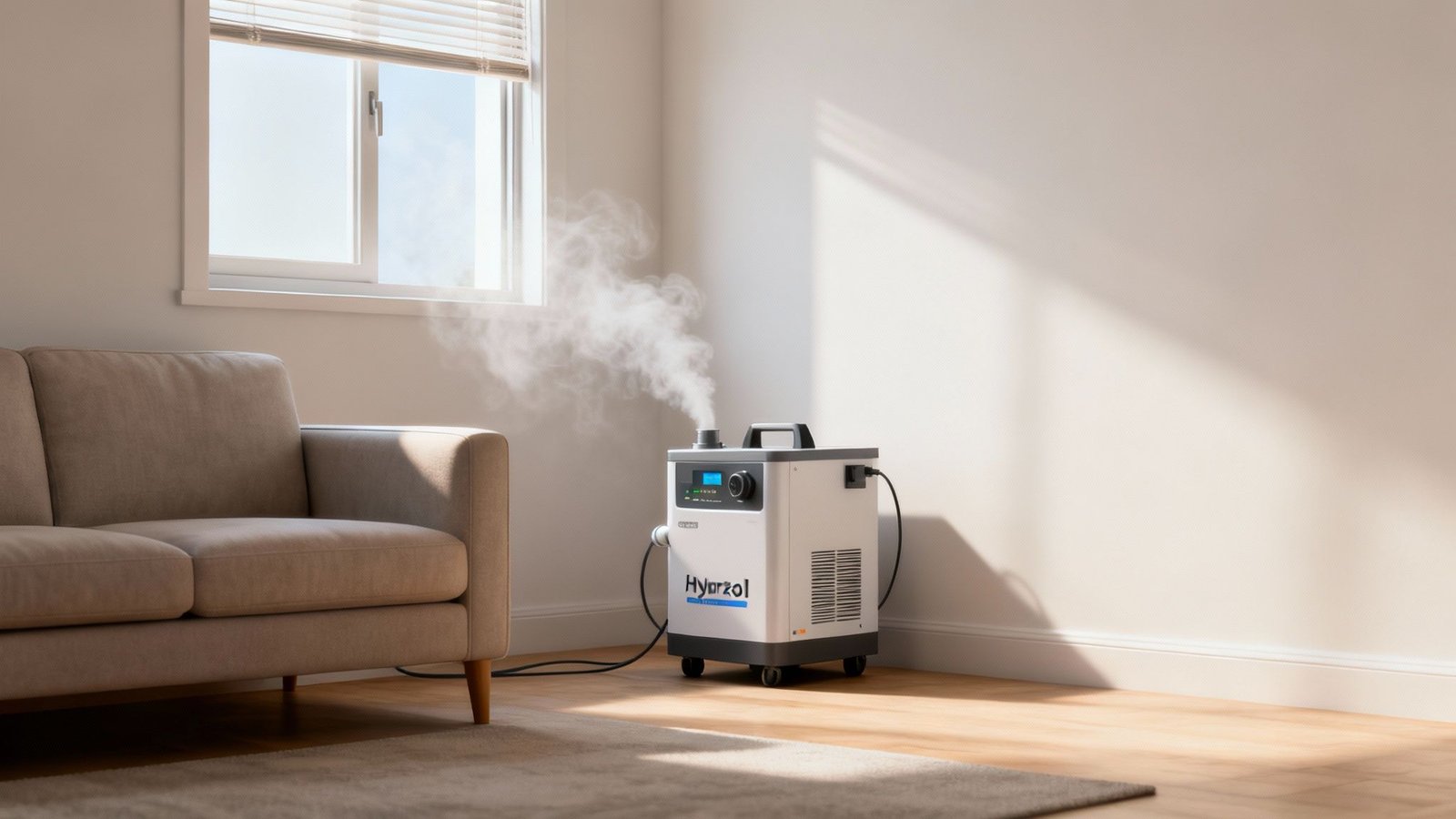
Hydroxyl Generators: This is a newer, safer, and often more convenient technology. These machines use UV light to create hydroxyl radicals (·OH), the same molecules that Mother Nature uses to clean the atmosphere. These radicals are highly effective at breaking down odors but are completely safe for people and pets. This is a huge advantage because we can run a hydroxyl generator while our team is still working inside the home, which helps speed up the entire restoration process.
When to Call a Professional for Smoke Odor Removal
You’ve tried everything. Vinegar bowls, baking soda scattered on every surface, and endless hours of scrubbing—but that stubborn smoke odor just won’t budge. It’s a frustratingly common story, and knowing when your best efforts aren’t going to cut it is key to protecting your property, your investment, and your family’s health.
Sometimes, the signs are obvious. Certain situations are clear red flags that the job has graduated from a weekend project to a task for certified professionals. If any of these sound familiar, it's time to pick up the phone.
Heavy and Widespread Soot
When soot covers nearly every surface, it’s a sign of severe smoke infiltration. This is far more than a surface-level mess; it means microscopic particles have been forced deep into porous materials like drywall, insulation, and even the wood framing of your home. Simply wiping down the walls won't get the job done. This requires specialized equipment and techniques that can pull the soot particles out from within the structure itself.
The Odor Persists After Cleaning
You've cleaned, washed every fabric, and aired out the house for days. Yet, the smell creeps back, especially when it gets warm or humid. This is a classic indicator that the source of the odor is hiding in places you can't reach, like wall cavities, your HVAC system, or the subflooring.
Key Insight: A lingering odor means that VOCs (volatile organic compounds) are still off-gassing from deep inside your home. At this point, only advanced deodorization methods like thermal fogging or hydroxyl treatments can penetrate these areas and neutralize the embedded molecules.
Damage From a Protein Fire
Kitchen fires are a different beast entirely, especially when they involve meat, poultry, or fish. These are called protein fires, and they create a unique and particularly nasty residue: a nearly invisible but incredibly foul-smelling, greasy film that clings to everything. This residue is almost impossible to remove with standard household cleaners. It requires specialized chemical solutions designed specifically to break down and dissolve the greasy film.
The Importance of IICRC Certification
When the damage is this extensive, it’s time for professional intervention. For these situations, understanding how to find a reliable cleaning company is crucial. You absolutely want to look for a company with IICRC (Institute of Inspection, Cleaning and Restoration Certification) credentials.
This certification isn't just a piece of paper. It’s proof that the technicians have been formally trained in the science of fire and smoke restoration. They understand how different kinds of smoke affect various materials and have the expertise to use powerful, industry-grade equipment safely and correctly. For any homeowner, choosing a certified team like Onsite Pro Restoration ensures the job is done right the first time.
Wildfire smoke is a serious concern for those of us in Los Angeles. Recent fires that burned nearly 60,000 acres are a stark reminder of just how far smoke can travel. In fact, research shows that wildfire smoke can impact homes over 240 kilometers away, depositing a cocktail of hazardous compounds like VOCs and PAHs that normal cleaning can't remove. Calling in certified professionals isn't just about getting rid of the smell—it's the only way to ensure your home is truly clean and safe.
Frequently Asked Questions About Eliminating Smoke Odor
Q: How long does it take to get rid of smoke smell after a fire?
A: The timeline depends entirely on the fire's severity. A minor incident might clear up in a few days with aggressive cleaning and ventilation. However, for significant fires where smoke has deeply penetrated materials, the odor can persist for weeks or months without professional help. A certified team using advanced equipment like thermal foggers or hydroxyl generators can typically eliminate severe odors within 3 to 5 days.
Q: Will an air purifier remove fire smoke odor?
A: An air purifier helps, but it isn't a complete solution. A quality unit with a HEPA and activated carbon filter will capture airborne soot and odor-causing gases. However, it cannot remove the odor particles already embedded in your walls, furniture, carpets, or HVAC system. It’s an excellent tool to use during and after deep cleaning, but it won’t solve the root problem on its own.
Q: Is it safe to stay in a house that smells like smoke?
A: It is not recommended. The lingering smell is a direct indicator of microscopic soot particles and harmful chemicals in the air. Inhaling these can lead to respiratory problems, headaches, and other health issues, particularly for children, the elderly, and those with pre-existing conditions like asthma. It's safest to find temporary housing until the home is professionally remediated and declared safe. For more details, see our odor removal service FAQ.
Q: Does homeowners insurance cover smoke odor removal?
A: In most cases, yes. Standard homeowners insurance policies typically cover damage from fire and smoke. This coverage should include the costs associated with professional cleaning, deodorization, and restoring your property. Be sure to document all damage with photos and contact your insurance agent immediately. A certified restoration company can work directly with your adjuster to streamline the claims process.
When the job is too big and the odor won’t quit, trust the IICRC-certified professionals at Onsite Pro Restoration to restore your home’s safety and air quality. Call us 24/7 for a free assessment.
Get a Free Estimate Now