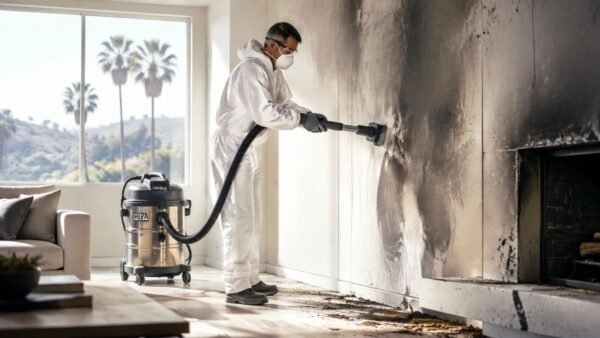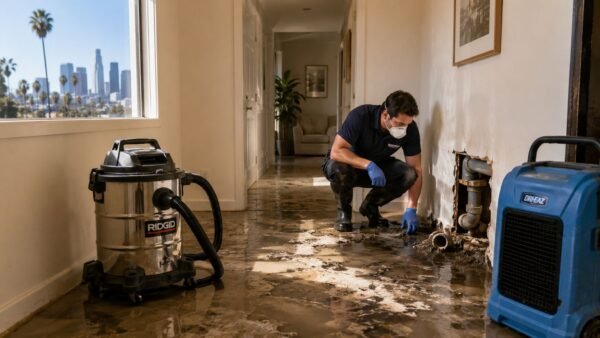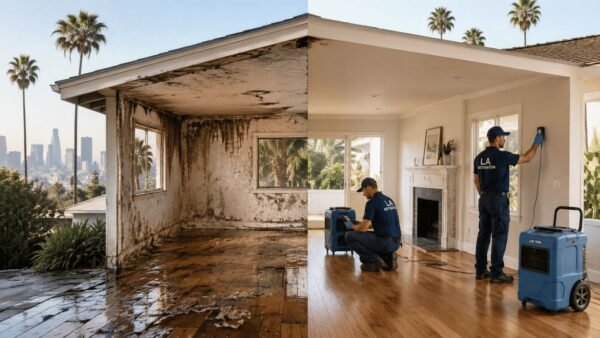

That sinking feeling when you spot mold is universal, but what you do next is what truly matters. Your first and most important move is to back away, avoid touching it, and call a professional mold removal company los angeles residents rely on to handle these situations safely.
Resist the urge to start scrubbing. A common mistake is grabbing a bottle of bleach, but that can unleash millions of spores into the air, turning a small, contained problem—like a leak behind your washing machine in West Hollywood—into a home-wide nightmare. This guide will walk you through the immediate steps to take, how to vet a true professional, and what to expect from the mold remediation process in Southern California.
The Hidden Dangers of Indoor Mold in LA Homes
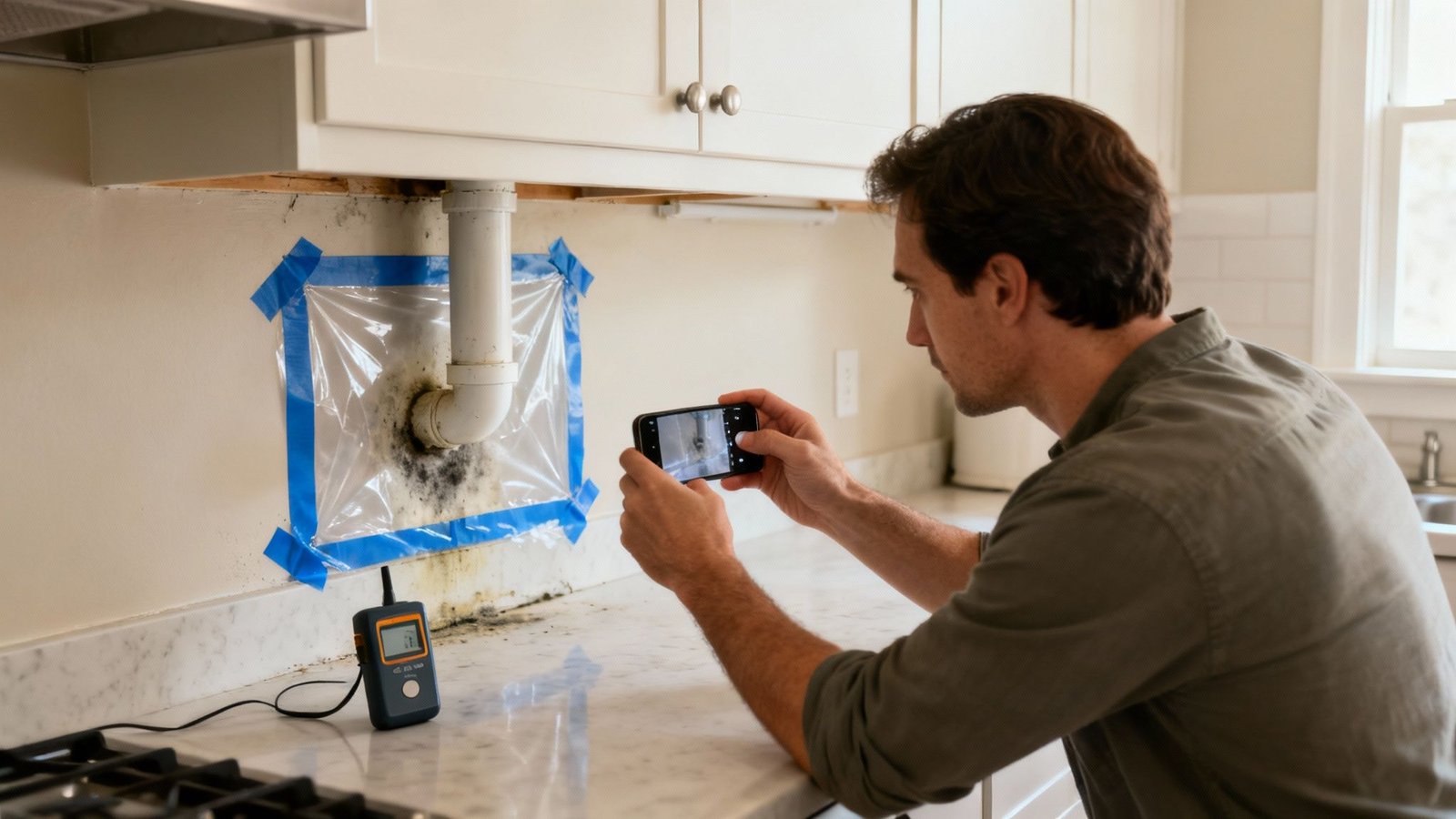
Whether it’s a suspicious dark patch behind the sink in your Sherman Oaks condo or a musty odor coming from the crawlspace of your coastal home in Santa Monica, discovering mold sets off alarm bells. How you react directly impacts the scope of contamination, the final cost, and your family's health. The key is to be methodical, not impulsive.
Your gut reaction might be to attack it with bleach. On porous surfaces like drywall or wood, this is one of the worst things you can do. Bleach might kill the surface growth, but it won't touch the "roots" (mycelia) embedded deep inside the material.
Even worse, the water in the bleach solution can feed the hidden mold, while the scrubbing action sends spores airborne, spreading them throughout your HVAC system and into every room.
Your Immediate Action Plan
Instead of grabbing cleaning supplies, take these crucial steps to manage the situation until the pros arrive.
Isolate the Area: Containment is your top priority. Shut any doors to the room and, if you can, use tape to seal the gaps around the door frame. Make sure to turn off any fans or HVAC systems that service that zone to stop spores from traveling.
Reduce Humidity: Mold needs moisture to live. If you're dealing with an active leak, shut off the main water supply right away. For general dampness, like the kind that rolls in with the coastal fog in Venice, get a dehumidifier running and set it to maintain a relative humidity below 50%.
Document Everything: Before a single thing is moved, take clear photos and videos. Get wide shots of the room, then close-ups of the mold and any signs of water damage. This documentation is gold for your insurance claim.
A common mistake Los Angeles homeowners make is cleaning up evidence of mold before it has been professionally documented. Without clear proof of the source and extent of the damage, you risk having your insurance claim denied.
What Not to Do
Knowing what to avoid is just as critical. Absolutely do not point a fan directly at the moldy area—this is like giving the spores a super-highway into the rest of your home. A hairdryer is just as bad.
And please, don't try to rip out moldy drywall or carpeting yourself. This is a job that requires professional containment gear to prevent hazardous exposure and cross-contamination.
Handling this initial discovery phase correctly paves the way for a smooth and effective remediation. If you've just found a mold problem that needs immediate attention, understanding the need for emergency mold removal will help you make the right call, fast.
Why Southern California is a Hotspot for Mold Growth
https://www.youtube.com/embed/iwcDXoeff2s
The Los Angeles market is absolutely flooded with contractors, but let's be clear: a general handyman is not a mold remediation specialist. Choosing the right mold removal company in Los Angeles is the single most important decision you'll make in this entire process.
Making the wrong call can lead to incomplete removal, cross-contamination, and recurring problems that will cost you way more in the long run.
This isn't about scrubbing a stain off the wall; it's a science-backed process designed to protect both your property and your health. True professionals have specific training, certifications, and protocols that set them apart. Your job is to find these experts among the crowd.
Check for IICRC Certification and State Licensing
The first and most straightforward step is to verify their credentials. Don't just take their word for it—look them up.
IICRC Certification: The Institute of Inspection, Cleaning and Restoration Certification (IICRC) is the gold standard for our industry. A company whose technicians are certified as Applied Microbial Remediation Technicians (AMRT) has proven expertise in mold and sewage cleanup. This is a non-negotiable credential.
California State License: Make sure the company holds a valid contractor's license from the California Contractors State License Board (CSLB). This gives you a layer of consumer protection and confirms they’re a legitimate business operating legally.
Scrutinize Their Insurance and Local Experience
Proper insurance is what protects you from liability if something goes wrong. Always ask for a Certificate of Insurance (COI) that shows both general liability and, more importantly, pollution liability coverage. This specific insurance covers errors related to environmental contaminants like mold.
Experience with LA's unique housing stock is also a huge factor. A company that has remediated mold in a 1920s Hollywood bungalow with original plaster walls has a completely different skill set than one that only works on new construction out in the Valley.
Professional mold removal isn't just a service; it's a critical environmental health intervention. Due to the city's aging infrastructure and diverse building materials, Los Angeles has become a hub for specialized remediation. Companies that have operated here for decades, like ATI Restoration, showcase the industry's evolution, employing certified technicians who follow EPA guidelines and partner with third-party industrial hygienists to ensure a property is safe. Learn more about the specialized mold remediation services available in Los Angeles to understand the depth of expertise required.
Ask the Right Questions During the Consultation
When a company representative comes to your home, you are interviewing them for a critical job. Don't be shy about asking detailed questions that reveal their process and professionalism.
Here are a few I always recommend:
- "Do you use a third-party industrial hygienist for post-remediation clearance testing?" The only acceptable answer is yes. A company that tests its own work has a glaring conflict of interest.
- "What is your containment protocol?" They should immediately describe using negative air pressure machines, HEPA air scrubbers, and physical barriers made of 6-mil plastic sheeting. If they hesitate, that's a red flag.
- "Can you provide local references?" Ask for references from recent jobs in neighborhoods like yours, whether it's a coastal home in Marina del Rey or a hillside property in Echo Park.
Beyond just vetting a mold specialist, understanding the importance of professional property assessment in general can help you spot potential moisture issues before they turn into major mold problems. While online reviews are helpful, nothing beats a direct conversation and verified credentials.
For a detailed comparison, check out our guide on the top mold removal companies in Los Angeles to see how local experts stack up.
Decoding Mold Removal Costs in the Los Angeles Area
Budgeting for mold remediation is often the biggest source of stress for homeowners, and for good reason. The cost to hire a mold removal company in Los Angeles isn’t a simple, flat-rate fee; it’s a dynamic figure shaped by a unique mix of local factors and project-specific details.
Understanding these variables is the key to making sense of quotes and steering clear of both underqualified low-ballers and overpriced services. The final bill is less about that visible spot on your wall and more about the complexity of the entire job.
Key Factors That Influence Your Final Bill
A small patch of surface mildew on bathroom tile is a world away from a deep-seated mold colony behind the walls of a Bel Air home. Here’s what remediation experts are actually evaluating when they build your estimate:
- Size of Contamination: This is the most direct cost driver. A small, contained area under 10 square feet is one thing. A problem that has spread throughout an entire attic or crawlspace is a completely different ballgame.
- Location and Accessibility: Mold growing in an open, easy-to-reach basement is much simpler (and cheaper) to deal with than mold hidden within a tight crawlspace or tangled behind a network of plumbing in a kitchen wall. Difficult access means more labor hours.
- Type of Contaminated Materials: Tearing out and replacing porous materials like drywall, insulation, and carpeting is far more involved than simply cleaning non-porous surfaces like metal or glass.
- Containment and Equipment Needs: Proper, safe remediation requires setting up containment zones with negative air pressure and using commercial-grade HEPA air scrubbers. The larger the area, the more extensive—and expensive—this setup becomes.
Understanding Average LA Mold Removal Costs
To give you a clearer picture, let's look at the local numbers. In Los Angeles, the complexity of homes and the scale of some projects often lead to higher costs.
Recent figures show that an average mold removal project in the area can range from approximately $2,174 to $2,567. For a widespread issue covering about 500 square feet, costs can average around $4 to $5 per square foot.
Keep in mind, severe situations like a flooded basement can easily push the total into the $7,500 to $10,000 range or even higher, especially when significant demolition and reconstruction are necessary.
Red Flag Warning: Be extremely wary of any company that gives you a rock-bottom price over the phone without a thorough on-site inspection. This is a classic sign they plan to cut corners on critical safety steps like proper containment or disposal, putting your home and your health at risk.
For a more personalized estimate based on your specific situation, you can use a detailed mold removal cost calculator to input your project details and get a preliminary budget. This tool is a great way to prepare for conversations with potential contractors.
A Look Inside the Professional Mold Remediation Process
Let's be honest: seeing strangers in hazmat suits walk into your home is unnerving. But understanding what a professional mold removal company in Los Angeles actually does—and why they do it—can turn that anxiety into confidence. A real mold remediation project isn't just about cleaning; it's a systematic, science-based process designed to remove the mold you see and, just as importantly, prevent it from coming back.
The first thing a specialist will do is evaluate the scope of the problem. This infographic breaks down the key factors they look at, which directly influence the project's complexity and cost.
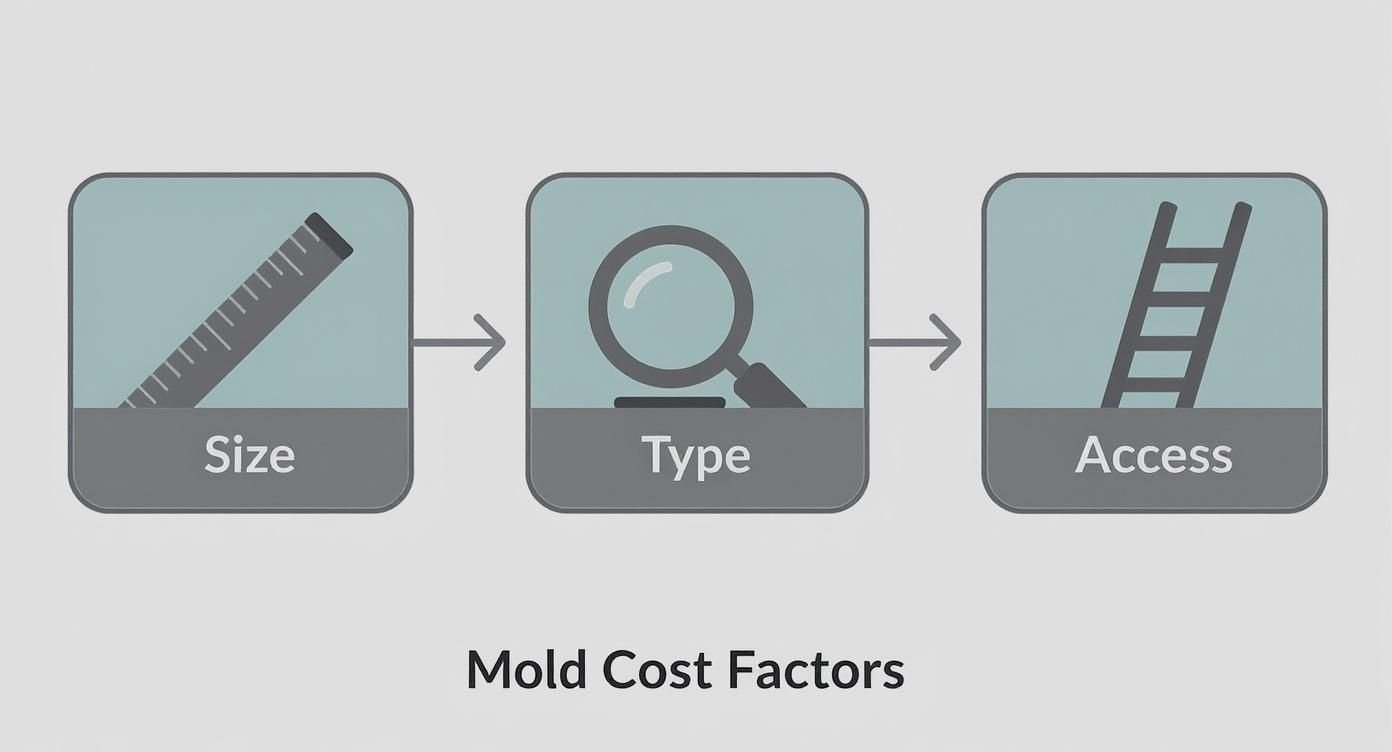
As you can see, the size of the area, the type of mold present, and how hard it is to access all play a part. This is exactly why a thorough, on-site inspection is non-negotiable before any work starts.
Establishing Safe Containment Zones
Before a single piece of drywall is touched, the very first step on-site is containment. Technicians use heavy 6-mil plastic sheeting to build a fully sealed barrier around the contaminated area. This isn't just for show; it's critical for preventing microscopic mold spores from going airborne and spreading to clean parts of your home during the removal process.
To make this containment even more effective, they'll install a negative air machine. This is basically a powerful fan with a HEPA filter that pulls air from the contaminated zone and pumps it outside. This creates a vacuum effect, ensuring any disturbed spores are captured immediately instead of drifting into your living room.
Removing Contaminated Materials
Once the area is fully sealed and under negative pressure, the physical removal begins. This is where professional expertise really makes a difference. Certified technicians will carefully cut out and bag all porous materials that can't be saved, like drywall, insulation, baseboards, and carpeting.
A common mistake I see from general contractors is trying to "kill" or "treat" mold on drywall. The IICRC S520 standard, which is the industry's rulebook, is crystal clear: contaminated porous materials must be removed and thrown away. The mold's root-like structures (mycelia) grow deep into these materials, making surface cleaning ineffective.
For non-porous surfaces like wood framing, metal, or concrete, the approach is different. Technicians use a combination of HEPA vacuums to capture surface spores and then treat the materials with antimicrobial agents. Every single surface inside that containment zone gets meticulously cleaned and sanitized.
To give you a clearer picture, every professional mold remediation job follows a strict sequence of events. Here's a breakdown of the typical stages, from the initial inspection to the final all-clear.
Mold Remediation Stages from Inspection to Clearance
| Phase | Key Actions | Purpose |
|---|---|---|
| Inspection & Assessment | Visual inspection, moisture mapping, and sometimes initial air/surface sampling. | To identify the source of the moisture, determine the extent of contamination, and create a detailed remediation plan. |
| Containment Setup | Sealing off the work area with plastic sheeting and establishing negative air pressure. | To prevent cross-contamination and protect unaffected areas of the property from airborne mold spores. |
| Material Removal | Controlled demolition and disposal of contaminated porous materials (drywall, insulation, etc.). | To physically eliminate the mold and its food source, which is the only way to ensure it doesn't return. |
| Cleaning & Decontamination | HEPA vacuuming and applying antimicrobial agents to remaining non-porous materials. | To remove any lingering spores from surfaces that can be salvaged, like wood studs or concrete. |
| Post-Remediation Verification | A third-party industrial hygienist conducts air and surface sampling after the work is done. | To provide unbiased, scientific proof that the mold has been successfully removed and the home's air quality is safe. |
Each phase builds on the last, ensuring the job is done right the first time. Skipping any of these steps, especially the final verification, can leave you right back where you started.
Post-Remediation Verification
The final step is arguably the most important one for your peace of mind: post-remediation verification testing. This isn't done by the company that did the cleanup. Instead, a certified, third-party industrial hygienist—someone completely independent—comes in to take air and surface samples.
These samples go to an accredited lab to confirm that the mold spore count in your home has returned to normal, safe levels. This independent clearance report is your ultimate proof that the remediation was successful and your home's air is healthy again.
For a deeper dive into the technical details, you can learn more about our comprehensive mold remediation service and what each step involves from beginning to end.
How to Compare Quotes from an LA Mold Removal Company
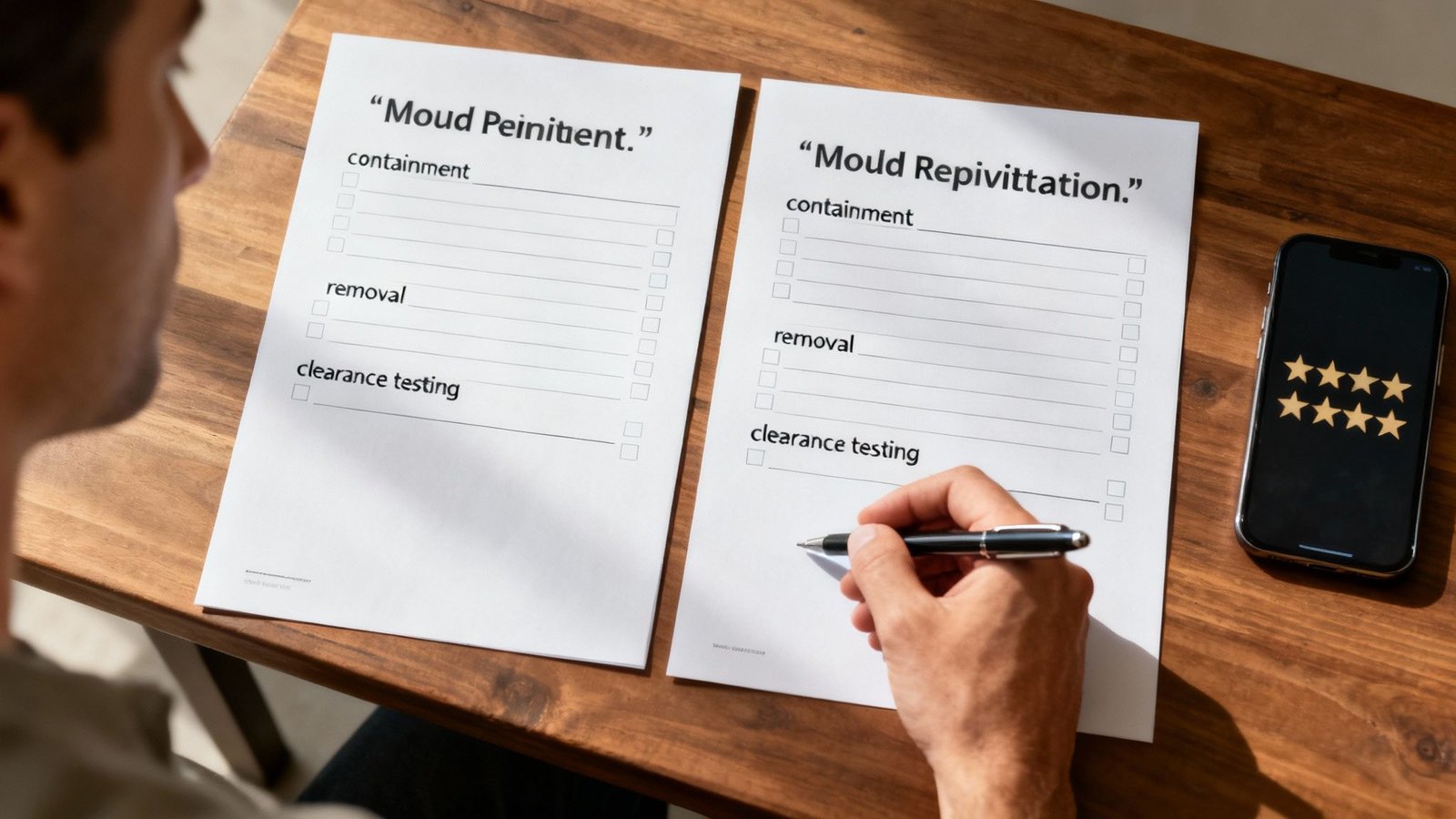
You’ve done the smart thing and collected a few different estimates. Now for the hard part: figuring out which one is actually the right choice.
Let me be blunt: the cheapest quote from a mold removal company in Los Angeles is almost never the best deal. In my experience, a suspiciously low price is a giant red flag that a company is about to cut corners—dangerous corners that can put your family’s health at risk. To really understand what you're paying for, you have to look past the bottom-line number and dig into the details.
A professional, trustworthy quote should read like a battle plan for getting your home safe again, not a vague to-do list. You want specifics, transparency, and a comprehensive scope of work that leaves zero room for surprises.
Look for a Detailed Scope of Work
Vague phrases like "mold cleanup" or "treat affected areas" should make you skeptical. A real pro will provide an itemized breakdown of the entire process, showing you they follow a strict protocol. This is the only way you can compare apples to apples.
Here’s what you should demand to see on any quote you’re seriously considering:
- Containment: The quote must explicitly mention setting up containment barriers with 6-mil plastic sheeting and using negative air pressure machines. This isn't optional; it's what stops spores from spreading all over your house.
- Removal of Contaminated Materials: It should clearly state what’s being torn out (e.g., drywall, insulation, baseboards) and confirm it will be disposed of according to local regulations.
- Cleaning Protocol: Look for specific mentions of HEPA vacuuming and the use of EPA-registered antimicrobial agents on any non-porous surfaces left behind.
- Post-Remediation Verification: This is an absolute must. The estimate has to include a line item for third-party clearance testing performed by an independent industrial hygienist.
Conflict of Interest Alert: If a company tells you they can do their own clearance testing to "save you money," run the other way. That’s like a student grading their own test. You need unbiased, independent proof that the job was done right and your air is safe.
Comparing Costs Beyond the Bottom Line
The cost of mold remediation in LA is a different beast. Our local labor and disposal costs mean prices often run higher than the national average. General research shows a typical range of $1,590 to $3,850, but the location of the mold makes a huge difference.
An HVAC system, for example, can push the cost up to between $3,264 and $10,880, while a small patch on some drywall might be closer to $1,088 to $3,155. You can check out more detailed local mold remediation cost breakdowns on Angi.com to get a feel for the current market.
When you lay your quotes side-by-side, check them against the checklist above. Is that higher bid higher because it includes a robust containment plan and proper third-party testing? Did the low-ball offer skip those critical steps entirely? Answering those questions is how you find the true value and pick the right mold removal contractors for your LA home.
Your Top Mold Removal Questions Answered
Even with a solid plan, specific questions always pop up for homeowners in Los Angeles. From the Hollywood Hills to the beach communities in Santa Monica, getting straight answers is the best way to feel confident about hiring a mold removal company in Los Angeles and moving forward.
Here are some of the most common questions we get from local residents facing a mold problem.
Does homeowners insurance in California typically cover mold removal?
This is the big one, and the answer is almost always, "it depends." Coverage hinges entirely on the source of the moisture. If the mold is a direct result of a sudden, covered event—like a pipe bursting and flooding your kitchen—your policy will probably cover the remediation costs. However, if the mold grew because of a slow leak, poor maintenance (like an old roof you've been meaning to fix), or just high humidity, it's almost always excluded from standard California homeowners policies. You absolutely have to read your specific policy and call your agent right away to discuss the situation. Your insurance carrier expects you to act fast to prevent more damage; the moment you find a leak, you're responsible for stopping it.
How long does a typical mold remediation project take?
The timeline for a mold removal project really depends on how bad the problem is. There's no one-size-fits-all answer. A minor issue, like a small mold patch on a bathroom ceiling, can often be handled in just 1-3 days. That usually covers setting up containment, removing the affected materials, cleaning the area, and getting everything dry. For bigger problems, like mold that has spread through a basement, crawlspace, or attic, the project could easily take a week or even longer. Any reputable company will give you a detailed, day-by-day project schedule in their formal proposal.
What is the difference between mold removal and mold remediation?
People use these terms interchangeably all the time, but in the restoration industry, they mean very different things. Mold removal is just the physical act of cleaning or tearing out mold. Think of it as one step in a much larger process. Mold remediation, on the other hand, is the whole professional playbook. It includes finding and fixing the moisture problem, setting up containment, filtering the air, removing contaminated materials, cleaning every affected surface, and bringing in an independent tester to verify that your home is safe again.
Is it safe to stay in my home during the process?
For your own health and safety, it is strongly recommended that you and your family find somewhere else to stay during the active remediation work. The process of removing mold will inevitably stir up spores and send them into the air. Professionals use containment barriers and negative air pressure machines to keep the spores from spreading, but the safest bet is to not be there. This is especially critical for children, the elderly, and anyone with allergies, asthma, or a compromised immune system.
Ready to make sure your home is safe and completely mold-free? The IICRC-certified team at Onsite Pro Restoration has the expertise to handle your project with the care it deserves. We manage everything from the first inspection to working directly with your insurance. Get your free, no-obligation assessment today.