
That stubborn smoke smell in the house isn't just an unpleasant reminder of a fire. It's a clear signal that microscopic, toxic particles have worked their way deep into your home’s surfaces. Just opening a window won't fix this; you need a real strategy to get rid of the source for good, especially in Los Angeles where wildfire smoke is a common concern.
Why That Lingering Smoke Odor Poses a Hidden Danger
When you smell smoke, what you're actually inhaling is a nasty mix of fine particulate matter and invisible gases that have settled into every nook and cranny of your home.
Think of the hazy air that hangs over Los Angeles after a wildfire in the nearby mountains. Those same tiny particles—soot, ash, and volatile organic compounds (VOCs)—don't just vanish. They're aggressive, bonding to every surface they come into contact with.
This leftover residue creates a nasty problem known as thirdhand smoke, a toxic cocktail that sticks around long after the visible smoke is gone. It’s not just a bad smell; it's a constant source of indoor air pollution.
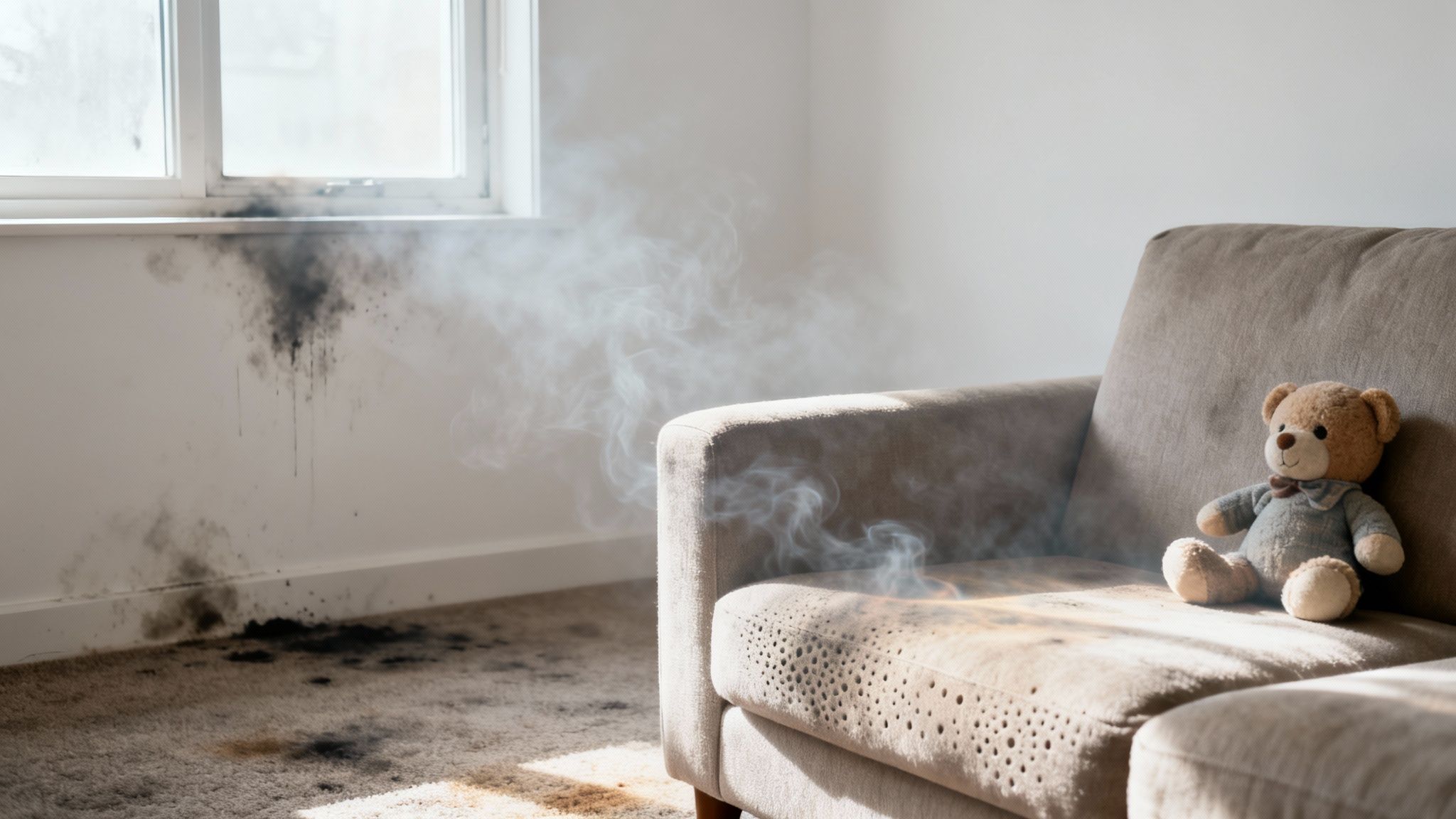
The Science Behind a Stubborn Smell
Smoke particles are incredibly small and often carry a sticky, oily film. This allows them to get deep into porous and semi-porous materials all over your house, including places you might not expect.
- Drywall and Paint: These act like sponges, soaking up odor-causing molecules deep within their layers.
- Carpets and Rugs: The fibers in your carpets can trap millions of smoke particles, releasing them back into the air every time you walk across the room.
- Upholstered Furniture: Your favorite sofa, chairs, and mattresses can hold onto that smoke residue for years.
- Wood and Laminate: Even surfaces that seem solid can absorb VOCs, leading to that never-ending smell.
This is exactly why spraying an air freshener is a temporary fix at best. You're just masking the symptom, not treating the cause. The particles are still there, continuously off-gassing and polluting the air you breathe. For a complete rundown on what to do right after a fire, check out our guide on what to do after a house fire.
From Annoyance to a Serious Health Risk
That lingering smoke smell in the house is a constant reminder of a hidden health threat. The VOCs and fine particulates released from contaminated surfaces can lead to real health issues, especially for children, the elderly, and anyone with respiratory conditions like asthma.
These health consequences aren't just a theory. Research after major wildfires shows a direct link between lingering indoor smoke and long-term health symptoms. For instance, a 2021 study after the Marshall Fire in Colorado found that 55% of residents whose homes still smelled of smoke a week after the fire were still reporting health problems six months later.
The most common complaints included itchy eyes (33%), recurring headaches (30%), and persistent dry coughs (27%). This data makes it clear: the threat doesn't disappear when the fire is out.
Key Takeaway: The smoke odor you smell is a direct sign of ongoing exposure to harmful pollutants. Getting rid of it isn't just about comfort—it's about making your home a safe and healthy place for your family again. Understanding this is the first step toward taking the right action.
Your First Response Plan for Smoke Contamination
When you first notice that unmistakable smoke smell in the house, what you do in the first hour can make a world of difference. Your immediate actions set the stage for how difficult the rest of the cleanup will be. A calm, methodical approach can drastically reduce long-term damage and those stubborn, lingering odors. The goal is simple: stop the smoke particles from spreading and start ventilating safely.
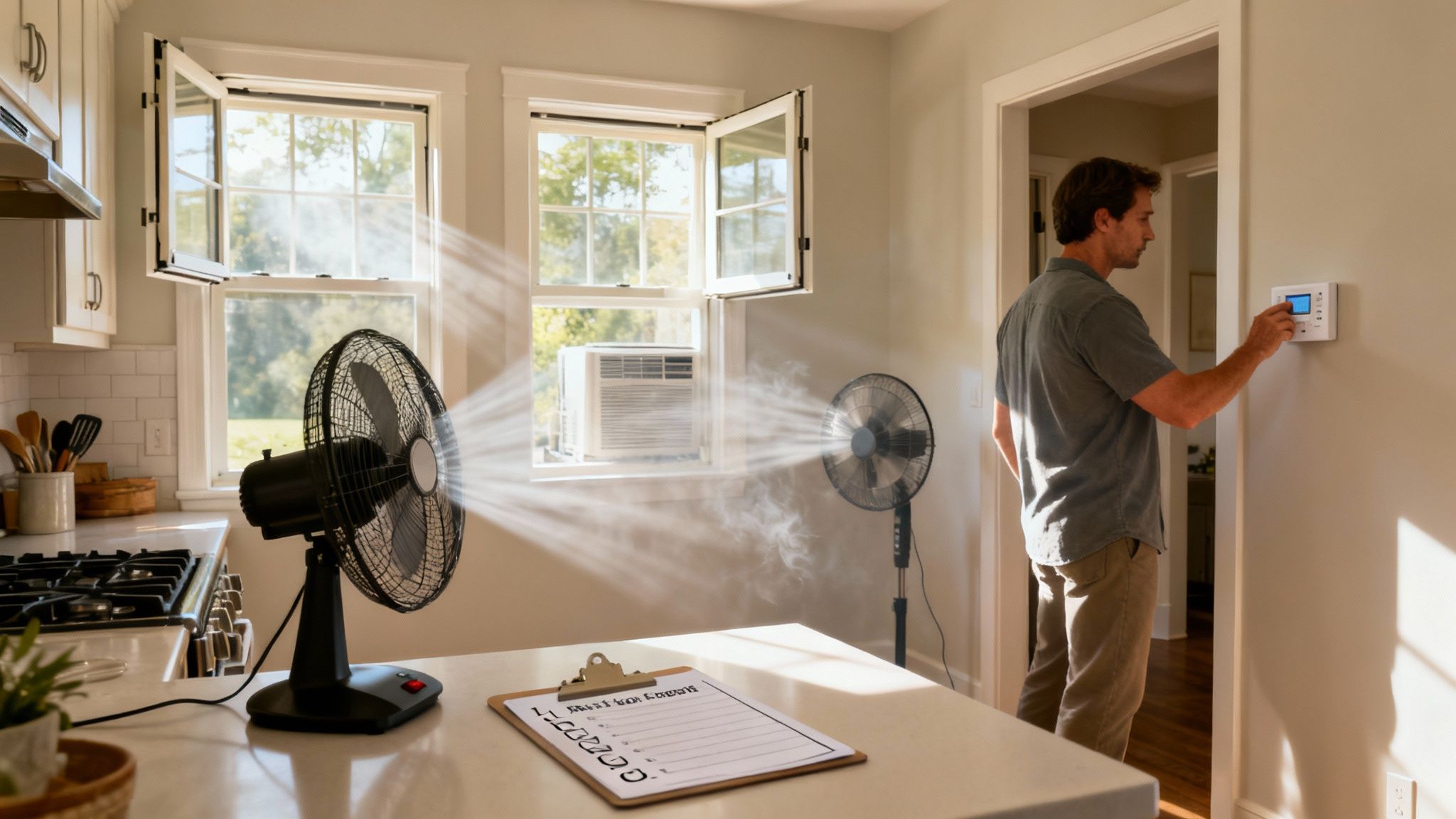
First thing's first: figure out where the smoke is coming from and check the air quality outside. If it’s from a kitchen mishap and the air outside is clear, get those windows and doors open on opposite sides of your home. This creates a cross-breeze. To speed things up, put a box fan in a window, facing out, to actively push the bad air outside.
But if the smoke is from an external source like a nearby wildfire, keep everything sealed up tight. Opening windows will just invite more pollutants in, making your problem much, much worse.
Shut Down Your HVAC System Immediately
This is the most critical step, and it's non-negotiable. Your home’s heating, ventilation, and air conditioning (HVAC) system is built to circulate air everywhere. When that air is full of smoke, your HVAC becomes a super-spreader, pushing contamination into every single room connected by ductwork.
Turning the system off at the thermostat stops this circulation dead in its tracks. You're preventing fine soot and oily residues from coating the inside of your ducts—a problem that’s far more complex and expensive to fix later on. Don't even think about turning it back on until the air is clear and you've had a chance to swap out the filter.
Perform an Initial Filter Change
With the system off, your next job is to deal with that air filter. It’s almost certainly clogged with a heavy load of soot and other nasty particles. Leaving it in there is just asking for those smells to come right back.
- Remove and Dispose: Carefully take out the old filter. The best way to handle it is to immediately place it in a trash bag and seal it up so the trapped particles don't escape back into your air.
- Install a High-Quality Replacement: Pop in a new, high-quality filter. I always recommend looking for one with a MERV 11 or 12 rating. They’re much better at capturing the tiny particles found in smoke.
- Inspect the Area: While the filter housing is open, do a quick visual check for any soot buildup around it and wipe it down with a damp cloth.
This simple move ensures that when you finally do turn your system back on, you aren't blasting trapped odors right back into your clean air. You can find more practical advice by exploring the best way to get smoke out of your house in our comprehensive guide.
Document Everything for Insurance
Before you touch anything or start any real cleaning, grab your phone and start taking pictures and videos. Go through every room and document any surface where you see soot or can smell a strong odor. When it comes time to file an insurance claim, this kind of detailed visual evidence is absolutely invaluable.
Pro Tip: Don't just take wide shots of the rooms. Get in close. Take pictures of the soot on the walls, the oily film on countertops, and any discoloration on furniture or curtains. The more detailed your documentation, the smoother your claim process will be.
A Practical Cleaning Strategy for Every Surface
Once you’ve stopped the immediate spread, the real work begins: getting that lingering smoke smell in the house out for good. This isn't a quick wipe-down; it's a methodical, surface-by-surface process that demands the right approach and a bit of patience.
You have to remember that you're not just cleaning what you can see. The goal is to get rid of the microscopic, oily residue clinging to absolutely everything. From your walls to your carpets, each material has absorbed those smoke particles differently and needs its own targeted strategy.
Tackling Hard Surfaces: Walls, Ceilings, and Floors
Hard surfaces like painted walls, ceilings, and non-porous floors are usually the biggest offenders. They make up the largest surface area in any room and will constantly release that smoky smell if they aren't treated correctly.
First, vacuum every single hard surface using a brush attachment. This lifts away loose soot and ash without grinding it into the finish. Whatever you do, don't use a feather duster—that will just launch the particles right back into the air you're trying to clean.
A simple, powerful cleaning solution often does the trick. I've had great success with a mix of one gallon of warm water, a half-cup of a strong degreaser (like trisodium phosphate or a TSP alternative), and a tablespoon of dish soap.
Important Note: Always test your cleaning solution on a small, hidden spot first. Check behind a bookshelf or inside a closet to make sure it won't damage the paint or finish before you tackle a whole wall.
When you're ready to start washing, grab two buckets—one for your cleaning mix and another for clean rinse water. Work in small sections from the top down. Ceilings, then walls, then baseboards. This system prevents dirty water from dripping onto areas you've already cleaned. Apply the solution, give it a gentle scrub, and immediately wipe it clean with a cloth dampened in your rinse water.
Deep Cleaning Soft Furnishings: Carpets and Drapes
Soft materials are absolute magnets for the smoke smell in the house. The porous fibers in carpets, upholstery, and drapes trap odor molecules deep inside, which makes them a real challenge to treat.
For anything machine washable (some curtains, furniture covers), run them through a cycle with your usual detergent plus one cup of white vinegar. Be prepared to wash them two or even three times to completely knock out the smell.
For everything else, you'll need a different game plan.
-
Carpets and Rugs: Start by sprinkling a generous amount of baking soda or activated charcoal powder across the entire surface. Let it sit for at least 24 hours to absorb the odors, then vacuum it up meticulously with a HEPA filter vacuum. If the smell is deep-seated, you’ll likely need to rent a steam cleaner or call in a professional carpet cleaner.
-
Upholstery: That same baking soda trick works wonders on sofas and chairs. After vacuuming it all up, you can lightly mist the fabric with a 50/50 mix of white vinegar and water. Just be careful not to soak the material.
-
Drapes and Blinds: Heavy draperies are almost always a job for a professional dry cleaner. For hard blinds made of vinyl or wood, you'll have to wipe every single slat with your TSP or vinegar solution. It’s tedious, I know, but if you skip it, you're leaving a major odor source right where it is.
DIY Smoke Odor Cleaning Solutions By Surface Type
Here’s a quick-reference guide I put together to help homeowners choose the right DIY solution for the job. Always remember to test in an inconspicuous area first!
| Surface Type | Recommended DIY Solution | Application Method | Important Precautions |
|---|---|---|---|
| Painted Walls/Ceilings | 1/2 cup TSP substitute, 1 gallon warm water, 1 tbsp dish soap | Two-bucket method: Wash with solution, rinse with clean water. | Test on a hidden spot. Wear gloves and eye protection. |
| Wood/Vinyl Floors | 1 cup white vinegar per 1 gallon warm water | Mop surface and dry immediately to prevent water damage. | Avoid pooling water, especially on wood floors. |
| Carpets & Rugs | Baking soda or activated charcoal powder | Sprinkle generously, let sit for 24+ hours, then vacuum. | Use a vacuum with a HEPA filter to trap fine particles. |
| Upholstery | Baking soda followed by a light mist of 50/50 vinegar & water | Sprinkle soda, wait, vacuum. Mist fabric lightly; do not saturate. | Check fabric care tags. Test for colorfastness first. |
| Drapes & Curtains | 1 cup white vinegar added to the wash cycle | Machine wash according to the item's care label. | May require multiple washes. Air dry if possible. |
| Hard Blinds (Wood/Vinyl) | 50/50 white vinegar and water solution | Wipe each slat individually with a microfiber cloth. | Dry wood blinds immediately to prevent warping. |
These methods are effective for light to moderate smoke damage. For heavy, set-in odors, professional intervention is almost always necessary.
Don't Forget The Overlooked Areas
The smoke smells that just won't go away often hide in the places people forget to clean. Smoke particles are tiny and invasive—they get everywhere. Your cleaning strategy has to be just as thorough.
Make a checklist and hunt down these commonly missed spots:
- Inside Cabinets and Drawers: Empty them out and wipe down every single interior surface.
- Light Fixtures: Soot and grime love to collect on light bulbs and inside shades.
- Closets: Smoke seeps past closed doors and contaminates both the walls and the clothes inside.
- Electronics: Gently wipe down the plastic casings with a dry microfiber cloth.
- HVAC Vents: Remove the grilles to clean them, and wipe as far back into the ductwork as you can safely reach.
Dealing with soot on walls and ceilings is especially tricky because smearing the oily film can make the problem ten times worse. To get a better handle on the right techniques, you can learn more about professional soot removal from walls to ensure you're using the best possible approach. This level of detail is what separates a temporary fix from a permanent solution.
Advanced Odor Removal Beyond Surface Wipes
So, you’ve scrubbed every last surface and run every washable fabric through the laundry, but you still catch a whiff of that stubborn smoke smell in the house. It’s frustrating, I know. But it's also a clear signal that the problem has moved beyond a simple surface issue.
Those microscopic smoke particles and volatile organic compounds (VOCs) are now either airborne or have worked their way so deep into porous materials that a simple wipe-down just won't cut it. This is where we shift gears from manual cleaning to more advanced deodorization tactics.
Intermediate DIY Odor Absorption Techniques
Before jumping to the heavy-duty equipment, there are a few things you can try using everyday household items. These are passive odor absorbers, meaning they work slowly over time. They won't magically eliminate a severe smoke problem, but they can definitely help trap some of the lingering airborne particles causing that faint smell.
- Activated Charcoal: This stuff is incredibly porous and fantastic at trapping odor molecules. Grab some briquettes (the kind without lighter fluid!) and place them in bowls around the most affected rooms.
- White Vinegar: Just like charcoal, vinegar is a great natural deodorizer. Pour some into a few shallow bowls and leave them out overnight. It’ll smell like a salad for a bit, but as the vinegar evaporates, it takes a lot of the smoke odor with it.
- Baking Soda: Don't just use it for scrubbing. Leaving a few open boxes around or sprinkling it directly on carpets and furniture (and vacuuming it up later) can help pull lingering smells out of the air.
Think of these methods as a finishing touch after a deep clean, not a primary solution. They’re great for maintenance but lack the power to tackle a serious smoke smell in the house.
This infographic gives you a good visual of the typical workflow we follow in the restoration industry—surfaces first, then fabrics, and finally, the air itself.
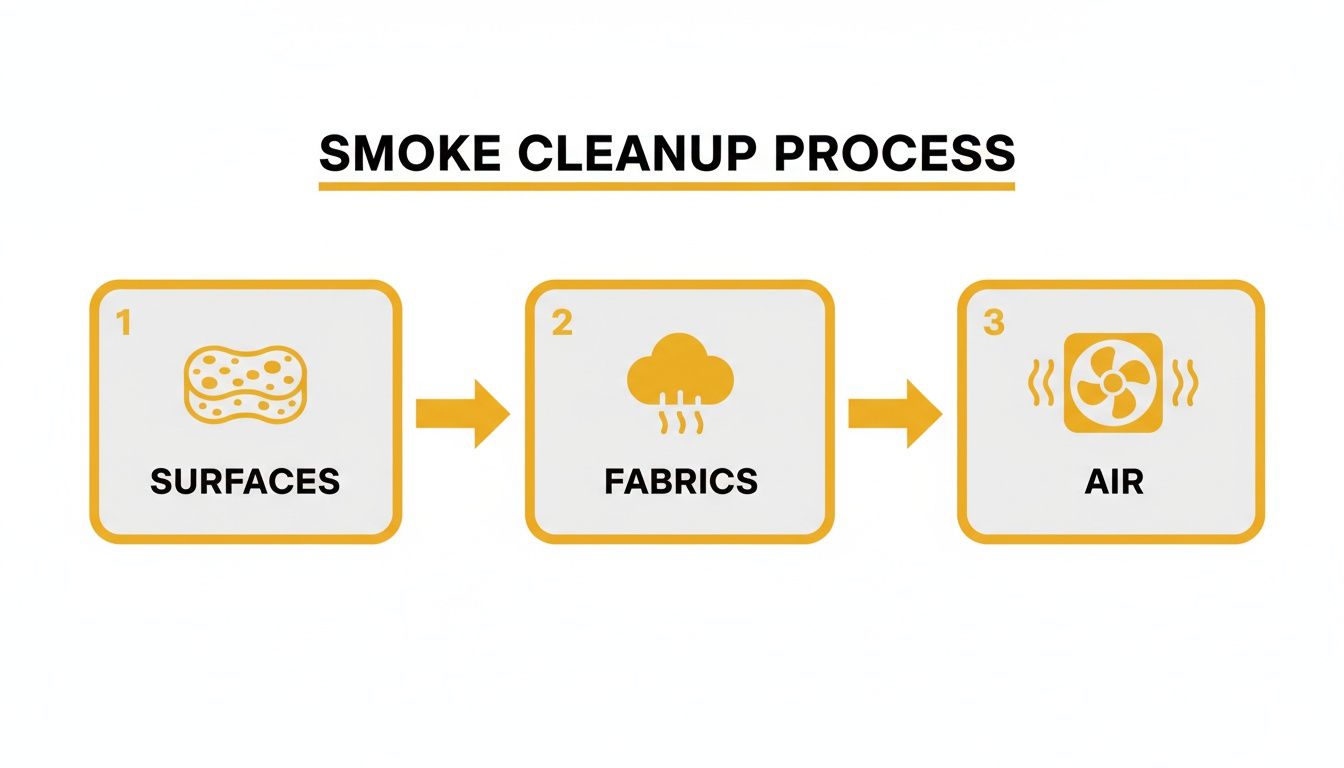
As you can see, treating the air is the critical final step, and it only works once the source—the residue on surfaces and textiles—has been completely removed.
Professional-Grade Deodorization Technology
When vinegar and charcoal aren't enough, it’s time for the big guns. Restoration pros like us use powerful equipment designed to find and destroy smoke molecules at their source. This isn't stuff you can buy at a home improvement store; it's highly effective technology that requires certified technicians to operate safely.
Safety First: I can't stress this enough. Professional equipment like ozone generators is hazardous to people, pets, and even plants if used incorrectly. That’s why their use is restricted to trained experts who can create a controlled, unoccupied environment for treatment.
Two of the most effective tools in our arsenal are ozone generators and thermal foggers.
Ozone Generators
Ozone (O3) is an unstable, highly reactive molecule. In a nutshell, it works by chemically changing the structure of smoke particles, completely neutralizing the odor. We use a generator to fill a sealed, empty space with ozone gas. That gas gets into everything—every crack, every fiber of your couch, even into the drywall—and destroys the smell at its source.
Thermal Foggers
Thermal fogging is a bit different. We heat a special solvent-based deodorizer until it turns into a fine mist, almost like smoke itself. Because the "fog" particles are so small, they can follow the exact same paths the smoke took, reaching deep into crevices and porous materials. The deodorizing agent then bonds to the smoke residue and neutralizes it on a molecular level.
These advanced treatments almost always go hand-in-hand with running industrial air scrubbers, which use massive HEPA and activated carbon filters to continuously pull contaminants out of the air. If you're curious about how this gear works, you can learn more about an air scrubber rental and see how it fits into a full deodorization strategy. Using these tools isn't just about getting rid of a bad smell; it's about restoring healthy, clean air to your home.
Tackling Stubborn Cigarette and Marijuana Smoke
Not all smoke damage is the same. A little kitchen mishap is one thing, but the residue from long-term cigarette or marijuana use is a whole different beast. This is the stubborn, clinging smoke smell in the house that property managers from West Hollywood to Burbank know all too well.
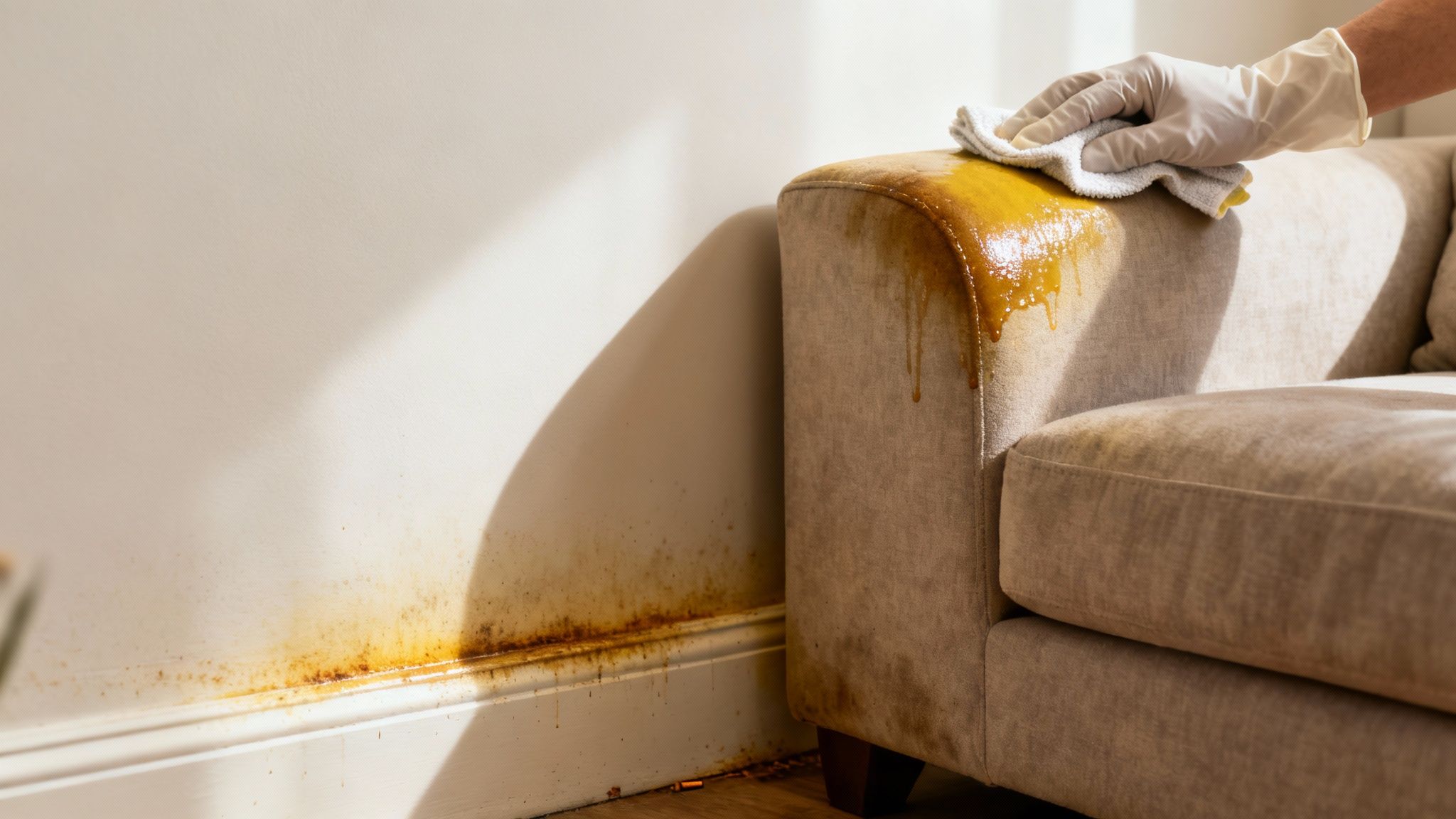
Unlike the dry soot from a wood fire, tobacco and cannabis smoke leaves behind a sticky, oily film called thirdhand smoke. It’s a yellowish-brown gunk that bonds to literally everything—walls, ceilings, carpets, even hard plastics. Your standard cleaners will often just smear it around, failing to get to the odor molecules buried deep within the surfaces.
This isn't just about a bad smell; it's a constant source of indoor air pollution that can seriously affect the health of anyone who moves in later.
Why Thirdhand Smoke Is So Difficult to Remove
Tobacco smoke’s chemical makeup is what makes it so tough. The thousands of compounds, including tar and nicotine, create a varnish-like layer that soap and water just can't cut through.
This residue constantly off-gasses harmful particles, which is why the smell seems to magically reappear on warm or humid days. It’s not your imagination. The science backs this up, highlighting just how deep the contamination goes. A major NIH study found nicotine at high levels in 90-97% of homes where smokers used to live, compared to only 6-10% of non-smoker homes. You can read the full research on thirdhand smoke persistence to see the hard evidence for yourself.
The data just confirms what we see in the field every single day: thirdhand smoke completely saturates a property, from the air right down to the dust.
The Professional Remediation Process for Tobacco Smoke
Because of its unique properties, getting rid of tobacco smoke odor requires a much more aggressive approach than your typical smoke cleanup. Slapping a coat of paint over the stained walls is probably the biggest mistake we see property owners make. The oily residue will eventually bleed right through the new paint, and the smell will be back before you know it.
Key Insight: A fresh coat of paint is a temporary mask, not a solution. Without proper cleaning and sealing, the smoke smell will inevitably return, often within a few weeks or months, wasting both time and money.
The only way to truly fix the problem is with a multi-step, professional process. Here’s how it’s done right:
- Intensive Cleaning: First, our technicians use powerful, specialized degreasing agents. We meticulously wash every single hard surface to break down that oily film.
- Odor-Blocking Primers: Once clean, all affected surfaces—especially drywall and wood—have to be sealed. We use shellac-based or other specialty odor-blocking primers to create a permanent barrier, locking in any microscopic odor particles left behind.
- HVAC and Duct Cleaning: Your HVAC system is like the lungs of the house, and it's been circulating that smoke residue everywhere. A thorough, professional duct cleaning isn't optional; it's essential for removing the buildup inside the ventilation system.
- Advanced Deodorization: Finally, we bring in the heavy hitters. Treatments like ozone or hydroxyl generation neutralize any lingering airborne particles and odors that have soaked into hard-to-reach spots.
For landlords and property managers, dealing with this correctly is crucial for protecting your investment and making sure the unit is safe for new tenants. For more tactics tailored to multi-unit buildings, check out our guide on how to eliminate smoke odor in an apartment. Pairing these remediation efforts with the right operational tools can also make a huge difference; a good property management software comparison can help you streamline everything from maintenance tracking to tenant turnover.
Knowing When to Call for Professional Help
You’ve scrubbed, aired out, and tried every trick in the book, but that stubborn smoke smell in the house just won’t quit. This is the moment a lot of homeowners hit a wall, wondering if they’ve reached the limit of what they can do on their own.
Let me be clear: recognizing when to bring in the professionals isn’t giving up. It's a smart decision to protect your health and your property’s value.
The decision usually comes down to a few clear signs that the problem runs deeper than the surface. If the smell comes roaring back on humid days or you get a whiff every time the HVAC system kicks on, you’re not fighting surface odors anymore. You're dealing with smoke particles embedded deep inside your home’s materials or hiding in your ductwork.
Clear Signs You Need an Expert
Sometimes, the writing is on the wall—literally. You might see visible soot staining your walls or ceilings that just keeps reappearing no matter how many times you clean it. That’s a tell-tale sign of a heavy, oily residue that standard household cleaners just can't handle. Widespread contamination that hits multiple rooms is another massive red flag.
Other clues can be more subtle. When you’re constantly questioning your home’s air quality because of that lingering smoke smell, it’s time to get a real assessment. This is where you should consider getting expert air quality tests for a safer home to know exactly what you’re up against.
You should call a certified restoration company if you're facing any of these issues:
- Persistent Odors: The smell just won't go away, even after multiple deep cleanings.
- Widespread Contamination: The smoke damage isn’t isolated to one small area; it’s in several rooms.
- Visible Soot or Staining: You can see an oily, yellowish-brown film on walls, ceilings, or other surfaces.
- HVAC System Involvement: The smell is strongest whenever the heat or air conditioning is running.
The Professional Advantage
A certified restoration company shows up with specialized equipment and techniques that you simply can't replicate with a trip to the hardware store. We’re talking about tools like thermal foggers and ozone generators that don't just mask odors—they neutralize the smoke molecules at their source.
These technologies can penetrate drywall, wood studs, and insulation where particles hide. More importantly, we’re trained to use this powerful equipment safely and navigate the maze of an insurance claim, providing the detailed documentation adjusters need to see.
This isn’t just about getting rid of an annoying smell; it’s about addressing a hidden health threat. The World Health Organization reported that in 2021, household air pollution was linked to 2.9 million premature deaths. For anyone living in a fire-prone region like Los Angeles, that risk is even more real, making professional cleanup a non-negotiable step for your family’s safety.
FAQ: Your Top Questions About Smoke Odor Removal
Q: How long does it take for smoke smell to go away on its own?
A: A minor smoke smell from cooking might clear in a day with good ventilation. However, a significant smoke smell in the house from a fire or long-term smoking will not go away on its own. The sticky particles embed in porous materials like drywall and carpet and can release odors for years without professional remediation.
Q: Will my homeowners insurance cover professional smoke odor removal?
A: In most cases, yes. If the smoke damage is from a covered peril, such as a house fire or significant smoke intrusion from a nearby wildfire, your policy should cover professional deodorization and restoration services. Always document the damage thoroughly and contact your provider to confirm coverage specifics.
Q: Are air purifiers effective against a smoke smell in the house?
A: Air purifiers with both HEPA and activated carbon filters are excellent for removing airborne smoke particles and reducing odor. However, they are a supportive tool, not a complete solution. They cannot remove odor-causing particles that have already soaked into walls, furniture, and flooring.
Q: Is it safe to stay in a house that smells like smoke?
A: It is not recommended, particularly for extended periods or for individuals with respiratory issues, children, or the elderly. The smell indicates the presence of fine particulate matter and VOCs, which can cause headaches, eye irritation, and long-term health problems. Addressing the source is crucial for restoring a safe living environment.
If you're stuck with a smoke smell that just won't quit, don't let the problem linger. Onsite Pro Restoration provides IICRC-certified smoke and odor removal services across Los Angeles. Our team uses professional-grade equipment and proven methods to get rid of the odor for good, leaving your home safe and healthy again.