
That nagging smoke smell in house isn't just an annoyance; it's a sign of lingering contamination. In our experience helping Los Angeles homeowners, the odor almost always comes from one of three sources: a recent cooking fire, invasive smoke from nearby wildfires, or the persistent residue of long-term tobacco use. Pinpointing the correct source is the critical first step to getting rid of it permanently.
Why? Because each type of smoke leaves behind a unique chemical residue. You can't effectively clean greasy kitchen smoke the same way you'd tackle the fine, pervasive particles from a wildfire. Identifying the culprit ensures you use the right methods from the start.
Get a Free Smoke Odor Assessment
Tracing the Source of Smoke Smell in Your House
Before you start scrubbing, you need to play detective. That smell is a clue, pointing you to the specific particles that have embedded themselves into your home's surfaces. The game plan for a burnt pot of chili is worlds away from what's needed to clear out the microscopic soot from a wildfire that has settled into your home in the San Fernando Valley.
Different Smoke, Different Problems
Every smoke source leaves its own chemical signature. Figuring out which one you're dealing with helps you put your effort where it will actually make a difference. Some residues are greasy, some are sticky, and others are so fine they get everywhere.
To make it easier, we've put together a quick reference table based on what we see in the field.
Common Smoke Odor Sources and Their Characteristics
| Smoke Source | Odor Profile | Common Residue Type | Typical Affected Areas |
|---|---|---|---|
| Tobacco Smoke | Stale, sour, pungent | Sticky, yellowish-brown film | Walls, ceilings, upholstery, inside electronics |
| Wildfire Smoke | Sharp, acrid, woody | Very fine, grey/black dust | Window sills, HVAC filters, all surfaces |
| Cooking Smoke | Greasy, burnt food smell | Oily, greasy film | Kitchen cabinets, walls, ceilings, nearby rooms |
| Fireplace/Soot | Earthy, ashy, burnt wood | Dry, black, powdery soot | Near the fireplace, HVAC ducts, carpets |
This table should give you a solid starting point. A greasy film on top of the fridge points to the kitchen, while a sharp, acrid smell that’s everywhere probably means wildfire smoke got in.
A Methodical Home Inspection
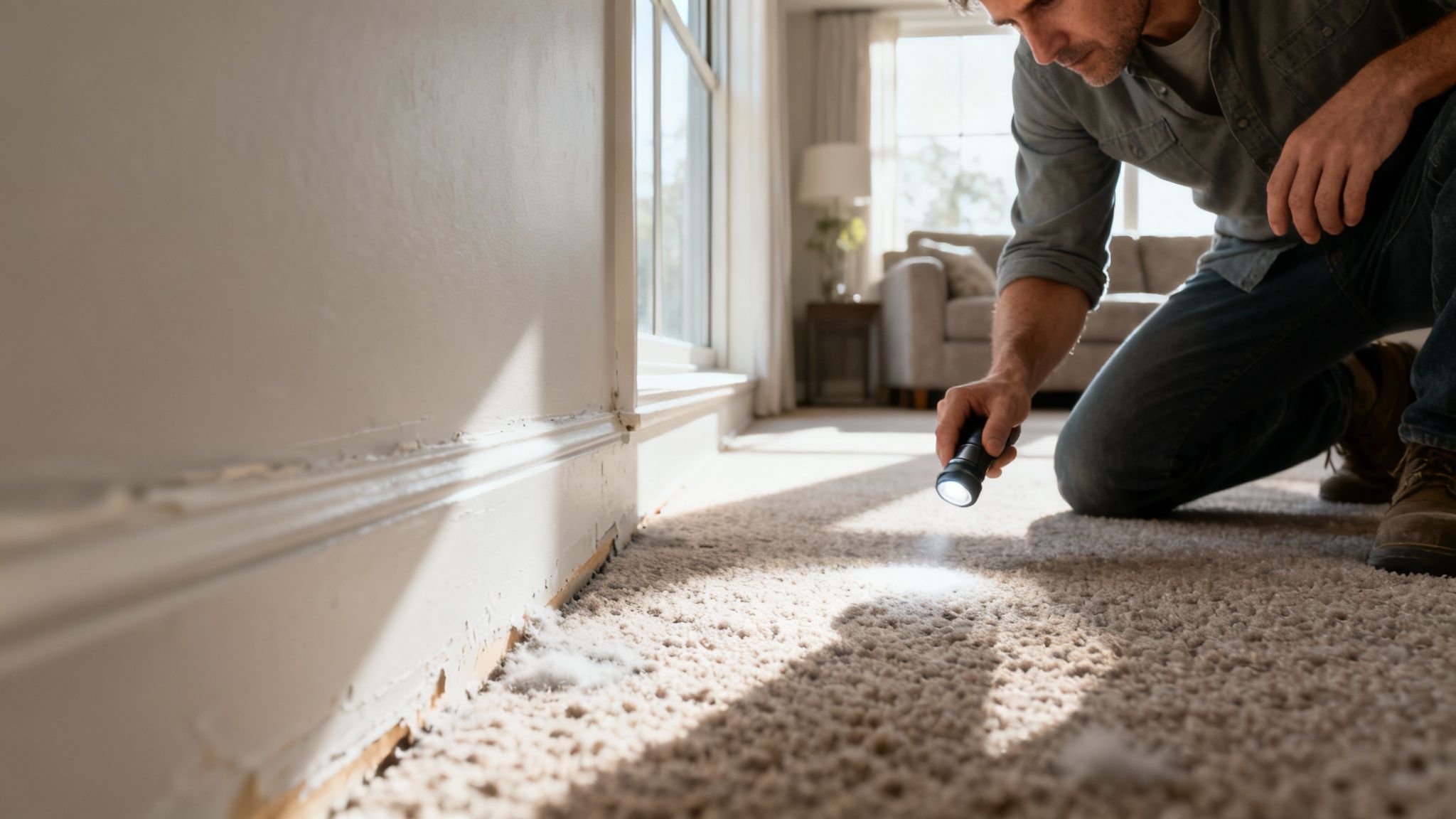
Now it’s time for a walkthrough. Use your senses—especially your nose. Does the smell get stronger as you enter a certain room? Sometimes the source is painfully obvious, but often it’s hiding in plain sight. Pay extra attention to porous materials, because they act like sponges for these odor particles.
Here’s where to focus your search:
- Textiles and Upholstery: Get close and sniff the carpets, curtains, sofas, and chairs. These are notorious for trapping and holding onto smells for months.
- Walls and Ceilings: Look for any discoloration or a sticky film. Check the corners and the areas around air vents, as these spots collect airborne particles.
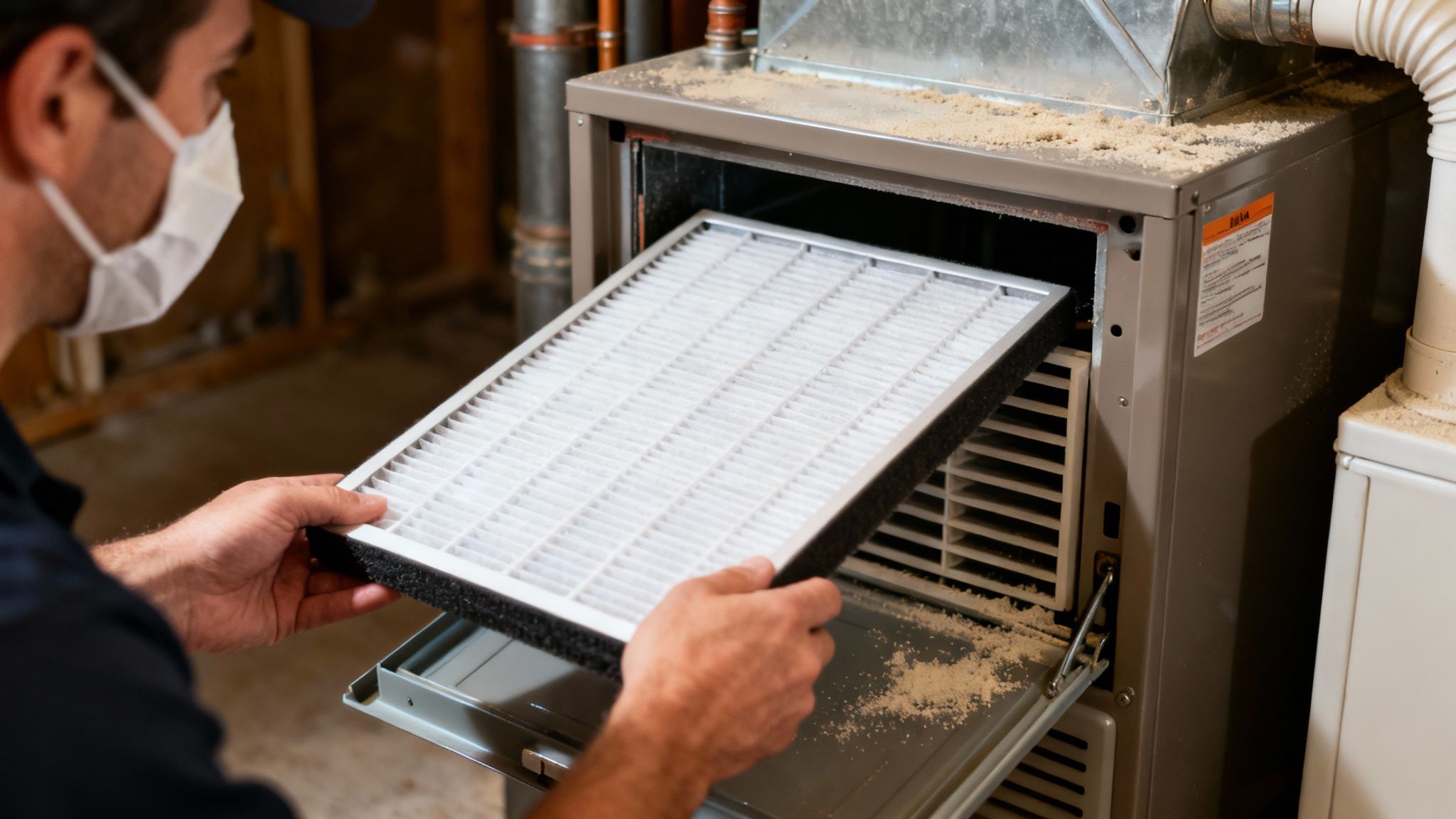
- HVAC System: This is a big one. Your air ducts can become a highway for smoke particles, trapping them and then blowing them right back into your rooms every time the system kicks on. Pull out the air filter—if it’s filthy and smells like smoke, you’ve found a major contributor.
Local Insight: Here in Los Angeles, we see how the local environment makes things worse. In coastal spots like Santa Monica, the marine layer can literally trap wildfire smoke near the ground, forcing it into homes. Head over to an older neighborhood like Sherman Oaks, and you'll find original ductwork that might be holding decades of old residue from all kinds of sources.
Taking the time to do this diagnostic work is essential. It tells you whether a weekend of airing out and some DIY cleaning will cut it, or if the problem has sunk so deep into your home’s structure that you’ll need professional help to truly get rid of the smoke smell in house.
The Unseen Dangers of Lingering Smoke Particles
That stubborn smoke smell isn't just unpleasant—it's a warning sign. It means microscopic, hazardous particles are still embedded in everything from your drywall and carpets to the very air you're breathing. We all know to get away from visible smoke, but the danger doesn't just disappear when the haze clears.
What’s left behind is a toxic film often called thirdhand smoke (THS). This is the chemical cocktail that lingers after tobacco use, a wildfire, or even a serious kitchen fire. Unlike the immediate risk of secondhand smoke, these particles settle deep into your home’s environment, continuing to release harmful compounds long after the fire is out.
What is Thirdhand Smoke?
Think of thirdhand smoke as the ghost of smoke past. It’s a sticky, invisible residue that coats every surface in your home. When these particles mix with common indoor pollutants—like ozone or nitrous acid—they can create new, even more dangerous chemical compounds, some of which are known carcinogens.
This process, called off-gassing, means your home can stay polluted for weeks, months, or even years. This is a huge concern for families, especially those with small children who are crawling on contaminated floors and putting their hands in their mouths, unknowingly increasing their exposure.
The Science of Stubborn Smoke Residue
The sheer persistence of these particles is what trips most people up. Many homeowners assume that once a smoker moves out or a wildfire is contained, a good airing out and some cleaning will solve the problem. Unfortunately, the science tells a very different story.
A landmark 2013 study showed just how tenaciously this residue holds on. Researchers went into homes two months after smokers had left and found that nicotine levels on surfaces and in dust were still dangerously high. In fact, 86% of living rooms still had surface nicotine levels that exceeded the typical cutoff for a smoker's home. You can learn more about how stubborn thirdhand smoke is in this detailed study.
This proves a critical point: Spraying air fresheners only masks the odor; it does absolutely nothing to remove the underlying chemical hazard. You need real remediation to make the indoor environment safe again.
Local Risks in Dense Communities
This problem gets magnified in dense areas like West Hollywood or in apartment buildings all over Los Angeles. Smoke doesn’t care about property lines. Odors and toxic particles can easily drift through shared ventilation, tiny cracks in the walls, or open windows, contaminating your apartment from a neighbor’s unit.
This cross-contamination means that even if your home is smoke-free, you could still be exposed to the health risks from someone else’s habits. For property managers, this is a massive headache when trying to keep all tenants safe. The only real solution is to eliminate the particles at their source.
When a home has suffered a direct fire, the problem is exponentially worse and demands a professional, systematic approach. You can see what that involves in our guide on fire damage restoration service in Los Angeles.
Ultimately, that lingering smoke smell in house is your home’s way of telling you it's contaminated. It’s a clear sign that your surfaces and air contain particles posing a real health risk, and it takes more than a surface-level clean to protect your family.
Your First Response to Minor Smoke Odors
When you catch that first whiff of a faint smoke smell, you’re at a critical crossroads. Acting fast can mean the difference between a minor nuisance and a stubborn, embedded problem that lingers for weeks. For those small incidents—a forgotten pot on the stove or a little smoke from a neighbor's barbecue—your immediate response is everything.
The goal here is simple: flush out the bad air and neutralize the odor particles before they get a chance to settle into your carpets, furniture, and walls. Think of it as first aid for your home’s air.
Start with Aggressive Ventilation
Your most powerful tool, by far, is fresh air. But just cracking one window open won't cut it. You need to create a powerful current that actively pushes the smoky, contaminated air out and pulls clean air in.
This is a strategy we've seen work wonders in homes all across Los Angeles, from hillside houses in Burbank to condos in Beverly Hills. The trick is to create a wind tunnel. Open windows on opposite sides of your house to establish a clear path for air to travel. To really accelerate the process, place a box fan in one of the windows, facing out. This creates a vacuum effect, actively pulling fresh air in through the other openings.
Harness the Power of Household Deodorizers
While the fresh air is doing its job, you can attack the odor particles on a molecular level using some simple things you probably already have in your pantry. These aren't just old wives' tales; they work by absorbing or breaking down the volatile organic compounds (VOCs) that create those nasty smells.
- White Vinegar: This stuff is a natural deodorizing powerhouse. Pour some white vinegar into a few shallow bowls and place them around the rooms that were hit the hardest. The acetic acid works to neutralize alkaline odors. You can also wipe down hard surfaces like countertops and tables with a 50/50 solution of vinegar and water for a more direct approach.
- Baking Soda: Famous for its ability to absorb odors, baking soda is your best friend for anything soft. Sprinkle it generously over your carpets, area rugs, and upholstered furniture. Let it sit for at least a few hours—overnight is even better—to give it time to draw out the smoke particles. Then, vacuum it all up with a vacuum that has a HEPA filter.
- Activated Charcoal: If you want to step up your game, grab some activated charcoal. It’s incredibly porous, making it a super-absorbent material that traps odor-causing molecules. Just place bowls of activated charcoal briquettes (make sure they don't have lighter fluid!) in the areas where the smoke smell in house is strongest.
Pro Tip: We've seen homeowners in Studio City completely knock out a minor kitchen smoke incident in less than 24 hours just by combining aggressive ventilation with strategically placed bowls of vinegar and charcoal. Don't underestimate these simple solutions.
After you’ve done this initial work, you might consider something like using a battery essential oil diffuser for air freshening to help manage any minor, lingering smells. However, if that odor persists after all these efforts, it's a clear signal that the smoke particles have penetrated deeper than any surface-level treatment can reach.
Deep Cleaning Techniques for Every Surface
Once you've aired things out, the real work begins. Smoke particles are incredibly invasive; they don't just float around, they literally bond to surfaces. This means you need a specific game plan, because what works on a kitchen counter won't do a thing for a smoke-logged sofa.
That lingering smoke smell in house is the ghost of those microscopic residues clinging to everything. To truly get rid of it, you have to break that bond and physically remove the particles. This goes way beyond simple wiping—it's a methodical, deep clean.
For minor issues, this flowchart gives you a solid starting point.
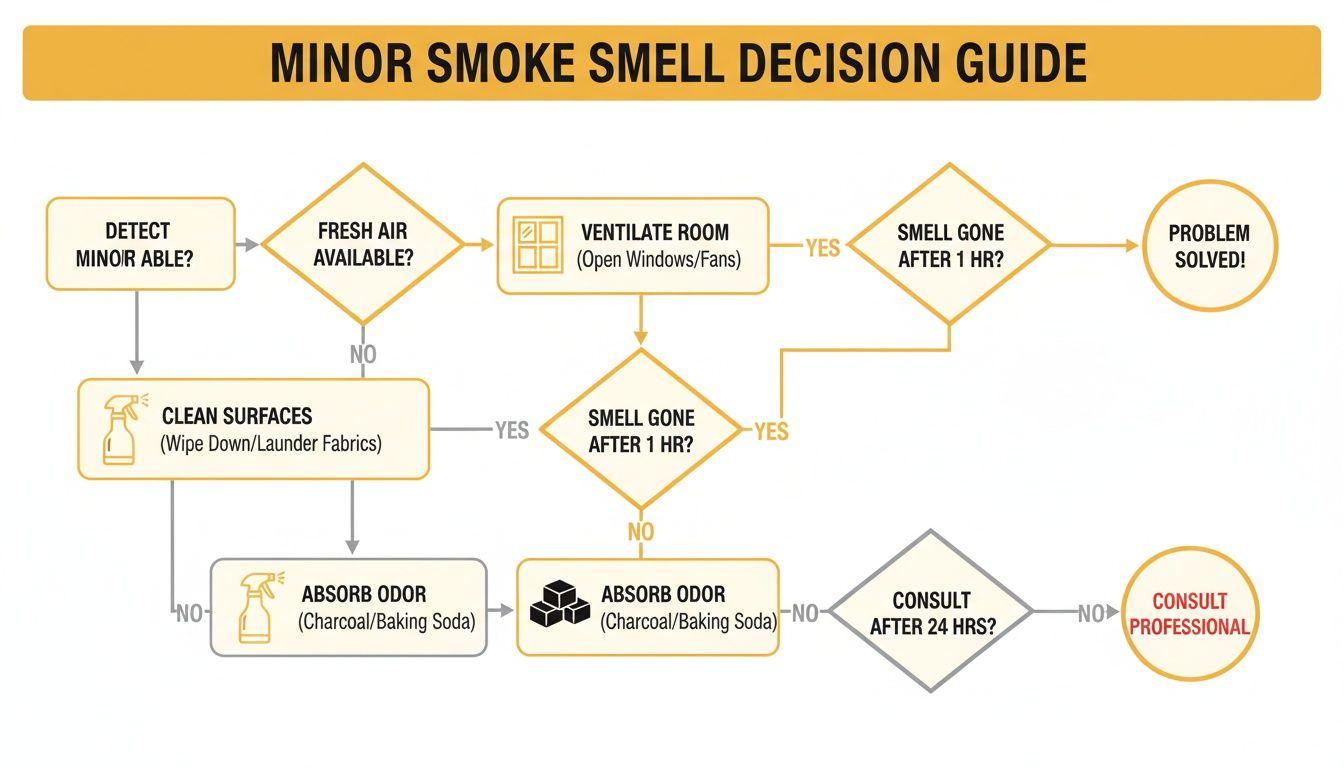
It boils the initial response down to three critical actions: ventilate, clean, and absorb. It's a clear path to follow when you first notice that smell.
Tackling Hard, Non-Porous Surfaces
Hard surfaces—think walls, ceilings, countertops, and baseboards—are notorious for holding onto smoke residue. You'll often see a sticky, yellowish film from tobacco or a greasy soot from a kitchen fire. Just painting over it is a huge mistake. We guarantee the odor will bleed right through in a few months.
These surfaces have to be washed, no exceptions. For light smoke, a simple mix of warm water and white vinegar can sometimes cut it. But for anything more stubborn, you'll need something stronger.
We often use Trisodium Phosphate (TSP) in the field to wash down walls before sealing and painting. It’s a powerful degreaser, but it's serious stuff. You absolutely need proper safety gear, like gloves and eye protection, and must follow the instructions to the letter.
We remember a job in a Sherman Oaks home where a flat-roof leak was complicated by soot stains from the fireplace. The water was one problem, but the soot left these awful, greasy streaks down the walls. A regular wash didn't touch it. We had to deep clean with a professional-grade degreaser before we could even think about repairs. You can see more on how tricky that gets in our guide to soot removal from walls.
Restoring Soft and Porous Materials
Soft materials are like magnets for smoke odors. Their fibers are porous, letting those tiny particles burrow deep inside where they're incredibly difficult to remove.
This is what we're talking about:
- Carpets and Rugs: Sprinkling baking soda and vacuuming is a decent first attempt, but it rarely solves a real problem. You'll likely need a professional steam cleaning. We use equipment that injects hot, deodorizing shampoo deep into the pile and then extracts all that dissolved grime.
- Upholstery and Drapes: Your couch, chairs, and curtains soak up smells just as fast as the carpet. Many can be steam-cleaned, but you have to check the tag for the cleaning code first. Some delicate fabrics might be ruined by water and need a specialized dry-cleaning method instead.
- Clothing and Bedding: For anything washable, run it through the laundry and add one cup of white vinegar to the rinse cycle. That really helps neutralize the odor. For really tough smells, don't be surprised if it takes a couple of washes.
The effectiveness of cleaning methods varies greatly depending on what you're trying to clean. Not everything can be treated the same way.
Call (818) 336‑1800 Now For Help
Smoke Odor Removal Methods by Material
| Material Type | Recommended DIY Method | Professional Treatment Option | Key Consideration |
|---|---|---|---|
| Walls & Ceilings (Painted) | Wash with a TSP or vinegar solution. | Ozone treatment, thermal fogging. | Must be cleaned before priming and painting, or odor bleeds through. |
| Carpet & Rugs | Baking soda treatment, followed by thorough vacuuming. | Hot water extraction (steam cleaning). | Over-the-counter sprays often just mask the smell temporarily. |
| Wood Furniture | Clean with a mild wood soap; air out in the sun. | Professional refinishing, sealing. | The finish can trap odors, requiring deeper treatment. |
| Upholstery & Drapes | Steam cleaning (if safe for fabric); fabric deodorizers. | Dry solvent cleaning, hydroxyl treatment. | Always check the manufacturer's cleaning code (W, S, W/S, X). |
| Clothing & Linens | Launder with vinegar added to the rinse cycle. | Specialized dry cleaning. | May require multiple washes for heavy smoke contamination. |
This table illustrates why a one-size-fits-all approach just doesn't work for smoke damage. The right technique is crucial for success.
Dont Forget The Overlooked Areas
The most annoying smoke smells are the ones hiding where you'd never think to look. Smoke particles are tiny and follow airflow, settling into every last nook and cranny.
Your cleaning checklist absolutely must include these spots:
- Light fixtures and even the lightbulbs themselves
- Inside all your cabinets and drawers
- Electronics (their fans suck in smoky air)
- Window blinds and screens
And don't stop at your front door. The outside of your home can hold onto smoke odors, too, especially after a nearby wildfire. For a complete solution, methods like pressure washing your house can strip soot and residue from siding, brick, and concrete. It’s about tackling the problem from every single angle.
Clearing Smoke Odors from Your HVAC System
If you’ve scrubbed every surface and the smoke smell in house just won’t quit, it’s time to look at your HVAC system. Think of your ductwork as the circulatory system of your home. It's incredibly efficient at spreading smoke particles, soot, and odor into every single room.
Turning on your AC or heat can instantly re-contaminate a space you just spent hours cleaning. That’s why addressing the HVAC system isn’t just a recommendation—it’s an essential, non-negotiable step for getting rid of the odor for good. Skipping it is like mopping the floor while someone keeps walking in with muddy boots. You're just undoing all your hard work.
Start with the Air Filter
The first and easiest move is to replace every air filter in your system. A standard filter is built to catch dust and dander, but it stands no chance against the microscopic particles found in smoke. You'll need an upgrade.
Look for a high-efficiency particulate air (HEPA) filter or, at the very least, a filter with a MERV rating of 11 or 12. These are designed specifically to trap smaller, lung-damaging particles like those from wildfire or tobacco smoke. This one change can make a noticeable difference in your indoor air quality almost immediately.
Why Professional Duct Cleaning is Crucial
Changing the filter is a great start, but it doesn't touch the residue already caked onto the inside of your ducts. Over time, that buildup of smoke particles becomes a constant source of odor, releasing foul smells every time air flows through. Trust us, this is not a DIY job.
Professional air duct cleaning requires powerful, specialized equipment:
- High-Powered Vacuums: Technicians use truck-mounted vacuums to create negative air pressure, pulling all the dust and debris out of the system without blowing it back into your home.
- Agitation Tools: Long, flexible brushes and compressed air whips are sent through the ducts to break loose the stubborn, sticky smoke residue from the interior surfaces.
- Systematic Cleaning: The process hits every component, from the supply and return ducts to the registers, grilles, and the air handler itself.
This thorough cleaning physically removes the source of the odor. It's the only way to ensure your ventilation system is no longer working against you.
Advanced Deodorization for Stubborn Odors
For severe smoke contamination, even a deep cleaning might not be enough. Odor molecules can actually penetrate the metal of the ductwork. In these tough cases, restoration professionals like us deploy advanced tech to neutralize what can't be physically removed.
Two of the most effective methods are:
- Ozone Treatment: An ozone generator fills the sealed-off HVAC system with O3 gas. This unstable molecule aggressively attaches to and oxidizes odor-causing particles, literally destroying them. It’s an incredibly powerful but hazardous process that requires the home to be completely unoccupied.
- Thermal Fogging: This technique uses a special machine to heat a solvent-based deodorizer into a fine, smoke-like fog. The fog permeates the entire HVAC system, mimicking the behavior of the original smoke to reach every last crevice and neutralize embedded odors on contact.
These advanced treatments are highly effective but require certified technicians and specialized equipment to be done safely. For persistent issues, learning about an air scrubber rental can also give you insight into how pros manage airborne contaminants during a restoration project.
When the smoke smell in house has infiltrated your HVAC, a professional approach is the only real path to clean, fresh air.
Knowing When to Call a Restoration Professional
While it's tempting to tackle smoke odor yourself, there’s a clear line where household sprays and elbow grease just don’t cut it. Knowing where that line is can save you from wasted time, ineffective products, and lingering health risks for your family.
This isn’t about giving up; it’s about recognizing when you’re up against something that requires specialized tools and expertise. Ignoring the signs of a deep-seated problem can mean that stubborn smoke smell comes roaring back weeks or even months later.
Large Scale Events Like a House Fire
This one is a no-brainer. If your property has had any kind of fire—even a small one that was put out quickly—the cleanup is far beyond a DIY job. What’s left behind isn't just soot you can wipe away; it's a toxic cocktail of char, chemical residues, and microscopic particles that are hazardous to your health.
This kind of work demands personal protective equipment (PPE) for a reason. Our professional crews gear up in full-body suits, respirators, and heavy-duty gloves because they’re trained to handle materials you should never touch or inhale. Trying to manage this level of contamination without the right gear is a serious gamble with your well-being.
The Odor Persists or Returns
So you’ve aired out the house for days, scrubbed every surface, and even rented a carpet cleaner, but that stale smoke smell in house just won’t die. It might fade for a day or two, but it always comes back.
This is the classic sign that smoke particles have gone deeper than the surface. They’ve worked their way into places you simply can't reach:
- Drywall and the insulation behind it
- The wood framing of your home and the subfloors
- Your HVAC system and all the connecting ductwork
- Porous materials like unsealed concrete or brick
No amount of surface-level cleaning will ever get to those embedded particles. They will continue to release odors, a process called off-gassing, especially when the weather gets warm and humid. If your best efforts only bring temporary relief, it’s a clear signal you need professional backup.
When Wildfire Smoke Permeates the Home
Wildfire smoke is a different beast entirely. Its particles are incredibly fine, allowing them to travel for hundreds of miles and sneak into your home through the smallest cracks around windows, doors, and vents. The health effects are no joke, and they can stick around long after the air outside looks clear.
Recent research drives this point home. After Colorado's 2021 Marshall Fire, a study revealed that 55% of residents whose homes still smelled smoky just one week later were suffering from symptoms six months down the road. These weren’t minor complaints—we’re talking persistent headaches, itchy eyes, and nagging respiratory issues. It proves the smell is a direct indicator of ongoing exposure.
What you're smelling can actively harm you. If your home was in the path of a wildfire and the odor is lingering, a professional assessment is critical to make sure your indoor air is safe to breathe.
Benefits of Hiring a Certified Restoration Company
Calling in a professional isn’t throwing in the towel—it’s choosing a guaranteed fix. A certified company like Onsite Pro Restoration arrives with an arsenal of technology and knowledge the public can't access. We use commercial-grade equipment like thermal foggers, ozone generators, and hydroxyl machines that don't just mask odors—they destroy the smoke molecules at their source.
These experts know the science behind smoke and odor behavior. They can pinpoint exactly where the problem is hiding. By hiring a professional restoration team, you get a systematic, proven process that ensures the smoke smell is gone for good, leaving your home truly clean and safe.
Frequently Asked Questions About Removing Smoke Smell
After a fire or even just years of indoor smoking, you're bound to have questions. Everyone does. Navigating the cleanup process, especially with that stubborn smoke smell in the house, can feel overwhelming. Here are some of the most common questions we get from Los Angeles homeowners, along with straight-forward, practical answers.
Q: How Long Does It Take to Get Rid of Smoke Smell in a House?
A: The timeline varies widely. A minor cooking incident might air out in a day with good ventilation. However, odors from long-term smoking or a house fire can take weeks of DIY cleaning and may never fully disappear. Professional restoration using advanced equipment like thermal foggers can typically eliminate severe odors completely within 3 to 5 days.
Q: Does Homeowners Insurance Cover Smoke Odor Removal?
A: Generally, yes, if the smoke is from a covered event like a house fire or furnace malfunction ("puffback"). However, policies rarely cover odors from long-term issues like cigarette smoking, as that's considered a maintenance issue. Always document the damage and check with your insurance agent about your specific policy.
Q: Is It Safe to Stay in a House That Smells Like Smoke?
A: It's not recommended, particularly for children, the elderly, or anyone with respiratory conditions. The smell indicates the presence of microscopic soot and potentially toxic compounds in the air and on surfaces. These can cause everything from headaches to more serious long-term health problems. See more details in our odor removal service FAQ.
Q: Can Painting Over Walls Eliminate a Smoke Smell?
A: No, this is a common and costly mistake. Painting only traps the oily residue temporarily. The odor molecules will eventually bleed through the new paint, and the smell will return. The proper method is to first wash the walls with a powerful degreasing agent like TSP, apply an odor-blocking primer, and only then apply the final coat of paint.
Dealing with a persistent smoke smell can be frustrating and exhausting. Let the certified experts at Onsite Pro Restoration take the burden off your shoulders. We use proven, industry-leading technology to guarantee complete odor removal, making your home safe, fresh, and livable again. Call us 24/7 for a free assessment and breathe easier today.