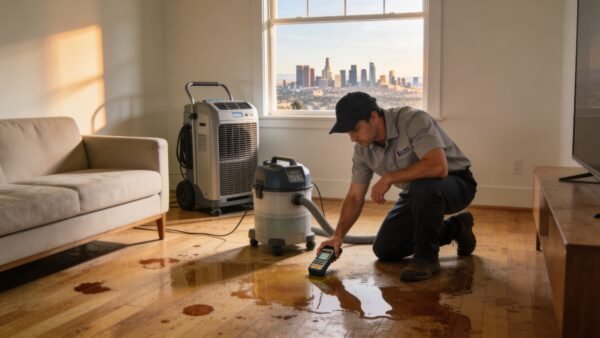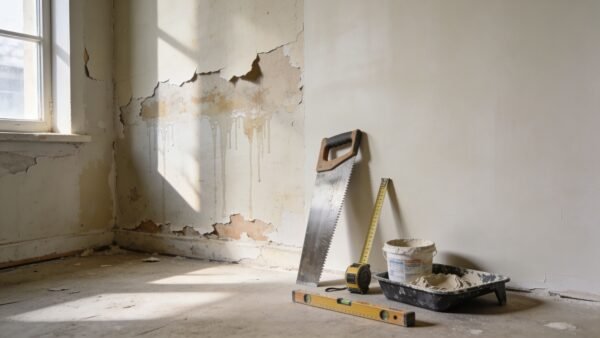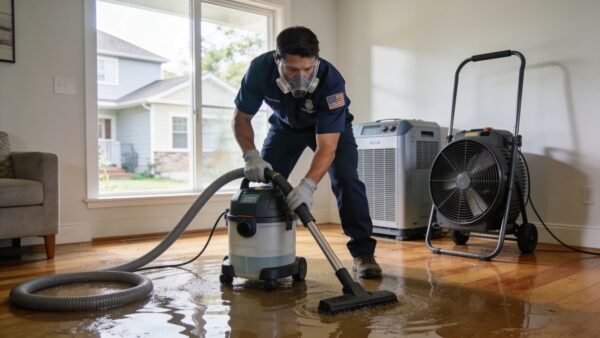

When disaster strikes your Los Angeles property, whether it's a burst pipe in the Valley or smoke damage from a nearby wildfire, you need more than a simple cleanup crew. You need a team of certified specialists who understand the science behind putting things back together. Think of pro restoration services as an emergency response team for your building, working to bring it back to its pre-damage state through a careful process of assessment, mitigation, and repair.
Getting professionals on-site immediately is critical. It’s often the difference between a quick recovery and battling persistent problems for months. Delays almost always lead to secondary damage, like mold blooming after a hidden water leak from a flat-roof in Sherman Oaks or soot permanently staining surfaces after a small kitchen fire.
Get a Free Damage Assessment Now
What Are Professional Restoration Services?
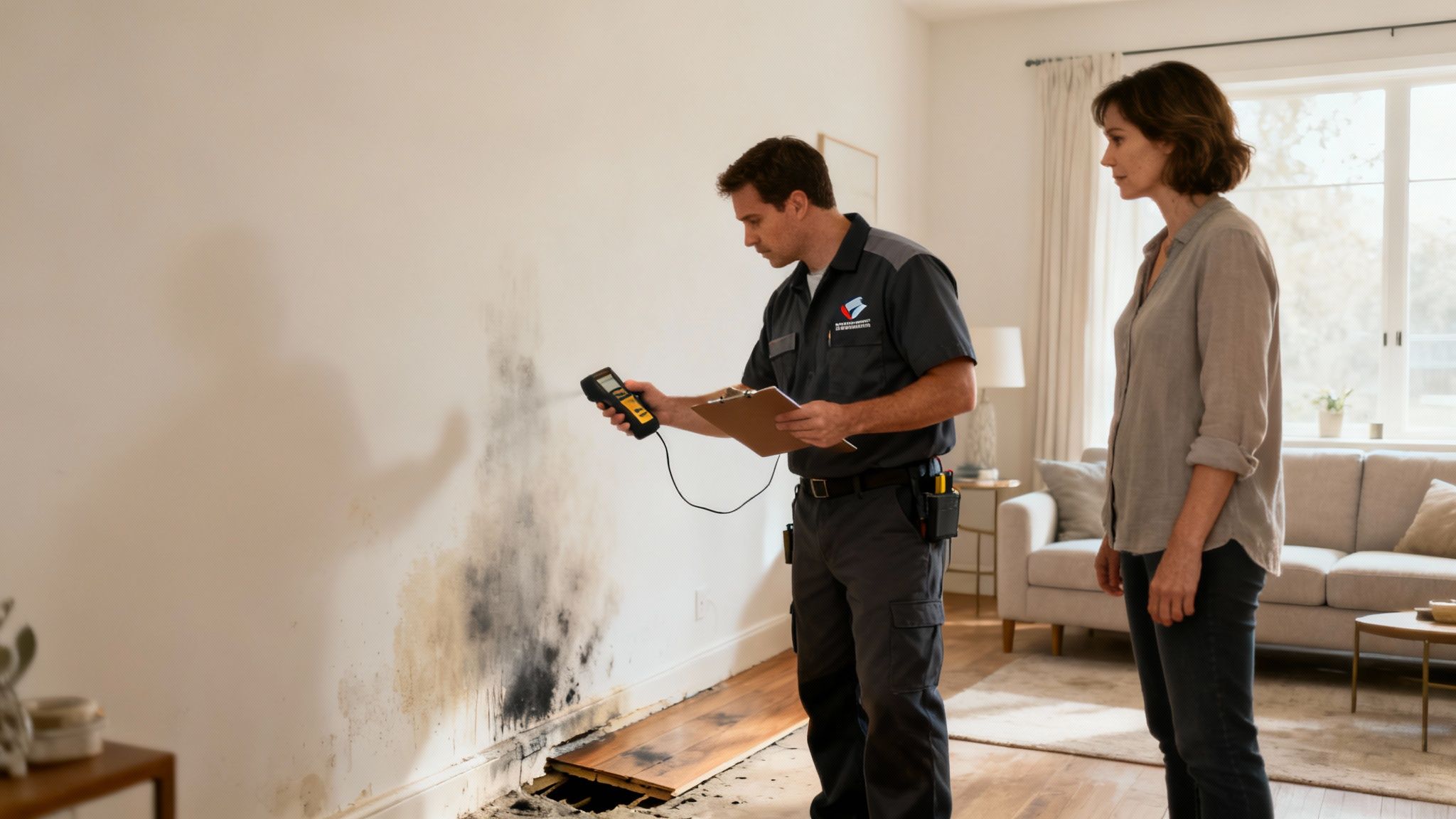
Simply put, pro restoration services are the bridge from a catastrophic event back to normal life. A general contractor or cleaning service just doesn't have the training to handle the complex aftermath of serious damage. The goal isn't just to patch a hole or wipe a surface clean; it's to prevent the long-term issues that pop up when damage isn't treated correctly, a common problem in Southern California's varied microclimates.
Core Types of Restoration Work
The restoration field is highly specialized, with experts focusing on specific types of property damage. Each category demands unique equipment, strict safety protocols, and a deep understanding of the science involved. To give you a clearer picture, here’s a quick breakdown of the main service types and what they aim to achieve.
Overview of Pro Restoration Service Types
| Service Type | Common Causes | Primary Goal |
|---|---|---|
| Water Damage Restoration | Burst pipes, flooding, roof leaks, appliance failures | Extract all moisture (seen and unseen), dry the structure, and prevent mold growth. |
| Fire Damage Restoration | Kitchen fires, electrical malfunctions, wildfires | Repair structural damage, remove soot/smoke residue, and eliminate lingering odors. |
| Mold Remediation | Chronic leaks, high humidity, coastal fog in Santa Monica | Contain and remove mold, clean the air, and fix the underlying moisture problem. |
| Biohazard Cleanup | Sewage backups, trauma scenes, chemical spills | Safely remove hazardous materials and thoroughly sanitize the entire affected area. |
As you can see, each service tackles a very different set of problems, requiring a targeted and scientific approach to get the job done right.
Why Certified Professionals Are Essential
Hiring a certified company isn't just a good idea—it's a necessary investment in your property's future. These teams show up with industrial-grade dehumidifiers, HEPA air scrubbers, and specialized cleaning agents that are worlds away from what you can buy at a store. But more importantly, they understand the chemistry and physics behind the damage.
A professional restoration company doesn't just clean up the mess; they restore the health and safety of your environment. They know how to test for hidden moisture, identify toxic residues, and ensure the air you breathe is clean after the job is done.
By understanding the key types of damage restoration services, it becomes clear why a specialized, professional approach is the only way to guarantee a safe and complete recovery.
Understanding the Four Pillars of Property Restoration
Property damage isn’t a one-size-fits-all problem. Think of a restoration company like a hospital—you wouldn't send a burn victim to the cardiology department. The same logic applies here. Pro restoration services are built on four core disciplines, each demanding its own set of tools, training, and scientific know-how.
Getting a handle on these specialties shows you why a general contractor just won't cut it. When your property is on the line, you need a certified expert who knows exactly which battle they're fighting.
Pillar 1: Water Damage Restoration
Water is hands-down the most common culprit behind property damage, but its impact is rarely simple. We're talking about everything from a slow, hidden leak festering inside a wall to a full-blown flood from a burst pipe. The real goal isn’t just mopping up what you can see; it’s about scientifically pulling every last drop of moisture out of the building’s bones.
Technicians use gear like thermal cameras and moisture meters to hunt down water trapped in drywall, subfloors, and insulation. The process is a careful sequence:
- Water Extraction: High-powered pumps and vacuums get rid of all standing water.
- Evaporation: Industrial-grade air movers are set up to create a vortex of airflow, speeding up the drying process.
- Dehumidification: Massive commercial dehumidifiers work to pull all that evaporated moisture out of the air and materials.
If this process is rushed or done incorrectly, you're looking at warped floors, crumbling drywall, and a serious mold problem down the road. This is especially true for incidents involving contaminated water, which often require professional sewer and drain services and pose significant health risks.
Pillar 2: Fire Damage Restoration
A fire is a double-edged sword. First, you have the direct destruction from the flames. But what often causes more lasting damage is the aftermath: the smoke and soot that gets into everything.
Soot is nasty, acidic stuff that can permanently etch glass, metal, and stone if it's not cleaned up fast. Smoke is even sneakier. Its microscopic particles invade every porous surface—wood, upholstery, drywall—leaving behind a stubborn odor that’s impossible to ignore.
Fire restoration is a science of removal and deodorization. It requires neutralizing acidic residues and eliminating odor-causing particles at a molecular level, a task far beyond the scope of standard cleaning.
Specialists use advanced methods like media blasting to scour soot from beams and thermal fogging to neutralize odors embedded deep inside building materials. For a closer look at these techniques, a complete guide on fire damage and the restoration process can shed more light.
Pillar 3: Mold Remediation
Mold is the silent invader. It thrives in the dark, damp corners of a home—behind walls, under floorboards, or in humid attics. It’s not just ugly; mold can literally eat away at your home’s structure and release allergens and mycotoxins that wreck your indoor air quality.
Professional mold remediation is a highly controlled operation designed to stop the problem from spreading. It’s not just about cleaning; it’s about containment.
- Containment: The affected area is sealed off with plastic sheeting, and negative air pressure machines are used to ensure spores can't escape.
- Removal: All mold-infested materials, like drywall or insulation, are carefully cut out and disposed of in sealed bags.
- Cleaning: HEPA vacuums and powerful antimicrobial agents are used to clean every surface within the contained zone.
- Source Correction: Most importantly, the original moisture problem that fed the mold is found and fixed for good.
Just spraying bleach on a moldy spot is a waste of time. It doesn't kill the roots and can actually blast spores into the air, making things worse. Real remediation gets rid of the colony and its life source.
Pillar 4: Biohazard Cleanup
This is the most serious and heavily regulated field in the restoration world. Biohazard cleanup involves safely removing, cleaning, and disinfecting any area contaminated with materials that pose a health threat. Think sewage backups, trauma scenes, or viral and bacterial outbreaks.
Technicians working in this area must follow ironclad protocols from OSHA and the EPA. This work demands full personal protective equipment (PPE), hospital-grade disinfectants, and an unwavering, step-by-step process to render a space sterile and safe again. It’s a critical service that requires total professionalism and discretion.
The need for these specialized services is on the rise. In the U.S., the restoration industry is growing fast, with a projected market size of $7.1 billion in 2025. That reflects a compound annual growth rate of about 4.5% since 2020, fueled by an uptick in severe weather and a greater public understanding of why professional help is non-negotiable.
Breaking Down the Professional Restoration Process, Step by Step
From that first panicked phone call to the final walkthrough, the journey with a pro restoration service isn't random—it's a structured, scientific process. Knowing what to expect can bring a sense of order to a chaotic time, giving you a clear roadmap from disaster to recovery. Every reputable company follows a similar set of steps designed to be thorough, safe, and efficient.
This infographic shows the four main pillars of restoration—Water, Fire, Mold, and Biohazard—each demanding its own expert approach.
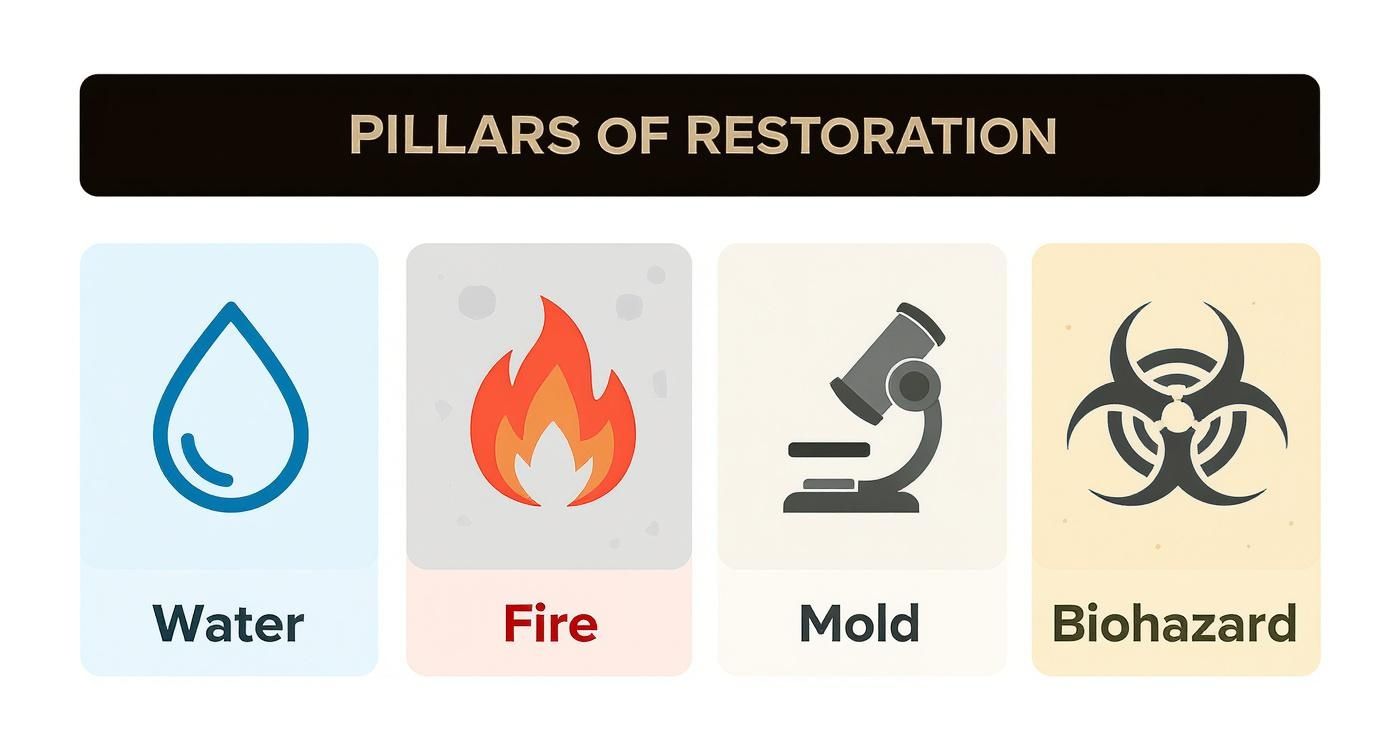
Think of it this way: you wouldn't use the same tools to fix a plumbing leak as you would to clean up after a fire. Each type of damage requires a unique, specialized response to get things back to normal safely.
Step 1: The First Call and On-Site Assessment
It all starts the moment you reach out. A true 24/7 emergency service will dispatch a team, often within the hour, to get eyes on the situation. This isn't just a quick look-around; it's a deep dive to figure out the extent of the damage, pinpoint the source, and map out an immediate game plan.
Crews use tools like moisture meters and thermal imaging cameras to see what the naked eye can't, like water hiding behind a wall. This first step is absolutely critical for creating an accurate estimate and giving your insurance company the initial proof they need to get a claim started.
Step 2: Securing the Site and Stopping Further Damage
Once the team understands the scope, the top priority is stopping the bleeding. This is the mitigation phase, where professionals act fast to stabilize your property and prevent the problem from getting any worse.
- Property Lockdown: This might mean boarding up broken windows, tarping a damaged roof, or putting up temporary fencing to keep the property safe from weather or intruders.
- Shutting Off the Source: If water is the culprit, technicians will immediately find and stop the source, whether it's a burst pipe or a faulty appliance.
- Safety First: In many cases, utilities like electricity and gas will be shut off to eliminate the risk of electrocution or fire.
This proactive work contains the issue and creates a controlled environment for the rest of the job, saving you a fortune in potential secondary damages.
Step 3: Water Removal and Structural Drying
For any job involving water, this is where the real science comes in. Pros use industrial-grade pumps to get rid of standing water, but the real work is extracting moisture that's soaked deep into building materials. You can get a closer look at this entire phase by learning about the water damage restoration process.
The goal isn't just to make things feel dry. It’s about returning materials to their normal, pre-damage moisture levels—a scientific benchmark that stops mold and prevents structural rot down the road.
You'll see high-velocity air movers and massive commercial dehumidifiers running around the clock. These machines work together to pull moisture out of drywall, wood studs, and subflooring. Technicians monitor the progress daily, taking readings to ensure everything is drying out correctly.
Step 4: Deep Cleaning, Sanitizing, and Debris Removal
With the property stable and dry, the real cleanup begins. This is far more intense than your average house cleaning. Technicians use specialized methods and cleaning agents designed for the specific type of damage.
- For Fire Damage: Crews meticulously scrub away soot and smoke residue from every surface. They often use thermal fogging or ozone treatments to permanently eliminate odors at a molecular level.
- For Mold Remediation: Contaminated materials are carefully removed inside a contained area, and all remaining surfaces are treated with powerful antimicrobial agents to kill off any lingering spores.
- For Biohazard Cleanup: All contaminated items are disposed of following strict federal and state regulations. The entire area is then thoroughly disinfected to make it safe for people to occupy again.
Step 5: The Final Restoration and Rebuild
The last step is all about putting things back together and returning your property to the way it was before the disaster. This could be as simple as replacing some drywall and painting, or as complex as a full-scale reconstruction involving framing, flooring, and new cabinetry.
This is where your property truly comes back to life. Before kicking off this phase, it helps to have a solid handle on the costs; it's smart to build a home renovation budget calculator to keep things on track. A high-quality restoration firm will manage this entire process, making sure every repair matches the original look and feel of your home or business.
How to Navigate Insurance Claims for Los Angeles Restoration Work
Dealing with property damage is stressful enough. Trying to navigate an insurance claim on top of it can feel like a second disaster.
But here’s the good news: with the right partner, you can manage your claim with confidence and get the coverage you deserve. This is where a pro restoration service becomes your most valuable ally, shifting from a simple repair crew to your expert advocate.
A top-tier restoration company does more than just fix the damage. They speak the same language as your insurance provider, ensuring every last detail of your loss is meticulously documented and defended.
Your Restoration Company Is Your Advocate
Think of your restoration team as a translator between you and the insurance company. They know exactly what adjusters need to see to approve a claim quickly and fairly. Their goal is to return your property to its pre-loss condition, and that includes helping you secure the financial resources to make it happen.
This partnership is critical. Insurance adjusters aren't there to give you the benefit of the doubt; they're looking for clear, detailed, and defensible proof of the damage. A professional restoration team provides exactly that, leaving no room for lowball offers or unnecessary delays.
Using Industry-Standard Software for Accurate Estimates
One of the most powerful tools in our arsenal is specialized estimating software, with Xactimate being the undisputed industry gold standard. This isn't just a spreadsheet. It's a massive, dynamic platform packed with thousands of line items for materials and labor, with costs updated in real-time for specific locations like Los Angeles.
When your restoration project manager builds an estimate in Xactimate, they are creating a report your insurance adjuster instantly understands and trusts. This report includes:
- Detailed Line Items: Every single task, from tearing out wet drywall to applying antimicrobial spray, is listed and justified.
- Precise Measurements: The exact square footage of every affected surface is calculated, removing all guesswork.
- Localized Pricing: All costs for materials and labor are based on current market rates in your specific zip code.
This level of detail creates a transparent, data-driven claim that is far more likely to be approved without a fight.
Understanding Key Policy Differences
Not all damage gets the same treatment from insurers, and the language in your policy can be downright confusing. An experienced restoration pro can help you understand the crucial details of your coverage. For example, there's a huge difference between "water damage" and "flood damage."
A standard homeowner's policy almost always covers sudden and accidental water damage, like a burst pipe. However, it will exclude damage from "flooding," which is defined as rising surface water coming from outside. That requires a completely separate flood insurance policy from the National Flood Insurance Program (NFIP).
Knowing these distinctions is vital. Our team can help you understand what your policy says, and you can learn more in our guide to homeowner's insurance coverage for water damage. This knowledge empowers you to have more effective conversations with your insurance provider. The insurance restoration contracting market is a major part of the industry, expected to top $4 billion in revenue in 2025 as jobs in the sector grow to over 372,000. It's a clear sign of how vital professional documentation is to the whole process.
When you partner with a seasoned pro restoration service, you're not just hiring a cleanup crew. You're hiring an advocate who streamlines communication, minimizes your out-of-pocket costs, and takes a huge amount of stress off your shoulders.
How To Choose The Right Pro Restoration Service in Los Angeles
When your home is flooding or filled with smoke, the urge to hire the first company that picks up the phone is overwhelming. But taking a moment to make a clear-headed choice is the single most important decision you'll make in the entire recovery process. It's a methodical decision, not a panicked one.
The residential restoration market is booming—it's projected to hit $25 billion by 2025 with a steady 6% annual growth rate. This surge, often fueled by an increase in climate-related disasters, has attracted a mix of seasoned experts and opportunistic, underqualified outfits. Knowing how to spot the difference is crucial to protecting your home and your wallet.
Non-Negotiable Qualifications
Before you dive into the specifics of your damage, you need to check a company's fundamental credentials. These aren't just "nice-to-haves"; they are the absolute baseline for any legitimate pro restoration service. If a company hesitates or can't provide these, hang up and move on.
- IICRC Certification: The Institute of Inspection, Cleaning and Restoration Certification (IICRC) is the gold standard in our industry. An IICRC-certified firm means its technicians are trained using the latest, science-backed methods for water, fire, and mold remediation. It's proof they know what they're doing.
- Proper Licensing and Insurance: Your chosen company must be licensed to operate in California and carry full general liability and worker's compensation insurance. This is your shield. It protects you from any liability if an accident occurs on your property during the job.
- 24/7 Emergency Availability: Disasters don’t clock out at 5 p.m., and neither should your restoration team. A true emergency service has a live person answering calls and a crew ready to roll out, 24 hours a day, 365 days a year.
Evaluating Experience And Reputation
Once you've confirmed the essentials, it’s time to look deeper at their track record. A company's history in the community speaks volumes about the quality of their work and their dedication to their clients.
A solid local presence is a huge green flag. Look for a company with a physical office nearby and years of experience handling problems specific to Los Angeles—from sudden pipe bursts in Sherman Oaks to the unique moisture challenges along the coast in Santa Monica. Finding a reliable water damage restoration company near you means they already understand local building codes and climate quirks.
Online reviews are a raw, unfiltered look into a company's performance. You're not looking for perfection, but patterns. Do customers consistently praise their communication, professionalism, and fair pricing? A couple of grumpy reviews can happen to anyone, but a recurring theme of complaints is a major warning sign.
Don’t be shy about asking for references from past jobs similar to yours. A confident, reputable company will have no problem connecting you with past clients who can vouch for their expertise and service.
Vetting A Potential Restoration Partner
To help you make a smart, informed decision, we've put together a checklist. Use it to compare potential companies side-by-side, moving beyond just the price tag to evaluate the factors that actually determine a successful restoration project.
This structured approach ensures you're asking the right questions from the start.
Restoration Company Vetting Checklist
| Qualification | Why It Matters | What to Ask For |
|---|---|---|
| IICRC Certification | This ensures their team is trained to the highest industry standards for both safety and effectiveness. | "Can you provide proof of your IICRC firm certification?" |
| Insurance Claims Experience | An experienced partner acts as your advocate, helping to streamline the claims process and maximize your coverage. | "Which insurance carriers have you worked with? Can you describe your process for documenting a claim?" |
| Local Reputation | A strong local presence indicates stability, accountability, and familiarity with regional challenges. | "How long have you served the Los Angeles area? Can you provide recent local references?" |
| Response Time | In an emergency, every minute counts. A fast response is critical to mitigating damage and preventing secondary issues like mold. | "What is your guaranteed emergency response time to my location?" |
Taking the time to run through this list can save you from a world of headaches down the road, ensuring you partner with a team that will get the job done right the first time.
FAQ About Pro Restoration Services in Los Angeles
When your property is suddenly hit with damage, it’s normal to feel overwhelmed. Your head is probably spinning with questions. The world of pro restoration services can feel a little technical, but a few straightforward answers can make all the difference when you’re trying to figure out your next steps. Let's clear up some of the most common things homeowners and property managers ask.
Q: How long does property restoration usually take in Los Angeles?
A: The timeline depends entirely on the type and scale of the damage. A small leak from a kitchen pipe caught right away can often be handled in just 3 to 5 days. This includes water extraction, drying, and minor repairs. However, a serious house fire can take months, involving structural repairs, extensive soot removal, and rebuilding entire sections of the home. A reputable company will provide a detailed project timeline after a full on-site assessment.
Q: Is it safe to stay in my house during restoration?
A: For your own health and safety, it's almost always best to find temporary housing. A restoration work zone can have structural dangers, poor air quality from mold or soot, and loud, heavy equipment. Your project manager will coordinate with your insurance adjuster to determine if relocation is necessary, but in most cases, it is a non-negotiable safety measure to protect you and your family.
Q: What’s the difference between restoration and remodeling?
A: People often confuse the two, but they are very different. Restoration is the science of returning your property to its pre-loss condition. The goal is to repair and replace what was damaged to make it exactly as it was before the incident. Remodeling is a choice to upgrade or change your property’s design. While you can sometimes incorporate upgrades, the core focus of pro restoration services is recovery, not redesign.
Q: Do I have to use the company my insurance provider recommends?
A: Absolutely not. This is a critical piece of information every Los Angeles property owner should know. You are not obligated to use your insurance company’s “preferred” vendor. You have the legal right to choose any licensed and certified restoration contractor you trust to be your advocate. Your chosen company will use the same industry-standard software and documentation to ensure a smooth claims process, regardless of who you hire.
When disaster strikes, you need a team you can trust to respond quickly and professionally. Onsite Pro Restoration is IICRC-certified and available 24/7 to handle any water, fire, or mold emergency in the Los Angeles area. Get a free, no-obligation assessment by calling us today or visiting our website.