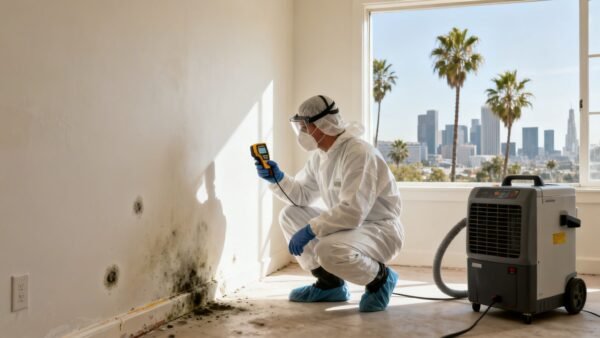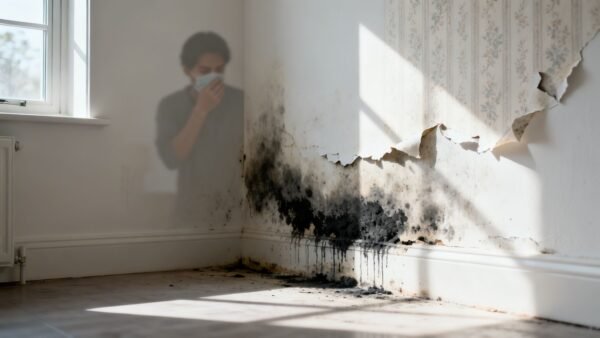

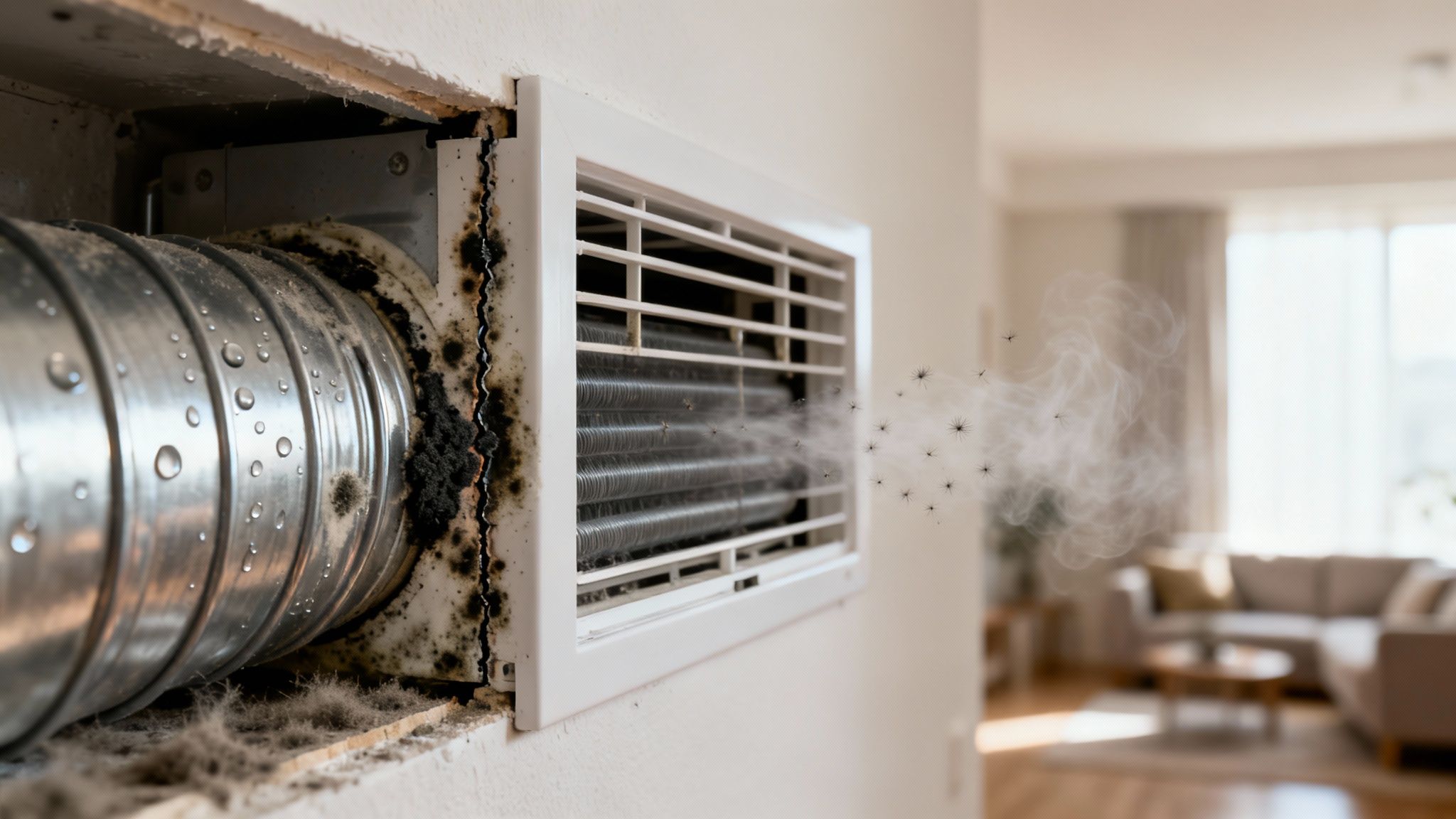
Your air conditioner is a lifesaver during a Los Angeles heatwave, but its dark, cool ductwork can secretly become a perfect breeding ground for mold. The moment humid air meets cold coils, condensation forms. Mix that moisture with a little trapped dust, and you've created an ideal environment for mold in air conditioning ducts. Once it takes hold, your AC system can circulate harmful spores throughout your entire home every single time it kicks on.
Don't wait for a musty smell to become a major health concern. Understanding the risks and knowing when to call a professional is crucial for every Southern California homeowner.
Why Your AC System Is a Perfect Hiding Place for Mold
Think of your HVAC system as the lungs of your home. It breathes air in, conditions it, and exhales it into every room. But just like lungs can get sick, your AC system can become contaminated. The main culprit is its core function—cooling air—which naturally creates moisture through condensation. This is especially true on humid days near the coast in Santa Monica or during a brutal San Fernando Valley summer.
This moisture, combined with the organic material that inevitably gets pulled into the system (dust, pollen, skin cells), is the perfect recipe for mold growth. The dark, enclosed environment of the ductwork shields it from UV light, allowing it to flourish completely undisturbed. What starts as a tiny, unseen patch on an evaporator coil can quickly spread, turning your home's air delivery system into a spore distribution network.
Key Factors for Mold Growth
Several elements have to come together to turn your AC ducts into a mold incubator, and they're all too common in Southern California homes.
- Excessive Moisture: While some condensation is normal, a clogged condensate drain line or an overflowing drain pan creates pools of standing water inside the unit—a constant water source.
- Organic Food Source: Dust isn't just dirt. It’s made of skin cells, pet dander, and other tiny organic particles that are basically a buffet for mold.
- Darkness: Mold thrives where the sun doesn't shine. Your air ducts provide the perfect dark channels for it to grow unchecked.
- Stagnant Air: When the system is off, the air inside the ducts sits still, giving spores plenty of time to settle on surfaces and start a new colony.
Understanding these factors is the first step in preventing a major contamination problem. Even a seemingly minor issue, like a slow drip from a flat-roof leak in Sherman Oaks that dampens attic insulation near a duct, can create the exact conditions mold needs to take hold.
To help you connect the dots, this table gives a quick overview of the most common signs you might notice, what’s likely causing them, and the potential impact on your home and health.
Quick Guide to Identifying AC Duct Mold Risks
| Symptom or Sign | Common Cause | Potential Impact |
|---|---|---|
| Persistent musty odor from vents | Active mold growth releasing microbial volatile organic compounds (MVOCs). | Poor indoor air quality, allergy-like symptoms. |
| Visible black or green spots on vents | A mature mold colony is present and releasing spores. | Spores circulating throughout the home, cross-contamination. |
| Increased allergy or asthma symptoms | Inhaling mold spores triggers an immune response. | Respiratory distress, chronic coughing, sinus infections. |
| Water stains around AC unit or vents | Clogged condensate line, leaking ductwork, or another water source. | Provides the necessary moisture for widespread mold growth. |
Spotting any of these signs warrants a closer look. What seems like a small issue can often be the tip of a much larger, hidden problem within your HVAC system.
Health Risks Linked to Mold in Air Conditioning Ducts
When mold takes root inside your air conditioning ducts, your HVAC system stops being a source of comfort. It becomes an invisible delivery service for microscopic irritants. Every time the AC kicks on, it blasts millions of mold spores into the air, tanking your indoor air quality and directly affecting your family’s health.
This is more than just a musty smell. It’s about chronic, low-level exposure to biological junk. Think of it like a leaky faucet—a single drop seems harmless, but over time, it causes rot and serious damage. In the same way, breathing in a few mold spores outdoors is normal, but inhaling a concentrated cloud inside your own home day after day overwhelms your body's defenses.
Allergic Reactions and Respiratory Distress
For most people, the first clue something is wrong is when allergy-like symptoms appear out of nowhere and just won't quit. This happens because mold spores contain proteins that your immune system flags as hostile invaders, triggering a full-blown defensive response.
This immune reaction can show up in a few ways:
- Persistent Sneezing and Congestion: A stuffy or runny nose that never seems to clear up, even when it’s not allergy season.
- Itchy, Watery Eyes: That constant irritation that makes you feel like you’re perpetually on the edge of a cold.
- Chronic Coughing and Wheezing: A dry, hacking cough or a faint whistling sound when you breathe, especially noticeable at night.
- Skin Irritation: Unexplained rashes or hives can also be a sign, caused by airborne spores landing on your skin.
If you notice these symptoms are worse when you're at home in your Los Angeles property but seem to get better when you're away for a while, that’s a huge red flag pointing straight at your indoor environment.
The Link Between AC Mold and Asthma
The connection between mold and breathing problems is especially serious for anyone with asthma. The numbers are pretty stark: in the US, where 21.8 million people have asthma, a shocking 4.6 million cases—about 21%—are directly linked to dampness and mold in the home. A lot of that originates right in neglected AC ducts. For a deeper dive, you can explore the findings on HVAC mold's impact.
For someone with asthma, mold spores aren't just annoying irritants; they're potent triggers that can set off a severe attack. When inhaled, these spores inflame the airways, leading to shortness of breath, chest tightness, and a desperate scramble for an inhaler.
Beyond Allergies: The Risk of Infection
While not as common, some types of mold can cause much more serious health problems, particularly for vulnerable people. This includes young children, the elderly, and anyone with a compromised immune system from an illness or medication.
For these groups, exposure to mold in air conditioning ducts can open the door to opportunistic infections. Fungi like Aspergillus, for instance, can cause a serious lung infection called aspergillosis in susceptible individuals. What starts as a simple mold issue can quickly escalate into a major health crisis, turning the very air you breathe into a threat.
The Three Ingredients for Mold Growth in Your AC Ducts
Mold doesn't just appear in your home by magic. It follows a simple, predictable recipe, and your ductwork can be the perfect kitchen. When three specific elements come together inside your HVAC system, you have the perfect conditions for mold in air conditioning ducts to start growing, often completely out of sight.
By understanding this basic formula, you can turn a mysterious problem into a preventable one. The three key ingredients are moisture, a food source, and darkness. Unfortunately, your AC system provides all three in abundance.
Ingredient 1: Moisture
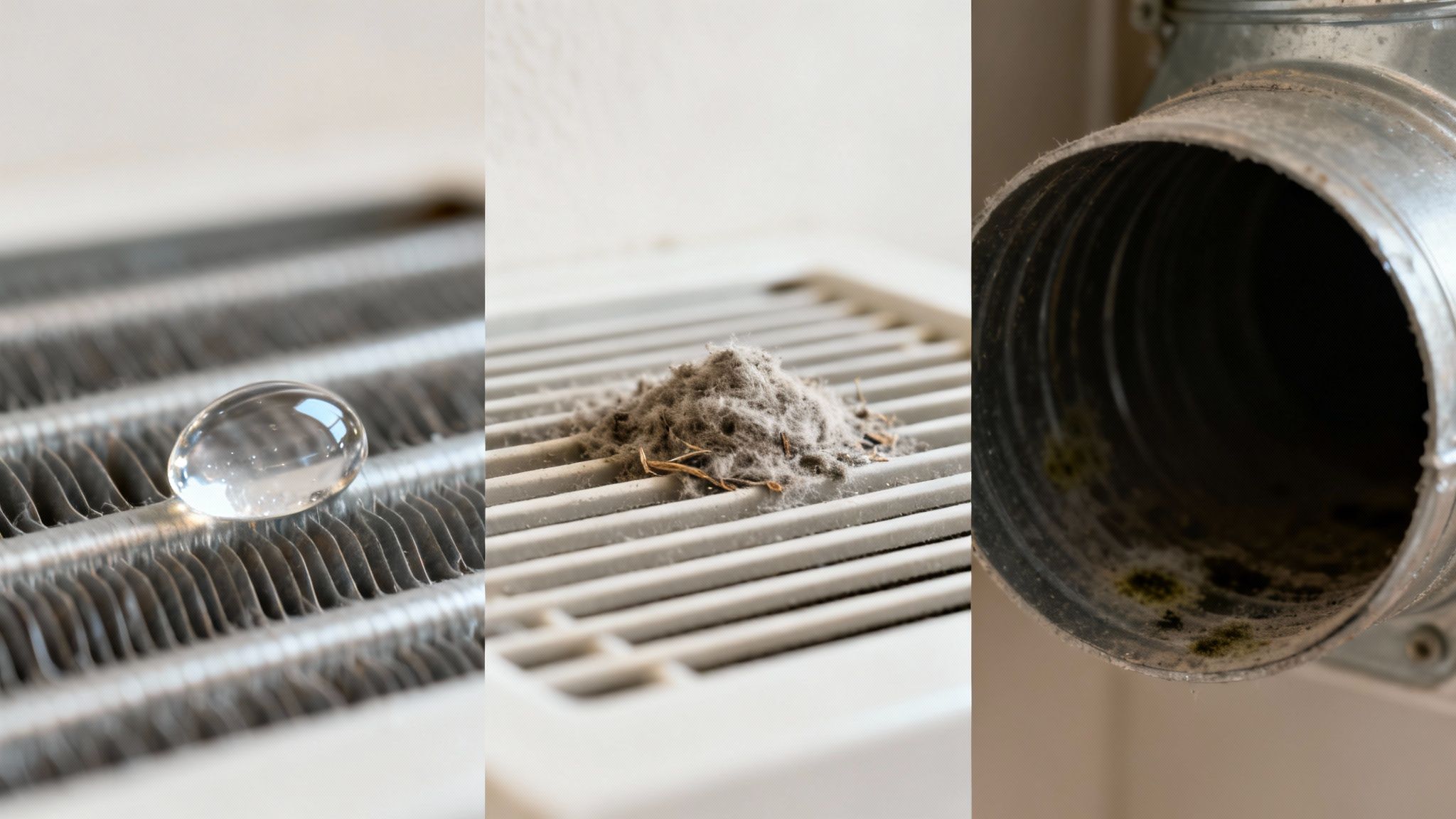
Moisture is the single most critical ingredient for mold. Without it, spores can hang around, but they can't grow into a colony. Your air conditioner's primary job—cooling the air—is a major source of this moisture.
As your AC pulls warm, humid air from your home during a San Fernando Valley heatwave, that air passes over cold evaporator coils. This creates condensation, just like a glass of ice water "sweats" on a hot day. In a properly working system, this water drips into a drain pan and is safely piped away.
But that's where things can go wrong. Problems start when:
- The condensate drain line gets clogged with dust and algae, causing water to back up and spill.
- The drain pan cracks or isn't sloped correctly, allowing water to pool inside the air handler.
- High humidity in unconditioned spaces like attics causes condensation to form on the outside of cold ductwork.
Any of these issues provide the steady supply of water that mold needs to activate and thrive. In fact, if you can keep building materials below 17% moisture content, almost all microbial growth stops. If you're concerned, our guide on how to read moisture meter readings can help you better understand the risks.
Ingredient 2: A Food Source
Mold is a living thing, and like all life, it needs to eat. You might think your clean metal ducts are sterile, but they are actually full of organic materials that serve as a perfect food source.
Everyday dust is the main culprit here. It isn't just inert dirt; it's a rich mix of:
- Dead skin cells
- Pet dander
- Pollen and plant fibers
- Fabric particles from clothes and furniture
As your HVAC system circulates air, it pulls this dust into the ductwork, where it settles on every surface. When moisture gets introduced, this layer of organic debris becomes a nutrient-rich buffet, allowing a single mold spore to grab a foothold and start multiplying.
Ingredient 3: Darkness and Temperature
The final ingredients for a thriving mold colony are darkness and the right temperature. Your air ducts are perpetually dark, which protects mold from the damaging effects of the sun's ultraviolet (UV) light.
On top of that, mold flourishes at room temperature, especially when relative humidity climbs above 60%. The combination of organic debris, darkness, and moisture turns an HVAC system into a spore factory that pumps contaminants throughout your home.
Across the U.S., an estimated 45 million+ buildings are compromised by these conditions. Sources like pollen and dirt settle on evaporator coils where the temperature and humidity are perfect for growth. For a deeper dive, check out this excellent resource on understanding what causes mold in air ducts and how to stop it.
How to Tell If You Have Mold in Your Vents
Catching mold in air conditioning ducts early is tough. Since the growth is buried deep inside your HVAC system, you have to rely on your senses and play detective in your own home.
Your house will usually give you a few clues that something isn't right. Paying attention to these subtle (and not-so-subtle) signals can help you pinpoint a problem before it gets out of hand. The most common signs fall into three buckets: what you smell, what you see, and how you feel.
The Unmistakable Musty Odor
The first and most reliable sign of a mold problem is that smell. As mold grows, it releases microbial volatile organic compounds (MVOCs), which have a very distinct, unpleasant odor.
This isn't just a generic "stale air" scent. It's a specific damp, earthy, or musty smell, often compared to wet socks or a pile of old books. You'll likely notice it's strongest right when your AC or heater kicks on, as that first blast of air pushes the odor out of the vents and into your rooms. If your home in Beverly Hills smells musty and you can't find the source, your HVAC system is a prime suspect.
A persistent musty smell that gets stronger when the air is flowing is one of the most reliable indicators of a hidden mold colony within your ductwork. Don't dismiss it as just "old house smell."
Visible Signs and Clues
While most of the mold stays hidden, you can sometimes spot visual evidence near the entry and exit points of your HVAC system. A quick visual check can give you the confirmation you need.
Be on the lookout for these signs:
- Dark Spots on Vent Covers: Check your air supply and return vents. Do you see small black, green, or even dark brown specks or fuzzy patches on the grilles themselves? This is often a sign that a much larger colony is thriving just out of sight.
- Discoloration Around Vents: Look for any staining or discoloration on the ceiling or wall right around the air vents. This can point to moisture problems inside the ducts—the number one ingredient for mold growth.
- Debris from Vents: If you notice weird black dust or flaky material shooting out of the vents when the system turns on, it could be pieces of a mold colony breaking off and going airborne.
Worsening Health Symptoms Indoors
Your body is an excellent detector of poor indoor air quality. If you or your family members are dealing with stubborn allergy-like symptoms that seem to ramp up when you're at home, it’s a major red flag.
These health-related clues are hard to ignore:
- A chronic stuffy or runny nose
- Persistent sneezing and coughing
- Itchy, watery eyes and a sore throat
- Unexplained headaches or fatigue
- Worsening asthma symptoms
If these issues seem to get better when you leave the house for a while—like when you go to work or on vacation—it strongly suggests an environmental trigger inside your home. To get a better handle on this, you can learn more about identifying mold in air duct symptoms. When these signs appear, professional mold testing and removal becomes essential to protect your family's health.
Call (818) 336-1800 for an Inspection
What to Expect from a Professional HVAC Mold Remediation
Hiring a professional to handle mold in air conditioning ducts isn't just about cleaning. It’s a methodical, multi-stage process designed by IICRC-certified technicians to completely remove the mold, stop it from spreading, and keep it from coming back. Trying to tackle this yourself is a huge risk—you'll likely just send spores flying through your home, making a bad situation much worse.
When you bring in a pro team, you're not just paying for elbow grease. You're investing in a careful strategy that puts safety and results first. Here’s a look at what that process actually involves.
Initial Inspection and Assessment
The first thing that happens is a deep-dive inspection. A certified technician won't just peek inside your vents and call it a day. They bring in specialized gear to figure out exactly how bad the problem is and where it’s hiding.
This isn’t just a quick look-around. Expect the inspector to use tools like:
- Borescopes: These are tiny cameras snaked deep into your ductwork to spot contamination you’d never see from the outside.
- Moisture Meters: Devices that can detect dampness hidden inside walls, insulation, or around the AC unit itself—pinpointing the water source that’s feeding the mold.
- Air Sampling Equipment: Sometimes, air samples are necessary to identify the types of mold present and how concentrated the spores are, which confirms the scale of the problem.
This assessment is the foundation for everything that follows. It allows the team to map out the contamination and build a remediation plan that’s customized for your home’s HVAC system and layout.
Containment and Air Filtration
Before a single tool touches your ducts, the number one priority is containment. This step is non-negotiable. Its entire purpose is to prevent mold spores from getting kicked into the air and spreading throughout the rest of your house during the cleanup.
Think of it like setting up a sterile, sealed-off work zone. Technicians will establish this by:
- Sealing all vents and return registers in the contaminated zones using thick plastic sheeting.
- Creating negative air pressure with powerful HEPA-filtered air scrubbers. This machine ensures air only flows into the contained area, not out, effectively trapping any spores that get disturbed.
This containment phase is what really separates a professional job from a simple duct cleaning. It's a critical safety measure that protects you and your family from cross-contamination.
Removal and Cleaning Process
With the area safely sealed off, the real work of removing the mold begins. Professionals use techniques and equipment that are far more advanced than anything available at a hardware store.
The crew will start by using high-powered HEPA vacuums to carefully pull the mold growth off the duct surfaces. A standard vacuum would just blow the microscopic spores right back out, but a HEPA filter is fine enough to capture them for good.
Once the visible mold is gone, the ducts are treated with an EPA-approved antimicrobial agent. This solution kills off any lingering spores and helps stop new growth in its tracks. Finally, technicians use tools like specialized brushes or high-pressure air whips to knock loose any stubborn debris, which is immediately sucked up by the negative air pressure system.
The flowchart below shows how the initial signs—like odd smells or visible spots—often lead homeowners down this path to professional help.
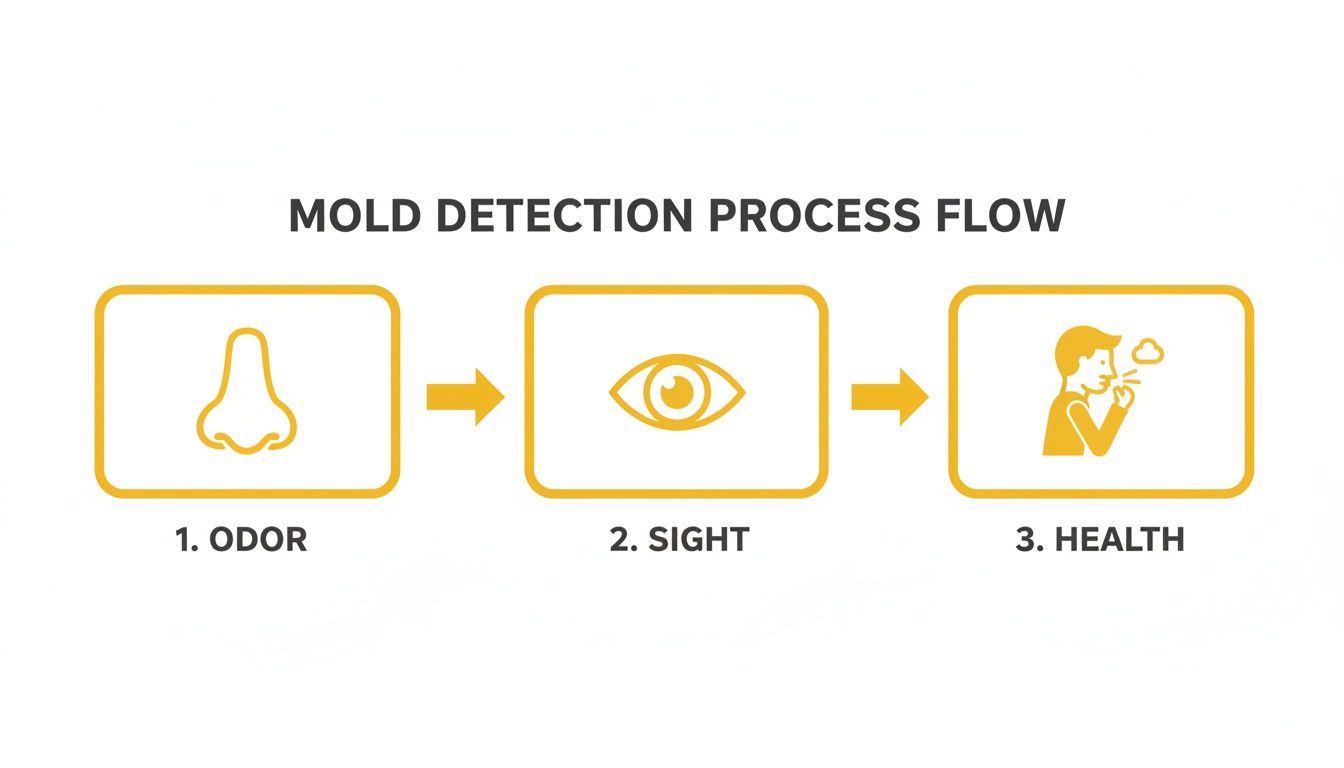
This process highlights how clues from your senses and your health are usually the first red flags that a serious remediation is needed. Seeing these steps laid out can also help you understand the scope and financial side of the project. To learn more, check out our guide on what mold remediation costs.
Final Clearance and Verification
The job isn't done just because the ducts look clean. Any reputable remediation company will insist on post-remediation verification, often called "clearance testing."
This usually involves bringing in an independent third-party industrial hygienist to take new air and surface samples from the areas that were treated. These samples go to a lab to confirm that the mold spore levels are back down to a normal, healthy baseline.
This final check gives you scientific proof that the job was done right and your home's air is safe again. It’s the ultimate peace of mind.
Proactive Steps to Prevent Future Mold Growth
Once your ducts have been professionally cleaned and the mold is gone, the job isn't over. The real goal is making sure it never comes back. A proactive approach is your best defense against another round of contamination, protecting both your investment and your family's well-being. Think of this as your playbook for keeping the air in your Los Angeles home healthy for the long haul.
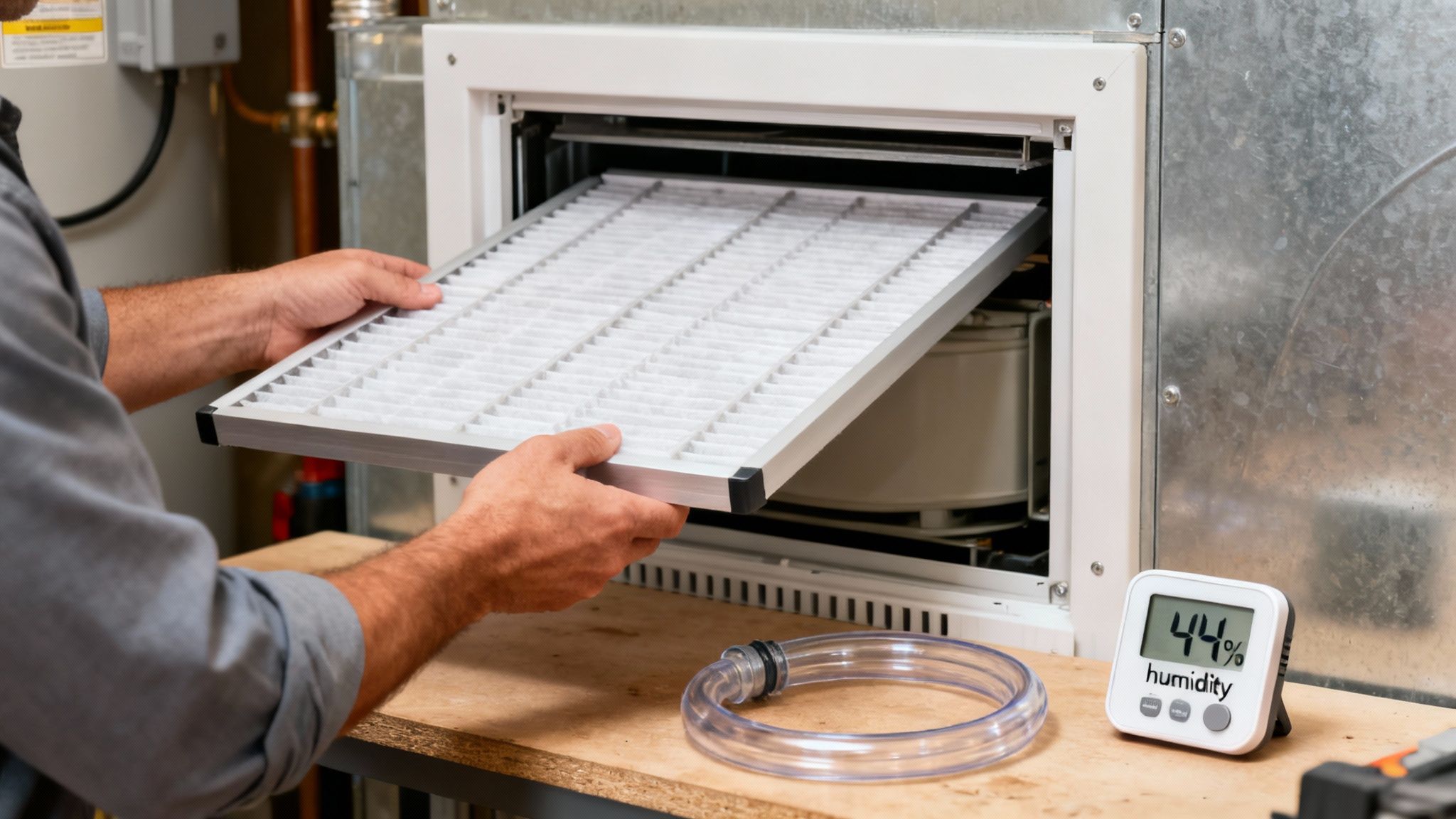
Effective prevention really boils down to controlling the three things mold needs to survive: moisture, a food source, and darkness. Since you can't exactly light up the inside of your ductwork, your efforts need to be laser-focused on managing moisture and the dust that mold loves to eat.
Control Indoor Humidity
Your most powerful tool in the fight against mold is humidity control. Mold spores get the green light to grow when relative humidity pushes past 60%, a common problem during Southern California's "May Gray" and "June Gloom."
Here's how to keep that moisture in check:
- Invest in a Dehumidifier: Use portable or whole-home dehumidifiers to keep your indoor humidity between a healthy 30% and 50%. This creates an environment where mold spores simply can't get a foothold.
- Ventilate Properly: Always use the exhaust fans in your kitchen and bathrooms. They're designed to pull steam and humid air directly outside before it can get sucked into your HVAC system.
- Fix Leaks Immediately: That tiny drip from a flat roof in Sherman Oaks or a leaky pipe under the sink creates a constant source of moisture. Your AC will pull that damp air into the system, creating a perfect breeding ground. Prompt repairs are non-negotiable.
Upgrade Your Air Filters
Your HVAC filter is the front-line soldier protecting your ducts from dust, pollen, and other organic debris that mold uses as food. Those cheap, flimsy fiberglass filters you see at the hardware store just don't cut it.
Upgrading to a high-MERV (Minimum Efficiency Reporting Value) filter is one of the single most effective changes you can make. A filter with a MERV rating of 8 to 13 is the sweet spot for homes, capturing tiny particles like mold spores and pet dander before they ever reach your ductwork.
Get in the habit of checking and changing your filter every 1-3 months. If you have pets or live in a dusty part of town, you'll need to do it more often. A clogged filter doesn't just stop cleaning the air; it chokes your entire system, leading to bigger problems down the road. For serious air cleaning during a project, specialized equipment like an air scrubber rental can make all the difference.
Schedule Regular HVAC Maintenance
Think of annual professional maintenance as a health check-up for your home's respiratory system. An IICRC-certified technician can inspect, clean, and tune-up the critical components that you can't see or reach.
A proper tune-up includes:
- Cleaning Coils and Drain Pans: Grime and buildup on evaporator coils trap moisture. A thorough cleaning eliminates this problem.
- Flushing the Condensate Line: This small line drains away condensation. If it gets clogged, water backs up—a classic cause of HVAC mold.
Studies show that a staggering 20% to 40% of buildings in North America have issues with indoor mold, a problem often fueled by AC ducts trapping moisture. You can discover more about the link between buildings and mold contamination to see just how widespread this is. Regular maintenance breaks that cycle, making sure your home doesn't become another statistic.
Frequently Asked Questions About AC Duct Mold
Even after you understand the risks, you probably still have some specific questions about mold in your air conditioning ducts. As a Los Angeles restoration professional, I hear these all the time. Here are some straight answers to the most common concerns.
Can I Just Clean the Mold in My AC Ducts Myself?
I get this question a lot, and the answer is always a hard no. Trying to clean duct mold yourself is one of the most dangerous mistakes a homeowner can make. Household cleaners like bleach won't kill the mold's root system inside porous duct materials.
Worse yet, attempting to scrub or spray the mold will disturb the colony. This sends a massive cloud of spores directly into your HVAC system, spreading contamination throughout your entire home. Professionals use containment barriers, negative air pressure, and specialized HEPA filtration to remove mold safely without making the problem a hundred times worse. Please, leave this job to an IICRC-certified pro.
How Much Does Professional HVAC Mold Remediation Cost in Los Angeles?
The cost for professional HVAC mold remediation here in Los Angeles can swing pretty widely. It all depends on the specifics of the job—how big is your system, how far has the mold spread, and how hard is it to access the ductwork?
A small, contained issue in an easy-to-reach spot might only be a few hundred dollars. But extensive contamination that has spread through the ductwork of a large house could run into several thousand. The only way to know for sure is to get a professional inspection. A certified company will give you a detailed assessment and a transparent quote based on what actually needs to be done.
Does Homeowners Insurance Cover Mold Removal from Air Ducts?
Whether your insurance covers this really comes down to your specific policy and what caused the mold in the first place. If the mold grew because of a "covered peril"—like a pipe that suddenly burst and was fixed right away—then your policy will likely help with the remediation costs.
However, if the mold is from a slow, gradual leak, poor maintenance, or just high humidity, it's almost always excluded from coverage. You have to read your policy carefully and talk to your agent. For a deeper dive, check out our guide on whether homeowners insurance covers mold. A good restoration company can also provide the right documentation to support your claim when the cause is covered.
What Is the Difference Between Mold and Mildew in My Vents?
While they're both types of fungi, there's a key difference. Mildew is usually a surface-level fungus that looks like a gray or white powdery patch. You often see it in damp places like a bathroom shower, and it’s fairly easy to clean off.
Mold, on the other hand, is the bigger concern. It can be black, green, or other colors and signals a much deeper moisture problem. It grows roots deep into materials and carries more significant health risks. If you see any kind of fungal growth in your vents, you should treat it as a potential mold problem. What you can see is often just the tip of the iceberg, with a much larger colony hiding inside the ducts.
Don't let mold compromise your home's air quality and your family's health. If you suspect you have mold in your air conditioning ducts, the IICRC-certified experts at Onsite Pro Restoration are ready to help 24/7. We provide professional inspections, testing, and remediation services across Los Angeles.