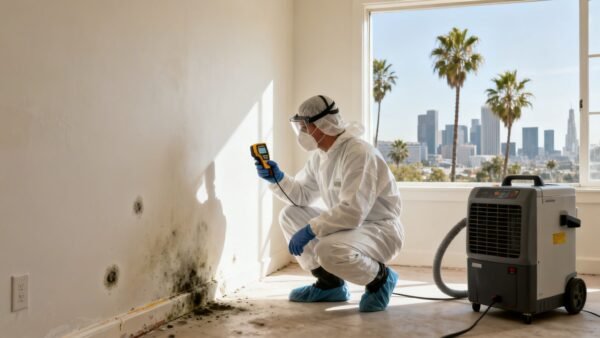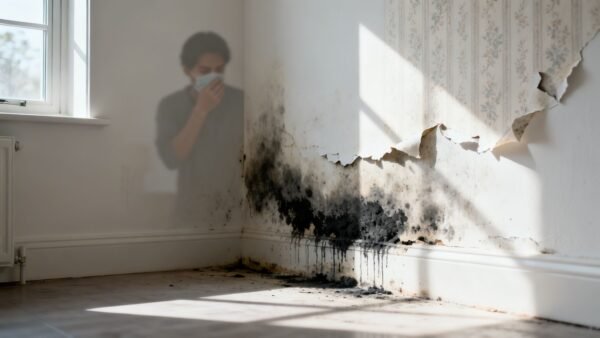

That musty, damp smell that hits you the second your AC turns on? It’s more than just a minor annoyance. Think of it as the first real warning flare that you might have mold growing in your air conditioner ducts. This isn't some rare, far-fetched problem. It's an incredibly common issue for Los Angeles homeowners, where the very system designed to keep you comfortable inadvertently becomes a superhighway for allergens and mold spores, spreading them to every room in your house.
If you suspect mold is compromising your home's air quality, don't wait.
Get a Free Mold Inspection Now
The Hidden Dangers of Mold in Air Conditioner Ducts
Think of your home's HVAC system as its lungs. It breathes air in, conditions it, and then breathes it back out into every room of your house. When it’s working right, you get clean, comfortable air. But when it’s contaminated with mold in the air conditioner ducts, that same system turns into a delivery service for microscopic threats that can seriously undermine your family's health.
This isn’t just about a musty smell or some minor sniffles. The constant recirculation of mold spores can set off a chain reaction of health issues, turning your home from a sanctuary into a source of chronic illness.
From Spores to Sickness: How Mold Affects Your Health
When mold finds a home in the dark, damp environment of your ductwork, it doesn't just stay there. As air rushes through, it picks up millions of these tiny, lightweight spores and blasts them into your living room, your kitchen, and your bedroom. You and your family are left breathing this contaminated air, day in and day out.
This ongoing exposure often leads to a whole host of health problems that get mistaken for stubborn colds or bad seasonal allergies.
- Respiratory Irritation: The most immediate effects are often a nagging cough, sore throat, wheezing, and a nose that’s always either stuffy or running.
- Allergic Reactions: For many people, this exposure triggers classic allergy symptoms like itchy, watery eyes, relentless sneezing, and even skin rashes.
- Asthma Flare-Ups: Mold is a well-known trigger for asthma. If someone in your home has asthma, they might start experiencing more frequent and severe attacks, struggling with shortness of breath and chest tightness.
The Dangers of Mycotoxins from "Black Mold"
Some molds, like the notorious Stachybotrys chartarum (what most people call "black mold"), can produce toxic chemical compounds called mycotoxins. These nasty substances can hitch a ride on mold spores and get circulated everywhere by your HVAC.
When inhaled, mycotoxins can lead to much more severe health problems. We're talking about neurological symptoms like chronic fatigue, splitting headaches, memory fog, and trouble concentrating. The most vulnerable people—children, the elderly, and anyone with a compromised immune system—are at the greatest risk.
The real problem with an HVAC system is that once it's contaminated, the exposure never stops. It's not like a patch of mold in a bathroom you can just avoid. It's in the very air you breathe in every single room, whether you're in a Sherman Oaks condo or a family home in Glendale.
The Documented Impact on Health
The link between indoor mold and poor health isn't just a hunch; it's backed by solid research. The CDC and EPA have confirmed that indoor mold exposure can lead to upper respiratory tract symptoms, cough, and wheeze in otherwise healthy people.
In one survey covering 244 buildings, a staggering 83% had serious mold problems, which was directly linked to a 52% jump in conditions like rhinitis, nasal discomfort, and skin rashes during peak mold seasons. The financial toll is just as serious, with the health costs from mold-induced allergic rhinitis in the U.S. hitting billions of dollars every year. You can read the full research about these findings to get the bigger picture.
This data drives home a critical point: ignoring potential mold in your air conditioner ducts is a gamble with your well-being. What seems like a small nuisance can quickly escalate into a serious health hazard for everyone under your roof.
Why Southern California Homes Are So Prone to AC Mold
Your HVAC system is essentially the lungs of your home. When it gets sick, the health of the entire house—and everyone living inside—is at risk. Mold only needs three things to set up shop: a little moisture, a food source (like dust), and darkness. Unfortunately for homeowners, the inside of an air conditioner duct is a five-star resort that provides all three.

The Ideal Environment for Contamination
Let's break down how your AC works. It pulls in warm, often humid, Los Angeles air and cools it down. That cooling process naturally creates condensation—moisture that’s supposed to drain away. But when that moisture mixes with the everyday dust, skin cells, and pollen that settle in your ductwork, it creates a perfect, nutrient-rich sludge for mold spores to land, germinate, and thrive.
Here in Southern California, a few local factors can make the situation even worse:
- Coastal Humidity: If you're in a neighborhood like Santa Monica or Venice, the marine layer brings in extra moisture that can get sucked right into your HVAC system.
- Sudden Temperature Shifts: We all know those days. A blistering hot Santa Ana morning flips to a cool evening, forcing your AC to work overtime and produce even more condensation.
- Dust and Pollen: Our dry climate means there’s a lot of dust and airborne allergens just waiting to become a food source for mold inside your ducts.
This trifecta of darkness, moisture, and organic debris turns your air ducts into a hidden incubator. Each time the system kicks on, it can blast millions of microscopic spores into your living room, bedrooms, and kitchen, tanking your indoor air quality.
Recognizing the signs is the first critical step toward protecting your home and your health. If you’re fighting a stubborn mildew smell, it's a clear signal to investigate the source. You can learn more about how to get rid of mildew smells in our detailed guide.
How to Tell if You Have Mold in Your Air Vents
The best way to deal with mold in air conditioner ducts is to catch it early. Spotting the signs before a small patch colonizes your entire HVAC system can save you a world of headaches—not to mention time and money. As a homeowner, you don't need a lab coat or fancy equipment for an initial check. You just need to trust your senses and know where to look.

Trust Your Nose: The Olfactory Test
Long before you see it, you can often smell it. Your nose is probably the most reliable first alert system for a hidden mold problem. That’s because active mold growth releases microbial volatile organic compounds (MVOCs), which create a very distinct, unpleasant odor.
If you keep smelling something musty, earthy, or damp—and it seems to get stronger right when the AC kicks on—that’s a huge red flag. Don't just write it off as a "stuffy house" smell. This is the classic signature of moisture and microbial growth hiding somewhere in your system.
Perform a Safe Visual Inspection
While most of your ductwork is out of sight, you can often find visual clues by checking a few key spots. Grab a good flashlight; that’s all you need.
What to Look For During Your Inspection:
- Vent Covers and Grilles: Take a close look at the air supply vents in every room. See any black, white, or greenish specks clustered on the grilles? That's usually the first place visible mold makes an appearance.
- The Air Handler and Evaporator Coils: If you can safely get to your indoor air handler unit (it’s often in a closet, the attic, or garage), open the access panel. Shine your light on the evaporator coils. Any dark staining or slimy buildup is a dead giveaway for contamination.
- The Condensate Drip Pan: Right under the air handler, this pan catches condensation. Check it for standing water, rust, or a slimy film. A clogged or slow-draining pan is one of the most common starting points for HVAC mold.
A critical takeaway for homeowners is that what you see on the surface is often just a fraction of the actual problem. Mold growth on a vent grille almost always indicates a more significant, hidden colony deeper within the ductwork.
Know When to Stop and Call a Professional
A DIY check is a great first step, but it has its limits. If you find any of the signs we just talked about, it’s time to put down the flashlight and call for professional help. Trying to wipe it away yourself can release a massive cloud of spores into your home, making a localized problem an airborne, house-wide one.
And what if you can’t see a thing, but that musty smell just won’t go away? It's highly likely the mold is growing deep inside the ductwork where you can’t get to it. We see this all the time. Our guide on how professionals check for mold in hidden areas like walls and ducts explains this in more detail.
Why Professional Mold Remediation is Crucial
When you spot what looks like mold in your air conditioner ducts, the gut reaction is often to grab some cleaner and attack it yourself. It’s an understandable impulse. But your HVAC system is the respiratory system of your home—a complex network where a simple mistake can spread a small problem everywhere.

The Risks Of A DIY Approach
Trying to clean duct mold on your own is like trying to catch smoke with your hands. The moment you touch it, the problem scatters. A DIY attempt can, and often does, make the situation far worse.
- Spreading Contamination: The second you scrub a moldy vent without professional containment, you’re launching millions of dormant spores into the air. Your HVAC system then happily circulates them to every single room, turning a localized issue into a full-blown infestation.
- Ineffective Cleaning Agents: That bottle of bleach under your sink won't cut it. While it might remove the surface stain on metal or plastic, it can’t penetrate the porous materials inside your ductwork to kill the mold's root structure. It just comes right back, sometimes stronger than before.
- Failure to Address the Source: Mold is just a symptom. The real disease is an underlying moisture problem—a small leak, a clogged condensate line, or just high humidity. If you only clean the mold, you haven't fixed what caused it. The mold will absolutely return.
The Environmental Protection Agency (EPA) draws a clear line: if a mold-affected area is larger than 10 square feet, you need a professional. Since your HVAC system connects the whole house, even a small visible patch often signals a much larger hidden problem that easily exceeds that limit.
What to Expect From Professional Remediation
Hiring a certified team like Onsite Pro Restoration isn’t just about cleaning. It’s about deploying a systematic, science-backed strategy to eliminate the mold for good and ensure it doesn’t come back. Our IICRC-certified technicians follow a strict protocol designed for one thing: complete, safe eradication.
Our process is built around total removal and safety from start to finish. You can see the full breakdown of our comprehensive approach by exploring our professional mold removal service details.
- Inspection and Assessment: We use tools like moisture meters and borescopes to pinpoint the source of the moisture that’s letting the mold grow.
- Containment and Air Filtration: We set up a secure containment zone with negative air pressure and run HEPA air scrubbers to trap any airborne spores.
- Mold Removal and Sanitization: Our team uses specialized tools to dislodge and vacuum out all mold growth, then applies an EPA-registered antimicrobial to sanitize the ducts.
- Final Verification: We conduct a final inspection and can arrange for post-remediation air quality testing to confirm spore counts are back to healthy levels.
Professional remediation is the only way to ensure the mold in your air conditioner ducts is gone for good. If you're looking into your options, seeing what different professional cleaning services offer can give you a good sense of industry standards.
How to Prevent Mold from Returning in Your AC Ducts
After a professional remediation crew gets the mold in your air conditioner ducts out for good, the next mission is simple: keep it from coming back. Prevention all boils down to controlling the three things mold loves: moisture, a food source (like dust), and darkness. Your goal is to turn your HVAC system from a potential problem spot into a fortress that keeps your home's air clean and healthy.

Master Your Maintenance Schedule
Consistency is everything. An HVAC system that gets ignored is practically rolling out the welcome mat for mold. A simple, regular maintenance routine is your best defense. Setting up a schedule for regular HVAC maintenance is the smartest move you can make.
Your Proactive Prevention Checklist:
- Change Air Filters Religiously: A clogged filter chokes airflow, boosts condensation, and basically sets the table for mold. Swap it out every 1–3 months. No excuses.
- Inspect Drip Pans and Condensate Lines: Once a month, check the drip pan under your indoor air handler. If you see standing water, you've got a problem. Ensure the condensate line is clear so water can flow out.
- Schedule Annual Professional Tune-Ups: Once a year, get a certified HVAC technician to give your entire system a full check-up. This is how you catch small moisture issues before they turn into a full-blown mold disaster.
Control Your Indoor Humidity
Here in Los Angeles, humidity can be a real battle. Mold absolutely thrives when indoor humidity creeps above 60%.
The EPA is clear on this: keeping your indoor humidity between 30% and 50% is one of the most powerful ways to stop mold in its tracks. This one change makes your home a much less inviting place for mold spores.
When the air feels thick and muggy, fire up a dehumidifier. This is especially important in basements or laundry rooms. Always run the exhaust fan in your bathroom when you shower and the fan over your stove when you cook. These little habits make a huge difference.
Our complete guide on how to prevent mold digs even deeper with more strategies tailored for Southern California homeowners.
FAQs About Mold in Air Conditioner Ducts
When Los Angeles homeowners call us thinking they have mold in their air conditioner ducts, the same questions always come up. Here are straightforward answers to the questions we hear every day.
Q: What does it cost to remove mold from air ducts in Los Angeles?
A: For professional mold remediation in AC ducts, you can expect the cost to be anywhere from $600 to over $2,000. The final number really comes down to a few things: the size of your HVAC system, how far the mold has spread, and whether the ducts are easily accessible. That’s why we always start with a free, on-site assessment to provide an accurate quote.
Q: Does homeowners insurance cover mold removal from AC ducts?
A: This almost always comes back to why the mold started. Generally, insurance will cover remediation if the mold was a direct result of a sudden, accidental event that your policy covers—like a burst pipe. However, mold that grows slowly because of poor maintenance or high humidity is usually excluded. We can help provide the proper documentation for your claim.
Q: Can I just use bleach to kill mold in my vents?
A: No, we strongly advise against it. Bleach is ineffective on the porous surfaces inside most ductwork and cannot kill the mold's root structure. Worse, trying to spray or wipe the ducts yourself can send millions of mold spores airborne, spreading the problem throughout your house. Professionals use EPA-registered fungicides and strict containment procedures for safe, effective removal.
Q: How long does professional air duct mold removal take?
A: A typical residential air duct mold remediation job takes between 4 and 8 hours. This allows our technicians time to set up proper containment, thoroughly clean the ductwork, and apply antimicrobial treatments. If the mold is severe or has affected the air handler unit, the project might take longer. We provide a clear, realistic timeline after our initial inspection.
Q: Can mold in my AC ducts make me and my family sick?
A: Yes, absolutely. The CDC has linked indoor mold exposure to a range of health issues, including upper respiratory tract symptoms, coughing, wheezing, and allergic reactions. It can also trigger asthma attacks. Long-term exposure to certain types of mold that produce mycotoxins can lead to more serious health problems.
If you're noticing a musty smell or can see signs of mold, don't wait for the problem to spiral. The best way to protect your home and your family's health is to get a professional assessment. Contact Onsite Pro Restoration today for a free, no-obligation inspection.