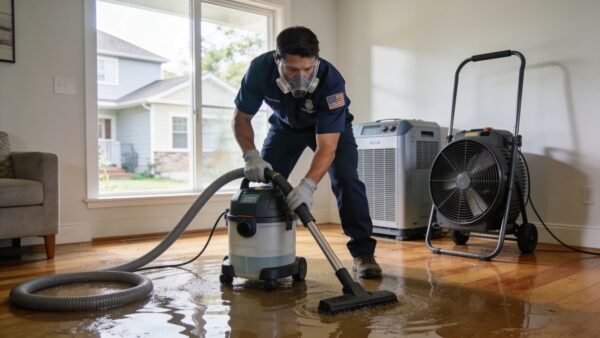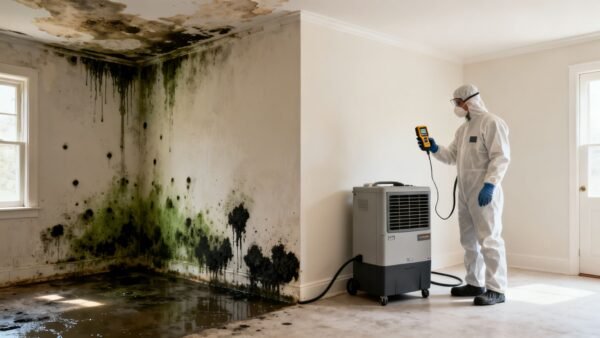

Finding mold in your Los Angeles home is more than just an ugly surprise—it’s a direct threat to your property and your family's health. Real Los Angeles mold removal isn't about spraying some bleach and calling it a day. It's a scientific process that gets to the root of the problem: the hidden moisture source that’s feeding the growth. This is the only way to solve the issue for good, not just cover it up until the next rainy season.
Don't let mold compromise your home's safety. For a professional, IICRC-certified assessment and a straightforward plan to get your property back to normal, trust the experts.
Get a Free Mold Inspection Today
The Hidden Dangers of Indoor Mold
It's easy to dismiss a patch of mold as just an ugly stain on the wall, but that’s a dangerous mistake. While mold certainly eats away at your property, the real threat for Los Angeles families is what it does to your health. The fact is, that visible growth is constantly pumping microscopic spores and chemical byproducts (mycotoxins) into the air you breathe every single day.
Think of those spores as invisible dust, always floating around your home. When you breathe them in, they can set off a chain reaction of health problems that are frustratingly hard to pin down and often get blamed on seasonal allergies. For many people, the symptoms creep up slowly, making it almost impossible to connect them back to a hidden leak in a Santa Monica condo or a damp corner in a Sherman Oaks house.

From Allergies to Chronic Illness
The first signs of a mold problem often look exactly like bad seasonal allergies. The key difference? Unlike pollen season, these symptoms never seem to go away as long as you're at home.
Common signs of mold exposure include:
- Persistent Respiratory Issues: Are you dealing with a nagging cough, wheezing, shortness of breath, or sinus congestion that just won't quit, even with allergy meds? That’s a major red flag.
- Headaches and Fatigue: Many people we work with describe mysterious headaches, migraines, and a persistent brain fog that magically seems to lift when they spend a few hours away from the house.
- Skin and Eye Irritation: Mold spores can also be a direct irritant, causing itchy skin, unexplained rashes, and red, watery eyes.
For the most vulnerable—kids, the elderly, or anyone with a weakened immune system—these issues can be far more serious. According to the CDC, mold exposure can lead to severe reactions in sensitive individuals.
We’ve seen entire families in Los Angeles suffer from what they thought were unending colds, only to discover a hidden leak behind their drywall was the true culprit. Once professional mold removal was complete, their chronic symptoms vanished within weeks.
Understanding Mycotoxins and Genetic Susceptibility
Some molds, like the infamous "black mold" (Stachybotrys chartarum), take things to another level. They produce toxic chemical compounds called mycotoxins. These aren't alive like spores but ride on them, allowing them to be inhaled or even absorbed through your skin. Mycotoxins are what cause the severe reactions often called "mold illness."
The effects can be systemic, messing with your neurological system and leading to serious health complications. This isn't just a niche concern; it's a legitimate health crisis. To make things even trickier, some of us are just wired to react more strongly. Studies suggest that up to 25% of people have a genetic trait that prevents their bodies from effectively clearing out mycotoxins. For this group, even a small amount of exposure can trigger a severe, long-lasting illness.
Because the symptoms are so varied and mimic so many other conditions, it’s incredibly difficult for most people to identify mold as the root cause. Getting solid answers through professional Los Angeles mold testing is the only way to know for sure what you're dealing with. It confirms the type and extent of the problem, giving you the clarity needed to protect your family.
Why Southern California Is So Mold-Prone
If you think your LA home is weirdly prone to mold, you’re not imagining things. While we're known for sunny skies, a unique mix of local microclimates, common building styles, and stubborn moisture problems creates the perfect storm for mold infestations. It’s why professional Los Angeles mold removal services are always in demand.
Ironically, our famous Southern California weather is a big part of the problem. That classic coastal fog, the marine layer, rolls inland almost every night, hitting neighborhoods like Santa Monica, Venice, and Marina del Rey especially hard. This isn’t just a cool mist—it's a heavy dose of moisture that settles on and inside our homes. This constant dampness keeps window sills, exterior walls, and stuffy attics perpetually moist, giving mold exactly what it needs to take hold.
The Impact of LA Architecture and Weather Events
Beyond the daily dose of humidity, the way many LA homes are built makes them even more vulnerable. Just look at the San Fernando Valley—neighborhoods like Sherman Oaks and Encino are full of older homes with flat roofs. While they have a certain style, these roofs are notorious for letting water pool up, leading to slow, sneaky leaks, especially during the intense "atmospheric river" storms we’ve been seeing more of.
A tiny, undiscovered roof leak can soak the insulation in your attic and then trickle down inside your walls, feeding a massive mold problem that stays completely out of sight.
- Crawl Spaces: So many older houses have damp, musty crawl spaces with terrible ventilation. This dark, humid space under your home is a five-star hotel for mold, which can easily spread up into your living areas. Getting this area under control is non-negotiable, which is why we often suggest solutions like those in our guide on crawl space dehumidification.
- Aging Plumbing: The huge number of homes built from the 1920s to the 1970s often still have their original cast iron or galvanized steel pipes. These old pipes are ticking time bombs, prone to corrosion and tiny pinhole leaks that drip slowly inside your walls—a steady, reliable water source that mold loves.
Even without a major leak, poor ventilation is a huge contributor. Stagnant, humid air in an attic is a recipe for disaster. Understanding the importance of attic ventilation isn't just about your roof; it's about keeping your whole home healthy.
How to Tell If You Need Professional Remediation
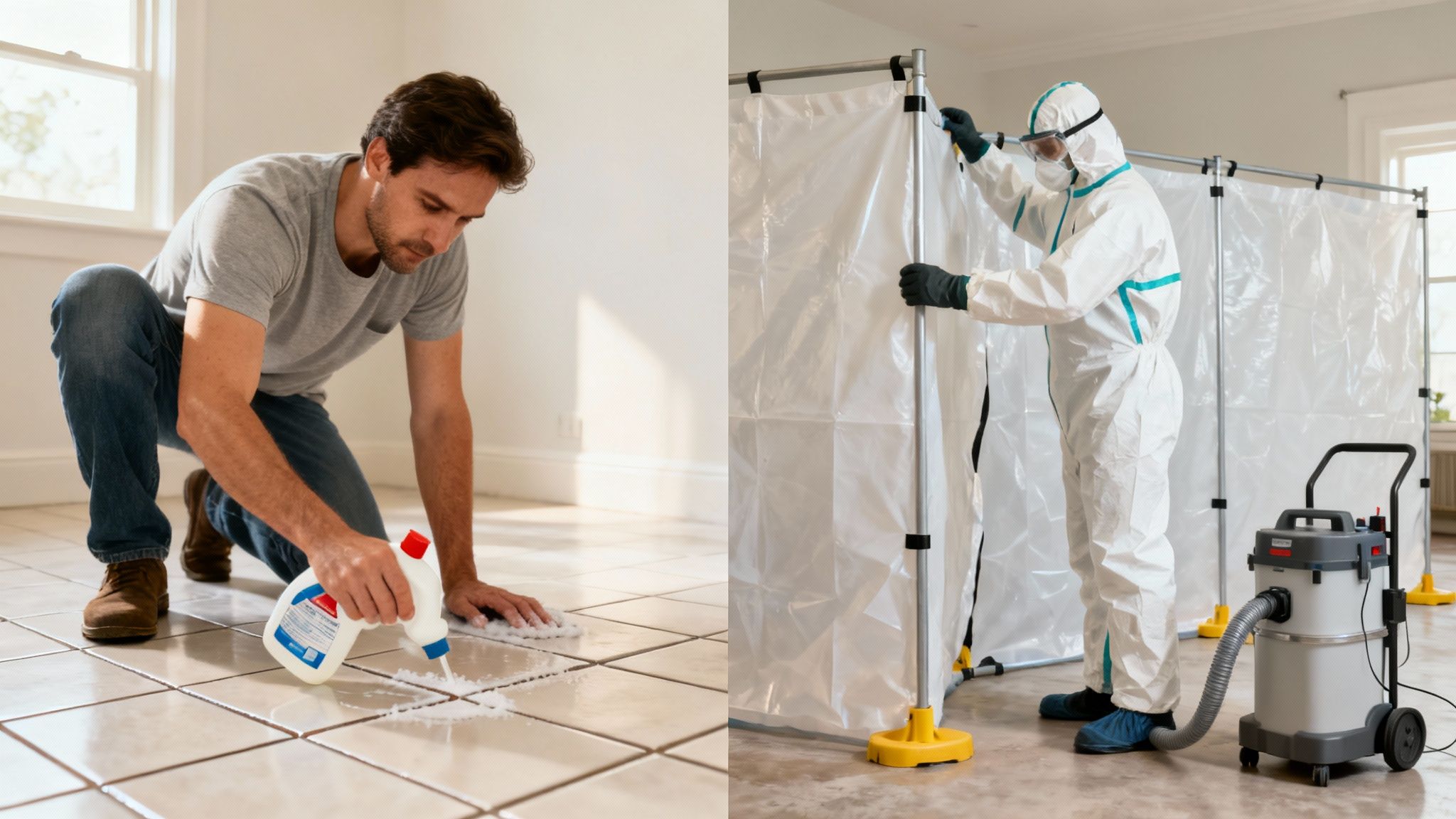
When people find mold, their first instinct is almost always to grab a bottle of bleach. This is one of the biggest mistakes you can make. Trying to kill mold with bleach is like mowing weeds instead of pulling them up by the roots. It might get rid of the surface stain, but it leaves the underlying root structure (the hyphæ) perfectly intact and ready to grow right back.
The EPA advises that any mold problem larger than 10 square feet requires professional attention. Attempting to scrub or tear out contaminated drywall yourself can launch millions of microscopic spores into the air, turning a contained issue into a house-wide infestation.
DIY vs Professional Los Angeles Mold Removal
Deciding how to tackle mold ultimately comes down to understanding the real scope of the problem. A small surface spot is one thing, but hidden growth inside a wall is a whole different beast that demands professional expertise.
This table breaks down the key differences:
| Factor | DIY Approach | Professional Remediation |
|---|---|---|
| Scope | Best for surface mold on non-porous materials under 10 sq. ft. | Essential for mold inside walls, attics, crawl spaces, or covering large areas. |
| Risk | High risk of cross-contamination, spreading spores throughout the home. | Low risk due to professional containment and air filtration protocols. |
| Equipment | Household cleaners, sponges, basic masks. | HEPA vacuums, air scrubbers, negative air machines, commercial-grade antimicrobials. |
| Outcome | Often temporary; mold frequently returns because the moisture source isn't fixed. | Permanent solution that addresses the root cause and includes post-remediation verification. |
When you're facing anything more than a minor surface issue, bringing in the pros isn't just a good idea—it's essential for protecting your home and your health. Knowing how to find trusted local home repair services is the first step toward a safe, effective, and permanent solution.
Don't guess with your family's health. Our interactive mold removal cost calculator can help you understand the potential scope and budget for your project.
Choosing the Right Mold Removal Company
Bringing in a professional team for Los Angeles mold removal can feel like a big step, but the process is far more scientific than you might think. Certified technicians don't just wing it; they follow strict, proven protocols, like those from the IICRC, to make sure the problem is gone for good. Think of it less like a deep clean and more like a surgical procedure for your home.
Step 1: Initial Assessment and Moisture Mapping
Before a single piece of drywall comes down, a certified inspector gets to work with a thorough assessment. Using tools like moisture meters and thermal imaging cameras, technicians find not just the mold you can see but also the hidden moisture that’s feeding it from inside walls or under floors. This moisture mapping is everything. If you don't fix the leak or humidity issue that started it all, the mold is guaranteed to come back.
Step 2: Containment and Air Filtration
Once the problem areas are identified, the number one priority is stopping the mold from spreading. The crew establishes a critical containment zone with heavy-duty plastic sheeting and negative air pressure machines to prevent microscopic mold spores from escaping into other rooms. Inside the contained area, industrial-strength HEPA air scrubbers run nonstop, catching any airborne spores.
Step 3: Safe Removal of Contaminated Materials
With the containment zone secure, the actual removal begins. Technicians in full personal protective equipment (PPE) carefully cut out and bag any contaminated porous materials that can't be saved, such as drywall, insulation, and carpeting. For materials that can be salvaged, like wood studs, the crew uses HEPA vacuums before treating them with an EPA-registered antimicrobial agent.
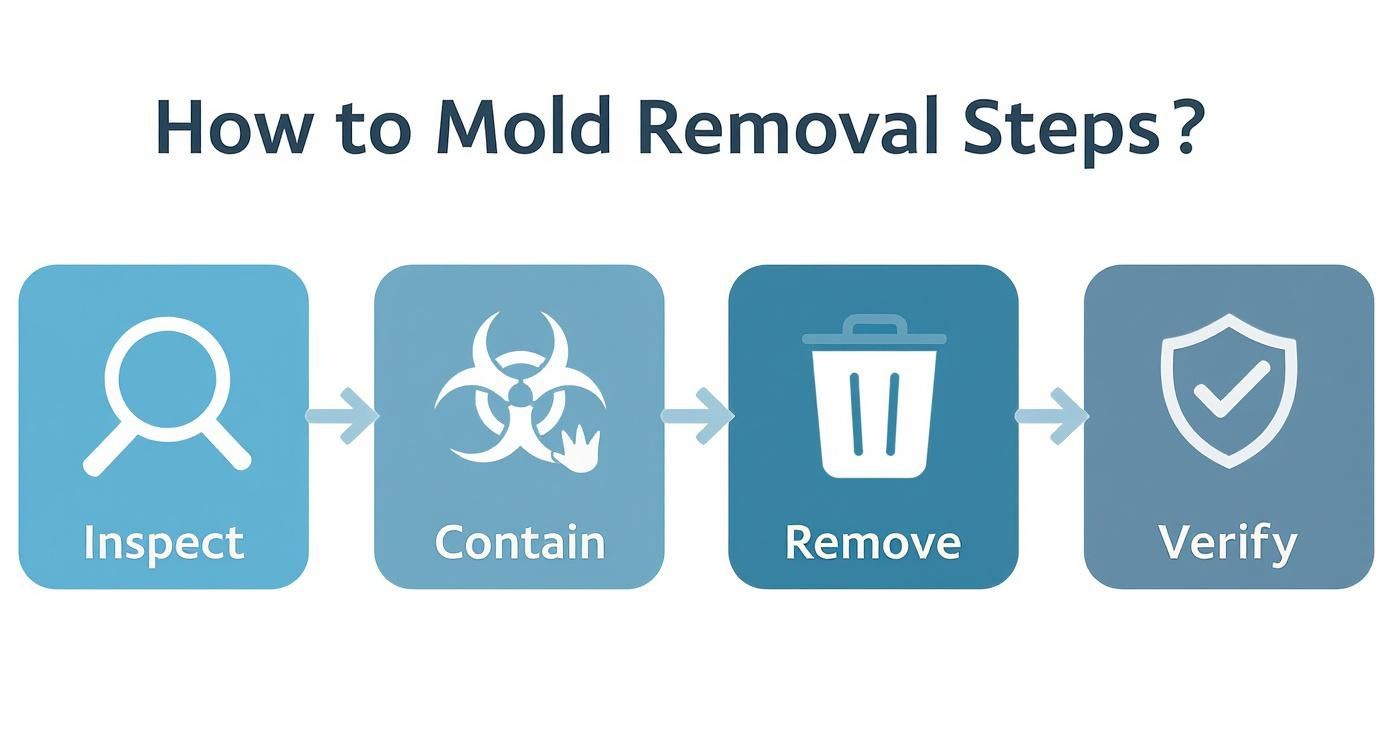
Step 4: Final Cleaning and Verification
After every bit of contaminated material is gone, the entire contained area gets a final, top-to-bottom cleaning. The most important part is post-remediation verification. Often, an independent third-party inspector is brought in to take air samples. This confirms that the mold spore count inside the treated area has dropped back to normal, healthy levels. This clearance test is your documented proof that the job was a success.
Understanding this methodical approach shows that a professional mold remediation service isn’t just about cleaning what you see. For more tips on vetting the right company, our guide on selecting qualified mold removal contractors walks you through what to look for.
Schedule a Free Inspection or Book Mold Testing
Let's get straight to the point—what’s the real cost for professional Los Angeles mold removal? It’s the first question everyone asks. While every mold situation is different, the final price tag is a direct reflection of the skilled labor, specialized gear, and strict safety measures needed to get the job done right.
Key Factors Influencing Your Final Bill
A few key variables will shape the final cost of getting your home back to a safe, healthy state.
- Size of the Affected Area: This is the biggest cost driver. A small patch behind a bathroom sink is a completely different ballgame than a widespread infestation in your attic.
- Location and Accessibility: Mold hiding inside walls, behind cabinets, or in your HVAC system requires more labor and time.
- Type of Contaminated Materials: Tearing out and replacing porous materials like drywall, carpet, and insulation is more intensive than cleaning non-porous surfaces.
- Source of the Moisture: Great remediation doesn't just remove the mold; it fixes the water problem that caused it. This could be repairing a leaky pipe or waterproofing a foundation.
Typical Cost Ranges in the LA Market
On average, the cost for mold remediation in Los Angeles is $2,573, with most homeowners spending somewhere between $1,590 and $3,850. Those figures are roughly 9% higher than in other major cities. Professionals in the area typically charge between $11 and $27 per square foot for the work.
For bigger jobs, the numbers can climb significantly. Cleaning out a contaminated HVAC system can run from $3,264 to $10,880. A severe, whole-house remediation project can escalate to anywhere between $10,880 and $32,640.
Answering Your Top Questions About Mold in LA
When you're dealing with a potential mold issue, a million questions can run through your mind. Here are straight answers to the questions we hear most often from Los Angeles homeowners.
Q: Does homeowners insurance cover mold removal in California?
A: It depends entirely on what caused the mold. If a pipe suddenly bursts and soaks your drywall, the resulting mold cleanup is usually covered because it's a direct consequence of a "covered peril." However, insurance almost never covers problems that creep up over time due to neglect, poor maintenance, or high humidity from poor ventilation.
Q: Is it safe to stay in my home during remediation?
A: For smaller, contained jobs, you can often stay in your home. Our technicians will build a full containment zone to ensure not a single spore escapes. However, for bigger projects involving your HVAC system or multiple rooms, we will always recommend that you, your kids, and your pets find somewhere else to be.
Q: How can I prevent mold from returning after removal?
A: Getting rid of mold is only half the battle. A successful Los Angeles mold removal project means fixing the moisture problem. Keep indoor humidity below 60%, ensure good ventilation by using exhaust fans and opening windows, and immediately fix any leaks you find. A dry home is a healthy home.
Q: What's the difference between mold removal and mold remediation?
A: "Mold removal" is the physical act of removing the mold. "Mold remediation" is the comprehensive process that includes inspection, containment, removal of contaminated materials, air filtration, and fixing the underlying moisture source to prevent regrowth. True professionals perform remediation, not just removal.
Q: What should I do if I find mold behind drywall?
A: Immediately stop using the area and contact a licensed restoration company to assess the risk. Do not attempt to tear out the drywall yourself, as this can release a massive amount of spores into your home's air. Mold often spreads far beyond the visible spots.
Don't let mold dictate the health of your home or family. For a professional, IICRC-certified assessment and a straightforward plan to get your property back to normal, you can count on the experts at Onsite Pro Restoration.