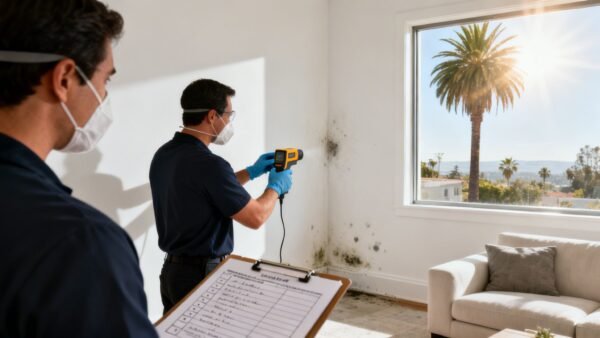

To get rid of a musty smell, you must first find and eliminate the moisture source fueling it. Once the water issue is resolved, you can effectively clean up any resulting mold or mildew growth.
The key is tackling the root cause, which is often a hidden leak, poor ventilation, or high humidity in your Los Angeles property. Simply spraying an air freshener is like putting a bandage on a broken arm—it does nothing to fix the actual problem. That persistent odor is a clear sign you need to investigate further.
The Hidden Dangers of Indoor Mold
That unmistakable, earthy odor in your home is more than just annoying; it’s a warning sign. It’s your property’s way of screaming that there’s a moisture problem, which is an open invitation for mold and bacteria.
The "musty" scent itself comes from microbial volatile organic compounds (MVOCs). These are gasses that mold and bacteria release as they grow and multiply in damp, dark spots. This is why you can often smell a problem long before you see it.
For property owners here in Los Angeles, this is a year-round issue. The lingering dampness after winter rains can saturate the framing of a home in Sherman Oaks, while the constant coastal fog in Santa Monica can easily work its way into walls and closets with poor airflow, creating a perfect breeding ground for mold.
Treat the smell as your first clue. Where is it strongest? That can lead you right to the source of the water. Ignoring it allows the underlying issue—a slow pipe leak, a compromised roof seal, a bathroom fan that doesn't vent outside—to worsen, leading to serious structural damage and potential health risks.
Musty smells are often the first red flag for hidden mold. It’s a huge issue, affecting an estimated 70% of homes worldwide. In the U.S., experts believe around 45 million buildings have unhealthy mold levels, turning what should be a safe space into a potential hazard.
Key Takeaway: A musty smell isn't the problem; it's a symptom of a deeper moisture issue. The only way to get rid of the odor for good is to find and fix the water source.
Knowing when to call for backup is crucial. If the smell is all over the house or you can’t pinpoint the source, a professional inspection is the next logical step. You can learn more about what's involved in professional LA mold testing to see how experts use specialized gear to find these hidden problems. Dealing with that smell quickly isn’t just about comfort—it's about protecting your home and your health.
How to Tell If You Need Professional Remediation
Before you can get rid of that musty smell for good, you have to find where it's coming from. The real culprit is almost always hidden moisture, which gives mold and mildew a place to thrive. So, it's time to put on your detective hat and follow your nose.
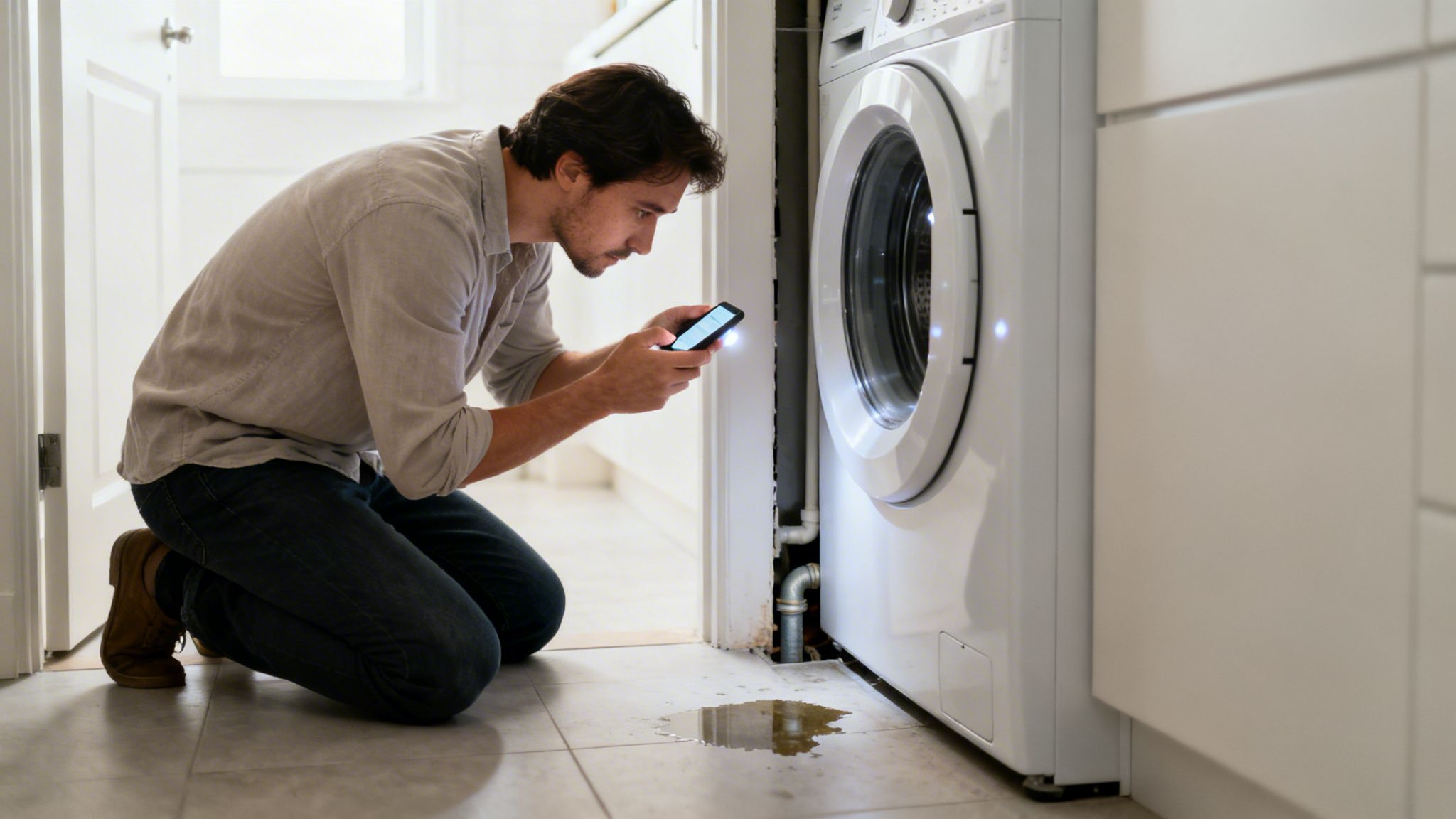
Start by walking through your property. Which room smells the worst? That potent, "old wet towel" odor is usually strongest right near the source, giving you a great starting point.
Common Hotspots in Los Angeles Homes
Once you’ve zeroed in on a room, it’s time to get a closer look. Check the usual suspects where we often find hidden moisture.
- Under Sinks: Kitchen and bathroom cabinets are notorious for slow leaks from plumbing lines. Look for any discoloration, warped wood, or faint water stains on the cabinet floor.
- Around Windows and Doors: Seals on older windows, especially in historic Burbank homes, can wear out. After it rains, feel the wall and windowsill for any damp spots.
- Behind Appliances: Refrigerators, washing machines, and dishwashers can develop tiny, slow leaks that soak the drywall and subfloor for months before anyone notices.
- Bathrooms and Laundry Rooms: These rooms are humid by nature. Check the grout and caulk around your tub or shower. If it’s cracked, water is likely seeping into the wall behind it.
Even a tiny, slow drip can cause major headaches. If you've found damp drywall, our guide on how to detect water leaks in walls offers more advanced tips.
Expanding Your Search to Structural Areas
If you’ve checked the obvious spots and still can't find the source, look deeper. The problem might be coming from an area with poor ventilation, where moisture gets trapped.
Crawl Spaces and Basements
Head down into your crawl space or basement. Is the smell overwhelming? Scan for damp soil, condensation on pipes, or dark stains on foundation walls and wood joists.
Attics and Roofs
Next, check the attic. Look for water stains on the insulation or the underside of the roof sheathing. A small roof leak can keep insulation damp and feed a musty odor that spreads through the house.
Pro Tip: Don't forget your HVAC system. It can pull musty smells from a damp crawl space and circulate them everywhere. If the odor gets stronger when the AC or heat kicks on, you might have mold growing inside the ductwork.
By methodically checking these areas, you stop just masking the smell and start actually solving the problem. Finding and fixing that moisture source is the single most important step in learning how to get rid of musty smell permanently.
Practical DIY Methods for Minor Odor Problems
Once you’ve tracked down and fixed a small moisture problem, you’re often left with that lingering musty smell. For contained issues, a few effective DIY tricks can knock out that odor.
The first step is ventilation. Open windows and doors to create a cross-breeze, and set up fans. For spots like basements or internal bathrooms, knowing how to ventilate a room without windows can be a game-changer.
Cleaning and Deodorizing Surfaces
If you spot small patches of surface mildew, a 50/50 mix of white vinegar and water is your best friend. Spray it on the area, let it sit for about an hour, and then wipe it down. The acetic acid in vinegar is a natural powerhouse against mold.
After cleaning, it's time to neutralize any remaining odor.
- Baking Soda: It absorbs odors instead of just covering them up. An open box in a closet or a small bowl under a sink works wonders.
- Activated Charcoal: This is a heavy-hitter. Activated charcoal is incredibly porous and fantastic at trapping odor molecules. Place pre-made bags in damp corners, basements, or bathrooms.
- Coffee Grounds: Dry, unused coffee grounds also do a great job of absorbing musty smells and leave behind a pleasant coffee aroma.
Here's a quick comparison of natural deodorizers versus chemical sprays.
Natural Deodorizers vs Chemical Air Fresheners
| Method | How It Works | Best For | Safety Notes |
|---|---|---|---|
| Baking Soda | Absorbs and neutralizes acidic odor molecules. | Enclosed spaces like closets, cabinets, and refrigerators. | Non-toxic and safe around pets and children. |
| Activated Charcoal | Traps odors and impurities in its highly porous surface. | Persistent damp smells in basements, bathrooms, or cars. | Non-toxic, but keep it contained to avoid messy black dust. |
| White Vinegar | The acetic acid breaks down mildew and bacteria causing the odor. | Cleaning hard surfaces where mildew is visible. | The vinegar smell dissipates as it dries. Safe for most surfaces, but test a small spot first. |
| Chemical Air Freshener | Coats nasal passages or masks odors with strong fragrances. | A quick, temporary fix for masking smells. | Can contain VOCs; may trigger allergies or asthma. Doesn't solve the root problem. |
Important Note: These DIY solutions are only for minor, localized odor issues where you've completely solved the moisture source. If the musty smell comes back or is spread across multiple rooms, that’s a red flag for a bigger problem.
Sometimes, the musty smell gets trapped in soft furnishings. If a small spill left your carpet damp, our guide on how to dry wet carpet fast has the steps you need to prevent mildew. Real success in learning how to get rid of musty smell always comes from tackling the root cause.
Red Flags That Signal a Deeper Moisture Issue
While elbow grease can handle minor spills, a musty smell can be the tip of the iceberg, signaling a serious hidden moisture problem. Knowing the difference between a simple cleanup and a major issue is key.
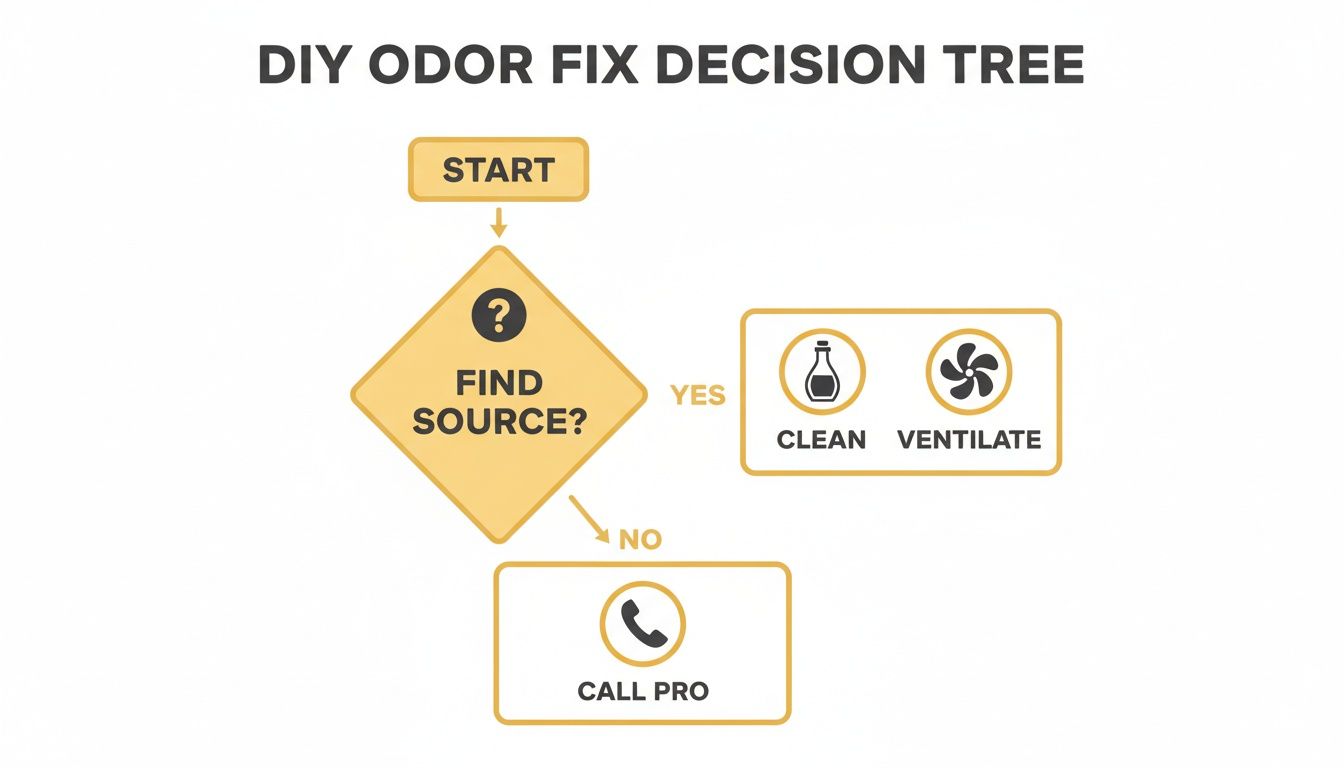
If you can't confidently find and fix the source of the water, you’re past the point of surface cleaning.
When the Odor Persists or Returns
The most obvious sign of a bigger problem is an odor that just won't quit. If you’ve scrubbed and aired everything out but that damp smell returns, it's a classic symptom of an unresolved moisture source. A slow pipe leak inside a wall of a Beverly Hills home might be the culprit. You might clean mildew off the baseboard, but the saturated drywall behind it remains a food source for mold. That smell will always come back until a professional repairs the leak. For more on this, check out our guide on the common signs of water damage in walls.
Pro Tip: If that musty odor intensifies every time it rains in Los Angeles, it's a huge clue that water is getting into your home’s structure, likely through a bad roof, foundation cracks, or leaky window seals.
Visible Mold and Health Concerns
Another red flag is the amount of visible mold. A tiny spot of mildew on shower grout is usually manageable. But any mold growth covering more than 10 square feet is considered a significant problem by the EPA and requires professional remediation.
The health risks are just as serious. That musty smell isn't just unpleasant—it's the direct result of microbial growth. A 2018 study of over 15,000 older adults discovered that self-reported musty odors were linked to an 18.95% prevalence of cognitive impairment. This highlights that these smells are a proxy for mold exposure, which can have real health consequences.
Call a professional if you notice:
- A musty odor coming from your HVAC vents.
- Warped flooring or peeling paint.
- A smell you can't pin down.
When you run into any of these red flags, it’s time to stop guessing.
Choosing the Right Mold Removal Company
When DIY fails and that musty smell persists, it’s a sign the problem is buried deeper than any surface cleaner can reach. This is where restoration professionals come in, armed with serious technology and a game plan that attacks the odor at its source.
Instead of guessing, our first move is to use specialized tools like thermal imaging cameras and moisture meters to find exactly where water is hiding behind your walls or under floorboards. This tech lets us create a detailed "moisture map" of the property without having to tear things apart.
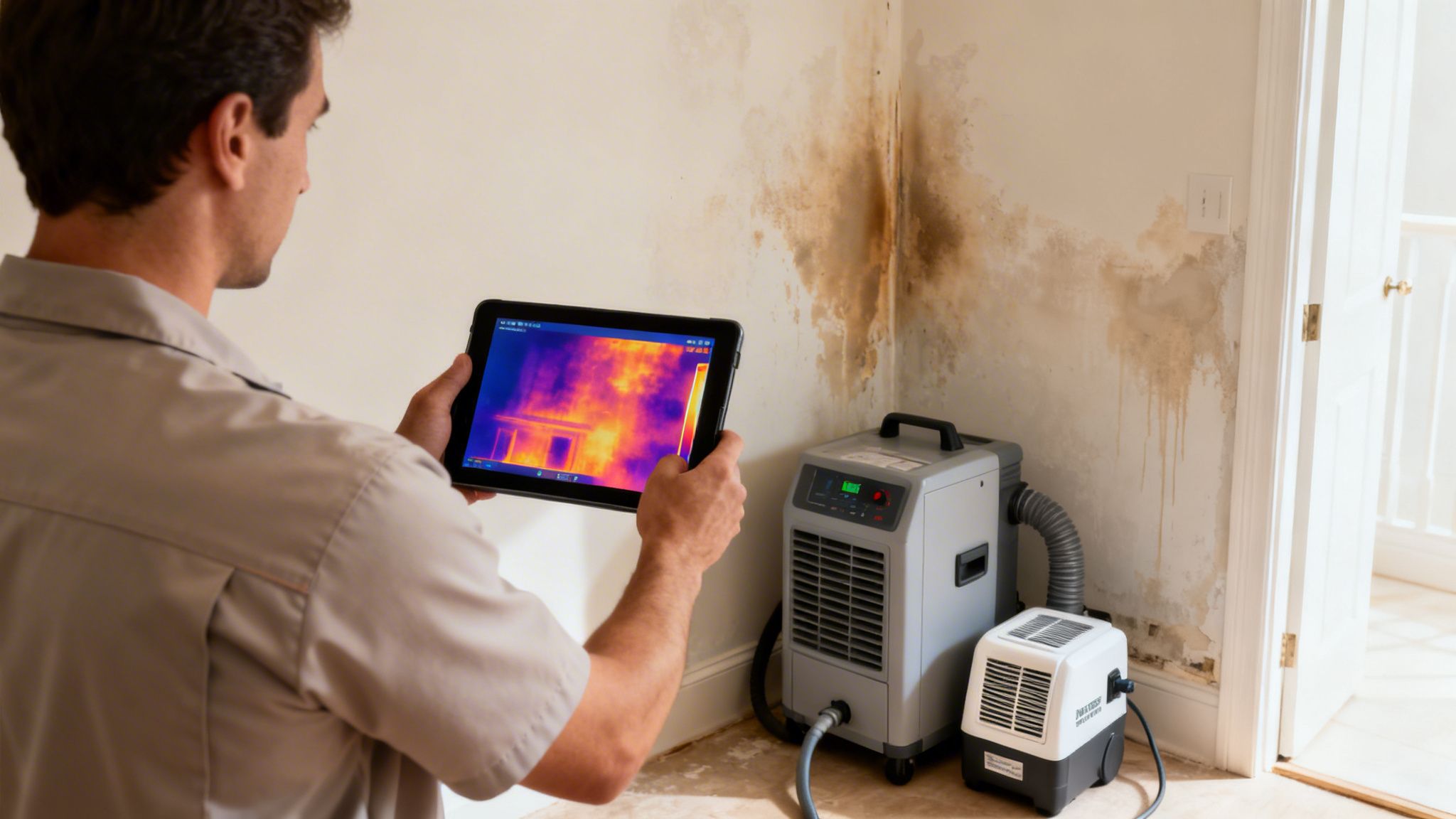
This diagnostic step is critical. The American Healthy Homes Survey II found that 12.7% of U.S. homes have musty smells directly linked to mold, often from hidden moisture. High-tech tools can spot this hidden water with up to 98% accuracy, ensuring we're not just treating symptoms.
The Professional Restoration and Deodorization Process
Once we've pinpointed the source and stopped the water intrusion, the real work begins. It’s a multi-stage process designed to dry the structure, clean the air, and destroy odors.
- Structural Drying: We bring in industrial-grade LGR dehumidifiers and high-velocity air movers. This setup creates a powerful drying vortex, pulling trapped moisture from deep within materials like drywall, wood studs, and insulation.
- Air Scrubbing: We set up HEPA air scrubbers. These machines constantly filter the air to capture microscopic mold spores, bacteria, and other particles contributing to the smell.
- Advanced Deodorization: For odors that have soaked deep into the property, we use thermal fogging or ozone generation (only in unoccupied, sealed-off areas) to chemically neutralize the odor-causing molecules for good.
Key Takeaway: A professional approach is a scientific process. We diagnose the source with precision, aggressively remove all moisture, and then purify both the structure and the air you're breathing.
This methodical system is the only way to be certain you know how to get rid of musty smell permanently. If you're dealing with stubborn pet odors adding to the musty problem, specialized professional pet odor removal services can be effective. It's also smart to understand what these services might cost; our guide on what mold remediation costs offers a transparent breakdown.
Schedule a Free Inspection or Book Mold Testing
Over the years, we've heard just about every question there is when it comes to musty odors in Los Angeles homes. Here are some of the most common ones we tackle.
Why does the musty smell get stronger when it rains in Los Angeles?
When it rains, the ground gets saturated, increasing the hydrostatic pressure against your foundation. This can force water vapor through microscopic cracks. That sudden spike in humidity inside your crawl space or basement "wakes up" dormant mold and mildew, causing them to release more musty-smelling gasses (MVOCs) into your home.
Can an air purifier get rid of a musty smell for good?
An air purifier is a temporary fix, not a permanent solution. A good one with a HEPA filter and activated carbon will trap airborne mold spores and absorb some odors, but it only treats the symptom. As long as the moisture source and mold are still there, the odor will return when the unit is turned off.
Is the musty smell from my air conditioner dangerous?
Yes, this should be taken seriously. A musty odor from your AC vents is a huge red flag for mold or bacteria growing inside the system, likely on the evaporator coils or in a clogged drain pan. Every time the AC kicks on, it blows these contaminants into every room, which is a major health concern for anyone with allergies or asthma.
My closet smells musty but I see no mold. What should I do?
Closets are prone to mustiness due to darkness and poor airflow. First, empty the closet and inspect the walls, ceiling, and floor carefully, especially walls backing onto a bathroom. The cause could be lingering humidity from clothes that weren't fully dry. Try running a dehumidifier in there for a few days. If the smell persists, you likely have a hidden moisture problem that requires professional detection.
Tired of playing detective with musty smells? The IICRC-certified team at Onsite Pro Restoration is on call 24/7 to find and fix the root cause for good. We use advanced diagnostic tools to pinpoint the source of the problem and eliminate it completely. Get a free, no-obligation inspection by contacting us today!