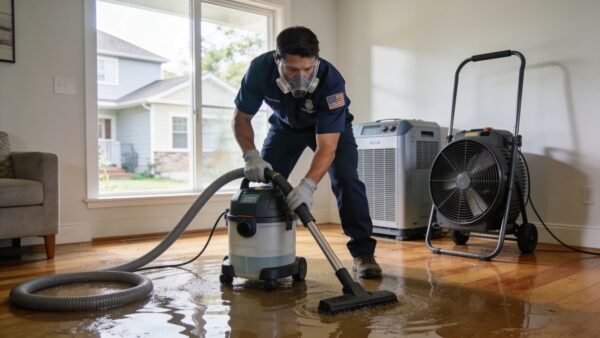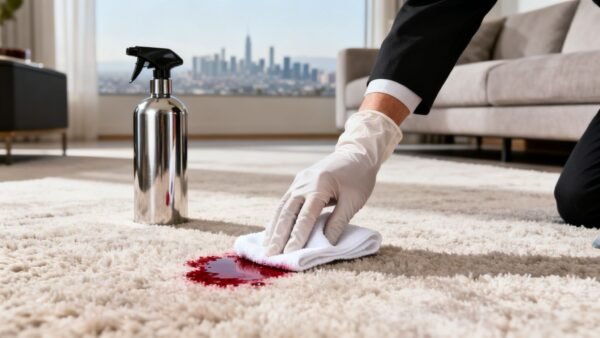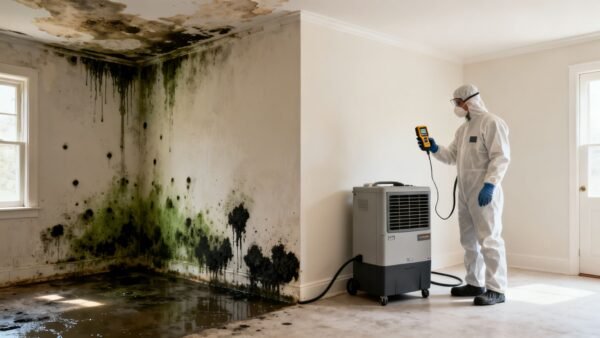

If you want to get rid of a smell for good, you have to stop masking it and start hunting for its source. Spraying air freshener on a hidden problem is like putting a bandage on a broken arm—it doesn't fix anything. In fact, a persistent smell is often the first clue you have about a deeper issue.
That lingering odor is a signal, a breadcrumb trail leading you to the real issue. It could be anything from a minor spill to a serious hazard like hidden mold or a slow plumbing leak. Learning how to eliminate odor in house starts with playing detective and following the clues to find and neutralize the source.
Get Your Free Odor Assessment Now
Pinpointing the Source of Your Household Odor
A musty, earthy smell, especially one that gets stronger after it rains or hangs around in a damp basement, almost always points to mold or mildew. We see this all the time in Los Angeles homes, especially in areas with persistent moisture from coastal fog or older plumbing.
Think about a small, unnoticed leak under a sink or a patch of dampness behind a washing machine. Those are perfect breeding grounds.
Common Odor Culprits and What They Mean
Different smells tell different stories. Learning to read them will save you time and help you focus your efforts where they'll actually make a difference.
- Musty & Earthy: This is the classic signature of mold or mildew. Check anywhere moisture collects: bathrooms, basements, laundry rooms, and under sinks. Even a small leak in a flat-roof home in Sherman Oaks can create the ideal environment for growth.
- Rotten Eggs or Sulfur: A faint smell might be a dead rodent trapped in a wall void or crawlspace. But a strong, persistent sulfur smell often signals a natural gas leak. This is a serious emergency. Evacuate immediately and call your gas company from a safe location.
- Sewage or Foul Water: This odor points directly to a plumbing problem. It could be a simple fix, like a dried-out P-trap under a rarely used sink, or a much bigger issue like a sewer line backup. These smells carry harmful bacteria and demand prompt attention.
- Acrid & Smoky: Lingering smells from a kitchen fire or even nearby wildfires can work their way into everything—drywall, carpet, upholstery, you name it. Those microscopic soot particles are stubborn and nearly impossible to remove without specialized equipment.
- Fishy or Electrical Burning: If you smell something "fishy" that isn't from last night's dinner, it can be a sign of an overheating electrical component. Faulty wiring, outlets, or circuit breakers can produce this odor, and it's a serious fire hazard that needs an electrician's immediate attention.
When an Odor Signals a Deeper Problem
While the garlic smell from dinner is just an annoyance, other scents are red flags for problems that can damage your home's structure and your family's health.
An odor is often the first and only sign of a hidden problem like water damage or a biohazard. Ignoring it can lead to more extensive damage and costly repairs down the road.
A musty odor, for example, is frequently the only clue you'll get about a mold infestation growing behind your walls. Our guide on how to check for mold in walls can walk you through how to investigate this further.
And don't forget to consider your HVAC system. You might be surprised to learn why your air conditioner smells from trapped dust, hidden mold, or even mechanical issues. When you find these kinds of red flags, it's a clear sign that it's time to stop diagnosing and start taking action.
Your First Line of Defense Against Common Odors
Before you spend a dime on professional services or harsh chemicals, there are some surprisingly powerful DIY moves you can make to reclaim your home’s air. The first, and honestly most overlooked, step is simple ventilation. When air gets trapped and stagnant, it concentrates odors, making them seem far worse than they actually are.
Just cracking open windows and doors on opposite sides of your house creates a cross-breeze that can flush out stale, smelly air in minutes. For specific problem areas like a stuffy bathroom or a kitchen filled with cooking smells, run the exhaust fan for at least 30 minutes. This simple act won't solve the underlying issue, but it clears the air enough for you to play detective and pinpoint the true source of the smell.
Deep Cleaning to Neutralize Odors at the Source
Once the air is clearer, it's time to go on the offensive. This isn't about masking the smell with a floral spray; it's about eliminating the odor-causing bacteria at their source. And you probably already have the best tools for the job right in your pantry.
Start with the basics. A simple 50/50 mix of white vinegar and water in a spray bottle is a fantastic all-purpose deodorizer. Vinegar is acidic, so it works by neutralizing the alkaline molecules behind many common household smells.
For soft surfaces like carpets, rugs, and upholstery that act like sponges for bad smells, baking soda is your secret weapon.
- Liberally sprinkle dry baking soda over the entire surface. Don't be shy here; you want a good, visible layer.
- Let it sit for a few hours—or even overnight for stubborn odors. This gives it time to absorb the odor molecules.
- Thoroughly vacuum it all up. You may need to go over the area a few times to get all the powder out.
This method works wonders on general mustiness, lingering pet odors, and even light smoke smells. It's a fundamental part of knowing how to eliminate odor in house with everyday items.
Natural vs. Chemical Solutions: What to Use and When
While pantry staples are great for many situations, some odors are just too stubborn and require a more targeted attack. The trick is to correctly identify what you're up against so you can choose the right tool for the job.
A critical mistake homeowners make is grabbing the wrong cleaner. This can either do nothing at all or, worse, permanently set the stain and the odor.
For organic-based odors—think pet urine, vomit, or other bodily fluids—enzymatic cleaners are a total game-changer. These specialized products contain active enzymes that literally break down and "eat" the odor-causing bacteria, rather than just covering them up. If you have pets, an enzymatic cleaner is a must-have in your cleaning arsenal.
Sometimes the problem is localized in an appliance. Before assuming the whole kitchen smells, it's worth learning how to clean a smelly refrigerator and other appliances. A simple deep clean can often solve what feels like a major odor crisis.
To make the right choice, it helps to see how your options stack up.
DIY Odor Neutralizers Head-to-Head
This table breaks down the most common household items you can use to fight odors, so you can pick the perfect one for your situation.
| Neutralizer | Best For Odors | How It Works | Pros | Cons |
|---|---|---|---|---|
| White Vinegar | Mildew, cooking smells, general mustiness | Neutralizes alkaline odor molecules with its acidity. | Inexpensive, non-toxic, versatile. | Strong initial smell (dissipates), not for all surfaces. |
| Baking Soda | Pet smells, smoke, stale fridge/freezer odors | Absorbs and neutralizes odor-causing molecules. | Very cheap, safe, excellent for soft surfaces. | Can be messy, requires dwell time. |
| Enzymatic Cleaner | Pet urine, vomit, blood, organic stains | Enzymes break down and digest protein-based bacteria. | Extremely effective on organic odors, removes stains. | More expensive, must be used correctly to work. |
| Activated Charcoal | Persistent ambient odors in enclosed spaces | Porous structure traps and absorbs airborne odor molecules. | Passive, long-lasting, chemical-free. | Slower acting, not for surface cleaning. |
No matter which product you choose, always test it on a small, hidden spot first to make sure it won’t discolor or damage the material. And remember, proper ventilation isn’t just for airing out a room—it’s a crucial safety measure when you're cleaning.
Tackling Stubborn Smells from Mold, Sewage, and Pets
When you’ve aired everything out and deep-cleaned twice, but a foul odor just won’t quit, you’re probably dealing with one of the big three: mold, sewage, or deep-set pet accidents. These aren't just annoying smells—they're red flags for serious issues that can damage your health and your home's structure. Covering them up with air freshener is not an option.
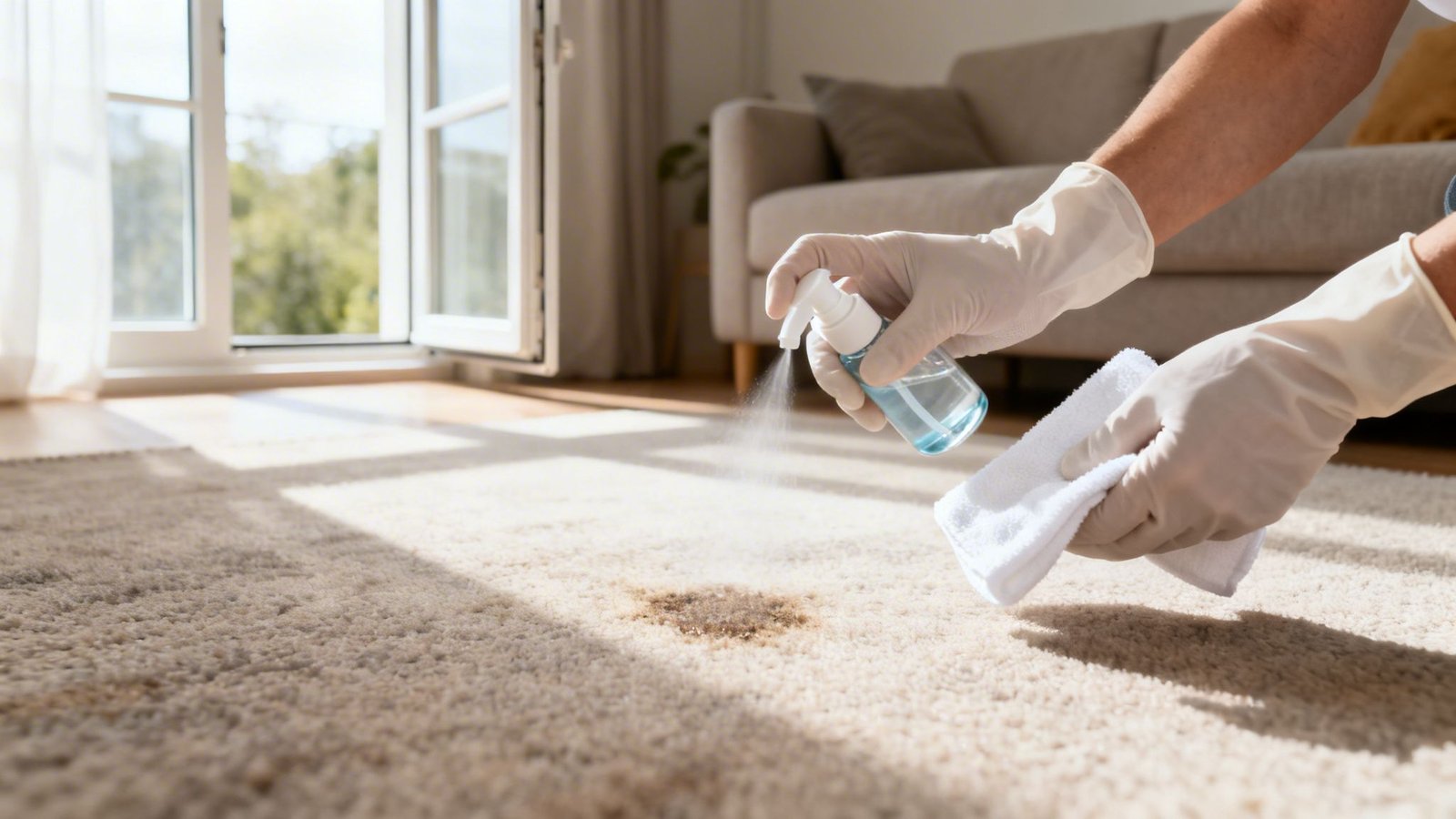
Learning how to eliminate odor in house when it's this stubborn means you have to play detective and get to the source.
Investigating and Treating Musty Mold Odors
That persistent earthy or musty smell is the classic calling card of a hidden moisture problem—and where there’s moisture, there’s often mold. Don't just wipe down a visible spot; you have to cut off the water supply to stop it for good.
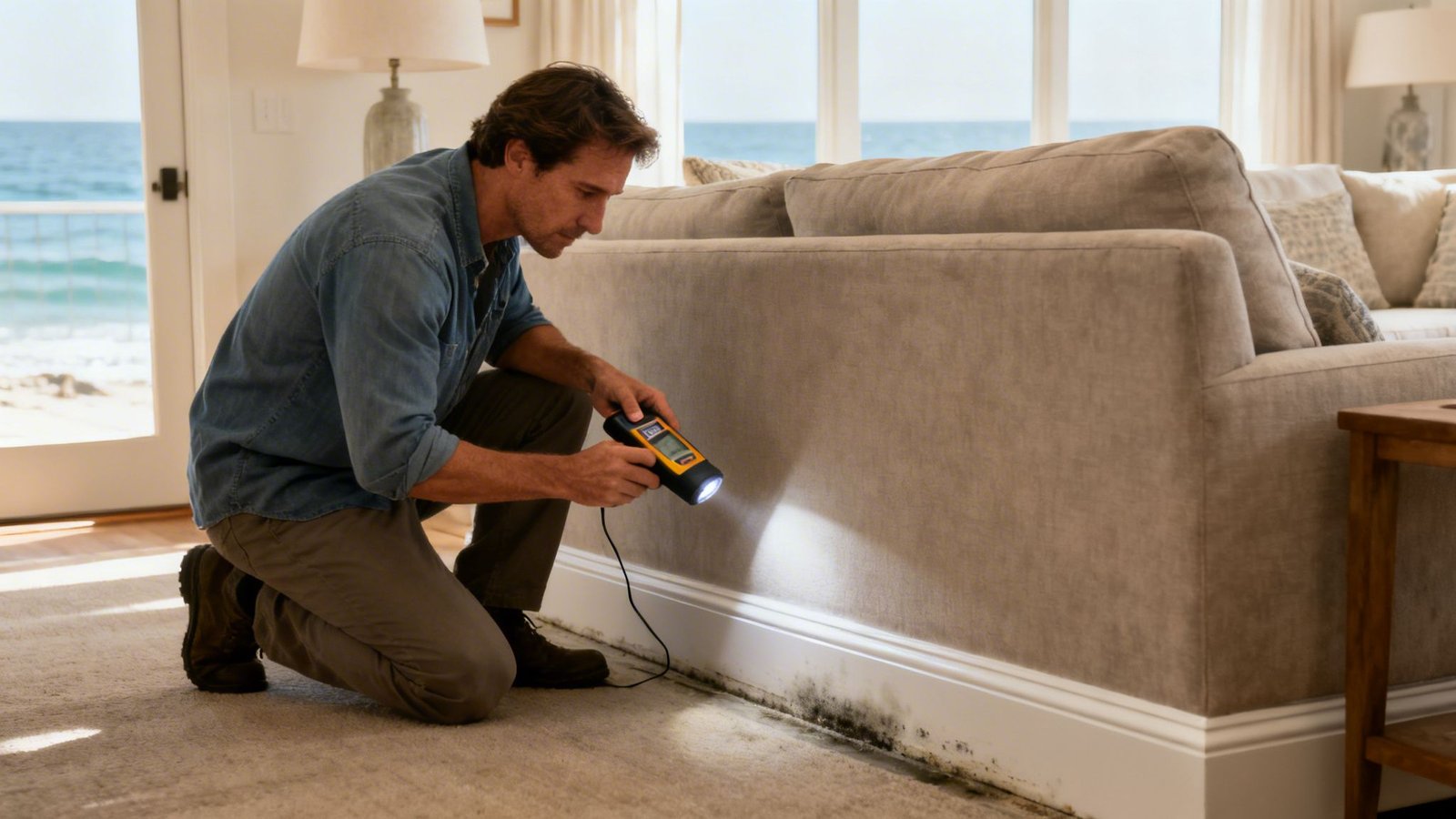
Grab a flashlight and check the usual suspects: under sinks, behind toilets, in closets, and around window sills. Look for water stains, peeling paint, or drywall that feels soft. A little surface mildew might respond to a vinegar spray, but if the smell lingers or the patch is bigger than your hand, the problem goes deeper.
This is a huge issue. In California, it's estimated that mold from water damage affects 1 in 4 homes. When left untreated, these sneaky odors stick around in 60% of cases, which can seriously impact property value.
Handling Hazardous Sewage Smells
A sewage odor is an emergency. Full stop. That rotten-egg or sulfur smell is a sign your plumbing has failed, potentially releasing harmful bacteria and toxic sewer gas into your home.
Sometimes, the fix is simple. A dried-out P-trap in a floor drain or guest bathroom can be refilled by pouring a gallon of water down it, restoring the water barrier that blocks gas.
But if the smell is strong, spreads through the house, or you hear gurgling drains, you could be looking at a sewer line backup. This is a biohazard. Stay out of the area, turn off your water main if you think it's an active leak, and call a professional immediately.
A sewer backup is more than a bad smell—it's a serious health hazard. The contaminated water, known as "black water," contains pathogens that can cause severe illness. Never attempt to clean a significant sewage spill yourself.
Sewer backups are more common than you’d think. In LA County, these backups and the mold that follows impact over 10,000 properties every year, especially after heavy rains. If this is happening to you, our team created an in-depth resource with critical next steps; take a look at your ultimate guide to sewage damage cleanup.
Permanently Eliminating Persistent Pet Odors
We all love our pets, but their accidents are notoriously difficult to clean. Pet urine odor actually gets worse over time because as it dries, it leaves behind uric acid crystals. These crystals aren’t water-soluble, so regular carpet cleaners won’t touch them.
The only real solution is an enzymatic cleaner. These products use specialized enzymes to break down the uric acid crystals, destroying the odor at its source.
Here’s a real-world scenario we see all the time: A Glendale condo owner had a lingering cat urine smell, even after professional carpet cleanings. We brought in a moisture meter and a black light, which revealed the urine had soaked straight through the carpet and pad, right into the subfloor.
To fix it properly, we had to:
- Remove the contaminated carpet and padding completely.
- Treat the subfloor with a professional-grade enzymatic cleaner, letting it sit to fully break down the acid crystals.
- Seal the subfloor with a special odor-blocking primer before installing new padding and carpet.
This is the key takeaway: you have to treat every single layer the urine touched. Failed DIY attempts are incredibly common; U.S. homeowners spend an estimated $2.5 billion a year on products that don't solve the underlying problem. A professional approach resolves the issue correctly over 90% of the time, often on the first visit.
Eliminating Pervasive Smoke and Fire Odors
Smoke isn't just a smell; it's a physical invader. Unlike other household odors that you can wipe away or air out, smoke is composed of microscopic, oily soot particles. These particles are incredibly tiny and sharp, allowing them to dig deep into every porous surface in your home—drywall, wood studs, carpeting, furniture, and even your insulation.
This is exactly why scrubbing the walls or shampooing the carpets rarely works. The odor isn't just on the surface; it's embedded in the material itself. It’s a frustrating reality for homeowners who find the smell continues to off-gas from hidden sources for months or even years, making most DIY efforts feel pointless.
Why Smoke Smell Is So Stubborn
To really get why smoke is so hard to remove, stop thinking of it as a scent and start thinking of it like a stain that has soaked deep into a sponge. The particles are so small they work their way into the microscopic pores of nearly every material. A simple wipe-down only gets the top layer, leaving millions of odor-causing particles behind.
This is especially true after a kitchen fire in a Burbank home or from the pervasive smoke of California wildfires. The heat from a fire actually opens up the pores of materials like wood and drywall, allowing soot to penetrate even deeper. Once things cool down, those pores close, trapping the smell inside.
Smoke doesn't just sit on surfaces; it chemically bonds with them. This is why you need specialized, professional-grade treatments to break those bonds and neutralize the odor at a molecular level for good.
Lingering smoke odors are a tough reality for over 15,000 LA households every year. Professional restoration companies can deploy advanced technology proven to eradicate these stubborn soot odors in just 48-72 hours—a huge improvement over the two-week average for most DIY attempts. Critically, data shows 85% of smoke odors contaminate HVAC systems, which is why a professional duct cleaning is non-negotiable. You can see more about these industry solutions in the latest odor eliminator market research.
The Professional Technology That Actually Works
When it comes to learning how to eliminate odor in house after a fire, the real answer lies in technology that can reach where cleaning cloths and sprays can't. Certified technicians use a multi-step process with specialized equipment designed to find and destroy odor particles.
This process often involves one or more of these advanced tools:
- Thermal Fogging: This technique uses a machine to heat a solvent-based deodorizer, creating a dense fog. The fog particles are similar in size to smoke particles, so they follow the exact same paths deep into porous materials to neutralize the odor at its source.
- Ozone Generation: An ozone generator creates O3 molecules, which are highly reactive. When these molecules collide with smoke odor molecules, they cause a chemical reaction (oxidation) that destroys the odor. This is a powerful process that requires the home to be completely unoccupied for safety.
- Hydroxyl Treatment: A safer alternative to ozone, hydroxyl generators use UV light to create hydroxyl radicals. These radicals are extremely effective at breaking down odor molecules in the air and on surfaces, and the process can be performed while the home is still occupied.
From Soot to Safety: A Real-World Example
Picture this: a small grease fire breaks out in the kitchen of a Burbank home. The fire is put out quickly, but a thick, acrid smoke has already filled the entire first floor. The homeowner tries airing out the house and washing the walls, but the smell just won't go away.
This is where a professional team like Onsite Pro Restoration comes in. Our methodical approach would look like this:
- Soot & Residue Cleanup: First, our IICRC-certified technicians would meticulously clean every single surface to remove all soot and oily residue. This is a non-negotiable first step, as you can't deodorize a dirty surface.
- HVAC & Duct Cleaning: Next, we would professionally clean the entire HVAC system and all associated ductwork to remove the soot particles that were inevitably circulated throughout the house.
- Advanced Deodorization: Depending on the severity, we’d then deploy hydroxyl generators or thermal foggers to neutralize the deeply embedded odors that cleaning alone can't reach.
- Surface Sealing: In severe cases, we apply a specialized odor-blocking sealant or primer to affected surfaces like drywall and subfloors before any repainting. This permanently encapsulates any remaining odor molecules, ensuring they never return.
This systematic process is the only way to guarantee the smoke smell is gone for good. If you're struggling with this stubborn problem, our team has put together a detailed guide on how to eliminate fire smoke odor in house.
When to Call a Professional for Odor Removal
Knowing your limits is a huge part of learning how to eliminate odor in house safely. While you can tackle everyday smells on your own, some odors are red flags. They signal a problem that’s moved beyond the reach of store-bought sprays and deep cleaning.
Pushing forward with DIY methods on these serious issues can backfire, leading to more damage, wasted money, and even health risks.
You've cleaned, scrubbed, and aired everything out, but the smell just won’t quit. That’s the number one sign the source is either hidden or has soaked so deep into your home’s materials that surface cleaners can't touch it. When an odor comes back, it's time to call in a team that can find and kill the source for good.
Red Flags That Demand an Expert Assessment
Some smells aren't just annoying—they're warnings. If you notice any of these, it's time to get a professional assessment to protect your family and your property.
- Persistent Musty or Earthy Odors: That stubborn musty smell, especially in a basement or bathroom, almost always points to a hidden mold colony. It’s likely growing behind your walls, under the floorboards, or deep inside your HVAC system.
- Any Odor After Water Damage: Whether it was a burst pipe or a leaky roof, water creates the perfect breeding ground for mold and bacteria. If you have any lingering smell after a water event, moisture is still trapped somewhere. You need professional drying and deodorization.
- Stubborn Smoke and Soot Smells: Smoke particles from a fire are microscopic and incredibly invasive. They get into drywall, wood, insulation—everything. It's impossible to get them out completely without specialized gear like thermal foggers or ozone generators.
- The Unmistakable Smell of Sewage: A sewage odor is a straight-up biohazard. It means a plumbing failure is releasing harmful bacteria into your home. This is never a DIY job. It requires immediate professional cleanup to make sure the area is safely sanitized.
This chart helps break down the decision, especially when you're dealing with something as tough as a fire odor.
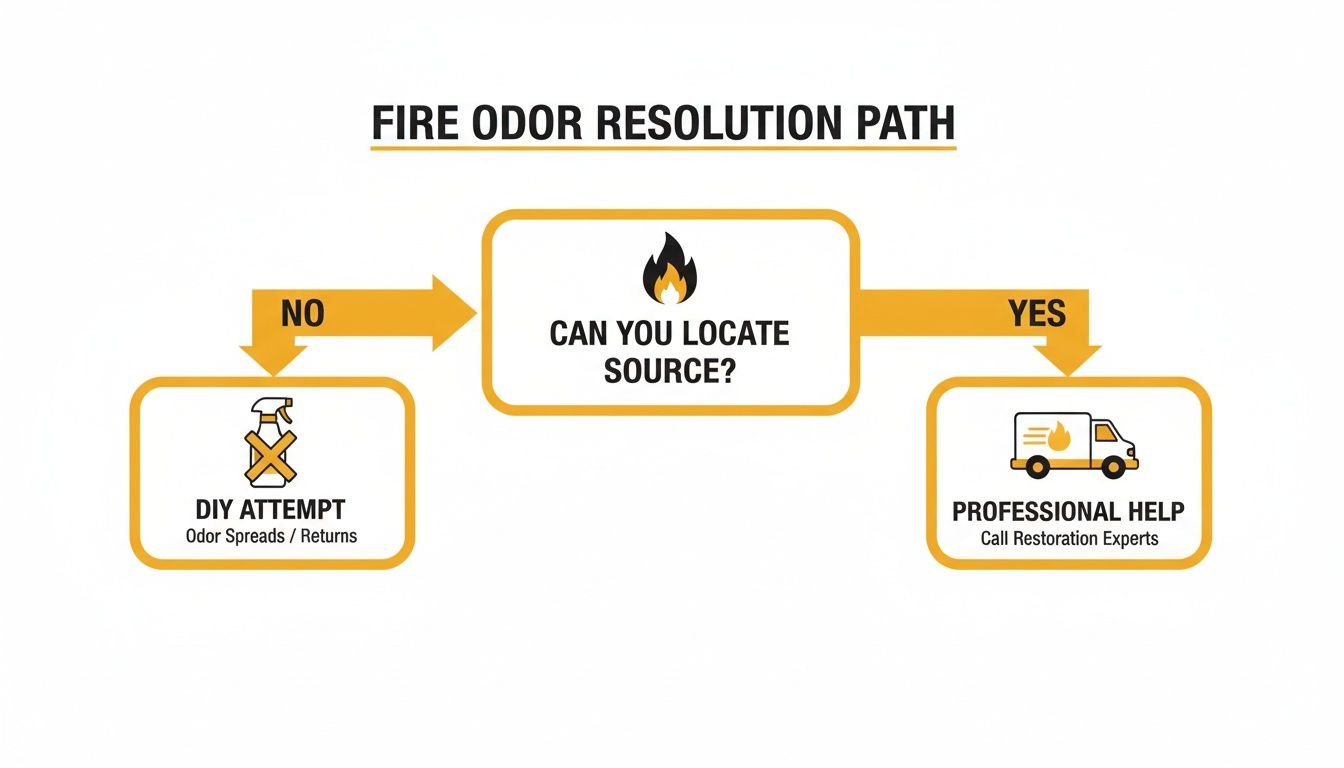
As the flowchart shows, you might be able to handle minor, surface-level smells yourself. But when odors are baked deep into the property from an event like a fire, you need professional technology for a real solution.
The Onsite Pro Restoration Process
When you call us, you’re not just getting a cleaning crew. You’re getting a team of IICRC-certified restoration experts who understand the science behind odor removal and have the right tools to solve the problem permanently. We’ve designed our process to be fast, thorough, and stress-free for homeowners across Los Angeles.
Persistent household odors can signal serious underlying damage. Locally in Los Angeles, where water intrusions from burst pipes affect over 20,000 properties annually, unchecked odors from mold or sewer backups can reduce home values by up to 10-15%. Statistics show that 70% of residential odor issues stem from hidden moisture, and DIY sprays fail 60% of the time against deep-seated smells from fire or biohazards. You can learn more by checking out the latest odor eliminator market insights.
We always start with a free, no-obligation inspection. Our technicians use advanced diagnostic tools like moisture meters and thermal imaging cameras to find the exact source, even if it's hiding behind a wall.
Once we’ve located the problem, we walk you through our plan of action and give you a clear, upfront estimate before any work begins. Our goal isn't just to get rid of the odor—it's to handle the entire process for you, including working directly with your insurance company on the claim. You can see the tools and training our certified restoration professionals use to guarantee results.
Frequently Asked Questions About Odor Elimination
When you're dealing with a persistent smell, a lot of questions come up. Here are the straight answers to the most common concerns we hear from homeowners trying to figure out how to eliminate odor in house for good.
How Long Does It Take to Professionally Deodorize a House?
The timeline depends entirely on the source and severity of the odor. Minor issues like lingering cooking smells can often be resolved in under 24 hours with a deep clean and ozone treatment. However, severe odors from fire damage or a long-term mold problem are more complex. This process can take 3 to 5 days and includes source removal, surface sealing, and running industrial-grade air scrubbers or hydroxyl generators. A precise timeline can only be provided after a thorough on-site inspection.
Will Homeowners Insurance Cover Odor Removal Costs?
Generally, yes—if the odor is the result of a "covered peril." For example, odor removal is typically included in claims for fire damage (smoke odor) or a burst pipe (moldy odor). Insurance will not cover odors resulting from poor maintenance, such as long-term pet accidents or cigarette smoke. The key is whether the event that caused the smell is covered by your policy. We work with all major carriers in Los Angeles to streamline this process.
Are Professional Deodorization Methods Safe for My Family and Pets?
Yes, when performed by IICRC-certified professionals who follow strict safety protocols. Our top priority is safety. We use EPA-approved products and proven techniques. Powerful methods like ozone generation require the home to be unoccupied during treatment, but we ensure the property is thoroughly ventilated and tested for safety before allowing re-entry. Other methods, like hydroxyl treatments, are safe to use while a home is occupied.
Can You Permanently Remove Cigarette Smoke Smell from a House?
Yes, but it requires a comprehensive, professional approach. Simply painting over the walls will trap the odor, which will eventually leach back out. The permanent solution involves a deep cleaning of all surfaces to remove tar and nicotine residue, a thorough HVAC and duct system cleaning, and the use of advanced technology like thermal fogging or ozone generation to neutralize odor molecules that have penetrated porous materials like drywall and wood.
Don't let stubborn odors ruin your home's comfort and value. If DIY methods have failed, it's time to call in the experts. The team at Onsite Pro Restoration has the certified training and advanced technology to eliminate any odor at its source, permanently.