
Getting rid of cigarette smoke odor for good is a lot more involved than just spraying some air freshener and opening a window. That stubborn smell comes from a physical substance—a sticky, yellow-brown film of tar and nicotine that coats everything. To truly eliminate the cigarette smoke odor in a house, you have to remove that residue from every surface, nook, and cranny.
This means deep cleaning every surface, dealing with all fabrics and textiles, cleaning the HVAC system, and almost always sealing the walls with a specialized primer before you can even think about repainting. It’s a full-on restoration project, not just a cleaning job.
Don't let lingering smoke odors devalue your property. For professional smoke remediation in the Los Angeles area, call Onsite Pro Restoration today at (818) 336-1800.
The Hidden Dangers of Thirdhand Smoke
That smell you can't seem to shake is what we in the restoration business call thirdhand smoke. It’s not the smoke you see in the air; it's the toxic, sticky residue left behind. It works its way into drywall, carpets, light fixtures, and even the hidden parts of your ventilation system.
This residue doesn't just sit there. It continuously off-gases chemicals and that unmistakable stale odor, sometimes for years after the last cigarette was put out. Standard cleaning products just can't break down this greasy film.
Why That Smell Just Won't Go Away
The chemical compounds in tobacco smoke are incredibly stubborn. They don’t just lie on a surface; they absorb deep into materials all over the house.
- Drywall and Paint: Porous materials like these literally act like a sponge for smoke particles.
- Carpets and Upholstery: The fibers trap tar and nicotine, which is why vacuuming alone does absolutely nothing.
- Wood, Vinyl, and Laminate: Even hard surfaces get coated. The finish on floors and cabinets can develop a yellowish, smelly film that’s tough to scrub off.
- HVAC Systems: This is the big one. Your ductwork becomes a delivery system, circulating smelly, contaminated air throughout the entire house.
Forget scented candles or plug-in air fresheners. They just mask the smell for a little while. The odor will always come back because the source—that sticky residue—is still there.
Key Takeaway: You aren't just fighting a smell; you are removing a physical, chemical residue. Understanding this is the first step toward a successful remediation and learning how to eliminate cigarette smoke odor in a house for good.
The "Nose Blind" Problem You Can't Ignore
People who smoke in their own homes often don't even notice the smell. It's a classic case of olfactory fatigue—their senses have just gotten used to it. But for a non-smoker, like a potential homebuyer or a new tenant in a Los Angeles property, the odor is overwhelming and an instant dealbreaker. For instance, a property manager in Sherman Oaks may not detect an issue, but a prospective tenant certainly will.
This perception gap is a huge issue. Research on odor perception shows that non-smokers detect tobacco odors far more intensely than smokers do. What a seller might think is a "faint" smell could be a serious understanding indoor air quality problem for the next person who lives there.
To truly fix the problem, you have to treat it like any other major contamination. Much like removing soot after a fire, you need a systematic plan to decontaminate the property. Our guide on how to clean soot off walls offers some great insights into just how widespread this kind of residue can be. Clearing the air and restoring the home’s value means going way beyond a simple surface clean.
First Moves: Air Exchange and Source Removal
Before you even touch a cleaning solution, your first job is to get fresh air moving and remove every single item that’s holding onto the smoke odor. This isn't just about making the house smell better for a few hours; it's about stopping the ongoing contamination.
Think of it this way: you can't clean a wall while someone is still smoking in the room. This first phase is crucial for creating a clean slate, making all your deep-cleaning efforts far more effective.
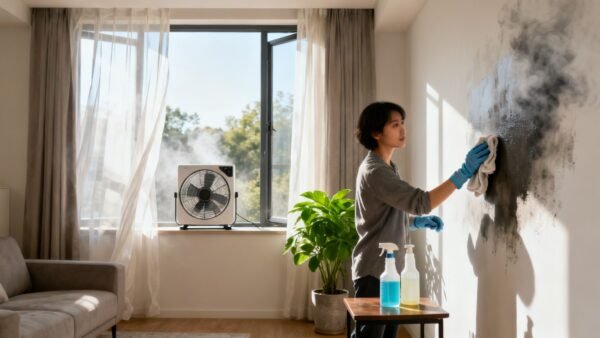
Your first action is simple but non-negotiable: ventilate the entire property. Throw open every window and door you can to create a strong cross-breeze. To really make a difference, place box fans in the windows, making sure they face outwards. This creates negative pressure, actively pulling the stale, contaminated air out instead of just stirring it around inside.
Let the fans run for at least 24 hours if you can. The goal is a total air exchange—pushing out the trapped, smoky air and replacing it with fresh air. This won't eliminate the smell completely, but it’s the mandatory starting point for learning how to eliminate cigarette smoke odor in a house.
Get Rid of the Odor Sponges
With fresh air circulating, it’s time to be ruthless. Cigarette smoke residue, known as thirdhand smoke, is a sticky, oily substance that latches onto everything, especially porous materials. These items act like sponges, constantly re-releasing the smell into the air.
You need to do a complete sweep of the property and get these "odor sponges" out.
- The Obvious Sources: Start with the easy stuff. Collect all ashtrays, old cigarette butts, and any leftover tobacco. Double-bag them before tossing them in an outdoor trash bin to contain the smell.
- Porous Disposables: Smoke loves to cling to paper and cardboard. Old newspapers, magazines, and boxes are major culprits. Unless they're irreplaceable, the best move is to bag them up and get them off the property.
- Textiles and Fabrics: Gather every removable fabric in the house. This means curtains, drapes, blankets, bedding, and any slipcovers or cushion covers on furniture. Take them straight to the laundry room or bag them up for a trip to the dry cleaner. Don't let them sit in a pile.
This is what you're actually fighting—not just a smell, but a physical residue.
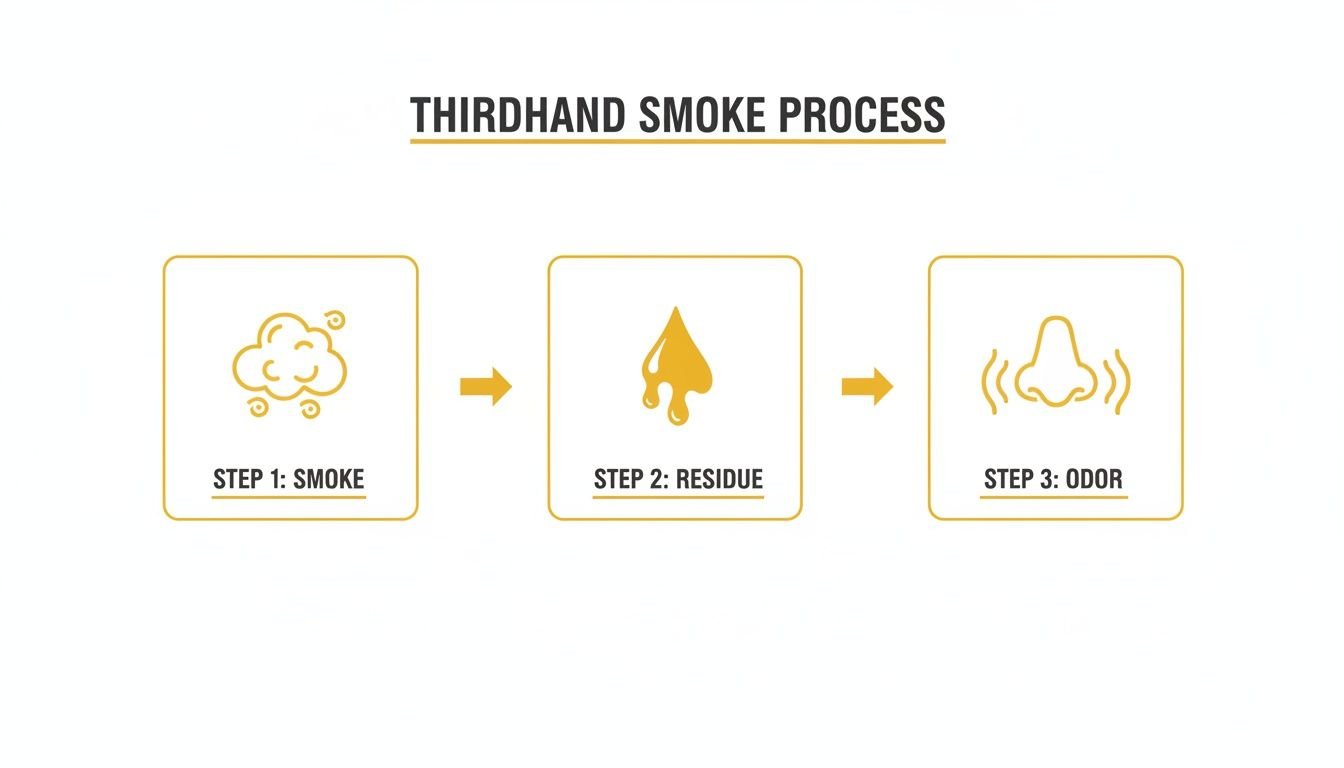
The image makes it clear: the odor comes from a physical, sticky film. Just airing out a room will never be enough to get rid of it.
Expert Tip: Don't skip the small stuff. I've seen jobs where a single throw pillow or a box of old papers in a closet was enough to keep that foul smell lingering, completely undermining hours of hard work. If you're on the fence about an item, it's almost always better to toss it.
By clearing out the clutter and removing these primary sources, you’ve now prepped the area for a real deep clean. You’ve exposed the surfaces that hold the most residue—the walls, ceilings, and floors—which we'll tackle next. For more on this initial stage, check out our guide on the best way to get smoke out of a house, which dives deeper into these critical first steps.
Deep Cleaning Every Hard and Soft Surface
Now that you've aired out the space and removed the primary sources, the real fight begins. You're up against a sticky, oily film of tar and nicotine that has coated literally everything. Standard soap and water won't even make a dent in it.
This residue requires specific, targeted cleaning to break it down.
Attacking Hard Surfaces: Walls and Ceilings
Your first target should be the largest surfaces in the house: the walls and ceilings. This is where the vast majority of thirdhand smoke residue accumulates, and cleaning them delivers the biggest and most immediate blow to the odor.
You’ll know it when you see it—that gross, yellowish-brown film. For very light cases, a simple mix of one part white vinegar and one part warm water might work. Vinegar is a great natural deodorizer and its acidity can cut through some of the grime.
But for a home with years of smoking, you need to bring in the heavy hitters. The professional’s choice is a trisodium phosphate (TSP) cleaner, and for good reason. It’s incredibly effective at dissolving the heavy grease, soot, and nicotine that has bonded to painted surfaces.
Safety First: When using TSP or any powerful chemical, gear up. That means rubber gloves, safety goggles, and clothes you don't mind ruining. Keep the windows wide open and get some fans running to ensure the area is well-ventilated.
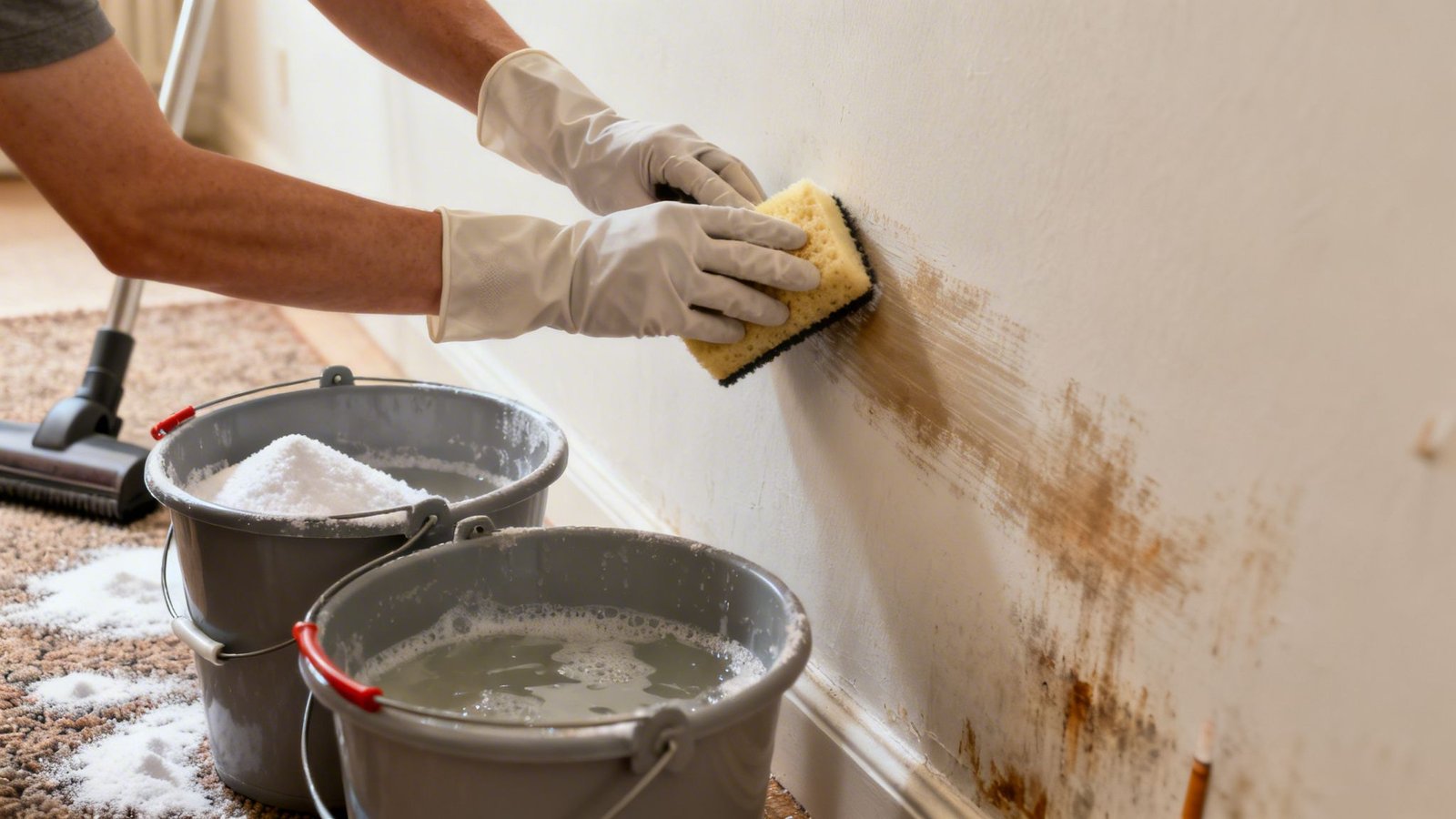
To avoid just smearing the tarry film around, use a two-bucket system. One bucket holds your cleaning solution, and the second holds clean rinse water. Wipe a section of the wall, then rinse your sponge in the clean water bucket before dipping it back into the cleaning solution. This small step is critical—it stops you from reapplying the smelly gunk you just removed.
The Right Way to Wash Walls
Cleaning walls is a workout, but doing it systematically prevents streaks and saves you from having to do it all over again.
- Work in small zones: Focus on a manageable 3×3 foot section at a time.
- Clean from the bottom up: It feels backward, but it works. Starting at the baseboards and working up prevents dirty runoff from streaking the clean areas below.
- Rinse from the top down: Once a vertical section is washed, grab a fresh sponge and clean water. Rinse from the ceiling downward to wash away any remaining residue.
This is the standard procedure we use in the field because it guarantees that drips only run over dirty or already-rinsed areas. We use the same principles for fire damage cleanup, which you can learn more about in our guide on how to wash soot off walls.
Deodorizing Porous Materials and Textiles
With the hard surfaces clean, it's time to deal with the soft stuff. Carpets, rugs, and upholstered furniture are like giant sponges that have soaked up years of smoke odor. A quick vacuum won't cut it.
A good first step is to generously sprinkle baking soda over every inch of carpet and upholstery. Be liberal with it—you want a visible layer. Let it sit for at least a few hours, or even better, overnight. This gives the baking soda time to absorb the odors near the surface.
Next, vacuum it all up. Here's the critical part: you absolutely must use a vacuum with a HEPA filter. A standard vacuum will just suck up the microscopic odor particles and shoot them right back out the exhaust, re-contaminating the room you just cleaned.
For carpets and furniture exposed to years of smoking, this is just a preliminary step. The smoke particles are embedded deep in the fibers, far beyond where baking soda or a vacuum can reach. Professional steam cleaning is almost always required to eliminate the cigarette smoke odor in the house for good. The process uses high-pressure hot water and specialized cleaning agents to flush out the deep-seated grime, then powerfully extracts the dirty, odorous water, leaving the fibers truly clean.
Tackling the Hidden Odor in Your HVAC System
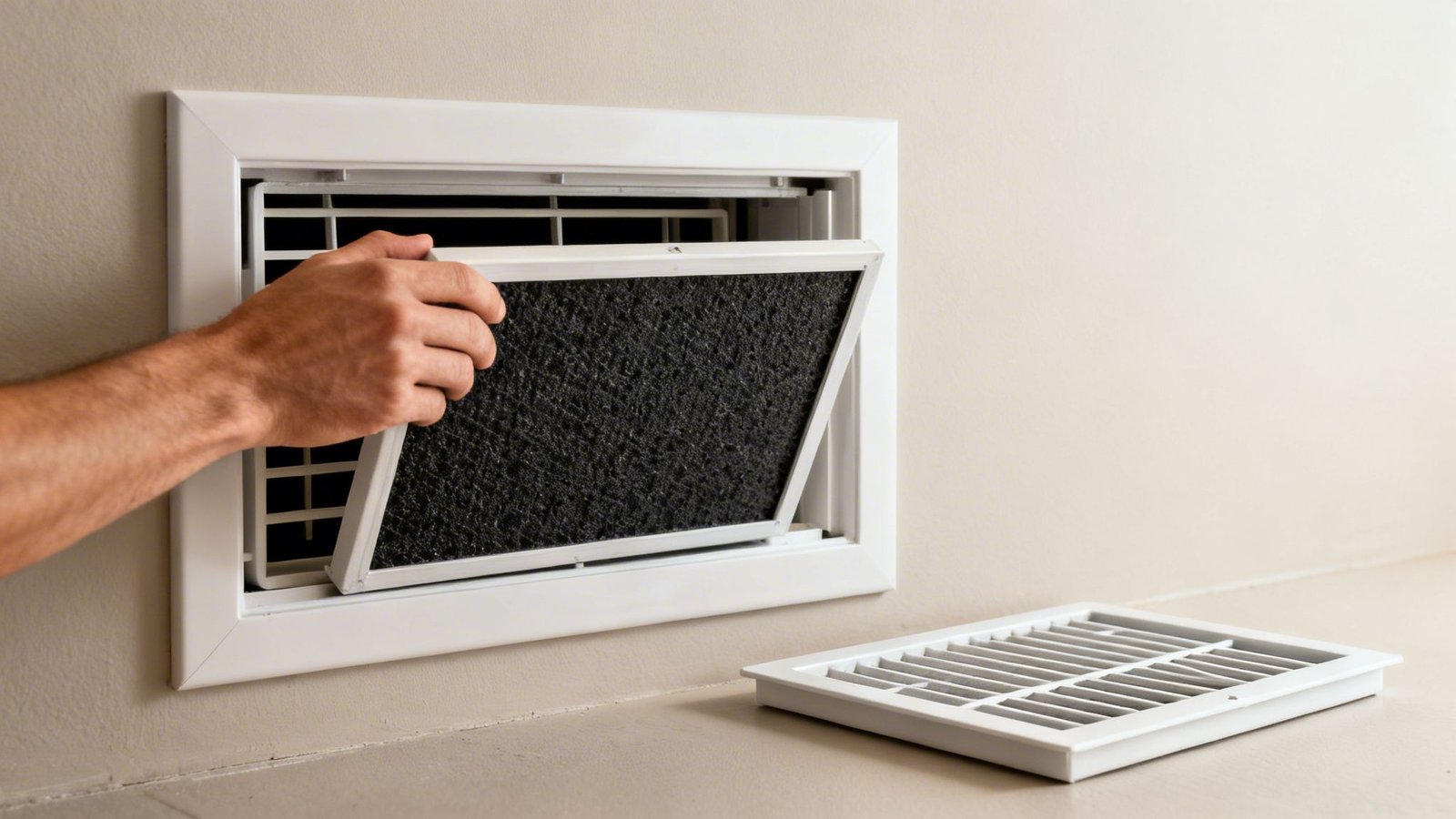
You can scrub every wall, floor, and piece of furniture in a house, but if you skip the HVAC system, you’ve set yourself up for failure. The second you turn on the heat or air conditioning, that stale cigarette smell will come flooding right back into your freshly cleaned rooms. This isn't a fluke; it's by design.
Your home's heating, ventilation, and air conditioning (HVAC) system is its respiratory system. For months or even years, it’s been inhaling smoke-filled air and circulating it everywhere. In the process, a sticky, smelly residue of tar and nicotine has coated the interior of your ductwork, turning it into a massive odor delivery machine.
Simply cleaning the visible parts of your home is one of the most common and frustrating mistakes we see. Addressing the HVAC system isn't optional—it's a critical step if you truly want to eliminate cigarette smoke odor in the house.
Simple First Steps for Your Vents and Filter
Before calling in the pros, there are a couple of immediate things you can do to start chipping away at the problem. These steps won't solve the core issue inside the ducts, but they are a non-negotiable part of the process.
Your first move is incredibly simple: replace the air filter. That old filter is likely saturated with smoke particles and is probably dark brown or black. Get it out of there and replace it with a high-quality new one.
For the best results, look for a filter with a high MERV (Minimum Efficiency Reporting Value) rating. Even better, find one that incorporates activated carbon. Activated carbon is excellent at adsorbing the volatile organic compounds (VOCs) that cause odors, giving you an extra layer of defense.
Next, go room by room and remove all the metal or plastic vent covers (registers and grilles). Take them to a sink or bathtub and give them a thorough scrub in hot, soapy water to remove that sticky film. It’s a small task that removes a surprising amount of residue.
Why Professional Duct Cleaning Is a Non-Negotiable
Washing vent covers and changing a filter are good habits, but they don't touch the real source of the problem. The lingering smoke smell comes from hundreds of square feet of hidden metal surfaces deep inside your walls and ceilings. No DIY method can reach or effectively clean this area.
This is where professional air duct cleaning becomes essential. It’s not just a vacuum hose stuck into a vent; it’s a systematic process using specialized equipment.
Expert Insight: We've seen homeowners in Los Angeles spend thousands on new paint and flooring, only to find the smoke smell returns with the first autumn chill when they turn on the heater. The source was always the ductwork, which continuously re-contaminated their beautifully renovated space.
Certified technicians use a combination of powerful tools to scrub the ductwork clean from the inside:
- High-Powered Vacuums: These create intense negative air pressure, ensuring that all dislodged dust, debris, and smoke residue is pulled completely out of the house, not released back into your rooms.
- Rotating Brushes: Long, flexible brushes are fed deep into the ducts, mechanically scrubbing the interior walls to break loose the caked-on tar and nicotine film.
- Air Whips: High-pressure air tools blast residue from corners and crevices that brushes can’t always reach.
This comprehensive cleaning removes the hidden reservoir of odor, preventing the HVAC system from sabotaging all your hard work. After a professional cleaning, your system will finally circulate truly clean air. For homes with particularly stubborn odors, exploring options like our air scrubber rental can provide continuous air purification during and after the rest of the remediation.
Sealing and Painting to Lock in Lingering Odors
After all that scrubbing and cleaning, you might think you’ve finally beaten the smoke smell. But here’s a hard lesson from the field: with cigarette smoke, the war isn’t over. Microscopic tar and nicotine particles are still embedded deep inside porous surfaces like drywall, wood trim, and even plaster.
Over time, those trapped particles will slowly bleed back to the surface. You'll see ugly yellow stains reappear, and that stale, foul odor will return. This is exactly where most DIY efforts fail. Slapping on a fresh coat of standard latex paint is a complete waste of time and money—the stains and the smell will push right through it in just a few months.
The Non-Negotiable Power of a Sealing Primer
To permanently lock away any remaining odor and staining, you absolutely must use a specialized primer. This isn't your everyday wall primer; it’s a specific product engineered to create an impermeable barrier. Think of it like shrink-wrapping your walls to trap the smell inside for good.
Your only real options are shellac-based or oil-based stain-blocking primers. These products create a tough, non-porous film that physically blocks odor molecules and stains, preventing them from ever escaping. They are the professional standard for a reason.
Expert Tip: Don't let the strong smell of these primers scare you off. Yes, a shellac or oil primer is potent, but it's a temporary headache for a permanent fix. Make sure you have maximum ventilation with fans and open windows, and always wear a proper respirator. The smell will fade as it cures, taking the smoke odor with it forever.
Your Strategy for Applying the Sealing Coat
Applying this sealing coat isn't just painting; it's creating a complete, unbroken seal. Precision is key.
- Ensure Surfaces Are Ready: Before you even think about opening a can of primer, double-check that every surface is completely clean and dry from your earlier cleaning. Any lingering dust or grime will stop the primer from sticking correctly.
- Apply Thorough Coverage: Use a high-quality roller and apply one full, even coat of your stain-blocking primer. Cover every single wall and ceiling surface that was exposed to the smoke. Don’t rush it, and don't try to stretch the primer too thin.
- Consider a Second Coat: For properties with extremely heavy, long-term smoke damage, a second coat of primer is cheap insurance. It provides an extra layer of protection against bleed-through and is a small price to pay for total peace of mind.
- Allow for Proper Curing: Follow the manufacturer’s instructions for cure times to the letter. If you rush and apply the topcoat before the primer is fully cured, you can easily break the seal you worked so hard to create.
Once the sealing primer has completely cured, you can finally paint. Your topcoats of regular latex paint are now just for color and appearance; the primer has already done all the heavy lifting for odor control. While cleaning is essential, a fresh coat of paint from professional interior house painting services is what truly seals off the contaminated surfaces and gives your home a fresh start. Skipping this crucial sealing step is the single biggest mistake people make when trying to eliminate cigarette smoke odor in a house.
When to Call a Professional Smoke Remediation Company
You’ve scrubbed, aired out, and washed everything you can think of. The curtains are clean, the windows have been open for days, but that stale, lingering cigarette smell just won’t quit. If this sounds familiar, you’ve likely hit the limit of what DIY methods can accomplish.
This is the point where the problem has moved from a simple surface odor to something much deeper. When a property has housed a long-term smoker, you're not just fighting a smell; you're fighting years of accumulated, sticky, oily residue that has seeped into the very structure of the home. For that level of saturation, professional help isn't just an option—it's the only way to truly solve the problem.
Advanced Deodorization Technologies
The reason household cleaners and elbow grease fail is that they can't reach what they can't touch. Thirdhand smoke residue penetrates porous materials like drywall, wood studs, insulation, and subflooring. Restoration pros like us use specialized equipment designed to attack odor at the molecular level.
-
Ozone Generation: This is a heavy-hitting, time-tested method. An ozone generator floods an unoccupied space with O3 gas, a highly reactive molecule that seeks out and destroys odor particles. It's incredibly effective, but it requires the home to be completely empty of people, pets, and even plants during treatment for safety.
-
Thermal Fogging: This is a smart technique that essentially fights fire with fire. A machine heats a deodorizing agent into a fine, hot fog. This fog expands and works its way deep into cracks, crevices, and porous surfaces—exactly like the original smoke did—neutralizing odors on contact.
-
Hydroxyl Generation: A newer, safer alternative that's gaining a lot of traction. Hydroxyl generators use UV light to create the same hydroxyl radicals that naturally clean our planet’s atmosphere. They are fantastic at breaking down odors and volatile organic compounds (VOCs) and can often be used while the property is still occupied, making them far less disruptive.
Expert Insight: There’s no single "best" technology; the right choice depends on how severe the smoke damage is and what materials are affected. An IICRC-certified technician can assess the smoke penetration and create a targeted plan, sometimes using a combination of methods to guarantee the best and safest result.
When to Make the Call
So, when is it time to stop scrubbing and call in a professional? A good rule of thumb is when a property has been smoked in heavily for five years or more. At that point, the sheer volume of residue is almost always too much for DIY solutions.
Tobacco smoke doesn’t just cause an odor; it leaves behind a toxic film that penetrates deep into building materials. The World Health Organization highlights the significant environmental impact of this residue, underscoring that this is more than just an unpleasant smell. For homeowners in Los Angeles, this is why a deep, professional restoration is often the only way to truly learn how to eliminate cigarette smoke odor in a house with a history of heavy smoking.
If you're a property manager in Sherman Oaks trying to get a unit ready for the next tenant, or a home flipper in Beverly Hills who just acquired a smoke-damaged property, remediation is an investment. It protects your property’s value, prevents complaints down the road, and ensures you won’t face a failed home inspection.
Got more questions about how the pros tackle stubborn smells? Check out our frequently asked questions about professional odor removal for more detailed answers.
Frequently Asked Questions About Smoke Odor Removal
Q: Can I just paint over smoke-stained walls to hide the smell?
A: No. Standard latex paint cannot block the oily tar and nicotine residue. The stains and the foul odor will bleed through within a few months. You must first clean the walls with a degreaser, then apply a specialized shellac-based or oil-based stain-blocking primer to create a permanent barrier before painting.
Q: How long does it take to get rid of cigarette smoke smell?
A: For light, recent smoke exposure, a weekend of deep cleaning and airing out might suffice. However, for a home with years of heavy smoking, a full professional remediation is necessary. This process, which can include ozone treatment or thermal fogging, may take a week or more to fully eliminate the odor embedded in drywall, carpeting, and the HVAC system.
Q: Is cleaning the HVAC system really necessary for smoke odor removal?
A: Yes, it is absolutely essential. An HVAC system in a smoker's home acts as a re-contamination machine, circulating smoke particles for years and coating the ductwork in sticky residue. Skipping a professional duct cleaning means the moment you turn on your heat or A/C, the smoky smell will be blown right back into your clean rooms.
Q: Will an air purifier get rid of cigarette smell permanently?
A: An air purifier with a high-quality HEPA and activated carbon filter can significantly reduce airborne smoke particles and odors, improving air quality. However, it cannot remove the sticky thirdhand smoke residue that has already settled on walls, floors, and furniture. It is a helpful tool during and after remediation but is not a standalone solution for a serious odor problem.
When DIY methods aren't enough for severe smoke damage in Los Angeles, the certified professionals at Onsite Pro Restoration have the advanced technology and expertise to permanently solve the problem. Contact us 24/7 for a free assessment and restore your property's value and air quality.