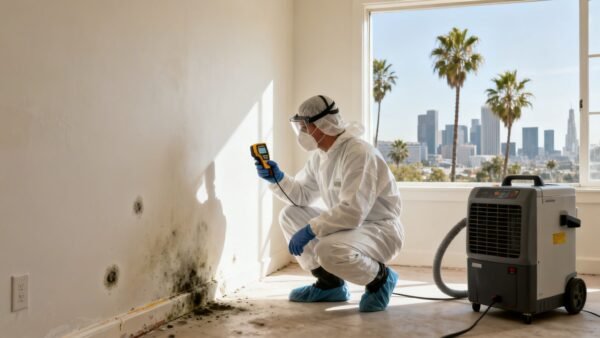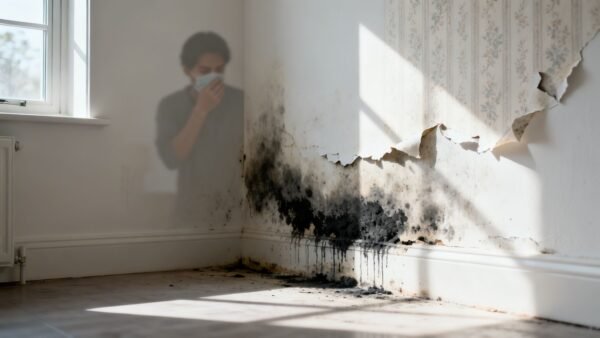

Finding mold often begins with your senses. Long before you spot a major problem, you might notice a persistent musty smell or see some unexplained discoloration on a wall or ceiling. Learning how to detect mold in a house starts with trusting these clues. Too many homeowners in Los Angeles, from the damp coastal air of Santa Monica to the older homes in the San Fernando Valley, brush these early warnings aside. Recognizing them is the key to stopping a small issue from exploding into a massive remediation project.
Get a Free Mold Inspection Now
The First Clues: Uncovering Hidden Mold Growth
The first sign of mold is rarely a huge, obvious patch. It’s usually much more subtle—a quiet signal that something isn’t right. Recognizing the early signs is critical for stopping a small issue from becoming a major remediation project.
Trust Your Nose: The Signature Scent of Mold
Your sense of smell is one of the best mold detectors you have. Often, the first clue isn't something you see, but a distinct, musty odor you can't quite place. People describe it as earthy, like damp soil or a wet basement. This smell comes from Microbial Volatile Organic Compounds (MVOCs), which are gases mold spores release as they grow and feed on materials like drywall and wood.
This scent can be stronger in certain spots or at certain times. You might only catch a whiff when you open a little-used closet, head down to the basement, or when the AC kicks on. If you've noticed a musty whiff from mould coming from your vents, that’s a clear red flag that your HVAC system needs a serious look.
Look Beyond Black Spots: Visual Signs of Growth
When people hear "mold," they immediately picture the scary black stuff, Stachybotrys. But mold shows up in a whole rainbow of colors and textures. You need to keep an eye out for any unusual spots or stains, including:
- Green, white, or blue: These colors often pop up on surfaces like drywall, especially behind wallpaper or furniture.
- Orange or pink: You’ll commonly see these slimy-looking molds in consistently damp places like shower grout, toilets, or sinks.
- Brown or yellow: These shades can appear on wood surfaces or on ceilings where a slow water leak has been happening for a while.
The texture can be a giveaway, too. Some molds look fuzzy and soft, almost like cotton, while others are slimy or powdery to the touch. Any weird, unexplained discoloration on your home's surfaces should be treated with suspicion, especially if it’s in an area that’s prone to moisture. You can see exactly how water damage sets the stage for this by reviewing these common signs of water damage in walls.
Before we move on, let's quickly summarize the sensory clues that should immediately put you on high alert. This checklist breaks down what to look and smell for, and where you're most likely to find it in a typical Los Angeles home.
Quick Mold Detection Checklist: Sensory Clues
| Indicator Type | What to Look or Smell For | Common Los Angeles Hotspots |
|---|---|---|
| Smell | A persistent musty, earthy, or damp soil-like odor | Basements, crawl spaces, laundry rooms, bathrooms, and around HVAC units. |
| Visual | Discoloration: green, white, blue, orange, pink, brown, or black | Under sinks, behind toilets, around window frames, in closets, and on ceiling corners. |
| Texture | Fuzzy, slimy, powdery, or velvety patches on surfaces | Drywall, wood baseboards, shower grout, and behind appliances like refrigerators or washers. |
| Water Damage | Peeling paint, warped walls, water stains, or bubbling wallpaper | Anywhere a leak has occurred—near plumbing, under roofs, or around leaky windows. |
This table isn't exhaustive, but it covers the most frequent early warnings we see in the field. If you're noticing any of these signs, it's time to take a closer look.
Key Takeaway: Mold isn't always black and obvious. Discoloration of any kind, especially when paired with a musty odor or signs of moisture, is a significant red flag that warrants a closer look.
Start by checking the common hotspots. Gently pull your furniture a few inches from the walls, especially in rooms that don't get much airflow. Get a flashlight and inspect the baseboards in your bathrooms and kitchen, look under every sink for evidence of old leaks, and check the corners of closets. These are the dark, quiet places where mold loves to get its start, hidden from plain sight.
Following the Moisture Trail: Where Mold Loves to Hide
Mold and moisture are two sides of the same coin. Find one, and the other is always there. This means learning how to detect mold in a house is really about becoming a moisture detective and tracing water back to its source. It’s like following a trail of breadcrumbs that leads you right to a hidden colony.
This is especially true here in Los Angeles, where our climate creates some unique challenges. A flat-roof leak in Sherman Oaks can spring a slow, nearly invisible leak after one of our rare heavy downpours. Over in Santa Monica, that persistent coastal fog can cause just enough condensation on window frames to feed a mold problem that nobody notices for months.
Your investigation starts by knowing the common water entry points and the subtle signs of water damage that most homeowners miss.
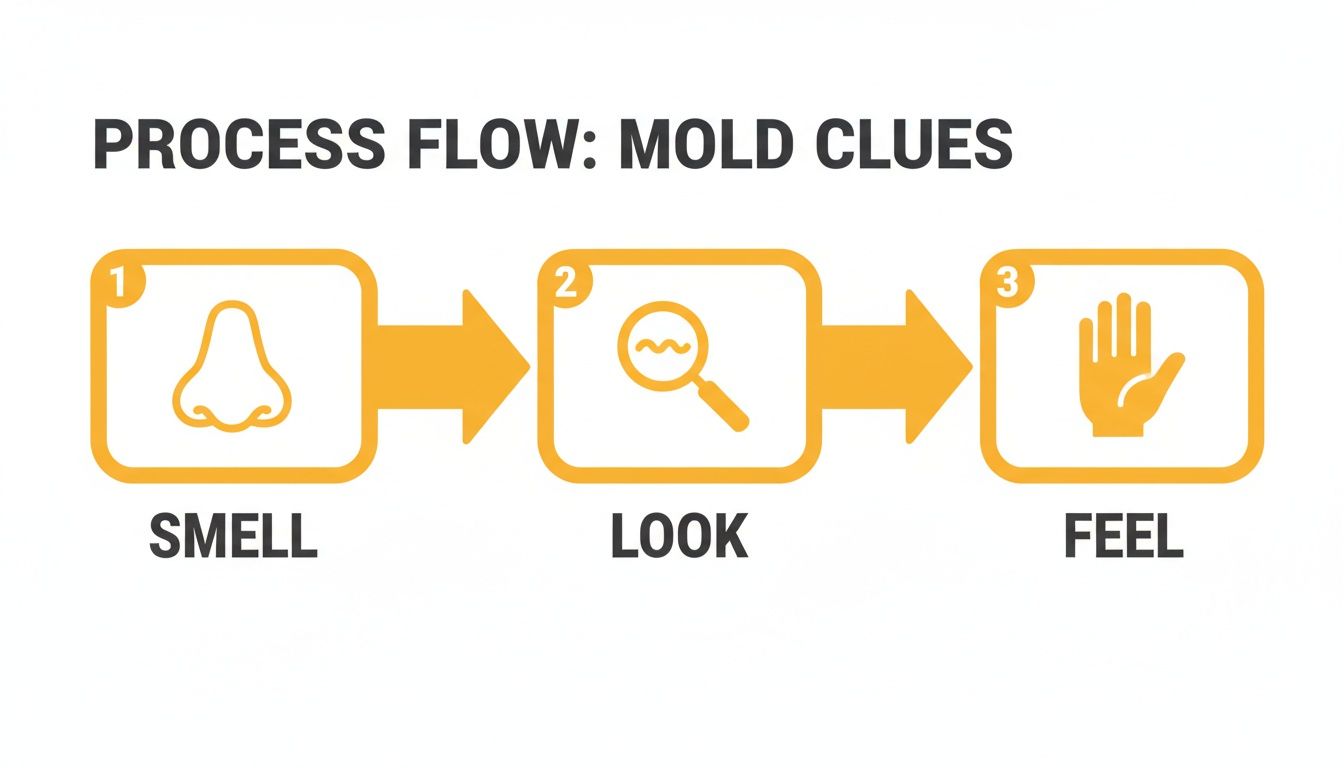
As you can see, finding mold isn't just about looking. It's a multi-sensory job where clues from your nose, eyes, and even your hands come together to uncover the problem.
Performing a Systematic Moisture Audit
To pinpoint these trouble spots, you’ve got to do a methodical walk-through of your property. Don’t just glance around. You need to actively look for signs that water has been somewhere it shouldn’t. Grab a good flashlight and start focusing on the high-risk zones.
Begin with the obvious culprits: the "wet rooms." In kitchens and laundry rooms, pull out the fridge and washing machine. Check those supply hoses for any drips or cracks—a tiny, slow leak is the perfect recipe for a moldy wall behind an appliance. In bathrooms, get up close and inspect the caulking around tubs and showers, the base of the toilet, and inside the vanity cabinet under the sink.
Once you’ve covered those, expand your search to other vulnerable areas:
- Window and Door Seals: Look at the frames for any condensation, water stains on the sill, or paint that’s starting to peel. A bad seal is an open invitation for moisture.
- Attics and Crawl Spaces: Shine your flashlight on the underside of the roof decking and check the insulation for dark stains. A musty, damp smell up there is a huge red flag.
- HVAC Systems: Find your indoor air handler and check the drain pan. Make sure it's clear and draining correctly. A clogged line will cause an overflow that soaks everything around it.
Pro Tip: Spend a few bucks on a digital hygrometer. This simple tool measures the relative humidity inside your home. If you’re seeing consistent readings above 60%, you’re creating an ideal breeding ground for mold, even without a visible leak.
Connecting Water Damage to Hidden Mold
The evidence of a water problem isn't always a dramatic puddle on the floor. More often, it's the subtle changes you see in your home's building materials. When you spot these clues, you’re probably standing right next to a hidden mold colony.
Be on the lookout for:
- Peeling, bubbling, or cracking paint: This is a classic sign that moisture is getting into the drywall and literally pushing the paint off the surface.
- Warped or stained baseboards: Wood and MDF baseboards act like sponges. They'll swell up and discolor when they absorb moisture from the wall behind them.
- A soft or spongy feeling in drywall: Gently press on any areas you suspect are damp. If the wall gives way or feels soft, there's significant moisture trapped inside.
When you're tracing moisture, don't forget that problems outside can cause damage inside. A failing gutter system is a major offender. Understanding the parts of a rain gutter system and ensuring yours is working properly can prevent a lot of headaches from ever starting.
If you’ve found these subtle signs of moisture, the next step is to confirm what's happening behind the wall. Our guide on how to detect water leaks in walls will walk you through that deeper investigation.
Health Risks: When Your Body Signals a Mold Problem
Sometimes, the biggest clues you have about a mold problem have nothing to do with what you can see or smell. The first alarm often comes from your own body. If you’re dealing with persistent health issues that have no clear explanation, it’s a major red flag that your indoor environment is compromised—long before you ever spot a single patch of growth.
Think about it. Did your child’s asthma, once under control, suddenly flare up after moving into a new home in Burbank? Or maybe you’ve developed a chronic sinus infection that just won’t clear, even though allergy season is long over. These scenarios are incredibly common in our line of work and frequently point to an environmental trigger inside the house.
Connecting Symptoms to Your Environment
Your body can react to mold spores well before a colony is big enough to see. When you inhale these microscopic particles, they can set off a whole range of allergic responses. If you or someone in your family starts experiencing symptoms that consistently get worse at home but seem to improve when you’re out, it’s time to start connecting the dots.
The link isn’t always obvious at first. A nagging cough gets written off as a lingering cold. Itchy eyes get blamed on seasonal pollen. The trick is to look for patterns. Do your symptoms get worse in a specific room, like the basement or a bathroom with poor ventilation? Does that pounding headache finally ease up after you’ve been out of the house for a few hours?
A Critical Insight: Think of your body as a super-sensitive air quality detector. If it's constantly sending out alarm signals—sneezing, coughing, fatigue—it’s likely reacting to airborne contaminants like mold spores that are otherwise completely invisible.
Common Health Red Flags to Watch For
While a doctor should always be your first call for a medical diagnosis, recognizing health patterns often linked to mold exposure is a crucial first step in protecting your family. Mold affects everyone differently, but some symptoms show up time and time again.
Keep an eye out for these potential indicators:
- Persistent Respiratory Issues: This isn’t just a cold. We're talking about a chronic cough, wheezing, shortness of breath, or a constantly runny nose that never fully goes away.
- Allergic Reactions: Unexplained sneezing fits, itchy or watery eyes, and skin rashes or hives can all be triggered by mold allergies.
- Chronic Sinus Problems: If you're battling ongoing sinus pressure, congestion, or infections that keep coming back, mold could be a contributing factor.
- Neurological Symptoms: For some sensitive people, exposure can lead to frequent headaches, migraines, brain fog, or even memory issues.
These aren't just minor annoyances; they represent a serious public health issue. The World Health Organization connects millions of deaths each year to air pollution, with indoor mold being a major player. Here in the U.S., fungal illnesses—often starting with mold exposure—are linked to at least 75,000 hospitalizations and 7,000 deaths annually. The risk is even higher for kids; infants exposed to mold have a threefold greater risk of developing asthma. You can learn more about these startling global mold statistics and their impact.
When to Suspect Your Home Is the Culprit
The connection between your health and your home gets a lot clearer when multiple family members start feeling sick at the same time, or when symptoms pop up right after an event like a plumbing leak or a stretch of humid weather. I remember a case with a family in West Hollywood who couldn't figure out why their toddler was always congested. It wasn't until our inspection uncovered a massive mold colony growing behind the nursery wallpaper—fed by a slow, hidden window leak—that they finally got their answer.
If unexplained health issues are a part of your daily life, it’s a powerful signal to start investigating for hidden moisture and mold. Your family’s well-being could depend on what you find.
DIY Mold Testing: What Works and What Doesn't
It’s tempting to run to the hardware store for an at-home mold test kit. They look like a simple, fast way to figure out what's going on. But I’ve seen it time and again—these DIY options usually create more questions than they answer, and they almost never give you the information needed to actually fix a mold problem.
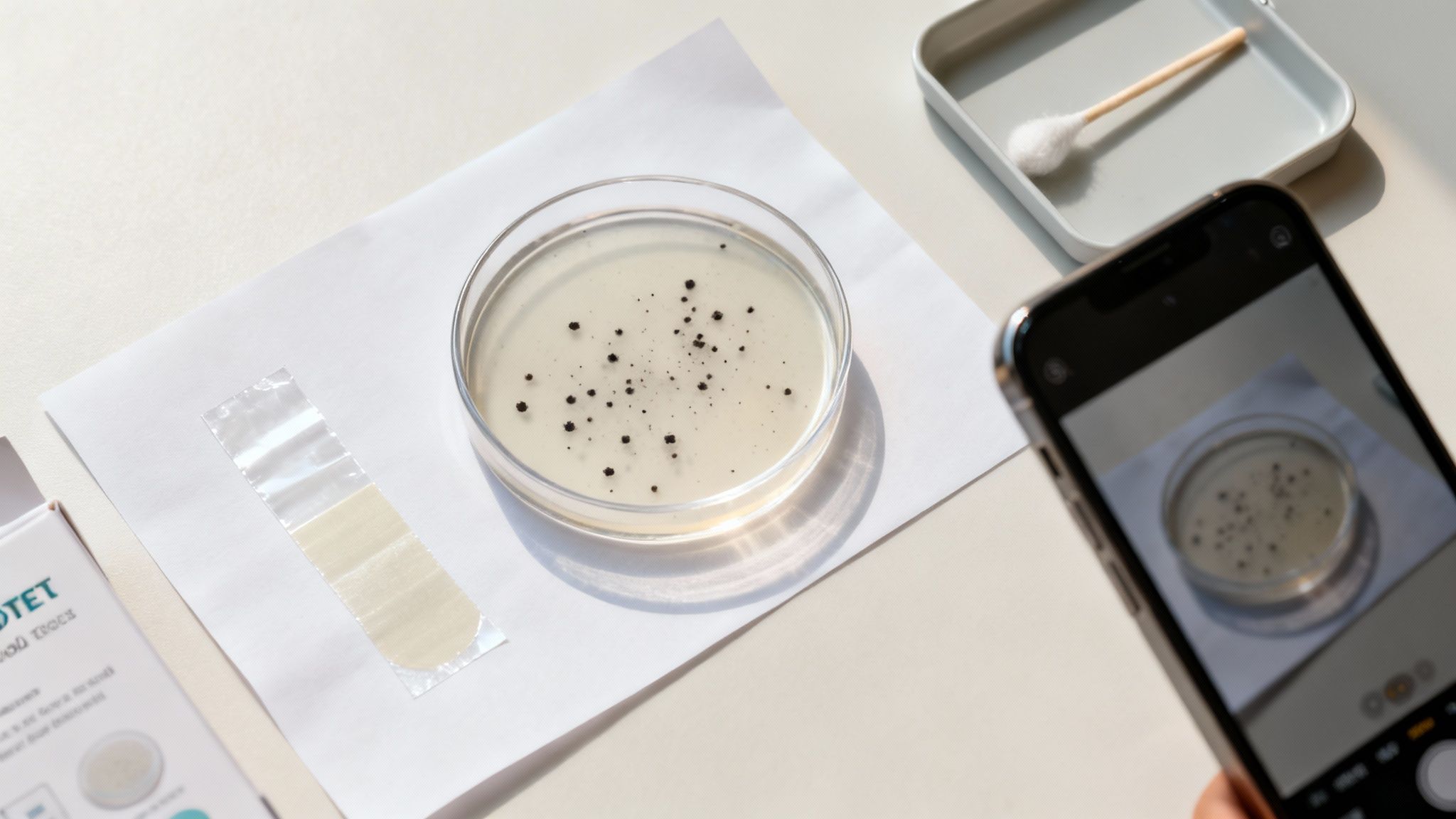
Think of these kits like a smoke detector that tells you smoke exists somewhere in the city but fails to mention your own kitchen is on fire. Sure, they can confirm the presence of mold spores, but that’s almost useless information by itself. Mold spores are everywhere, inside and out.
The Problem With Settling Plates
The most common DIY mold test is the settling plate—a little petri dish you leave open to catch airborne spores. You seal it up, wait, and see what grows. The problem? This method is fundamentally flawed.
- It can't measure concentration: The test gives you no idea how many spores are in your air, which is the most important piece of the puzzle. A few spores are normal; thousands per cubic meter mean you have a serious problem.
- It’s not representative: Heavier spores, like the infamous "black mold" (Stachybotrys), don't stay airborne for long. They’re less likely to fall into your dish, which can give you a false sense of security.
- It provides zero context: The results don't point you to the source. A positive test doesn't help you find the leak behind the drywall that’s feeding the growth.
A settling plate will almost always come back positive because mold is a natural part of our world. It just confirms what we already know without giving you any data to act on.
Are Surface Tests Any Better?
Another option you'll see is the tape lift or surface swab. You press special tape or a swab against a suspicious spot and send it to a lab. This is a bit more useful than a settling plate because it can confirm that a particular stain is, in fact, mold.
But it still falls short. It can't tell you the scale of contamination hiding behind the wall or under the floorboards. It’s just a snapshot of one tiny spot, not a full assessment. You might identify mold on a baseboard, but you still have no idea if the entire wall cavity is compromised. Learning how to properly read moisture meter readings is a much more effective DIY step for understanding the true scope of a hidden moisture issue.
The Professional Perspective: DIY test results are rarely, if ever, accepted by insurance companies or used for medical documentation. For any serious decision-making, you need scientifically valid, defensible data. That only comes from a certified inspector using calibrated equipment.
The Real Cost of Bad Data
Relying on a DIY kit can be an expensive mistake. A false negative might lead you to ignore a problem that just gets bigger and pricier to fix. A false positive could cause a ton of unnecessary stress and lead you to spend money on remediation you don't even need.
The demand for accurate, professional solutions is surging. The mold remediation market was valued at USD 1,234.6 million in 2023 and is projected to hit USD 1,516.8 million by 2030. With residential properties making up nearly 59% of this market, it’s clear that homeowners need reliable services, not ambiguous kits. For those of us in Los Angeles, these numbers show why investing in professional detection from the start is the smarter move.
When you think you have a mold issue, your best investment isn’t a plastic petri dish. It’s a call to a certified professional. We perform thorough visual inspections, use professional-grade tools like moisture meters and thermal cameras, and—only if needed—take proper air and surface samples for accredited lab analysis. This is the only way to truly understand what kind of mold you have, how much of it is there, and exactly where it’s coming from.
Why You Need a Professional Mold Inspection
Sometimes, you hit a wall in your own investigation. Maybe the musty smell is strong but you can’t find the source, or the signs point to a problem that’s just too big to handle on your own. This is the time to call in a certified professional.
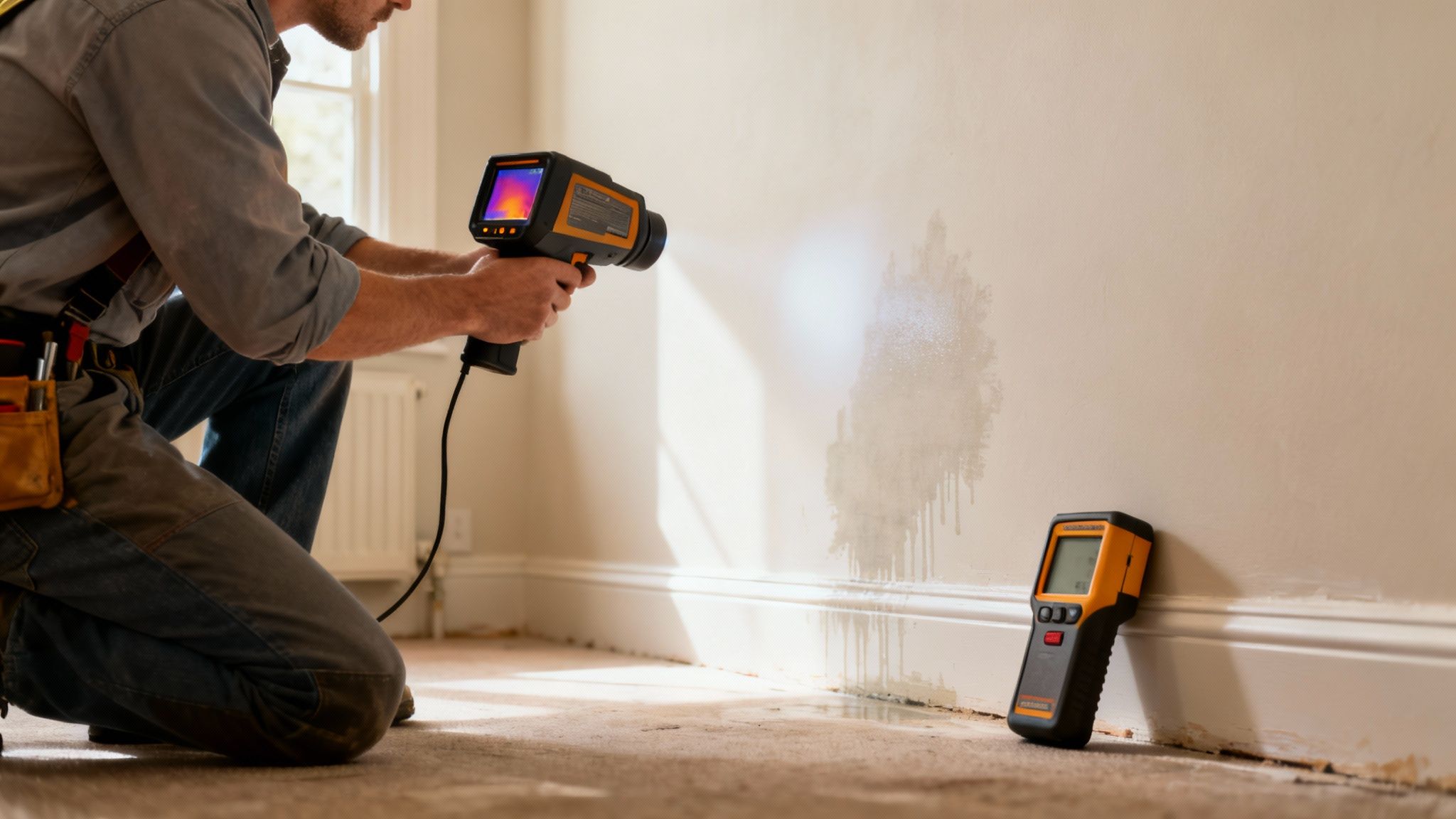
An IICRC-certified technician does more than just hunt for visible spots. They conduct a systematic investigation, using their experience and advanced tools to uncover the full scope of a mold issue and give you the definitive answers you need. Think of it less as a simple visual check and more as a scientific assessment of your home’s environmental health, providing the crucial data needed for effective cleanup and even insurance claims.
The Initial Assessment and Advanced Tools
A pro starts with a thorough visual inspection, but they bring a trained eye that catches subtle clues you might have missed. They’ll re-examine hotspots like basements, attics, and bathrooms, but their real advantage lies in the technology they bring to the job.
Inspectors use specialized tools to see what’s happening behind your walls and under your floors without tearing your house apart.
- Moisture Meters: These devices have probes that are pressed against drywall, wood, or concrete to get an instant reading of the moisture content inside. This is how they confirm where water damage is hiding, even if a surface feels bone dry to the touch.
- Thermal Imaging Cameras: An infrared camera doesn't see mold, but it sees temperature differences. Wet areas are almost always cooler than dry ones, so these cameras can instantly reveal large, hidden pockets of moisture that are completely invisible.
- Borescopes: If there’s a strong suspicion of mold inside a wall, a technician might use a borescope. It's a tiny camera on a flexible tube that can be inserted through a very small, easily patched hole to get a direct look inside a wall cavity.
Differentiating Between Inspection and Testing
It's really important to understand that a mold inspection and mold testing are two different services. A solid inspection can often confirm a problem and pinpoint its source without the need for expensive lab analysis. Testing, however, becomes necessary in specific situations.
A visual inspection is all about identifying visible growth and the moisture conditions feeding it. In many cases, if we find visible mold, the recommendation is straightforward: remove it safely. Since all mold types can pose health risks, the species doesn't always change the need for removal.
Mold testing, on the other hand, means taking samples and sending them to an accredited lab. This could involve:
- Air Samples: A special pump pulls a measured volume of air through a cassette. The lab analysis can then identify the types and concentrations of mold spores floating around.
- Surface Samples: Using a sterile swab or tape lift, a technician collects a sample directly from a colony to identify its specific species.
Testing is most useful when you suspect a hidden source that can't be found, for medical reasons when a doctor needs to know what you're being exposed to, or during a real estate transaction.
Key Insight: A reputable company will never push for expensive, unnecessary testing. The goal of the initial inspection is to find the problem and figure out how to solve it, not just to generate a lab report full of complicated spore names.
Understanding Your Professional Mold Report
After the inspection and any testing, you should receive a detailed report. This isn't just an invoice; it's a critical document that lays out everything the inspector found and what to do next. A professional report will always include:
- Detailed Findings: A room-by-room summary of all visual observations, moisture readings, and thermal imaging results.
- Photographic Evidence: Clear pictures documenting any visible mold, water damage, or the moisture source.
- Lab Results (if applicable): A copy of the laboratory analysis identifying mold species and spore counts.
- A Remediation Protocol: This is the most important part. It’s a clear, step-by-step plan explaining exactly how to safely remove the mold and, crucially, fix the moisture problem that caused it.
This professional document is your roadmap back to a healthy home. It ensures the cleanup is targeted, effective, and complete, and it’s invaluable when dealing with insurance companies. Mold is more common than people think; recent statistics show that approximately 47% of homes in the United States have some form of it. For homeowners in Los Angeles, this underscores why professional help is so critical, especially since mold can take root within just 24 to 48 hours after water damage.
To see what a certified professional looks for in your area, you can learn more about our Los Angeles mold inspection services.
FAQ: How to Detect Mold in a House
Even after you’ve done your own walkthrough, it's normal to have questions. Finding mold can feel overwhelming, and there’s a lot of bad information floating around online. To help you move forward, here are some straight answers to the questions we hear most from Los Angeles homeowners.
What Does Black Mold Look Like and Is It Always Dangerous?
A: The infamous "black mold," or Stachybotrys chartarum, usually looks like slimy, dark green or almost black splotches. You’ll typically find it in places that have been wet for a long, long time—think of a wall behind a slow, persistent plumbing leak. While Stachybotrys is known for producing mycotoxins, many mold species are black. More importantly, any mold—no matter the color—can trigger allergies and damage your home. The only way to know the exact species is with a lab test, so our advice is to treat all visible mold as a potential hazard.
Can I Just Use Bleach to Clean Up Mold?
A: Using bleach on mold is a common DIY mistake. It might appear to work on non-porous surfaces like tile, but on anything porous like drywall, wood, or carpet, it fails. The chlorine in bleach can't penetrate to kill the mold's root system, and the water in bleach actually feeds the remaining roots. The mold often returns stronger. Professionals use EPA-approved antimicrobial agents and physically remove contaminated materials, which is the only way to ensure the entire colony is gone.
Will My Homeowners Insurance Cover Mold Removal?
A: Whether your insurance covers mold almost always comes down to the source of the moisture. If the mold grew because of a "sudden and accidental" covered event, like a pipe bursting, your policy might pay for the remediation. However, carriers almost always deny coverage for mold caused by long-term leaks, lack of maintenance, high humidity, or flooding from outside sources. This is why professional documentation linking mold to a covered event is so critical for making a successful claim. To get more details, learn more about how homeowners insurance covers mold in our guide.
How Quickly Does Mold Grow After a Water Leak?
A: The speed can be genuinely shocking. If the conditions are right—moisture, a food source like drywall, and moderate temperatures—mold can start growing in as little as 24 to 48 hours. This tiny window is why an immediate response to water damage is non-negotiable. A small overflow from a washing machine in a Glendale laundry room can turn into a major hidden mold problem in just a couple of days. Acting fast is your best defense.
Don't let mold questions lead to delays. The team at Onsite Pro Restoration is here 24/7 to give you clear answers and professional solutions. If you think you have mold in your Los Angeles home, contact us for a free, no-obligation assessment.