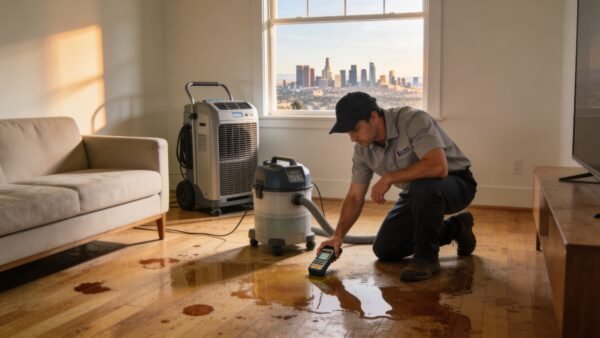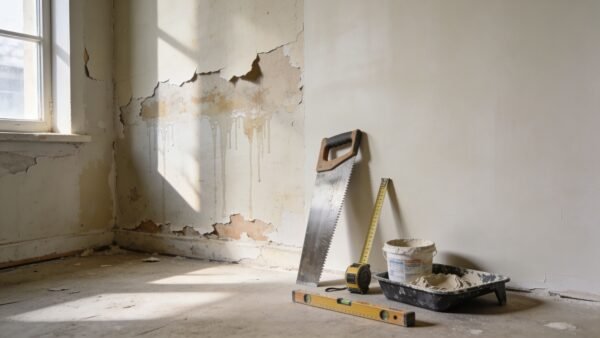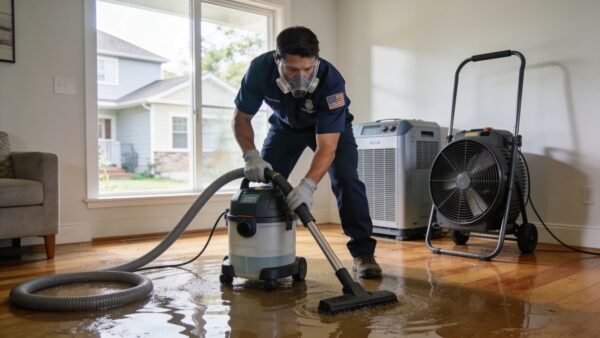

When you’re standing in a flooded room in your Los Angeles home, the first question that pops into your head is always the same: "How long is this going to take?" It’s the number one thing homeowners and property managers want to know. Knowing the answer is crucial for planning, managing stress, and getting your life back on track.
The short answer is that the initial, intense drying phase usually takes about 3 to 7 days. But getting your property completely back to its pre-loss condition—the full restoration, including repairs—can be a much longer haul, stretching anywhere from a few weeks to several months. This guide breaks down the timeline so you know exactly what to expect.
If you're facing a water emergency right now, don't wait. Call Onsite Pro Restoration at (818) 336-1800 for immediate 24/7 assistance.
Understanding the Key Factors in Your Restoration Timeline
Knowing the roadmap from the get-go helps manage the stress. This isn't a one-and-done job; it's a process with distinct phases, and the clock for each one depends on what we're up against. The timeline for a burst pipe in a Sherman Oaks condo will be very different from a flooded basement in Beverly Hills.
Several key factors will shape your specific timeline:
- The Source of the Water: Clean water from a burst supply line is a much simpler problem to solve than contaminated water from a sewer backup, which requires extensive sanitization and adds days to the process.
- The Extent of the Damage: A small leak contained to a single bathroom is worlds apart from a multi-level flood that has soaked structural beams and insulation after a major storm.
- The Materials Affected: Water behaves differently depending on what it hits. Porous materials like drywall, carpet, and wood flooring soak up moisture and need more time and attention to dry properly compared to non-porous surfaces like tile or concrete.
This image gives you a great visual of the two main stages: the immediate drying process and the much longer restoration and repair phase.
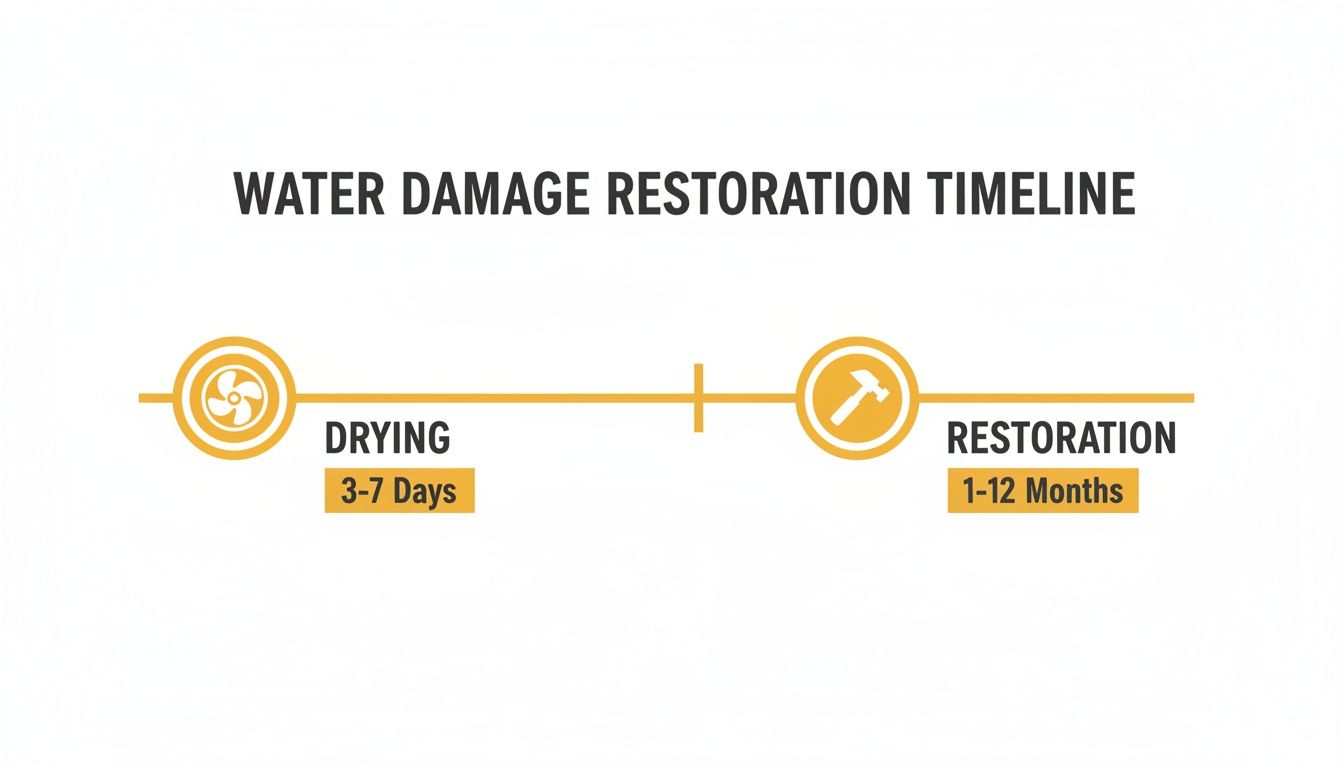
As you can see, stopping the immediate damage is a relatively quick sprint. The marathon is the full recovery and rebuilding, which can vary wildly based on the project's complexity.
Estimated Water Damage Restoration Timeline At A Glance
To give you a clearer picture, here’s a quick breakdown of what to expect during each phase of a typical project. Keep in mind these are averages—your situation could be faster or take a bit longer.
| Restoration Phase | Average Duration | Key Activities |
|---|---|---|
| Emergency Mitigation & Water Extraction | 1-3 Days | Removing standing water, assessing damage, initial moisture readings, setting up drying equipment. |
| Structural Drying & Dehumidification | 3-7 Days | Using air movers and dehumidifiers to dry out walls, floors, and cavities. Daily monitoring. |
| Demolition & Debris Removal | 1-5 Days | Tearing out unsalvageable materials like drywall, flooring, and insulation. |
| Cleaning & Sanitizing | 1-3 Days | Treating affected areas with antimicrobial solutions to prevent mold and bacterial growth. |
| Reconstruction & Repairs | 1 Week to 12+ Months | Rebuilding walls, installing new flooring, painting, and restoring the property to pre-loss condition. |
This table provides a bird's-eye view, but the reconstruction phase is where timelines can really diverge depending on the scale of the repairs needed.
Mitigation vs. Full Recovery
It's helpful to think of the process in two distinct parts.
The first part is mitigation. This is the emergency response phase, focused on stopping the damage from spreading. It involves extracting all standing water and setting up industrial-grade air movers and dehumidifiers to pull moisture out of the structure. This is the critical period that most often takes 3–7 days.
The second, and much longer, phase is the full recovery. This is where we repair or replace everything that was damaged beyond saving—think flooring, drywall, cabinets, and paint. Depending on how severe the damage was, this reconstruction can take anywhere from a few days for a minor issue to 12 months or more for a major catastrophe.
If you're in the middle of a water emergency right now, the most important step is to start the mitigation phase immediately. Our emergency water cleanup teams are available 24/7 to get the process started and prevent any further damage.
Why The First 48 Hours Are The Most Critical
When your property gets hit with water, you’re officially on the clock. Think of the first 48 hours as the emergency room for your home—every single minute matters. The decisions you make and the actions you take in this window will literally determine the entire recovery timeline.
This is the period where a manageable problem can spiral into a full-blown disaster.
The moment the water stops flowing, a new countdown starts. Within just a few hours, materials we think of as solid—drywall, wood floors, insulation—begin to soak up water, swell, and lose their shape. The longer they stay saturated, the less likely they can be saved, which drives up repair costs and stretches out how long your water damage restoration will take.
The Cascade of Secondary Damage
Waiting even a day is a gamble. It opens the door to a whole host of secondary problems that make the restoration job far more complex and drawn-out. The biggest and most immediate threat? Mold.
In the warm, damp environment left behind by a water intrusion, mold can start growing in as little as 24 to 48 hours. What began as a simple water problem quickly morphs into a hazardous mold issue, which demands an entirely different—and more involved—remediation process.
Jumping on it fast is the only way to stop this domino effect. We know from years in the field that kicking off the mitigation process within this critical window massively reduces secondary damage and gets your life back to normal sooner. After those first two days, mold growth and structural decay really start to take off.
The Risks of Delaying Action
Putting off that call to a professional does more than just let the damage spread. It triggers a chain reaction with some pretty serious consequences for your property and your wallet.
- Increased Costs: The longer materials stay wet, the higher the chance they have to be ripped out and replaced. What could have been a drying job becomes a demolition and reconstruction project, ballooning the costs for materials and labor.
- Health Hazards: Standing water is a breeding ground for bacteria and other nasty microorganisms, especially if it’s from a contaminated source. This poses a very real health risk to you and your family.
- Structural Integrity Issues: Water is relentless. It weakens wooden studs, subfloors, and ceiling joists. If left unchecked, that moisture can lead to rot, threatening the structural safety of your home.
This is why that initial inspection is so important; it helps us understand the full extent of the problem right away. For homeowners looking to be proactive, these rental property inspection tips to protect your investment offer great insights into preventative checks.
Ultimately, the best thing you can do is call for professional help immediately. It's the smartest investment for a faster, safer, and more cost-effective recovery. You can learn more about the first steps in our guide to First Onsite Restoration.
The 5 Phases Of Professional Water Restoration
Figuring out how long water damage restoration takes is a lot easier once you see how the pros break it down. A professional, IICRC-certified restoration isn't a single event—it's a carefully managed sequence of five distinct phases. Each step has its own goal, requires specialized gear, and comes with its own timeline, all designed to get your property back to its pre-loss condition safely and efficiently.
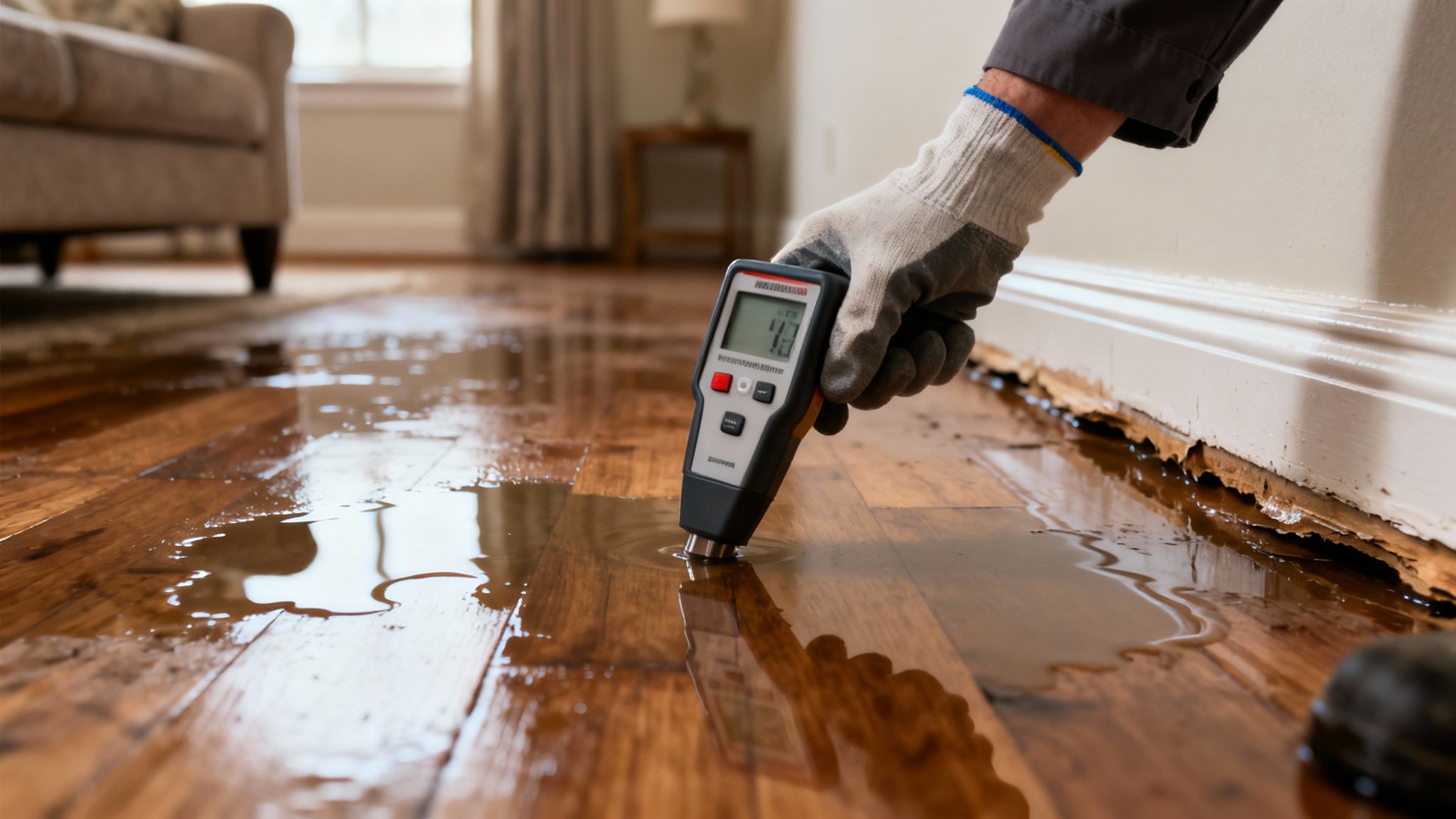
It helps to think of it like a medical procedure. First, you get the diagnosis. Then comes the emergency intervention, followed by stabilization, treatment, and finally, recovery. Every step builds on the last one to make sure nothing gets missed.
Phase 1: Emergency Contact And Assessment
Typical Duration: 1-2 Hours
This is where the clock starts. The second you call a 24/7 restoration company, a team is dispatched, often arriving at your door within the hour. It’s all about speed at this stage.
Their first priority is to find and stop the source of the water if you haven't already. After that, they launch into a detailed inspection to figure out the scope of the damage, identifying the water category and class of loss. Using tools like moisture meters and thermal cameras, they map out exactly what’s wet, how wet it is, and what it will take to fix it.
Phase 2: Water Removal
Typical Duration: 1-3 Days
With a solid plan in place, the crew gets to work on water extraction. The mission here is simple: get as much standing water out as quickly as possible. This is a critical step that stops water from spreading further and soaking deeper into your home’s structure.
Professionals bring out the heavy equipment for this—powerful, truck-mounted extraction units and submersible pumps that can pull thousands of gallons of water out of a property. If you have saturated carpets, they'll use special extraction wands to literally squeeze the water out of the padding, which dramatically cuts down the time needed for the next phase.
Phase 3: Drying And Dehumidification
Typical Duration: 3-7 Days
This is the real heart of the mitigation process and a huge factor in determining how long the water damage restoration takes. Even after all the standing water is gone, a ton of moisture is still trapped inside porous materials like drywall, wood studs, and subflooring.
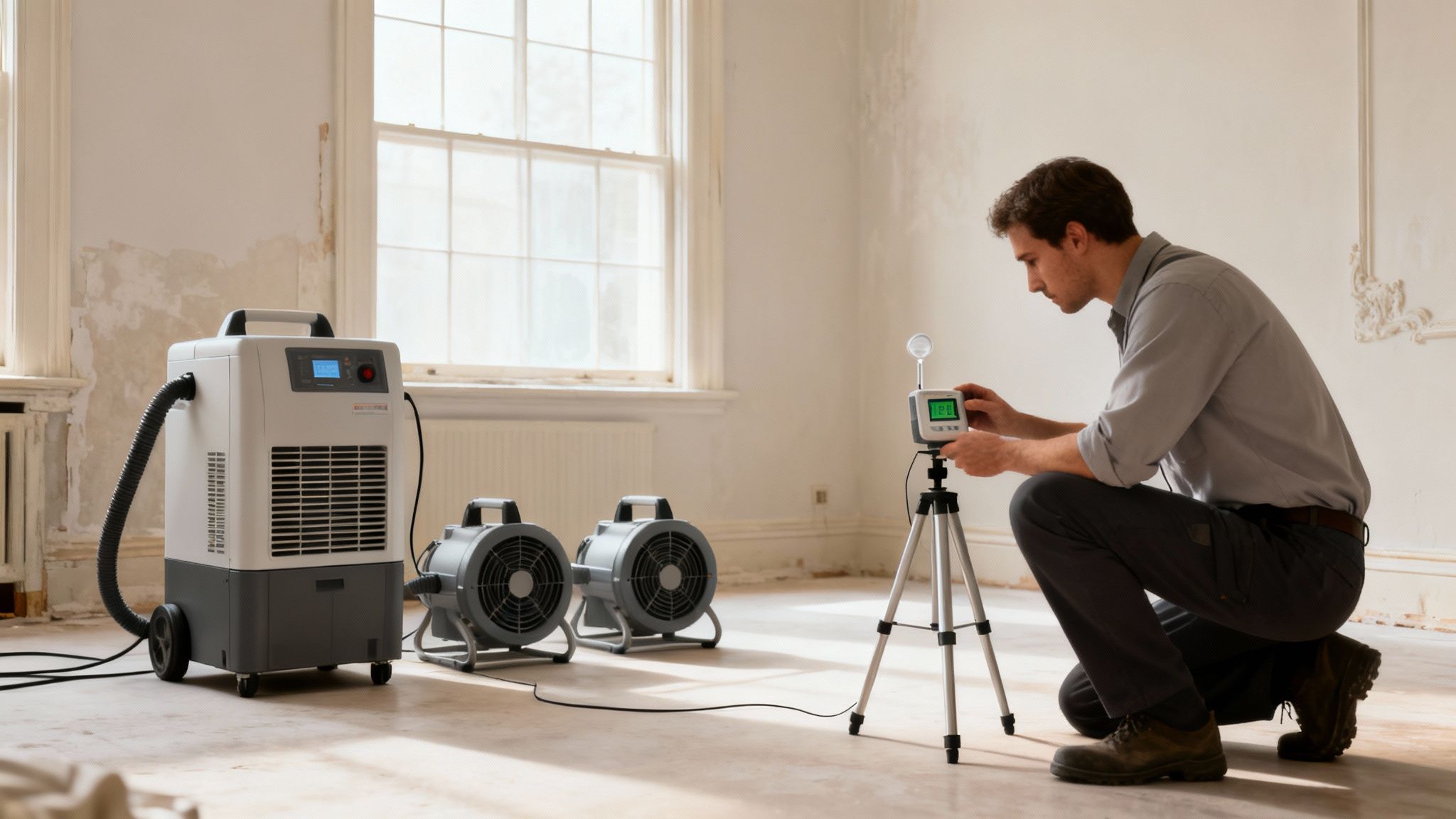
This is where the science of drying comes into play. Technicians strategically place high-velocity air movers to promote evaporation and industrial-grade dehumidifiers to pull that evaporated moisture out of the air. This combination creates an optimal drying environment.
During this phase, the crew will visit your property every day. They’ll be taking moisture readings, checking progress, and repositioning equipment to make sure everything is drying out completely and evenly.
Phase 4: Cleaning And Sanitizing
Typical Duration: 1-3 Days
Once the structure is verified as dry, the job pivots to cleaning up the mess left behind. Water damage, particularly from gray or black water, can leave a nasty mix of contaminants, silt, and bacteria. Every single affected surface needs to be cleaned and properly sanitized.
This step often involves antimicrobial treatments to head off any future mold growth and specialized cleaning techniques to salvage personal belongings. Odor control is just as important, and technicians might use fogging equipment or hydroxyl generators to get rid of any lingering musty smells for good.
Phase 5: Full Restoration And Repairs
Typical Duration: 1 Week to 12+ Months
The final phase is all about reconstruction. With the property now clean, dry, and stable, the team can start rebuilding and repairing any materials that had to be removed.
This can be something as simple as replacing a section of drywall and a few baseboards. Or, it could be as complex as rebuilding entire rooms from the ground up, complete with new flooring, cabinets, and a fresh coat of paint. The timeline for this phase varies the most because it depends entirely on how bad the initial damage was. For a closer look at what this involves, you can explore the complete water damage restoration process in our dedicated guide.
Key Factors That Influence Your Restoration Timeline
No two water damage scenarios are ever identical. That’s why a timeline that works for your neighbor’s burst pipe might be completely different for your situation. Several key variables have a direct impact on how long water damage restoration takes, and understanding them helps clarify why every job is unique.
Think of it like a medical issue. A small cut might just need a bandage and a couple of days to heal. But a more serious injury could require stitches, medication, and weeks of recovery. The same principle applies here—the specifics of the damage dictate the entire restoration plan and its timeline.
The Category of Water
The single most important factor is the type of water we’re dealing with. In the restoration industry, we classify water into three categories based on how contaminated it is. Each one demands a different level of response and dramatically affects the project’s duration.
Here’s a look at how the three water categories compare and why they matter so much for the restoration timeline.
How Water Categories Impact Restoration Time
| Water Category | Description | Impact on Timeline |
|---|---|---|
| Category 1 | Clean Water: From a sanitary source like a broken supply line. No immediate health risk. | Fastest. The focus is on extraction and drying, making this the most straightforward type of cleanup. |
| Category 2 | Gray Water: Contaminated with chemicals or biologicals, like from a dishwasher overflow. | Moderate. Requires more intensive cleaning and decontamination, adding time to the process. |
| Category 3 | Black Water: Grossly unsanitary water from sewage or river flooding. Poses serious health risks. | Longest. Requires strict safety protocols, specialized cleaning, and disposal of porous materials, significantly extending the timeline. |
Dealing with Category 3 water is by far the most complex and time-consuming scenario. It involves serious health hazards from bacteria and pathogens. This requires extensive safety measures, heavy-duty sanitation, and the removal of nearly any porous material the water touched. To get the full picture, you can learn more about what is Category 3 water damage and why it demands such a careful, methodical response.
The Class of Damage
While "Category" tells us how dirty the water is, "Class" tells us how much water there is and how deeply it has soaked into your property. It’s all about the level of saturation.
- Class 1: Minimal water. Only a small part of a room is affected, and the materials aren't very absorbent.
- Class 2: Significant water. A whole room is wet, soaking into materials like carpet and drywall.
- Class 3: Maximum water. This is when water comes from overhead, like a burst pipe in the ceiling, completely saturating walls, insulation, and even the subfloor.
- Class 4: Specialty drying needed. This involves materials that are incredibly difficult to dry, such as hardwood floors, concrete, or dense plaster.
A Class 4 situation will always extend the drying phase, as it requires specialized equipment and advanced techniques to pull moisture out of these dense materials.
The Materials Affected
Different materials absorb and release water at very different speeds. Porous materials like drywall, wood, and insulation act like sponges, grabbing onto moisture and refusing to let go.
A good rule of thumb: the more porous the material, the longer it takes to dry. A concrete slab might dry in a day, but a soaked hardwood floor could take a week or more even with specialized drying equipment.
Finally, the reconstruction phase isn't just about repairs. It often involves putting in place effective waterproofing strategies to prevent the same thing from happening again. This crucial step adds to the timeline but is essential for long-term protection. It's this unique combination of water category, damage class, and affected materials that ultimately shapes the timeline for getting your property back to normal.
When Restoration Stretches From Weeks To Months
While most water damage jobs follow a fairly predictable script, some situations can spiral, turning a one-week fix into a multi-month ordeal. Understanding what causes these delays is key to knowing the full spectrum of how long water damage restoration takes. These aren't just minor speed bumps; they're major events that demand a much more extensive and methodical response.
When water gets past the drywall and starts soaking the structural core of your home, the entire timeline shifts. A standard restoration job can quickly morph into a long-term reconstruction project.
Dealing With Severe Structural Damage
Picture this: water has seeped into the wooden beams supporting your subfloor or the main joists holding up your ceiling. This is where everything grinds to a halt. Before any real restoration can even start, a structural engineer has to come in to assess the building's integrity and make sure it's safe.
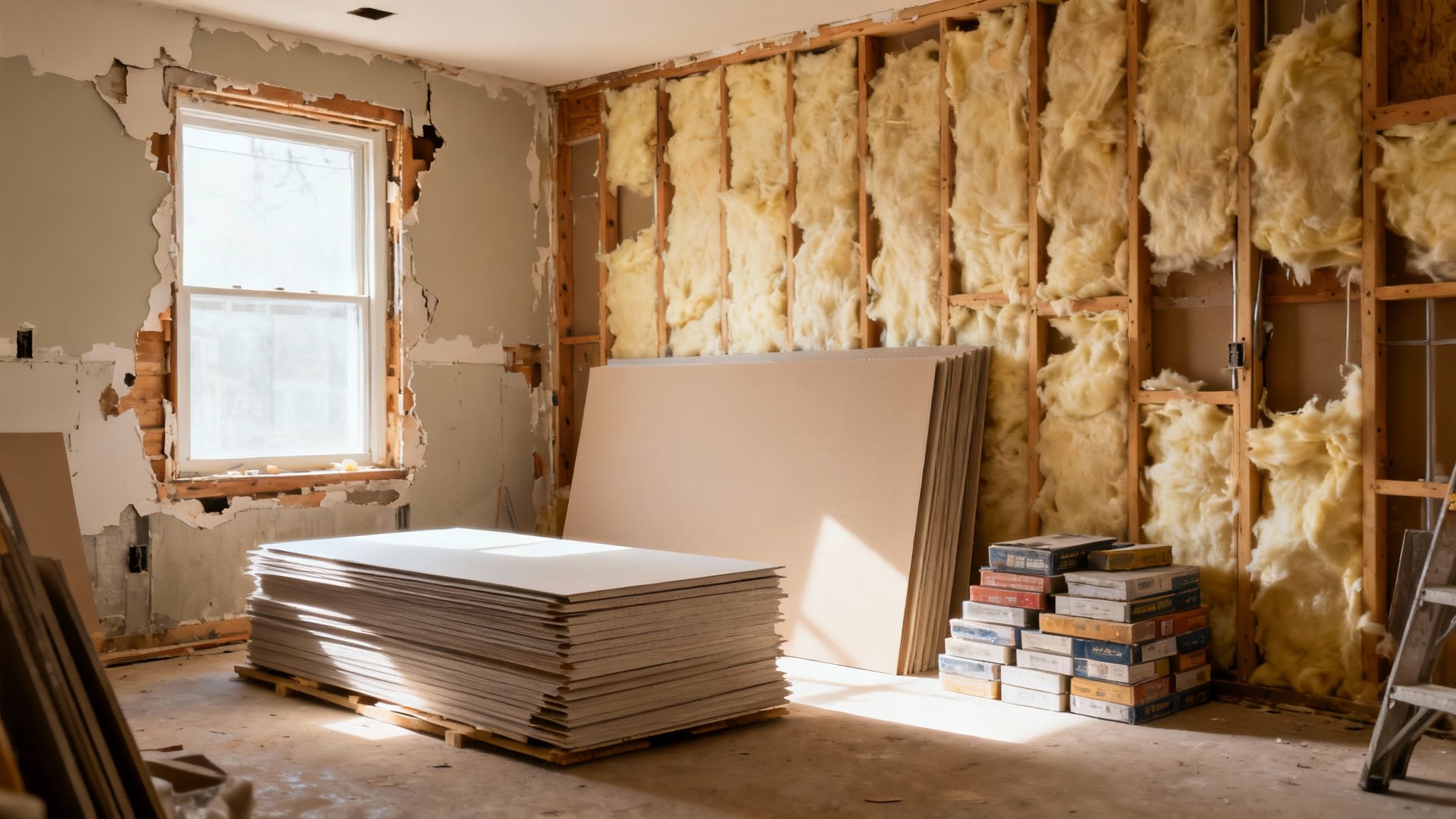
Just getting that assessment scheduled and completed can take time. If the engineer finds that key structural parts are weakened, the repair process becomes incredibly complex. It often involves setting up temporary supports, painstakingly removing compromised materials, and rebuilding everything to meet modern building codes. This isn't just a repair anymore; it’s a foundational rebuild that can easily add weeks, if not months, to the project.
Widespread Contamination Scenarios
Another game-changer is severe contamination, especially from a major sewage backup (Category 3 water). When this kind of hazardous water saturates large areas of your home, the cleanup is far more involved than just drying things out.
Every single porous material—drywall, insulation, carpeting, even wood flooring—has to be carefully removed and disposed of following strict biohazard rules. Technicians need specialized personal protective equipment (PPE), and the entire area must be contained to stop cross-contamination. The cleaning and sanitizing phase that follows is also much more intense.
This is also when the risk for secondary problems, like mold, skyrockets. If significant mold is found, it triggers its own separate, detailed process. You can learn more about how our professional mold remediation service integrates with water damage repairs.
For major disasters like widespread storm surge flooding or deep structural compromise, the entire rebuilding process can stretch to 6–12 months or longer. This is particularly true when supply chains are jammed and permits and skilled contractors are in high demand. You can explore more industry statistics on major flooding restoration timelines.
Common External Delays
Beyond the physical damage itself, several outside factors can slam the brakes on your restoration timeline. For homeowners, these are often the most frustrating delays because they're completely out of the restoration company's hands.
- Complex Insurance Claims: A large or complicated insurance claim can be a slow, bureaucratic nightmare. Delays pop up everywhere—from the adjuster’s initial inspection to negotiations over the scope of work and the final approval of payments.
- Building Permits: Any major reconstruction work is going to require permits from your city or county. The application and approval process can sometimes drag on for weeks, and no work can legally start until that permit is in hand.
- Material and Labor Shortages: We've all seen how supply chain issues can delay everything. Getting essential materials like flooring, cabinets, or windows can take much longer than expected. After a major storm, skilled labor is also in incredibly high demand, leading to long scheduling backlogs.
Frequently Asked Questions About Water Damage Restoration Timelines
Even after understanding the phases of restoration, you’re bound to have questions. When your home is underwater, you want straight, clear answers. Here’s a rundown of the most common concerns we hear from homeowners navigating this process.
Q: How long does it take for walls to dry out after a water leak?
A: With professional-grade equipment like industrial air movers and high-capacity dehumidifiers, drywall typically takes 3 to 5 days to dry completely. However, this can be affected by the type of insulation, the initial saturation level, and the home's humidity. We use specialized moisture meters to confirm walls are fully dry to prevent future mold growth.
Q: Can I stay in my house during water damage restoration?
A: It depends on the scale and type of damage. For a minor, clean water leak (Category 1) in a contained area, you can often stay. However, if the damage is widespread, affects structural integrity, or involves contaminated water (Category 2 or 3), it's highly recommended to relocate temporarily for your safety.
Q: Does homeowners insurance cover water damage restoration?
A: Most standard policies cover damage from sudden and accidental events, like a burst pipe or appliance malfunction. They almost never cover gradual leaks or damage from overland flooding (which requires a separate policy). Contact your insurance agent immediately to understand your specific coverage.
Q: How do professionals know when an area is completely dry?
A: We rely on data, not guesswork. Our IICRC-certified technicians use professional moisture meters to measure moisture content deep within materials like wood and drywall. We also use thermal imaging cameras to detect hidden pockets of moisture, ensuring every affected area is returned to its proper dry standard.
Q: How quickly can a restoration company get to my Los Angeles property?
A: Professional restoration companies like Onsite Pro operate 24/7. In an emergency, our goal is to be on-site within 60-90 minutes of your call to begin assessment and mitigation, which is crucial for minimizing damage and shortening the overall restoration timeline.
If you're facing a water emergency and need answers now, Onsite Pro Restoration is here to help 24/7. Call us at (818) 336-1800 for a free assessment and let our certified experts get your property back to normal quickly and safely. Learn more at https://onsitepro.org.