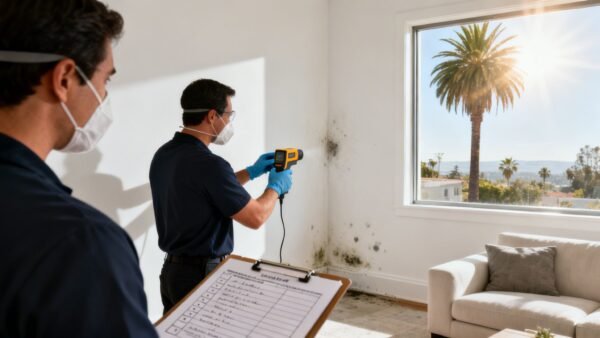

When you're dealing with water damage, the first question on every Los Angeles homeowner's mind is, how fast can black mold grow? The answer is unnervingly quick. Under the right conditions, like those after a burst pipe in a Sherman Oaks home, those harmless, invisible spores can spring to life and start colonizing wet surfaces in as little as 24 to 48 hours. Understanding this rapid timeline is critical for protecting both your property and your family’s health.
Don't wait for mold to take over. If you've had water damage, act now.
Get a Free Mold Inspection and Protect Your Home Today
The First 48 Hours: Your Critical Window After Water Damage

Think of mold spores as microscopic seeds that are already scattered throughout every home, just waiting. They're completely dormant until water shows up—whether from a slow leak, a damaged roof, or a plumbing disaster like burst water pipes. That moisture is the "just add water" signal for them to sprout.
This initial 48-hour window is without a doubt the most critical period for any property owner in Los Angeles. What you do here determines everything that comes next.
The Colonization Process Begins
In that first day or two, the spores don't just get damp; they start to grow roots, called hyphae, which dig into any porous material they can find. This is precisely why drywall, wood, carpet, and insulation are so vulnerable. They act like a sponge, holding onto moisture and providing a perfect food source for mold to anchor itself.
Black mold, known to professionals as Stachybotrys chartarum, thrives on these materials. After just 48 hours of moisture, it can begin its rapid takeover, posing a serious threat to both your health and the building's structure.
What Happens If You Wait
Ignoring even a small amount of moisture for just a couple of days is a gamble. What begins as an invisible process quickly escalates into a visible, spreading infestation.
The difference between acting in the first 24 hours and waiting until day three is often the difference between a straightforward drying job and a costly, complex mold remediation project. Your initial response truly dictates the entire outcome.
To help you visualize how quickly this happens, here’s a typical timeline of what to expect on common household surfaces after water exposure.
Black Mold Growth Timeline After Water Exposure
| Timeframe | Growth Stage | What to Look For |
|---|---|---|
| 0 – 24 Hours | Activation | Invisible. Spores absorb water. No visible signs or smells. |
| 24 – 48 Hours | Germination | Still invisible, but hyphae (roots) begin to penetrate surfaces. A faint, musty odor may start. |
| 48 – 72 Hours | Early Growth | Small, fuzzy spots may appear. They might be white, gray, or greenish before turning black. |
| 1 – 2 Weeks | Visible Colonization | Distinct mold colonies are visible. The classic black, slimy appearance develops. Odor is strong. |
| 2+ Weeks | Widespread Infestation | Mold has spread significantly, potentially damaging structural materials and releasing high levels of spores. |
By the end of that second day, even if you can't see it, the foundation for a widespread problem is already set. This is why immediate, decisive action is non-negotiable.
What Black Mold Needs to Thrive So Quickly
So, how fast can black mold grow and seem to appear out of nowhere? It’s not random. Mold follows a simple but powerful recipe, and unfortunately, all the ingredients are readily available in Los Angeles homes right after a water event.
Black mold needs three things to get started:
- A Food Source: It isn’t picky. Black mold feeds on cellulose, an organic compound found everywhere in your home—drywall, wood studs, the paper backing on insulation, and even simple dust and debris. Your house is an all-you-can-eat buffet.
- Moisture: This is the non-negotiable trigger. Spores can lie dormant for years, but they need water to wake up and grow. A relative humidity above 60% is often enough to kickstart the process.
- The Right Temperature: Mold loves the same temperatures we do, typically between 60-80°F. This makes our indoor environments the perfect incubator, day in and day out.
Understanding Water, Humidity, and Mold Growth
When we talk about moisture, it’s more than just a visible puddle. Two concepts really dictate whether mold will grow: relative humidity and water activity.
Think of relative humidity as the moisture floating in the air. In coastal neighborhoods like Santa Monica, that persistent marine layer can easily push indoor humidity levels up, creating a welcoming environment for mold even without an obvious leak.
Water activity, on the other hand, is the moisture available right on a material’s surface. When drywall gets soaked from a burst pipe, its water activity level skyrockets. This gives mold spores a direct drink of water, allowing them to sprout. You can learn more about how we measure this by checking out our guide on how to read moisture meter readings.
Why Black Mold Is a Sign of a Serious Problem
Not all molds are the same. Stachybotrys chartarum, the infamous black mold, is what restoration pros call a tertiary colonizer. This means it’s a late arrival to the party—it usually only shows up after other, faster-growing molds have already set up shop.
Its presence is a massive red flag. It signals a persistent, significant moisture problem, not just a little condensation from a shower.
Black mold thrives in environments with high, continuous moisture. If you see it, it’s a sure sign that water has been sitting in that area for a long time, giving this slow-growing but dangerous fungus the chance to take hold.
Under ideal indoor conditions—with humidity above 93% and temperatures between 68-77°F—black mold can double its colony size in just a few days. It flourishes on water-logged, cellulose-rich materials while producing mycotoxins that pose serious health risks. This is why a rapid response to any water damage in a Los Angeles property isn't just a good idea—it's absolutely critical.
A Day-by-Day Look at a Mold Infestation
Let's walk through a common scenario: a small, slow pipe leak starts inside a wall in your Glendale property. It might seem like a minor issue, but this is the exact trigger that kicks off a mold infestation—and it happens much faster than most homeowners realize.
Day 1 to 3: The Hidden Start
The second water hits drywall or wood, the clock starts ticking. For the first 24 to 72 hours, you won’t see a thing. The wall might feel a little damp, but that’s it.
Behind the scenes, though, it’s a different story. Dormant mold spores—which are always present in the air—land on that wet surface and come to life. They immediately start sending out microscopic roots, known as hyphae, that burrow into the paper of the drywall and porous wood framing. There's no visible growth or musty smell yet, which creates a dangerous false sense of security.
Day 4 to 7: The First Clues Appear
Around day four or five, the first subtle signs might emerge. You may notice small, discolored spots on the wall. At first, these colonies can look like common dust, dirt, or even shadows.
They often appear white, gray, or even greenish before turning that classic dark black. This is also when you might catch the first faint, musty odor, especially in a contained area like a closet or under a sink. For a Beverly Hills homeowner, writing this off as "a little mildew" is a huge mistake. The problem is already escalating.
This timeline shows how the key ingredients come together to fuel rapid growth.

Once moisture is introduced, it’s a race against time before mold starts consuming organic food sources in a warm space.
Day 7 to 14: The Problem Gets Serious
By the second week, the growth explodes. Those small, isolated spots start merging into larger, more obvious patches of black mold. The slimy or sooty dark appearance becomes unmistakable, and the musty smell gets much stronger, often filling the entire room.
At this stage, the mold is no longer just on the surface. Its root system has dug deep into the material, weakening its structural integrity. This is the point where trying to clean it yourself becomes ineffective and can even make things worse by spreading spores.
Week 3 and Beyond: Widespread Contamination
After three weeks, you have a full-blown infestation. The visible colonies are just the tip of the iceberg—what’s growing behind the wall is likely far worse. The drywall itself might feel soft, begin to bubble, or even crumble. The wood studs behind it are next.
Critically, the mature colonies are now pumping millions of spores into your home's air. These airborne spores travel through the HVAC system, contaminating other rooms and creating a significant health risk for anyone living there. If you see signs of growth, our guide on how to check for mold in walls explains the right way to assess the situation. This is not a problem you can afford to ignore.
Understanding the Health Risks of Mold Exposure
While the physical damage black mold inflicts on your property is bad enough, the impact it can have on your family’s health is the real emergency. The danger isn’t just the ugly black spots on your wall; it’s the invisible compounds the mold releases into the air, known as mycotoxins.
These microscopic toxins become airborne as the colony grows, often within the first 24 to 48 hours. This means health risks can start long before you ever see or smell a widespread problem. When you breathe in mycotoxins, your body often sounds the first alarm.
From "Just Allergies" to Serious Illness
For many people in Los Angeles, the first signs of mold exposure feel exactly like a bad allergy season. It’s easy to blame a runny nose or itchy eyes on smog or pollen, but these symptoms could be your body’s warning that something is wrong with your indoor air.
Common health issues we see linked to mold include:
- Respiratory Problems: A nagging cough, constant sneezing, wheezing, and shortness of breath are classic signs. For anyone with asthma, exposure can trigger more frequent and severe attacks.
- Allergic Symptoms: Itchy or watery eyes, a perpetually runny nose, unexplained skin rashes, and sinus pressure are very common reactions.
- General Malaise: Many clients report persistent headaches, brain fog, and a deep fatigue they just can't shake after spending time in a contaminated home.
According to trusted sources like the Centers for Disease Control and Prevention (CDC), anyone can be affected by mold. However, some members of your household are at a much higher risk for severe reactions.
Who Is Most Vulnerable to Mold?
A healthy adult might just feel run-down, but for others, the risks are significantly greater. You have to act fast if your home includes:
- Children and Infants: Their immune and respiratory systems are still developing, making them far more susceptible to irritation from airborne spores.
- The Elderly: As we age, our body's natural defenses weaken, making it harder to fight off environmental toxins.
- Immune-Compromised Individuals: Anyone with a weakened immune system or undergoing treatments like chemotherapy faces a much greater risk of serious fungal infections.
- Those with Chronic Lung Disease: If you have a pre-existing condition like asthma or COPD, mold exposure can make it drastically worse.
The U.S. Environmental Protection Agency (EPA) is very clear on this: all molds have the potential to cause health effects. Promptly addressing any indoor mold growth is essential to protect the well-being of everyone in the building.
Because how fast can black mold grow is directly tied to how quickly these health risks appear, waiting is never the right call. The moment you even suspect mold, you're not just dealing with a property issue—you’re facing a potential health hazard that needs immediate and professional attention.
What to Do Immediately When You Find Mold

When you find mold in your Los Angeles home, how you react in that first hour is critical. Knowing what to do—and more importantly, what not to do—can stop a small problem from exploding into a full-blown contamination that jeopardizes your property and health.
Your first move is simple: stop the water source. If it’s a leaky pipe under the sink, shut off that specific valve. If you can’t find it or the source is unclear, don't hesitate to turn off the main water supply to your house. This single action starves the mold of the moisture it needs to keep growing.
Next, get some air moving. Open windows and use fans to help dry things out, but be smart about it. Never point fans directly at visible mold growth, as the airflow can easily dislodge spores and blast them across the room.
What You Should Never Do
It’s a natural instinct to want to attack the mold yourself. But this is the biggest mistake we see homeowners make, and it can backfire in a major way.
Scrubbing or spraying black mold with store-bought cleaners without professional containment is like hitting a dandelion with a leaf blower. You’ll send millions of microscopic spores into the air, turning a localized spot into a house-wide infestation that’s far more dangerous and expensive to fix.
Here’s what you absolutely should not do:
- Scrub or wipe dry mold: This immediately makes the spores airborne, spreading the contamination.
- Use bleach on porous surfaces: Bleach might kill surface mold on tile, but it won’t penetrate porous materials like drywall or wood. The roots (hyphae) are left behind, and the water in the bleach solution can actually feed their regrowth.
- Run your HVAC system: If mold is anywhere near a vent, your heating and air conditioning will become a super-spreader, efficiently delivering spores to every single room in your home.
When to Call for Professional Mold Remediation in Los Angeles
Not every dark spot calls for a hazmat suit. A small patch of surface mildew on a non-porous surface, like your shower tile, can usually be handled with a good household cleaner.
However, the game changes completely when you spot these red flags. That’s your signal to stop and call for backup.
- The mold patch is larger than 10 square feet: This is the general guideline from the EPA. Anything bigger is not a DIY job.
- Mold is on porous materials: If you see it on drywall, wood, carpet, or insulation, the problem is almost certainly deeper than what’s visible.
- You smell a strong, musty odor: That powerful earthy smell means a significant colony is thriving somewhere, even if it's hidden behind a wall or under your flooring.
When you suspect black mold, especially after any kind of water damage, the safest and most effective route is to get a professional opinion. Arranging for professional mold inspection services is a smart first step to understand the true scale of the problem. For a definitive fix, you need a certified team that knows how to safely contain and eliminate the threat. Our guide on emergency mold removal can connect you with qualified experts immediately.
Long-Term Strategies to Prevent Mold Growth
Once the immediate mold threat is gone, your job isn’t over. It’s just getting started. The focus has to shift from reacting to a crisis to actively preventing the next one. A proactive, long-term strategy is the only way to keep your Los Angeles home safe from another outbreak.
This means cutting off the key ingredients mold needs to survive. The single most important factor? Moisture control. Without water, mold simply cannot grow. Your primary goal is to keep your indoor environment consistently dry, which means tackling both sudden leaks and everyday humidity.
Master Your Indoor Humidity
Here in Los Angeles, managing humidity is a constant battle. We bounce between bone-dry Santa Ana winds and the thick marine layer that can soak coastal areas like Santa Monica. The key is to keep your indoor relative humidity between 30% and 50%.
- Use a Dehumidifier: During those foggy coastal months or after a heavy rain, a dehumidifier is your best friend. Run one in naturally damp spots like basements, crawl spaces, or bathrooms without great ventilation to pull that excess moisture right out of the air.
- Invest in a Hygrometer: These are inexpensive little devices that measure indoor humidity. Placing a few around your home will tell you exactly when moisture levels are creeping into the danger zone (anything above 60%).
Improve Your Home's Ventilation
Stagnant, damp air is practically an open invitation for mold. You need good ventilation to ensure that humid, stale air is constantly being swapped out for fresh, dry air.
The rule of thumb is to run your bathroom exhaust fan during every shower and for at least 20-30 minutes afterward. This simple habit is one of the most powerful ways to stop bathroom mold before it even starts.
The same logic applies to your kitchen—always use the range hood vent when you're cooking to pull steam out of the room. If you’re looking for more specific advice, our guide on how to prevent mold in your Los Angeles home for good breaks it down with detailed, room-by-room tips.
Perform Routine Maintenance Checks
Finally, you need to become a bit of a detective in your own home. So many of the major mold jobs we handle start from slow, hidden leaks that go unnoticed for months or even years.
Get into the habit of doing a quick walk-through every few months. Here’s what to look for:
- Check Under Sinks: Get a flashlight and look for any small drips, water stains, or musty smells in your kitchen and bathroom cabinets.
- Inspect Appliance Hoses: Take a peek behind your washing machine, dishwasher, and refrigerator. Those little water lines can become brittle and fail without warning.
- Examine Window Seals: Make sure the caulking around your windows is solid and intact to keep rain from seeping in.
- Assess Your Roof: This is especially critical for the flat-roof styles so common in North Hollywood and the Valley. Poor drainage is a frequent cause of catastrophic water damage.
FAQs About Black Mold Growth in Los Angeles
Even when you know the basics, it's natural for Los Angeles homeowners to have specific, practical questions about what black mold growth really means for their property. We get these calls all the time. Here are some straightforward answers to the most common concerns.
Can mold really start growing in just 24 hours?
Yes, it absolutely can. While you won't see fuzzy black patches in the first 24 hours, the clock is already ticking. In that first day, dormant spores that have landed on a damp surface—like a wet piece of drywall after a leak—are absorbing water, waking up, and starting to put down invisible roots called hyphae. The foundation for a full-blown infestation is laid long before you ever see or smell a thing.
If it’s black, is it the dangerous kind of mold?
Not necessarily. Many common household molds can appear dark green, brown, or black, including species like Alternaria or Aspergillus. The problem is, you can’t tell the infamous Stachybotrys chartarum from a less hazardous look-alike just by eye. Because all molds can trigger allergies and damage your home, any visible mold signals a moisture problem that must be fixed urgently.
How do I know if mold is growing behind my walls?
Hidden mold is a huge concern, but it almost always leaves a few tell-tale signs. The number one giveaway is a persistent, musty, or earthy smell that you can't seem to trace. Other red flags include bubbling or warped paint, soft or discolored drywall, and a sudden spike in allergy symptoms that only act up when you're at home.
Will mold just die if I dry it out?
No, and this is one of the most dangerous misconceptions. When mold dries out, it doesn't die; it just goes dormant. The colony will stop actively growing, but it's still there, along with all the allergens and toxins it has already produced. The moment that spot gets wet again—even from high humidity in the air—the colony will reactivate and pick up right where it left off. This is why professional remediation involves physically removing the contaminated materials.
Don't let a small leak turn into a major health hazard that takes over your property. If you see or smell signs of mold, you need a fast, professional assessment to understand what you're dealing with.
The team at Onsite Pro Restoration provides IICRC-certified mold inspections and remediation services across Los Angeles. We find the moisture source, contain the spread, and restore your home to a safe and healthy condition.