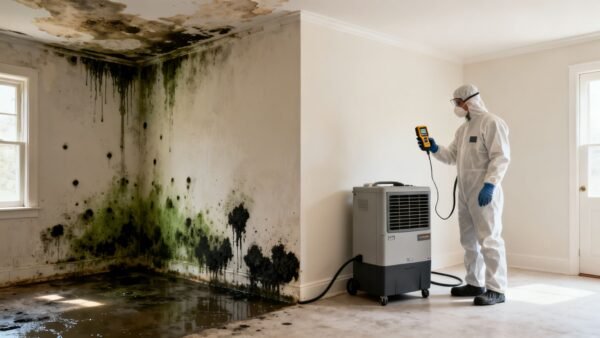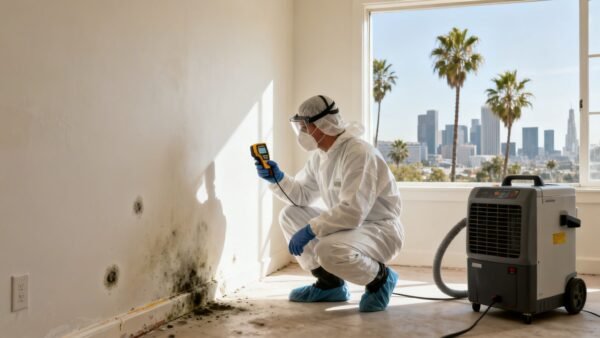

Discovering standing water in your basement is a shock no Los Angeles homeowner wants to face. The initial dread can quickly turn to panic, but your actions in the first hour are critical for safety and minimizing long-term damage. This guide outlines the essential steps for a safe and effective flooded basement cleanup, ensuring your home is restored correctly.
Immediate Safety Steps Are Non-Negotiable
Before you do anything else, prioritize safety. Never step into standing water until you are 100% certain the electricity to the basement has been shut off at the breaker. Water and electricity are a deadly combination. Once the power is off, find your home's main water shut-off valve and turn it off to stop more water from coming in. With these immediate threats handled, you can begin to assess the situation.
Understanding the Water Source: The First Step in Cleanup
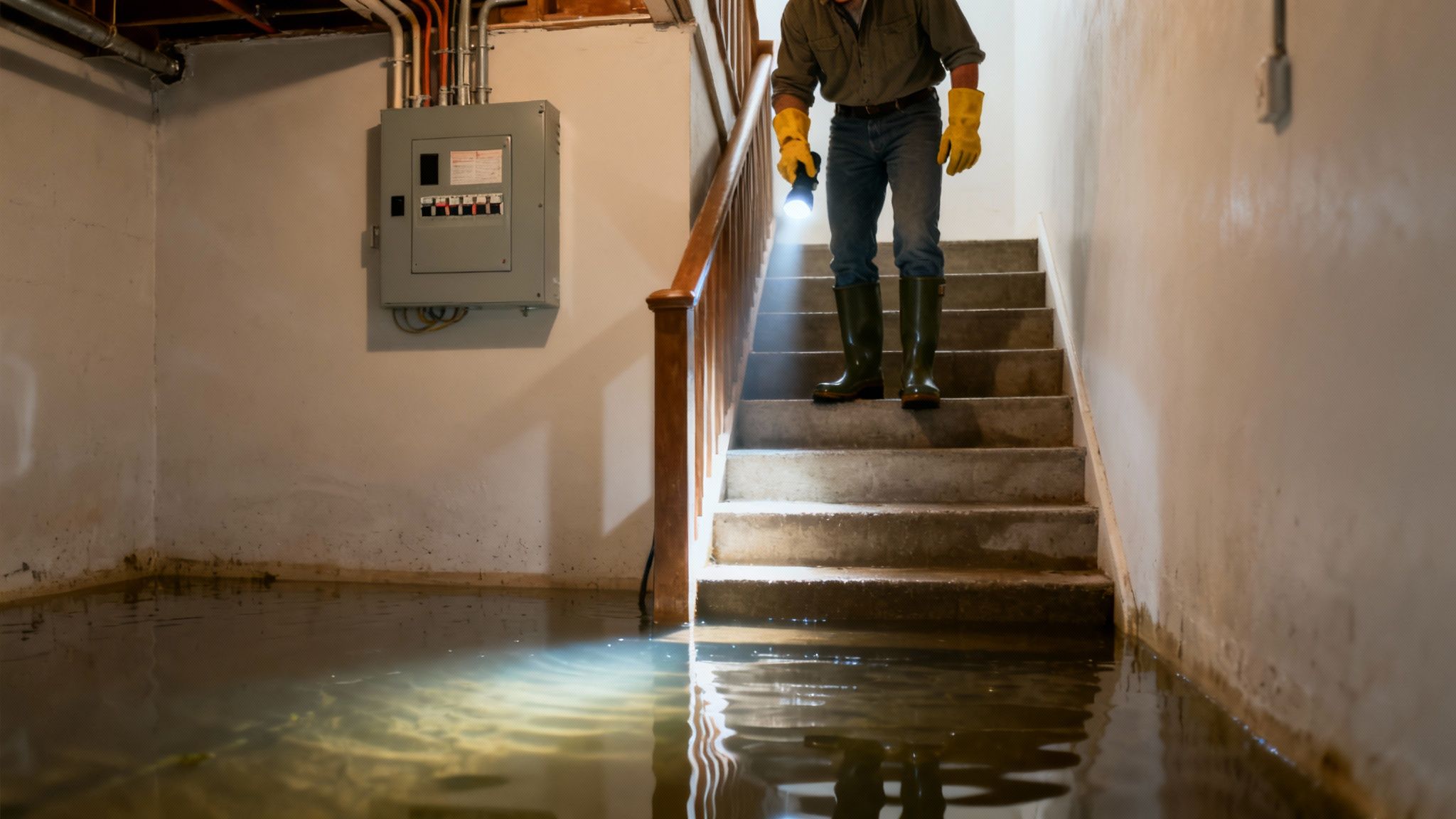
Identifying where the water came from is key to the entire flooded basement cleanup process. The source determines the necessary safety precautions and what your insurance might cover. Water is classified into three categories:
- Category 1 (Clean Water): This is the "best-case" scenario, originating from a sanitary source like a burst supply line or an overflowing sink in a San Fernando Valley home. While not an immediate health threat, if it sits for more than 48 hours, it can degrade into Category 2.
- Category 2 (Grey Water): This water is contaminated and can cause illness. It comes from sources like an overflowing washing machine, a dishwasher, or a toilet containing only urine.
- Category 3 (Black Water): This is the most dangerous and grossly contaminated with harmful bacteria, pathogens, and toxins. Common sources in Los Angeles include sewage backups or floodwaters from storm runoff overflowing the LA River.
Warning: Never attempt to handle Category 3 water on your own. This level of contamination requires professional-grade personal protective equipment (PPE) and specific sanitization protocols. Using a household shop vac can aerosolize contaminants and spread them throughout your home's air.
Document Everything for Your Insurance Claim
Before moving a single box, pull out your phone. Documenting the damage before cleanup begins is crucial for a smooth insurance claim. Take extensive photos and videos. Get wide shots showing the full extent of the flooding, then zoom in on details like the water line on the walls, soaked furniture, and submerged appliances. This visual evidence is undeniable proof of your loss.
The stress of a flood is immense, but you don't have to navigate it alone. Understanding the professional steps for emergency water cleanup provides a roadmap and helps you ask the right questions. Proper restoration is the only way to prevent future problems like hidden mold growth or musty odors that can plague a home for years.
How Much Does Flooded Basement Cleanup Cost?
Figuring out the financial impact of a flooded basement is challenging. The final price for a flooded basement cleanup isn’t a flat rate; it's a combination of several key factors that vary significantly from one property to the next.
The biggest variables are the size of the flooded area and the depth of the water. A few inches of clean water in a small basement is a completely different scenario than a foot of contaminated water in a large commercial basement. More water and more square footage mean more labor, more equipment, and more time.
Key Factors That Determine Cleanup Costs
Beyond the size of the flood, the type of water is a major cost driver. Each category demands a different level of safety and cleanup intensity.
- Category 1 (Clean Water): From a burst supply line. The job focuses on extraction and thorough drying.
- Category 2 (Grey Water): From an appliance overflow. This requires more intensive cleaning and sanitization.
- Category 3 (Black Water): From sewage or overland flooding. This is the most expensive, requiring full PPE, specialized disinfectants, and often the removal of contaminated materials.
The extent of damage to your home’s materials also plays a significant role. If water has saturated drywall, insulation, and wood framing, these materials often need to be removed. This adds demolition and reconstruction costs to the initial cleanup bill.
The longer water sits, the higher the cost. Water quickly migrates into porous materials, degrading from Category 1 to Category 2 in as little as 48 hours and promoting mold growth, which introduces a new set of remediation costs.
A Look at the Average Costs
The financial reality of a flooded basement can be shocking, with costs varying widely based on the severity of the damage. In our experience, the average flooded basement cleanup costs most homeowners between $2,000 and $7,000.
For a smaller basement around 500 square feet, you might expect to pay $1,500 to $3,500. For a large 2,000-square-foot basement, costs can easily climb to $6,000 to $14,000. If you're dealing with Category 3 black water, the project could exceed $15,000 due to the intensive safety protocols and disposal requirements.
For a more detailed breakdown, explore our comprehensive guide to water damage cleanup costs. Being informed helps you have a clear conversation with restoration professionals and sets realistic expectations.
The Hidden Costs of Waiting
It’s tempting to delay or attempt a DIY cleanup to save money, but this approach often backfires. The most common cause of secondary damage is inadequate drying. A professional team doesn't guess; we use moisture meters, thermal imaging cameras, and industrial-grade dehumidifiers to locate and eliminate all moisture from your home's structure. This professional approach prevents long-term issues like wood rot, a compromised foundation, and persistent musty smells that can harm your home's air quality and value.
The Professional Water Removal and Drying Process
A professional flooded basement cleanup is a precise science that goes far beyond what a shop vac and fans can achieve. It's a systematic, IICRC-certified process designed to completely restore the health and safety of your basement. The first step is always the most dramatic: water extraction.
Our technicians arrive with powerful, truck-mounted extraction units and high-capacity submersible pumps. These machines remove hundreds or even thousands of gallons of standing water quickly, preventing it from wicking further into your home’s structure.
The Science of Structural Drying
Once the standing water is gone, the real work begins. This is where professional expertise makes all the difference as we shift from water removal to structural drying. Moisture hides deep inside porous materials like concrete, wood studs, and drywall.
To force it out, we create a powerful drying vortex using specialized equipment:
- Industrial-Grade Air Movers: These high-velocity fans accelerate evaporation by blasting air across floors, walls, and other surfaces.
- Low-Grain Refrigerant (LGR) Dehumidifiers: These workhorses pull vast amounts of moisture from the air, creating an intensely dry environment that draws trapped water out of building materials.
This is not a "set it and forget it" process. Our technicians constantly monitor progress, using tools like thermal imaging cameras and moisture meters to find hidden water pockets behind walls or under flooring.
Key Insight: The goal of professional drying isn't just to make surfaces feel dry. It's to return every affected material to its normal, pre-loss moisture content. This is the only way to reliably prevent secondary damage like mold growth and wood rot.
The infographic below illustrates the key factors that influence the scope and cost of any cleanup job.
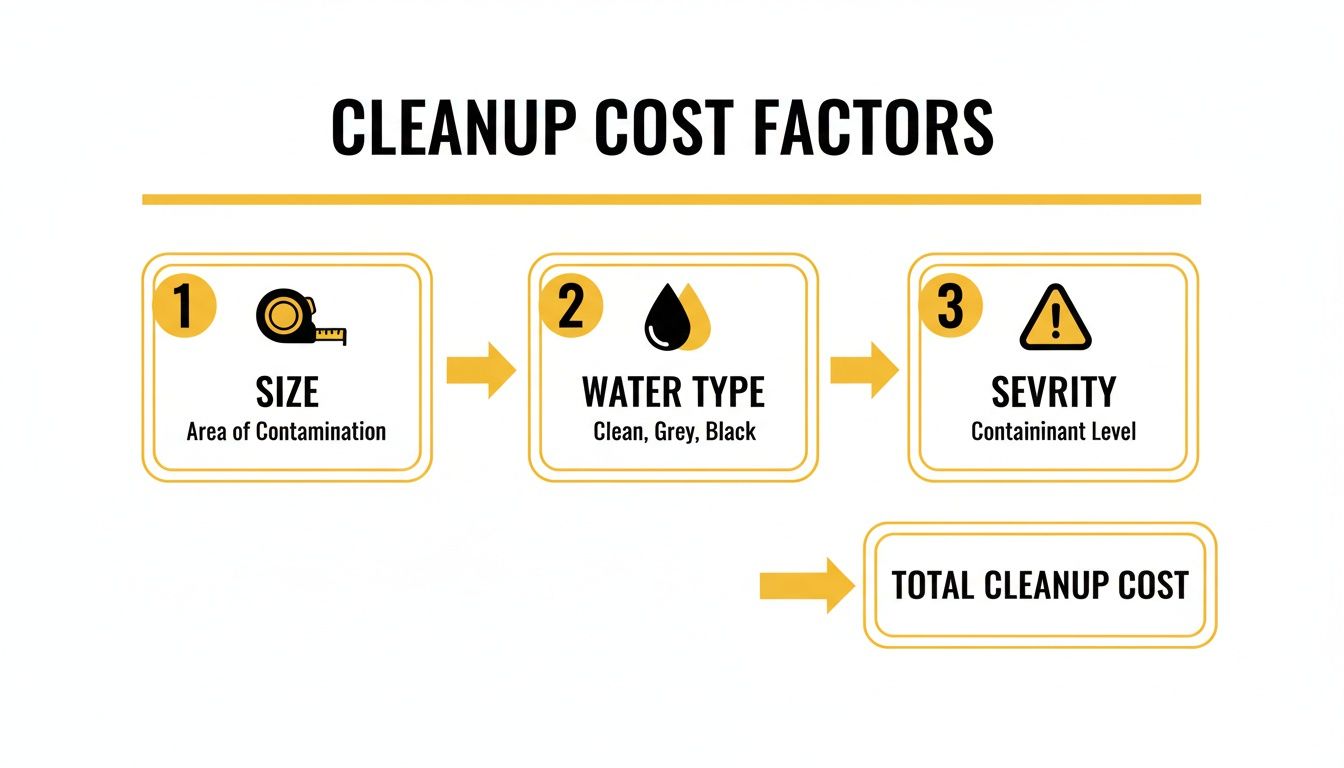
As you can see, each factor—from the size of the area to the type of water—builds on the last. A large-scale flood with contaminated black water is a far more complex and resource-intensive job than a small leak from a clean water line.
Sanitization and Deodorization
After extraction and during drying, sanitization is crucial, especially with grey or black water. Our teams apply EPA registered disinfectants list to all affected surfaces. This step is essential for killing bacteria, viruses, and fungi that pose serious health risks. This treatment also eliminates the source of musty, post-flood odors rather than just masking them. The entire professional approach is detailed and methodical; learn more in our full water damage restoration process guide.
DIY vs. Professional Cleanup: A Comparison
| Cleanup Task | DIY Approach (Limitations & Risks) | Professional Method (Industry Standard) |
|---|---|---|
| Water Extraction | Shop vacs, buckets. Slow, inefficient, and leaves significant moisture behind. Risk of electrocution. | Truck-mounted extractors and submersible pumps remove water rapidly, minimizing absorption into materials. |
| Drying | Household fans and open windows. Only dries the surface, leaving deep moisture trapped. High risk of mold. | Strategic placement of industrial air movers and LGR dehumidifiers to create a controlled drying environment. |
| Moisture Detection | "Touch test." Fails to identify moisture inside walls, under floors, or in insulation. | Thermal imaging cameras and calibrated moisture meters find all hidden water pockets to ensure complete drying. |
| Sanitization | Household cleaners (e.g., bleach). Can be ineffective on porous surfaces and may not kill all pathogens. | Application of EPA-registered, hospital-grade antimicrobial agents to eliminate bacteria, viruses, and mold spores. |
| Documentation | A few personal photos. Often insufficient for insurance claims, lacking technical data. | Detailed moisture maps, daily drying logs, and comprehensive photo documentation to validate the claim. |
While a DIY effort might seem proactive, it often falls short. Professional methods are designed not just to clean, but to fully restore your home's structural integrity and safety.
Final Checks and Completion
A professional flooded basement cleanup is complete only when the data confirms it. We take final moisture readings from all affected materials and compare them to readings from an untouched, dry area to establish a "dry standard." Only when everything is back to its normal moisture content do we remove the equipment, ensuring a permanent solution that protects your property value.
How to Prevent Mold Growth After a Basement Flood
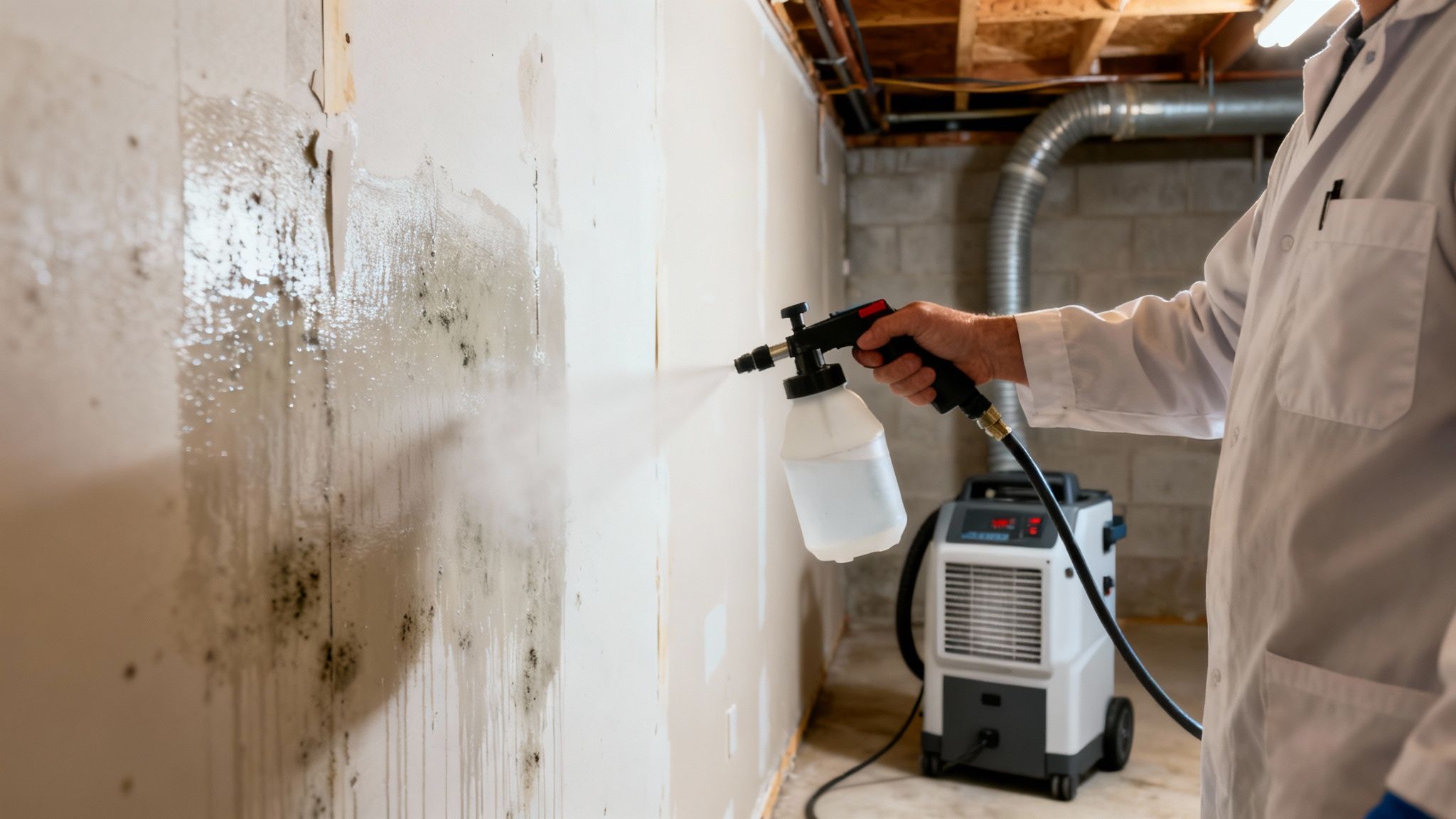
Once the water is gone, the fight against mold begins. In the dark, damp aftermath of a flood, mold can start growing in as little as 24 to 48 hours. Swift, professional drying is your best defense against this silent threat. Our process is a multi-pronged attack that tackles both surface contamination and airborne spores, a crucial part of any effective flooded basement cleanup.
The Immediate Threat of Airborne Spores
Long before you see a single black spot, microscopic mold spores are in the air, waiting for the right conditions. A basement with stagnant, humid air is a perfect breeding ground, especially in coastal areas like Santa Monica where fog contributes to ambient moisture.
To combat this, we use high-efficiency particulate air (HEPA) scrubbers. These machines act like powerful magnets, pulling spores, dust, and other contaminants out of the air. This proactive air cleaning dramatically improves air quality and prevents new mold colonies from forming while we dry the structure.
Mold isn't just an ugly stain; it actively digests organic materials like wood and drywall, compromising your home's structural integrity. Stopping it before it starts is the most effective and least costly strategy.
The Difference Between Mold Prevention and Remediation
It's important to understand the distinction between preventing mold and remediating it:
- Mold Prevention: This is integrated into our water damage service. After water extraction, we apply antimicrobial treatments to affected surfaces. This creates a barrier that inhibits mold growth while the area dries.
- Mold Remediation: This is a more intensive process required when mold is already established. It involves containing the area, physically removing mold, and often disposing of contaminated materials like drywall or insulation.
For a deeper dive into proactive steps, read our guide on how to prevent mold after water damage.
Post-Cleanup Vigilance is Crucial
After our equipment is gone, your own senses are your best tool. Pay attention to any lingering musty or earthy smells—a classic sign of hidden moisture. Also, watch for any new discoloration or peeling paint on walls. This vigilance is vital because basement flooding is incredibly common. In fact, 98% of basements will experience some type of water damage. This widespread risk highlights why professional moisture detection is essential after any water event.
Navigating Your Water Damage Insurance Claim
After the initial shock of a flooded basement subsides, the daunting reality of the insurance claim process sets in. Approaching it with a clear strategy can make all the difference in getting the coverage you're entitled to.
Before touching anything, document everything. Take more photos and videos than you think you'll need, capturing the damage from every angle. This visual proof is your most powerful tool.
Building a Strong Insurance Claim
With visual evidence secured, create a detailed inventory of all damaged items. List everything from large appliances to personal belongings, noting their approximate age, value, and the damage sustained.
Start a dedicated folder for every receipt related to the flooded basement cleanup. This includes professional services, temporary lodging, packing supplies, and any other related expenses. Every dollar spent is a potential part of your claim. Understanding whether insurance covers water damage and your specific policy's exclusions is a crucial piece of this puzzle.
Pro Tip: Do not throw anything away until your insurance adjuster gives you explicit permission. Discarding items before they are officially inspected can jeopardize your reimbursement for them.
Your Restoration Company is Your Best Ally
A professional restoration company is your greatest ally in the claims process. We provide the exhaustive, technical documentation that insurance companies require.
Here’s what we provide:
- Detailed Moisture Readings: We use calibrated moisture meters and thermal imaging to create a "moisture map," scientifically proving the extent of water intrusion into hidden areas.
- Professional Loss Reports: We generate detailed reports that outline the cause of loss, mitigation steps taken, and an itemized scope of work for the restoration.
- Direct Communication: We speak the same language as insurance adjusters and can communicate directly with them to provide the necessary data to keep your claim moving.
Understanding Common Policy Questions
A major point of confusion for homeowners is what their policy actually covers. It almost always comes down to the source of the water.
- Sudden & Accidental Leaks: Standard homeowner's policies typically cover these events, such as a burst pipe, a leaking water heater, or an overflowing washing machine.
- Overland Flooding & Seepage: This is a major exclusion. Damage from groundwater or a nearby river overflowing is not covered by a standard policy. This requires separate flood insurance, usually from the National Flood Insurance Program (NFIP).
- Sewer Backups: Coverage for a sewer or drain backup is typically excluded unless you have specifically added it as an endorsement to your policy.
We help document the water's source to provide the evidence your claim needs. For a complete walkthrough, our guide on filing an insurance claim for water damage lays out a clear roadmap.
FAQ: Your Top Flooded Basement Questions Answered
When you’re facing a flooded basement, you need clear, fast answers. Here are our responses to the most common questions we hear from Los Angeles homeowners.
Q: How long does the flooded basement cleanup process take?
A: The timeline depends entirely on the severity. A minor flood with clean water might take 2-3 days for extraction and drying. However, a major flood involving contaminated water and saturated materials can easily take a week or more for demolition, sanitization, and complete structural drying.
Q: Can I clean up a flooded basement myself?
A: For a very small, clean water spill, perhaps. But for anything significant, DIY cleanup is a major gamble. There are serious risks of electrocution and exposure to contaminants. Household equipment cannot remove hidden moisture, leading to a high risk of mold growth, which can start in just 24-48 hours. Professional methods are essential for ensuring your home is truly dry and safe.
Q: Will my homeowners insurance cover a flooded basement?
A: It depends on the water source. Standard policies typically cover "sudden and accidental" internal events like burst pipes. They almost always exclude damage from natural floods (groundwater, storm surge) and sewer backups. You need a separate flood insurance policy for overland flooding and a specific rider for sewer backup protection.
Q: What should I do with my soaked belongings?
A: Do not throw anything away until your insurance adjuster has inspected it or given you permission. Your first step should be to document everything with photos and videos. If it's safe, move high-value or sentimental items to a dry area. Leave heavily contaminated items for professionals to handle and document for your claim.
Facing a flooded basement is tough, but you’re not in it alone. For immediate, professional help with your flooded basement cleanup in the Los Angeles area, the certified team at Onsite Pro Restoration is ready 24/7. We’ll restore your home and your peace of mind.