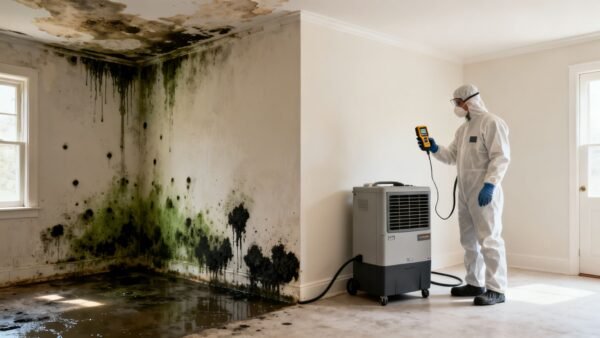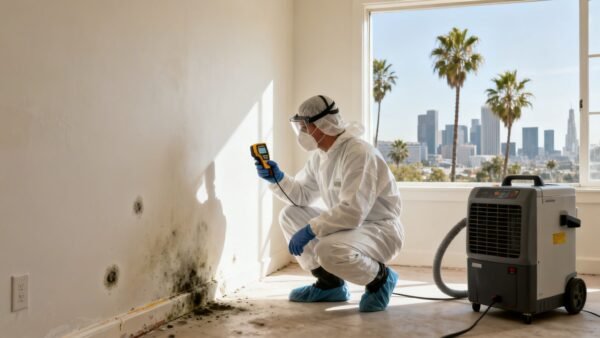

Flood damage restoration is the systematic process of cleaning up, drying, sanitizing, and repairing a property after it has been impacted by water. It’s far more than just mopping up visible puddles; it's a scientific approach to stabilizing the environment to prevent secondary issues like mold and structural rot. The primary goal is to return your home to its pre-disaster condition. The initial 24-48 hours are absolutely critical in preventing long-term, costly problems. If you're a homeowner in the Los Angeles area, understanding this process is the first step toward reclaiming your property after a water disaster.
Dealing with water damage? Don't wait. Call us 24/7 for immediate help and a free assessment.
Get a Free Assessment Now
What Is Flood Damage Restoration and Why Is It Urgent?
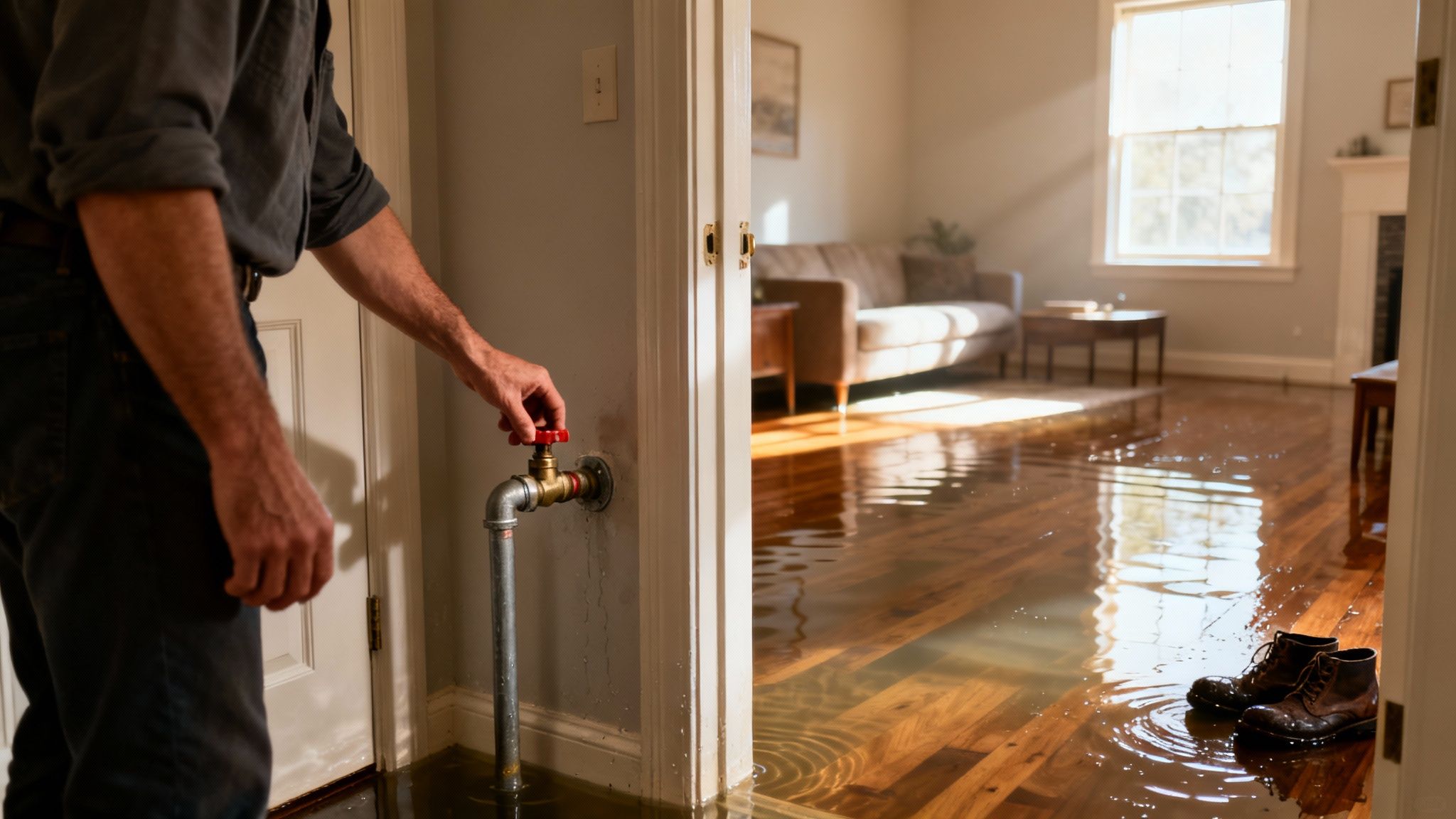
There are few things as heart-stopping for a homeowner as discovering water spreading across your floor. It’s an overwhelming moment, and panic is a completely normal reaction. But your actions in the next few hours can make all the difference.
Professional flood damage restoration is like an emergency medical response for your home. The first priority is to stop the bleeding by shutting off the water source. From there, it’s all about accurately assessing the damage and stabilizing the situation to prevent it from worsening.
This isn't a simple cleanup job. It's a scientific process that tackles both the water you see and the hidden moisture that has seeped into your walls and floors. Certified technicians arrive with specialized equipment to ensure every last bit of damaging moisture is managed, protecting your property's value and, more importantly, your family's health.
Why Acting Fast Is Non-Negotiable
When it comes to water damage, delay is your worst enemy. The longer water sits, the more destructive it becomes. Within the first day, materials like drywall, insulation, and wood subfloors start absorbing water, causing them to swell, warp, and lose their structural integrity.
This soggy environment is also the perfect breeding ground for mold, which can start to grow in as little as 24 hours, especially in the humid coastal air of Santa Monica or after a heavy winter rain in the San Fernando Valley.
Acting swiftly prevents secondary damage. The difference between a controlled drying process and a full-scale mold remediation project often comes down to how quickly you respond.
This is exactly why a fast, professional response is non-negotiable. An organized approach ensures every step, from the initial water extraction to the final repairs, is handled correctly. You can learn more about those crucial first steps in our guide on emergency water cleanup.
The Growing Need for Professional Services in Los Angeles
With shifting weather patterns, the need for these expert services has become a reality for homeowners everywhere, including Southern California. The disaster restoration market, which is largely driven by water and flood events, is growing rapidly.
It's projected to hit about USD 42.9 billion in 2025 and is expected to climb to USD 55.5 billion by 2030. This isn't just a random statistic; it highlights how frequently these incidents are happening and how much homeowners now rely on certified professionals to fix them. You can dive deeper into the findings from the United Nations Office for Disaster Risk Reduction.
For homeowners here in Los Angeles—whether you're dealing with a burst pipe in a Sherman Oaks condo or storm flooding in a hillside home—understanding this professional process is the first step toward getting your life back. There is a clear, systematic plan to bring your property back to life.
Your Immediate 24-Hour Flood Response Checklist
When you first discover a flood, the chaos can feel overwhelming. But what you do in those initial moments can drastically change the outcome, saving you from much bigger headaches and costs down the road. This isn't just a list of tasks; it's your emergency game plan for the first 24 hours.
Follow these steps to protect your family, secure your home, and get the flood damage restoration process started on the right foot.
Prioritize Safety Above All Else
Before you even think about saving a single piece of furniture, you absolutely must make the area safe. Water and electricity are a deadly mix, and there's no telling if the flood has compromised your home's structure.
Your first move, without question, is to shut off the main power from your circuit breaker box. If you can get to it safely, turn off the main gas line, too. You don't want to add a gas leak to the list of problems.
A critical warning: Never try to use a regular vacuum cleaner or a shop vac to suck up standing water. The risk of getting electrocuted is incredibly high. If the water is deep or you have any doubt about the electrical safety, get everyone out immediately and call for professional help.
The following checklist breaks down what to do within the first hour. It's designed to help you act decisively when every second counts.
Immediate Flood Response Checklist
| Priority | Action Item | Why It's Critical |
|---|---|---|
| 1 | Shut Off Main Power | Prevents electrocution, which is the single greatest immediate danger in a flood situation. |
| 2 | Stop the Water Source | If it's a burst pipe or appliance, stopping the flow prevents thousands of dollars in additional damage. |
| 3 | Evacuate If Unsafe | High water levels or signs of structural damage (sagging ceilings, cracks) mean it's time to leave. |
| 4 | Call a Restoration Professional | Their industrial equipment and expertise are crucial for preventing mold and long-term structural rot. |
| 5 | Alert Your Insurance Company | Starting the claims process early gets an adjuster assigned and your claim in the queue faster. |
Acting on these five points first will set you up for a much smoother recovery process.
Stop the Water and Call for Help
Once you've handled the immediate electrical hazards, your next job is to stop the bleeding. If the flood is coming from inside your home—like a burst pipe or a rogue appliance—find your main water valve and shut it off.
Now, it's time to make the most important phone call you'll make all day: dial a 24/7 professional restoration company. These pros are your lifeline. They have the industrial-grade pumps, air movers, and certified training to start mitigating the damage correctly. The faster they get there, the better your chances of preventing a serious mold infestation and saving your home's structure.
Document Everything for Your Insurance Claim
While you're waiting for the restoration team to arrive, grab your smartphone and switch into detective mode. The evidence you gather now is the foundation of your insurance claim.
- Take tons of photos and videos. Don't just get one or two shots. Get wide angles of every affected room, then zoom in on specific items that are damaged. Make sure to capture the standing water and the source of the flood if you can see it.
- Start a list of damaged items. Jot down everything you can see that's ruined—furniture, electronics, rugs, personal keepsakes. If you can remember the rough age or value, even better.
- Don't throw anything away yet. It might be tempting to start clearing out the soggy mess, but hold off. Your insurance adjuster will need to see the damaged items to approve your claim. The only exception is if something poses an immediate health risk.
Taking these deliberate steps in the first few hours can make a world of difference. It's about acting quickly, but also methodically. For a closer look at the heavy-duty gear and methods the pros use as soon as they arrive, check out our guide on emergency water extraction.
What a Professional Flood Damage Restoration Really Looks Like
Once you’ve done your part—shutting off the power and water and calling for help—our certified team takes over. From the moment we arrive, the entire process shifts from damage control to a methodical, scientific recovery mission. This isn’t just about cleaning up; it's about saving your home from long-term structural harm and invisible threats like mold.
Think of it as a carefully choreographed surgery for your house. Every step is precise, relying on specialized technology and IICRC-certified expertise to fix the damage you can see and, more importantly, the damage you can't. Let’s walk through what happens when we step through your door.
This flowchart breaks down the critical first moves a homeowner should make, hammering home that safety and professional help are non-negotiable.
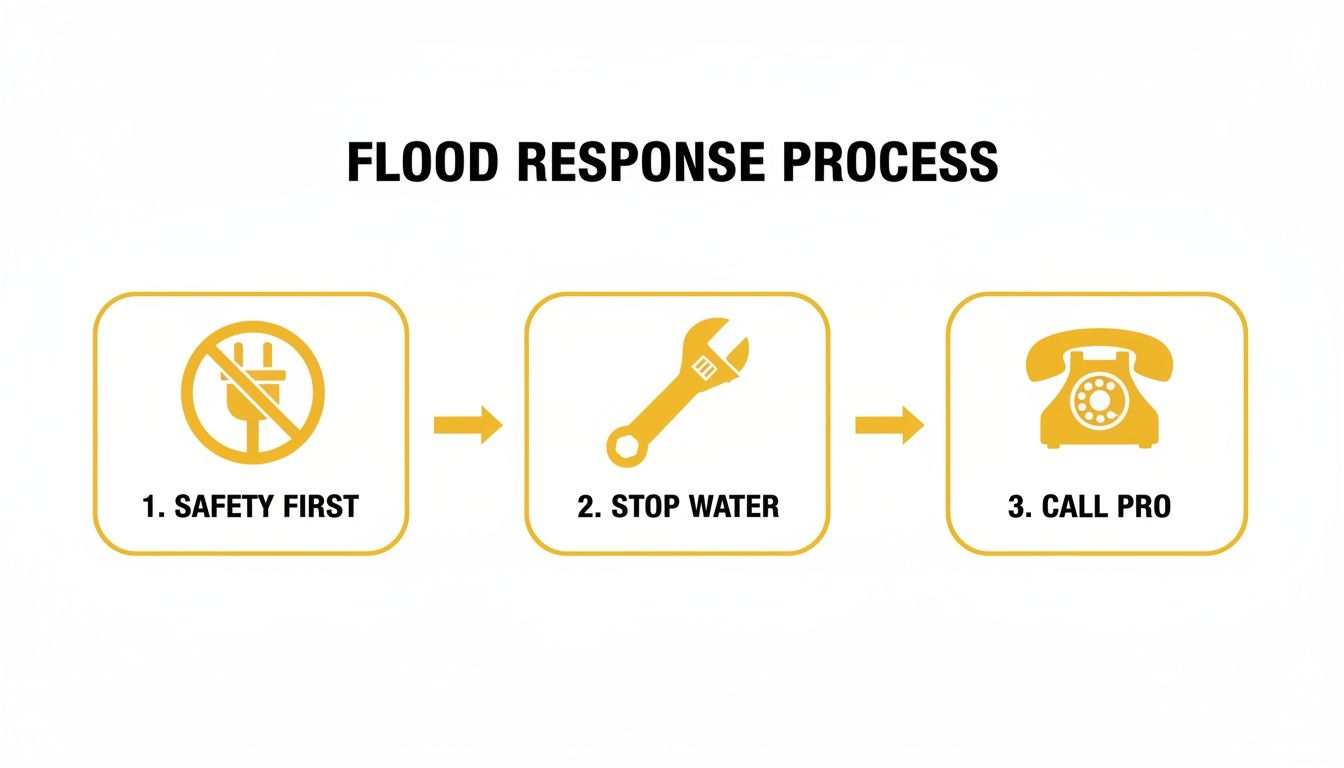
The sequence is crystal clear: secure the area, stop the water at its source, and then get an expert on the phone to handle the rest.
Phase 1: The Initial Damage Assessment and Inspection
The very first thing we do is a deep-dive investigation. This isn't just a quick look around; it's about understanding the full scope of the water's impact. Our IICRC-certified technicians use advanced diagnostic tools to map out the damage with pinpoint accuracy.
- Moisture Meters: These tools are our eyes behind the walls. They let us find hidden pockets of moisture trapped in drywall, under flooring, and inside wooden studs without tearing everything apart.
- Thermal Imaging Cameras: This tech lets us literally "see" temperature differences. A cool spot on a thermal scan is a dead giveaway for trapped moisture that would otherwise go unnoticed.
This detailed inspection allows us to create a "moisture map" of your property. This map becomes the blueprint for the entire restoration plan, ensuring not a single wet spot is missed and shutting down the risk of hidden mold growth later on.
Phase 2: Getting the Water Out—Fast
With a clear game plan, the next move is rapid water extraction. The longer water sits, the deeper it soaks into porous materials like wood and drywall, which is when the real damage starts to compound. We bring in the heavy-duty equipment to get it out immediately.
For serious flooding, we start with submersible pumps that can drain hundreds of gallons of water per hour. Once the bulk of the standing water is gone, we switch to truck-mounted vacuums. These machines have incredible suction power, pulling water from carpets and padding far more effectively than any shop vac could.
The whole point of extraction is to remove as much liquid as possible before we even think about drying. A thorough extraction job can dramatically cut down the overall drying time, which in turn reduces the risk of mold and lowers your final bill.
Phase 3: The Science of Structural Drying and Dehumidification
Just because the puddles are gone doesn't mean the house is dry. Building materials are still saturated, and the air is heavy with moisture. This is the most critical phase for preventing mold, which can start colonizing within just 24-48 hours.
To win this race against time, we create a controlled drying environment using a strategic trio of equipment:
- High-Velocity Air Movers: These aren't your average fans. We position them to create a powerful vortex of airflow across walls and floors, which speeds up evaporation and pulls moisture out of materials.
- Industrial Dehumidifiers: As the air movers push moisture into the air, our commercial-grade dehumidifiers suck it right back out, capturing dozens of gallons of water vapor per day.
By carefully managing airflow and humidity, we systematically pull every last drop of moisture from the structure. Our technicians monitor this process daily, taking new readings and adjusting equipment until your home is back to its normal, dry state. To guarantee a full recovery, you need a pro in your corner; specialized water damage restoration companies have the gear and training to handle every aspect of the job.
Phase 4: Cleaning, Sanitizing, and Putting It All Back Together
Once we've confirmed the property is bone-dry, the final phase begins. Now we focus on cleaning, sanitizing, and rebuilding to get your home back to its pre-flood condition.
Floodwater is often contaminated with bacteria and other nasty stuff. Every affected surface gets a thorough cleaning and is treated with antimicrobial agents to kill off any lingering germs and prevent future mold growth.
Finally, any materials that were too far gone are removed and replaced. This could mean installing new drywall, laying fresh carpet, or even rebuilding entire sections of a room. Our team handles all of these repairs, ensuring everything is done right. You can see the full range of our rebuilding skills by checking out our pro restoration services. The goal is a seamless process that leaves you with a home that’s safe, clean, and feels like your own again.
How Restoration Costs and Timelines Are Determined
After a flood, two questions immediately jump to mind for every property owner: "How much is this going to cost?" and "How long until my life gets back to normal?" There are no simple, one-size-fits-all answers, but understanding what drives the cost and timeline of a flood damage restoration project brings some much-needed clarity.
The final bill isn’t just a number pulled out of thin air. It’s a direct reflection of the specific damage your property has sustained, the materials involved, and the level of contamination we’re dealing with. A small, clean water overflow from a washing machine in a Van Nuys home is a vastly different scenario than severe storm flooding that soaks a multi-level hillside property in the Hollywood Hills.
Key Factors Influencing Restoration Costs
Several critical variables determine the overall scope and expense of the job. Our technicians size these up during the initial inspection to give you a transparent and accurate estimate right from the start.
- Category of Water: This is one of the biggest cost drivers. We classify water into three categories, and each requires a different level of safety gear and cleanup. Category 1 (clean water from a burst pipe) is the least expensive to handle. Category 3 (black water from sewage or storm flooding) is highly contaminated and requires extensive sanitization and removal of affected materials.
- Total Square Footage Affected: It’s simple math—the larger the impacted area, the more labor, equipment, and materials are needed to get the space dry, clean, and restored.
- Types of Materials Damaged: Restoring original hardwood floors is far more complex and costly than replacing a section of soaked carpet. Porous materials like drywall, insulation, and particleboard often need to be completely removed and replaced if they get saturated, especially with contaminated water.
These factors combine to create a unique project profile for every single home.
Understanding the Timeline for Recovery
Just as costs vary, so does the project timeline. A straightforward Category 1 water loss might see drying equipment removed in just 3 to 5 days, with repairs wrapped up shortly after. On the other hand, a complex situation involving contaminated water and significant structural damage could take several weeks or even months from start to finish. Our detailed guide on how long water damage restoration takes breaks down the timelines for different scenarios.
The goal is always to work as efficiently as possible without cutting corners. Proper drying and decontamination are absolutely non-negotiable for ensuring your home is safe and preventing future headaches like mold.
The Financial Impact of Delay
Waiting to call for professional help is the quickest way to watch both the cost and the timeline skyrocket. Industry data shows that the average residential water damage repair can run from $3,000 to over $10,000.
But when moisture is left to sit for more than 24-48 hours, it wicks into wall cavities and subfloors, creating the perfect breeding ground for mold, electrical hazards, and structural decay. That neglect can easily push a project into the $10,000–$50,000+ range, turning a manageable problem into a financial catastrophe. You can explore more restoration industry statistics to see how these costs break down nationally by reading insights from PuroClean.
The most expensive flood damage restoration project is often the one that was ignored at the start. An immediate professional response is an investment in minimizing the final cost.
Ultimately, giving you a clear, detailed estimate and a realistic timeline is a core part of our service. We believe in total transparency, helping you manage expectations and make informed decisions during a stressful time. By breaking down every variable, we demystify the process and empower you to move forward with confidence.
Get a Free Assessment Now
Navigating Your Homeowners Insurance Claim Successfully
After the shock of a flood wears off, the last thing you want to do is wrestle with an insurance company. The process can feel overwhelming, but a little know-how is your best defense for getting every dollar you're entitled to. Let's break down the roadmap to a successful claim.
The first thing you need to understand—and this trips up a lot of Los Angeles homeowners—is that not all water damage is created equal in the eyes of an insurer. Filing under the wrong policy is one of the fastest ways to get a denial.
Standard Homeowners vs. Flood Insurance
Your standard homeowners policy is built to cover water damage from internal sources. Think sudden and accidental events, like a washing machine hose that gives way or a pipe that bursts under the sink. It’s for water that originates inside your house.
That same policy, however, almost never covers damage from external water. For that, you need a separate flood insurance policy, usually from the National Flood Insurance Program (NFIP). This is what you’ll use for rising rivers, storm surges, or heavy rainfall that inundates your property from the outside.
Knowing where the water came from is everything—it dictates which policy you need to file against.
The Power of Professional Documentation
A successful claim boils down to one thing: proof. The insurance adjuster needs undeniable, detailed evidence of the damage, what caused it, and what you did to stop it from getting worse. This is where a professional flood damage restoration company becomes your most powerful ally.
We don't just dry your home; we build a bulletproof case for your claim by meticulously documenting every single step.
Our reports are specifically designed to meet the toughest insurance standards. We create detailed moisture maps, take exhaustive photos, and write a clear scope of work that leaves no room for an adjuster to second-guess the damage.
This documentation is the backbone of your claim. It makes it incredibly difficult for an insurer to downplay the severity of the damage or question the work needed to fix it. The result? A smoother, faster approval process that gets you the funds you need to rebuild.
A Clear Roadmap for Filing Your Claim
Having a plan makes the whole process less intimidating. While we handle the technical side and communicate directly with your insurance company, knowing these steps helps you stay in the driver's seat.
- Notify Your Insurer Immediately: As soon as it's safe, call your agent to report the loss. This is the starting gun—it assigns you a claim number and gets an adjuster on the case.
- Provide Our Documentation: We send our complete assessment, moisture maps, and photo evidence directly to your adjuster. We show them exactly what happened and what it will take to make it right.
- Meet the Adjuster On-Site: We always make it a priority to be there when the adjuster inspects your property. This lets us walk them through our findings, use our moisture meters to show them hidden damage, and answer their technical questions on the spot.
- Review the Settlement Offer: After your claim is approved, you’ll get a settlement offer. Our detailed estimate serves as a benchmark to ensure their offer is fair and covers the real-world cost of restoration.
Getting your home back after a flood hinges on handling your insurance claim correctly. For extra guidance on how to fight back and win your flood damage insurance settlement, insights from public adjusters can be a huge help. We also dive deeper into claim prep in our guide to handling an insurance claim for water damage.
Why Hiring an IICRC Certified Restorer Is Essential
When your Los Angeles property floods, panic sets in, and it's tempting to just hire the first company that answers the phone. But hold on—not all restoration companies are created equal. The single most important decision you can make for your home’s health and long-term value is choosing a firm that is IICRC-certified.
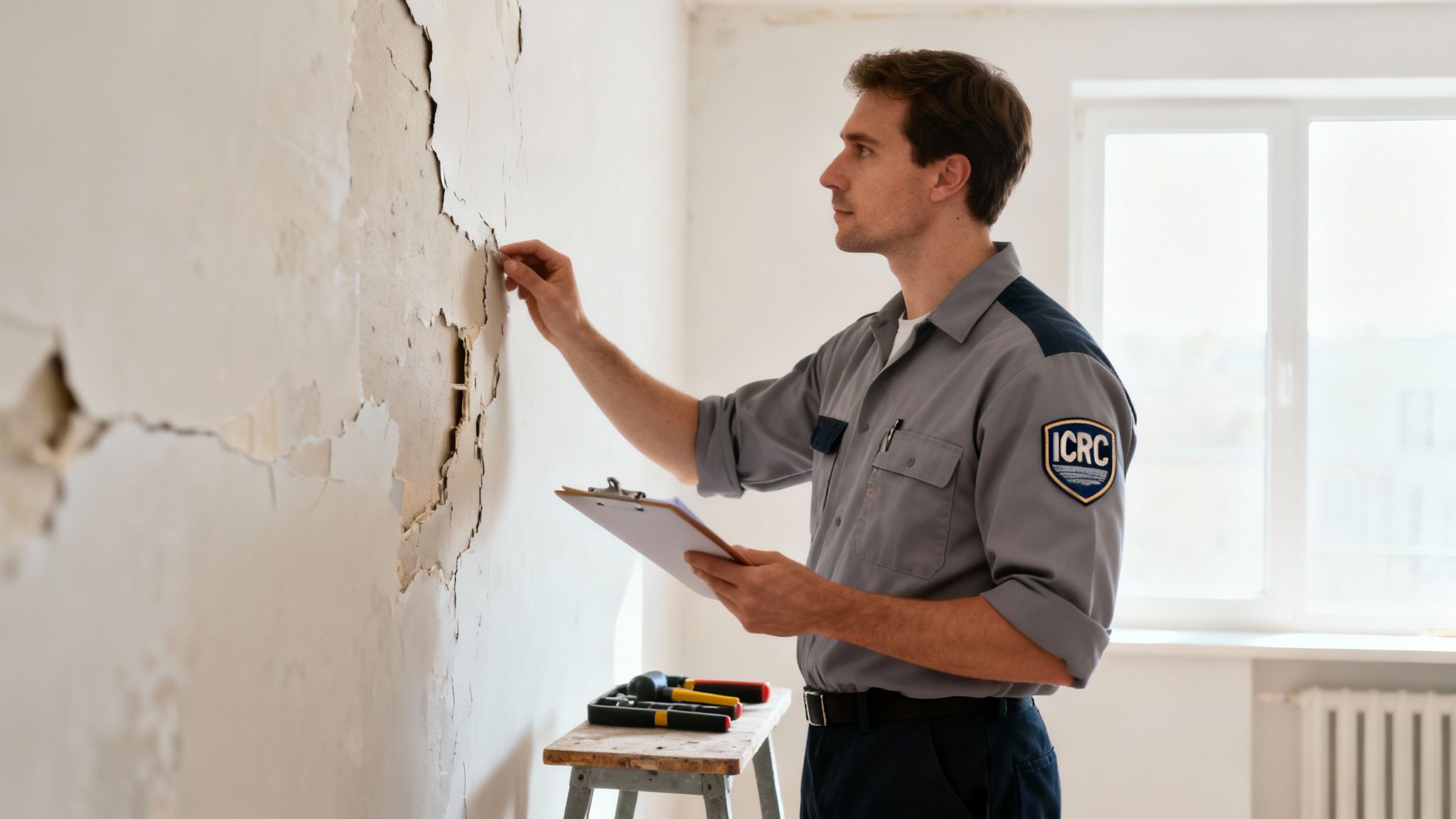
This isn’t just about a fancy logo on a van; it’s a guarantee of real expertise. The IICRC (Institute of Inspection, Cleaning and Restoration Certification) sets the global standard for our industry. A certified technician has proven they understand the science behind restoration—from psychrometry (the science of drying) to advanced microbial remediation. They know what they're doing.
The Certified vs. Uncertified Technician
Let’s play out two scenarios after a pipe bursts in your home. An untrained contractor might show up with a shop vac and a few fans, get the visible water out, and call it a day. The problem? Moisture has almost certainly wicked deep into your drywall and subfloors, and they’ve just left it there.
In sharp contrast, an IICRC-certified technician arrives with a scientific game plan. They use moisture meters and thermal imaging cameras to map out exactly where the water went, ensuring no hidden pockets of moisture are left behind to feed a future mold colony.
A certified professional’s work is methodical and documented, protecting your property from unseen threats. An uncertified worker’s shortcuts can lead to catastrophic secondary damage, turning a manageable water issue into a major structural and health crisis.
This methodical approach isn’t just "best practice"; it's the only way to ensure a true recovery.
The Real Risks of Hiring an Untrained Contractor
Hiring someone without the right credentials for flood damage restoration is a gamble you simply can't afford to take. The consequences can be severe, costly, and downright dangerous:
- Incomplete Drying: This leads directly to hidden mold growth inside your walls and under your floors, wrecking your home's air quality and structural integrity.
- Improper Sanitization: Floodwater, especially from storms or sewage backups, is a toxic soup of contaminants. If surfaces aren't properly sanitized, dangerous bacteria get left behind.
- Insurance Claim Denials: Your insurance company expects restoration work to be performed to industry standards. A shoddy job without proper documentation can give them grounds to deny your claim, leaving you holding the entire bill.
Homeowners are catching on. Market research shows a booming residential restoration segment, reflecting an increased need for qualified contractors who can handle complex repairs and insurance paperwork. You can see the full research on disaster restoration services market trends for yourself.
In a high-value market like Los Angeles, that IICRC certification isn't just a piece of paper—it's your assurance of a safe, effective, and properly documented restoration.
Common Questions About Flood Damage Restoration
Walking through a flood is overwhelming, and it's completely normal to have a million questions about what happens next. Here in Los Angeles, we hear the same concerns from homeowners time and again. We've put together some straight answers to give you clarity and confidence.
Q: How long does it take for mold to grow after a flood?
A: Mold can start taking root in as little as 24 to 48 hours when you have the damp, humid conditions a flood leaves behind. The clock starts ticking the second the water gets in. That’s exactly why our rapid water extraction and professional drying process is so aggressive. We’re in a race against time to create an environment where mold simply can’t get a foothold, protecting both your property and your family.
Q: Can I clean up minor flood damage myself?
A: Even if a puddle looks small, water is sneaky. It seeps deep into places you can't see—behind drywall, under subfloors, and into insulation. Without professional moisture meters, there's no way to know if everything is truly dry. A DIY cleanup almost always leads to trapped moisture, which is a recipe for mold, structural rot, and much more expensive repairs later on. Getting a professional assessment is always your safest bet.
Q: What is the difference between water mitigation and restoration?
A: Think of them as two halves of the same recovery mission. Water mitigation is the emergency response—stopping the damage from getting worse by extracting water and starting the drying process. Water restoration is the rebuilding phase, where damaged materials are repaired or replaced to return your home to its pre-flood condition. A full-service company handles both for a seamless process.
Q: Does my homeowners insurance cover all flood damage?
A: This is a huge point of confusion. A standard homeowners policy usually covers sudden and accidental water damage from inside your house, like a burst pipe. However, these policies almost never cover water from external sources like heavy rains or overflowing rivers. For that, you need a separate policy from the National Flood Insurance Program (NFIP). We help you document the source to ensure you file the right claim.
Q: How can I tell if a restoration company is trustworthy?
A: Look for IICRC (Institute of Inspection, Cleaning and Restoration Certification) credentials. This is the global standard for the industry. Also, check for a valid contractor's license, proof of insurance, and positive online reviews from local customers in the Los Angeles area. A reputable company will offer a detailed, transparent estimate and be available 24/7.
Q: What should I do with my damaged belongings?
A: Do not throw anything away until your insurance adjuster has seen it. Move items to a dry, secure area if possible and take detailed photos of everything. Create an inventory list of damaged possessions, including their age and estimated value. This documentation is crucial for your insurance claim.
When disaster hits, you need a certified team you can count on to restore not just your property, but your peace of mind. Onsite Pro Restoration provides 24/7 emergency response for flood damage restoration all across Los Angeles. Call us anytime for a free, no-pressure assessment.