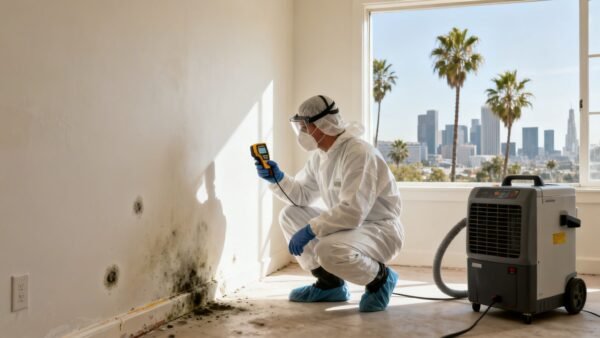

When you’re facing a fire clean up, the first 48 hours are everything. This isn't the time for sorting through belongings or worrying about paint colors. Your focus has to be laser-sharp on three things: making sure everyone is safe, securing the property from further harm, and getting the ball rolling with your insurance company. How you handle these first few steps really sets the tone for the entire recovery process.
Get a Free Fire Damage Assessment Now
What to Do Immediately After a Fire
The moments after the firefighters pack up and leave are surreal. The adrenaline rush is gone, and you're left staring at the overwhelming reality of the damage. But what you do right now is critical. These initial actions don't just protect your family and your finances; they create a clear, manageable path forward for the huge job of fire clean up that lies ahead.
Your number one priority is, and always will be, safety. Don't even think about going back inside until the fire department gives you the official all-clear. A building might look okay from the outside, but it can be hiding serious structural dangers—weakened floors, a compromised roof, or even toxic fumes from burnt materials.
Once you have the green light, the next move is to protect what’s left from the elements and potential looters, which is a real concern in many parts of Los Angeles. This usually means boarding up any broken windows and securing doors that won't close properly.
We've put together a quick checklist to help you stay focused during this overwhelming time.
Immediate Post-Fire Action Checklist
This table breaks down the most urgent tasks you need to tackle in the first couple of days. Following these steps helps stabilize the situation and prepares you for the restoration journey.
| Priority | Action Item | Why It's Important |
|---|---|---|
| Highest | Wait for Official Clearance | Never re-enter the property until the fire department declares it safe. Hidden structural damage, hot spots, or toxic air can be deadly. |
| High | Contact Your Insurance Agent | This officially starts your claim. Ask for next steps and find out what your policy covers for immediate needs like lodging. |
| High | Secure the Property | Board up broken windows and doors to prevent weather damage and theft. Your insurance policy requires you to mitigate further loss. |
| Medium | Call a Restoration Professional | An experienced team can prevent secondary damage from water and soot, which sets in quickly and complicates the cleanup. |
| Medium | Document Everything | Take extensive photos and videos of all damage before anything is moved or cleaned. This is your primary evidence for a fair claim. |
| Ongoing | Start a Communication Log | Keep a notebook to track every conversation with your insurer, contractors, and officials—note the date, time, person's name, and what was discussed. |
This checklist isn't exhaustive, but it covers the non-negotiable first steps. Getting these right makes everything that follows much smoother.
Securing the Property and Making Initial Contacts
While you're arranging to secure the site, you need to make two phone calls that can't wait. First, call your insurance company. Tell them what happened and ask for clear instructions on what they need from you to open a claim. They’ll assign an adjuster who will be your main point of contact through this whole ordeal.
Your second call should be to a certified and licensed restoration company like Onsite Pro Restoration. Getting professionals on-site early is key to preventing secondary damage. Think about it: water from the fire hoses can lead to mold, and a hole in the roof during a Santa Ana wind event could turn a bad situation into a catastrophe if it's not addressed immediately.
Documenting the Damage for Your Claim
Before a single thing is moved, touched, or thrown away, you need to document everything. I can't stress this enough—this is probably the single most important step for getting a fair insurance settlement.
- Take tons of photos. Get pictures of every room from different angles. You'll want wide shots to show the scope of the damage and close-ups of particularly valuable or badly damaged items.
- Shoot video. A slow, narrated walk-through is an incredibly powerful tool. As you record, talk about what you're seeing, pointing out specific items and areas of concern.
- Start a basic inventory list. You won't remember everything right away, and that's okay. Just start a running list of items that were damaged or destroyed. If you can, jot down the brand, model, and roughly how old it was.
This initial documentation serves as your baseline. It proves the condition of your home right after the fire, which can head off potential disputes with your insurance company down the road. For a more in-depth look, we have a complete guide on what to do after a house fire.
Key Takeaway: The first 48 hours are all about stabilization and documentation. Don't rush into cleaning or throwing things out. Your job is to focus on safety, security, and kicking off the official recovery process with your insurance company and a restoration partner you can trust.
The Scope of Damage from Soot, Smoke, and Odors
When a fire is out, the real battle has just begun. The flames are the most dramatic part, but it’s the soot, smoke, and lingering odors that cause the most widespread and complicated damage. Getting a handle on fire clean up means knowing how to fight these invisible enemies, which can quietly destroy your property long after the fire department leaves.
Soot isn't just black dust. It’s a toxic, acidic film left behind by whatever burned. The type of fire dictates the type of soot, and each one requires a completely different cleaning strategy. For instance, a slow, smoldering fire involving plastics or synthetic materials leaves behind a wet, greasy soot that smears into a bigger mess if you try to wipe it.
On the other hand, a hot, fast-burning fire—the kind that tears through wood—creates a fine, powdery soot. It might look easier to handle, but its microscopic particles are like dust in the wind. They travel everywhere, settling in the tiniest cracks and crevices you didn't even know existed.
The Corrosive Nature of Soot
The real kicker? Soot is acidic. As soon as it lands, it starts eating away at surfaces. In just a few days, it can tarnish metal fixtures, etch glass, and leave permanent stains on plastics, countertops, and vinyl flooring.
This is a huge problem in coastal areas like Santa Monica. The high humidity in the air mixes with soot particles to form a mild acidic solution, dramatically speeding up the corrosion process. A simple stain today can become irreversible damage by next week, which is why immediate action is so critical. For a deeper dive, check out our guide on soot removal from walls.
Smoke Infiltration and Lingering Odors
Smoke damage is even trickier. The intense heat and pressure from a fire act like a piston, forcing microscopic smoke particles deep into porous materials like drywall, insulation, and wood framing. Worse yet, your HVAC system sucks in these particles and happily circulates them throughout the entire property, contaminating rooms the fire never even touched.
Those trapped particles are why the awful smell sticks around. Air fresheners and scented candles just mask the odor for a little while. The smell will always come back until you get rid of the source particles.
Expert Insight: You can't just cover up a fire smell; you have to eliminate the microscopic particles causing it. Professionals use techniques like thermal fogging or ozone generation to reach and neutralize odors trapped deep within a home's structure and contents.
The scale of this problem is growing. Wildfires globally had burned over 102 million hectares by mid-2025—an area twice the size of California. These events leave behind toxic ash layers that demand professional handling to prevent long-term contamination. You can read more about the 2025 wildfire impact on CTIF.org to understand the global trends.
Why Professional Intervention Is Necessary
The complex chemistry of soot and smoke makes professional fire clean up an absolute necessity. Certified technicians have the right training, tools, and cleaning agents to do the job safely and correctly.
Here’s where a pro makes all the difference:
- Surface Cleaning: You might grab a wet rag, but that will just smear greasy soot and push it deeper into the surface. A professional uses a specialized dry-cleaning chemical sponge that actually lifts the soot off without smearing.
- Air Quality: Opening a window won’t cut it. Pros use industrial-grade HEPA air scrubbers and hydroxyl generators to physically capture airborne soot particles and neutralize odors, making the air safe to breathe again.
- HVAC Systems: There's no DIY way to clean contaminated ductwork. Professionals have the specialized equipment to thoroughly clean and sanitize your entire HVAC system, stopping it from re-contaminating your home every time it kicks on.
Trying to clean up after a fire yourself often makes things worse. You can accidentally set stains permanently or spread contaminants, making the professional restoration job more difficult and expensive in the long run.
What to Expect From a Professional Fire Clean Up Service
When you bring in a professional restoration company, you're not just hiring a cleaning crew. It’s a leap of faith, I get it. But a certified fire clean up is a precise, multi-stage operation designed to safely bring your property back to how it was before the fire. From the moment they arrive, every action is deliberate and follows strict industry standards from organizations like the IICRC.
It all starts with a detailed inspection and damage assessment. A trained technician will walk through your property to figure out the full extent of the fire, smoke, soot, and water damage. This isn't just a quick glance—they're identifying the different types of soot, checking moisture levels from firefighting, and mapping out just how far smoke has traveled. That assessment is the blueprint for their entire restoration plan.
Initial Mitigation and Debris Removal
Before the real cleaning can start, the immediate dangers have to be handled. This first phase is all about stabilizing the property.
- Emergency Board-Up: Technicians will secure any broken windows, compromised doors, or holes in the roof. This keeps the weather out and prevents anyone from getting in who shouldn't be.
- Water Extraction: Standing water from fire hoses is a huge problem. Crews use powerful pumps and truck-mounted vacuums to get rid of all that water, which stops materials from getting more saturated and prevents mold from taking hold.
- Debris Clearing: All the charred building materials, ruined belongings, and other debris are carefully taken out. This is a critical safety step and clears the way for the detailed cleaning that comes next.
When working with pros, you’ll find that a wide range of professional clean up services are available to handle everything from initial debris removal to the final deep clean.
The damage goes way beyond what you can see. It's a chain reaction of corrosive soot, invasive particles, and persistent smells, as this graphic shows.
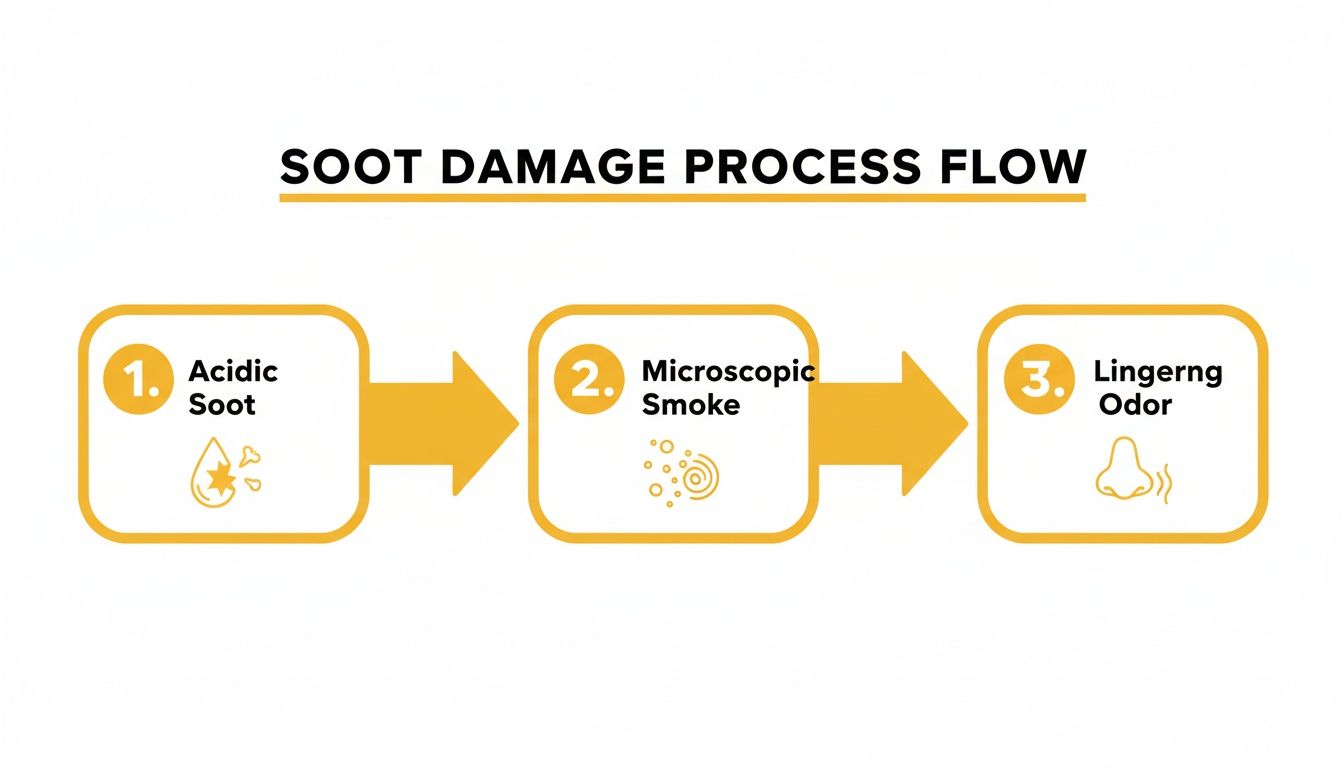
This is why a multi-pronged professional approach is so essential—you have to tackle all three of these issues to truly restore a property.
Soot Removal and Structural Cleaning
Once the site is stable, the painstaking work of removing soot and smoke begins. This is where professional gear and techniques really shine. Technicians use special dry-cleaning sponges to lift powdery soot off surfaces without smearing it deeper into the material, which is a classic DIY mistake.
For that stubborn, greasy soot—the kind you get from a kitchen fire or from burning plastics—they bring out advanced cleaning agents designed to safely break down those oily residues. Every single surface, from the ceilings and walls to floors and fixtures, is treated based on what it’s made of. High-Efficiency Particulate Air (HEPA) vacuums are running the whole time, capturing tiny soot particles and making sure they don't get kicked back into the air.
Expert Tip: The order of operations is everything. A pro always cleans from the top down—ceilings first, then walls, and floors last. This ensures any dislodged soot is systematically removed instead of re-contaminating areas that have already been cleaned.
Contents Restoration and Deodorization
What about all your personal stuff? A huge part of any professional fire clean up is restoring your belongings. Items that can be saved are carefully packed up and taken to a secure facility for specialized cleaning. This can involve some pretty impressive methods:
- Ultrasonic Cleaning: Uses sound waves to gently clean delicate items like jewelry, ceramics, or blinds.
- Specialized Laundry: Industrial-grade machines and detergents are used to get stubborn smoke odors out of clothes and other textiles.
- Electronics Cleaning: Certified technicians can often save smoke-damaged electronics that you might think are a total loss.
While your belongings are getting cleaned, the focus at the property shifts to getting rid of the smoke smell for good. Just wiping down surfaces won't cut it. To eliminate odors that have soaked deep into the building materials, professionals use advanced deodorization tech to neutralize odor at a molecular level.
These methods often include:
- Thermal Fogging: This process creates a heated fog that carries a deodorizing agent, allowing it to penetrate materials just like the smoke did.
- Ozone Treatment: An ozone generator fills the space with ozone (O3), which oxidizes and destroys odor-causing molecules. This is a powerful tool, but it requires the property to be completely empty.
- Hydroxyl Generation: This is a safer alternative to ozone. Hydroxyl generators use UV light to create radicals that break down odors without needing to evacuate the property.
Finally, your home’s HVAC system gets a full inspection and cleaning. The ducts are professionally sanitized to remove any trapped soot and smoke, making sure the system doesn't just blow contaminated air back into your clean home once you move in. You can learn more about our complete process over on our fire damage restoration service page.
Navigating Your Insurance Claim for Fire Damage
Let's be honest: dealing with an insurance claim is often the most draining part of recovering from a fire. After the shock wears off, you're left with a mountain of paperwork, endless phone calls, and policy language so dense it feels like a second disaster.
But you can get through this. With a methodical approach and the right professional partner, you can navigate the process with confidence and secure the full settlement you deserve.
First things first, you need to know what kind of policy you have. It will almost always be one of two types, and the difference is huge.
- Actual Cash Value (ACV): This policy pays you what your damaged property was worth the moment before the fire. It factors in depreciation, so you'll get what a five-year-old couch is worth today, not what you paid for it new.
- Replacement Cost Value (RCV): This is the better coverage. It pays to replace your damaged items with brand-new ones of similar quality. Typically, the insurer pays the ACV upfront, and you get the rest (the "holdback") after you've actually bought the replacement and sent them the receipt.
Knowing this is critical as you start the painful task of inventorying everything you've lost. You have to be meticulous here. Go room by room, listing every single item. Find brand names, model numbers, purchase dates, and original costs if you can. Photos and videos are your absolute best friends in this process, providing undeniable proof of what you owned.
Why a Professional Restoration Company Is Your Best Advocate
This is where hiring a certified restoration company gives you a massive strategic advantage. An experienced team does more than just the physical fire clean up; we become your advocate in the insurance maze. We're the ones who provide the incredibly detailed, line-item estimates and comprehensive documentation that insurance adjusters demand.
Key Takeaway: A professional restoration company speaks the same language as your insurance adjuster. We use industry-standard software like Xactimate to generate precise, credible estimates that legitimize your claim and dramatically speed up the approval process.
This professional documentation cuts through the frustrating back-and-forth that can delay your recovery for weeks, even months. We work directly with your adjuster, giving them all the necessary reports, moisture readings, and photographic evidence to justify every single step of the restoration plan.
The financial stakes can be astronomical. After the recent wildfires near the San Fernando Valley, many homeowners learned the hard way that swift professional intervention was the key to controlling costs and maximizing what their insurance policy would pay.
Communicating With Your Adjuster and Understanding Your Full Coverage
Clear and consistent communication with your insurance adjuster is vital. Keep a log of every conversation—note the date, time, and what was discussed. Be organized, be persistent, and don't ever hesitate to ask questions until you are 100% clear on what's happening with your claim.
Beyond the structure of your home, your policy likely covers other critical expenses. One of the most important—and often overlooked—is Additional Living Expenses (ALE).
This is the coverage that pays for you to live somewhere else while your home is uninhabitable. It can cover hotel bills, rent for a temporary apartment, and even the extra cost of having to eat out every night.
Understanding the full scope of your policy ensures you don't leave money on the table. A successful fire clean up and restoration absolutely depends on a properly managed claim, turning a complicated nightmare into a clear path back to normal.
How Professionals Restore Your Personal Belongings
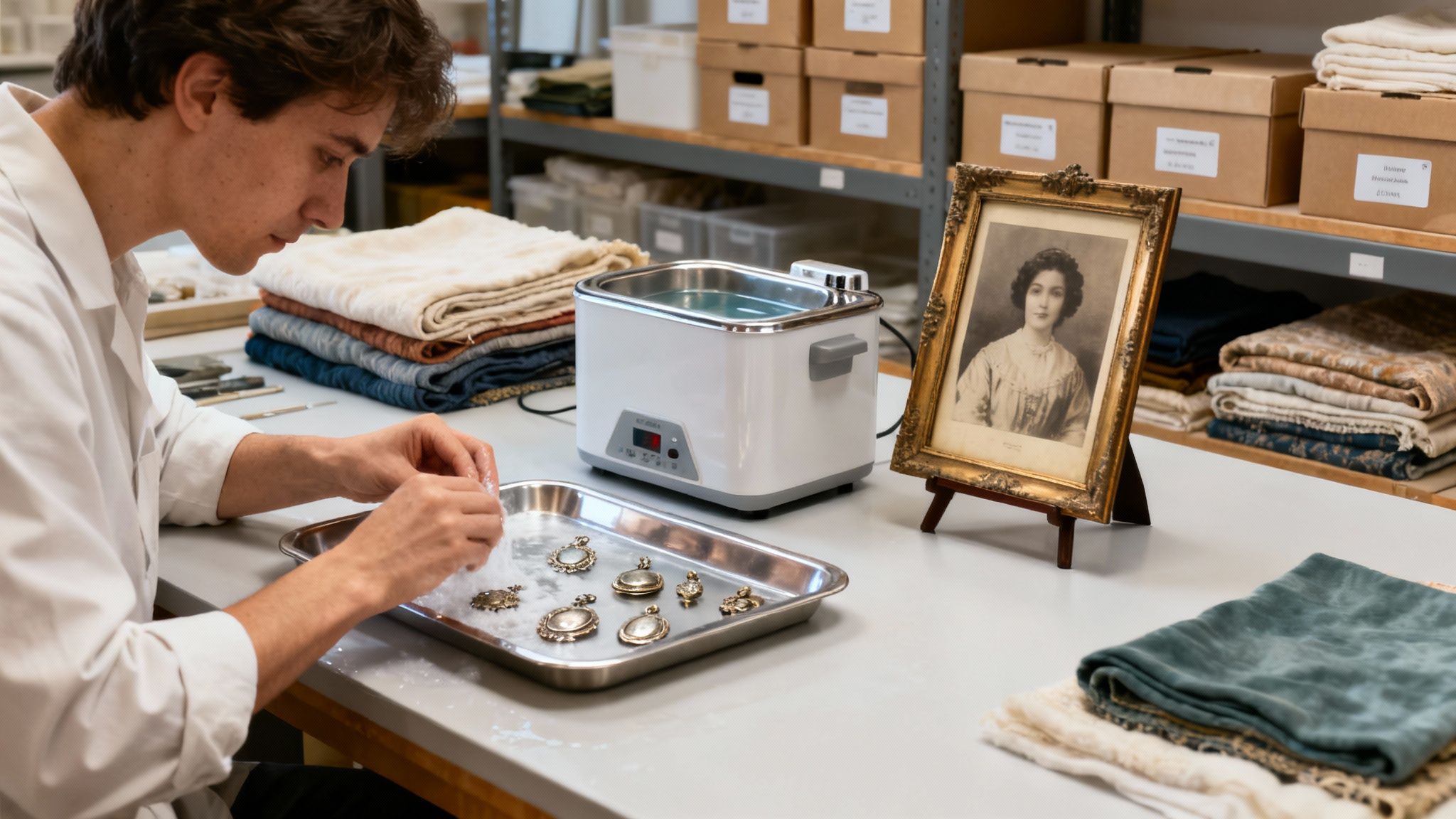
After a fire, the holes in the roof and charred walls are impossible to miss. But what often causes the most heartache is the fate of your personal belongings—the photos, furniture, and heirlooms that make a house a home. It's a common misconception that anything touched by smoke or soot is a lost cause.
The truth is, professional contents restoration, a specialized part of the fire clean up industry, can salvage far more than most people realize.
The secret is in the assessment. A certified technician understands that not all damage is the same. They'll evaluate each item based on its material and the type of smoke it was exposed to—was it a hot, fast fire or a slow, smoldering one? This careful triage determines what's salvageable and which cleaning method will work without causing more harm.
Trying to wipe down a smoke-damaged wooden table yourself, for example, can be a huge mistake. You might accidentally push the acidic soot deeper into the grain, turning a recoverable piece into something that's truly ruined.
Specialized Cleaning for Every Type of Possession
Once items are sorted, they are usually inventoried, carefully packed, and moved to a secure, climate-controlled facility for restoration. This is where technicians use equipment and techniques that go far beyond what you have under your kitchen sink.
Here’s a glimpse at some of the methods we use:
- Ultrasonic Cleaning: This is incredible for delicate items. It uses high-frequency sound waves to create microscopic bubbles in a cleaning solution, which gently but powerfully scrub intricate surfaces. It’s perfect for things like jewelry, ceramics, blinds, and even complex mechanical parts.
- Specialized Laundry Systems: Your home washing machine just can't handle the deeply embedded odor molecules from a fire. We use industrial machines with proprietary detergents designed to pull out smoke, soot, and bacteria from clothing, bedding, and drapes.
- Freeze-Drying (Lyophilization): For priceless, water-damaged paper goods like documents, photos, and books, this process is a lifesaver. Items are frozen and then placed in a powerful vacuum, which turns the ice directly into vapor. This removes the moisture while preserving the paper and ink.
These advanced techniques are just part of the comprehensive pro restoration services we offer to bring your cherished possessions back to their pre-fire condition.
Real-World Example: We recently handled a fire in a Sherman Oaks home where the family believed their entire collection of antique silver, a priceless heirloom, was destroyed by thick, greasy soot. Using specialized cleaning agents and painstaking polishing techniques, our contents team restored every single piece. We removed all the acidic residue and tarnish without harming the delicate metalwork. The family was overjoyed.
Restoring Electronics and Sentimental Heirlooms
Even electronics, which seem so fragile, can often be saved. Our certified technicians are trained to safely clean corrosive soot from sensitive circuit boards and internal components. This process is frequently much more cost-effective than replacing expensive computers, TVs, and stereo systems.
Family heirlooms and antiques require an even more specialized approach. Here, the process shifts from simple cleaning to true conservation. To ensure we preserve the historical integrity of these items, we often consult detailed antique restoration tips and work with conservation experts.
Ultimately, having your personal belongings expertly cleaned and returned gives you a powerful sense of normalcy and hope. It’s a vital step in the emotional recovery that goes hand-in-hand with the physical fire clean up of your home, proving that a fire doesn't have to mean losing everything you hold dear.
Frequently Asked Questions About Fire Clean Up
After a fire, your mind is racing with questions. It's completely normal. The road ahead can feel overwhelming, but getting clear, straight answers is the first step toward making the fire clean up process feel manageable. We hear the same concerns from Los Angeles homeowners every day, so let's tackle some of the most common ones right now.
How Long Does the Fire Clean Up Process Take?
This is always the first question, and the honest-to-goodness answer is: it really depends on the scale of the damage.
If you had a small kitchen fire that was put out quickly and contained to one room, we might have everything cleaned, repaired, and restored in a matter of days or a week. But for a major fire that burned through the roof and required thousands of gallons of water to extinguish, you’re looking at a much longer project—often several weeks, and sometimes months.
Here’s what really drives the timeline:
- The Severity of the Fire: How much charring and structural damage is there? The amount of debris we have to haul out is a huge factor.
- Water Damage: The water from the fire hoses has to go somewhere. We need time for full water extraction and structural drying to stop mold before it starts.
- The Type of Soot: Soot from synthetic materials (like plastics and foams) is greasy and oily, making it much tougher and more time-consuming to clean than the dry, powdery soot from burned wood.
- Smoke Penetration: Smoke is sneaky. It works its way deep into drywall, insulation, and wood framing, which means the deodorization process will be more intensive.
- Insurance Delays: Unfortunately, waiting for approvals from an insurance adjuster can sometimes put the brakes on our progress.
As soon as we're on-site, we’ll give you a detailed and, most importantly, realistic timeline. You’ll know what to expect every step of the way.
Is It Safe to Stay in My Home During the Cleanup?
Absolutely not. It is never safe to live in a property during a professional fire clean up. The air is full of hazardous soot particles, chemical residues from everything that burned, and there's always a risk of structural problems you can't see. Our IICRC-certified technicians wear full personal protective equipment (PPE)—respirators, gloves, and protective suits—for a reason.
But the good news is you won't be without a roof over your head. Nearly every standard homeowner's insurance policy includes a benefit called Additional Living Expenses (ALE). This coverage is there specifically to pay for temporary housing, like a hotel or a rental, while your home is being restored. It ensures your family stays safe and comfortable.
What Does Fire Damage Restoration Cost in Los Angeles?
The cost of a fire clean up in the L.A. area can swing wildly. A simple job to get rid of smoke odor in a single room might only be a few thousand dollars. On the other hand, a serious fire with major structural damage, widespread soot, and heavy water damage can easily run into the six figures.
The final cost really boils down to a few key things:
- The total square footage of the damaged area.
- The types of materials that were burned (e.g., synthetics vs. natural wood).
- The extent of water damage and how much drying is needed.
- The volume of personal belongings that need to be salvaged and cleaned.
To keep everything transparent and fair, we use an industry-standard pricing software called Xactimate, which is the same program nearly all insurance carriers use. This lets us build a detailed, line-item estimate that's accurate and easy for your adjuster to approve. We work directly with your insurance company to make the billing process as painless as possible.
Should I Use the Restoration Company My Insurer Recommends?
Your insurance company might give you a list of their "preferred vendors," but it’s critical to know your rights. Under California law, you have the absolute right to choose any licensed restoration company you trust. The company your insurer suggests often has an agreement with them that can sometimes prioritize the insurance company's costs over the quality of your home's restoration.
Your Advocate in Restoration: You need to hire a company that works for you, not for the insurance company. Your restoration partner should be your biggest advocate, fighting to restore your property to the highest standard and making sure your interests come first during the claims process.
Before you hire anyone, do your homework. Check online reviews, confirm they are IICRC-certified, and ask for references from local jobs. Choosing an independent, reputable company ensures the focus stays exactly where it should be: on a quality fire clean up and a full recovery for your home.
When you're dealing with the aftermath of a fire, you need more than just technical skill—you need a compassionate team ready to go to bat for you. At Onsite Pro Restoration, we handle everything from the first assessment to the final walkthrough, working directly with your insurance to make your recovery as smooth and stress-free as possible. If you need immediate help, we're here 24/7.