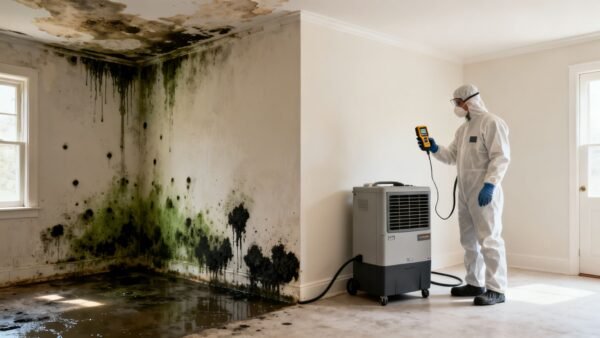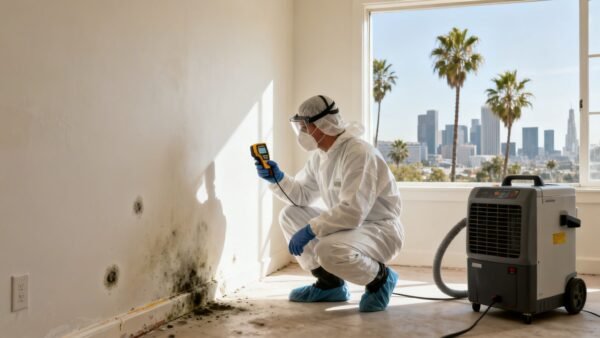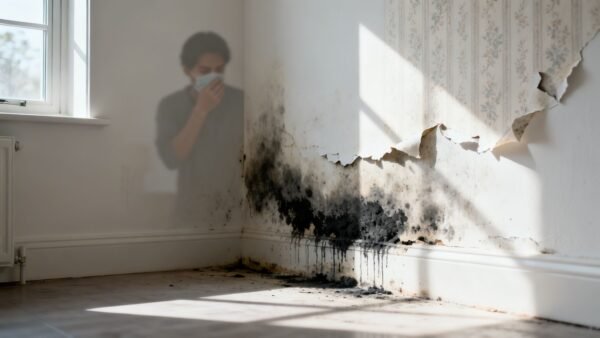

When your Los Angeles home is underwater, you're not just dealing with a simple spill—you're facing a full-blown crisis. Emergency water extraction is the critical first response in professional water damage restoration. It's the specialized process of removing massive amounts of standing water from your property, fast, before it can cause permanent structural damage or kickstart a dangerous mold infestation.
This isn't a job for a mop and bucket. From a burst pipe in a Sherman Oaks condo to a slab leak in a Santa Monica home, immediate, professional water removal is the "emergency service" your property desperately needs.
Call (818) 336-1800 Now for Immediate Emergency Service
Why Is Emergency Water Extraction So Critical for LA Homes?
Water damage is incredibly deceptive. What might look like a manageable puddle in your living room is often just the tip of the iceberg. Water is relentless; it quickly seeps into drywall, soaks insulation, and saturates the subflooring. This creates a hidden, damp environment perfect for mold growth while simultaneously weakening your home’s structural integrity.
That’s the point where calling in a professional becomes non-negotiable.
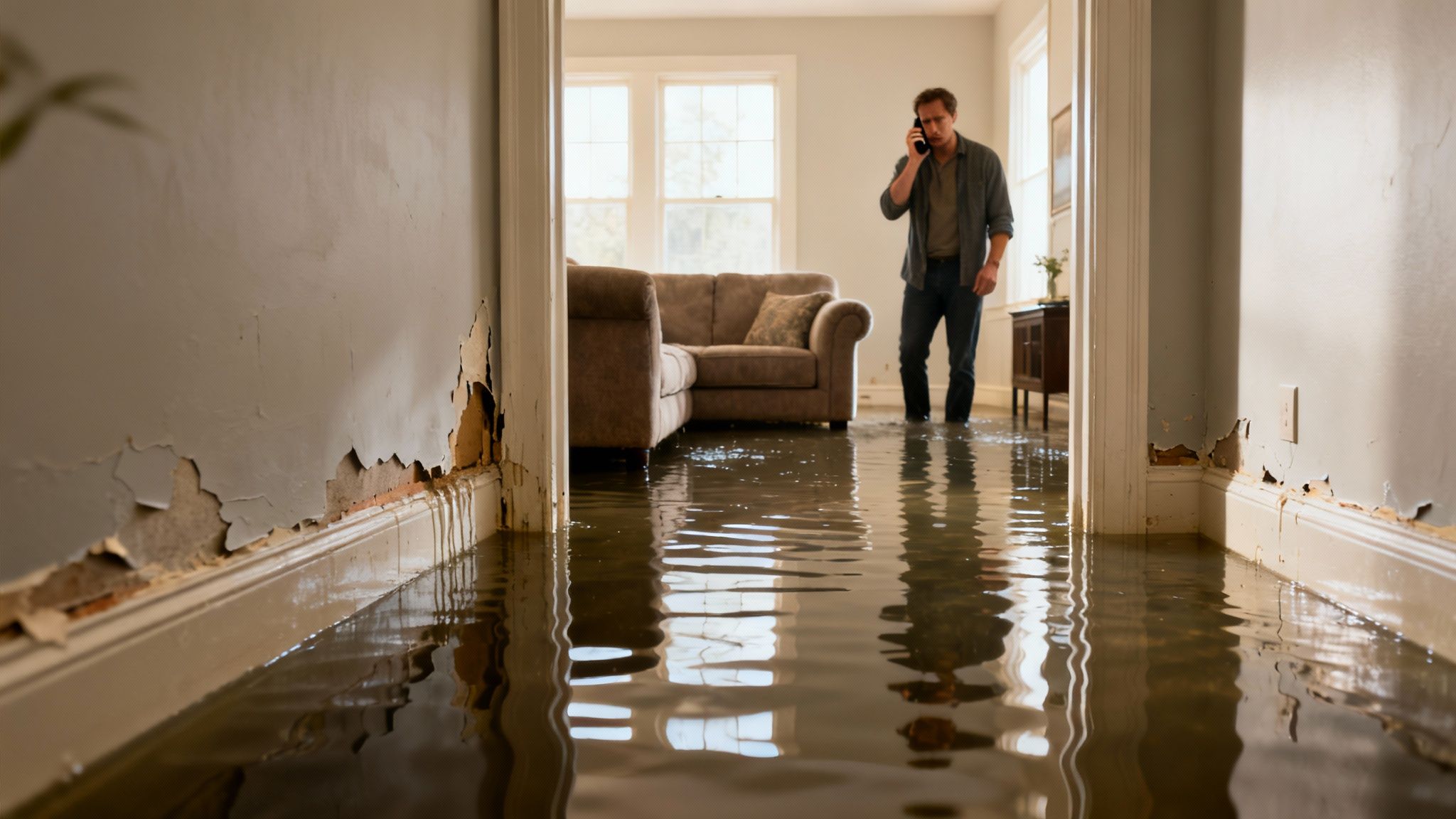
Here's an easy way to think about it: a small kitchen spill is like a skinned knee. You can clean it up, put a bandage on it, and it heals just fine. But widespread flooding from a failed water heater in your Beverly Hills garage? That's more like a serious injury requiring immediate medical attention to stop the bleeding, prevent infection, and avoid long-term complications. Emergency water extraction is that expert medical care for your home.
When to Call the Professionals
Knowing when to hang up the shop vac and pick up the phone is crucial. Waiting too long can turn a thousand-dollar problem into a ten-thousand-dollar catastrophe. You absolutely need to call in the pros if you're facing any of these situations.
A good way to quickly assess the situation is to compare your scenario against this chart. It's a quick reference to help you decide when to call for emergency help.
DIY Cleanup vs. Professional Extraction
| Scenario | Can I Handle This Myself? | Is Professional Extraction Needed? |
|---|---|---|
| A Small, Contained Spill (e.g., knocked-over glass on tile) | Yes. A few towels or a mop should do the trick. | No. |
| Widespread Saturation (e.g., water covers an entire room) | No. You won't be able to remove the deep-down moisture from carpets and subfloors. | Yes, immediately. |
| Contaminated Water (e.g., sewer backup, floodwaters) | Absolutely not. This is a biohazard. | Yes, this is an emergency. |
| Water Inside Walls (e.g., bubbling paint, damp drywall) | No. You can't reach the moisture trapped behind the wall. | Yes, to prevent mold and rot. |
| Water Standing for 24+ Hours | No. The risk of mold growth is now extremely high. | Yes, without a doubt. |
If your situation falls into the "Yes" column, it's time to act fast. A professional team doesn't just get rid of the water you can see; they have the tools and training to address all the hidden moisture. The entire process is a scientific procedure designed to get your home back to a safe, dry, and healthy state.
The Dangers of Unseen Moisture
The biggest threat isn't the puddle on the floor; it's the water you can't see. Without industrial-grade equipment, moisture gets trapped inside porous materials like wood, drywall, and insulation. This lingering dampness creates the perfect breeding ground for mold, which can start colonizing in as little as 24 to 48 hours.
Professional extraction isn't just about speed; it's about being thorough. Technicians use advanced tools like moisture meters and thermal imaging cameras to pinpoint every last hidden pocket of water. This ensures the drying process is complete and effective, leaving nothing behind.
Trying to skip this step is a huge gamble—one you're taking with your property's value and your family's health. The cost of a proper emergency water extraction is just a fraction of what you'll pay down the road for extensive mold remediation and major structural repairs. Think of it as an investment in getting your life back to normal, both quickly and safely.
Immediate Steps to Take Before Professionals Arrive
When you're dealing with a water emergency, the first few minutes are critical. What you do while waiting for our emergency water extraction team can make a huge difference in the final outcome. Your job isn't to fix the problem—it's to control the chaos and prevent things from getting worse.
The most important thing you can do is stop the source of the water, but only if you can do it safely. This usually means finding your home's main water shut-off valve and turning it off. If the flooding is already significant, your next priority is shutting down the power.
Ensure Safety First
Water and electricity are a deadly mix. Never step into a room with standing water if the power is on, and don't even think about plugging in or touching any electrical devices in the flooded area.
Here’s how to secure your home:
- Shut Off the Main Breaker: Head to your electrical panel and flip the main breaker. This cuts power to the entire house, eliminating the immediate risk of electrocution.
- Turn Off the Water Main: Find your main water shut-off valve. It's often in the basement, garage, or outside near your water meter. Turn it clockwise until it stops.
Taking these two simple steps creates a much safer environment for your family and for the restoration crew on their way. If you smell gas or see any sparks, don't hesitate—call 911 immediately.
Protect Your Valuables and Document Everything
Once the immediate dangers are handled, it’s time to shift gears to minimizing damage and gathering evidence for your insurance claim. Your smartphone is your best friend here.
Start by taking photos and videos of absolutely everything. Get wide shots of the flooding, close-ups of damaged walls, soaked furniture, and any personal belongings that got wet. The more thorough you are, the smoother your insurance claim will be. This visual proof is exactly what adjusters need to see.
After you’ve documented the scene, move what you can to a dry area.
- Elevate Furniture: Slip pieces of aluminum foil or small wood blocks under the legs of your wooden furniture. This small trick prevents the finish from bleeding into your carpet and stops the wood from absorbing more water.
- Remove Valuables: Grab irreplaceable items first—think family photos, important documents, laptops, and other small electronics—and move them to a safe, dry spot.
- Secure Rugs and Draperies: Roll up any area rugs and get them off the wet floor. If your drapes are touching the water, loop them through a coat hanger and hang them back on the rod to keep them from wicking up more moisture.
These quick actions are a crucial first step in the larger emergency water cleanup process. By taking control before help arrives, you're not just saving your belongings; you're laying the groundwork for a faster, more successful restoration.
The Professional Water Extraction Process From Start To Finish
When a restoration crew arrives, they bring order to the chaos. The professional emergency water extraction process isn't just about sucking up water; it's a methodical, scientific procedure designed to get your property back to a safe, dry, and healthy state. Knowing what to expect can bring a lot of peace of mind when things feel overwhelming.
The whole operation starts the second our technicians walk through your door. They don't just start pumping; they begin with a thorough assessment to understand the full scope of the problem—both what you can see and what's hiding behind the walls.
Phase 1: Initial Assessment And Safety Measures
The first priority is always safety. Our crew will immediately confirm the power is off to all affected areas and check for any structural dangers or hazardous materials.
Once the area is secure, the real assessment begins. This is a high-tech inspection that goes way beyond what the naked eye can see.
- Moisture Meters: These are our go-to tools for measuring the actual moisture content in materials like drywall, wood floors, and subflooring. Some have probes for deep readings, while others are non-invasive for quick surface scans.
- Thermal Imaging Cameras: Using infrared technology, our technicians can literally "see" temperature differences in walls and ceilings. Wet areas are almost always cooler, which lets us map out exactly how far water has traveled without tearing everything apart.
- Hygrometers: These devices measure the humidity and temperature in the air, giving us a critical baseline to work from as we start the drying process.
This data-driven approach allows us to create a detailed "moisture map" of your home. This map tells us precisely where the water is and how bad the saturation is, becoming the blueprint for the entire restoration project. For a deeper look at how this fits into the bigger picture, you can explore our guide to the complete water damage restoration process.
Phase 2: Water Removal And Extraction
With a clear plan, the heavy lifting starts. The goal here is to get all the standing water out as fast as humanly possible. A standard shop vac from the hardware store just can't keep up.
Professionals use truck-mounted and portable extraction units. These are incredibly powerful vacuums capable of removing hundreds or even thousands of gallons of water in a short time. This speed is critical to stop further damage and minimize how much moisture soaks into your home's structure.
We also use specialized tools, like weighted extraction heads for carpets, that squeeze water out of saturated padding and flooring. This dramatically speeds up the drying time. Every gallon we pull out with the vacuum is one less gallon we have to evaporate later on.
Phase 3: Drying And Dehumidification
After the standing water is gone, the focus shifts to removing the moisture that's still trapped in the air and inside materials. This is the most crucial—and often longest—part of the job.
We strategically place industrial-grade equipment to create the perfect drying environment.
- High-Velocity Air Movers: These aren't just fans. We aim them precisely to blast cool, damp air away from surfaces like walls and floors, replacing it with warmer, drier air.
- LGR Dehumidifiers: Low-Grain Refrigerant (LGR) dehumidifiers are the workhorses of structural drying. They pull incredible amounts of moisture from the air, condense it into water, and pump it away, removing dozens of gallons of water vapor from the air every single day.
Once the bulk water is gone, knowing how to dry wet carpet fast becomes the next key step, and this professional equipment is how it's done right. This combination of powerful air movement and dehumidification creates a drying vortex that pulls moisture from the very bones of your home.
This infographic shows the key actions you should take right away in a water emergency, which lines up perfectly with the initial safety and documentation steps our professional crew follows.
It reinforces the need for a structured response: safety first, then documentation, and finally salvaging belongings. It’s the same protocol we follow to ensure a safe and effective restoration.
Phase 4: Monitoring And Completion
The job isn't done just because the equipment is running. Our technicians will return daily to monitor the drying progress, using their moisture meters and thermal cameras to make sure materials are returning to their normal, dry state. We adjust the equipment as needed to hit any stubborn damp spots.
This careful monitoring continues until the moisture levels in all affected materials meet or beat industry standards for dryness. Only then is the emergency water extraction and drying process truly complete, ensuring your home is safe from the long-term threats of mold and structural decay.
Why Professional Equipment Makes All The Difference
When you’re staring at a soaked living room or a flooded basement, it’s easy to think your garage shop vac can handle the job. While it’s great for a small spill, it’s completely out of its league in a real water damage situation.
The difference between a DIY cleanup and professional emergency water extraction isn't just about power—it's about precision and science. This isn’t just about making things look dry; it’s about removing the water you can see and, more critically, the destructive moisture you can’t. This specialized gear is the only way to head off long-term nightmares like structural rot, warped floors, and dangerous mold.
The Power Of Extraction And Pumping
The first job is always to get the standing water out, and that’s where the heavy hitters come in. Your standard wet-dry vac holds just a few gallons and needs constant emptying. Every minute you spend dumping a small tank is another minute water has to soak deeper into your home’s structure.
Restoration crews, on the other hand, bring in tools built for one thing: rapid bulk water removal.
- Submersible Pumps: For serious flooding, these high-capacity pumps go right into the standing water. They can move thousands of gallons per hour, dropping water levels fast to stop the damage from spreading.
- Truck-Mounted Vacuums: These are the real titans of extraction. Hooked up to a powerful vehicle engine, they generate incredible suction that pulls water from deep within carpets, padding, and subfloors with a force no consumer-grade machine can touch.
This speed isn't for show. The faster we get the water out, the less damage it does. Period.
Finding Hidden Moisture With Advanced Diagnostics
This is where the pros really separate themselves. Water is sneaky. It travels behind baseboards, seeps into wall cavities, and saturates insulation—all places you’d never see. Leaving that moisture behind is a guaranteed recipe for mold and rot.
This is where diagnostic tools are non-negotiable. Professionals use a combination of moisture meters and thermal imaging cameras to build a detailed "moisture map" of the entire affected area. Thermal cameras show temperature differences that instantly reveal hidden damp spots, while moisture meters give precise readings of how saturated materials like drywall and wood actually are.
This scientific approach completely removes the guesswork. We don't just hope an area is dry; we know for sure. This is a cornerstone of professional structural drying for homeowners, ensuring no hidden moisture is left behind to cause problems later.
The Science Of Structural Drying
Once the standing water is gone, the real science kicks in. Getting the remaining moisture out of the air and building materials is a careful balancing act of airflow, temperature, and dehumidification. This is where our industrial-grade gear proves its worth.
- Industrial Air Movers: These aren’t just fans. They’re engineered to create a powerful, focused vortex of air that sweeps across wet surfaces. This high-velocity airflow dramatically speeds up evaporation, pulling moisture from deep inside floors and walls and pushing it into the air.
- LGR Dehumidifiers: Low-Grain Refrigerant (LGR) dehumidifiers are the workhorses of any drying job. They are incredibly efficient at ripping moisture vapor out of the air, condensing it back into liquid, and pumping it away. A single LGR unit can pull over 25 gallons of water from the air in just one day.
Together, this equipment creates a powerful drying system. The air movers get the moisture airborne, and the dehumidifiers aggressively snatch it out of the environment. This controlled, scientific process is the only way to bring your home back to its pre-loss condition—safe, stable, and completely dry.
Navigating Costs, Insurance, And Project Timelines
Once the shock of a water emergency fades, three questions always come to the surface: How much will this cost? Will my insurance cover it? And how long until my life is back to normal?
Knowing the answers is the key to getting through the recovery process without getting overwhelmed. The final bill for an emergency water extraction job isn't a flat rate; it's a direct reflection of what happened in your home.
The total square footage affected, the kinds of materials that got wet (hardwood is very different from carpet), and how long the water was left sitting will all shape the final cost. But the biggest factor? It’s all about the type of water we’re dealing with.
Understanding Water Categories And Their Impact On Cost
Not all water is created equal. Where the water came from directly impacts the health risks involved, the steps we have to take for a safe cleanup, and, of course, the price.
- Category 1 (Clean Water): This is the straightforward stuff from a clean source, like a burst water supply line. It has minimal health risks and is the least expensive to fix.
- Category 2 (Gray Water): Now we're dealing with contamination. This water comes from places like an overflowing washing machine or a leaky dishwasher. It's full of detergents and bacteria, so the cleanup is more intense.
- Category 3 (Black Water): This is the most dangerous and expensive situation. Think sewage backups or floodwaters from a nearby river. This water is loaded with dangerous pathogens and toxins that require strict safety protocols and specialized cleanup methods.
The clock is always ticking. The longer any water sits, the worse it gets. A simple Category 1 leak can degrade into a contaminated Category 2 or 3 mess in as little as 48 hours. For a more detailed look at what goes into the bill, check out our guide on water damage cleanup costs.
Working With Your Homeowners Insurance
Trying to figure out an insurance claim can feel like a nightmare, but we're here to help. Most standard homeowners policies will cover damage from "sudden and accidental" events, like that burst pipe or a failed washing machine hose. What they almost never cover is damage from slow, gradual leaks or flooding from outside the home.
The first step is understanding your California home insurance policy. We take the guesswork out of the process by working directly with all major insurance carriers. We provide them with the detailed documentation, moisture readings, and photo evidence they need to process your claim without needless delays.
Setting Realistic Project Timelines
Every job is a little different, but a professional water damage project follows a pretty clear timeline. Knowing what to expect can make a chaotic time feel much more manageable.
- Emergency Extraction (Hours): Getting the standing water out is the first and fastest step. We can usually get this done within a few hours of arriving.
- Structural Drying (3-5 Days): This is where the real work happens. Our industrial-grade air movers and dehumidifiers will run 24/7 to pull trapped moisture out of walls, floors, and the air itself.
- Monitoring (Daily): We don't just set the equipment and walk away. Our technicians will be back every day to take moisture readings and adjust the equipment to make sure everything is drying efficiently and correctly.
- Repairs (Varies): Once our instruments confirm everything is back to its proper dry standard, any reconstruction can begin. This could mean replacing drywall, laying new flooring, or other repairs.
The total timeline really depends on how bad the damage is, but our goal is always the same: get you back into a safe, dry, and healthy home as quickly as humanly possible.
The High Cost Of Delaying Water Extraction
When it comes to water damage, the clock is your worst enemy. A small leak from a burst pipe in a Sherman Oaks home can explode from a simple cleanup into a full-blown, catastrophic restoration project in a shockingly short time. Putting off an emergency water extraction isn’t just procrastinating—it’s actively letting the destruction get worse, minute by minute.
This isn’t about scare tactics; it’s about understanding the brutal timeline of water damage. Acting immediately is the single most important thing you can do to keep costs down, protect your property, and safeguard your family's health. Waiting even a day just multiplies the complexity and the final bill.

The First 24 Hours: Swelling And Warping
The first few moments after water gets in are deceptive. The puddle you see is alarming, sure, but the real damage is happening silently as porous materials like drywall, wood floors, and furniture soak up the moisture.
Within just a few hours, these materials start to swell, warp, and fall apart. Drywall turns soft and mushy, furniture finishes can bleed into carpets, and the glue holding your flooring together gives up. Every minute that ticks by allows water to creep deeper into your subfloor and wall cavities.
The Next 48 Hours: Mold Starts To Grow
This is the critical window where a water problem turns into a health hazard. After just 24 to 48 hours of dampness, mold and mildew start to colonize. These organisms absolutely love dark, moist environments—which is exactly what you now have inside your walls and under your floors.
Once mold takes hold, the situation gets far more serious. It's no longer just a water issue; it's a biohazard contamination that requires specialized mold remediation, driving up costs and stretching out the restoration timeline.
What started as a clean water leak (Category 1) can quickly degrade into a contaminated mess (Category 2 or 3) as bacteria and mold flourish. This escalation dramatically increases the scope of work and the price tag.
After One Week: Structural Integrity Is Compromised
If water damage sits unaddressed for a week or more, the consequences become severe. The constant moisture will begin to corrode plumbing, rot wooden structural supports like studs and joists, and permanently ruin your floors and drywall.
At this point, the integrity of your home itself is at risk. You're no longer looking at just extraction and drying; you're facing major reconstruction.
- Wood Rot: Structural supports can weaken, becoming soft and unstable.
- Biohazard Risks: The entire area is likely contaminated with dangerous levels of mold and bacteria.
- Electrical Dangers: Lingering moisture creates a persistent risk of short circuits or even fire.
Delay turns a straightforward restoration job into a complex and expensive rebuilding project. The cost difference between acting right away and waiting a week can be astronomical—often tens of thousands of dollars. The message is clear: when water strikes, every second counts. Calling for an emergency water extraction isn't just a solution; it's an investment in damage control.
FAQs About Emergency Water Extraction
Q: How long does the water extraction and drying process actually take?
A: The initial water extraction of standing water is fast, usually taking only a few hours. The more critical structural drying phase, however, typically lasts 3 to 5 days. During this time, industrial air movers and dehumidifiers run 24/7 to remove all trapped moisture from walls, floors, and subfloors. Technicians monitor this process daily to ensure your property reaches its dry standard.
Q: Can my wet carpet be saved or does it need to be replaced?
A: It depends entirely on the source of the water. If the water was "clean" (Category 1) from a supply line leak and extraction began within 24-48 hours, the carpet and pad can often be saved. If the water was contaminated (Category 2 or 3) from a source like a sewer backup or overland flooding, the carpet must be replaced to eliminate health risks from bacteria and pathogens.
Q: Will my homeowners insurance pay for this?
A: Most standard homeowners policies cover damage from "sudden and accidental" events, like a burst pipe or a failed appliance hose. They typically do not cover damage from gradual, long-term leaks or external flooding (which requires a separate flood insurance policy). We work directly with all major insurance carriers, providing the detailed documentation they need to process your claim quickly.
Q: What is the difference between water extraction and water mitigation?
A: Water extraction is one specific step: the physical removal of standing water. Water mitigation is the complete process of preventing further damage. Mitigation includes extraction but also encompasses structural drying, dehumidification, cleaning and sanitizing affected areas, and removing damaged materials to protect the property.
Facing water damage is overwhelming, but you don't have to go through it alone. The certified professionals at Onsite Pro Restoration are on call 24/7 to respond to your emergency. We get there fast to stop the damage in its tracks, manage the entire restoration, and work directly with your insurance company to make a tough situation as simple as it can be.