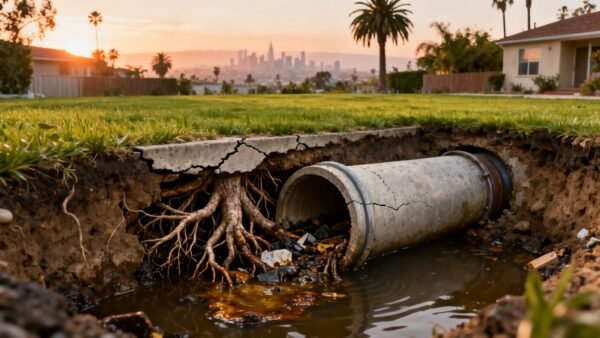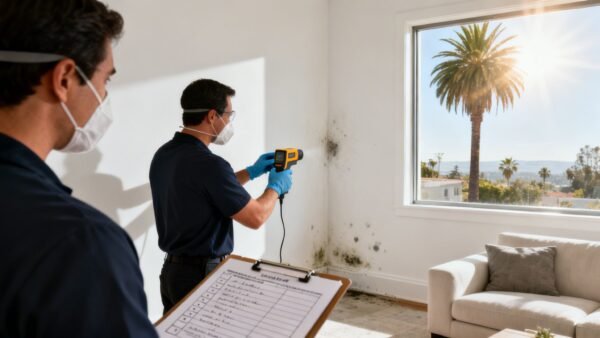

Before you can even think about how to clean out a sewer line, you need to get good at spotting the warning signs. This isn't like a simple clog in your kitchen sink. A main line backup is a whole-system problem, and it usually whispers before it screams. When facing a clog in your Los Angeles home, recognizing these early symptoms is the first step toward preventing a messy and expensive disaster.
If you suspect a main sewer line clog, don't wait for a backup to happen.
Call (818) 336-1800 for a Professional Inspection
Recognizing the Signs of a Main Sewer Line Clog
It often starts with plumbing mysteries that don't quite add up. Maybe the toilet gurgles every time the washing machine drains, or you flush the toilet and water bubbles up in the shower drain. These aren't random quirks; they’re classic symptoms of a bigger issue brewing deep in your pipes.
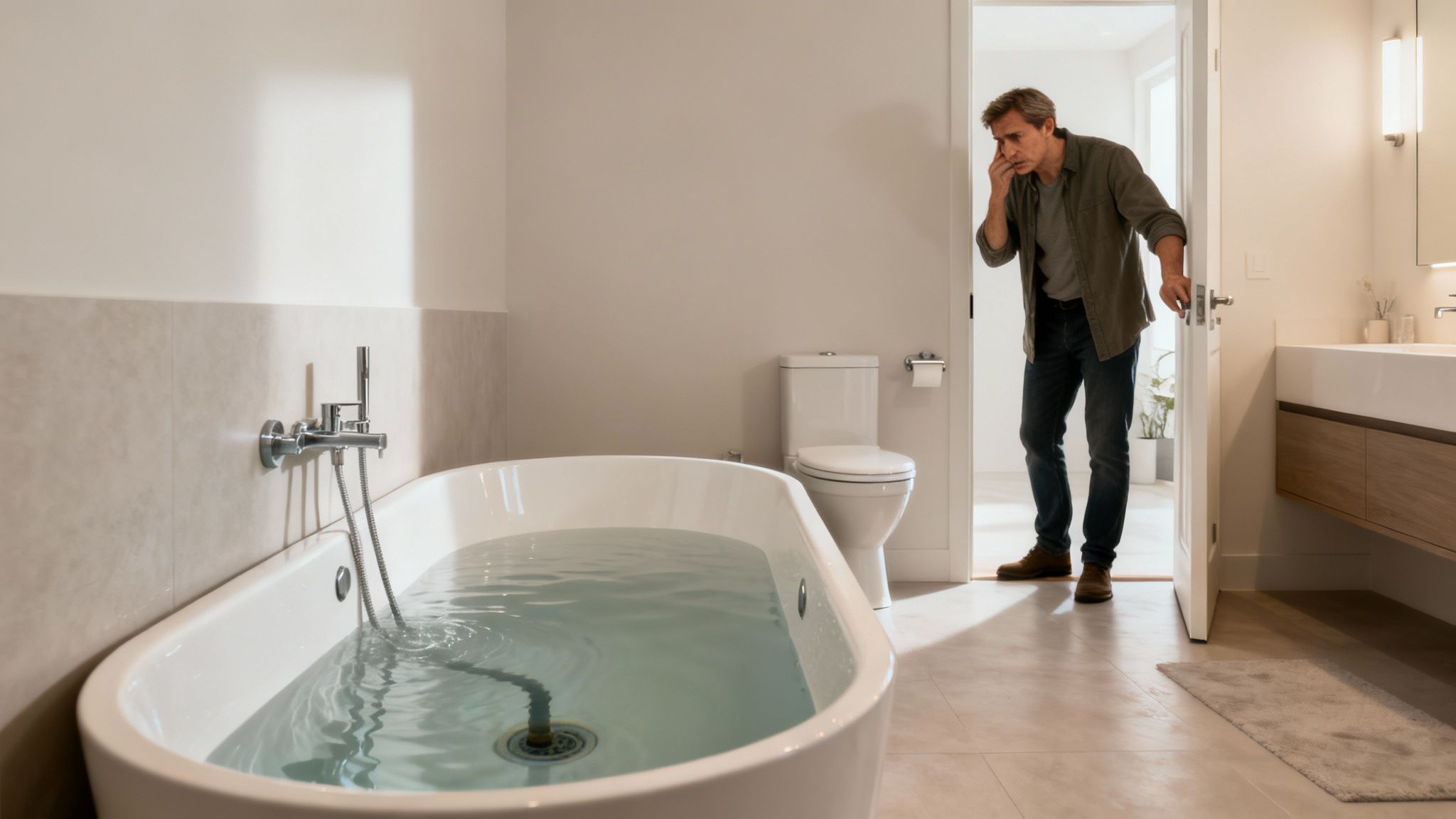
A single slow drain is just an annoyance. But when multiple fixtures start acting up at the same time? That’s a massive red flag pointing directly at your main sewer line, a problem that needs immediate attention to clean out the sewer line properly.
Common Warning Signs
Catching these problems early can save you from a world of hurt—and a mountain of restoration bills. Keep your eyes, ears, and nose open for these telltale signs:
- Multiple Slow Drains: The kitchen sink, the shower, and the toilet are all draining like molasses. This is a dead giveaway that the clog is located downstream, where all those individual drain lines meet.
- Weird Gurgling Noises: If you hear bubbling or gurgling sounds coming from drains or toilets, that’s often trapped air fighting its way past a blockage. Your plumbing is literally trying to tell you something is wrong.
- Nasty Odors: A persistent sewer gas smell wafting up from your drains means wastewater isn't flowing out like it should. Those noxious fumes have nowhere to go but back into your home.
- Water Backups: This is the most alarming sign. Water from a toilet flush or a running sink suddenly appears in the lowest drain in your house, usually a basement floor drain or a first-floor shower.
In older Los Angeles neighborhoods like Glendale or a home with a flat-roof in Sherman Oaks, we see this all the time. The culprits are often invasive tree roots strangling old clay pipes or years of grease buildup finally causing a total blockage. These issues never fix themselves; they only get worse.
Sewer backups are a serious business, affecting thousands of U.S. properties every year. The resulting water damage restoration can easily run between $5,000 to $10,000 for a single incident. If you're curious about the bigger picture, you can read more about the global progress on treating domestic wastewater and how it affects infrastructure.
Ignoring these warnings is a costly mistake. When raw sewage backs up, it doesn't just make a mess; it saturates drywall, seeps into flooring, and compromises the structural integrity of your home. You can learn more about the signs of water damage in walls to see just how destructive it can be. Acting fast is the only way to keep a small clog from turning into a massive restoration nightmare.
The DIY Approach to Clearing a Sewer Line Blockage
When you first notice the signs of a main line clog, the immediate instinct for many homeowners is to roll up their sleeves and handle it themselves. The go-to tool for this job is a sewer auger, often called a snake. You can rent these heavy-duty machines from most hardware stores, but it's critical to know what you’re getting into before you start.
Before you even think about feeding that cable down the drain, let's talk about safety. This isn't just dirty water; you'll be dealing with raw sewage, which is a serious biohazard.
Essential Safety Precautions
Proper Personal Protective Equipment (PPE) is absolutely non-negotiable. Don't even think about cutting corners here—the health risks are far too high.
- Waterproof Gloves: Heavy-duty rubber gloves are your first line of defense.
- Safety Goggles: Protect your eyes. An unexpected splashback of contaminated water can cause serious infections.
- Respirator Mask: Sewer gases are loaded with harmful bacteria and pathogens you should not be breathing. A simple dust mask is not enough.
- Coveralls: Wear old clothes you can throw away or, better yet, waterproof coveralls to keep raw sewage off your skin.
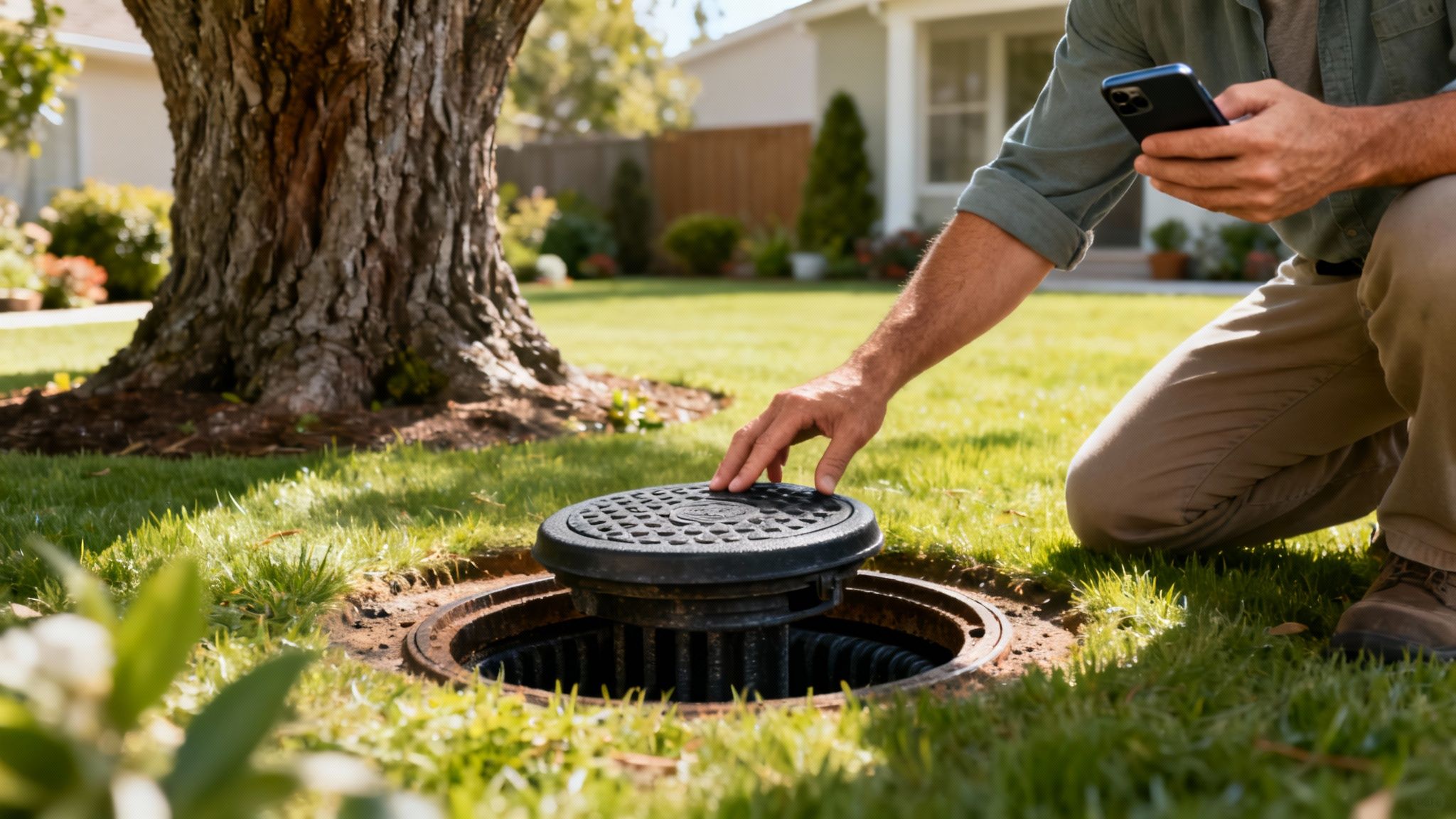
Once you’re properly geared up, you need to find your main line cleanout. This is a capped pipe, usually in the basement, crawl space, or just outside near your foundation. Be ready when you open it—pressure and sewage might be released. From there, you carefully feed the auger cable into the pipe and turn it on to muscle through whatever is blocking the line.
The Limitations of a DIY Sewer Line Clean Out
While renting an auger can sometimes give you temporary relief, you need to have realistic expectations. A DIY attempt to clean out a sewer line often falls short of a real, long-term solution, especially for stubborn clogs.
A sewer snake is great at punching a hole through soft blockages, but it rarely removes the entire obstruction. Think of it like poking a straw through a thick milkshake—you create a channel, but most of the problem is still stuck to the sides of the pipe.
This is especially true for the two most common culprits we see in Southern California homes:
- Grease Buildup: Years of fats, oils, and grease congeal into a thick, sticky sludge. An auger might drill a small opening, but that soft grease will quickly close back in, and the clog will be back before you know it.
- Tree Root Intrusion: Tiny, hair-like roots find their way into small cracks in your pipes and grow into dense, powerful masses. Snaking might tear away some of the smaller roots, but it leaves the main root ball intact, ready to regrow and cause another backup.
The hard reality is that a DIY fix often just kicks the can down the road. That clog will almost certainly return, sometimes within weeks. This cycle of repeated blockages puts unnecessary stress on your pipes and, frankly, on your patience. And when you're facing the mess left behind by a backup, professional help is essential for proper sanitization. You can learn more about the critical steps involved in a professional sewage damage cleanup and why it’s a job best left to certified experts.
Why You Need Professional Sewer Line Cleaning Services
So, you’ve rented an auger, given it your best shot, and the clog is still winning. This is a classic sign that you’re dealing with a problem that’s beyond a simple DIY fix. Don’t feel defeated; this is actually the moment to bring in the heavy hitters.
When a stubborn blockage refuses to budge, professional intervention isn’t just an option—it’s a necessity. Pros come armed with advanced tools that do more than just poke a hole in a clog. They completely clear the line, restoring it to full flow.
The two most powerful weapons in a professional’s arsenal are hydro-jetting and sewer camera inspections. Used together, they can diagnose and resolve even the most severe blockages you can imagine.
Get a Free Estimate for Hydro-Jetting
The Power of Hydro-Jetting
Think of hydro-jetting as pressure washing for the inside of your pipes. It's a game-changer. This method uses a specialized, high-pressure hose to blast water at up to 4,000 PSI, scouring the interior walls of your sewer line clean. It’s incredibly effective at destroying years of accumulated gunk that a mechanical snake can't even touch.
An auger just breaks up a clog. Hydro-jetting obliterates it. It emulsifies thick grease, pulverizes invasive tree roots, and flushes away hardened scale. The pipe is left nearly as clean as the day it was installed. This is why it’s the definitive way to clean out a sewer line for results that actually last. If you're weighing your options, reviewing detailed professional service information can give you a clearer picture of what to expect.
This flowchart lays out the decision-making process perfectly—from your first DIY attempt to knowing when it's time to call in a professional.
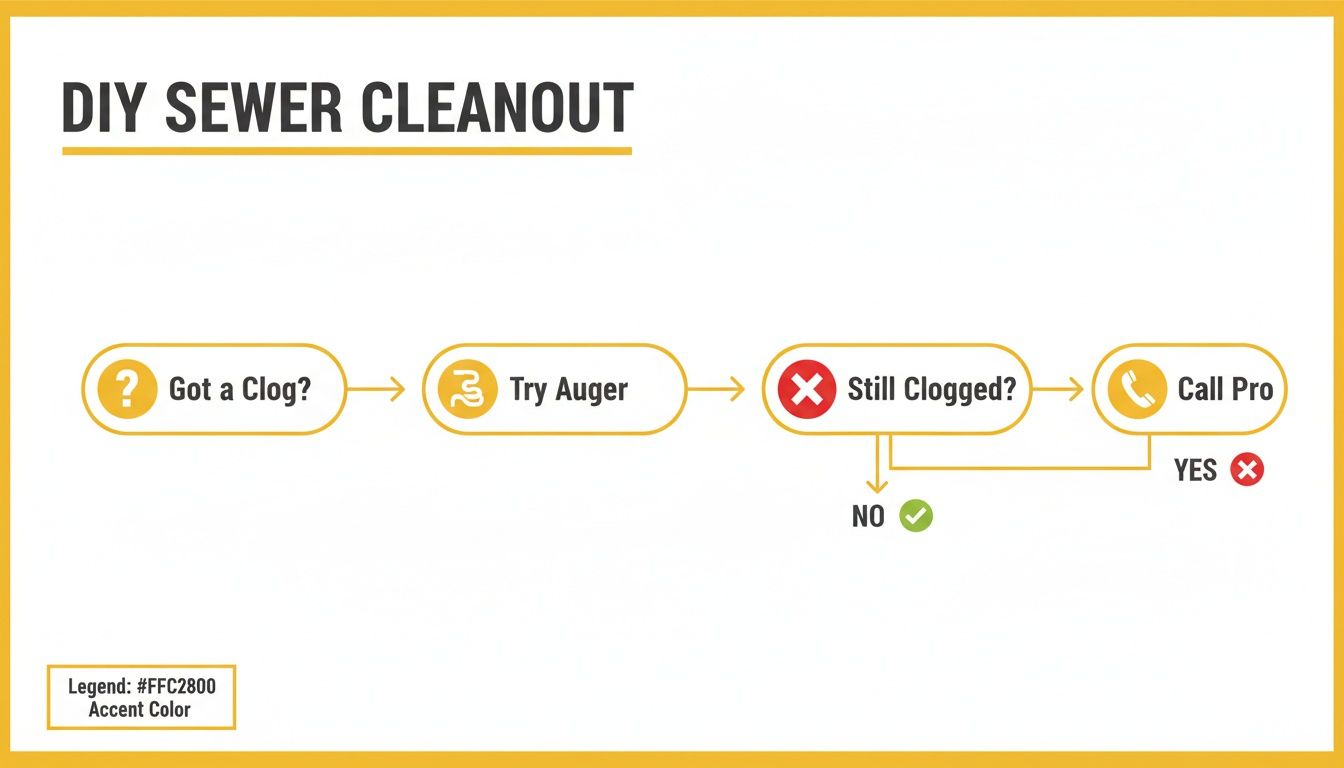
The key takeaway? A mechanical auger is a solid first step, but when it fails, you're likely facing a more serious issue that needs a pro-grade solution like hydro-jetting.
For a clearer understanding, here's how the two main methods stack up against each other.
Sewer Line Cleaning Methods Compared: Snaking vs. Hydro-Jetting
| Feature | Drain Snaking (Auger) | Hydro-Jetting |
|---|---|---|
| Effectiveness | Good for simple clogs (hair, paper). Often just pokes a hole through the blockage. | Excellent for all types of blockages, including grease, roots, and scale. Cleans the entire pipe wall. |
| Best Use Case | Minor, localized clogs in smaller drain lines (sinks, toilets). | Main sewer line blockages, recurring clogs, heavy grease buildup, and preventative maintenance. |
| Cost | Lower upfront cost. | Higher upfront cost. |
| Long-Term Result | A temporary fix. Clogs often reform around the remaining buildup. | A long-term solution. Restores the pipe to near-original condition, preventing quick re-clogging. |
| Pipe Safety | Can damage older or fragile pipes if not used correctly. | Safe for structurally sound pipes, but requires a camera inspection first to rule out cracks or breaks. |
While snaking has its place, hydro-jetting is the clear winner for comprehensive, long-lasting sewer line cleaning.
Why a Camera Inspection Is Crucial
Before any professional even thinks about hydro-jetting, they should perform a sewer camera inspection. This is non-negotiable. It involves feeding a high-resolution, waterproof camera down your sewer line to get a live look at what’s really going on in there.
Here’s why this step is so important:
- Accurate Diagnosis: The camera pinpoints the exact location and nature of the clog. Is it a massive grease ball? Aggressive tree roots? Or worse, a collapsed pipe? Knowing your enemy is half the battle.
- Safety Check: A camera inspection confirms your pipes are strong enough to handle the intense pressure of hydro-jetting. You don’t want to blast a high-pressure jet of water into a pipe that's already cracked.
- Proof of a Job Well Done: After the jetting is finished, a second camera run confirms the entire blockage is gone and your pipe is clear. It’s your peace of mind that the job was done right.
A camera inspection removes all the guesswork. It protects your property by ensuring the right solution is used, and it gives you visual proof of the results. For complex issues a camera might uncover, like underlying pipe damage, our team specializes in comprehensive sewer remediation services.
Without a camera inspection, you're just flushing money down the drain. It's the only way to truly understand the health of your sewer line and ensure a permanent fix.
The Health Risks of a Sewer Backup in Your Home
A sewer backup is much more than a plumbing nightmare. It's a biohazard event, plain and simple. The moment that water breaches your home, it contaminates everything it touches.
This isn't just dirty water; it’s officially classified as Category 3 water, or "black water." It's the most hazardous type of water intrusion you can face, a toxic cocktail of bacteria like E. coli and Salmonella, viruses, parasites, and other dangerous pathogens. Direct contact can lead to serious illnesses, from skin infections and respiratory issues to severe gastrointestinal problems.
Why Household Cleaners Are Not Enough
When faced with a backup, the first instinct for many homeowners is to grab a bottle of bleach and start scrubbing. This is a huge mistake.
Household cleaners, even bleach, are nowhere near powerful enough to sanitize an area hit by a sewer backup. They can't penetrate porous materials like drywall, carpet padding, or wood framing to kill the contaminants that have soaked deep inside.
Worse, trying to clean it yourself creates a false sense of security. The surface might look and smell a bit better, but the dangerous microorganisms are still there, thriving inside your home's structure and posing an ongoing risk to your family. You can read more about what makes Category 3 water damage so hazardous in our detailed guide.
The Professional Remediation Process
Calling a certified team like Onsite Pro Restoration isn't about cleanup; it's a health and safety intervention. We follow a meticulous process designed to eliminate the threat and return your home to a safe condition. Here’s what that actually looks like:
Containment
First, we seal off the entire affected area using heavy-duty plastic sheeting and containment barriers. This stops cross-contamination in its tracks. We'll often set up industrial-grade air scrubbers with HEPA filters to capture any airborne pathogens kicked up during the work.
Safe Water Extraction
Using powerful, truck-mounted pumps, we extract all the standing sewage and contaminated water. This equipment is far more effective than anything you could rent and ensures the waste is handled safely.
Removal of Contaminated Materials
This is a critical step. Any porous material that came into contact with the black water is considered unsalvageable. We carefully cut out and remove contaminated drywall, insulation, carpet, and padding, bagging it all for proper biohazard disposal.
Antimicrobial Treatment
With the contaminated materials gone, we apply EPA-registered, hospital-grade antimicrobial agents to all remaining surfaces. This isn't just cleaning; it’s a sanitizing process that kills off any lingering bacteria and helps prevent future mold growth.
Structural Drying
Finally, we set up high-velocity air movers and commercial dehumidifiers. This equipment creates a controlled drying environment, pulling every last bit of moisture from the structural wood and concrete. Eliminating the moisture is the only way to ensure bacteria and mold can't take hold later on.
A professional approach to a sewer backup isn't about making things look clean; it's about making them medically safe. Every step is a calculated measure to protect your family's health from unseen dangers.
Trying to handle a sewer backup yourself exposes you and your family to serious health risks and practically guarantees that contamination will be left behind. When it comes to black water, calling in the experts isn't just a good idea—it's non-negotiable for the well-being of everyone in your home.
How to Prevent Future Sewer Line Backups
The best way to deal with a sewer backup is to make sure it never happens. Shifting from a reactive "fix-it-when-it-breaks" mindset to a proactive one can save you thousands in cleanup costs and protect your home from some truly devastating damage. It really comes down to treating your plumbing like the critical piece of infrastructure it is, not just an out-of-sight, out-of-mind system.
Preventative care almost always starts in the kitchen. Fats, oils, and grease are public enemy number one for a healthy sewer line. It seems harmless to pour hot grease down the drain, but once it cools, it solidifies and creates a sticky, stubborn trap for every other bit of debris that follows. To get ahead of this, check out these proper cooking oil disposal methods to prevent clogs.
Smart Flushing Habits
What goes down your toilet matters just as much as what goes down the kitchen sink. Your toilet is engineered for exactly two things: human waste and toilet paper. Anything else is a gamble that rarely pays off.
- "Flushable" Wipes: Despite what the package says, these wipes do not disintegrate like toilet paper. They are a leading cause of major clogs in municipal sewer systems.
- Feminine Hygiene Products: These are designed to absorb liquid and will expand inside your pipes, creating a perfect plug.
- Paper Towels & Cotton Balls: These materials are far too dense to dissolve. They clump together and create blockages almost instantly.
The rule of thumb is simple: when in doubt, throw it out. Treating your toilet like a trash can is the fastest way to an expensive and disgusting sewer backup. Don't risk it.
The Role of Professional Inspections
For homes in areas with gorgeous, mature trees like Sherman Oaks or Beverly Hills, routine professional inspections aren't just a good idea—they're essential. Tree roots are naturally drawn to the moisture and nutrients inside your sewer lines. They'll find their way into the tiniest crack and, over time, can cause severe blockages or even collapse the pipe entirely.
This proactive approach is especially critical if you live in a coastal Los Angeles community like Santa Monica, where coastal fog contributes to soil moisture that encourages root growth. All that extra strain contributes to the more than 100,000 sewer overflow incidents that happen every year from clogs and overloaded systems.
Scheduling a camera inspection every 18-24 months is a smart investment in your property's future. It allows a professional to get eyes on the inside of your pipes and spot problems like root intrusion or hairline cracks before they turn into a full-blown emergency.
FAQs: How to Clean Out a Sewer Line
Even after you've got a good handle on the basics, it's natural to have a few more specific questions about cleaning a sewer line. We get these all the time from Los Angeles homeowners, so here are some straight answers to help you figure out your next steps.
How often should I clean my main sewer line?
For most homes in the Los Angeles area, a professional inspection and cleaning every 18 to 24 months is a solid preventative strategy. It’s the best way to catch small problems before they turn into a weekend-ruining emergency. If you're in an older house with original clay pipes or have large trees near your sewer line, consider an annual cleaning to prevent root intrusion.
Does homeowners insurance cover sewer backup damage?
This is a huge question, and the answer is tricky. Most standard homeowners insurance policies do not automatically cover damage from a sewer backup. To get that protection, you usually need a specific add-on, often called an "endorsement," for your policy. It's critical to pull out your policy and check the fine print. Our team put together a detailed guide on whether homeowners insurance covers sewer backups that walks you through the specifics.
What’s the difference between a main line clog and a regular drain clog?
The main difference is the scope of the problem. A regular drain clog is a local issue, affecting just one sink, shower, or toilet. A main sewer line clog is a system-wide failure. The classic sign of a main line clog is using one fixture and having water back up in another—for instance, flushing a toilet and seeing water gurgle up into your shower drain.
Can I use chemical drain cleaners on my main sewer line?
Please, absolutely do not pour chemical drain cleaners down the drain to fix a main sewer line clog. Those products are incredibly harsh and can eat away at your pipes, especially older cast iron or clay ones. They are ineffective against major blockages like tree roots and create a serious safety hazard for the professional who has to fix the problem later. Stick to mechanical methods like snaking or professional hydro-jetting.
Don't let a small clog turn into a major biohazard. If you even suspect a main sewer line issue or are already dealing with a backup, the certified experts at Onsite Pro Restoration are on call 24/7.