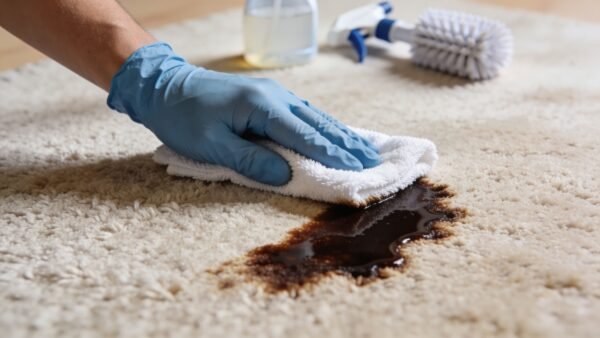

You clean the spot. It smells better for a day or two. Then the odor comes back the next humid morning, or after the marine layer rolls in, or when the house heats up in the afternoon. That pattern frustrates a lot of Los Angeles homeowners because it feels like the carpet is somehow creating odor on its own.
It isn’t.
With carpet cleaning for pet odors, the underlying issue is usually deeper than the surface pile. The smell returns because the contamination was never fully removed, or because it reached the pad and subfloor and keeps reactivating. In LA, that cycle is especially common in homes that swing between dry heat and periods of moisture exposure from coastal air, open windows, bathroom humidity, or routine cleaning.
If you’re dealing with a recurring dog or cat urine smell, the fix starts with understanding what’s in the carpet, how to find the full spread, and where DIY stops being enough.
Need help with a home that smells musty as well as pet-affected? It can help to compare pet contamination with other odor sources, such as this guide on getting rid of mildew smell, because the treatment path is very different.
Why Pet Odors Persist in Los Angeles Carpets
The stubborn part of pet odor isn’t the initial accident. It’s what gets left behind after the liquid dries.
What stays in the carpet
Pet urine leaves behind alkaline salt crystals deep in carpet fibers. When these crystals are exposed to moisture, they trigger rapid bacterial growth and odor. Professional carpet cleaning is highly effective, removing up to 98% of pet-related allergens, as pet dander can otherwise persist for up to six months, according to the Sears Clean guide on pet-owner carpet cleaning.

That’s why a carpet can smell fine one day and sour the next. The contamination is still there. Moisture in the air or slight dampness from foot traffic, mopping nearby floors, or a recent cleaning can wake it up again.
In Los Angeles, that reactivation often shows up in two different home environments:
- Coastal conditions: Homes closer to Santa Monica and other coastal areas deal with marine air and morning dampness.
- Valley heat cycles: In places like Sherman Oaks or North Hollywood, heat can intensify odor release from contaminated fibers and padding.
Why store-bought cleaning often disappoints
A lot of homeowners assume the smell means bacteria alone are the problem. That’s only part of it.
Killing bacteria helps, but it doesn’t remove the material bacteria feed on. If the urine residue remains in the carpet, backing, or pad, odor can return. That’s why shampoos and fragrance-heavy sprays often give temporary relief instead of a lasting result.
Practical rule: If a carpet smells cleaner right after treatment but worse again after humidity or warmth, the contamination likely wasn’t extracted deeply enough.
Another issue is reach. Standard vacuums and consumer spot cleaners don’t pull much from the base of the carpet. Professional systems use stronger extraction and products designed to neutralize odor at the molecular level rather than cover it.
The LA climate problem
Southern California isn’t uniformly humid, but LA homes still deal with microclimates. Open windows, bathroom steam, pet water bowls, AC condensation, and marine layer moisture all create enough environmental change to reactivate old urine residue.
That’s why the same carpet may seem acceptable during a dry stretch and then suddenly smell again after a cool, damp morning.
Homeowners often think they’re fighting “a dirty carpet.” In reality, they’re fighting a chemical residue lodged below the visible surface.
How to Locate Hidden Pet Urine Stains
Before you treat anything, find the full map of contamination. Many odor problems persist because the visible stain is only one part of the problem.
Use a UV light the right way
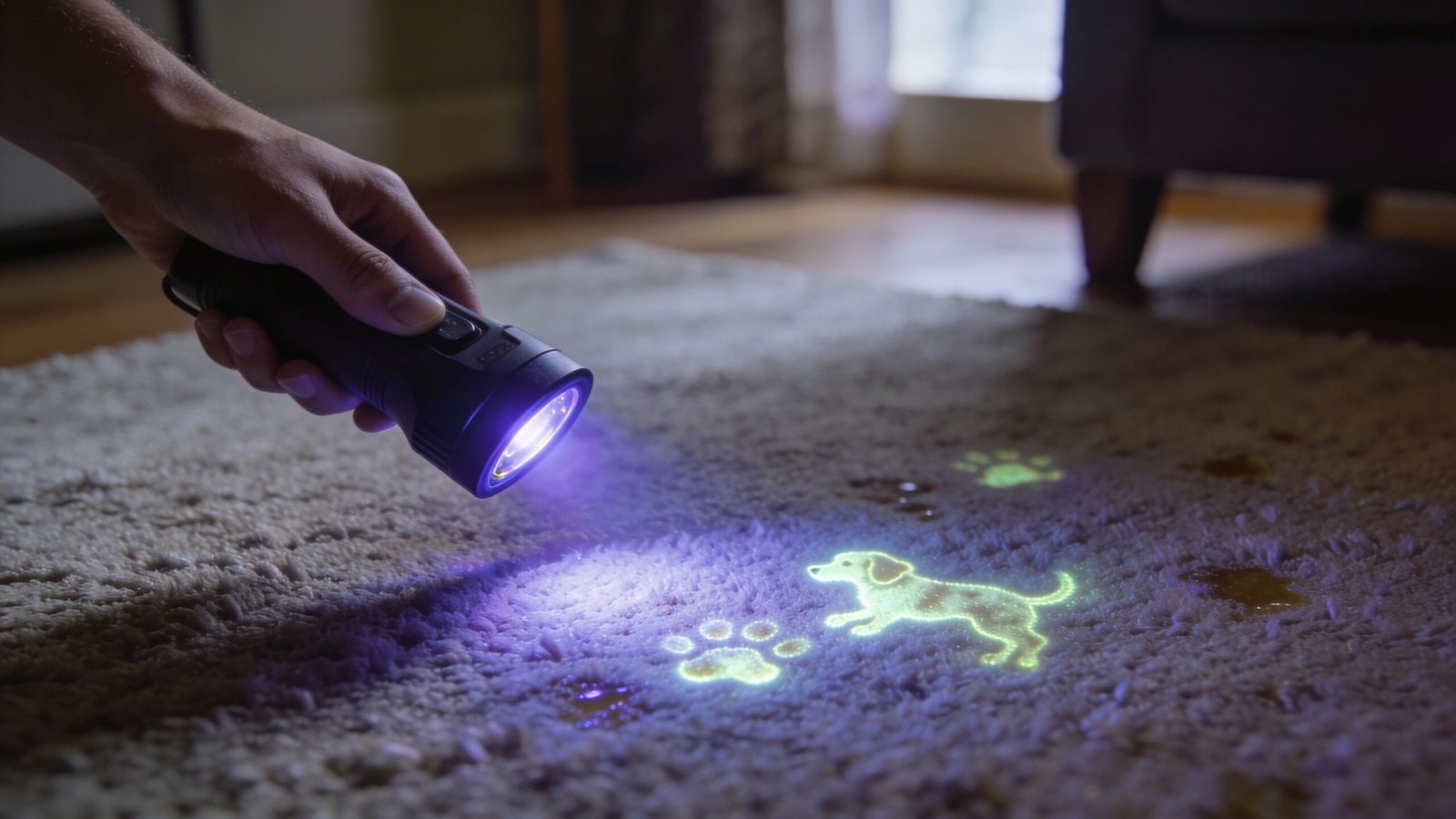
A basic blacklight inspection can reveal accidents you didn’t know were there. It works best at night or in a room you can fully darken.
Use this process:
- Darken the room completely. Close blinds, curtains, and doors.
- Hold the UV flashlight a short distance above the carpet. Move slowly, section by section.
- Check likely target zones first. Around bed edges, furniture corners, hallway transitions, and near doors.
- Mark each find discreetly. Painter’s tape on a nearby baseboard works better than writing on the carpet.
- Look for patterns, not just spots. Splatter, paw tracking, or repeated marking along the same wall can change the treatment plan.
Not every glow under UV means urine, but it gives you a practical starting point. The bigger mistake is treating only where the smell feels strongest.
Why moisture matters
A stain can look small on the carpet face and still spread widely underneath. Carpet fibers slow your eye, but they don’t stop liquid from moving into the backing and pad.
That’s where a moisture tool becomes useful. If you’re trying to judge whether the contamination stayed near the surface or moved downward, this guide on how to read moisture meter readings helps you understand what a meter is telling you.
Don’t trust your nose alone. Odor often drifts away from the original accident area, especially in rooms with HVAC airflow or heavy furniture.
A short walkthrough on finding hidden contamination can help if you’ve never done this before:
What hidden stains usually mean
If you find multiple old spots, repeated use areas, or staining under furniture edges, that usually points to a behavior pattern rather than a one-time accident. In practical terms, it also means the odor source is rarely limited to one quick spot treatment.
That’s important because homeowners often over-clean one obvious area while ignoring three older deposits nearby. The room still smells, and the cleaning gets blamed.
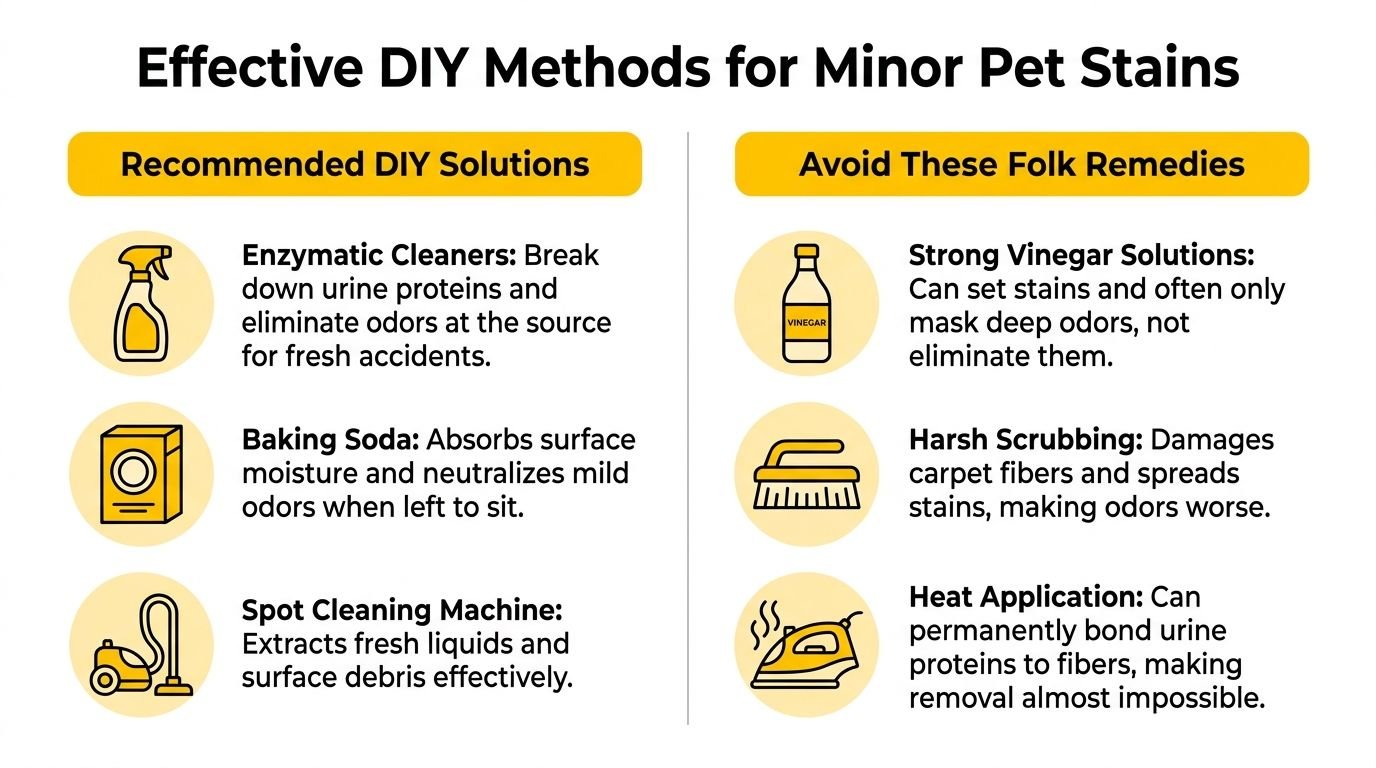
Effective DIY Methods for Minor Pet Stains
DIY has a place. It just needs to be used on the right kind of problem.
Fresh accidents and light contamination can often be improved at home. Old, repeated, or saturated areas are different. That’s where people waste time, over-wet the carpet, and lock residue deeper into the system.
What works better than folk remedies
Enzymatic treatments are up to 75% more effective than vinegar and baking soda at breaking down the uric acid crystals in pet urine. For best results, after blotting fresh urine, apply a CRI-certified enzymatic cleaner and allow it to dwell for 10-15 minutes before extraction. Proper DIY methods can achieve 85-95% odor elimination on stains less than 72 hours old, based on guidance from 3N1 Services on safe carpet cleaning for pets.
That doesn’t mean every bottle labeled “pet enzyme” will perform the same way. Application matters as much as product choice.
Best use case for DIY
DIY is most reasonable when all of these are true:
- The accident is recent: Fresh spots respond much better than aged deposits.
- The area is limited: A small isolated incident is very different from repeated marking in one room.
- There’s no strong recurring smell after drying: If odor rebounds, the residue likely goes deeper.
- The carpet hasn’t been repeatedly soaked: Multiple attempts with water can make assessment harder.
A practical home process
Use a calm, measured approach instead of dumping product onto the area.
| Step | What to do | Why it matters |
|---|---|---|
| Blot | Press with paper towels from the outside inward | Reduces spread through the fibers |
| Apply enzyme cleaner | Saturate the affected area enough to reach where the urine went | Enzymes need contact with the contamination |
| Wait | Leave the cleaner in place for the full dwell time on the label | Cutting dwell time weakens the result |
| Extract or blot again | Remove as much liquid as possible | Less residue stays in the carpet |
| Dry thoroughly | Increase airflow and keep pets off the area | Damp carpet invites odor rebound |
What usually makes it worse
Some remedies feel productive but create bigger problems.
- Ammonia-based cleaners: These can worsen odor problems and confuse pets because the smell profile is wrong for urine cleanup.
- Aggressive scrubbing: This can push contamination deeper and rough up the carpet face.
- Heat: Hot air, steam from the wrong tool, or other heat exposure can bond residue into fibers.
- Heavy vinegar use: It may change the smell temporarily without solving the deeper contamination.
If you need a deeper walkthrough for a spot you’re trying to save before calling a pro, this resource on how to eliminate urine odor is useful.
A good DIY result should improve the room after the carpet is fully dry. If it only smells better while wet, that’s a warning sign.
The Professional Solution When DIY Is Not Enough
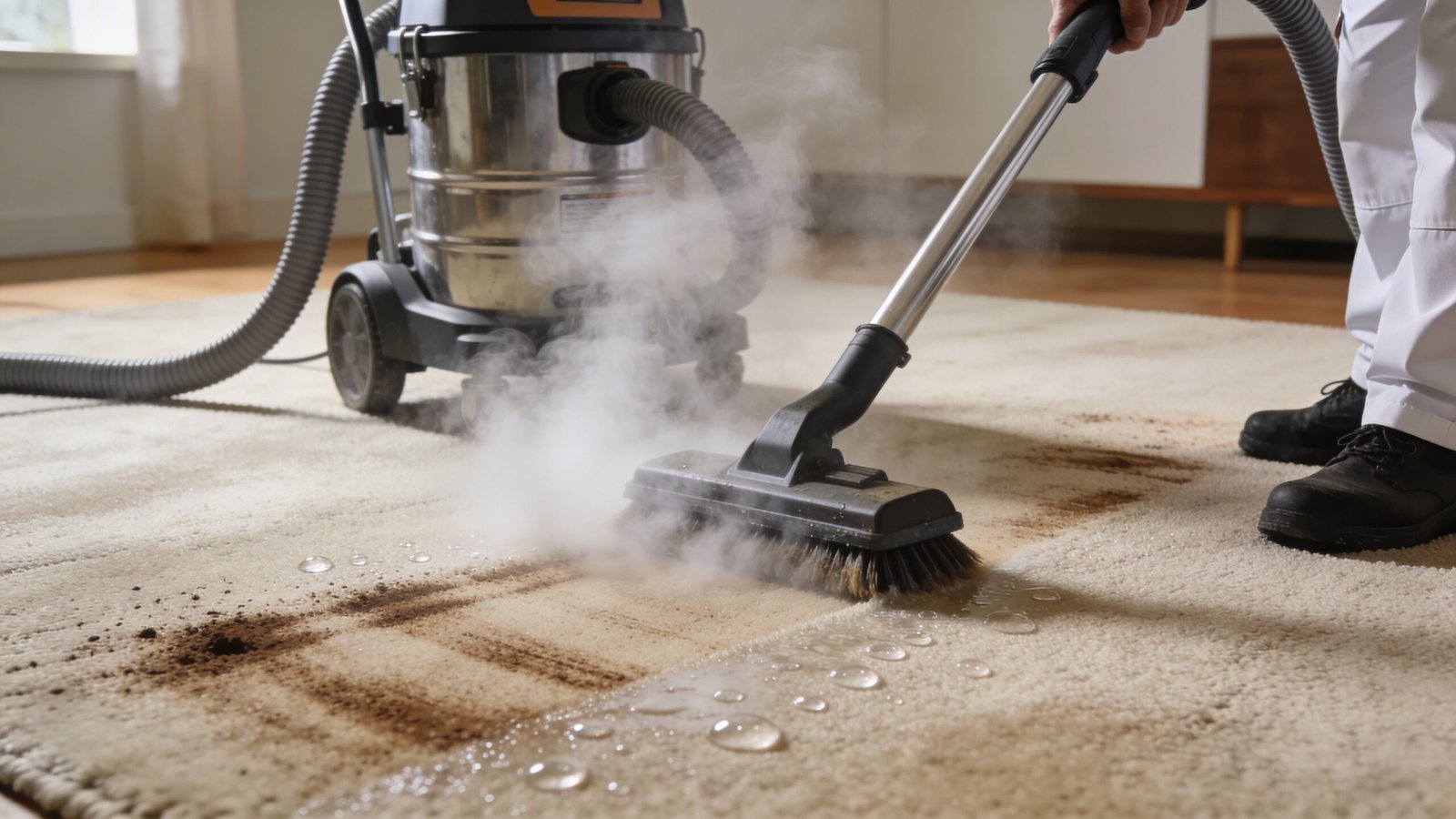
The point of professional treatment isn’t just “stronger cleaning.” It’s source removal, controlled chemistry, and the ability to reach below the carpet face.
What pros do differently
Professional carpet cleaning for pet odors usually starts with inspection, not cleaning. That matters because the right method depends on whether the odor is in the fiber, the backing, the pad, the subfloor, or even circulating through the HVAC system.
Hot water extraction is the method carpet manufacturers most often recommend. It injects hot water and cleaning agents deep into the carpet, then removes them with high-powered suction. Done correctly, it pulls out bacteria, allergens, and residue associated with pet accidents, as described in the earlier Sears source.
Rental machines don’t usually match that performance. The homeowner sees water going in and dirty water coming out, so it feels thorough. But the limiting factor is often extraction power and treatment chemistry.
When the scope gets larger
Professional pet odor remediation costs vary by severity. While basic carpet cleaning may cost $100–$350, severe cases can require subfloor treatment ($300–$1,000) or HVAC cleaning ($300–$700) if odors have circulated. This investment is justified by the ability to remove urine from under carpet backing and padding, preventing odor reactivation, according to Angi’s guide to pet odor removal service cost.
That price range surprises some homeowners until they understand what severe work involves. In tougher cases, the technician may need to:
- Pull back carpeting to inspect what’s happening underneath
- Remove contaminated padding that can’t be salvaged
- Clean under the carpet backing rather than only the visible pile
- Treat adjacent upholstery or mattresses if the odor source spread
- Address ductwork if odors moved through the HVAC system
Why deodorization matters
A real odor treatment should neutralize odor molecules, not perfume the room. That’s the dividing line between deodorization and masking.
Masking agents can make the room feel cleaner for a short time. They don’t solve the source. Professional-grade neutralizers are designed to react with the odor compounds themselves.
This is also why “just steam clean it” isn’t always enough. Extraction removes a lot, but persistent pet contamination often requires both flushing and targeted odor treatment.
When to stop trying at home
A homeowner usually benefits from escalation when one of these is true:
- The smell keeps returning after repeated cleaning
- The accident site is unknown or there are multiple hidden spots
- The pad or subfloor may be involved
- A property manager or landlord needs documentation
- There may be an insurance question tied to another covered loss
For broader restoration concerns, not just carpet, this overview of a restoration professional helps explain what a trained remediation team typically handles.
If the odor affects the whole room, the issue usually isn’t the carpet surface alone.
Protecting Your Subfloor From Lasting Damage
The carpet face gets attention because you can see it. The subfloor is where severe odor cases turn into restoration work.
Why subfloor contamination changes the job
Once urine passes through the carpet and pad, it can soak into wood or concrete below. At that point, cleaning the top layer may improve the room but still leave an odor reservoir underneath.
That’s why some homes smell better after treatment, then relapse months later.
While professional treatments like P.U.R.T.® claim to eliminate 99.9% of odors from carpets, industry data suggests odors may return in 20-30% of cases within a year if the urine has penetrated the subfloor. This highlights the importance of assessing saturation levels with moisture meters before treatment, as noted by South Coast Chem-Dry’s discussion of pet urine treatment limits.
What proper subfloor protection looks like
A thorough restoration-minded approach may include:
- Lifting the carpet to inspect the underside and the pad
- Discarding contaminated padding when it can’t be effectively restored
- Cleaning and drying the subfloor
- Applying a specialty sealant to lock in remaining odor after cleaning
- Reinstalling or replacing materials based on the level of damage
Many standard carpet cleanings stop short of addressing deeper damage. They improve the face fiber and leave the structure below only partially addressed.
A useful homeowner mindset
Think of pet odor as a depth problem, not just a stain problem. If the contamination is structural, the solution has to be structural too.
If you’re dealing with a soaked floor assembly or trying to understand how wet materials should be handled, this guide on how to dry wet carpet fast gives helpful context.
How to Prevent Future Pet Odors in Your Home
Prevention works best when you treat it as a routine, not a one-time cleanup strategy.
Build a faster response habit
Fresh accidents are easier to manage than old ones. Keep paper towels, an enzyme cleaner, and a dedicated absorbent cloth in a reachable spot instead of buried in a laundry cabinet.
If a pet has an accident, blot immediately, limit foot traffic, and keep the area from staying damp. Delay is what turns a manageable cleanup into a recurring odor problem.
Reduce repeat-risk zones
Some homes need behavior changes. Others need layout changes.
A few practical moves help:
- Use washable runners or area rugs in repeat locations near doors or hallways
- Protect furniture where pets rest frequently
- Keep litter areas and pet relief routines consistent
- Watch for stress triggers like guests, new pets, construction noise, or schedule changes
For upholstered areas where pets spend a lot of time, a practical home-maintenance option is using waterproof couch covers for dogs. That won’t solve carpet contamination, but it can reduce how much odor and moisture get absorbed into soft furnishings nearby.
Think like maintenance, not emergency cleanup
Homes with indoor pets benefit from periodic deep cleaning before odor becomes obvious. That’s especially true in bedrooms, family rooms, and low-light corners where old spots get missed.
The best prevention plan is simple. Catch accidents fast, clean correctly the first time, and don’t ignore small recurring incidents. Repetition is what drives damage downward into the pad and subfloor.
Frequently Asked Questions About Pet Odor Removal
Can pet urine smell come back after professional cleaning
Yes, it can. The usual reason is depth of contamination, not that the carpet was “badly cleaned” on the surface. If urine reached the pad or subfloor, odor can return after humidity changes or normal living conditions reactivate what remains below.
That’s why inspection matters as much as extraction.
Is carpet replacement always necessary
No. Some carpets can be restored, especially when the contamination is limited and caught earlier. Replacement becomes more likely when repeated accidents have saturated the pad, damaged the backing, or contaminated the subfloor to a level where cleaning alone won’t hold.
A good inspection should tell you whether restoration is realistic or whether replacement is the more cost-effective path.
Are pet odor treatments safe for dogs and cats
They can be, if the products are used correctly and the treated area is allowed to dry as directed. The primary safety issue is often misuse. Over-application, poor ventilation, and mixing products create avoidable problems.
If you’re dealing specifically with cats, this cat urine odor removal guide is a helpful companion read because feline accidents often involve stronger repeat-marking patterns than dog accidents.
Will homeowners insurance cover pet odor removal
Usually not, when the issue is ordinary pet damage.
Standard homeowners insurance policies (HO-3) typically exclude pet damage, considering it a maintenance issue. However, coverage may apply if the odor is linked to a covered peril, like a burst pipe causing accidents. In Los Angeles, about 40% of claims for pet odors are initially denied if misclassified, making professional documentation from an IICRC-certified firm critical for approval, according to Chem-Dry’s discussion of pet urine odor removal and claims context.
That means documentation matters if the odor issue overlaps with water damage, mold concerns, or another covered event.
How do I know if the smell is in the carpet or the HVAC system
Pay attention to when and where the odor appears. If the smell intensifies when air starts moving through the house, or seems stronger at vents and room transitions, the system may be circulating odor from contaminated dust or nearby affected materials.
A room-by-room inspection helps separate source odor from air movement.
What’s the biggest mistake homeowners make
Trying too many partial fixes in a row.
One light DIY cleanup on a fresh spot makes sense. Repeated soaking, heavy fragranced products, and surface-only machine cleaning often complicate the problem. They can spread contamination, delay proper treatment, and make it harder to determine how deep the damage goes.
If your home still smells like pet urine after repeated cleaning, or you suspect the odor has reached the pad or subfloor, Onsite Pro Restoration can inspect the affected area, document what’s going on, and help you choose the right restoration path for your Los Angeles property.