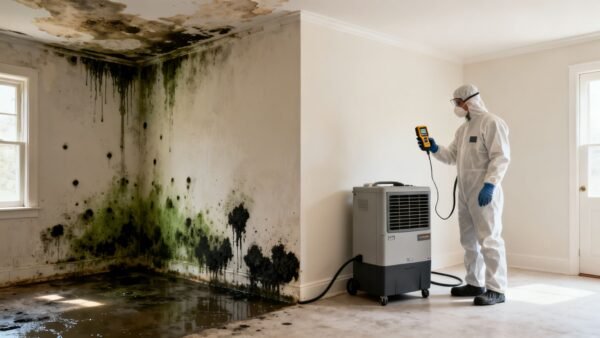

It’s a sound no Los Angeles homeowner ever wants to hear: the unmistakable spray of water inside your walls or the sight of a ceiling stain growing by the second. When a pipe bursts, those first 15 minutes are everything. For a Los Angeles homeowner, a fast and informed response to a burst pipe repair situation can be the difference between a manageable cleanup and a catastrophic flood that requires weeks of restoration.
Your immediate actions can literally be the difference between a contained, manageable repair and a catastrophic flood that forces you out of your home. The goal is simple: stop the water, make the area safe, and start controlling the damage before the pros even get there.
This isn't a time to wait and see. A burst pipe can dump dozens of gallons of water per minute, soaking drywall, ruining floors, and destroying valuables. A fast, decisive response is your best defense.
Your Immediate Response to a Burst Pipe
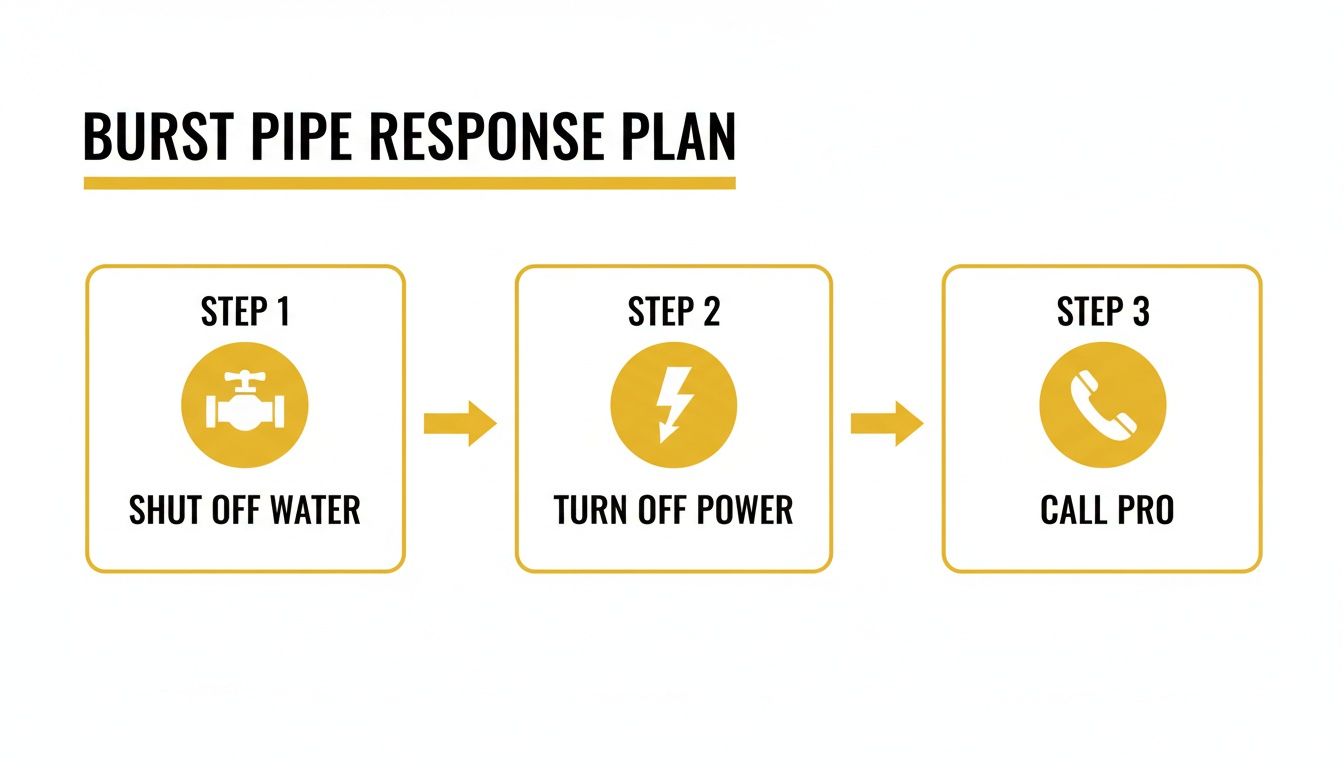
This simple plan is your north star in a chaotic moment. Shut off the water, kill the power, and call for help. Following this order addresses the biggest threats first and sets the stage for a safe and effective professional burst pipe repair.
Step 1: Find and Shut Off the Main Water Valve
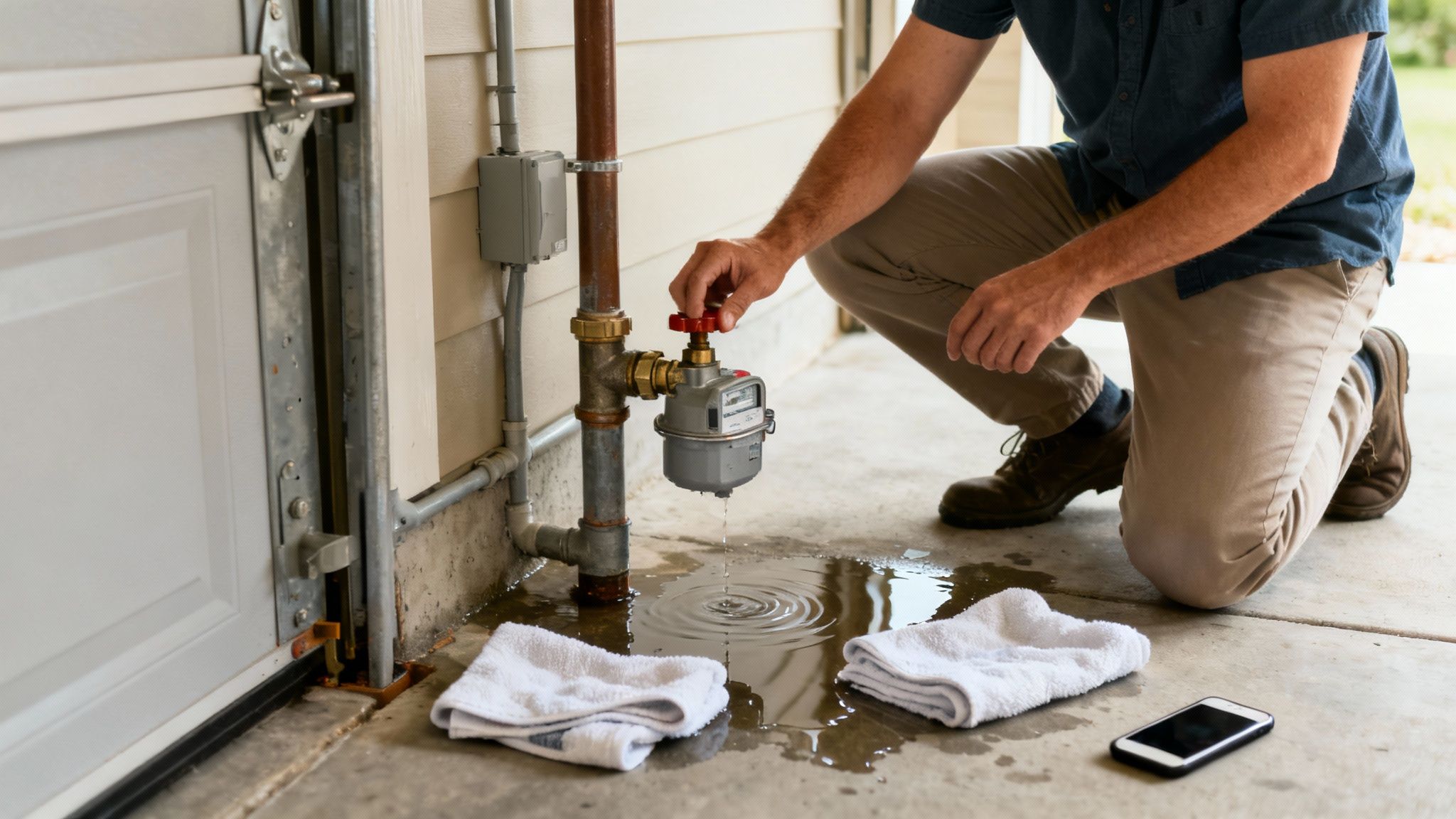
Before you even think about grabbing a towel, you have to stop the source. Every single property has a main water shut-off valve, and knowing where it is before an emergency is non-negotiable.
For most single-family homes here in the San Fernando Valley, you'll find it on an exterior wall near the front of the house, where the main line comes in from the street. Look for either a lever-style "ball valve" or a round "gate valve" handle.
Living in a condo in Downtown LA or an apartment in West Hollywood? Your shut-off is likely inside—check a utility closet, under a sink, or near the water heater. If you’re scrambling and can't find it, don't waste precious minutes. Call us, and we can try to walk you through it over the phone.
Step 2: Secure the Area by Turning Off the Power
Water and electricity are a deadly mix. As soon as the water is off, your next job is to eliminate the risk of electrocution. Head to your circuit breaker panel (usually in the garage, a closet, or a hallway) and flip the breakers for the affected rooms to the "OFF" position.
Safety First: If the floor around your breaker panel is wet, do not touch it. Never, ever stand in water while dealing with electricity. Back away, evacuate the area, and let our emergency team know about the hazard when you call. This is a job for a professional with the right safety equipment.
This step is just as much for our safety as it is for yours. Our emergency water extraction process always starts with a thorough safety check, and having the power off lets us get to work securely and immediately.
Step 3: Start Initial Damage Control
With the immediate dangers of water flow and electricity handled, you can take a few smart steps to limit the damage while you wait for our crew.
- Move Your Valuables: If it's safe, get furniture, electronics, rugs, and important papers out of the wet zone. Focus on anything irreplaceable or expensive first.
- Contain the Spread: Use buckets, mops, and old towels to soak up what you can. You won't get it all, but every drop you remove helps stop the water from creeping into other rooms or seeping down into the subfloor.
- Document Everything: Pull out your phone and take plenty of photos and videos. Get shots of the burst pipe if you can see it, the standing water, and all the damaged areas. This visual proof will be gold when you file your insurance claim.
To make it even easier to remember under pressure, here’s a quick-reference checklist for those critical first few minutes.
Your First 15 Minutes Emergency Checklist
When you discover a burst pipe, panic can set in. This table breaks down exactly what to do, why it matters, and how to do it in the right order.
| Priority Action | Why It's Critical | How to Do It |
|---|---|---|
| Shut Off Main Water Valve | Stops the flow of water, preventing further flooding and structural damage. | Locate the main valve (exterior wall, utility closet, near water heater) and turn it fully clockwise. |
| Turn Off Electricity | Prevents the life-threatening risk of electrical shock from water mixing with live circuits. | Go to your breaker panel. Flip the switches for all affected rooms to the "OFF" position. |
| Call a Professional | Gets expert help on the way immediately to start proper water extraction and drying. | Call a 24/7 restoration company. Report the burst pipe and any electrical hazards. |
| Move Valuables | Protects irreplaceable items and expensive electronics from permanent water damage. | If the area is safe, move items to a dry, unaffected part of your home. |
| Start Documenting | Provides crucial evidence for your insurance claim to ensure you get full coverage. | Use your phone to take photos and videos of the source and all water-damaged areas. |
| Soak Up Standing Water | Minimizes water migration into subflooring and adjacent rooms while you wait for help. | Use towels, mops, and buckets to remove as much surface water as possible. |
Following these steps methodically will put you in the best possible position to handle a burst pipe emergency, protecting both your property and your safety.
Why Pipes Burst in Southern California Homes
When people think of burst pipes, they usually picture frozen plumbing in a frigid climate. But here in Los Angeles, our pipes face a completely different set of threats. The causes are often more subtle, developing silently over years until they result in a sudden, catastrophic flood.
We get calls for burst pipe repair from all over, especially from gorgeous, established neighborhoods like Sherman Oaks, Beverly Hills, and Hancock Park. The classic charm of these older homes often hides an aging and vulnerable plumbing system—a ticking time bomb that many homeowners don't know exists.
The Problem with Aging Infrastructure
A huge number of homes built before the 1970s are still running on galvanized steel pipes. Over decades, the protective zinc coating wears away, leaving the raw steel exposed to constant moisture. This triggers internal corrosion that doesn't just restrict water flow—it dangerously weakens the pipe walls from the inside out.
Even older copper pipes, while more durable, have their own issues. They can fall victim to "pitting corrosion," where tiny, localized pits eat through the metal. A pipe can look perfectly fine one day, then spring a pinhole leak that quickly turns into a major burst.
The Hidden Stress of Seismic Activity
Living in Southern California means living with earthquakes. While we all focus on preparing for "the big one," it's the thousands of minor, often unfelt, seismic shifts that put constant stress on rigid plumbing.
These subtle ground movements cause pipes to shift, joints to weaken, and connections to loosen over time. A pipe that was perfectly installed decades ago might now be under serious tension, just waiting for a surge in water pressure to make it fail.
This cumulative stress is a huge factor in why sudden pipe failures are so common here. The pipe doesn't just burst at random; it's often the final straw after years of enduring invisible geological strain.
Maintaining aging infrastructure is a global challenge. The market for drinking water pipe repair was valued at USD 59.76 billion in 2024 and is projected to hit USD 90.76 billion by 2030. This trend underscores the growing need for expert burst pipe repair right here in our own communities.
Hard Water and Mineral Buildup
Another problem unique to Southern California is our notoriously hard water, which is loaded with minerals like calcium and magnesium. While it's safe to drink, these minerals are brutal on your plumbing.
Over time, the minerals precipitate and form a hard, crusty layer inside your pipes known as "scale." This creates a two-pronged attack on your system:
- It narrows the pipe's diameter. This is like a clogged artery, forcing water to move through at much higher pressure.
- It accelerates corrosion. The scale buildup itself can create an environment that speeds up the breakdown of the pipe material.
This one-two punch of increased pressure and weakened pipe walls is the perfect recipe for a sudden burst. When we handle a burst pipe repair, it's incredibly common to find that the failed section is almost completely choked off with mineral scale.
The Aftermath of Improper Installations
Not all pipe failures are due to age or the environment. Sometimes, the problem is just plain bad workmanship. An improperly soldered joint, the use of mismatched materials, or pipes that aren't properly supported all create weak points that are destined to fail.
These shortcuts might hold up for a few years, but they will eventually give out under the daily stress of water pressure changes. A cheap "repair" from an unlicensed handyman can easily become your next 3 a.m. emergency call. That’s why hiring a certified, professional team isn't just about fixing today's problem—it's about preventing the next one.
The Professional Burst Pipe Repair and Restoration Process
Once our 24/7 emergency team arrives, the first order of business is to get the situation under control. We’ll walk you through exactly what’s happening and what comes next—no jargon, just a clear plan. Moving from a flooded room back to a fully restored home is a technical job, but we believe you should understand every step.
The moment you call us, you're not just getting a cleanup crew; you're getting a team that shifts immediately from emergency mode to a structured restoration plan. This ensures nothing gets missed and protects your property from long-term headaches like mold or structural rot.
Step 1: Initial Assessment and Water Extraction
The first thing our IICRC-certified technician does is a thorough damage assessment. This isn't just a quick glance. We use professional moisture meters and sensors to map out exactly how far the water has traveled—behind walls, under flooring, and deep into your home’s insulation.
Right after the assessment, we fire up the big guns for water extraction. This is where our industrial-grade, truck-mounted and portable extraction units make a massive difference. We can pull out hundreds of gallons of standing water in a hurry, which is crucial for stopping porous materials like drywall and wood framing from soaking up even more.
Step 2: Structural Drying and Dehumidification
Getting the standing water out is just the first battle. The real war is against the hidden moisture trapped inside the structure itself. This part of the job is pure science.
We set up high-velocity air movers at strategic angles to push a powerful, targeted airflow across wet floors, walls, and carpets. This speeds up evaporation, pulling moisture out of the materials and into the air.
At the same time, we bring in the workhorses: large, commercial-grade dehumidifiers. These machines grab all that moisture out of the air, turn it back into liquid, and pump it away. This powerful cycle runs continuously until your property is scientifically dry.
We don't guess when your property is dry. Our technicians take daily moisture readings of the air, surfaces, and materials to scientifically verify that the structure has returned to its normal, pre-loss moisture content. This meticulous monitoring is your best defense against future mold growth.
Step 3: The Pipe Repair Itself
While the drying is underway, our plumbing experts get to work on the source of the problem—the burst pipe. How we fix it depends entirely on where the pipe is, what it’s made of, and how hard it is to get to. Understanding the complete water damage restoration process can help you see how all these steps fit together for a successful outcome.
To give you a better idea of what to expect, here’s a look at the two main approaches we use for burst pipe repair.
Comparing Traditional and Modern Pipe Repair Methods
Choosing the right repair technique is a balancing act between cost, disruption, and long-term reliability. This table breaks down the old-school method versus the newer, less invasive options.
| Repair Aspect | Traditional Repair (Cut and Replace) | Trenchless Repair (Pipe Lining or Bursting) |
|---|---|---|
| Process | Involves physically cutting out the damaged section of pipe and replacing it with a new piece. | An epoxy-saturated liner is inserted into the existing pipe, or a new pipe is pulled through the old one. |
| Disruption | High. Requires cutting into drywall, concrete slabs, or excavating landscaping to access the pipe. | Low. Minimal to no digging or demolition is needed, as access is gained through existing points. |
| Timeline | Can be longer due to the need for extensive demolition and subsequent reconstruction. | Typically much faster, often completed in less than a day with minimal reconstruction required. |
| Best For | Easily accessible pipes (under sinks, in exposed basement ceilings) or severely collapsed pipes. | Pipes located under slabs, behind finished walls, or beneath expensive landscaping and hardscaping. |
Ultimately, trenchless methods are fantastic for minimizing the mess, especially for pipes buried deep in your property. But sometimes, a straightforward cut-and-replace is the most practical solution for pipes that are easy to reach.
Step 4: Advanced Moisture Detection and Verification
The final, and arguably most critical, phase is making absolutely sure every affected spot is bone dry. Water is sneaky. It loves to hide in wall cavities, under cabinets, or beneath layers of flooring, completely out of sight.
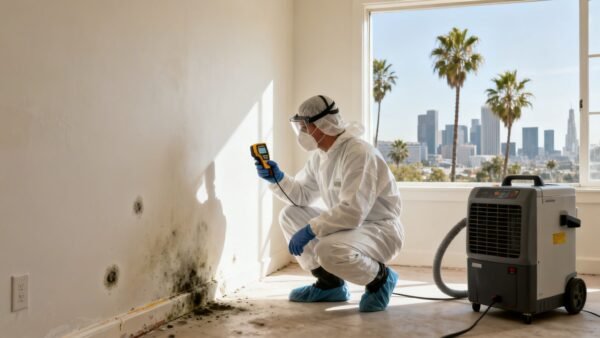
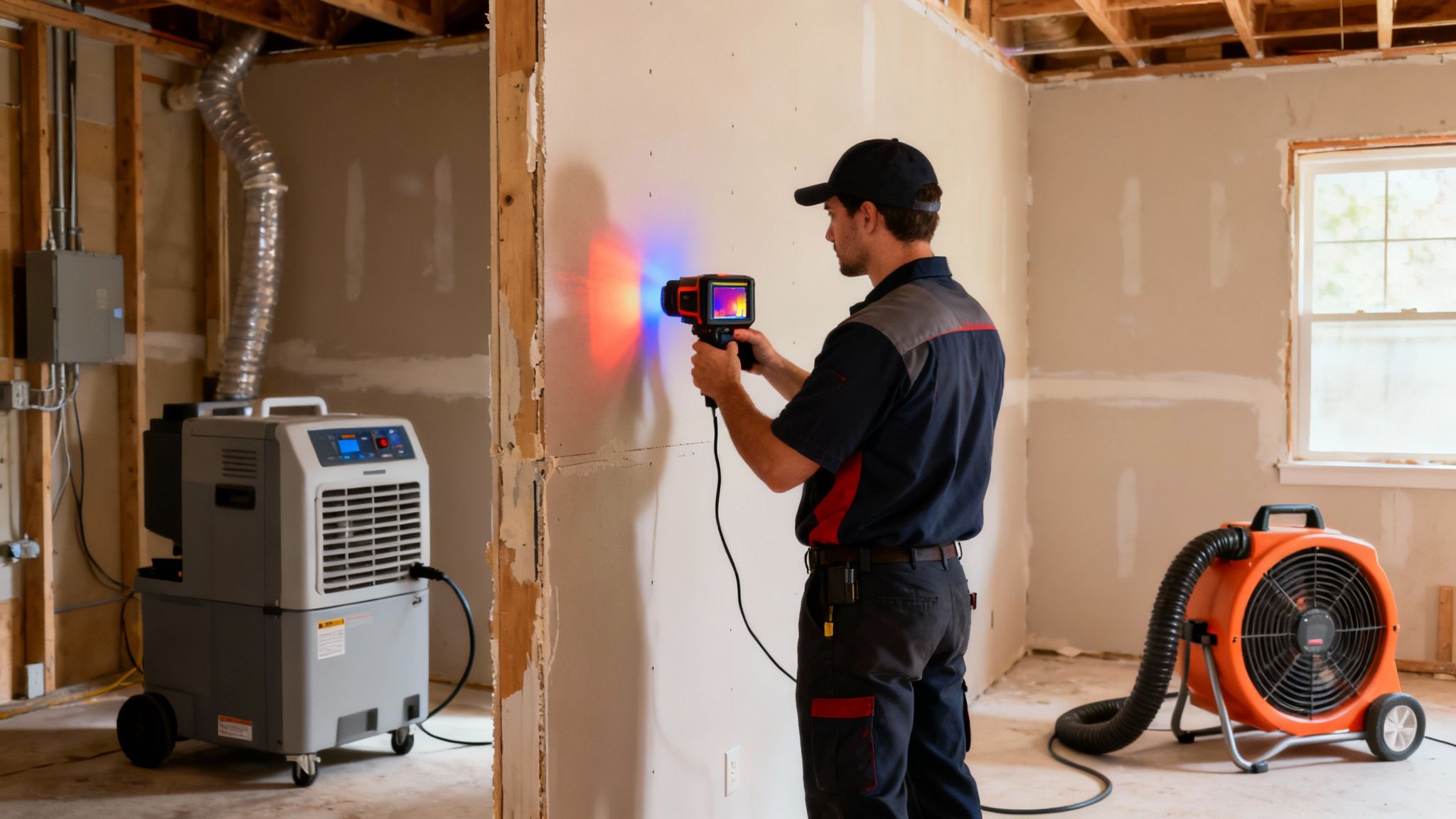
To hunt down this hidden moisture, we use advanced tools like thermal imaging cameras. These cameras show us temperature differences on surfaces, allowing us to literally "see" the cold spots where water is still trapped behind a wall that looks and feels dry. This technology is our guarantee that the job is done right, leaving no moisture behind to cause problems down the road.
How to Navigate Your Water Damage Insurance Claim
After the shock of a burst pipe wears off, the idea of dealing with your insurance company can feel just as daunting as the water damage itself. It’s a process filled with jargon and paperwork, but you don't have to go it alone. With a seasoned restoration partner, you can get through it without pulling your hair out.
Think of us as your advocate. We speak the adjuster’s language and provide the exact documentation they need to process your claim fairly and efficiently. Our job is to take that burden off your shoulders so you can focus on getting your property—and your life—back in order.
Understanding Your Homeowner's Policy
Most standard homeowner's insurance policies are designed for events that are "sudden and accidental"—and a burst pipe fits that description perfectly. This coverage typically pays for water extraction, professional drying, and repairing damaged materials like flooring, drywall, and ceilings.
But there are always nuances. For example, your policy will likely cover the thousands of dollars in water damage, but it might not cover the cost to repair the small section of broken pipe that caused it. It’s a frustrating but common distinction.
Policies also almost always exclude damage from slow, long-term leaks caused by poor maintenance. This is precisely why jumping on a burst pipe repair immediately is so crucial for your claim. For property managers, it's also worth understanding landlord vs. homeowner's insurance differences to know exactly who is on the hook for what.
The Power of Professional Documentation
Insurance companies run on one thing: proof. Without meticulous, professional-grade documentation, getting a claim approved can feel like an uphill battle. This is where a professional restoration team adds incredible value. We build an evidence package that leaves no room for doubt.
Our documentation process is thorough and includes:
- Detailed Photo and Video Logs: We capture everything with high-resolution images and video, from the initial mess to every step of the restoration.
- Moisture Mapping and Readings: Using tools like thermal cameras, we create maps that show exactly how far water has traveled inside your walls and floors. This proves why our drying strategy is necessary.
- Formal Written Reports: We pull all our findings into an industry-standard report that clearly outlines what happened, the scope of work, and every action taken to prevent further damage.
This level of detail doesn't just support your claim; it streamlines the entire approval process.
Your Role in the Documentation Process
While we manage the technical side, the evidence you gather in the first few moments is priceless. Before a single thing is moved or cleaned, take a few minutes to create your own record. This personal touch strengthens your claim, especially when it comes to your personal belongings.
Pro Tip: Grab your smartphone and record a video as you walk through the damaged areas. Talk through what you're seeing—point out specific ruined items, show the high-water marks, and state the date and time. It’s a simple act that creates a powerful, time-stamped piece of evidence.
Here’s a quick checklist for your personal documentation:
- Make a list of all damaged personal items, from furniture and rugs to electronics and decor.
- Snap photos of brand names and serial numbers on high-value electronics if you can safely do so.
- Dig up receipts or credit card statements for big-ticket items to help prove their value.
By working as a team, we can present a complete, undeniable picture to your insurance company. For a deeper look at the process, our guide on handling an insurance claim for water damage offers even more practical tips.
Proactive Maintenance to Prevent Future Pipe Bursts
Once you've recovered from a water damage event, the last thing you want is a repeat performance. This is the perfect opportunity to shift from reactive to proactive. The absolute best way to handle burst pipe repair is to prevent it from happening in the first place. By taking a few smart maintenance steps, Los Angeles homeowners and property managers can dramatically lower the risk of another plumbing disaster.
This isn't about massive, expensive overhauls. We're talking about targeted actions that address the real vulnerabilities we see every day in Southern California plumbing systems. From taming high water pressure to getting ahead of corrosion, a little foresight makes all the difference.
Know Your Plumbing System Intimately
Every property has a unique plumbing history, and the first step to prevention is understanding what's behind your walls. If you're in an older Los Angeles home, particularly in areas like Pasadena or Beverly Hills built before the 1970s, chances are you're dealing with galvanized steel or aging copper pipes.
Knowing the age and material of your pipes is critical. Galvanized pipes, for instance, corrode from the inside out and have a limited lifespan. A pipe that looks fine on the surface could be moments from failure. Get in the habit of visually inspecting exposed pipes for rust, green or white discoloration, or any dampness around fittings—these are your early warnings.
Regulate Your Water Pressure
It might surprise you, but many neighborhoods in Los Angeles County have incredibly high municipal water pressure. While that feels great in the shower, any pressure consistently over 80 PSI puts constant, excessive strain on your entire system. It stresses your pipes, your fittings, and the hoses connected to your appliances.
A water pressure regulator is a small but mighty device installed where the main water line enters your property. It acts like a gatekeeper, stepping the pressure down to a safe, steady level for your home. Honestly, it's one of the single most effective and affordable investments you can make to prevent a pressure-related pipe burst.
Watch for the Subtle Signs of Trouble
A catastrophic pipe failure rarely happens out of the blue. There are almost always subtle warning signs if you know what to look for. Training yourself to spot these clues means you can catch a problem when it's just a small leak, not a full-blown flood.
Keep an eye out for these red flags:
- Unexplained Spikes in Your Water Bill: If your usage habits haven't changed but your bill suddenly jumps, it’s a classic sign of a hidden leak.
- Discolored Water: Seeing brown or rusty water from your faucets? That could be corrosion flaking off the inside of your pipes and entering the water supply.
- Musty Odors: A persistent damp or earthy smell, especially under sinks or in closets, is a dead giveaway that a slow leak is happening somewhere out of sight.
You can also get a technological edge. Installing some of the best smart water leak detectors can provide a crucial early warning, sending an alert straight to your phone the second moisture is detected. That buys you precious time to act before real damage sets in.
The Value of Professional Inspections
The scale of pipe degradation across the country is staggering. The American Water Works Association estimates that over USD 1 trillion in investment is needed over the next 25 years to repair aging water infrastructure. This national issue highlights the importance of maintaining the plumbing within your own property.
A proactive mindset transforms you from a potential victim of a plumbing emergency into the protector of your property. By investing in regular maintenance and inspections, you are actively safeguarding your home’s value and your peace of mind.
Scheduling a professional plumbing inspection every couple of years allows an expert to spot issues you'd likely miss. A good plumber can accurately assess the health of your pipes, test your water pressure, and identify weak spots long before they fail. For a deeper dive into preventative strategies, check out our complete guide on how to prevent pipes from bursting.
FAQs About Burst Pipe Repair in Los Angeles
Even after covering the basics of a plumbing emergency, you probably still have a few questions. That's completely normal. We've put together some straightforward answers to the most common things we hear from homeowners and property managers dealing with burst pipe repair across Los Angeles.
Think of this as a quick reference to reinforce the most important takeaways and give you clear, actionable insights.
What is the average cost of burst pipe repair in Los Angeles?
The cost can vary significantly based on several factors. A simple, accessible leak under a sink may only cost a few hundred dollars. However, a major burst behind a concrete slab that floods multiple rooms can easily run into the thousands. Key cost factors include the pipe's location and accessibility, the extent of the water damage, and the type of pipe material being repaired. We always provide a detailed, upfront estimate before work begins.
Can I do a temporary DIY repair on a burst pipe?
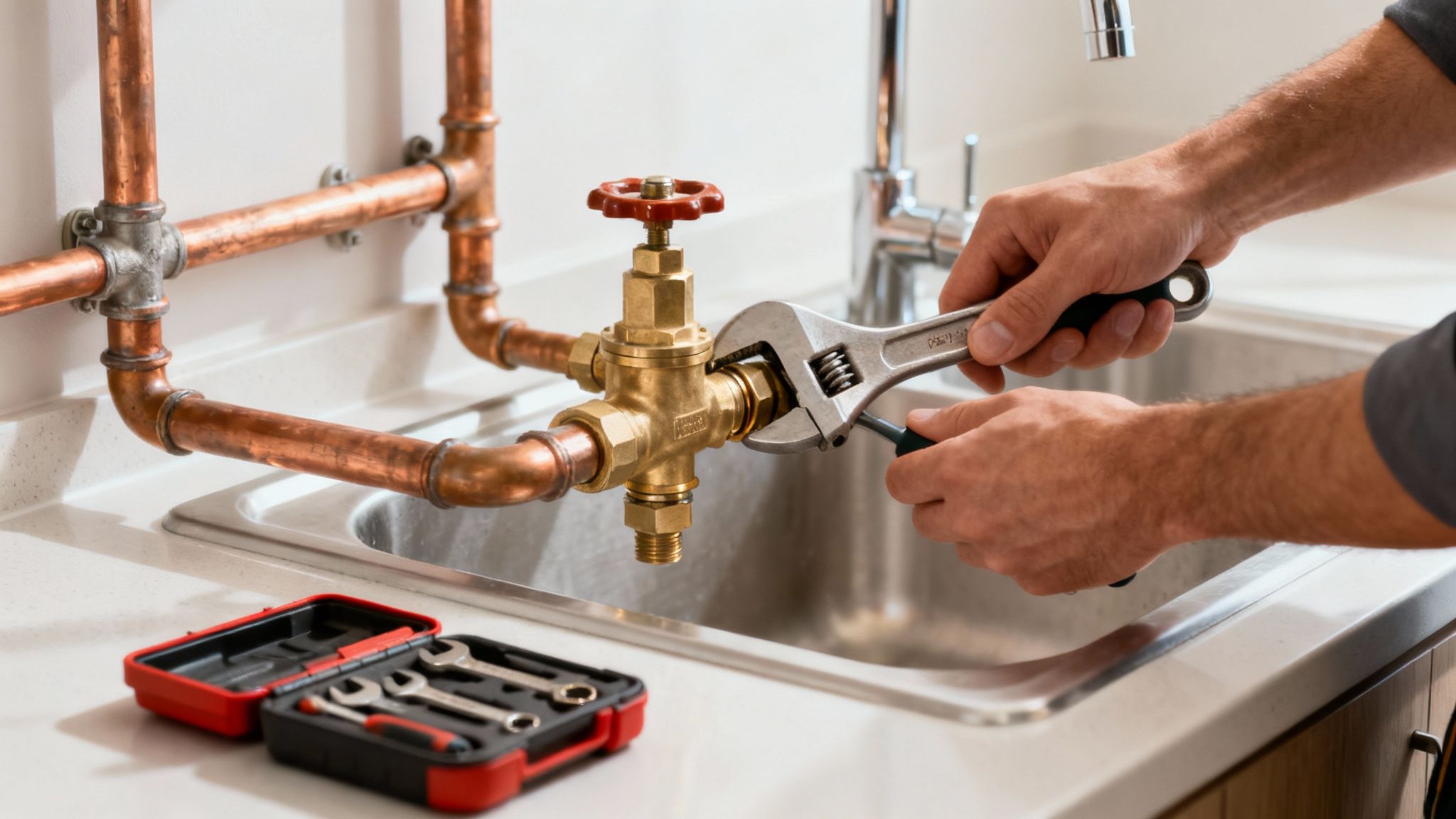
We strongly advise against it for a major burst. Products like pipe clamps or repair tape are designed for very small, low-pressure pinhole leaks, not a pipe that has fully ruptured. Attempting a DIY fix often creates a false sense of security and can fail spectacularly, causing a second, often worse, flood. Your best and safest action is to shut off the main water supply and call for professional help.
How long does the full water damage restoration process take?
The timeline is dictated by the extent of the water damage. The actual burst pipe repair might only take a few hours, but the structural drying process is the most time-consuming part. Using industrial air movers and dehumidifiers to thoroughly dry walls, floors, and cavities typically takes 3 to 5 days. Rushing this critical step can lead to mold growth and long-term structural issues.
Will my homeowner's insurance cover all the costs?
This is a crucial question. Most standard homeowner's policies cover the resulting damage from a sudden and accidental pipe burst—this includes water extraction, drying, and repairs to drywall, flooring, and personal items. However, many policies exclude the cost of repairing the broken pipe itself, viewing plumbing maintenance as the homeowner's responsibility. For more details, our guide on how homeowner's insurance covers burst pipes can help. We provide the detailed documentation your insurer needs to process your claim.
What causes pipes to burst in Los Angeles if it's not freezing temperatures?
In Southern California, pipe bursts are typically caused by aging infrastructure (corroding galvanized steel or copper pipes), minor seismic activity that stresses pipe joints over time, high water pressure from the municipal supply, and mineral buildup (scale) from our notoriously hard water. These factors weaken pipe walls and increase internal pressure, leading to sudden failure.
How quickly should I call for help after a pipe bursts?
You should call a professional 24/7 restoration company immediately after shutting off the main water valve and ensuring the electricity is turned off to the affected area. The faster professionals can begin water extraction and drying, the less secondary damage (like mold growth and structural rot) will occur. Every minute counts in minimizing the overall damage and cost of repairs.
When you're dealing with a water emergency, you need a team that moves fast and handles everything from the initial mess to the final coat of paint. Onsite Pro Restoration is your 24/7 partner for expert burst pipe repair and water damage restoration in Los Angeles. Don't wait—call us now for an immediate response.