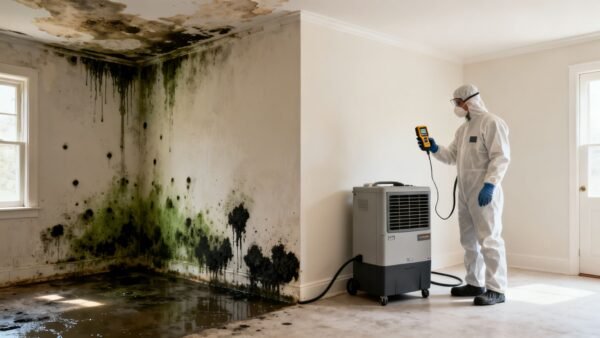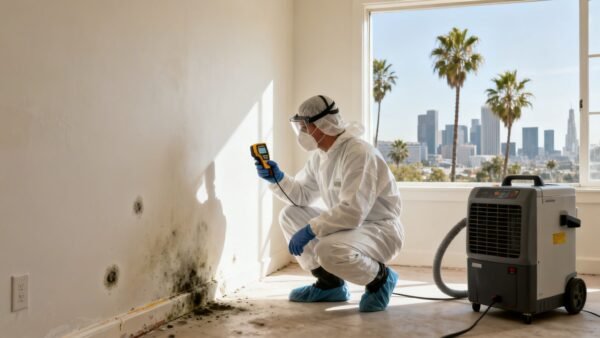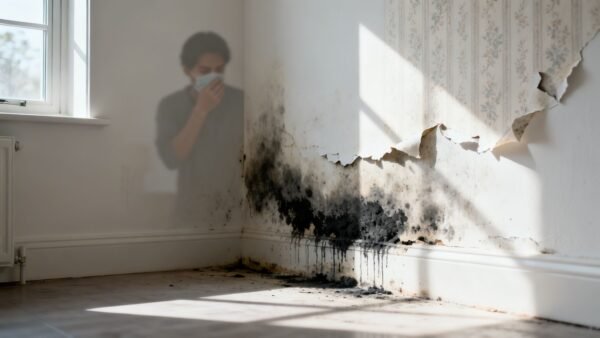

A successful burst pipe cleanup starts with immediate, decisive action. What you do in the first 30 minutes is absolutely critical; your only goals should be stopping the water, cutting the power, and documenting the mess for your insurance claim. For Los Angeles homeowners, getting these first steps right can mean the difference between a manageable problem and a full-blown catastrophe.
Getting these first steps right can mean the difference between a manageable problem and a full-blown catastrophe.
Call (818) 336-1800 for a Free Assessment
Your Immediate Response to a Burst Pipe Emergency
The chaos of discovering a burst pipe can be overwhelming, but a calm, systematic response will protect both your property and your family's safety.
First things first: shut off the water. Before an emergency ever happens, every homeowner should know exactly where their main water shutoff valve is. It's usually tucked away in a garage, basement, or utility closet.
The location can vary. A slab leak in a Studio City home, for instance, might require you to shut the valve at the street. But a second-story pipe burst in a Hollywood Hills condo will likely have a valve inside the unit. The principle is the same: stop the source.
Once the water is off, head straight for the electrical panel. Water and electricity are a deadly mix. Flip the breakers for every affected room to eliminate the risk of short circuits, electrical fires, or electrocution. Never, ever touch electrical devices or stand in water while doing this.
Safety First: Standing water can turn your home into an electrical hazard zone. If you cannot safely reach your breaker box without stepping in water, call an emergency restoration professional and an electrician immediately.
To simplify the process during a high-stress moment, we've created a straightforward checklist to guide your first few actions.
Immediate Burst Pipe Action Checklist
This quick reference guide is designed for the first 30 minutes after discovering a burst pipe. Follow these steps methodically to ensure safety and minimize damage.
| Action Item | Why It Is Critical |
|---|---|
| Shut Off Main Water Valve | Immediately stops more water from entering your home, preventing further saturation of drywall, flooring, and personal items. |
| Turn Off Electrical Breakers | Prevents electrocution, short circuits, and potential electrical fires caused by water interacting with live circuits. |
| Document with Photos & Videos | Provides irrefutable visual evidence for your insurance adjuster, proving the initial scope and severity of the damage. |
Following this checklist ensures you address the most urgent threats—water flow and electrical hazards—before moving on to the next steps.
This simple flowchart breaks down those critical first steps for your burst pipe cleanup.
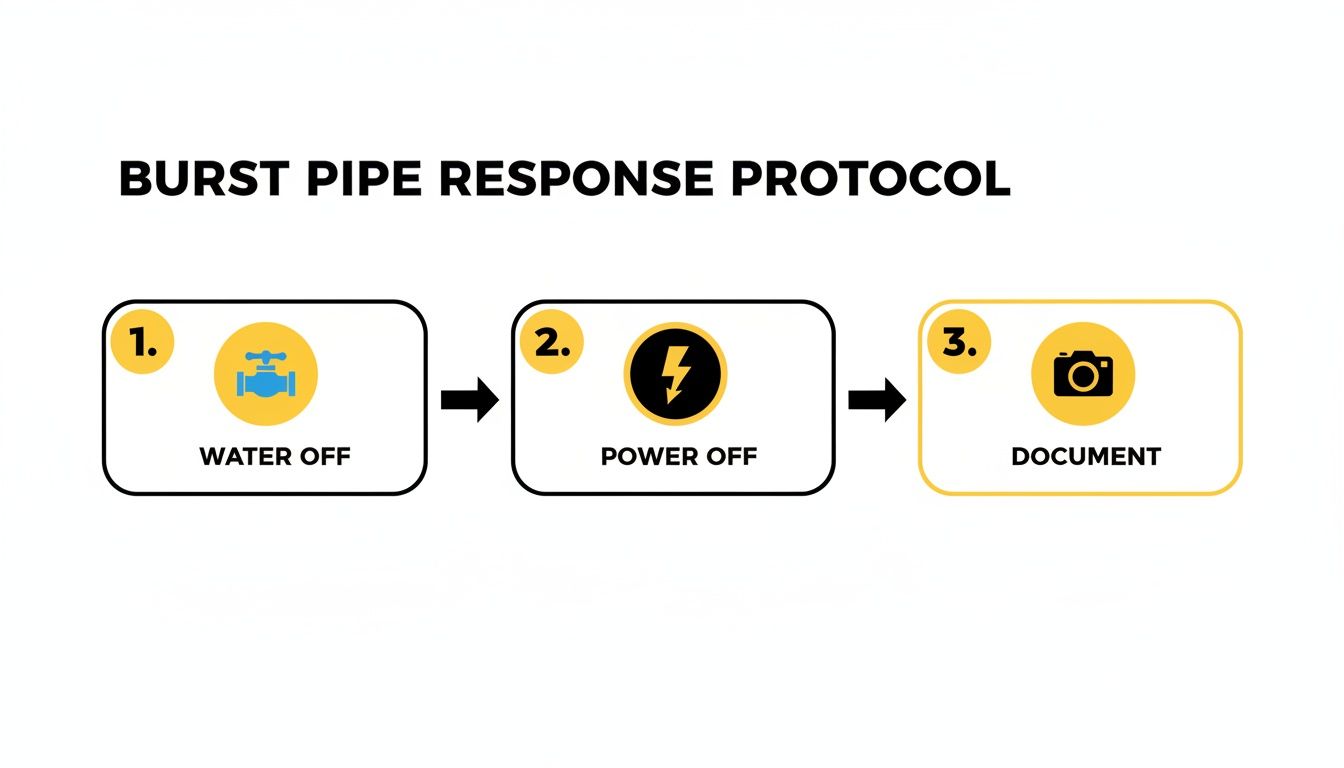
This visual guide reinforces a clear, three-part protocol that puts safety and damage containment first.
Document and Call for Help
With the immediate threats handled, pull out your smartphone. Go through every affected area and take extensive photos and videos of everything—the source of the leak, soaked carpets, damaged furniture, and how high the water climbed on the walls. This visual record is invaluable for your insurance claim.
Finally, call a certified restoration company. Professional teams are built for rapid response. Their expertise in emergency water extraction is essential for preventing the secondary damage that always follows, like structural rot and mold growth, which can start in as little as 24-48 hours.
Why Professional Water Extraction Is Non-Negotiable for Burst Pipe Cleanup
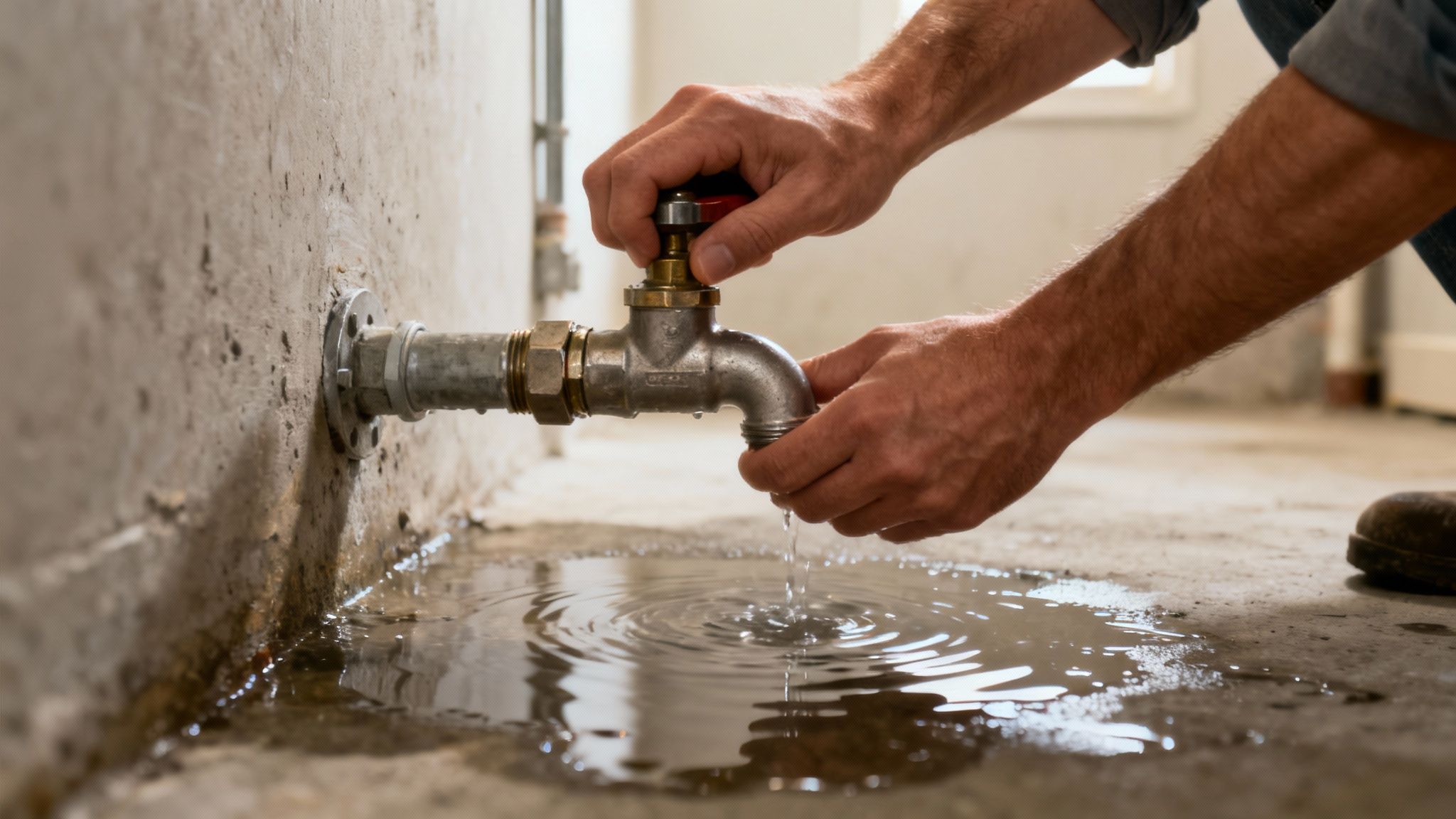
After a pipe bursts, the first instinct for many homeowners is to grab a shop vac and set up some box fans. It’s a well-intentioned start, but this approach almost always misses the real threat: hidden moisture.
Water doesn't just sit on the floor. It wicks up drywall like a sponge, soaks deep into subflooring, and saturates the insulation inside your walls. This is where the real long-term damage happens.
Professional burst pipe cleanup is a science, not a simple mopping job. IICRC-certified technicians show up with specialized equipment that you just can't find at a hardware store. It’s not about working faster; it’s about being thorough down to the microscopic level.
The Tools of a True Restoration Pro
The difference between a DIY job and a professional one comes down to the technology we use to find and eliminate every last drop of water.
- Truck-Mounted Extractors: These aren't your average wet vacs. They’re industrial-strength machines that can pull out hundreds of gallons of water an hour, far outpacing anything you can rent or buy.
- Thermal Imaging Cameras: This is the real game-changer. These cameras let us see what the naked eye can’t—temperature differences behind walls and under floors that pinpoint hidden pockets of moisture.
- Industrial-Grade Dehumidifiers: Forget the small unit in your basement. These machines are built to pull massive amounts of moisture from the air and surrounding materials, which dramatically speeds up the drying process.
A Glendale homeowner learned this lesson the hard way. After a laundry room pipe burst, they spent a week with a shop vac and fans. Months later, a musty smell led them to discover extensive black mold behind the drywall. What started as a water damage problem turned into a much more expensive and hazardous mold remediation project.
The Financial Stakes of Incomplete Drying
Trying to save a few bucks by cutting corners on water extraction can lead to staggering costs down the road. A close look at insurance claims reveals the average loss from a single frozen pipe incident is $27,000, with some disasters running into the millions.
These numbers make it clear why a professional dry-out is an investment, not an expense. You can read the full study on burst pipe claim costs to see the data for yourself.
The goal isn't just to make things look dry. It's to return every affected material to a verifiable, pre-loss moisture content. Only a certified restoration pro has the training and gear to get this done right, protecting you from future problems like structural rot and dangerous mold.
Stop Water Damage Now: Call Our 24/7 Hotline
The Critical 48-Hour Window for Mold Prevention
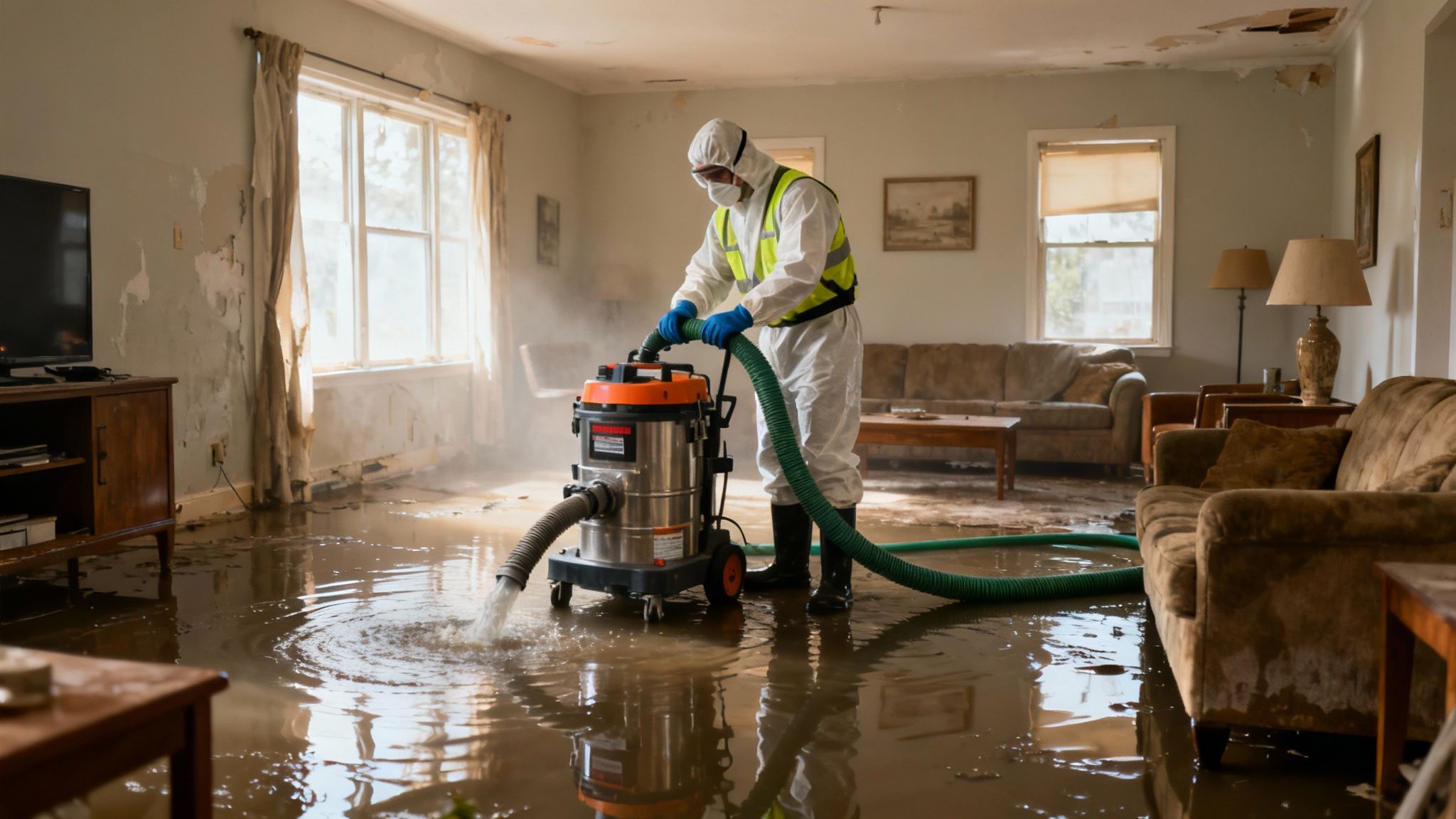
After a pipe bursts, the clock starts ticking. Not just on the water damage, but on a much more insidious threat: mold. The first 24 to 48 hours after a flood are absolutely crucial for any burst pipe cleanup.
This isn't just about drying things out. It's about stopping a biological process. Dormant mold spores, which are always in the air, find everything they need in that damp drywall, soaked carpet padding, and saturated insulation.
Waiting just one extra day can turn a straightforward water removal job into a complex and hazardous mold remediation project.
The Science of Rapid Mold Growth
Mold doesn't need much to get started—just moisture, a food source (like the paper on drywall), and a little bit of time. A Beverly Hills homeowner recently learned this the hard way. After a small supply line under their kitchen sink started leaking, they put off calling for help.
Within a week, a massive black mold colony had bloomed behind their cabinets. The cleanup went from a simple drying job to a full tear-out and remediation, costing thousands more.
This scenario is far from rare. Over 250,000 homes in the U.S. deal with flooding from burst pipes every year. In a humid climate like Los Angeles, that water damage can become a serious mold problem in just a day or two, dramatically increasing the scope and cost of repairs.
Professional Mold Prevention Strategies
To stop mold before it even has a chance to start, certified technicians use a multi-step process that goes way beyond just drying the area.
- Antimicrobial Treatments: After extracting the standing water, we apply professional-grade antimicrobial agents to all affected surfaces. This doesn't just clean; it neutralizes existing spores and creates a barrier against new growth.
- Advanced Moisture Detection: We use non-invasive moisture meters and thermal imaging cameras to find every hidden pocket of dampness. This is key because mold loves to grow where you can't see it—behind baseboards, under flooring, and inside wall cavities.
- Air Scrubbers: High-efficiency particulate air (HEPA) scrubbers are set up to physically filter mold spores out of the atmosphere, which is critical for purifying your indoor air quality and preventing cross-contamination.
Taking these professional steps is non-negotiable for protecting your property and your family's health. For a deeper dive, our guide on how to prevent mold after water damage offers more detailed strategies. You can also consult this excellent homeowner's guide to preventing mold in basements for additional tips on safeguarding your home.
Navigating the Water Damage Insurance Claim
After the initial shock of a burst pipe wears off, the next wave of stress often comes from one place: the insurance claim. It can feel just as daunting as the water cleanup itself. For Los Angeles homeowners, understanding how this process works from the adjuster’s point of view is the secret to a smooth recovery.
The first thing you need to know is that insurance adjusters live by one core rule: they cover "sudden and accidental" damage. A pipe that violently bursts is the textbook example of a covered event. On the flip side, a slow drip from a neglected pipe that’s been leaking for months? That’s almost always denied as a maintenance issue. This distinction is everything.
Documenting for a Successful Claim
Your claim’s success really comes down to the quality of your documentation. The initial photos you snapped of the flooding are a great start, but a professional restoration company takes it to a whole new level. Our job is to build a rock-solid case for you.
Here’s how we provide the proof an adjuster needs to see:
- Comprehensive Photo and Video Evidence: We don’t just take a few pictures. We create a full visual timeline, documenting every stage of the burst pipe cleanup from the initial damage all the way through the final dry-out.
- Detailed Moisture Logs: This is critical. Using professional-grade meters, we record the moisture levels in your drywall, subflooring, and framing over several days. This data is undeniable proof that the structure was dried completely and professionally.
- Line-Item Estimates: We use the same software adjusters use, like Xactimate, to create highly detailed estimates. Every single cost is broken down, leaving no room for questions and justifying every step we took.
By providing this level of professional documentation, we’re essentially advocating on your behalf. We give the insurance adjuster a complete, undeniable picture of the damage and the work required to fix it, which helps speed up approvals and ensures you get a fair settlement.
Think of it this way: a professional restoration team does a lot more than just dry your home. We help build the case for your claim. This partnership is crucial for taking the stress off your shoulders and getting your property restored the right way.
For a deeper dive, check out our complete guide on handling an insurance claim for water damage.
Bringing Your Home Back to Pre-Loss Condition
The job isn’t over just because the drying equipment is gone. The final, and arguably most important, phase of any burst pipe cleanup is the full restoration—getting your home back to its "pre-loss condition."
That’s a term we use a lot in this industry, but it’s more than just jargon. It's our promise to make it seem like the disaster never even happened.
True restoration is all about the details. It's not enough for the space to just be dry. It means seamlessly replacing damaged drywall, installing new flooring that perfectly matches what was there before, and applying a fresh coat of paint so you can't even spot where the repair was made. This is where real craftsmanship becomes every bit as crucial as the initial emergency response.
From Cleanup to Reconstruction
The handoff from mitigation (the cleanup phase) to reconstruction is a make-or-break moment in the whole process. This is why working with a single, full-service restoration company is such a game-changer.
When one team handles everything—from the initial water extraction to hammering in the final nail—you avoid the delays and headaches that come with trying to juggle multiple contractors. Imagine coordinating plumbers, then drywallers, then painters. It's a logistical nightmare.
A unified approach keeps the project moving smoothly and efficiently, getting your life back to normal that much faster. The end goal is a home that's not just repaired, but is completely safe and free of any reminders of the water damage. Our complete water damage restoration process breaks down exactly how we manage this from start to finish.
This final stage is also an opportunity to make smart upgrades. If you're replacing ruined floors, why not choose something more resilient this time around? As you work towards bringing your home back to its pre-loss condition, consult this comprehensive ultimate guide to moisture resistant options for waterproof flooring to make an informed choice.
The Bigger Picture of Water Damage
While a burst pipe feels like a personal disaster, it's part of a much larger problem. Water main breaks alone are responsible for 260,000 incidents every year across the U.S. and Canada.
All told, water damage costs in the U.S. hit a staggering $13 billion annually. This is why having professional documentation from the cleanup and restoration is so vital for getting your insurance claim approved. These aren't small incidents, and your insurer will want to see proof that the job was done right.
FAQs: Answering Your Burst Pipe Cleanup Questions
When you're dealing with a burst pipe, the questions come fast and furious. It's a stressful time, and you need clear, direct answers to make the right calls. Here are the most common concerns we hear from homeowners across the Los Angeles area.
Q: How long does the burst pipe cleanup process take?
A: The timeline for a burst pipe cleanup happens in two main parts. First, the emergency mitigation (water extraction and drying) typically takes 3 to 5 days. During this phase, we use industrial dehumidifiers and air movers. Once dry, the reconstruction phase begins to repair materials like drywall and flooring, which can take a few more days or several weeks depending on the extent of the damage. We provide a clear timeline after our initial assessment.
Q: Can I just clean up the water myself to save money?
A: A DIY approach almost always leads to bigger, more expensive problems later. A shop vac and fans only get surface water, leaving moisture trapped inside walls and under floors where mold and rot begin. Professionals use tools like thermal cameras and moisture meters to find and eliminate all hidden water, preventing costly secondary damage.
Q: Will my homeowners insurance cover all the costs?
A: Most standard homeowners insurance policies cover damage from a "sudden and accidental" pipe burst. This includes water cleanup services and property restoration costs. However, they usually don't cover the cost to repair the broken pipe itself or damage from slow, long-term leaks caused by poor maintenance. We provide the detailed documentation your insurer needs to process the claim fairly.
Q: What does restoring to 'pre-loss condition' mean?
A: "Pre-loss condition" is the industry standard meaning we restore your property to the exact state it was in moments before the pipe burst. This is a comprehensive process of meticulously replacing damaged materials like drywall, flooring, and cabinetry with materials of like kind and quality. The goal is a seamless repair that makes it impossible to tell the incident ever happened.
Don't wait for water damage to become a bigger problem. The Onsite Pro Restoration team is available 24/7 to provide a free assessment and start the recovery process immediately. Call us now at (818) 336-1800 or visit https://onsitepro.org to get the expert help you need.