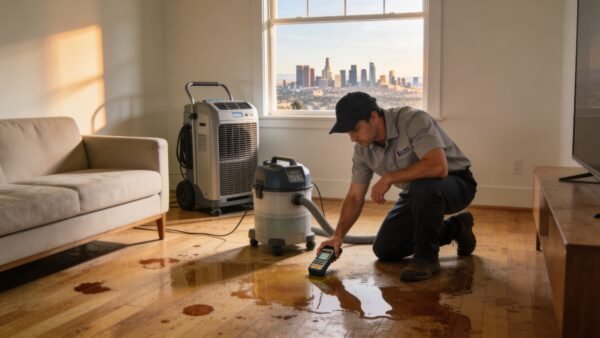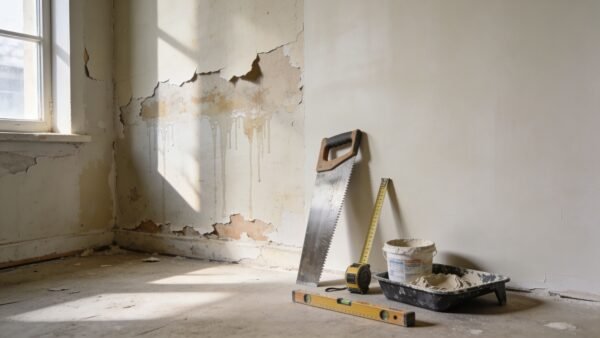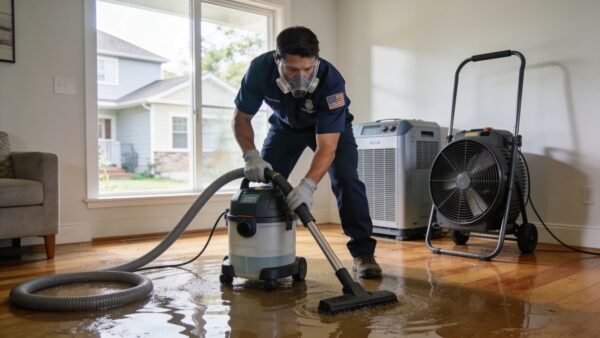

Finding mold in your Los Angeles home is unsettling, but your first move is what really counts. The best way to clean mold doesn’t start with a scrub brush—it starts with a clear-headed assessment. This immediate check is crucial; it tells you whether you have a small DIY job or a serious problem that needs a professional before it spirals out of control, especially given Southern California's climate. The first 100 words are key, so don't wait.
Need a Professional Mold Inspection?
Don't let mold compromise your property. Call Onsite Pro at (818) 336‑1800 or book a free inspection today.
First Steps When You Discover Mold
You know the feeling. That musty, earthy smell hits you when you open a closet in your Sherman Oaks home, or you spot a few dark specks on the bathroom ceiling after a week of coastal fog in Santa Monica. Your first instinct is probably to grab the bleach and go to war. Don't do it.
Scrubbing mold without the right precautions is one of the worst things you can do. You’ll just disturb the colony, sending millions of spores airborne to find new places to grow. It spreads the contamination and creates a real health hazard for your family.
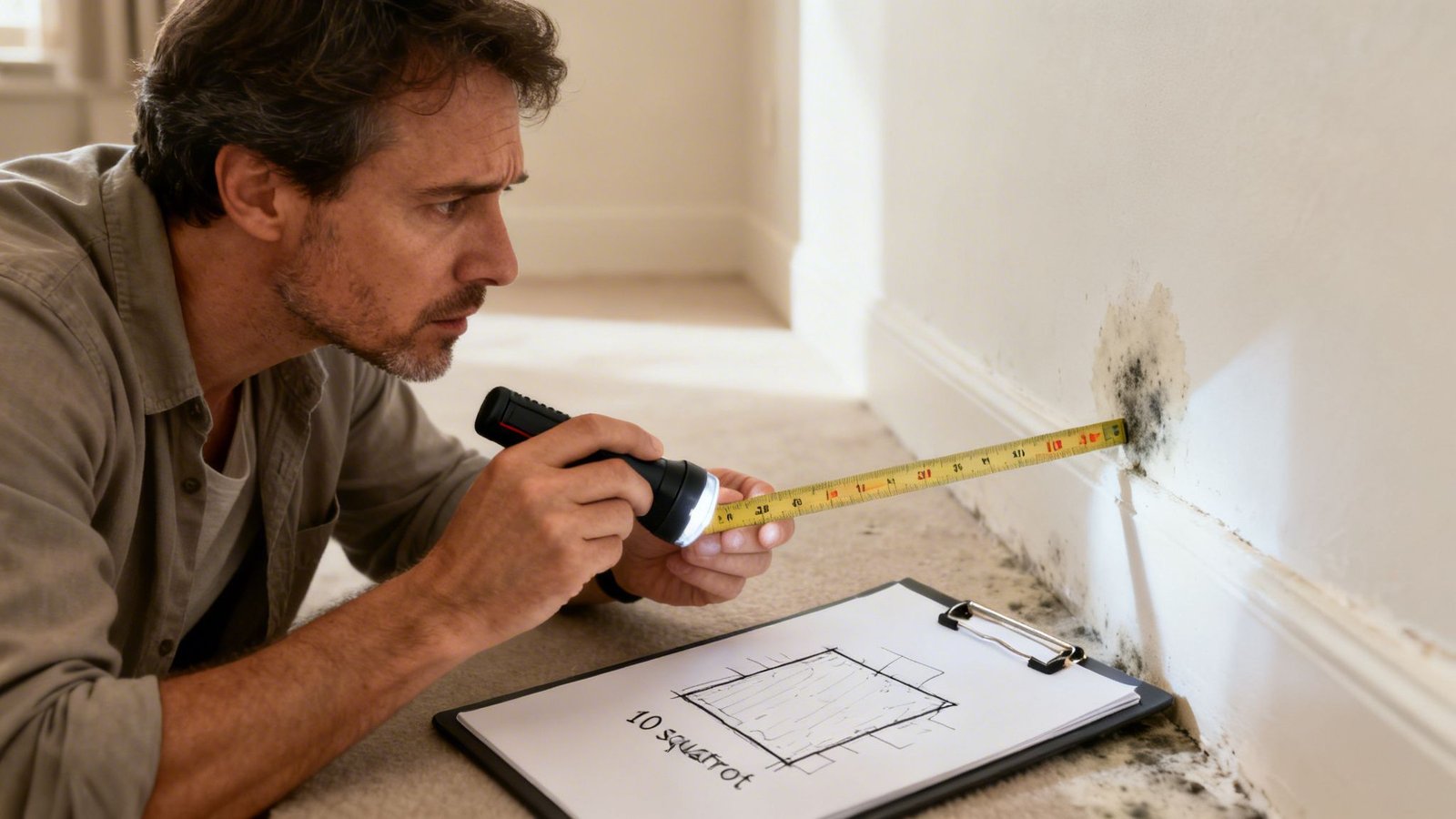
Before you touch anything, take a step back and look at the situation like a professional would. The goal here is to figure out just how big and bad the problem is.
Use the 10-Square-Foot Rule
The Environmental Protection Agency (EPA) offers a solid rule of thumb for homeowners: the 10-square-foot rule. If the moldy area is smaller than 10 square feet—about the size of a 3-foot by 3-foot patch—it’s usually considered a localized problem you can often handle yourself, as long as you take the right safety precautions.
But if the mold covers more than 10 square feet, stop right there. That’s a sign of a much bigger, more established issue, likely fed by a significant moisture source. At that scale, you really need to call in a licensed remediation company to make sure it’s removed completely and safely.
Know Your Surface Type
Next, pay close attention to what the mold is growing on. The material is a huge factor in whether you can clean it or need to toss it.
- Non-Porous Surfaces: These are materials that don't absorb water, like glass, metal, hard plastics, and glazed tile. Mold on these surfaces is usually just on the surface and is much easier to clean since the roots can't dig in.
- Porous & Semi-Porous Surfaces: This is where things get tricky. Materials like drywall, wood, carpet, insulation, and ceiling tiles are like a sponge for moisture. Mold’s root-like structures (mycelia) grow deep inside, making surface cleaning totally ineffective. In most cases, these materials have to be cut out and replaced.
Key Takeaway: Mold on your shower tile is a world away from mold on the drywall behind it. You can clean the tile, but the drywall is probably a lost cause and needs professional eyes on it.
To help you decide, here’s a quick-glance table to see if your mold problem is a DIY task or if it's time to call in the experts.
DIY Cleanup vs Professional Remediation
| Scenario | Recommended Action | Reasoning |
|---|---|---|
| A few spots on shower tile or a window sill. | DIY Cleanup | Non-porous surfaces are easy to clean, and the mold can't root deeply. |
| A patch of mold on drywall smaller than 10 sq. ft. | DIY Cleanup (with caution) | Manageable if you use full PPE and proper containment to prevent spore spread. |
| Any mold growth larger than 10 sq. ft. | Call a Professional | This indicates a significant underlying moisture problem and requires expert containment and removal. |
| Mold appears after a sewage backup or flood. | Call a Professional | The water is contaminated (Category 3), posing serious health risks that require specialized gear. |
| You smell a strong musty odor but can't see mold. | Call a Professional | The source is likely hidden inside walls or your HVAC system, requiring professional inspection. |
| Mold is growing on porous materials like drywall or insulation. | Call a Professional | Surface cleaning won't work. The contaminated material needs to be safely removed and replaced. |
Ultimately, when you're in doubt, getting a professional assessment is the safest and most effective path forward.
Look for Clues of Hidden Mold
What you see is often just the tip of the iceberg. That persistent musty smell is a massive red flag that mold is growing somewhere you can't see it—behind a wall, under the floor, or deep inside your HVAC system. When you notice that smell, it's smart to look for some quick fixes to stop mold before things get worse.
Other signs of a hidden problem include:
- Paint or wallpaper that’s bubbling, peeling, or warping.
- Mysterious dark stains or discoloration on walls or ceilings.
- A spike in allergy symptoms, asthma, or respiratory issues that only happen in one area of the house.
If you suspect mold is hiding, resist the urge to start tearing into walls. DIY demolition without containment is a recipe for disaster, as it can release a huge cloud of spores into your home's air. If you want to dig deeper into finding it, our guide on how to check for mold in walls has more detailed steps. This careful first look is your most powerful tool in winning the fight against mold.
The Best Way to Clean Mold Includes Proper Safety and Containment Gear
Thinking you can just scrub away a patch of mold like any other household stain is a huge mistake. The second you touch it, that mold colony goes on the defensive, blasting millions of microscopic spores into the air. Without the right protection, you're not just cleaning a wall; you're breathing in a cloud of allergens and irritants that can cause some serious respiratory and health issues.
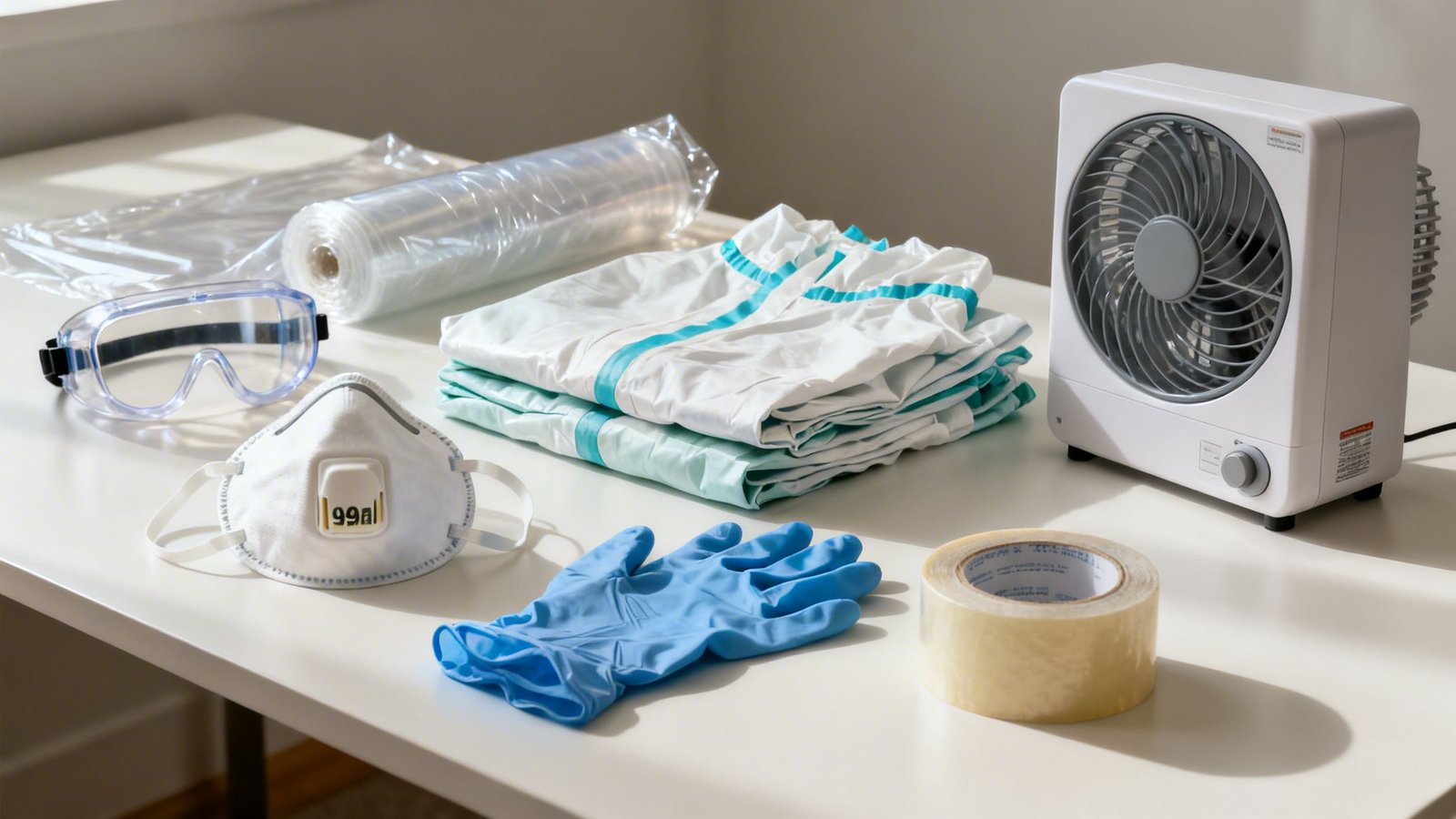
Before you even grab a sponge, your first job is to gear up properly with Personal Protective Equipment (PPE) and set up containment. This isn't optional. It's the absolute foundation of the best way to clean mold without making yourself sick or spreading the problem.
Essential Personal Protective Equipment (PPE)
A simple paper dust mask and some gardening gloves just won’t do the job. Mold spores are incredibly small, often just 3 to 40 microns across, and will slip right past flimsy barriers. Here’s what you absolutely must have:
- N95 or P100 Respirator: This is non-negotiable. An N95 mask is certified to block at least 95% of airborne particles, including mold spores. Make sure it forms a tight seal around your nose and mouth—no gaps.
- Non-Vented Goggles: Spores can get into your system through your eyes. You need full-seal, non-vented goggles that protect you from airborne particles and any chemical splashes.
- Long Rubber Gloves: Get gloves that go up to your mid-forearm. This is critical for stopping contaminated water from running down your arms and onto your skin.
- Disposable Coveralls: A full-body suit, preferably with a hood, is worth the investment. It prevents spores from landing on your clothes and hair, which you could then track through your house.
Your PPE is basically your personal cleanroom suit. It keeps the hazard on the outside, so you can get the job done right without paying for it with your health later.
How to Properly Contain the Work Area
Just as important as protecting yourself is protecting the rest of your home. You have to completely isolate the contaminated room. If you skip this, you could easily turn a small mold problem in a Santa Monica bathroom into a whole-house nightmare.
Expert Insight: The goal of containment is to create negative air pressure. It's a simple but professional technique that forces air (and spores) from the work area to flow outside the house, not into other rooms.
Here's how we build a reliable containment barrier on our jobs:
First, seal off all doorways and openings. Use thick (6-mil) plastic sheeting and heavy-duty tape. If you need a way in and out, create an entryway with two overlapping flaps of plastic to act as an airlock.
Next, shut down your HVAC system completely. The last thing you want is your air conditioner becoming a superhighway for spreading spores to every single room. Cover all the supply and return vents in the work area with plastic and tape them off.
Finally, create that negative air pressure. Put a standard box fan in a window, making sure it's facing out. Use more plastic sheeting or cardboard to seal the rest of the window opening around the fan. When you turn it on, it will pull contaminated air out of the room, preventing it from drifting into the rest of your home.
Proper containment and PPE are what separate professional work from a DIY disaster. It's a system that works. You can see how these steps fit into the bigger picture by reading our guide to professional mold removal services. Taking this setup seriously is the difference between a successful cleanup and one that fails, costing you more time and money down the road.
Facing a Mold Outbreak?
Our certified team uses professional-grade containment to protect your property. Get a Free Mold Inspection today.
Choosing the Right Cleaning Agent for Any Surface
Walking into the cleaning aisle can be completely overwhelming. You're faced with dozens of products, all promising to wipe out mold for good. So how do you know which one actually works?
From my experience, the best way to clean mold isn't about grabbing the strongest-smelling chemical. It’s about matching the right agent to the right surface. A cleaner that works wonders on your shower tile could be totally useless—or even damaging—on the drywall in your basement.
Getting this choice right is critical. The wrong product might just bleach the stain, leaving the roots to grow back, or it could permanently ruin the very material you're trying to save. Let's break down the agents that get the job done and debunk the popular myths.
The Great Bleach Debate
Bleach is almost always the first thing homeowners reach for. It's cheap, it's everywhere, and its power to zap stains makes it seem like the perfect mold-killing solution. In fact, one study found that roughly 90% of people tackling a mold problem used bleach.
The problem is, its effectiveness is widely misunderstood.
The EPA is very clear: bleach only works on non-porous surfaces. Think glazed tile, glass, sinks, and bathtubs. On these hard, sealed materials, it does a great job killing surface mold. But the story changes completely with porous materials like drywall, wood, or carpet.
On those surfaces, the chlorine in bleach can't penetrate deep enough. It stays on top, removing the color of the mold stain, while the water component of the bleach soaks right in—potentially feeding the mold's root system.
Expert Tip: If you decide to use bleach on a non-porous surface, make sure the area is well-ventilated. Never, ever mix it with ammonia or other cleaners; this can create toxic gas. A solution of no more than one cup of household bleach per one gallon of water is plenty strong.
Better Alternatives for Different Surfaces
While bleach has its place, other products are often safer and far more effective, especially on materials that aren't perfectly sealed. Knowing what to use where is the key to a successful cleanup.
For Non-Porous Surfaces (Tile, Glass, Metal)
- Diluted Bleach Solution: As we discussed, this is a solid choice for these materials.
- Commercial Mold Cleaners: Many EPA-registered products are formulated for bathrooms and kitchens. They work well without the harshness of straight bleach.
For Semi-Porous Surfaces (Concrete, Unfinished Wood)
- Specialized Mold Removers: Look for products designed to penetrate slightly porous materials. These often use fungicides that can reach the shallow roots common on concrete or raw wood.
- HEPA Sanding/Grinding: For unfinished wood or concrete, sometimes the best method is to physically remove the top layer of the material, then clean and seal it.
For Porous Surfaces (Drywall, Carpet, Insulation)
- No cleaning agent is truly effective. This is the hard truth. The mold’s roots (mycelia) grow deep into the material's fibers, much like roots in soil. Surface cleaning won't solve the problem, no matter what chemical you use. The only safe and permanent solution is to remove and replace the contaminated material.
Debunking Common DIY Cleaning Myths
The internet is flooded with "natural" mold cleaning hacks. Unfortunately, many of them are ineffective and only give you a false sense of security.
- Vinegar: While its acidity can kill some surface mold, it’s not a broad-spectrum solution. Just like bleach, it struggles to get into porous materials and often isn't strong enough to wipe out an established colony.
- Hydrogen Peroxide: The standard 3% concentration you buy at the store is a very weak solution. It might bubble and look like it's working, but it’s mostly killing bacteria and has a very limited effect on mold spores and their roots.
- Baking Soda: This is a great deodorizer and a mild abrasive for scrubbing, but it does not kill mold. It might help you clean away the surface stain, but it leaves the roots intact to grow back.
Ultimately, the surface dictates the strategy. If you're wondering why your past cleaning attempts have failed, you can learn more by reading our article that answers the question, "Does bleach kill black mold?". For anything beyond a small patch on a hard, non-porous surface, your safest and most effective move is to get professional advice.
The Complete Process for Cleaning and Drying
With your safety gear on and the containment area sealed, you’re ready to get to work. The best way to clean mold isn't just about scrubbing what you can see. It's a methodical process that eliminates the visible growth, the hidden moisture that feeds it, and the invisible spores floating in the air.
But before you touch a single cleaning product, you have to do one thing: find and fix the moisture source. I can't stress this enough. Mold needs water to survive. If you don't stop the leak from a pipe behind the drywall, fix the condensation in your bathroom, or dry out that damp Sherman Oaks basement, the mold will come back. Cleaning is pointless if the water issue remains.
The Cleaning and Removal Technique
Once the water source is handled, the physical removal can begin. The trick here is to clean thoroughly without making the problem worse by sending spores everywhere.
Apply your chosen cleaning solution sparingly. You don't want to oversaturate the surface, especially semi-porous materials like wood or concrete, as you'll just be reintroducing moisture. Instead of spraying directly onto the mold (which can aerosolize spores), lightly dampen a disposable cloth or sponge.
Work in small, manageable sections. When you scrub, start from the outside of the mold patch and work your way inward. This simple technique keeps you from accidentally smearing spores onto clean, adjacent surfaces. Make sure to swap out your cleaning cloths often to avoid cross-contamination.
Crucial Safety Step: Proper disposal is non-negotiable. All contaminated items—rags, sponges, brushes, and any porous materials you removed like drywall scraps or carpet—must go into heavy-duty (6-mil) plastic bags. Seal these bags tightly with tape inside the containment zone before you carry them through your home.
This diagram shows how the approach changes depending on the surface you're cleaning.
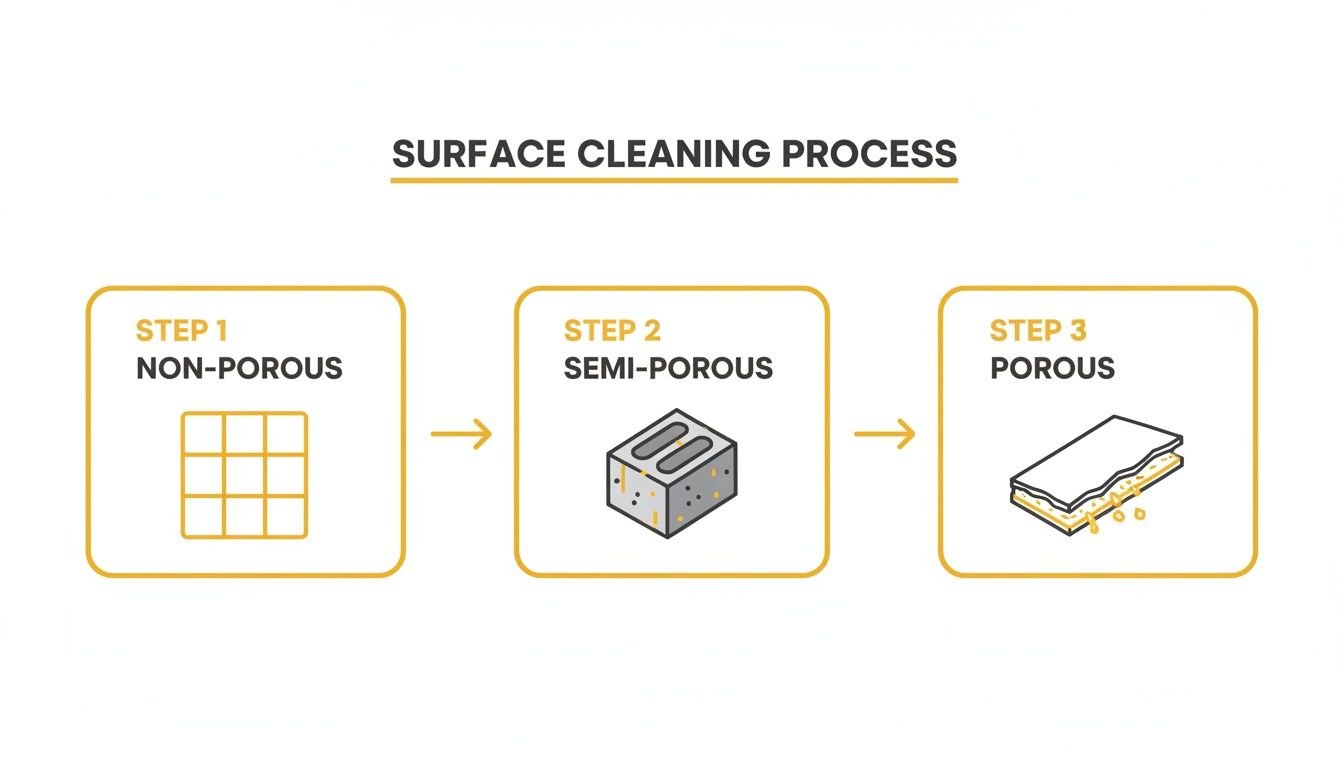
As you can see, non-porous surfaces are candidates for cleaning, but porous materials almost always have to be cut out and thrown away. That's a key difference between a temporary fix and a permanent solution.
The Final and Most Important Stage: Drying
You’re not done once the visible mold is gone. The final stage—thorough drying—is arguably the most important. Any moisture left behind is an open invitation for mold to regrow, sometimes in as little as 24 to 48 hours. The area has to be completely, bone-dry.
To get there, you need to create an environment that actively pulls moisture from the building materials and the air.
- Use High-Volume Fans: Position several fans to create aggressive, circulating airflow across the surfaces you just cleaned. This constant movement is what encourages moisture to evaporate from wood, concrete, and subflooring.
- Deploy a Dehumidifier: While fans move the damp air around, a dehumidifier is what actually pulls the water out of that air. You need to run a dehumidifier 24/7 inside the containment area until you can get the relative humidity to stay consistently below 50%.
- Monitor the Progress: Let the equipment run for at least 24 to 48 hours after you think the area is dry. Trust me on this. Use your hand to check the surfaces; they should feel totally dry and even a little warm, not cool or clammy to the touch.
This drying process is vital for any cleanup, but it's absolutely critical if you're dealing with significant water intrusion. If you’re tackling something like a soaked floor, our guide on how to dry wet carpet fast offers a deep dive into preventing mold before it even starts.
Only when you are 100% certain the area is arid should you even think about taking down your containment and starting on repairs.
When a DIY Project Becomes a Job for Pros in Los Angeles
Recognizing your own limits is the smartest and safest thing you can do when you’re staring down a mold problem. A small spot on the bathroom tile is one thing, but many situations are just too big, too complex, or too hazardous for a weekend warrior.
Knowing the red flags that signal it’s time to call a professional isn’t admitting defeat—it’s about protecting your home and your family’s health. Honestly, the best way to clean mold often means handing the job over to someone with the right training and gear. If you're ever in doubt, getting a professional assessment is always the right call.
The 10-Square-Foot Rule Revisited
We touched on this earlier, but it’s so important that it’s worth repeating. This is the clearest dividing line there is. If the total area of visible mold is bigger than 10 square feet—that’s roughly a 3-foot by 3-foot patch—it's an immediate sign to stop what you're doing and pick up the phone.
Growth of this size is a clear indicator of a significant, ongoing moisture problem that you probably haven't even found yet. A professional won't just clean the mold you can see; they'll use tools like moisture meters and thermal imaging cameras to pinpoint the hidden water source that’s feeding the whole operation.
When Contamination Involves Your HVAC System
Discovering mold anywhere in your heating, ventilation, and air conditioning (HVAC) system is an absolute game-over for any DIY project. Think about it: your HVAC is the respiratory system of your home.
When it gets contaminated, it actively pumps mold spores into every single room, every time it kicks on. This can turn a localized issue in a Beverly Hills home into a full-blown infestation affecting the entire property. Cleaning HVAC ductwork requires specialized vacuums, brushes, and expertise to avoid making the contamination even worse. This is a job that is exclusively for certified professionals.
Mold From Contaminated Water Sources
Not all water is created equal. If the mold growth is the result of a sewage backup, an overflowing toilet, or floodwater that came from outdoors, you're dealing with a biohazard. This is what we in the industry call "Category 3" water, and it’s loaded with dangerous bacteria and pathogens that pose serious health risks.
Trying to clean this kind of mold without proper biohazard training and equipment is incredibly dangerous. Professionals have the necessary PPE and EPA-registered cleaning agents to safely handle both the mold and the underlying bacterial contamination.
Expert Insight: With Category 3 water, the risk isn't just from inhaling mold spores; it's also from direct contact with hazardous waste. Professionals follow strict IICRC protocols to contain and neutralize these threats—something a homeowner is simply not equipped to do.
The Professional Advantage in Equipment and Efficacy
A huge reason to hire pros is the arsenal of specialized equipment we bring to a job. A DIYer with a bottle of cleaner from the hardware store and a sponge just can't compete with the tools a certified remediation company uses.
These tools make all the difference:
- Commercial-Grade HEPA Air Scrubbers: These powerful machines run 24/7 during a project, capturing 99.97% of airborne particles down to 0.3 microns. That includes microscopic mold spores, cleaning the air and preventing cross-contamination.
- HEPA Vacuums: Unlike your household vacuum, which will just suck up spores and spray them right back out, these vacuums use special filters to trap mold for good during the cleanup phase.
- Antimicrobial and Antifungal Treatments: Professionals use EPA-registered biocides that are far more effective and longer-lasting than anything you can buy over the counter.
- Advanced Moisture Detection Tools: Thermal cameras and moisture meters let us "see" inside walls and find every last pocket of dampness, ensuring we solve the problem at its root.
This professional-grade approach is why remediation experts are far more successful. Industry data shows that pros achieve complete mold and spore removal in over 90% of cases because they address the hidden moisture that 80% of homeowners miss. Understanding the signs that a job is too big, especially with tricky issues like hidden mold behind baseboards, will help you know when it's time to call for backup.
When you're facing a serious infestation that's beyond a simple fix, our team is ready to step in. You can learn more about our process for emergency mold removal near me to see how we can bring your home back to a safe, healthy state.
Frequently Asked Questions About Cleaning Mold in Los Angeles
Here are answers to the most common questions we get from Los Angeles homeowners dealing with mold.
Q: Can I just paint over mold?
A: Absolutely not. Painting over mold is one of the worst mistakes a homeowner can make. It’s like putting a band-aid on a bullet wound. The paint will hide the stain, but the mold colony is still alive underneath, eating away at your drywall and releasing spores. You must properly remove the mold and fix the moisture source first.
Q: What’s the difference between mold and mildew?
A: Mildew is a type of surface-level mold, often appearing as a powdery gray or white patch on damp surfaces like shower curtains. Other molds can be fuzzy or slimy and grow deeper into materials. While mildew is generally easier to clean, both are fungi and should be removed promptly to protect your property and health.
Q: Is black mold really more dangerous than other molds?
A: The notorious "toxic black mold," Stachybotrys chartarum, gets a lot of media attention, but the truth is that any type of indoor mold can cause health problems. The color of mold does not determine its risk level. All mold growth should be treated as a potential health hazard and handled with caution, especially for those with allergies or respiratory issues.
Q: Are DIY remedies like hydrogen peroxide effective?
A: Many popular home remedies are ineffective against a significant mold problem. For instance, a lab study showed that spraying 3% hydrogen peroxide on moldy materials did almost nothing to kill the spores. You can read the full research on mold cleaning products yourself. For anything beyond a tiny spot on a non-porous surface, professional solutions are far more reliable.
Q: Why is mold so common in Los Angeles homes?
A: Los Angeles's climate, with its coastal fog, occasional heavy rains ("Atmospheric Rivers"), and temperature fluctuations, creates ideal conditions for mold. Leaks from flat-roof homes common in areas like Sherman Oaks, poor ventilation in older buildings, and condensation around windows are frequent causes of moisture buildup that leads to mold growth.
Q: What should I do if I find mold behind drywall?
A: Immediately stop using the area and contact a licensed restoration company to assess the risk. Do not attempt to tear out the drywall yourself, as this can release a massive amount of spores into your home. A professional can properly contain the area and safely remove the contaminated material. If you're wondering what a professional job involves, you can learn more about what mold remediation costs in our detailed guide.
If you're facing a mold problem that feels overwhelming, don't wait for it to get worse. The Onsite Pro Restoration team is available 24/7 to provide a free assessment and restore your home safely. Visit us at https://onsitepro.org or call our emergency line now at (818) 336‑1800.