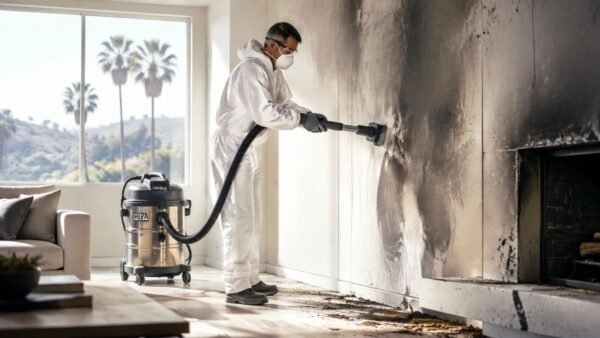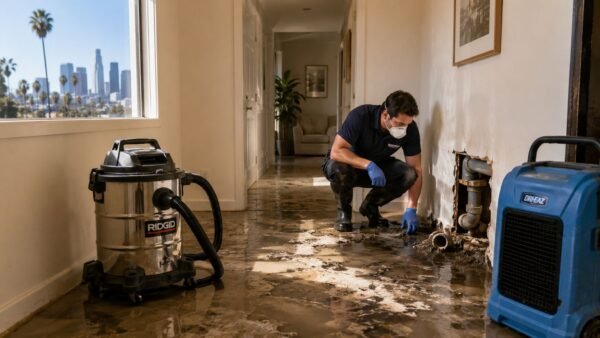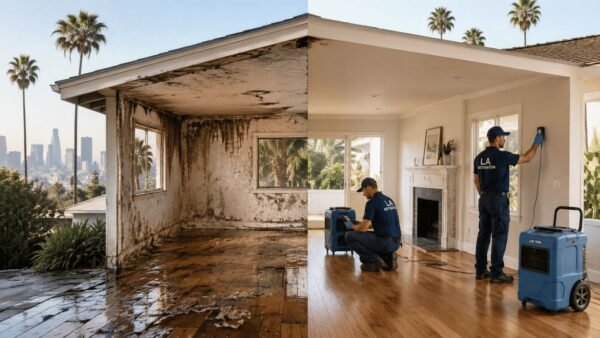

You just found sewage in your Los Angeles home, and now every minute feels expensive. In a real sewage cleanup Los Angeles job, the first question isn't cosmetic, it's whether the water has already spread into drywall, subfloor, cabinets, or HVAC returns, because that changes the health risk, the cleanup method, and who may pay for it.
In older homes across Sherman Oaks, North Hollywood, Studio City, Encino, Glendale, and Burbank, the most common panic call sounds the same. A toilet overflows, a floor drain backs up, or wastewater comes up through a tub, and suddenly a hallway, bathroom, or kitchen is contaminated. That is not a routine spill. Under restoration standards, this is treated as Category 3 black water, which means the contamination is severe enough to require professional containment, removal, and documentation.
The scale of the problem in Los Angeles makes that response normal, not dramatic. The City's sewer system includes about 6,477 miles of gravity mains, 32 miles of force mains, and 46 pumping plants, serving over 4 million people in a roughly 600-square-mile area, with daily wastewater flow around 272 million gallons per day according to LA Sanitation's published system data. LA County reporting also shows why these backups are a public issue, not just a household nuisance. Over 2014 to 2023, the county logged 3,174 spill cases and 30,521,025 gallons of sewage released, with around half reaching surface waters. LA Sanitation system and spill data and county spill reporting context
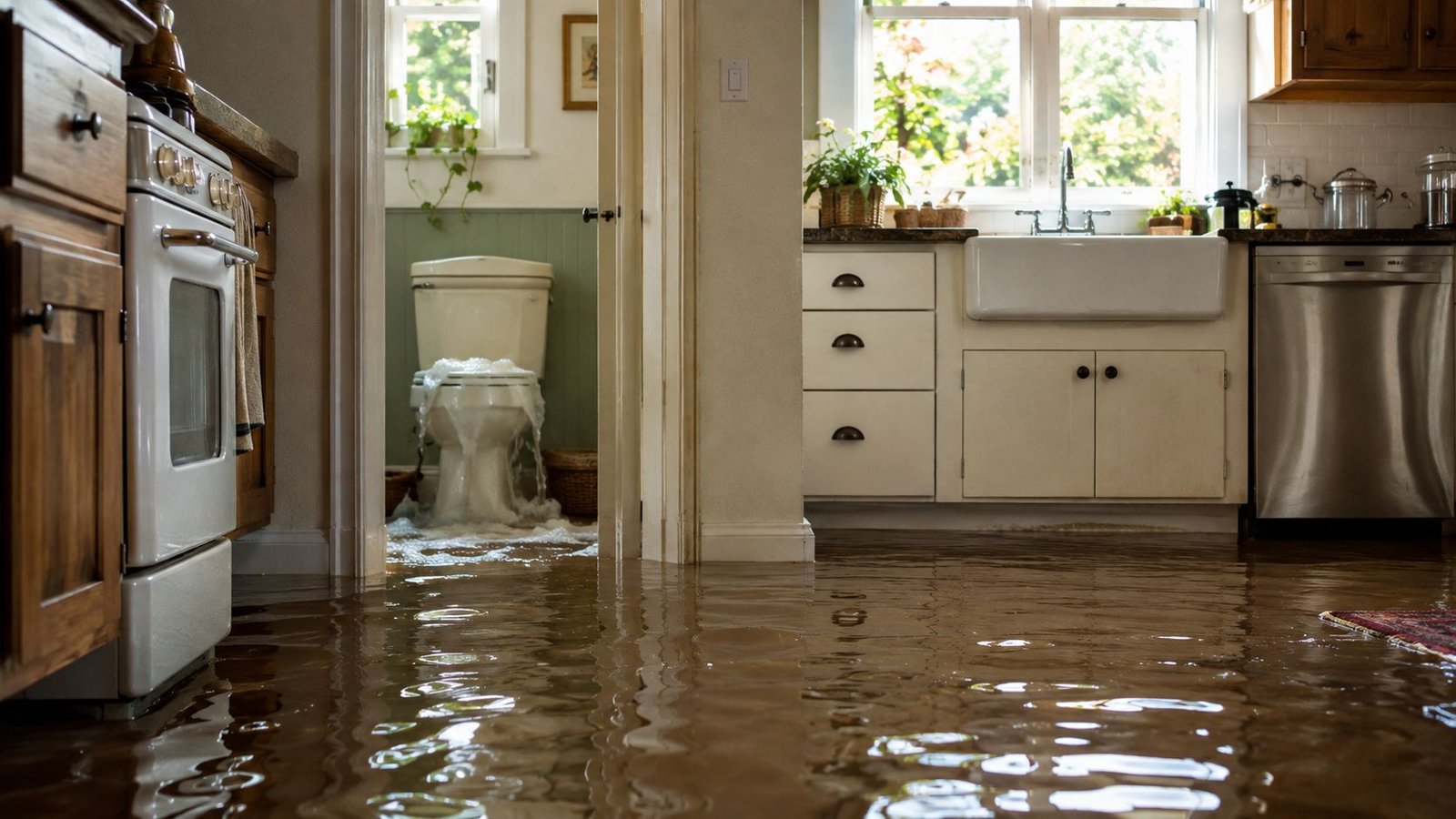
A backed-up bathroom can carry bacteria, viruses, and other contaminants into porous materials fast. The practical urgency isn't just odor. It's exposure, cross-contamination, and the clock on drying before mold growth becomes a second claim. For a plain-language primer on why sewage is handled as a health issue, see the health risks tied to sewer backups. One valuable outside reference that helps homeowners understand root causes is expert clogs and drain help, especially when a backup starts in the plumbing rather than the city main.
The three tracks that matter
Practical rule: treat the backup as three jobs running at once, health safety, source tracing, and claim documentation. If you ignore one, the whole file gets harder to defend later.
The rest of a real job usually splits into three parallel tracks. One crew looks at safety and contamination control. Another traces whether the issue sits in the public main, the private sewer lateral, or an interior fixture. A third set of photos and notes becomes the record the adjuster or landlord will ask for later.
That's why sewage cleanup in Los Angeles is never just “dry it out.” It's a triage event.
What a Sewage Backup in Your LA Home Actually Looks Like
In a North Hollywood bungalow with old cast-iron lines or a Sherman Oaks home with a slab foundation, the first sign is often ugly and sudden. Water rises in one fixture, then starts appearing in a second room, usually near the lowest drain point. If the overflow includes toilet waste or backup from a floor drain, it's not a wet-house cleanup. It's a contaminated-loss response.
Why black water changes everything
Category 3 water is the level that makes people stop arguing about “can we save the drywall?” and start protecting health. The visible water may look like a plumbing problem, but the contamination can move into baseboards, subfloor, insulation, cabinet cavities, and wall bottoms where homeowners can't see it. Once porous materials absorb sewage, they generally stop being a cleaning problem and become a demolition decision.
The other hidden deadline is mold. LA restorers watch the clock because moisture left in walls and floors can create a mold problem quickly if the structure doesn't dry correctly. That's why we treat a sewage call differently from a clean-water leak. The job is part containment, part removal, and part odor and microbial control.
Why the Los Angeles system makes this a big-city issue
Los Angeles is not dealing with a tiny infrastructure network. LA Sanitation reports a system built around thousands of miles of pipe, multiple pumping plants, and very high daily flow, which means a home backup can be tied to a much larger municipal problem, not just a toilet issue inside the property. The countywide spill history reinforces that this is a regional hazard, not a rare event.
A homeowner can smell sewage and assume the cleanup is simple. In practice, the smell is often the least important problem, because the contamination path underneath the floor is what drives cost and scope.
For a homeowner, the vocabulary matters. When a crew says Category 3, containment, controlled demolition, or structural drying, those aren't buzzwords. They're the sequence that keeps a damaged hallway from becoming a whole-house loss.
Your First Hour After the Backup
The first hour is about keeping people safe and preserving evidence. Don't start with mopping, don't start with guessing the cause, and don't start signing a work authorization just because someone arrives first.
Do the safety steps in order
- Cut power to affected areas if water is near outlets, appliances, or anything that could conduct electricity.
- Move people and pets out of the contaminated zone.
- Avoid skin contact with the water and anything saturated by it.
- Call the right public number. If it's a City of Los Angeles sewer issue, use 311. If you're in a county service area, the County Sanitation Districts provide a 24-hour emergency hotline at 562-437-6520 for sewage-related overflow, emergency, or odor problems.
- Notify the landlord or property manager right away if you rent.
That sequence matters because the first response determines whether the job gets classified as a public-sewer problem, a private-plumbing problem, or a landlord-tenant issue.
Document before anyone moves anything
Take timestamped photos from the first minute. Get the waterline on the wall, the room layout, the affected fixture, and anything that shows where the backup started. A short video is useful if it captures the spread path and the smell of the room after the overflow, but the photos matter most because adjusters compare them against the demolition scope.
Write down when you first noticed the backup, when symptoms started, and who you called. If someone in the home has nausea, skin irritation, or respiratory issues, note that too. Restoration teams and adjusters both care about the timeline because it helps establish what happened before any cleanup changed the scene.
For a practical overview of what to ask for when you call, keep emergency water cleanup guidance handy as a reference point for the first call.
Useful habit: tell the dispatcher or restoration company what you saw, not what you think the cause is. “Toilet backup into hallway” is stronger than “the sewer exploded,” because it's factual and keeps the source question open.
When you speak to a restoration company, say you need sewage containment, extraction, and documentation. Don't say you already know the whole building is ruined. Let the crew size the loss after they inspect it.
Who Is Actually Responsible for Your Backup in Los Angeles
Responsibility is where a lot of claims go sideways. In Los Angeles, the cleanup path depends on where the failure started, and that's not always obvious from the room that flooded.
Public main, private lateral, or interior fixture
There are three common buckets.
A public sewer main problem points to the city or county system. A private sewer lateral problem is usually between the home and the main, which tends to be the homeowner's responsibility. An interior-only backup from a toilet, tub, shower, or floor drain is also usually on the property side.
That distinction matters because a homeowner can hire a crew immediately and still be wrong about who should ultimately carry the cost. It also matters for reimbursement disputes. If a city inspector, sewer district representative, or plumber identifies the issue at the connection point, that evidence can shape the claim file.
What the local data says about the bigger picture
County reporting shows how often these losses move beyond one house. LA County documented 3,174 spill cases over 2014 to 2023, and 30,521,025 gallons of sewage were released, with around half reaching surface waters. Another county report showed 21 low-flow diversions in one year prevented about 182 million gallons of polluted urban runoff from entering local waterways. Those numbers don't tell you who pays for your specific backup, but they do show why agencies care about source control and containment.
There's also a neighborhood dimension that's easy to miss. Independent reporting and city audits have pointed to sanitation inequities and long-standing maintenance problems in some lower-income areas, which means a backup can overlap with broader municipal neglect instead of a one-off plumbing failure. That doesn't change the cleanup method, but it does change how carefully a homeowner should document the scene and the service history.
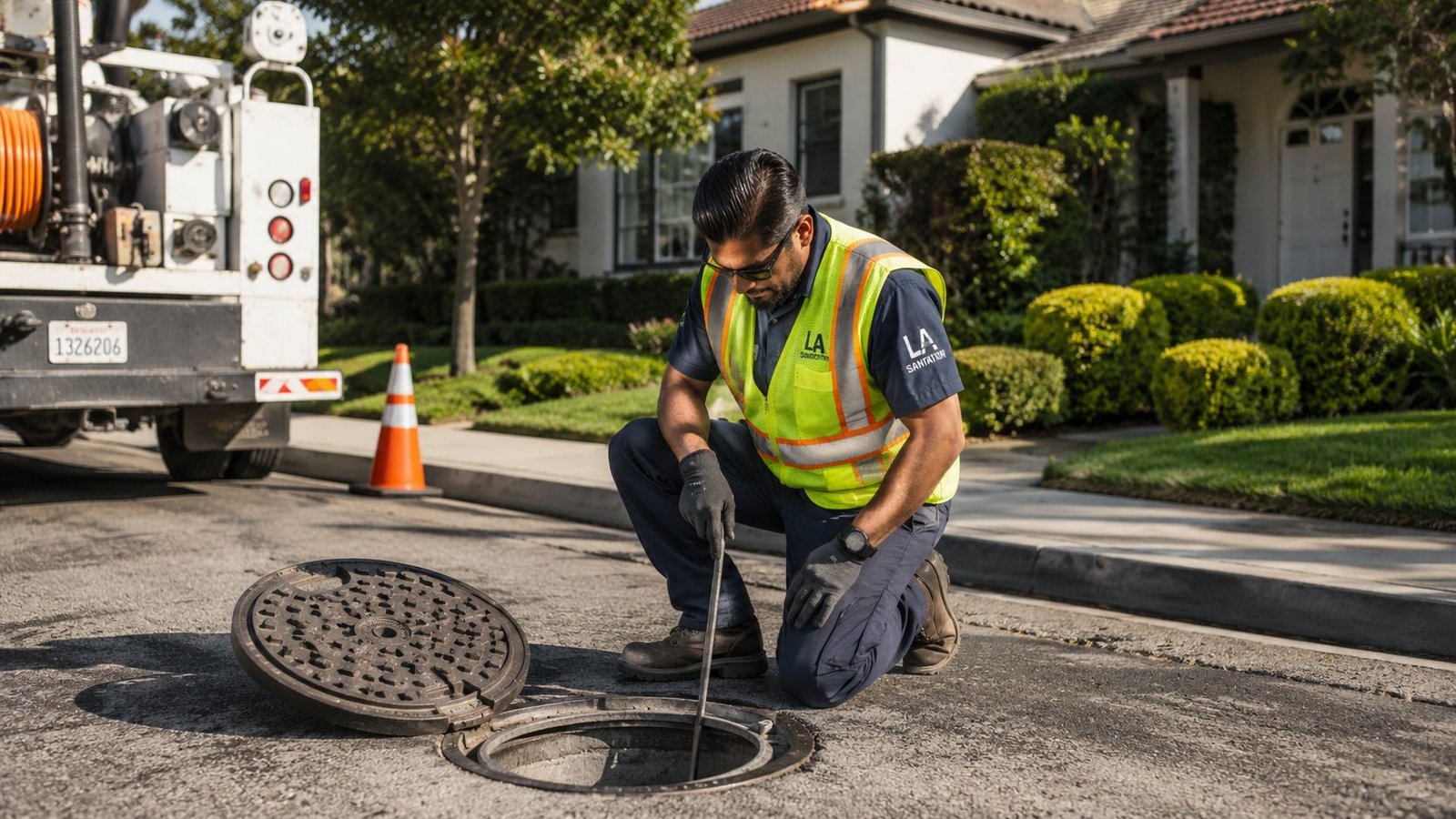
If the issue smells like a city-main backup, ask what the inspector or district rep sees at the right-of-way before you authorize demolition. That keeps you from spending money on cleanup scope that should have been documented as a source issue first.
The fastest way to lose a reimbursement fight is to let someone start demolition before the source is identified and photographed.
What a Professional Sewage Cleanup Crew Actually Does
A real sewage job follows a sequence, and each step protects the next one. Crews that work to IICRC S500 principles don't start with deodorizer. They start by separating the contaminated zone from the rest of the house.
The field sequence that works
First comes safety zoning. Technicians isolate the affected area, limit traffic, and set up access control so contaminated footwear and tools don't track waste through the home. Then they use truck-mounted vacuums or equivalent high-powered extraction equipment to remove bulk liquid.
After extraction, they inspect what has to come out. That usually means drywall bottoms, baseboards, padding, laminate, and other porous materials that won't reliably decontaminate once sewage has soaked in. Crews then apply EPA-registered antimicrobial agents to the exposed structure and begin controlled drying with LGR refrigerant dehumidifiers and high-CFM air movers.
What good crews check that homeowners miss
The obvious surfaces are not the whole job. A good crew checks HVAC return lines, the back side of cabinets, the subfloor, and crawlspace vapor movement if the home has one. Those spaces can hold moisture long after the visible floor looks dry.
Odor control usually starts with source removal and containment, then adds equipment like negative-pressure air scrubbers with HEPA filtration and activated-carbon stages. That matters because sewage odor can migrate through hallways and return-air pathways if the air isn't controlled.
The last step is verification. Technicians use moisture meters and sometimes ATP or swab clearance testing to confirm that the structure is ready for repairs or rebuild. If a crew skips the verification step, the homeowner often learns about it later when odors come back.
For a service path that fits contamination work, biohazard cleanup support is the category many LA jobs fall under once sewage has spread beyond a single fixture.
Job-site truth: drying a room without removing contaminated porous material is a shortcut that usually costs more later.
What Sewage Cleanup Actually Costs in Los Angeles
Pricing depends on how far the backup spread and how much of the structure had to be removed. Angi's Los Angeles cost data is the closest local anchor in the brief, but the actual number still moves with demolition depth, materials, and whether the loss sits on a slab or over a crawlspace.
Typical LA Sewage Cleanup Cost Ranges by Job Size
| Job Size | Typical LA Cost Range | What Usually Drives the Price |
|---|---|---|
| Small bathroom backup | Local average pricing varies by scope and access, with Los Angeles carrying a higher labor and disposal load than many markets | Fixture source, toilet contamination, limited demolition, same-day drying |
| Single-room contamination | Varies with flooring type and cabinet involvement | Area size, carpet or laminate removal, antimicrobial work, drying equipment |
| Multi-room backup | Grows quickly when hallways, closets, or HVAC pathways are affected | Cross-contamination control, larger extraction, more demolition, longer dry time |
| Structural contamination | Highest cost when subfloor, base framing, or contents need removal | Finished flooring replacement, contents handling, rebuild coordination |
What changes the invoice
The biggest cost drivers are easy to understand once you've seen a few LA losses. Square footage affected changes extraction and drying time. Category 3 contamination raises the labor, disposal, and containment burden. Slab homes can be simpler on access but harder when moisture gets trapped under flooring. Crawlspace homes often take more time because technicians have to manage vapor, access, and hidden moisture below the floor.
In Los Angeles, costs also run higher because the city has older building stock, tighter access, and more inspection coordination than a simpler suburban market. That's why a crew should give you an itemized scope, not a vague “we'll dry it out” number.
If a company quotes sewage cleanup without asking about flooring type, foundation type, and where the water migrated, the quote isn't finished.
For a more focused pricing breakdown, keep sewage backup cleanup cost guidance in the file when you meet the adjuster. That helps you compare mitigation scope against the actual damage pattern.
How Insurance Treats Sewage Cleanup Claims in California
Most homeowners are surprised here. Standard HO-3 policies often exclude raw sewage backup, so the policy may not pay just because the house got hit hard. The usual path is a water-backup endorsement or a similar add-on with a limited sublimit.
What adjusters in LA usually want
Adjusters want a clean cause-of-loss story. That means photos before demolition, moisture logs, an itemized mitigation scope, and notes that tie the damage to a specific event rather than general wear and tear. They also want the cleanup and repair phases separated, because mitigation is not the same thing as rebuild.
The most common documentation mistakes are simple. Homeowners throw away damaged material before photographing it. They approve scope without getting itemized line items. They describe the issue too loosely, which makes the insurer question whether it was a covered backup or a maintenance problem. Those are avoidable errors.
For a separate policy deep dive, home insurance and sewer backup coverage is worth reviewing before you send the first email to your carrier.
What to pull in the first 24 hours
- Declarations page: confirm deductibles, endorsements, and sublimits.
- Policy language: look for sewer backup, water backup, or drain overflow wording.
- Claim contact info: get the adjuster name, claim number, and email address.
- Photos and notes: send the first set before demolition begins.
- Mitigation estimate: keep the scope itemized, not bundled.
If you're comparing policy language before filing, Mai & Associates policy reviews can help homeowners understand where backup coverage often appears in the form. That doesn't replace the insurer's wording, but it gives you a place to start.
How to Choose a Sewage Cleanup Company in Los Angeles
A good company shows up ready to control the loss, document the scope, and protect the rest of the house. A bad one shows up with a van, a vague promise, and no paperwork discipline. In sewage work, that difference is expensive.
What the first visit should include
A credible LA provider should be able to show IICRC credentials relevant to the job, such as WRT, ASD, or AMRT, and should also be able to verify a CSLB license through the state board. The crew should walk the property, map moisture, and explain what is contaminated, what is salvageable, and what has to be removed.
They should also give you an itemized estimate in a platform the insurance world recognizes, usually Xactimate or Symbility. That helps the adjuster compare the mitigation scope against the damage. If the company can't document before-and-after conditions, you'll feel that weakness when the claim gets reviewed.
When you're comparing providers from Glendale to West Hollywood, Beverly Hills to Burbank, or Sherman Oaks to Woodland Hills, the response window matters too. Sewage work can't wait for a leisurely weekday slot.
Red flags that cost homeowners money
- Door-to-door solicitation after a storm: that's not a qualification, it's a sales tactic.
- Large upfront deposits: a legitimate mitigation crew should be able to explain billing and authorization clearly.
- Vague line items: if the estimate says “clean sewage area” and nothing else, ask for details.
- No photo log: if they don't document the pre-demo condition, the claim file gets weak fast.
- No plan for cross-contamination control: a crew that can't explain containment doesn't understand Category 3 work.
Practical rule: if a contractor can't tell you how they'll protect the hallway, the HVAC system, and the unaffected bedrooms, they're not ready for sewage remediation in a lived-in LA home.
A qualified crew should also explain content handling, including what can be cleaned, what should be isolated, and what needs disposal. If they shrug at those questions, keep looking.
A readiness checklist you can keep on your phone
- Save the city line and the restoration number.
- Keep the declarations page as a PDF.
- Ask about a backwater valve where code allows it.
- Inspect the lateral yearly if your plumbing history is rough.
- Add a water-backup endorsement before the next rainy season.
Here's the video that shows the kind of professional posture and certification awareness you should expect from a restoration crew:
For homeowners who want a single provider that can handle sewage remediation, biohazard cleanup, and documentation for insurance, Onsite Pro Restoration is one local option serving Los Angeles neighborhoods within about an hour of North Hollywood.
If you're dealing with sewage damage in Los Angeles, Onsite Pro Restoration can help with containment, extraction, sewage remediation, and the documentation your adjuster will ask for. For a fast local response in Los Angeles, CA, including Sherman Oaks, Burbank, Glendale, Studio City, Van Nuys, Encino, and Woodland Hills, call 818-336-1800 or visit Onsite Pro Restoration to request emergency sewage cleanup support today.