
A broken pipe repair cost in Los Angeles usually lands between $500 and $5,000, depending on how accessible the pipe is and how much water damage follows. If the leak soaked drywall, flooring, or cabinetry, the plumbing fix may be the smaller part of the total bill.
If you're reading this with a wet ceiling in Sherman Oaks, warped flooring in Glendale, or a damp wall in Burbank, the first thing to understand is simple. You are not just paying to stop a leak. You're paying to stop a loss from spreading through your house.
That distinction matters in Los Angeles homes. Older houses in Glendale and parts of West Hollywood often hide copper lines in walls that are expensive to open and repair. Valley homes with slab plumbing can turn one failed line into a demolition and drying job fast. In practical terms, homeowners who focus only on the plumber's invoice often underestimate the total cost of the incident.
Your Guide to Broken Pipe Repair Costs in Los Angeles
A homeowner usually searches for broken pipe repair cost because water is already where it shouldn't be. The urgent question is, "What is this going to cost me?" The honest answer is that the number depends on two separate jobs. First, someone has to repair or replace the damaged pipe. Second, someone has to dry and restore the building materials that got wet.
In Los Angeles, that second part is where many people get surprised. A pipe can fail behind a vanity wall in Beverly Hills, inside a kitchen ceiling in North Hollywood, or under a slab in the San Fernando Valley. The visible water may look minor, but moisture doesn't stay visible for long. It moves into insulation, baseboards, engineered flooring, and drywall cavities.
What homeowners usually miss
Most online estimates focus on the plumbing side. That's useful, but incomplete.
Practical rule: If water escaped beyond the pipe itself, you're dealing with a plumbing problem and a restoration problem.
That means the primary consideration isn't just who can patch the line the cheapest. It's who can contain the total loss before it spreads. Quick extraction, dehumidification, moisture mapping, and documentation often save more money than shaving a little off the repair invoice.
Why Los Angeles homes vary so much
A condo in Burbank, a hillside house in Studio City, and a postwar ranch in Sherman Oaks don't fail the same way.
Factors that change the final cost include:
- Pipe location: Exposed lines are simpler than pipes buried in walls or slabs.
- Home construction: Older plaster walls, tile showers, and tight crawlspaces raise labor.
- Finish level: Hardwood, custom cabinets, and stone finishes cost more to restore than basic materials.
- Response speed: Delayed drying usually creates a bigger restoration scope.
If you want a realistic budget, think in terms of the full incident cost, not just the plumber's bill.
Average Cost to Fix a Broken Pipe
The plumbing-only baseline is more straightforward. A burst pipe repair in major U.S. markets typically costs about $400 to $2,000 total, or about $150 to $250 per linear foot, while the pipe material itself may cost only $0.50 to $30 per linear foot before installation, which is why labor usually dominates the invoice according to HomeGuide's burst pipe repair cost breakdown.
That pricing tells you something important. In most homes, you're not paying for pipe. You're paying for access, diagnosis, cutting, fitting, testing, and cleanup.
Estimated Broken Pipe Repair Costs in Los Angeles (Plumbing Only)
| Repair Scenario | Typical Cost Range |
|---|---|
| Small accessible repair | $400 to $2,000 |
| Repair priced by affected length | $150 to $250 per linear foot |
Those numbers are a baseline, not a promise. A short visible repair under a sink or in a garage wall usually stays closer to the lower end. Longer damaged runs, multiple failure points, or hard-to-reach piping push the bill upward fast.
What the plumbing invoice usually includes
For the pipe repair itself, the quote often covers:
- Leak location work: Finding the failed section without opening more than necessary.
- Material replacement: Copper, PEX, fittings, couplings, or valves as needed.
- Labor and testing: Cutting out bad sections, installing new pipe, then pressure testing.
- Basic access work: Minor opening of a wall or cabinet if needed for the repair.
For a deeper look at repair-only pricing, see this page on the cost of burst pipe repair.
What it usually doesn't include
Plumbers fix plumbing. They don't always handle what the water did afterward.
That means the plumbing quote may not include drywall replacement, flooring removal, cabinet drying, insulation removal, moisture monitoring, or mold-related work. Homeowners in LA often discover that after the leak is stopped, the building still needs days of drying and follow-up repairs.
What Drives Your Final Repair Cost
The biggest mistake people make is assuming the size of the pipe determines the size of the bill. It doesn't. Access is everything.
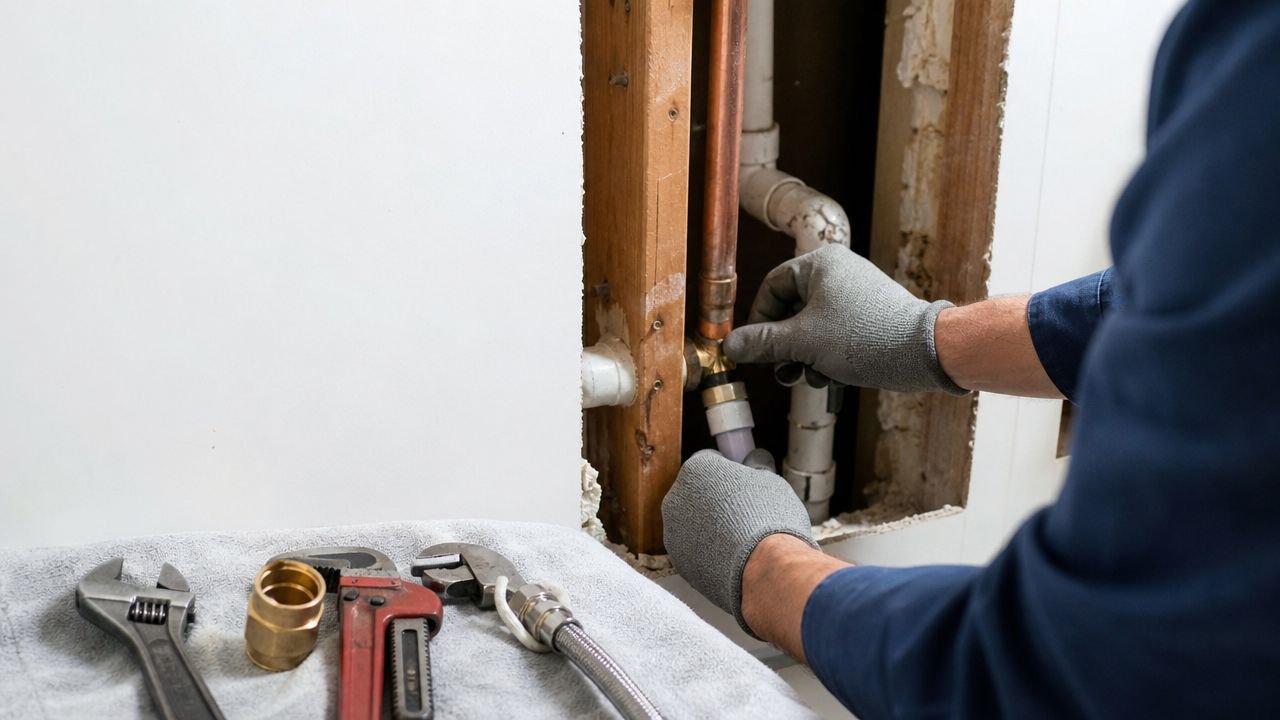
Accessibility is the biggest cost multiplier. Repairs behind walls or under concrete slabs can jump from a few hundred dollars to $4,500 to $5,000+ because demolition and restoration add labor and materials beyond the plumbing fix itself, as outlined in Angi's burst pipe repair cost guide.
Access changes everything
A visible leak under a bathroom sink is one kind of job. A line buried under tile, plaster, concrete, or custom cabinetry is another.
Here's how access drives cost in practical terms:
- Behind walls: Opening, protecting, and later restoring the wall adds labor before the pipe work is even finished.
- Under slabs: Slab leaks can involve tracing the line, exposing concrete, then rebuilding the assembly after repair.
- Ceiling cavities: Upstairs leaks often damage both the pipe location and the room below.
- Underground runs: Exterior or buried lines add equipment, digging, and more restoration work.
Older LA housing stock raises the stakes
In neighborhoods like Glendale and parts of Los Feliz, older homes often have materials and layouts that slow down access. Plaster walls are messier to open than modern drywall. Tight framing bays, remodel layers, and previous patchwork can complicate repairs.
In Valley properties, slab and below-floor routing can be the primary issue. When a pipe fails beneath concrete, the job isn't about a cheap piece of replacement pipe. It's about how you reach it and how much of the surrounding structure must be opened and rebuilt. For homeowners comparing methods, this overview of foundation tunneling solutions is useful context for understanding why some under-slab repairs avoid more disruptive access paths.
Other cost drivers homeowners should expect
Not every variable deserves the same weight. These usually matter after access:
The pipe is rarely the expensive part. The path to the pipe is.
- Pipe material: Copper, older galvanized sections, and mixed-material systems can complicate a clean repair.
- Extent of failure: One isolated break is different from discovering several weak points.
- Finish protection: Stone counters, hardwood floors, and built-ins require more careful demolition and containment.
- Emergency timing: Nights, weekends, and active flooding usually cost more than scheduled daytime work.
Beyond the Plumber The True Cost of Water Damage
A homeowner in North Hollywood hears a pop in the wall, shuts off the water, and assumes the main expense will be the plumber. In many Los Angeles losses, that assumption is wrong. The plumbing repair may be the smallest line item once water gets into drywall, insulation, cabinetry, flooring, or the ceiling below.
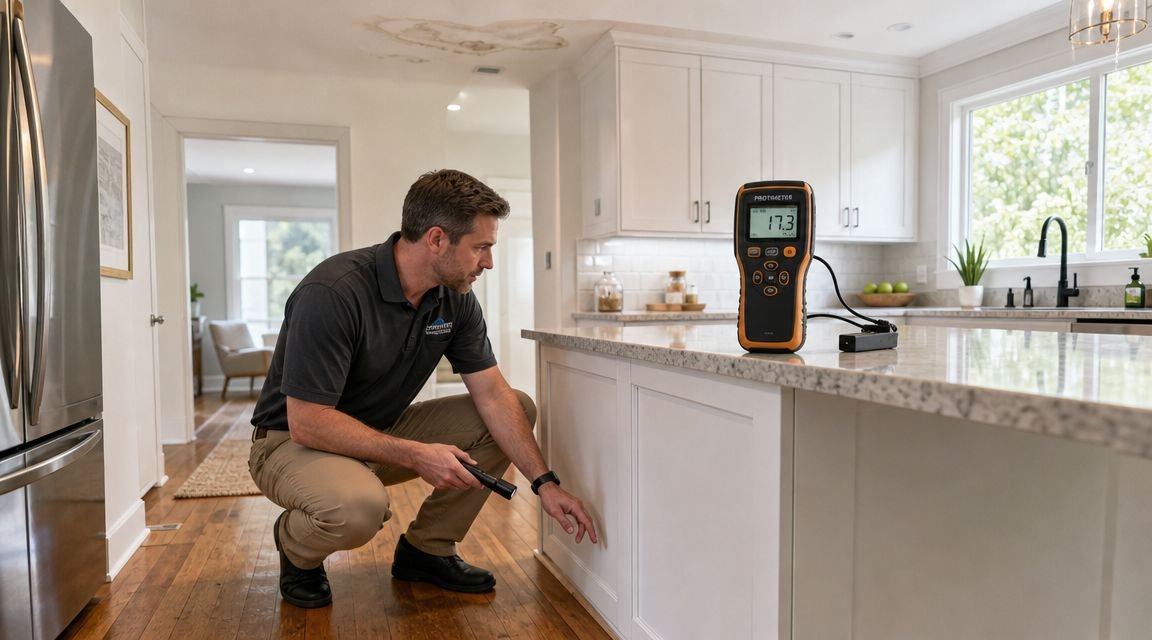
I see this across Burbank, Glendale, and older Valley housing stock. Owners call to stop a leak. Then we open a vanity toe-kick, pull baseboards, or meter the adjacent wall and find moisture spread well past the break itself.
That changes the budget fast.
Why restoration costs outrun plumbing costs
Water moves farther than people expect. It travels along framing, drops into lower cavities, soaks insulation, swells MDF and particleboard, and gets trapped under finished flooring. A small pipe split behind a second-floor bathroom wall can turn into ceiling work downstairs, floor drying, cabinet removal, and texture repair in two rooms.
That is why professional mitigation matters. The job is not just to stop visible water. The job is to find wet materials, document the spread, remove what cannot be saved, and dry the structure before secondary damage sets in.
Common restoration work after a broken pipe includes:
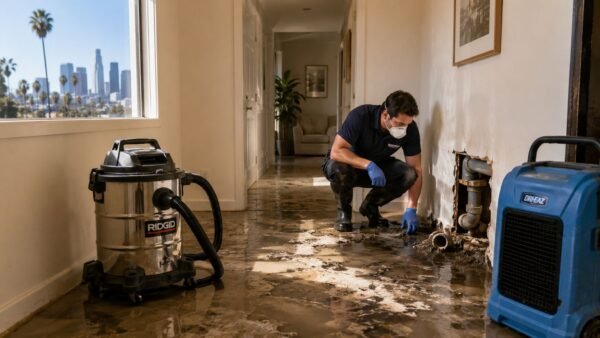
- Emergency extraction: Removing standing water before it migrates farther.
- Structural drying: Running dehumidifiers and air movers to pull moisture from framing, drywall, and subfloors.
- Selective demolition: Opening wet cavities and removing damaged insulation, drywall, or flooring only where needed.
- Cleaning and preventive treatment: Addressing wet areas before odor and microbial growth become a larger problem.
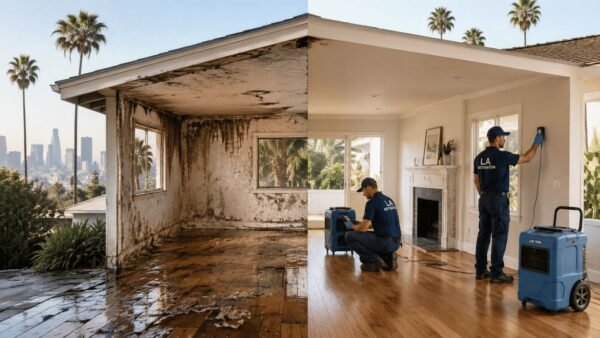
- Rebuild coordination: Returning the property to pre-loss condition after drying is confirmed.
Homeowners who want a clearer picture of the full process can review these steps in water damage restoration, which closely match what happens after a burst pipe in an occupied home.
The cheapest pipe fix can produce the most expensive claim
A quick patch can stop water flow and still leave the underlying problem behind. If nobody checks the wall cavity, the underside of the cabinets, the tack strip near the baseboard, or the room below, moisture stays in place. In Los Angeles heat, hidden dampness does not need much time to stain finishes, warp materials, or create a bigger tear-out later.
That is the trade-off homeowners need to understand. Saving money on the first visit can increase demolition, drying time, and rebuild costs a week later.
For a closer look at the restoration side of the bill, this guide to water damage repair cost helps explain why the total incident cost often extends far beyond the plumber's invoice.
A short video can help clarify what proper drying and mitigation involve after a leak:
If water reached drywall, insulation, flooring, or cabinetry, fixing the pipe is only one part of the job. The property still has to be dried, cleaned, and rebuilt correctly.
Navigating Your Insurance Claim for a Burst Pipe
Insurance is where many homeowners lose time and money. Not because the loss isn't valid, but because the documentation is weak, the mitigation is delayed, or the scope is incomplete.
In many burst pipe claims, the policy may respond to the sudden water damage and the necessary mitigation work, while the failed pipe itself may not be the main covered item. Coverage depends on the policy language, endorsements, exclusions, and the cause of loss. That means homeowners shouldn't assume anything. They should document everything.
What to do immediately
If the leak is active, shut off the water first. Then start preserving evidence.
Take these steps before too much cleanup happens:
- Photograph the damage: Capture the pipe location, wet materials, staining, and affected rooms.
- Save damaged items when practical: Don't throw everything away before the adjuster has enough proof.
- Track emergency work: Keep invoices for plumbing, extraction, drying, and temporary protective steps.
- Write down timing: Note when you found the leak, when the water was shut off, and when help arrived.
Why mitigation matters to insurers
Policies generally expect the homeowner to take reasonable steps to prevent further damage. That means a fast dry-out isn't optional. If a homeowner waits and the damage spreads, the carrier may ask why the property wasn't mitigated sooner.
This is why moisture documentation matters so much. A restoration team usually records readings, affected materials, and drying progress. That file helps connect the visible damage to the hidden moisture that required removal or drying.
For a deeper overview of policy issues, this article on whether homeowners insurance covers burst pipes is worth reading.
Where homeowners get stuck
Claims often become difficult for three reasons:
Insurance tip: A burst pipe claim is easier to support when the plumber's findings, photos, and drying records all tell the same story.
- They only fix the pipe: The adjuster later questions damage that was never documented at the start.
- They begin demolition without records: Missing photos make causation harder to show.
- They rely on surface appearance: Dry-looking walls can still test wet.
In Los Angeles properties with custom finishes or multi-room spread, organized documentation can make the difference between a smooth claim and a long argument.
DIY Repair vs Calling a Professional Restoration Expert
A very small, visible leak isn't always a full emergency restoration project. If a connection under a sink is dripping and no building materials got wet, a capable homeowner may be able to shut off the valve and handle a temporary measure while arranging a repair.
But once water enters a wall, ceiling, floor cavity, or cabinet base, DIY gets risky fast.
The true cost gap is significant. An accessible pipe fix might be $150 to $500, while average water damage restoration is around $3,290 nationally, which is why delayed or improper drying can make the final bill much larger according to this burst pipe cost guide from eLocal.
When DIY is reasonable
DIY may be acceptable when all of these are true:
- The leak is visible
- The water is contained
- No drywall, flooring, or insulation got wet
- You can shut the water off immediately
When professional help is the safer financial choice
Call a restoration professional if any of the following happened:
- Water entered a wall or ceiling cavity
- Flooring feels swollen, loose, or damp
- Cabinets or baseboards absorbed water
- You don't know how far the moisture spread
A homeowner comparing options should think in terms of risk transfer. Hiring a specialist isn't just about labor. It's about moisture mapping, drying verification, and reducing the chance that a hidden problem reappears months later. This page on choosing a restoration professional gives a good checklist for that decision.
Frequently Asked Questions About Broken Pipe Repairs
How much does after-hours broken pipe service cost
After-hours service usually costs more than a standard daytime visit, but the bigger cost issue is rarely the trip charge. It is the water that keeps moving through drywall, under flooring, into cabinets, or down to the unit below while the problem waits.
In Los Angeles, I tell homeowners to price the whole event, not just the plumber. A night call that stops the leak early can be far cheaper than waiting until morning and paying for added demolition, drying, and reconstruction.
How long does a broken pipe repair and dry-out usually take
A straightforward pipe repair can be completed the same day if the break is accessible. Dry-out takes longer because wet materials release moisture at different rates, and the work does not end when the pipe is fixed.
Ceilings, insulation, engineered wood, base cabinets, and wall cavities all have to be checked, not guessed at. Some properties need water extraction and equipment placement on day one, moisture checks over the next few days, and only then a decision about what can be saved and what needs to be removed.
What can Los Angeles homeowners do to reduce the chance of another pipe failure
Older houses in Glendale, Burbank, Sherman Oaks, and across the Valley often have aging copper, past patch repairs, or mixed plumbing materials that create weak points over time. Regular inspections help catch corrosion, poor previous work, pressure issues, and small leaks before they turn into an emergency.
Pay attention to ceiling stains, unexplained moisture, a jump in the water bill, or lower pressure at fixtures. If one hidden leak already happened, it makes sense to have the rest of the system evaluated and the affected areas checked by a local property restoration team near your LA home to confirm no moisture was left behind.
Should I file an insurance claim for every broken pipe
No. The right call depends on the deductible, the extent of damage, and whether the loss reached finishes and structural materials.
A small, contained repair may not justify a claim. Water that spread into walls, flooring, cabinets, or multiple rooms is a different situation. In those cases, good documentation, photos, moisture readings, scope notes, and an itemized estimate make it easier to handle the claim decision with clear numbers instead of guesswork.
Does a plumber handle the drying too
Usually not. The plumber repairs the failed line and restores water service. Drying, dehumidification, moisture mapping, material removal, and documentation are restoration tasks.
That distinction matters. A repaired pipe does not mean the property is dry. Homeowners should ask on the first call who is handling mitigation, because delays after the plumbing fix are often what turn a manageable loss into a much larger bill.
Get a Fast and Accurate Quote for Your LA Property
The right way to think about broken pipe repair cost is simple. The pipe repair starts the job, but fast mitigation controls the total loss. In Los Angeles, from Sherman Oaks to West Hollywood to Glendale, the homeowners who act quickly usually avoid the most expensive version of this problem.
If you need local help evaluating the full scope, including emergency response and restoration planning, review property restoration near me and get the property inspected before hidden moisture turns a manageable issue into a much larger repair.
SEO title tag: Broken Pipe Repair Cost in Los Angeles
Meta description: Broken pipe repair cost in Los Angeles usually ranges from $500 to $5,000. Learn what drives plumbing, drying, and insurance costs.
Schema opportunity: FAQ schema, LocalBusiness schema
If you're dealing with an active leak, ceiling stain, or hidden water damage, call Onsite Pro Restoration at 818-336-1800 for a free inspection. They serve Los Angeles, including Burbank, Glendale, Sherman Oaks, West Hollywood, and surrounding areas with 24/7 emergency response.