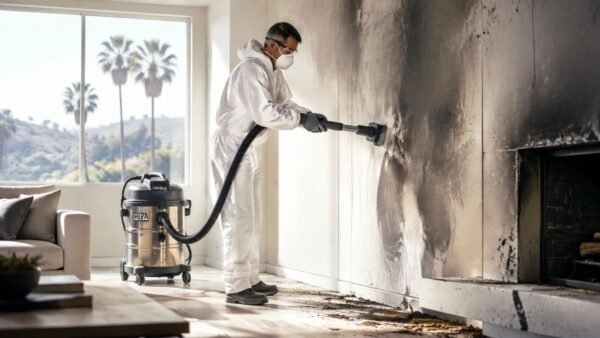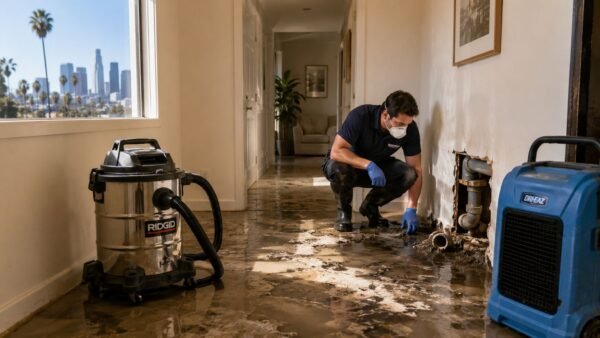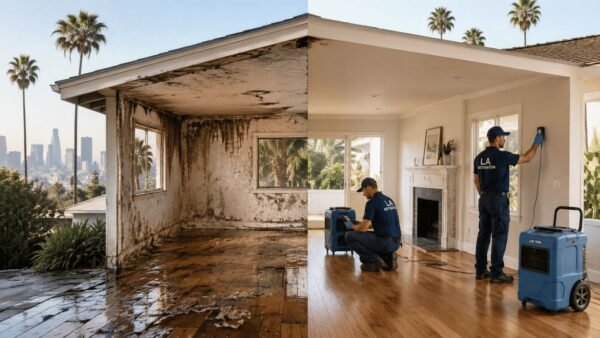

Professional pet odor removal goes far beyond surface cleaning. The best source-targeted treatments can remove 99.9% of pet urine odors from carpets when technicians fully access the contamination and dissolve the urine crystals instead of just masking the smell.
For those seeking a pet odor removal service near me, the experience often involves the same frustrating pattern most homeowners describe. You clean the carpet, spray a deodorizer, open the windows, and the smell still comes back. In Los Angeles homes, especially older properties in Sherman Oaks, Glendale, and Burbank, that usually means the odor didn't stay on the surface. It moved into the carpet backing, pad, subfloor, upholstery, or another porous material.
That distinction matters. A lingering pet smell isn't just a housekeeping issue. It's often a small restoration problem. Once urine or other organic residue dries inside porous materials, routine carpet shampooing and fragrance sprays usually don't reach the root cause. That's why homeowners often keep paying for cleaning without getting a permanent result.
A practical starting point is learning the difference between masking and removal. For homeowners who want a broader overview of tackling lingering pet smells effectively, that guide is useful. But when odor has migrated into flooring layers or wall materials, the work starts to look more like professional odor removal service than ordinary cleaning.
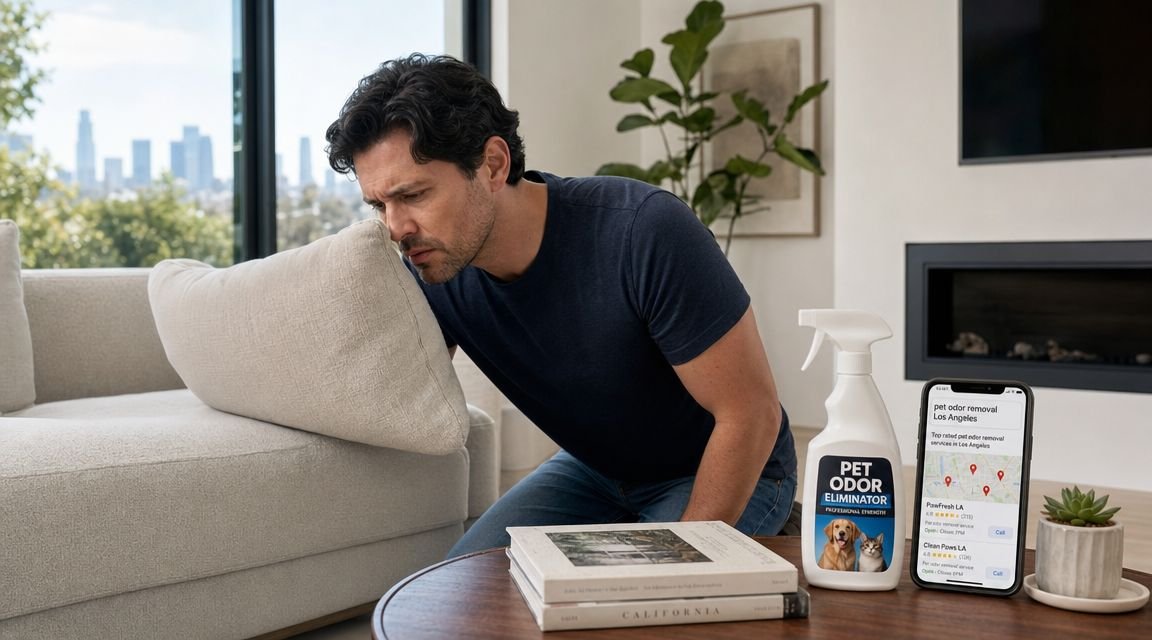
Your Guide to Professional Pet Odor Removal in Los Angeles
A homeowner notices the smell first thing in the morning. It hits near the stairs, then fades. By afternoon, it seems gone. Later that night, after the house closes up, it's back again. That's a classic pet odor pattern, and in Los Angeles it often gets worse in homes with older carpet installations, layered flooring repairs, or areas that have seen past moisture issues.
Why the smell keeps returning
Pet urine doesn't stay where you see the stain. It can pass through carpet fibers into the backing, soak into padding, and reach the subfloor. If the affected area sits near baseboards, drywall or trim can also absorb odor. Once that residue is in place, normal cleaning may improve the room briefly without solving the actual problem.
Practical rule: If the smell disappears after cleaning and returns later, the odor source is still in the material.
That return cycle is why homeowners often think the problem is mysterious when it isn't. The smell is re-emitting from hidden porous surfaces.
What Los Angeles homeowners usually need
A real pet odor service typically starts with inspection, not deodorizer. The technician has to determine whether the odor is limited to soft surfaces like carpet and upholstery, or whether it has reached structural materials.
In my experience with LA-area properties, the toughest jobs are rarely the ones with the biggest visible stain. They're the ones where past accidents soaked below the finish material and stayed there through years of cleaning, humidity swings, and remodeling. In North Hollywood and surrounding neighborhoods, I've seen odor complaints tied as much to what sits under the carpet as to the carpet itself.
How a Professional Pet Odor Removal Service Works
The work is methodical. A good technician doesn't start by spraying perfume or running a standard carpet wand over the room. The first job is to find the odor reservoir, the material that is holding the contamination and feeding the smell back into the room.
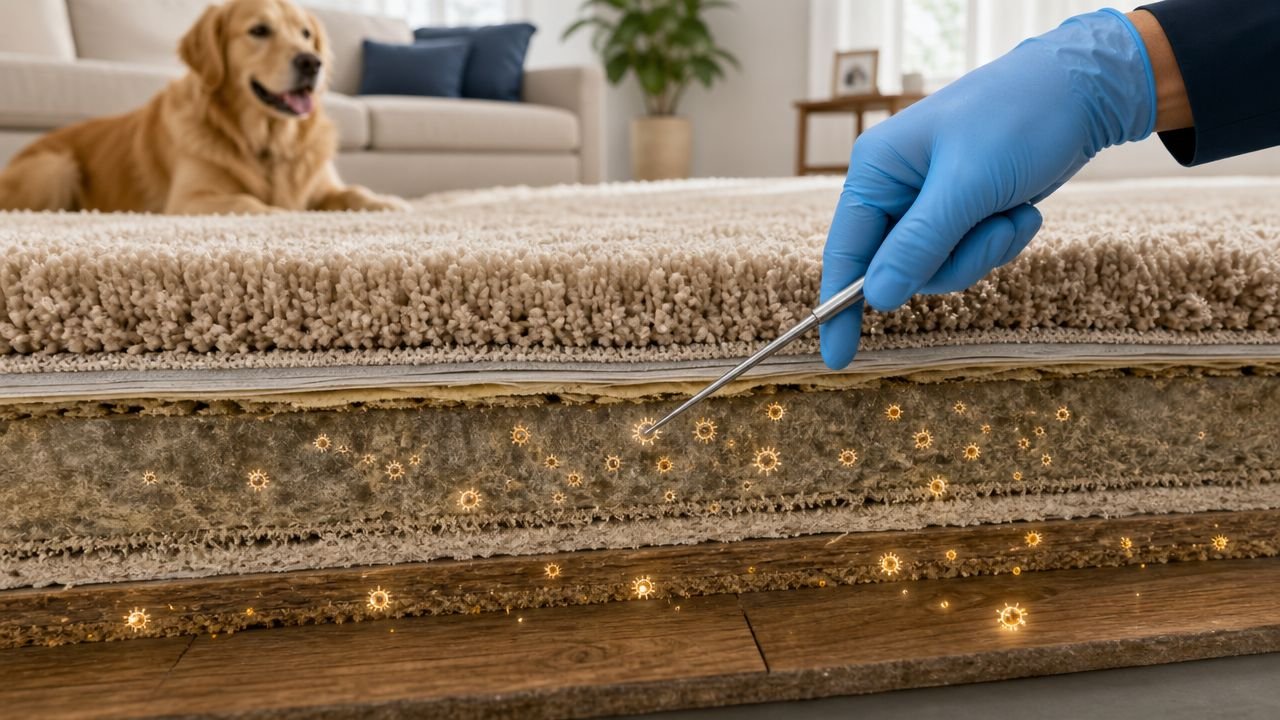
Step one is locating hidden contamination
Persistent pet odor often comes from porous materials such as subflooring, padding, drywall, or HVAC contamination, which can require source-finding, removal, and deodorization beyond basic cleaning, as noted by Bio-One's odor removal guidance.
That finding stage matters because odor doesn't always sit where your nose expects it to. The smell may appear strongest in a hallway even though the worst contamination is under a bedroom carpet or inside the base of a nearby wall.
Technicians often use tools such as:
- Moisture meters to identify areas that may still be holding residue or prior moisture.
- UV inspection lights to reveal old urine deposits that aren't visible in normal light.
- Controlled odor mapping by checking transitions, corners, furniture edges, and floor penetrations.
- Material testing to determine whether carpet, pad, subfloor, or upholstery is the actual reservoir.
For carpet-specific problems, homeowners often start by comparing options for carpet cleaning for pet odors. That's useful, but severe odor cases usually require a broader restoration workflow.
Step two is removing or extracting the source
Once the contaminated material is identified, the job changes from cleaning to remediation. Professionals are most effective when they treat the odor reservoir, not just the stain on top. Industry guidance from SERVPRO's odor removal process explains that residues can remain embedded in carpet backing, pad, and subfloor, which is why deep extraction and deodorization are needed to stop re-emission.
What that can look like in practice:
| Situation | What usually works | What usually fails |
|---|---|---|
| Odor limited to carpet face fibers | Targeted extraction and source treatment | Fragrance spray alone |
| Odor in carpet and pad | Deep flushing, extraction, pad treatment, sometimes pad removal | Basic steam cleaning |
| Odor in subfloor or porous wood | Subfloor treatment, sealing, sometimes replacement | Repeated shampooing |
| Odor in upholstered furniture | Fabric-safe source treatment and extraction | Surface wipes and aerosol deodorizers |
A homeowner usually sees only the top layer. The treatment plan depends on what sits underneath.
Here's a helpful visual overview of why source inspection matters before treatment:
Step three is neutralizing, sealing, or removing what remains
After source extraction, technicians apply targeted deodorizers or source-specific chemistry to break down remaining residue. In severe cases, they may also seal affected subfloor or other porous surfaces so any trace contamination doesn't continue off-gassing into the room.
A real odor-removal process asks one question at every stage: what material is still holding the smell?
That's the difference between temporary improvement and a result that lasts.
Signs You Absolutely Need a Professional
Some odor problems are manageable with immediate spot treatment. Others aren't. If the smell has settled into building materials, DIY work usually turns into repeated expense and frustration.
The smell comes back after every cleaning
This is the biggest red flag. If the room smells better right after shampooing or spraying and then worsens again, the contamination is probably below the visible surface.
Professionals get results when they treat the hidden reservoir instead of the top stain. That's why a recurring odor often points to backing, pad, or subfloor contamination rather than a failure of effort on your part. If you're dealing with that cycle, this guide on how to eliminate urine odor can help you understand what layer is likely affected.
Humidity or closed windows make the odor stronger
Los Angeles doesn't have the same year-round humidity as some coastal regions, but marine air, seasonal dampness, and tightly sealed rooms can still reactivate old contamination. Homeowners often notice the smell more during warmer afternoons or after the room has been shut overnight.
That usually means residue is still active inside porous material. You're not imagining it. The chemistry changes as conditions in the room change.
If odor intensity rises and falls with weather or ventilation, the source usually isn't gone. It's reacting.
The stain is gone, but the room still smells
Visible stain removal and odor removal are not the same job. You can remove discoloration from the carpet face while leaving residue in the lower layers.
That's also where product choice confuses people. DIY shoppers often compare enzymatic and oxygen-based formulas, and that comparison can be helpful for minor incidents. But when the smell persists after repeated treatment, the issue usually isn't picking a better retail bottle. It's that the contamination has traveled into materials a spray can't fully reach.
You smell it even when the pet isn't around
If the odor is constant, especially in one room or one traffic path, the house itself is holding it. That points to absorbed residue in flooring, furniture, base materials, or ventilation pathways.
This is especially important before listing a home for sale or turning over a rental. Buyers and tenants notice persistent pet odor quickly, even when the current occupants have gone nose-blind to it.
Why Choose Onsite Pro Restoration for LA Pet Odor Removal
Los Angeles odor jobs often overlap with bigger property conditions. A pet smell may seem isolated, but once a technician starts tracing it, the problem can connect to older pad damage, hidden moisture, previous leaks, or porous subfloor in a remodeled room. That's why restoration training matters.

Restoration training changes the outcome
Onsite Pro Restoration is a licensed, IICRC-certified restoration company serving Los Angeles and nearby communities. That matters because pet odor removal isn't always a simple maintenance task. Sometimes it requires the same disciplined approach used in water damage, microbial cleanup, or smoke odor work. Inspection, containment, material evaluation, documentation, and source removal all matter.
In LA homes, especially older structures around Glendale, Burbank, and Sherman Oaks, technicians often have to work around layered flooring, prior repairs, and materials that absorb odor thoroughly. Restoration-trained crews are equipped to think beyond the carpet face.
The chemistry has to attack residue, not cover it
Advanced remediation often relies on enzyme-based or source-specific treatment rather than fragrance masking, because the uric-acid and organic residue has to be broken down at the contamination site for permanent elimination, as described by Antietam Chem-Dry's pet odor removal guidance.
That distinction matters in the field. A room can smell “clean” for a day after a scented treatment and then slip right back to the original complaint. Source-specific chemistry behaves differently. It targets the residue that continues producing odor.
The equipment matters in severe cases
For straightforward soft-surface contamination, extraction and targeted treatment may be enough. For more stubborn whole-room odor, a restoration contractor may also bring in specialized equipment such as:
- Hydroxyl generators for odor reduction in occupied environments where broader air treatment is needed.
- Thermal foggers to distribute deodorizing agents into areas that are difficult to access directly.
- Air movers and drying equipment when moisture is part of what is reactivating the odor.
- Inspection tools such as UV lights and moisture meters to confirm where treatment should begin.
In our experience with Los Angeles homes, the best results come from matching the method to the material. Carpet contamination needs one approach. Upholstery needs another. A urine-soaked wood subfloor is a different problem entirely.
Local response also matters
Onsite Pro Restoration serves neighborhoods across the LA area and typically arrives in about an hour for urgent property concerns. That fast response helps when odor complaints are tied to active moisture, recent accidents, move-out deadlines, or real estate turnover.
For homeowners searching for a pet odor removal service near me, local familiarity is part of the value. LA weather, older home construction, and the way odor interacts with enclosed interiors all shape the treatment plan.
Typical Costs and Timelines in the Los Angeles Area
Cost depends less on room count than most homeowners expect. The main drivers are size of the affected material, fabric or surface type, and depth of contamination.
What the baseline numbers actually tell you
According to Thumbtack's pet odor remover pricing information, standard upholstery cleaning commonly averages $120 to $150, with a lounge chair around $50, a couch around $135, and an L-shaped sectional around $190. Pet-odor-related add-ons can increase pricing by $0.20 to $0.25 per square foot.
Those figures are useful because they show what homeowners often misunderstand. Pet odor remediation isn't priced like a simple room refresh. It's tied to the amount and type of material that has to be treated.
Why one odor job costs more than another
Two houses can both have “pet odor” and require very different work.
A single upholstered chair with surface-level odor is one type of project. A bedroom where urine has reached the carpet pad and subfloor is another. Add drywall impact, baseboard absorption, or repeated historic contamination, and the labor changes again.
A technician usually prices around factors like these:
- Affected material type such as carpet, upholstery, pad, wood subfloor, or drywall
- Depth of contamination including whether odor has stayed at the surface or moved into lower layers
- Access requirements such as furniture moving, lifting carpet edges, or opening small areas for inspection
- Treatment scope including extraction, deodorization, sealing, air treatment, or selective removal
For broader planning, homeowners sometimes compare general cleaning services cost pages, but odor work often needs a site-specific inspection before anyone can quote it responsibly.
How long the process usually takes
A mild odor issue may be inspected and treated in a single visit. A deeper problem can take longer because the work may involve extraction, drying time, follow-up deodorization, or selective removal of contaminated materials.
A realistic expectation is this: the heavier the odor and the deeper the migration, the more the schedule depends on drying and verification, not just cleaning time. That's why severe jobs can feel slower than homeowners expect. The treatment may happen quickly, but the room still needs time to stabilize so the result can be judged accurately.
Preparing for Your Appointment and Navigating Insurance
A little preparation makes the visit faster and more accurate. It also gives the technician a better chance of tracing every source the first time.
What to do before the crew arrives
Start with access. Clear small items, floor clutter, and anything blocking the suspected area. If odor is strongest around a bed, sectional, or rug, mention that before the appointment so the crew can plan accordingly.
A simple homeowner checklist helps:
- Point out every known incident: Even old accidents matter because they often explain current odor patterns.
- Keep pets secured: Dogs and cats should stay in a separate room or with a family member during inspection and treatment.
- Avoid last-minute sprays: Don't add fragrance products right before the appointment. They can interfere with odor mapping.
- Protect furniture planning: If you're worried about future accidents on upholstery, prevention tools like best waterproof dog couch covers can help after remediation is complete.
Homeowner tip: The best inspection starts with honest conditions, not a freshly perfumed room.
When insurance may enter the conversation
Standard pet damage isn't usually treated the same way as a sudden accidental loss. But there are gray areas. If a covered event such as a plumbing leak or water intrusion worsened an existing odor issue, part of the remediation may overlap with a broader property claim.
That makes documentation important. Restoration contractors can provide photos, moisture readings, inspection notes, and scope details that support the claim process. Homeowners who want to understand the paperwork side can review this overview of the home insurance claim process.
The key is not to assume coverage and not to rule it out too quickly. Odor itself may not be the claim. The related property condition might be.
Frequently Asked Questions About Pet Odor Removal
Can pet odor be removed permanently?
Yes, if the source is fully identified and treated. Some professional services report removal of 99.9% of pet urine odors from carpets when using a source-targeted process that dissolves urine crystals rather than masking smell, according to San Diego City Chem-Dry's pet odor removal information.
Are professional treatments safe for pets and kids?
A proper contractor should explain what products are being used, where they're being applied, and when the area is ready for normal use. The important issue is not scent strength. It's whether the treatment is appropriate for the material and fully applied according to product instructions.
How do I know if I need cleaning or restoration?
If the odor is limited to a recent, shallow incident on a soft surface, cleaning may be enough. If it keeps returning, shifts with humidity, or seems embedded in the room itself, the problem is more likely restoration-level.
Will one visit solve it?
Sometimes. Mild contamination often can be addressed in one appointment. Severe contamination may require staged work, especially if technicians need time for extraction, drying, or treatment of subfloor and other porous materials.
If pet odor keeps returning in your Los Angeles home, don't keep paying for surface cleaning that can't reach the source. Onsite Pro Restoration provides professional inspection, documentation, and restoration-based odor removal for homes across LA County. Call 818-336-1800 for a free inspection.