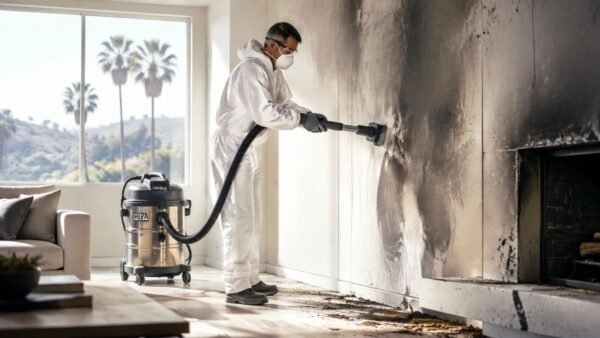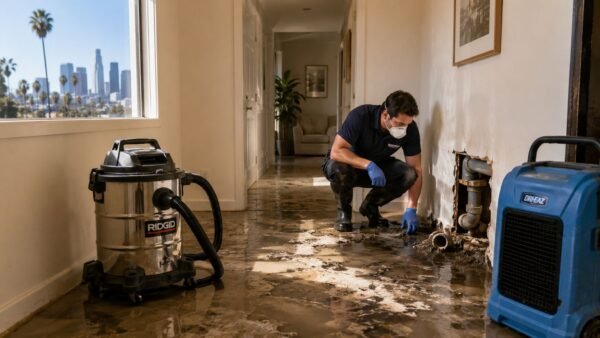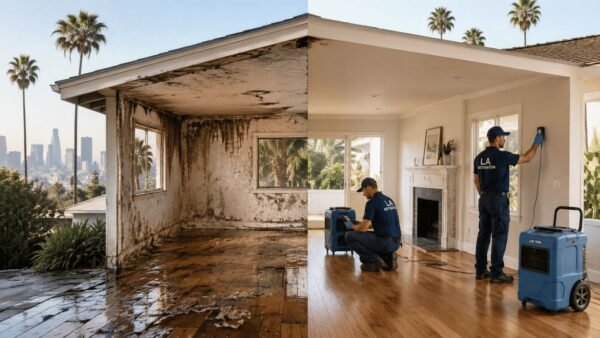

A lot of Los Angeles homeowners first notice mold indirectly. Not with a dramatic black patch on the wall, but with a smell that wasn’t there last month.
Maybe you came home after a rare stretch of steady rain and your hallway in Sherman Oaks smells damp. Maybe your Santa Monica bathroom always seems to stay humid, and now the caulk line looks darker than it used to. Maybe a tenant mentions a “stale” odor near an exterior wall, and you assume it’s old carpet or a closed-up room.
That’s how many mold problems begin. Inside drywall. Under laminate. Behind a vanity. Around a roof penetration that only leaks during wind-driven rain.
This isn’t unusual. Nearly half of U.S. homes are estimated to contain mold, about 47% according to a 2022 NIOSH report summarized here by My Chemical-Free House. For Los Angeles homeowners, the risk can be higher because of older housing stock and local moisture patterns.
If you’re dealing with an odor and you’re not sure whether it’s mold, start with a practical guide on how to get rid of musty smell. But the bigger question is usually this: what causes black mold in homes, and why does it show up in one room and not another?
That Musty Smell A Los Angeles Homeowner's Unwelcome Discovery
In LA, people often assume mold is mostly a problem in humid states with basements and constant rain. That assumption causes delays.
A flat-roof home in Studio City can trap water after a storm. A bathroom in Venice can stay damp because marine air and weak ventilation keep surfaces wet longer. An older duplex in Pasadena can hide a slow plumbing leak inside a wall cavity for weeks before anyone sees staining.
The musty smell matters because it often points to moisture that hasn’t dried properly. Mold doesn’t need a dramatic flood to start. It just needs the right wet conditions in the right material for long enough.
Practical rule: If a room smells earthy, stale, or like wet cardboard, don’t treat the odor as the problem. Treat it as evidence.
Homeowners also get stuck on the wrong question. They ask, “Is it black mold?” before asking, “Why is this area staying wet?” The second question is the one that solves the problem.
A simple way to think about it is this:
| What you notice | What it often means |
|---|---|
| Musty odor | Hidden moisture or active mold growth |
| Dark spotting | Surface growth, staining, or both |
| Bubbling paint | Moisture inside wall or ceiling material |
| Reappearing discoloration | Ongoing leak, humidity, or condensation issue |
That distinction matters in Los Angeles because many homes here have moisture problems that don’t look like classic flood damage. They show up as repeated condensation, roof seepage, aging plumbing leaks, and damp air trapped in tight rooms.
Decoding 'Black Mold' What Homeowners Should Actually Fear
“Black mold” is one of the most misunderstood terms in home restoration.
Many homeowners use it to mean any dark mold they can see on a wall, shower ceiling, or windowsill. That’s understandable, but it’s not technically correct. A mold’s color alone doesn’t identify its type, and not every black-looking patch is Stachybotrys chartarum.
According to BustMold’s overview of black mold, Stachybotrys chartarum is far less common than commonly assumed. It needs constant high humidity and prolonged saturation, which makes it rarer than common indoor molds like Cladosporium or Aspergillus. That same resource notes that CDC and EPA guidance emphasizes that all molds can pose health risks, and those risks depend more on the person exposed than on the color of the mold.
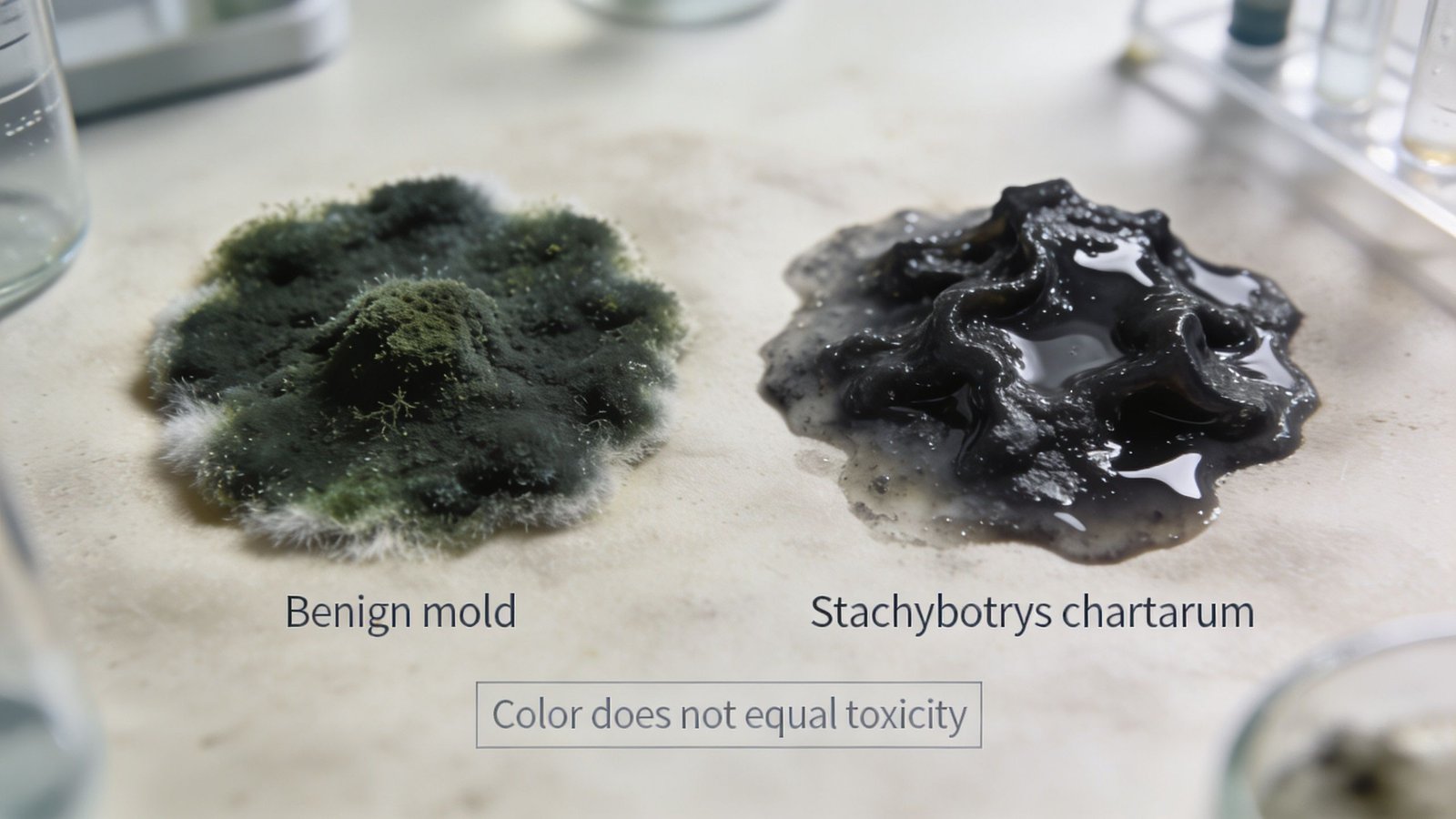
That’s the part homeowners often miss. If you have active mold growth in your home, the immediate concern is not winning a guessing game about species from across the room. The concern is that moisture has persisted long enough to support growth, and that contamination may extend beyond the visible area.
If you want a visual reference, this guide to what black mold looks like can help you compare appearances. Just don’t use appearance alone as a diagnosis.
Why Stachybotrys gets so much attention
Stachybotrys tends to get media attention because the name sounds alarming and it’s associated with severe water-damage conditions. But in actual houses, it usually needs a very specific setup:
- Constant wetness: Not just a brief spill. Materials stay damp over time.
- Cellulose-rich surfaces: Wet drywall paper, cardboard, wood products, and similar materials.
- Poor drying conditions: Little airflow, trapped humidity, hidden cavities.
That means a lightly spotted bathroom ceiling is not automatically Stachybotrys. It could be another mold type growing from repeated condensation.
What homeowners should actually focus on
A better triage question is this: Is the mold superficial and isolated, or is there an active moisture source feeding it?
Use this framework:
- Lower concern: A small amount of growth on a non-porous surface, where the moisture source is obvious and temporary.
- Higher concern: Growth that keeps returning, appears on drywall or wood, follows a leak line, or shows up with a strong odor.
- Immediate concern: Mold linked to water damage, hidden cavities, HVAC systems, or occupant symptoms that get worse indoors.
Dark color doesn’t make mold dangerous by itself. Ongoing moisture does.
That’s the professional view. The color can help guide inspection, but the cause determines the response.
The Primary Cause Moisture and Where It Hides in LA Homes
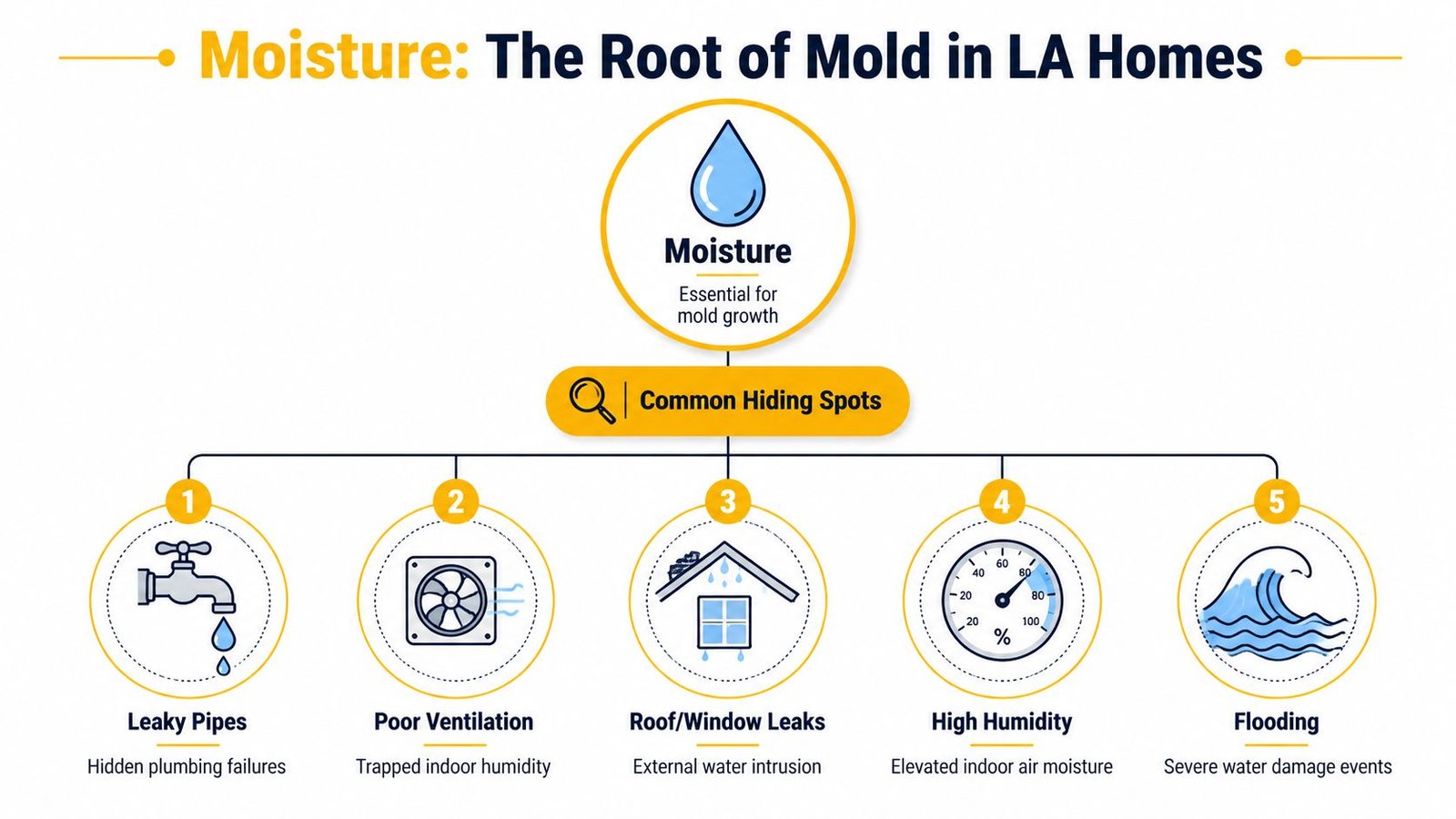
If you want the direct answer to what causes black mold in homes, it’s this: moisture.
Not dirt. Not age alone. Not bad luck.
Mold needs moisture, oxygen, temperatures between 40-100°F, and a food source such as drywall paper or wood, according to Mold AQP’s explanation of common causes of mold. That same source notes that water damage is the primary trigger, and that the EPA’s position is simple: no mold grows without water.
In houses, that “food source” is everywhere. Drywall facing, framing lumber, dust, cardboard boxes, carpet backing, cabinetry, and insulation facings can all support growth once they stay wet.
Obvious leaks and intrusions
Some moisture sources are easy to understand because the event is visible.
A supply line bursts under the kitchen sink. Rain enters around a roof seam. A second-floor toilet overflows and wets the ceiling below. In those cases, the cause is obvious. The danger comes when people dry the surface and assume the structure underneath is fine.
Porous materials wick moisture sideways and downward. Water can move into baseboards, drywall cavities, subfloors, and insulation long after the visible puddle is gone.
Common LA examples include:
- Flat-roof leaks in Sherman Oaks or Valley Village: Water can sit on a low-slope roof and enter through weak flashing or membrane seams.
- Window leaks during wind-driven rain on the Westside: The damage may show up below the sill, inside trim, or behind paint.
- Older plumbing failures in Pasadena or Hancock Park homes: Galvanized or aging lines can leak slowly before they fail visibly.
High humidity and condensation
Many Los Angeles homeowners are often surprised by this fact. They think mold requires an obvious leak, but repeated condensation can do the job.
Bathrooms are the classic example. If steam collects on the ceiling after every shower and the exhaust fan is weak, absent, or never used long enough, those surfaces stay damp. The same thing happens around single-pane windows, exterior walls, or supply vents when indoor air meets a cooler surface.
Homes near the coast face another version of the same problem. Marine air, cool mornings, and closed-up interiors can leave a room feeling slightly damp without any single event you can point to.
If you’ve noticed recurring moisture overhead, this article on condensation on ceiling helps explain why it happens.
A few areas deserve special attention:
- Bathrooms without effective exhaust
- Laundry rooms with poor airflow
- Closets on exterior walls
- Bedrooms where windows stay closed and furniture is pushed tightly against cool walls
For humidity control, it also helps to review Engle Services' HVAC insights, especially if your home feels damp even when there’s no visible leak.
If moisture forms on a surface again and again, mold doesn’t care whether that water came from a pipe or from the air.
Hidden water sources
The most expensive mold jobs often start with small hidden leaks.
A refrigerator line drips behind cabinets. A dishwasher connection wets the subfloor. An icemaker line seeps into the wall cavity. A shower pan leaks around a failed seam and keeps the framing wet after every use.
These are dangerous because homeowners don’t see standing water. They see secondary clues:
| Hidden source | What you may notice first |
|---|---|
| Slow pipe leak in wall | Musty smell, warped baseboard, paint bubbling |
| Leak under appliance | Soft flooring, cabinet swelling, odor |
| Shower or tub leak | Loose tile, stained ceiling below, damp vanity wall |
| HVAC condensation issue | Musty air, damp register area, recurring spotting |
By the time mold becomes visible, the moisture source may have been active for a long time.
Catastrophic water events
Some causes are immediate and unmistakable. Flooding, sewer backups, storm intrusion, and major pipe breaks can saturate a home fast.
In those situations, mold is not the first event. It’s the second event, triggered by the first. Wet carpet padding, soaked drywall, swollen trim, and saturated insulation all create conditions where mold can establish itself if drying is incomplete.
This is why professionals use structural drying tools instead of relying on open windows and a box fan. Air movers, dehumidifiers, moisture meters, and thermal imaging help confirm whether materials are drying, not just looking dry.
The LA moisture pattern most people overlook
Los Angeles has a reputation for dryness, but houses here still trap moisture in very predictable ways:
- Older housing stock hides plumbing and envelope failures.
- Flat and low-slope roofs can hold water longer after storms.
- Coastal fog and marine layers slow drying near the ocean.
- Tightly sealed interiors keep humid bathroom and kitchen air indoors.
- Air conditioning systems can create condensation issues if they’re dirty, poorly balanced, or not draining correctly.
That’s why the root cause conversation matters more than the mold color conversation. Mold is the symptom. Moisture is the disease.
How Building Flaws and HVAC Systems Accelerate Mold Growth
A home doesn’t need a dramatic construction defect to support mold. Small flaws are enough if they let moisture in or keep moisture trapped.
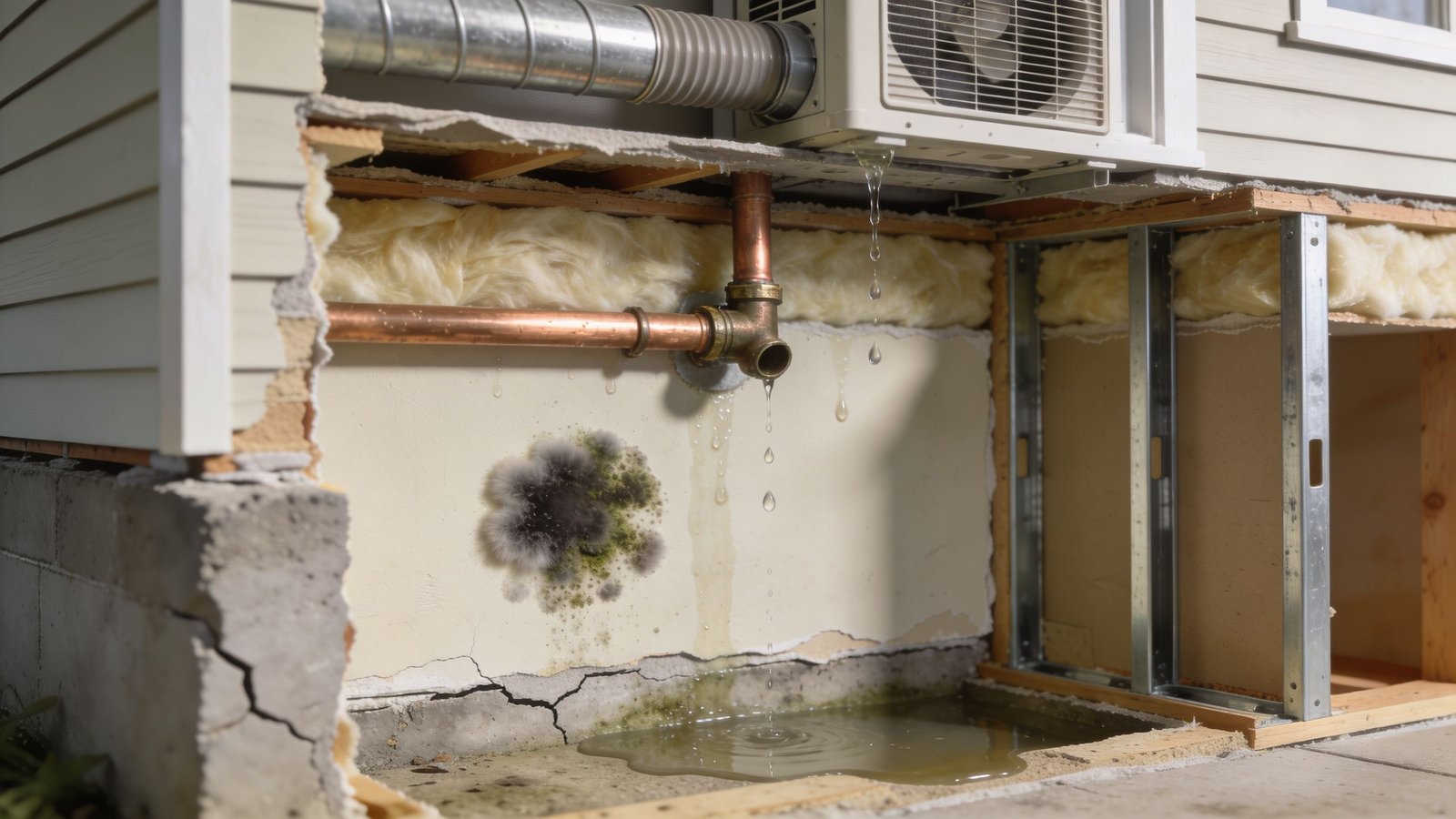
That’s especially true because water damage can create mold growth conditions within 24-48 hours, according to this summary at Real Time Lab. That short window is why a “minor” leak on Friday can become a mold problem by the time someone checks it on Monday.
Flat roofs and aging envelopes
Many Los Angeles homes and multifamily buildings use flat or low-slope roof designs. Those roofs can perform well, but they have less margin for neglected maintenance.
If drains clog, flashing loosens, or membrane seams age out, water can sit where it shouldn’t. The leak may not show up directly below the entry point. Water often travels along framing and appears somewhere completely different.
Older windows and wall assemblies create another issue. If seals fail, exterior moisture can enter around the perimeter and soak framing or drywall edges. In neighborhoods with older homes, these problems are common because the original materials have aged.
Plumbing systems inside older homes
Historic and mid-century properties across LA often have outdated plumbing components hidden behind finished walls. A slow leak in a supply line, drain connection, or shower assembly can keep one cavity damp for a long time.
Homeowners usually notice the cosmetic damage first:
- Paint that blisters without obvious cause
- Baseboards that swell or separate
- Drywall that feels soft
- Cabinets that smell stale near plumbing walls
Those are building clues, not just cosmetic flaws.
HVAC systems can spread the problem
HVAC equipment doesn’t just cool air. It also handles moisture. When the system is dirty, poorly maintained, or draining badly, it can add to mold risk instead of reducing it.
Condensation around coils, drain pans, air handlers, and nearby duct materials can support growth. Then the system may circulate odors and particles through the home. If you suspect that issue, this guide on mold in air conditioning ducts is worth reviewing.
A leak feeds mold in one location. An HVAC system can move that problem far beyond the original source.
That doesn’t mean every musty vent means contaminated ductwork. It does mean HVAC-related mold should be inspected differently than a simple bathroom surface spot.
Why fast response matters
The building flaws above aren’t unusual. What turns them into major remediation projects is delay.
A homeowner sees a ceiling stain and waits. A property manager notices tenant complaints about odor but assumes it’s housekeeping. A window corner keeps getting wiped down without asking why it gets wet in the first place.
That’s how a manageable moisture issue turns into drywall removal, containment, filtration, and post-remediation cleaning.
If you’ve had any recent leak, overflow, or persistent indoor humidity issue, don’t wait to assess it. Moisture problems are much easier to solve before they become contamination problems.
Your Mold Detection Checklist Signs You Can See Smell and Feel
Homeowners usually expect mold to announce itself with obvious black spots. Often it doesn’t.
You may smell it before you see it. You may feel the room is “off” before any surface looks dramatic. You may notice peeling paint or warped trim and not connect it to mold at all.
What you can see
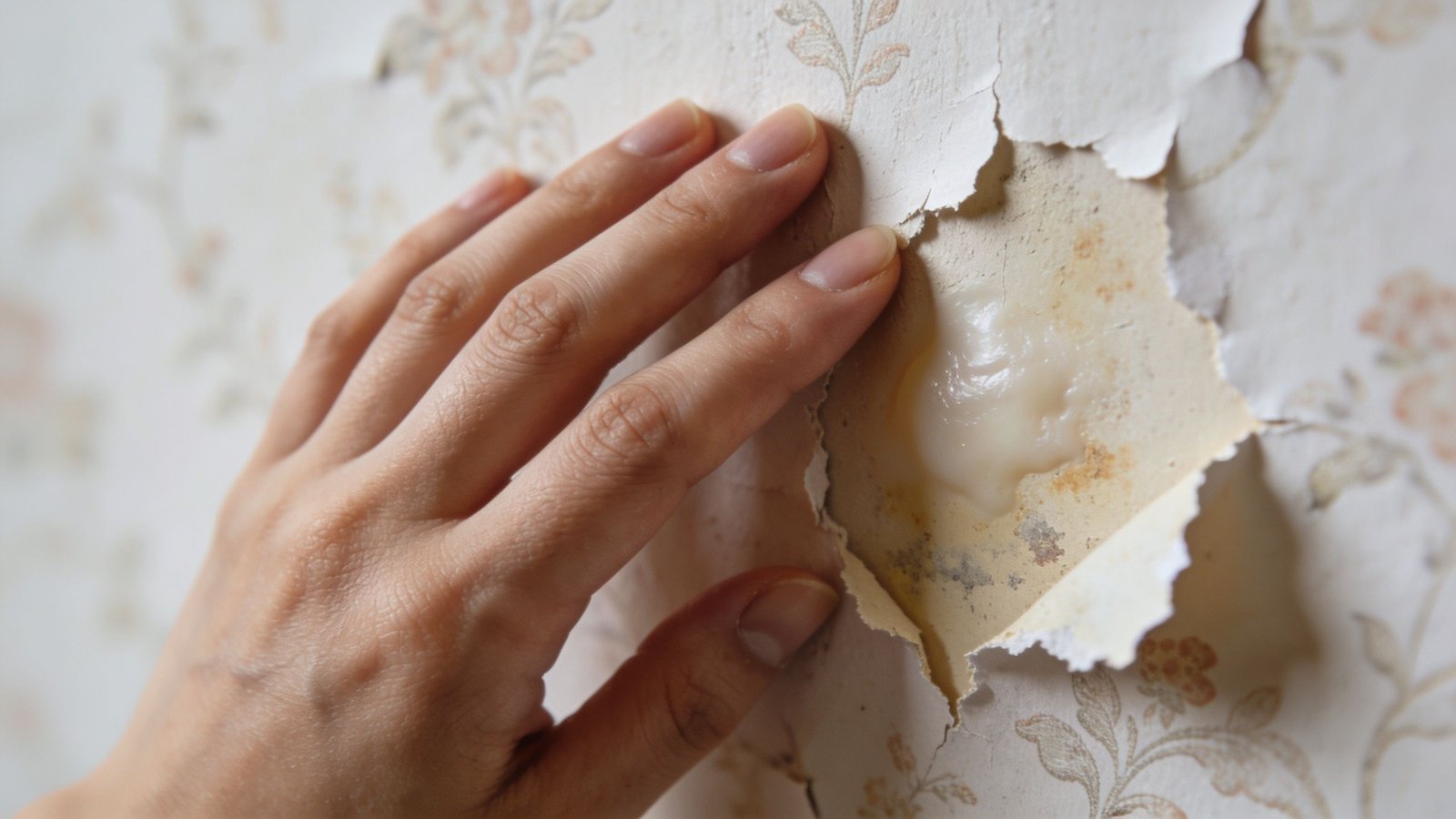
Start with surfaces and shape changes, not just color.
Look for:
- Discoloration: Brown, green, gray, or black staining on drywall, ceilings, caulk, grout, or trim.
- Texture changes: Bubbling paint, peeling wallpaper, soft drywall, warped baseboards.
- Repeat patterns: A spot you clean that returns, especially near windows, tubs, sinks, or ceiling corners.
- Material distortion: Cabinet bottoms swelling, laminate lifting, or flooring cupping.
A useful homeowner habit is to inspect with side lighting. A flashlight held across a surface makes rippling, swelling, and patchy texture easier to spot.
What you can smell
Mold odors are usually described as musty, earthy, stale, or like wet paper.
That smell often shows up before the growth does because mold may be inside a wall cavity, under flooring, behind cabinetry, or above a ceiling. If one room smells consistently different from the rest of the house, trust that clue.
A quick field check helps. Close the room for a few hours, then open the door and smell the air at the threshold. If the odor is stronger when the room has been closed, moisture and poor ventilation may be part of the problem.
This video gives a good visual overview of common warning signs homeowners tend to miss:
What you can feel
Sometimes the room itself tells you there’s moisture trouble.
You might notice:
| Sense | Possible clue |
|---|---|
| Touch | Wall feels cool, damp, or slightly soft |
| Breathing comfort | Symptoms feel worse in one room or after HVAC starts |
| General comfort | Air feels heavy or muggy even with AC running |
This isn’t a medical diagnosis. But many homeowners do report irritation, allergy-like symptoms, or respiratory discomfort that seems stronger indoors when a mold issue is active.
If a room looks normal but smells wrong and feels damp, inspect it like you already know there’s a moisture source somewhere nearby.
Your Action Plan From Prevention to Professional Remediation
Once you know what causes black mold in homes, the next step is deciding what to do about it. The right response depends on the source, the material affected, and whether the growth is minor or part of a larger hidden issue.
Start with prevention that actually matters
Prevention is mostly moisture control.
Run bathroom exhaust fans during showers and leave them running long enough to remove steam. Use kitchen ventilation when you cook. Check under sinks, behind toilets, around water heaters, and behind appliances for slow drips. Don’t ignore recurring window condensation or ceiling dampness.
Indoor humidity management also matters. The verified guidance in the background material supports keeping indoor relative humidity in the 30-50% range, while higher humidity creates better mold conditions. In practical terms, if a room routinely feels damp or forms condensation, ventilation and dehumidification need attention.
A solid prevention routine includes:
- Weekly checks: Under sinks, around tubs, near laundry hookups.
- Seasonal roof review: Especially after storms.
- HVAC maintenance: Keep drain lines and condensate components clean.
- Fast dry-outs: Any wet building material should be addressed immediately.
What homeowners can handle carefully
Some limited cleanup is reasonable if the issue is clearly small, clearly on a non-porous surface, and clearly tied to a minor moisture source you’ve already fixed.
Examples might include a little condensation-related spotting on tile or metal in a bathroom. But even then, the rule is simple. If you can’t explain why it happened, don’t assume cleaning solved it.
DIY stops making sense when:
- The surface is porous, like drywall, wood, carpet, or insulation
- The growth keeps returning
- There’s a strong musty odor
- Water entered a wall, floor, or ceiling cavity
- The source may involve sewage, flooding, or HVAC
When professional remediation is the right move
Some situations deserve immediate professional assessment.
Call for help if you’re dealing with any of the following:
- Post-water-damage growth: After leaks, overflows, flooding, or storm intrusion
- HVAC involvement: Odors or contamination linked to vents or air handling
- Hidden mold indicators: Strong odor with no visible source
- Porous material contamination: Drywall, framing, insulation, carpet pad
- Occupant sensitivity concerns: If people in the home are reacting to the environment
- Large or spreading areas: Especially if multiple rooms are involved
If you need to understand what that process typically includes, review a professional mold remediation service. The key is that remediation is not just cleaning what you can see. It’s finding the moisture source, containing affected areas, removing compromised material when needed, drying the structure, and verifying conditions are stable.
That’s the difference between temporary cosmetic cleanup and an actual fix.
FAQ What Every LA Homeowner Asks About Black Mold
Q: Can black mold grow in Los Angeles even though the climate is usually dry?
Yes. LA’s overall climate doesn’t protect an individual house from indoor moisture problems. Coastal fog, bathroom humidity, flat-roof leaks, condensation, and aging plumbing can all create the wet conditions mold needs.
Q: Is all black-colored mold toxic?
No. Dark color alone does not identify Stachybotrys chartarum. Some black-looking mold is a different species entirely, and the bigger concern is that any active indoor mold points to moisture that needs to be corrected.
Q: If I clean the visible spot, is the problem gone?
Not necessarily. If the mold grew because of a leak, trapped humidity, or hidden condensation, cleaning the surface may only remove the symptom. The source can still be active behind the wall, under flooring, or inside adjacent materials.
Q: What rooms in LA homes are most likely to develop mold?
Bathrooms, kitchens, laundry areas, closets on exterior walls, attic-adjacent ceilings, and any room with old plumbing or poor ventilation are common trouble spots. Near the coast, rooms with cool surfaces and limited airflow often see repeated condensation.
Q: Should I test first or remediate first?
It depends on the situation. If you already have obvious active growth and a known moisture source, the priority is usually correcting the moisture issue and planning proper cleanup. If the type of mold matters for documentation, real estate concerns, or insurance communication, professional testing can be useful before work begins.
Q: Does homeowners insurance cover black mold?
Coverage depends on the cause of loss and the policy language. Insurance often treats mold differently depending on whether it resulted from a sudden covered water event or from long-term maintenance issues. Documentation matters, especially photos, inspection notes, moisture findings, and a clear timeline of the damage.
If you’ve found a musty odor, visible growth, or signs of hidden moisture in your home, Onsite Pro Restoration can help you assess the cause and respond quickly. Their IICRC-certified team serves Los Angeles and nearby communities with emergency water extraction, structural drying, mold inspection, testing, and remediation, along with documentation that can help support the insurance process.