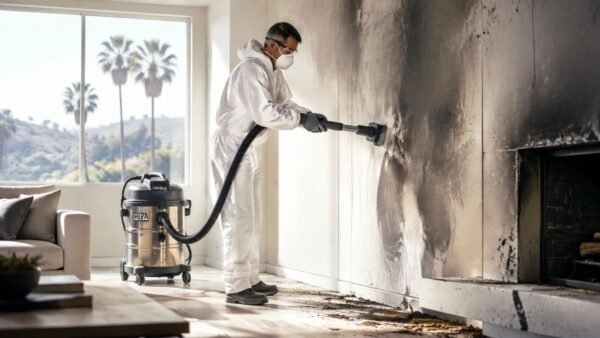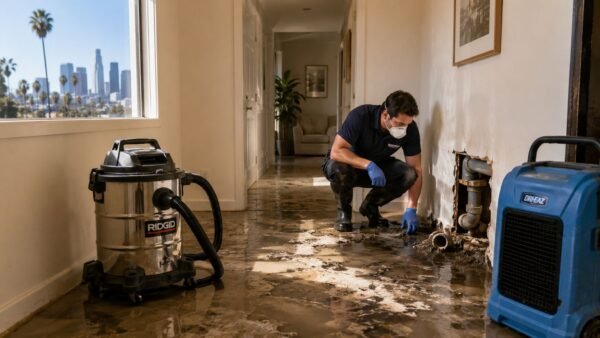

It often starts with a persistent musty smell you can't quite place. Or maybe it’s a cough that just won’t quit. The earliest black mold symptoms in a house show up in two ways: physical signs on your property and subtle health issues affecting your family. In Los Angeles, where hidden moisture is more common than people think, knowing how to spot these clues is the first step to protecting your home and everyone in it.
Knowing how to spot these clues is the first step to protecting your home and everyone in it.
Worried you might have a mold problem? Don't wait. Call Onsite Pro at (818) 336-1800 now or Book a Free Mold Inspection online.
The Hidden Dangers of Indoor Mold
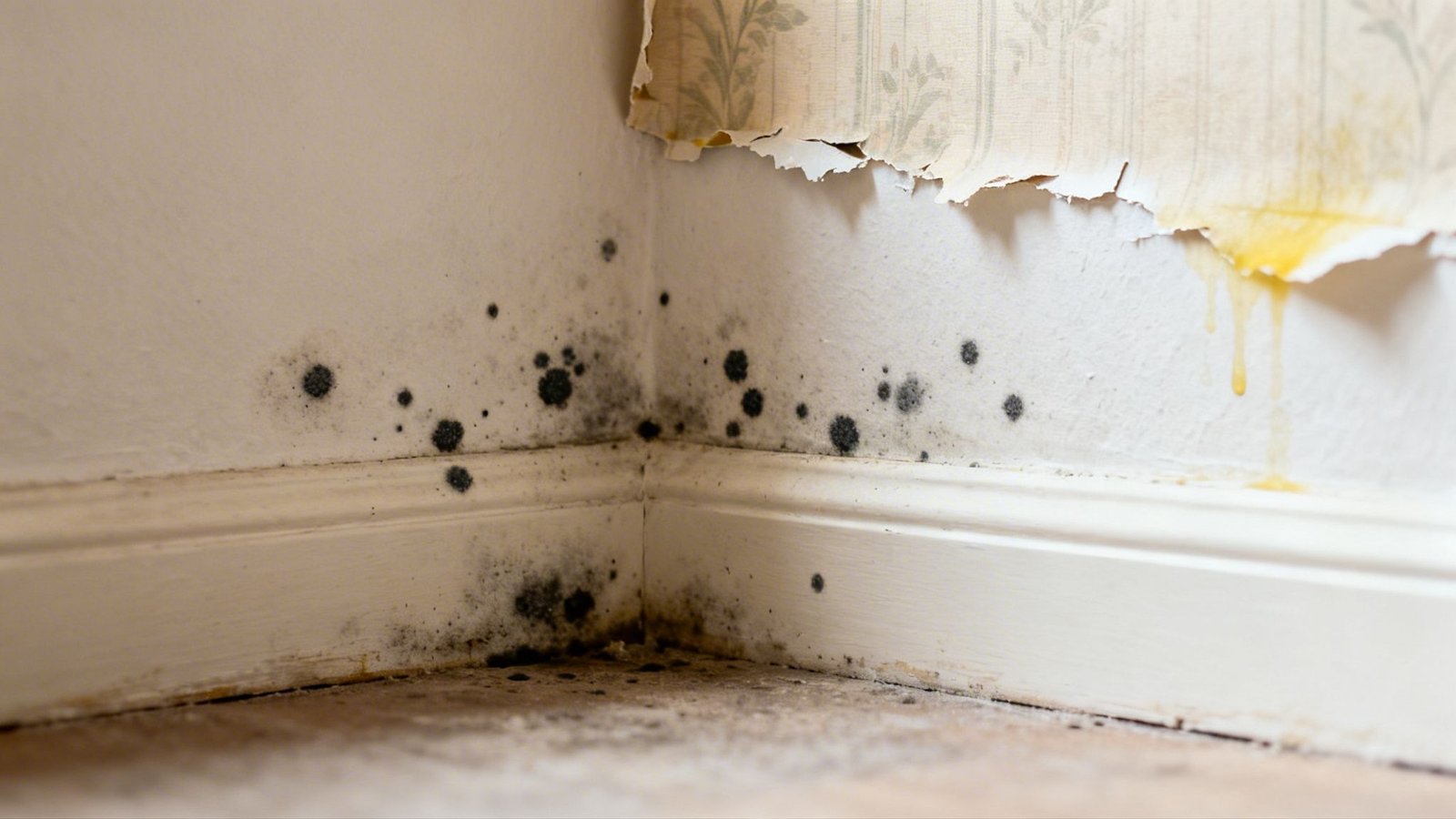
You have to play detective in your own home. The infamous "black mold," or Stachybotrys chartarum, doesn't always show up as a giant, obvious patch. It often starts silently, thriving on moisture deep inside walls, under flooring, or in forgotten corners where it can feed on organic materials like drywall and wood.
This is a far more common scenario than most people think. That musty smell in your Los Angeles bungalow isn’t something to ignore. Black mold releases spores and microbial volatile organic compounds (mVOCs) into the air, which can irritate your immune system and cause a whole range of symptoms from sneezing and coughing to red, itchy eyes.
To make it easier to connect the dots, here’s a quick look at the signs you should be watching for—both in your house and in your health.
Black Mold Symptoms At a Glance: House vs. Health
| Symptom Category | Specific Signs to Look For | Common Locations & Examples |
|---|---|---|
| Property Signs | Dark splotches (black, green, brown), peeling paint, warped walls, water stains, musty odor. | Bathrooms, kitchens, basements, laundry rooms, around windows, under sinks. |
| Health Signs | Chronic cough/sneezing, itchy/watery eyes, sore throat, skin rashes, worsening asthma. | Symptoms that appear or worsen at home and improve when you're away. |
By keeping both sets of symptoms in mind, you get a much clearer picture of what might be happening behind the scenes.
Physical Signs Within the Property
The most obvious clues are the ones you can see. You’re looking for dark, splotchy stains on walls, ceilings, or baseboards, especially in areas that are frequently damp. These spots aren't always pure black; they can be dark green or brown and often have a fuzzy or slimy texture.
But mold’s calling card is moisture. Keep an eye out for these subtle signs of a water problem:
- Peeling or Bubbling Paint: This is a classic sign that moisture is trapped behind the paint, pushing it away from the surface.
- Warped Drywall or Wood: Building materials will often swell, bend, or change shape as they absorb water.
- Visible Water Stains: Those discolored rings or patches on a ceiling are a dead giveaway of a leak from above.
- A Persistent Musty Odor: Never ignore this. That damp, earthy smell is often the very first warning that mold is growing somewhere you can't see it.
That musty odor is your home’s primary alarm system. It’s crucial to know how to detect hidden water leaks behind walls to get ahead of the problem. Our guide on how to check for mold in walls can also give you the right steps for tracking down these hidden threats.
Health Symptoms Affecting Occupants
Sometimes, your body is the first to tell you something is wrong. If you or your family members are suddenly dealing with persistent, allergy-like symptoms that have no clear cause, mold could absolutely be the culprit. These are reactions to inhaling mold spores.
Pay attention to these common health-related signs:
- Chronic coughing or sneezing
- Itchy, watery eyes
- A persistent sore throat or raspy voice
- Unexplained skin rashes or irritation
- Worsening asthma or new breathing difficulties
These symptoms are especially suspect if they seem to flare up when you're at home and get better when you leave for extended periods. Your body is giving you valuable data.
Health Risks Linked to Black Mold Exposure
The black mold symptoms in a house are about more than just a musty smell or an ugly stain on the wall. When mold releases its spores into the air, they don’t just float around—you breathe them in. These microscopic particles can cause serious health problems, largely because of compounds called mycotoxins.
Many people write off their symptoms as a stubborn cold or seasonal allergies. But if you find yourself feeling sick only at home, or your "cold" just won't go away, it's a huge red flag. Your environment is likely the culprit, and mold is a common trigger.
Respiratory System Under Attack
Your lungs and sinuses take the first hit. Inhaling mold spores can set off an immediate immune response, leading to a frustrating list of chronic symptoms.
Black mold is particularly hard on respiratory health. The World Health Organization has connected 21% of US asthma cases to dampness and mold inside homes. It gets worse: an estimated 40% of all asthma episodes are triggered by household mold.
You might notice what feels like a constant allergy attack—a stuffy nose, scratchy throat, coughing, watery eyes, or even skin irritation. But for people with asthma, COPD, or a weakened immune system, the danger escalates quickly. They can experience severe shortness of breath, chest tightness, and other serious reactions.
These symptoms often hit vulnerable groups the hardest:
- Children: Their developing lungs are far more sensitive to irritation, and mold exposure can even trigger the onset of asthma.
- The Elderly: A naturally weaker immune system makes them more susceptible to respiratory infections caused by mold.
- Individuals with Compromised Immune Systems: Anyone with conditions like HIV/AIDS or undergoing treatments like chemotherapy is at high risk for dangerous fungal infections.
- Anyone with Pre-existing Respiratory Conditions: If you already have asthma or COPD, mold can cause your symptoms to flare up more frequently and severely.
Beyond the Lungs: Neurological and Systemic Effects
While breathing problems are the most common sign, the mycotoxins from black mold can affect your entire body, including your nervous system. These effects are often confusing and hard to pin down, leaving people suffering for years without connecting their symptoms to their home environment.
Think of mycotoxins as tiny disruptors that can cross the blood-brain barrier and directly impact your central nervous system. This is why many people exposed to toxic mold report feeling "off" in ways that are difficult to describe to a doctor.
This neurological interference can show up in a number of debilitating ways:
- Brain Fog and Difficulty Concentrating: A constant feeling of mental slowness or being unable to focus.
- Chronic Headaches and Migraines: Persistent headaches that don't respond to normal treatments.
- Fatigue and Lethargy: A deep, bone-weary exhaustion that sleep doesn't fix.
- Mood Swings and Anxiety: Unexplained irritability, moodiness, or a sudden increase in anxiety.
Because these symptoms overlap with so many other conditions, they often lead to misdiagnoses. It's critical to consider your environment as a potential root cause. Mold spores can easily get into your HVAC system and circulate throughout the entire house, making a professional duct cleaning an important step in removing the threat.
The wide range of health effects, some of which are quite severe, can even require specialized cleanup protocols similar to those used for other biological contaminants. You can see how professionals handle these high-risk situations by reading our guide to biohazard cleanup services. Understanding just how far-reaching the risks are shows why you must tackle any suspected mold issue immediately—not just for your property, but for the health of everyone inside.
How to Visually Identify Black Mold in Your Home
While musty smells and nagging health issues are major red flags, seeing the problem with your own eyes is often what confirms your worst fears. It’s time to become a mold detective in your own home, and that starts with knowing exactly what you're looking for.
It's a common myth that "black mold" is always jet black. The truth is, its appearance can be deceiving, which is why a trained eye helps. This is your field guide to spotting suspicious growth, but we have to start with the most important rule: never touch or disturb a potential mold colony.
What Black Mold Actually Looks Like
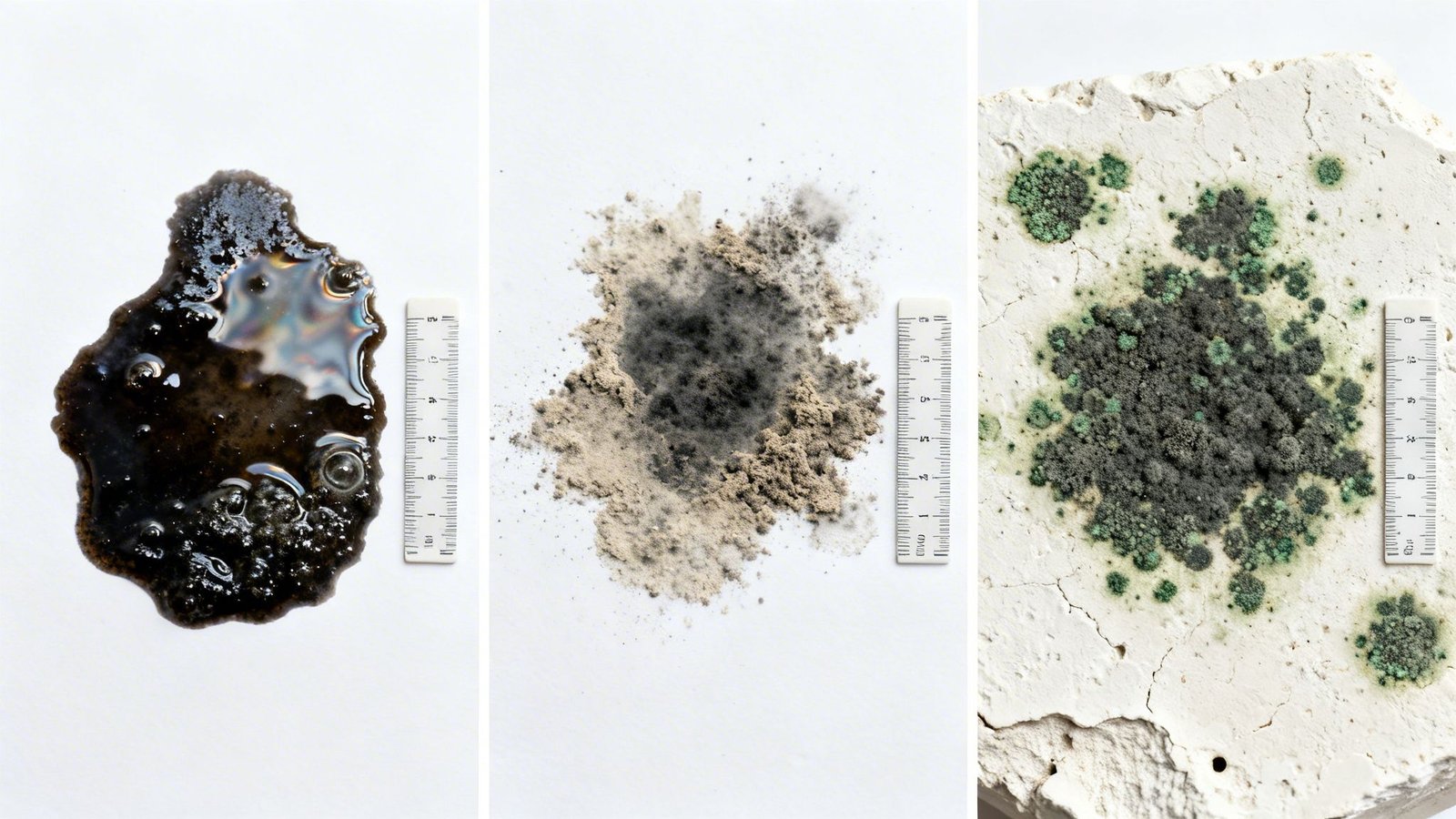
Forget about a single, textbook appearance. Black mold, or Stachybotrys chartarum, shows up in different ways depending on its age and how much moisture it has. Its name is a bit of a misnomer, as it can easily be dark green or even a deep, shadowy gray.
To spot it correctly, keep an eye out for these distinct looks:
- Slimy and Wet: In areas with a constant water source—like a fresh leak under a sink in your West Hollywood apartment—black mold often appears as a slimy, gelatinous patch. Think of a dark, slick spot spreading across the drywall or wood.
- Sooty and Powdery: If the water source has already dried up, the colony can become dry and powdery. It might look like someone smudged soot or dark dust onto a surface. Disturbing mold in this state is extremely risky, as spores can go airborne in an instant.
- Circular Patches: Mold tends to grow out from a center point, often creating clusters of circular patterns. You might spot a collection of small dots that eventually grow and merge into a larger, more defined splotch.
The golden rule of mold investigation is simple: if it looks suspicious, treat it like a problem until a professional proves otherwise. A visual sign is a direct call to action, telling you that the conditions for mold—moisture and a food source—are active in your home.
A Room-by-Room Tour of Mold Hotspots
Now, let's walk through a typical Los Angeles home to uncover mold’s favorite hiding spots. While it can technically grow anywhere, certain areas are prime real estate for mold thanks to steady moisture and poor airflow.
1. Bathrooms: The Obvious Suspect
Bathrooms are ground zero. The constant humidity from hot showers creates a perfect microclimate for mold to thrive.
- Check around the base of the toilet where condensation often gathers.
- Inspect the tile grout and caulk lines around the tub and shower.
- Look inside the vanity cabinet under the sink, paying close attention to the plumbing P-trap.
2. Kitchens: Moisture and Food Sources
Just like bathrooms, kitchens have plenty of water sources. Leaks are common and can go unnoticed for weeks.
- Under the Sink: This is a top hiding place. A slow drip from a garbage disposal or supply line is all it takes to start a colony.
- Behind the Refrigerator: If you have a fridge with an icemaker, pull it out and check the water line for any leaks.
- Inside the Dishwasher: Check for dark spots along the rubber seal or near the bottom of the unit where water can sit.
3. Laundry Rooms and Basements
These less-trafficked areas are notorious for dampness. A poorly ventilated laundry room in a San Fernando Valley home or a damp basement in an older Pasadena property are classic mold zones.
- Inspect the hot and cold hoses connected to the washing machine.
- Check the lint trap and the dryer vent duct for blockages that trap moist air.
- In basements, look for any signs of water seepage along the base of the walls.
Uncovering Less Obvious Hiding Spots
The most dangerous mold is often the mold you can’t see. It can grow for months—or even years—behind surfaces before you notice any black mold symptoms in your house.
- Inside HVAC Systems: Your air conditioner is designed to remove humidity, which creates condensation. If the drain pan or coils aren't maintained, mold can flourish and then blow spores throughout your entire home every time the system kicks on.
- Behind Wallpaper: Is your wallpaper peeling, bubbling, or discolored? That’s a huge red flag. The paper and adhesive are a perfect food source, and the gap behind it traps moisture from the wall.
- Underneath Flooring: A leak that seeps under laminate, vinyl, or even hardwood can cause massive mold growth on the subfloor. To see what's involved with that, check out our guide on how to kill mold on wood.
By methodically checking these common and hidden spots, you can conduct a thorough visual inspection. Remember, seeing the problem is the first step to solving it. If you find anything that matches these descriptions, it's time to get a professional assessment.
Why Southern California Homes Are So Mold-Prone
Everyone thinks Los Angeles is too dry and sunny for mold to be a real problem. But that’s a dangerous misconception. While we get plenty of sunshine, Southern California’s unique mix of coastal weather, popular home styles, and even our lifestyle creates the perfect storm for serious mold growth.
Understanding these local risk factors is the key to protecting your property. The truth is, the causes of black mold symptoms in house that catch so many homeowners off guard are often hiding in plain sight.
The Coastal Fog and Marine Layer Effect
If you live anywhere from Santa Monica to the South Bay, you know the marine layer well. That thick, damp fog rolls in off the Pacific, blanketing our coastal neighborhoods in a cool, persistent moisture that can linger for hours.
It might feel like a welcome break from the heat, but it also sends humidity levels soaring. This constant dampness saturates exterior walls and seeps in through window frames, preventing materials from ever drying out completely. That sustained moisture is exactly what dormant mold spores are waiting for to activate and start colonizing.
Architectural Styles and Hidden Leaks
Many homes across Los Angeles, particularly in areas like the Hollywood Hills and West Hollywood, feature modern flat-roof or low-slope designs. They look great, but they are notorious for pooling water after one of our infrequent but heavy rainstorms. If the seals aren't perfect, that standing water finds a way in. A flat-roof leak in a Sherman Oaks home is a classic example.
This can create a slow, hidden leak that drips into your attic or wall cavities for months, or even years, before you ever see a stain.
A tiny, undetected roof leak is one of the most common culprits behind a serious mold infestation. By the time a homeowner notices a water stain on the ceiling, a significant colony has likely already established itself in the unseen space above.
A steady drip like this is a five-star resort for toxic mold like Stachybotrys, providing the food and water it needs to flourish.
Common Los Angeles Mold Hotspots and Their Causes
| High-Risk Area in Home | Common LA-Specific Cause | Preventative Tip |
|---|---|---|
| Attics & Ceilings | Flat or low-slope roofs pooling rainwater; common in modern LA architecture. | Schedule annual roof inspections, especially before the rainy season, to check for failed seals. |
| Bathrooms (No Windows) | Poor ventilation in dense apartment buildings or converted spaces. | Run the exhaust fan for 30 minutes after every shower and consider a standalone dehumidifier. |
| Window Frames & Sills | Condensation from the coastal marine layer, especially in homes near the beach like in Santa Monica. | Wipe down window frames and sills regularly, especially during "May Gray" and "June Gloom." |
| Under Kitchen Sinks | Slow leaks from old garbage disposals or aging pipes in mid-century homes. | Check under your sink monthly for small drips or water stains. Look for a chalky white residue on pipes. |
| Around AC Vents | Condensation from running the AC nonstop during San Fernando Valley heatwaves. | Have your HVAC system professionally serviced annually to ensure drain lines are clear. |
| Crawl Spaces | High humidity and poor airflow, often found in older Craftsman-style homes. | Consider professional crawl space encapsulation to create a vapor barrier against ground moisture. |
Being aware of these high-risk zones can help you spot a problem before it gets out of control. Regular, targeted inspections are your best defense.
Air Conditioning, Condensation, and Trapped Moisture
Getting through a heatwave in the San Fernando Valley means your air conditioner is working overtime. That constant cooling creates a massive amount of condensation. While your HVAC unit is built to drain that moisture away, a clogged line or poor maintenance can cause water to back up and spill into your attic, walls, or crawl space.
Even a perfectly working system creates cold surfaces—like air ducts and registers—where warm, humid air condenses. This can turn your HVAC system into a delivery service for mold spores. The problem is worse in older homes with outdated AC units and carpeting, a common combination in neighborhoods like North Hollywood or Sherman Oaks. One study found that homes with both carpets and air conditioning had significantly higher mold levels. You can read more about these findings on mold in US homes.
Aging Infrastructure in Historic Neighborhoods
Los Angeles has some beautiful historic neighborhoods, from Pasadena to Hancock Park. But the charm of these older homes often comes with aging plumbing. Cast iron and galvanized steel pipes installed in the mid-20th century are now at the end of their lifespan and prone to developing pinhole leaks.
These leaks are often too slow to cause a sudden flood. Instead, they produce a tiny, steady trickle of water behind a wall or under a floorboard. This creates the dark, damp, and undisturbed environment that black mold absolutely loves. That’s why you should never, ever ignore a faint musty smell in an older home—it’s the classic calling card of a hidden mold problem fueled by decaying pipes.
How to Tell If You Need Professional Remediation
It’s tempting to grab a bottle of bleach and try to handle a small mold spot yourself. But knowing where to draw the line between a quick DIY cleanup and a situation that needs a certified pro is one of the most important decisions you’ll make as a homeowner.
Getting it wrong can be a costly mistake. If you disturb a significant mold colony without proper containment, you can accidentally launch a cloud of spores throughout your home, making the black mold symptoms in your house much, much worse. Let's talk about the signs that mean it's time to put down the sponge and pick up the phone.
Red Flags That Mean It's Time for a Pro
The EPA offers a simple rule of thumb: if a mold patch is larger than 10 square feet, you need professional help. But size isn't the only factor. You should call a certified remediation company immediately if you notice any of these issues.
- The Mold Comes Roaring Back: You scrubbed a spot clean, but a week later, it's back. This is a classic sign that the hidden moisture source—the root of the problem—was never fixed. A pro finds and solves the why, not just the what.
- That Persistent Musty Smell: If your home smells earthy and damp but you can't see any mold, it’s almost certainly hiding. It could be thriving inside your walls, beneath the floorboards, or deep within your HVAC system, and finding it requires specialized gear.
- Your Family Is Feeling Unwell: Are chronic headaches, nagging coughs, or persistent fatigue a new normal in your house? If these symptoms seem to fade when you're away from home, it’s a strong signal that your indoor air quality is compromised.
- It’s Growing Near Your HVAC System: This is a top-tier emergency. Mold near any part of your heating or cooling system means it's positioned to spread spores to every single room in your home.
This is especially true here in Los Angeles, where our unique climate and housing stock create the perfect storm for hidden mold.
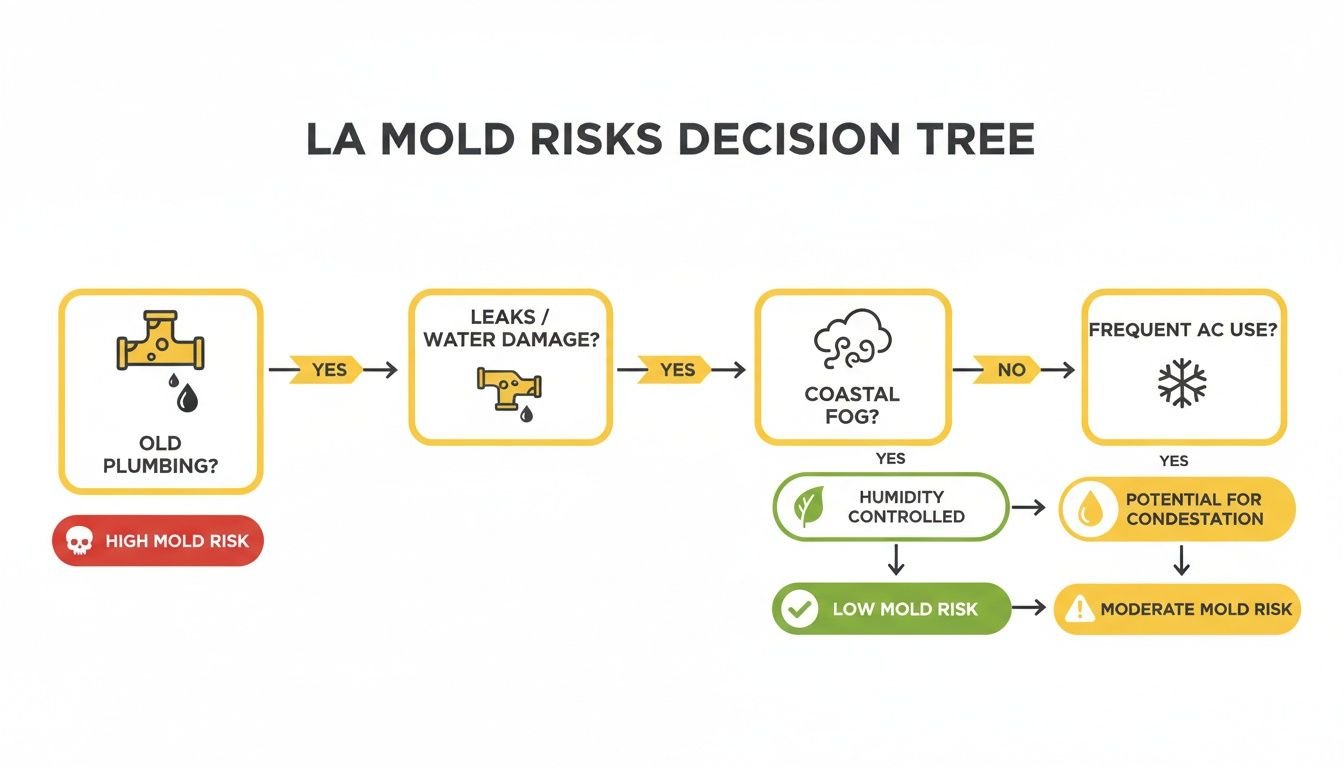
As you can see, things like older plumbing, heavy AC use, and even our famous coastal fog create prime conditions for mold to grow completely out of sight.
Ready for a professional opinion? Book a Free Mold Inspection with our certified team today.
The Professional Remediation Advantage
So, what are you really paying for when you hire a professional? It’s not just a deeper clean. It’s a scientific process designed to safely contain, remove, and prevent the mold from ever coming back.
A licensed and certified team, like us at Onsite Pro Restoration, follows a strict, non-negotiable protocol.
- Setting Up Containment: We use heavy plastic sheeting and create negative air pressure to completely seal off the work area. This stops spores from escaping into the rest of your home.
- Scrubbing the Air: While we work, commercial-grade HEPA air scrubbers run continuously, capturing any airborne spores, mycotoxins, or dust particles.
- Removing Contaminated Materials: We carefully remove and bag any infested materials like drywall, carpet, or insulation, treating the area with EPA-approved antimicrobial agents.
- Mapping the Moisture: We use thermal cameras and moisture meters to hunt down the exact water source. Without fixing the leak, the mold will just return.
Trying to do this without the right equipment and training is a recipe for failure. A professional gets the job done right the first time, protecting both your property’s value and your family’s health. To see our full process, learn more about our mold remediation service and how we make your home safe again.
Finding mold in your home is bad enough. Then the financial anxiety kicks in, and it’s often worse than the discovery itself. The cost of a mold problem isn't just about the cleanup—it's a silent threat that can tank your home’s value and drag you into a complicated fight with your insurance company.
The numbers are staggering. A known mold infestation can wipe more than $99,000 off a home's resale price in an average market, turning a sale into a homeowner's nightmare. And that's before we even talk about health. Allergic rhinitis from indoor mold costs Americans $3.7 billion a year, with acute bronchitis adding another $1.9 billion on top of that. You can dig into these and other statistics in this detailed report on mold in the USA.
Your Home's Value on the Line
In California, a history of mold—especially the dreaded black mold—is a major red flag that you must disclose to potential buyers. Even after you've paid for professional remediation, the stigma can stick, potentially forcing you to accept a lower offer.
But it’s the mold you don't see that poses the biggest financial risk. It can quietly feast on drywall, wood framing, and subflooring for months or years. By the time a home inspector finds it, what could have been a contained issue is now a structural catastrophe and a major deal-breaker.
Demystifying Homeowners Insurance Coverage
Most homeowners think their insurance policy has their back when it comes to mold. The reality is far more complicated. Coverage almost always comes down to one critical detail: the source of the water.
Key Takeaway: Homeowners insurance typically only covers mold damage if it’s the result of a "sudden and accidental" water event. Think a burst pipe or a failed washing machine hose. Gradual damage from a slow leak or poor maintenance is almost always excluded.
This is where most claims get denied. If mold grew slowly because of a bad window seal or high bathroom humidity, you'll likely be footing the entire bill yourself. Getting a handle on these policies requires real-world expertise. To get a better feel for the expenses you might face, check out our guide on what mold remediation costs.
Your Professional Ally in the Insurance Claim Process
This is exactly where a certified restoration company like Onsite Pro Restoration becomes your most valuable financial partner. We do more than just get rid of the mold; we build the evidence-based case your insurance adjuster needs to approve the claim.
Our team is trained to document everything in a way that leaves no room for doubt.
- Detailed Documentation: We create meticulous reports, notes, and logs from the moment we arrive.
- Photographic and Video Evidence: We capture clear, time-stamped visual proof of the water damage and its source.
- Moisture Readings: We use professional moisture meters and thermal cameras to map the water intrusion, proving where it came from and when.
By delivering this complete evidence package, we clearly connect the mold to a covered event. We turn a potential financial disaster into a managed, documented process, giving you the best shot at getting the coverage you pay for and making your home safe again.
FAQs: Your Black Mold Questions Answered
When you spot something that looks like mold, a flood of questions usually follows. Is it dangerous? Can I clean it myself? What’s the difference between this and mildew? We hear these questions every day from homeowners across Los Angeles. Here are some straight answers from the field.
Q: What is the difference between mold and mildew?
A: Think of mildew as a surface-level problem. It’s that powdery, gray or white fungus you find on damp shower tiles. You can usually wipe it away with a household cleaner because it doesn't root into the material. Black mold is an invasive fungus that grows into its food source—your drywall, subfloor, or wooden studs. It looks slimy and is typically dark green or black. Because it digests and destroys building materials, you can't just wipe it away.
Q: Can I just paint over black mold?
A: Absolutely not. This is one of the most dangerous and common mistakes we see. Slapping a coat of paint over mold only hides the problem. The mold colony is still very much alive underneath, feeding on the drywall and continuing to release spores and mycotoxins into your air. The only real fix is complete removal by a certified pro and addressing the moisture source that caused it.
Q: How quickly can black mold spread in a house?
A: Faster than you think. With a water source (like a small leak), a food source (drywall paper), and the right temperature, black mold can start growing in as little as 24 to 48 hours. From there, a small, hidden patch can explode into a visible, widespread colony in under a week. This is why immediate action after any water event is the only way to prevent a small issue from becoming a massive remediation project.
Q: What should I do if I find mold behind drywall?
A: Immediately stop using the area and contact a licensed restoration company to assess the risk. Do not try to cut into the drywall yourself, as this can release a massive amount of spores into the air. A professional will use containment and proper equipment to safely determine the extent of the problem without cross-contaminating your home.
Q: Is professional mold testing really necessary?
A: If you can see mold, you obviously have a mold problem. But a visual check doesn’t tell you the whole story. Professional testing is crucial for identifying the species (confirming if it's toxic Stachybotrys), measuring the airborne spore concentration to assess health risks, and finding hidden mold. This data is non-negotiable for building a safe and effective remediation plan and is often required by insurance companies.
If you've spotted any of these warning signs or have more questions, don't wait for the problem to get worse. Contact Onsite Pro Restoration today for a free, no-obligation assessment of your property. Book your free inspection online or call our 24/7 emergency line at (818) 336-1800 to speak with a specialist.