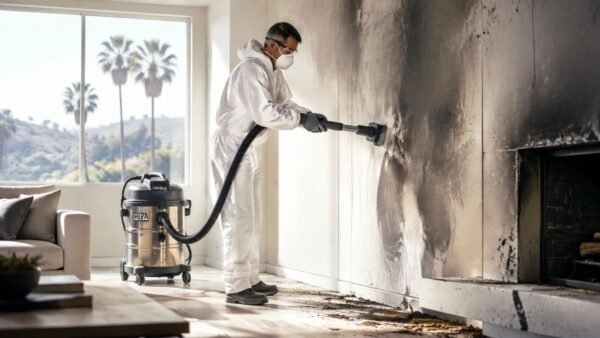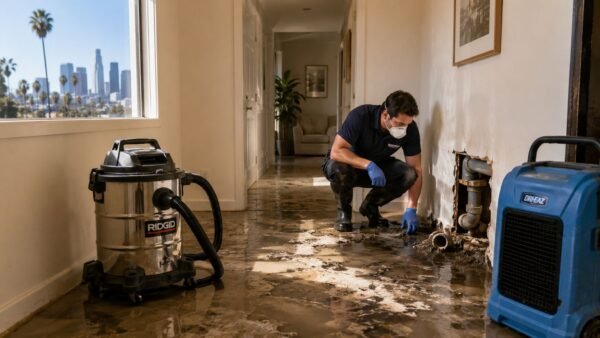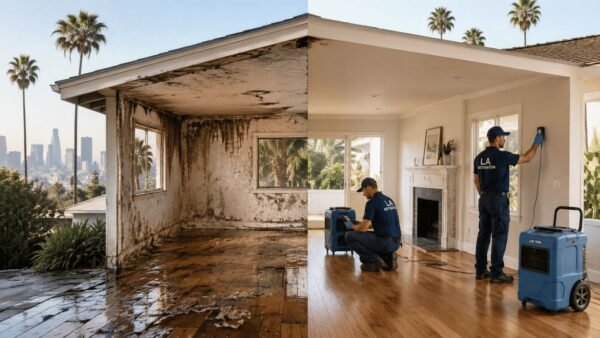

When a storm rolls through Los Angeles, the chaos left behind can feel completely overwhelming. Dealing with storm damage repair is a multi-step process that starts with immediate safety checks, moves to documenting everything for your insurance, and ends with professional restoration to fix water intrusion, roof damage, and structural issues.
How you handle these first few hours is critical. It sets the foundation for a smoother recovery and a successful insurance claim.
Your First Steps After the Storm Passes
The moments right after a major storm are often disorienting. Your instinct might be to jump straight into cleanup, but a methodical approach is far better. The immediate goals are simple: keep everyone safe and stop the initial damage from spiraling into a bigger, more expensive problem.
Prioritize Safety Above All Else
Before you even think about grabbing a bucket or taking a photo, you have to confirm the area is safe. Storms leave behind hidden dangers that are far more serious than a leaky roof.
- Watch for Electrical Hazards: Stay far away from any downed power lines outside. Inside, if you see standing water, do not touch any electrical appliances or outlets. If you can get to your breaker box without walking through water, shut off the main power.
- Check for Gas Leaks: If you smell gas or hear a hissing sound, get everyone out immediately. Call your gas company from a safe distance—don't use your phone or anything that could create a spark near the house.
- Assess Structural Integrity: Be on the lookout for sagging ceilings, deep cracks in the walls, or a foundation that looks like it has shifted. If the building seems unstable, do not go inside. A compromised structure, whether in Sherman Oaks or downtown LA, can collapse without warning.
Once you know it's safe to proceed, you can move on to the next steps. This simple infographic breaks down the process.
This visual is a great reminder to be methodical: start with safety, then carefully document, and finally, bring in professionals for the heavy lifting.
To help you stay focused during a stressful time, here's a quick reference checklist.
Immediate Storm Damage Action Checklist
This table breaks down the most urgent tasks to tackle right after a storm, prioritizing safety and setting you up for a smooth insurance claim process.
| Action Item | Why It's Critical | Pro Tip For LA Residents |
|---|---|---|
| Check for Hazards | Downed power lines, gas leaks, and unstable structures are immediate life-safety threats. | After heavy rains, be extra cautious of mudslide potential in hillside communities like the Hollywood Hills or Malibu. |
| Turn Off Utilities | Shutting off main power and water can prevent electrocution and further water damage. | Know where your main shut-offs are before a storm hits. Take a picture of them on your phone. |
| Call 911 (If Needed) | For any immediate threats like fire, gas leaks, or serious injuries. | Program the non-emergency numbers for your local utility companies into your phone for faster access. |
| Document Everything | Your insurance claim is built on this evidence. Photos and videos are your strongest proof. | Use your phone to record a walk-through video, narrating what you see. It’s faster than typing and captures more detail. |
| Contact Your Insurer | The sooner you report the loss, the sooner they can assign an adjuster and start the process. | Have your policy number handy. Most insurers have a 24/7 claims hotline or a mobile app for easy reporting. |
| Make Temporary Repairs | Mitigating further damage (like tarping a roof) is often required by your insurance policy. | Hardware stores can get chaotic after a storm. Consider keeping a basic emergency kit with a tarp, plywood, and duct tape. |
Taking these steps methodically will protect both your family and your property while you wait for professional help to arrive.
Document Everything Before You Touch Anything
Your insurance claim will live or die by the evidence you collect. Before you move a single piece of furniture or wipe up a puddle, grab your smartphone—it's your most important tool right now.
Take tons of photos and videos. Get wide shots to show the scope of the damage and close-ups to capture the details. Don't forget anything: the water stain on the ceiling, the shingles scattered across your lawn, the shattered window. This visual record is irrefutable proof for your insurance adjuster. It’s also smart to start a running list of damaged items as you go.
If you have an active leak, knowing how to stop roof leaks temporarily can prevent a small problem from becoming a catastrophe while you wait for help.
Mitigate Secondary Damage Safely
Once the scene is documented, your job shifts to damage control. The goal is to stop the problem from getting worse. After a storm, water is public enemy number one. It can trigger mold growth in as little as 24-48 hours, a common headache in the coastal air of Santa Monica.
Simple, temporary fixes can make a world of difference. Tarping a damaged roof or boarding up a broken window keeps more rain out. If you have standing water and it's safe, start removing it. For a more detailed look at this, check out our guide on emergency water cleanup.
These first actions are absolutely vital for protecting your home until the professionals can take over.
Navigating Insurance Claims for Storm Damage
Filing your insurance claim is probably the single most important step you'll take toward getting your home back to normal after a storm. It can feel like a mountain of paperwork and confusing terms, but if you're methodical, you can absolutely handle it. Your job is to give the insurance company undeniable proof of what you've lost.
And these claims are more common than you might think. The scale is massive. In recent years, natural disasters have cost insurers around $108 billion a year. A staggering 92% of all property damage and 97% of insured payouts were driven by weather events. You can dig into the natural disaster figures from Munich Re to see the full picture.
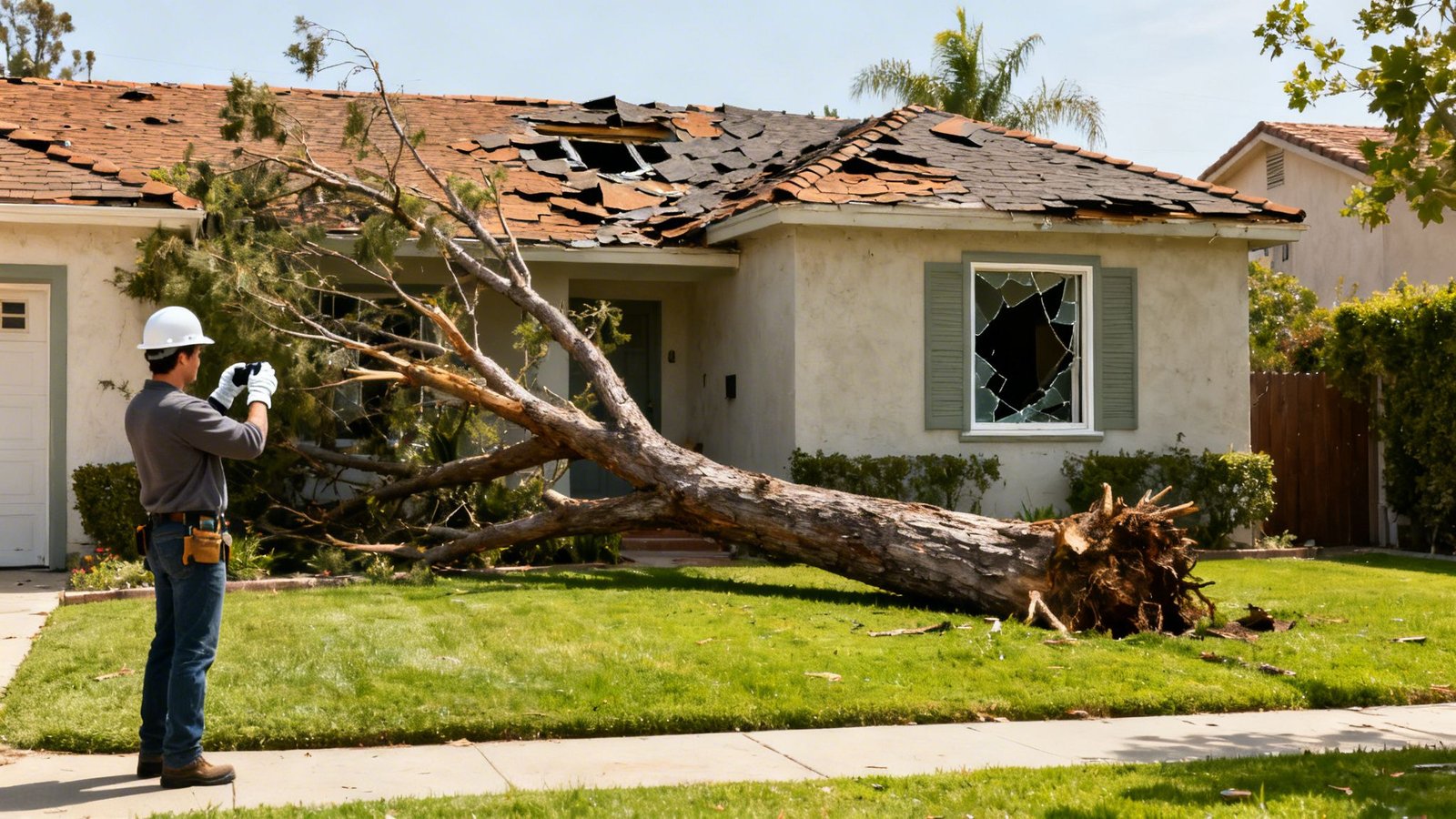
This is exactly why adjusters rely so heavily on your documentation. It’s not enough to say a tree fell on your roof; you have to detail every single thing that was damaged because of it.
Creating a Comprehensive Damage Inventory
First things first: you need to create a detailed list of every single item that was damaged or destroyed. Take your time with this. Walk through your home room by room and get as specific as you can.
- For Structural Damage: Note the exact location and size of the damage. For instance, "three cracked window panes in the living room," "a 10×10 foot water stain on the master bedroom ceiling," or "vinyl siding torn off the entire west-facing wall."
- For Personal Belongings: List everything from the big-ticket items like furniture and electronics down to smaller things like books and clothes. If you can, jot down the brand, model number, and roughly how old it is.
- Track Your Expenses: This is huge. Keep every single receipt for temporary repairs (like tarps or plywood), hotel stays if your home is unlivable, and any other cost that pops up because of the storm. These are almost always reimbursable.
Key Takeaway: You need to think like an insurance adjuster. The more organized and detailed your list is, the faster your claim gets processed. A vague inventory just leads to a back-and-forth of questions and delays.
Speaking the Adjuster's Language
Understanding just a few key insurance terms will completely change your conversations with the adjuster and help you make sense of your settlement offer. Misunderstanding these is a common—and expensive—mistake.
Here are the big ones:
- Deductible: This is simply the amount you have to pay out-of-pocket before your insurance kicks in. If your deductible is $2,500 and the total covered damage is $20,000, your insurance company will pay $17,500.
- Actual Cash Value (ACV): This is the value of your damaged property minus depreciation. A 10-year-old roof, for example, isn't worth what a new one is, and an ACV policy only pays for its current, depreciated value.
- Replacement Cost Value (RCV): This is what you want. RCV coverage pays the full cost to replace your damaged property with new materials of a similar kind and quality, without subtracting for depreciation.
Knowing which one you have is critical. With an RCV policy, you'll often get an initial check for the ACV, and then a second check for the rest once you've actually done the repairs and sent in the receipts. If you want to dive deeper, our guide on navigating insurance claims for water damage has a lot more detail.
Partnering With a Restoration Professional
Trying to juggle a complex storm damage repair claim while you're still dealing with the emotional fallout is incredibly stressful. This is where a professional restoration company becomes your best asset.
An experienced team like Onsite Pro Restoration does a lot more than just fix the physical damage. We use the same industry-standard software as the insurance companies to build detailed, line-item estimates that they understand and respect.
We document every single step with photos and moisture readings, giving the adjuster the exact proof they need to approve your claim without a lot of friction. We can speak directly with your adjuster, answer their technical questions, and make sure every bit of covered damage gets included in the final settlement. That teamwork can make a world of difference in speeding up the approval and helping you avoid a denial.
Preventing Further Damage Before Professionals Arrive
Once the storm has passed and your family is safe, the clock starts ticking on a new threat: secondary damage. The water that’s already inside your home doesn’t just sit there—it soaks into drywall, warps floors, and creates the perfect humid environment for mold to thrive.
Taking swift, decisive action isn't just a smart move; it’s often a requirement of your insurance policy. These temporary measures can dramatically shrink the final scope and cost of your storm damage repair. The goal isn't a full-on DIY restoration. Think of it as applying first aid to your home—stabilizing the situation to stop a bad problem from becoming a catastrophe while you wait for the pros.
Securing Your Home’s Exterior
Your home’s exterior is its first line of defense. Any breach needs to be addressed immediately, because even a small opening can let in gallons more water during the next Los Angeles downpour.
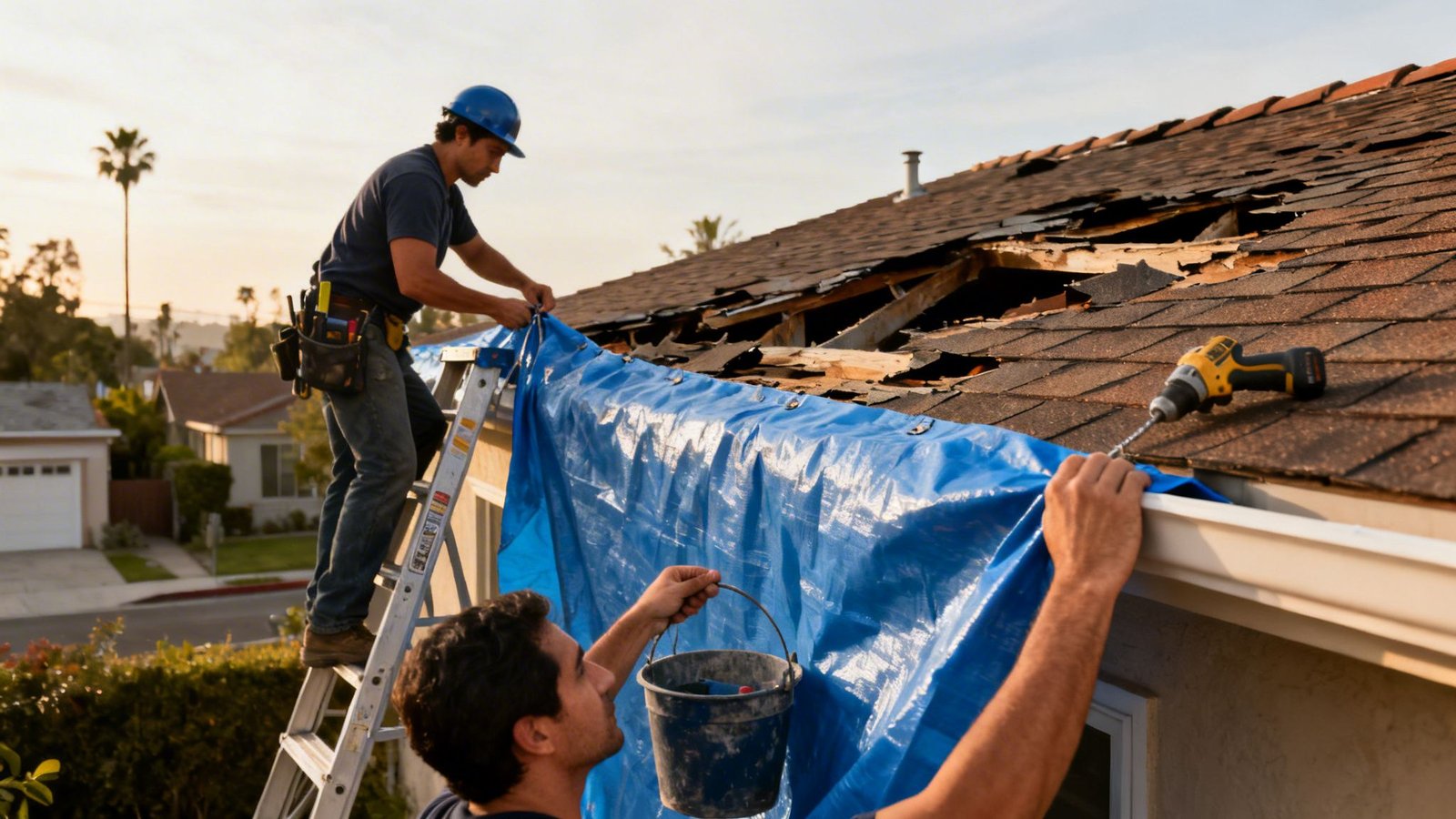
- Tarping the Roof: If you have missing shingles or a hole in your roof, getting a heavy-duty tarp over it is priority number one. A properly secured tarp can prevent thousands of dollars in new interior water damage. Just be extremely cautious if you do this yourself; wet roofs are incredibly slippery.
- Boarding Up Windows: Shattered windows are a double threat—a safety hazard from the broken glass and an open invitation for more rain and debris. Covering these openings with plywood secures your property and keeps the elements out.
Important Safety Note: Do not attempt to get on a steep or unstable roof yourself. If you aren't comfortable or don't have the right safety gear, it is always better to wait for a professional. Your safety is paramount.
Managing Interior Water Intrusion
With the exterior sealed up, your focus has to shift to the water already inside. Every moment it sits, it’s getting absorbed by porous materials like wood, drywall, and carpet padding.
Removing any standing water is the first step. A wet-dry vacuum is an excellent tool for this, letting you pull puddles of water from both hard surfaces and carpets. But here's where a lot of homeowners make a critical mistake: do not use standard household fans to try and dry things out. It seems like a good idea, but these fans can actually aerosolize mold spores and contaminants in the water, blasting them all over your home and turning a localized issue into a much bigger problem.
Professional mitigation teams use specialized equipment like air movers, which create a controlled airflow. You can learn more about how this works by understanding the principles of professional water mitigation. The whole idea is containment and controlled drying, not just blowing contaminated air around.
Protecting Your Belongings
Get any furniture, electronics, and other valuables away from wet areas as quickly as you can. If you can't move heavy furniture, at least try to get it off the wet carpet. Placing wood blocks or even squares of aluminum foil under the legs can prevent the finish from staining the carpet and stop the wood from soaking up more water.
Beyond these immediate fixes, thinking ahead is always a good idea. You can even learn how to prevent tree damage before the next big storm to get a jump on future problems. Every single action you take now to limit the damage will pay off big time when the professional repair phase begins.
The Professional Storm Damage Repair Process Explained
When a team of IICRC-certified technicians shows up at your door, their job is to bring order to the chaos. Professional storm damage repair isn't just about cleaning up a mess; it's a systematic, science-backed process designed to get your property back to its pre-loss condition, safely and efficiently. We're talking about a detailed operation that addresses hidden moisture, contamination risks, and the long-term integrity of your home's structure.
This meticulous approach is a necessity. The global storm damage restoration market is already valued at around $15 billion and is projected to hit $25 billion. This isn't surprising, given the increasing frequency of extreme weather events, which makes certified, local expertise more valuable than ever. You can dig into the numbers and trends in these industry analytics reports.
For homeowners in places like Beverly Hills or Glendale, knowing what we do step-by-step provides real peace of mind. You'll know exactly what to expect from the moment our trucks pull up.
Comprehensive Damage Assessment and Scope
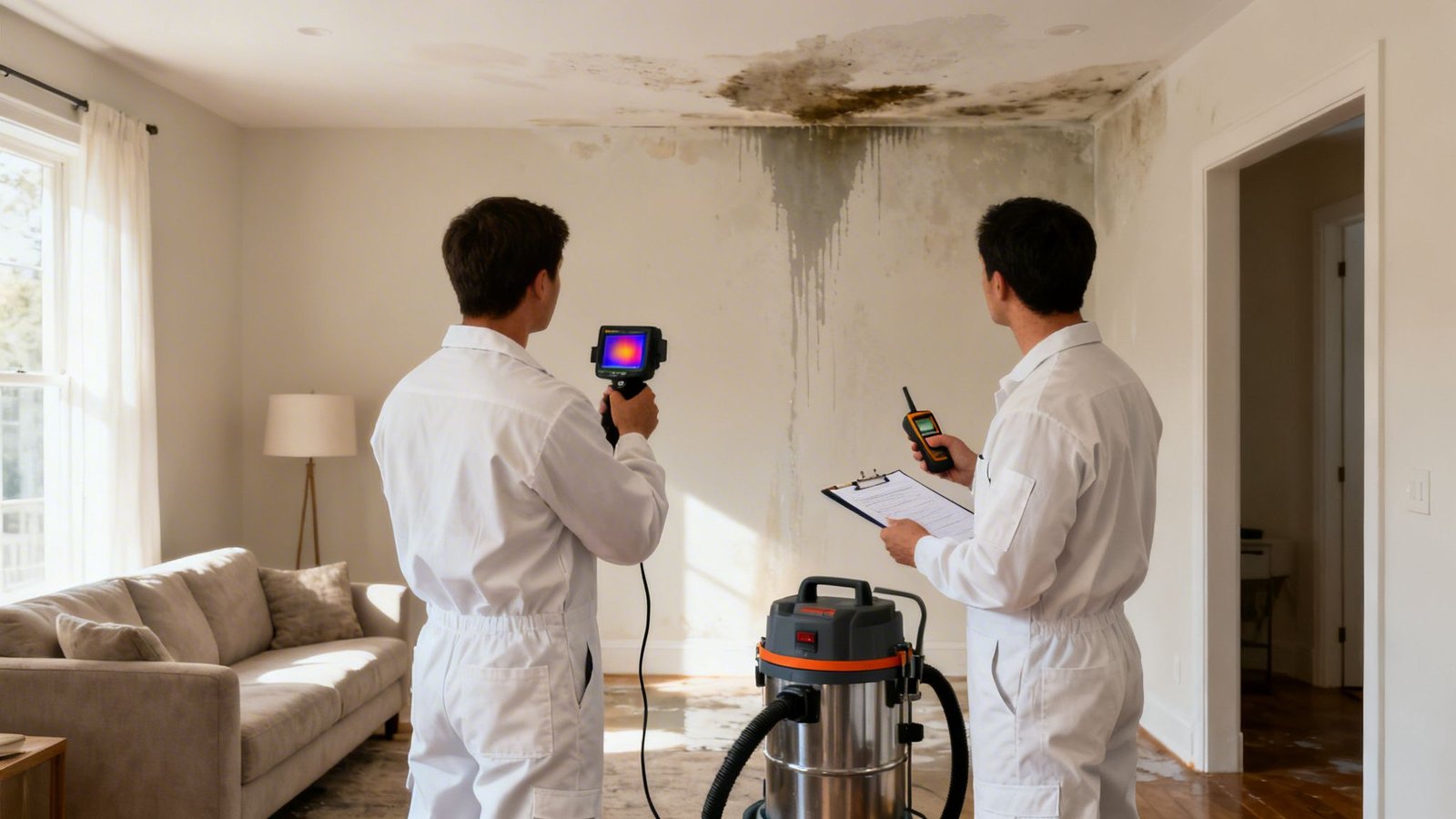
The first thing we do is a thorough inspection, and it goes far beyond what you can see. Our technicians use specialized tools to map out the full extent of the water intrusion and pinpoint every single affected material.
- Moisture Meters: These devices have probes we can insert into drywall or press against flooring to get precise readings of moisture content. This tells us exactly how saturated materials have become.
- Thermal Imaging Cameras: These cameras show us temperature differences in your walls and ceilings. Wet areas are almost always cooler, appearing as distinct blue or purple patterns on the screen, which helps us find hidden pockets of water that would otherwise be missed.
This data-driven assessment allows us to create a detailed "scope of work." This document outlines every single step needed for restoration, and it’s the exact kind of report your insurance adjuster will need to see.
Water Extraction and Debris Removal
Once we have a solid plan, the hands-on work begins immediately. The top priority is getting all the standing water and storm-related debris out of your home. We use powerful, truck-mounted extraction units and submersible pumps to quickly remove large volumes of water from basements, crawl spaces, and soaked carpets.
At the same time, our team safely removes any debris that got inside—this could be anything from broken tree branches and shattered glass to the mud and silt left behind by floodwaters. Any materials that can't be salvaged, like contaminated insulation or soaked drywall, are carefully bagged and removed according to local regulations.
Structural Drying and Dehumidification
Just removing the visible water isn’t nearly enough. The real science of professional storm damage repair is in drying the structure itself—the wood framing, subfloors, and everything else that absorbed moisture. This is where psychrometry, the science of drying, comes into play.
We strategically place high-velocity air movers to create a powerful vortex of airflow across wet surfaces. This rapidly accelerates evaporation, pulling moisture out of materials and pushing it into the air.
Pro Insight: It's the combination of aggressive air movement and dehumidification that truly dries a structure. Industrial-grade dehumidifiers work right alongside the air movers, grabbing all that evaporated moisture out of the air and collecting it so it can't be reabsorbed by other materials.
We monitor this entire process daily, taking new moisture readings to track our progress. This ensures your home is brought back to a safe, dry standard, which is the only way to effectively stop secondary problems like mold growth or wood rot from taking hold. This phase is absolutely non-negotiable for a successful, long-lasting repair.
How to Choose the Right Storm Damage Repair Company in Los Angeles
After a storm hits, the restoration company you hire becomes your most important partner. I can't stress this enough. This one decision shapes your entire recovery experience, from the quality of the storm damage repair to how smoothly your insurance claim gets handled. In a market like Los Angeles, you have to know how to spot the true pros.
Choosing the right team isn’t just about finding someone to fix a hole in the roof. It’s about entrusting your home—and your financial well-being—to experts who will advocate for you. A great company doesn't just restore your property; they restore your peace of mind.
Non-Negotiable Credentials and Qualifications
Before you even think about getting a quote, there are a few things you absolutely must verify. These aren't just suggestions; they are the bare minimum for any contractor you let on your property.
- Proper Licensing and Insurance: First, they need a valid contractor's license from the California Contractors State License Board (CSLB). No exceptions. They also must carry both general liability insurance and workers' compensation. This protects you from being on the hook if a worker gets injured at your house.
- IICRC Certification: The Institute of Inspection, Cleaning and Restoration Certification (IICRC) is the gold standard in our industry. When technicians are IICRC-certified, it means they've been properly trained in the latest, most effective techniques for water removal, structural drying, and getting rid of mold. It’s a real guarantee of professionalism.
Think of these as the fundamentals. Without them, you're taking a huge gamble with your most valuable asset.
The Importance of a Rapid and Local Response
When you're dealing with storm damage, the clock is ticking. Water quickly soaks into building materials, and dangerous mold can start growing in as little as 24-48 hours. A company located hours away just can't get there fast enough.
Key Takeaway: A real emergency restoration company should be able to get to your Los Angeles property in about an hour. That quick response is what stops secondary damage in its tracks and keeps your total repair costs from spiraling.
A local company also gets the unique challenges we face here—from the specific home construction in Sherman Oaks to the coastal air in Santa Monica that can make mold grow even faster. They know the local building codes inside and out, ensuring all repairs are done right the first time.
Insurance Savvy and Direct Billing
A top-tier restoration company does more than just the physical work; they are masters at navigating the insurance claims maze. They should be able to work directly with all major insurance carriers.
This expertise is a massive weight off your shoulders. An experienced team uses the same estimating software as the insurance adjusters, creating detailed, line-item reports that get approved faster. They can talk directly to your adjuster, answer the technical questions, and provide all the necessary proof, which cuts down on delays and stress for you. If you need a starting point, check out our guide on finding local water damage restoration companies.
Red Flags to Watch Out For
Knowing what to look for is only half the battle. You also need to know what to avoid. I'd recommend walking away from any company that:
- Uses High-Pressure Sales Tactics: A professional will assess the damage and give you a clear, calm plan. They won't try to bully you into signing a contract right there on the spot.
- Offers a Vague or Incomplete Estimate: A legitimate quote will be detailed, breaking down the scope of work, materials, and costs. A lowball price scribbled on a napkin is a giant red flag.
- Asks for a Large Upfront Payment: While a reasonable deposit can be standard, demanding a huge chunk of the total cost before any real work begins is often a sign of a shady operator.
Your goal is to find a trusted partner for your storm damage repair. By verifying their credentials, making sure they’re local and fast, confirming their insurance expertise, and keeping an eye out for red flags, you can confidently pick a company that will get your home—and your life—back to normal.
Frequently Asked Questions About Storm Damage
After a bad storm rolls through, you’re left with the cleanup, the stress, and a ton of questions. I get it. The road to recovery can feel overwhelming, but getting straight answers is the first step toward taking back control. We’ve been helping Los Angeles homeowners navigate this for years, and these are the questions that come up every single time.
This isn’t just a local problem, either. The U.S. has been hit by hundreds of separate billion-dollar weather disasters, with storms and floods creating a huge demand for real restoration pros. You can see the staggering numbers for yourself and explore the data from NOAA. It’s a sobering reminder of why being prepared with the right information is so critical.
How Long Does Professional Storm Damage Repair Typically Take?
This is always the first thing people ask, and the only honest answer is: it really depends on what the storm left behind. There's no one-size-fits-all timeline.
For a relatively minor issue—say, a few shingles torn off and a small, contained leak in the attic—we can often get things dried out and fixed up in about 3 to 5 days. That timeline covers the structural drying and the straightforward repairs that follow.
But if you're dealing with something major, like a basement completely flooded or a tree crashing through your roof, you’re looking at a much longer haul. These bigger, more complex jobs can easily take several weeks, and sometimes even a few months, to fully complete.
Several key things will dictate the schedule:
- How much water got in? How deep the water soaked into materials like your home's wood framing and subfloors is a huge factor.
- Is there any mold? If mold has already started to grow, we have to add a full remediation step, which takes extra time.
- What needs to be rebuilt? Tearing out and rebuilding walls, replacing entire floor systems, or repairing the roof structure is a lot more involved than patching a few cosmetic spots.
- How fast does the insurance company move? Sometimes, the biggest slowdowns come from waiting on your insurance carrier to approve the claim and the scope of work.
A good restoration team will give you a detailed, projected timeline, but only after they’ve done a thorough, hands-on assessment of the damage. For a closer look at the process, we break it down in our article on how long water damage restoration takes.
Will My Homeowners Insurance Cover All Storm Damage?
This is the big one, and it all comes down to the fine print in your policy. Most standard homeowners policies (often called HO-3 policies) cover damage from wind, hail, and the rain that gets in because of an opening the storm created. The classic example is wind ripping a hole in your roof, which then lets rain pour in and ruin your ceiling, walls, and floors. That's usually covered.
Crucial Distinction: Standard policies almost never cover damage from flooding. We're talking about rising surface water, like a nearby creek overflowing. That requires a completely separate flood insurance policy, typically from the National Flood Insurance Program (NFIP).
It’s absolutely vital to pull out your policy and read it. Look for your specific coverages, find out your deductible, and pay close attention to any exclusions. A reputable restoration company will document everything meticulously to help you get every dollar you’re entitled to for a covered loss.
What Is The Difference Between Water Mitigation And Water Restoration?
People use these terms interchangeably all the time, but in our world, they mean two very different things that happen in order.
Water mitigation is the emergency response. It's all about stopping the bleeding and preventing the damage from getting any worse. Think of it as first aid for your house. This phase includes:
- Emergency water extraction
- Tarping the damaged roof to keep more rain out
- Boarding up shattered windows
- Setting up our industrial-grade air movers and dehumidifiers to stabilize the environment
Water restoration, on the other hand, is the rebuilding process. It starts after mitigation is done and the structure is completely dry and stable. This is where we put everything back together—replacing drywall, laying new floors, painting, and handling any other repairs needed to get your home back to the way it was before the storm.
Can I Stay In My Home During The Repair Process?
Whether you can stay put really comes down to safety and basic livability. If the damage is minor and contained to just one or two rooms, you can often live in the house while we work. No problem.
However, if the damage is severe and widespread, it’s almost always safer and more practical to relocate for a while. You’ll likely need to move out if:
- There's major structural damage that makes the home unsafe.
- Essential utilities like electricity or water have to be shut off for a long time.
- The house is contaminated with mold or sewage, which poses a serious health risk.
The good news is that most insurance policies include coverage for Additional Living Expenses (ALE). This is designed to cover the cost of a hotel or a temporary rental while your home is uninhabitable. Check your policy and make sure you keep every single receipt.
When you’re facing the chaos after a storm, you need a team you can count on to show up fast and do the job right. Onsite Pro Restoration is IICRC-certified and on call 24/7 to help Los Angeles homeowners get back on their feet. If you need immediate help or just want a free, no-obligation damage assessment, give us a call.