
The chaos and confusion right after a house fire are overwhelming, but what you do in those first few hours is absolutely critical. It impacts not only your family’s safety but also the success of your insurance claim down the road. The number one rule is simple: ensure everyone is safe and stay out until the fire department gives you the official all-clear. Only then can your focus shift to securing what’s left, calling your insurance agent, and starting to document the initial fire and smoke damage.
If your Los Angeles home has suffered from fire damage, you need an expert team on-site immediately. Onsite Pro Restoration offers a 24/7 emergency response to secure your property and start the recovery process.
Call (818) 336-1800 Now for an Immediate Response
Your Emergency Action Plan After a House Fire
It's hard to think straight when you're standing outside watching smoke pour from your home. Having a clear, step-by-step plan helps you regain a sense of control and start protecting your financial recovery. Safety is the absolute, non-negotiable first priority. Never, ever re-enter a fire-damaged building until the fire marshal has officially declared it safe. Even when the flames are gone, the danger is far from over—structural instability and toxic air are silent threats.
Prioritize Safety and Wait for Clearance
Before you do anything else, account for every person and pet. Get everyone to a safe spot, well away from the property and clear of emergency crews and potential hazards like falling debris. Even if it was a small kitchen fire in your Sherman Oaks apartment that was put out quickly, the lingering dangers are real and often invisible.
These unseen risks include:
- Structural Weakness: Intense heat can warp and weaken walls, floors, and roof trusses, making them dangerously unstable.
- Toxic Air Quality: Smoke and soot are a nasty cocktail of chemicals and microscopic particles that can cause serious respiratory damage.
- Electrical Hazards: Damaged wiring combined with water from firefighting efforts creates a perfect storm for electrocution.
Wait for a fire department official to give you the explicit "all-clear." Don't take any chances by going back inside before then.
Make the Right Calls in the Right Order
Once you and your family are safe, it’s time to pick up the phone. Making these calls in the right sequence gets the recovery process started on the right foot.
- Your Insurance Company: Call your agent immediately to report the fire. This is what kicks off the claims process. They will give you crucial instructions on what to do next, including how to mitigate further damage and access temporary housing if your policy covers it.
- A Certified Restoration Company: You need a professional team that specializes in fire and smoke damage on-site, fast. Their first job is securing the property—boarding up broken windows and damaged doors to keep out weather and prevent vandalism.
- Family and Friends: Let your support system know that you are safe.
Your insurance policy is a contract, and it requires you to "mitigate further damage." This simply means taking reasonable steps to prevent the situation from getting worse. Calling a restoration company for an emergency board-up is a key part of holding up your end of the deal and protecting your claim.
Document Everything from a Safe Distance
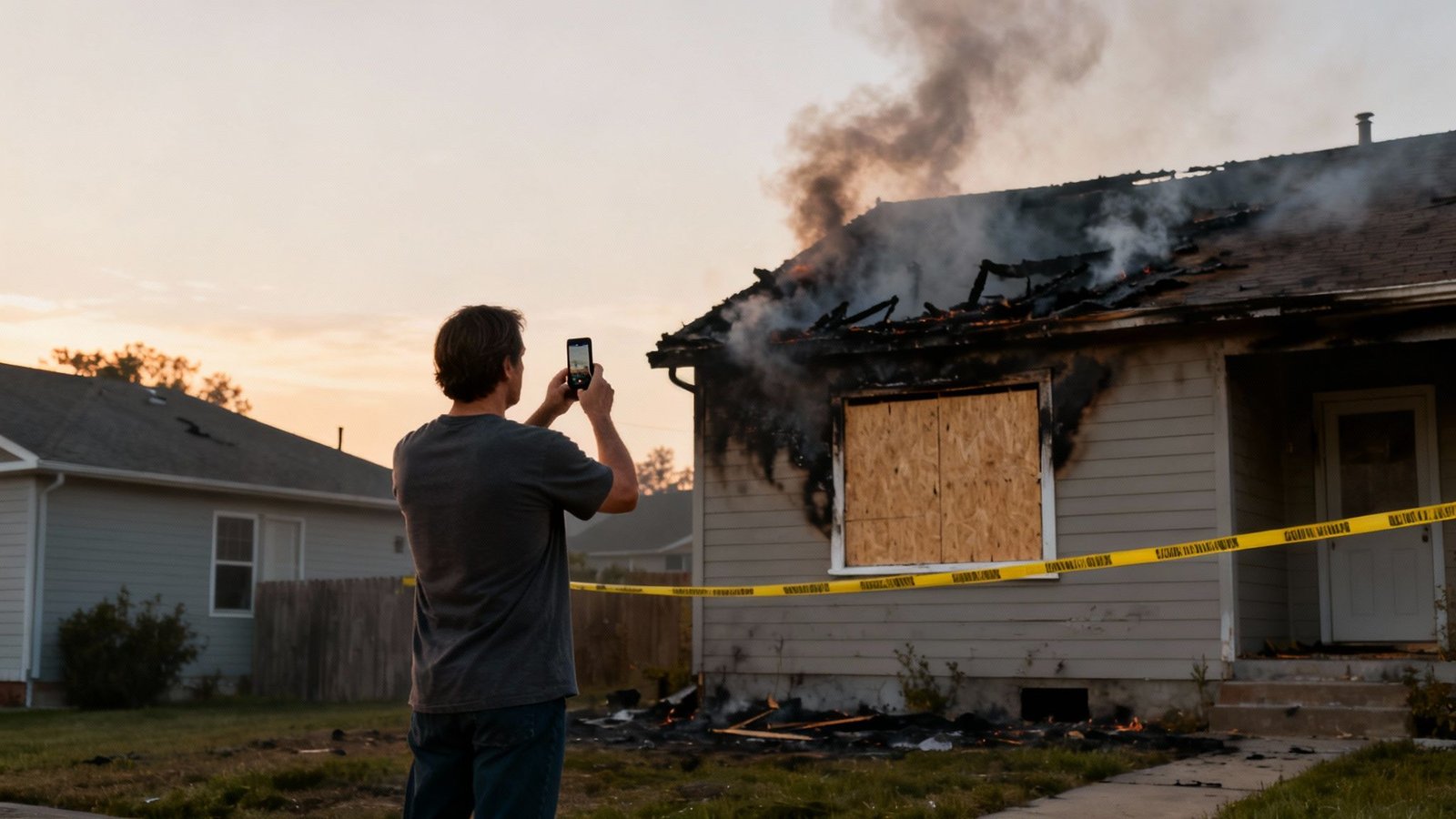
Before a single thing is moved or touched, start documenting. Use your smartphone to take as many photos and videos as you can of the outside of your home. Capture the fire and smoke damage from every possible angle. This initial visual evidence is pure gold for your insurance claim.
Don't forget to document the water damage caused by the firefighters' efforts, as this is almost always covered as part of a fire claim. It's also a good idea to know how to find your main water shut-off to prevent any more water from causing problems. Of course, the best strategy is always prevention; adapting effective workplace fire prevention tips for your home can go a long way in avoiding fire and smoke damage altogether.
Decoding the Different Types of Soot and Smoke
When you’re facing the aftermath of a fire, it’s easy to think all fire and smoke damage is just a messy, black film. But that’s a dangerous oversimplification. Just like you wouldn’t use a grease cleaner on a wine stain, the type of smoke and soot dictates the entire restoration strategy.
Using the wrong approach can permanently set stains, drive odors deeper into materials, and even cause more damage than the fire itself. Soot isn't just dust; it's a complex cocktail of microscopic particles and chemical residues from whatever burned. The material, the fire’s temperature, and the amount of oxygen all combine to create distinct types of smoke, each with its own destructive personality.
The Contrast Between Wet and Dry Smoke
One of the first things a restoration pro will determine is whether they’re dealing with wet or dry smoke. They behave in completely different ways and require completely different cleaning methods. Getting this right is step one.
Dry Smoke:
- Origin: This is the product of a fast-burning, high-temperature fire that had plenty of oxygen. Think of a fire that rips through paper or wood.
- Characteristics: It leaves behind a fine, powdery soot that doesn’t smear easily. While it can get into every tiny crevice, it mostly sits on top of surfaces instead of bonding with them.
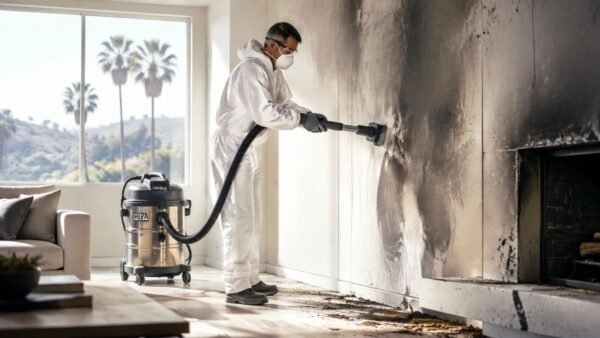
- Cleanup: Generally, this is the easier of the two to clean. Professionals will start with specialized HEPA vacuums to lift the fine powder before any wiping begins.
Wet Smoke:
- Origin: This comes from slow-burning, low-oxygen, smoldering fires. It’s what you get when plastics, rubber, and other synthetic materials burn.
- Characteristics: The residue is sticky, greasy, and smears at the slightest touch. The smoke itself is thick and carries a pungent, acrid odor that clings to everything.
- Cleanup: Far more challenging. Wet smoke residue has to be dissolved with powerful cleaning agents. Simply trying to wipe it away without the right solvent will spread the greasy film and make the problem much, much worse.
Specialized Residues from Kitchens and Garages
Beyond the basic wet and dry categories, some fires produce unique and incredibly stubborn soot. These are common in specific areas of a Los Angeles home, like a kitchen or garage, where specialized materials fuel the flames.
Protein Residue: This is the nasty result of a kitchen fire involving burned meat, poultry, or fish. It leaves a nearly invisible, greasy film on every surface, but it creates one of the most persistent and foul odors imaginable. Standard cleaners won't even touch it; it requires specialized enzymatic treatments that break down the organic compounds causing the smell.
Fuel or Petroleum Residue: When petroleum-based products burn—often in a garage or shed in places like the San Fernando Valley—they create a dark, oily soot that is extremely difficult to remove. This residue is highly corrosive and can quickly ruin metal finishes, plastics, and painted surfaces if not treated immediately. If you're dealing with this kind of tough residue, our detailed guide offers practical advice on soot removal from walls.
Key Insight: The type of soot is a direct clue to the nature of the fire. A professional can look at the residue and immediately understand what materials burned, how hot the fire was, and which specific cleaning protocols are needed to prevent permanent staining and lingering odors.
Recognizing the specific type of fire and smoke damage is the first critical step in building a proper restoration plan. Here’s a quick breakdown of what you might be up against.
Identifying Soot Types and Their Impact
The table below outlines the most common soot types we encounter, their sources, and the specialized approach each one demands for a successful cleanup.
| Soot Type | Common Source | Key Characteristics | Required Cleanup Method |
|---|---|---|---|
| Dry Soot | Fast-burning natural materials (wood, paper) | Fine, powdery, non-greasy, gray to black | HEPA vacuuming, dry chemical sponges |
| Wet Soot | Smoldering plastics and synthetic materials | Sticky, greasy, smeary, dense black color | Specialized degreasing and dissolving solvents |
| Protein Residue | Kitchen fires involving burned food (grease, meat) | Nearly invisible film, pungent and foul odor | Enzyme-based cleaners, thermal fogging |
| Fuel Residue | Burned petroleum products, oils, or synthetics | Oily, dark, highly corrosive, strong odor | Industrial-strength solvents, multi-step cleaning |
As you can see, a one-size-fits-all approach just doesn't work. Each type of soot requires a specific counter-attack to be neutralized effectively, ensuring your property is returned to a clean, safe, and odor-free state.
The Invisible Health Dangers of Smoke and Soot
After the fire trucks leave, the most dangerous threats are often the ones you can’t see. While charred walls are the obvious sign of fire and smoke damage, it’s the microscopic particles floating in the air and clinging to surfaces that pose a serious, long-term health risk. This is a silent hazard that can’t be ignored.
Smoke isn't just a harmless cloud—it's a toxic soup of gases and fine particulate matter. Soot is the physical proof of what didn't burn completely, but it’s far more dangerous than simple dirt. It’s an acidic, corrosive, and often toxic grime that gets into everything, from your furniture to the hidden corners of your ventilation system.
The Respiratory Risks of Particulate Matter
The biggest immediate health threat comes from microscopic particles known as PM2.5. We’re talking about particles smaller than 2.5 micrometers—about 30 times smaller than the width of a human hair. Because they're so tiny, they slip right past your body’s natural filters, embedding deep in your lungs and even entering your bloodstream.
This invasion can trigger serious health problems, especially for kids, the elderly, and anyone with existing health conditions.
- Asthma and Allergies: Inhaling these particles is a sure-fire way to trigger severe asthma attacks and make allergy symptoms flare up.
- Chronic Respiratory Issues: Long-term exposure can lead to bronchitis, COPD, and permanently reduced lung function.
- Cardiovascular Problems: Once in the bloodstream, these particles are known to increase the risk of heart attacks and strokes.
The scale of this problem is massive. Wildfire smoke has become a global health crisis, with the fine particulate matter from these events now causing over 100,000 premature deaths every year worldwide. This just goes to show that the dangers of fire and smoke damage don't stop at the property line; they affect air quality for thousands of miles.
Why Soot Is More Than Just a Stain
Don’t mistake soot for something you can just wipe away. It’s a hazardous material. Depending on what burned—plastics, wood, synthetic fabrics—soot can be a cocktail of acids, heavy metals, and cancer-causing chemicals. Trying to clean it with household products is not just ineffective; it’s a recipe for disaster.
Crucial Takeaway: Wiping soot with a wet rag is one of the worst things you can do. The greasy, acidic film just gets smeared deeper into porous surfaces like drywall, wood, and grout. Not only does this set the stain permanently, but it also kicks those toxic particles back into the air you’re breathing.
To get a real sense of the chemicals involved, it’s worth looking at professional Toxicological Information, which details the hazards of substances commonly found in post-fire environments.
The Hidden Danger in Your HVAC System
One of the most overlooked victims of fire and smoke damage is your HVAC system. During a fire, it acts like a giant vacuum, sucking up smoke, soot, and toxic fumes and then blasting them through the ductwork to every single room in the house—even the ones the fire never touched.
Once inside your ducts, these contaminants just sit there. The moment you turn your heat or AC back on, the system recirculates those same harmful particles, polluting your indoor air quality over and over again. This creates a chronic exposure risk that can cause health problems long after the visible damage is fixed.
A true restoration job always involves a full HVAC inspection and cleaning, usually with HEPA filtration. For heavy contamination, professional-grade equipment like a commercial air scrubber rental is the only way to truly clean the air.
Ultimately, tackling the invisible dangers of smoke and soot requires specialized knowledge and tools. DIY cleaning almost always falls short, leaving behind unseen toxins that put your family’s health on the line. Only a thorough, professional remediation can guarantee your home is truly safe to live in again.
The Professional Fire Damage Restoration Process
When you're standing in the aftermath of a fire, figuring out what to do next feels impossible. But for professionals, restoring a property from fire and smoke damage isn't about guesswork—it's a systematic process designed to safely bring your home back to life. Certified technicians don't just show up to clean; they follow a strict, industry-vetted roadmap to tackle every hazard, both visible and hidden.
That journey starts with a single phone call. The second you reach out to a 24/7 emergency restoration company, a team is on its way to your Los Angeles property, often arriving in about an hour. The first job is always the same: stop the damage in its tracks.
Need Immediate Fire Restoration in Los Angeles? Get a Free Estimate Now
Step 1: Initial Contact and Damage Assessment
The process kicks off the moment you call. A project manager will get the essential details about the fire to prep their team and dispatch an emergency crew. Once on-site, the lead technician begins a meticulous inspection to understand the full scope of the fire and smoke damage.
This is far more than a quick look around. They're trained to identify:
- The source of the fire and the specific materials that burned.
- The different types of soot and smoke residues present (wet, dry, protein, etc.).
- The extent of water damage left behind by firefighting crews.
- Which areas are structurally sound and which have been compromised.
This deep dive is critical. It forms the foundation for a detailed action plan and gives you and your insurance company an accurate estimate.
Step 2: Property Security and Water Removal
An unsecured property is an open invitation to more problems, from weather and vandalism to liability issues. The very next step is locking the site down. This means boarding up broken windows and doors and tarping any holes in the roof. This is a crucial part of mitigating further damage—something most homeowners' insurance policies actually require.
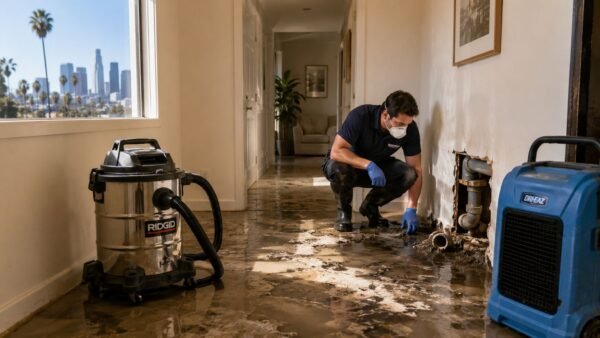
At the same time, if firefighting efforts left standing water, the crew gets to work on water extraction immediately. Using powerful pumps and industrial vacuums, they pull out the bulk of the water. This fast response is vital to head off secondary damage like mold, which can start to grow in as little as 24 to 48 hours.
Step 3: Soot and Smoke Removal
This is where the real heavy lifting begins. The specific techniques used here depend entirely on the type of soot found during the initial assessment. Professionals come armed with specialized equipment and cleaning agents that are worlds away from what you can buy at a store.
Expert Insight: Trying to just wipe away soot can be a disaster. It often drives the acidic particles deeper into surfaces like drywall and wood, causing permanent stains and locking in odors. Professional methods are all about lifting and neutralizing the contaminants, not just smearing them around.
The tools of the trade for this stage include:
- HEPA Vacuums: These aren't your average vacuums. They capture microscopic soot particles without spitting them back into the air.
- Dry Cleaning Sponges: Also known as chemical sponges, these are used to gently lift dry, powdery soot from delicate surfaces without any liquid.
- Specialized Solvents: When dealing with greasy, wet smoke residue, powerful degreasing agents are needed to break down that oily film so it can be removed for good.
The diagram below shows just how sneaky fire damage can be, spreading far beyond the flames to impact air quality, surfaces, and even your HVAC system.
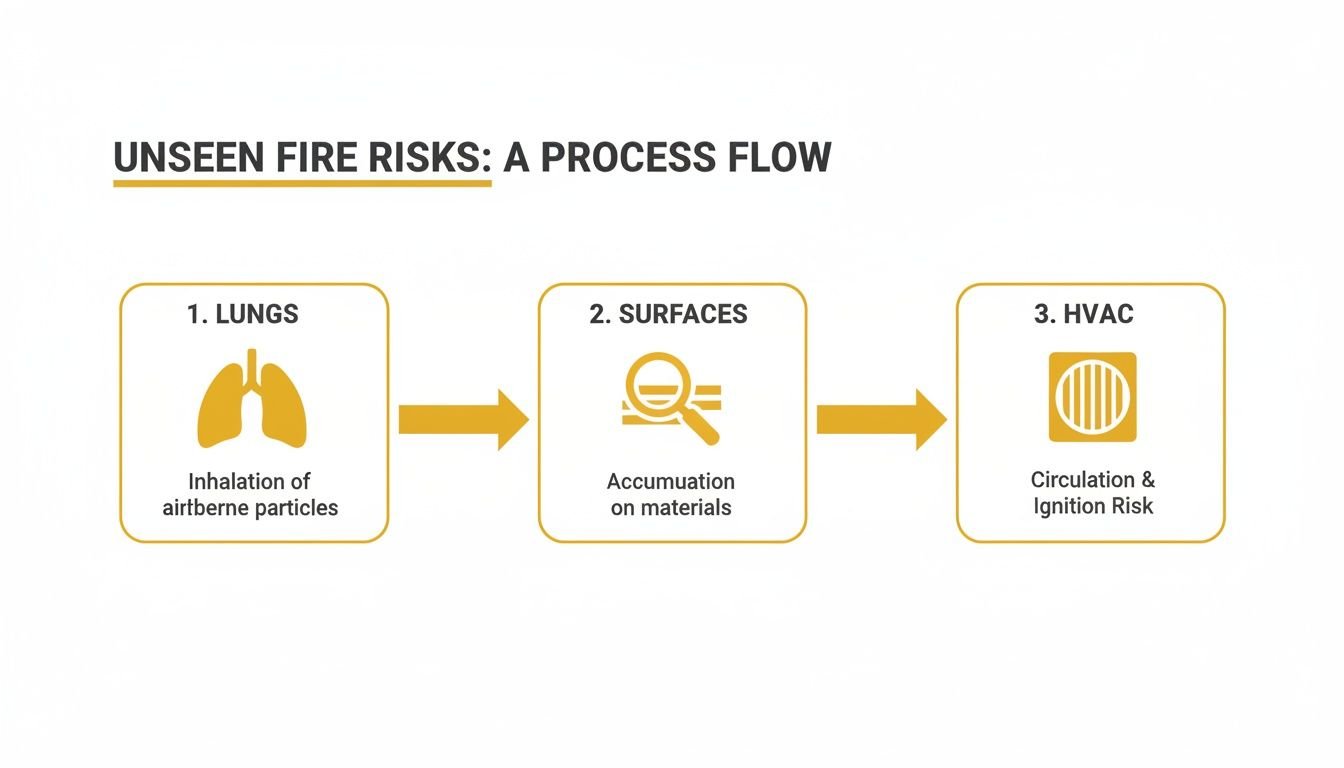
This flow highlights a critical point: the danger isn't just the fire itself. It’s how the toxic byproducts work their way into every nook and cranny of your home. To learn more about the complete process, you can explore the full fire damage restoration service and what it involves.
Step 4: Cleaning, Sanitizing, and Deodorization
Once the soot is gone, every salvageable surface and item in the affected area gets a deep clean and sanitization. This covers everything—walls, ceilings, floors, and personal belongings. Technicians might use ultrasonic cleaning for delicate items and industrial-grade detergents for the home's structure.
But cleaning alone won't get rid of that stubborn smoke smell. Smoke particles are microscopic and work their way deep into porous materials. To permanently kill the odor, professionals turn to advanced deodorization tech:
- Thermal Foggers: These machines heat a deodorizing solvent into a fine mist. It behaves just like smoke, getting into the same tiny spaces to neutralize the odor-causing particles at their source.
- Hydroxyl Generators: This is safe but powerful technology. It uses UV light to create hydroxyl radicals that literally break apart odor molecules in the air and on surfaces.
Finally, with the cleaning and deodorizing complete, the process shifts to repairs. Technicians will replace materials like drywall, flooring, and paint to bring your home back to its original condition, turning the fire and smoke damage into a distant memory.
How to Navigate Your Fire Damage Insurance Claim
After the shock of a fire wears off, you're immediately hit with a second crisis: the insurance claim. Dealing with fire and smoke damage is overwhelming on its own, but the paperwork, phone calls, and negotiations can feel like a grueling full-time job.
The key to a smooth claim process comes down to one thing: meticulous documentation. Your job is to provide undeniable proof of your loss. This starts the second you can safely re-enter your property. Before a single thing gets moved, start creating a visual record. Go through every room taking photos and videos of everything from multiple angles. This initial evidence is your most powerful tool.
Mastering Your Home Inventory
Next up is the home inventory. This is a detailed list of every single item damaged or destroyed in the fire. You have to get granular. Instead of "TV," you need to write "Samsung 65-inch QLED 4K Smart TV, Model QN65Q80A, purchased in 2022."
For every item, you'll want to include:
- Description: Brand, model number, and serial number if you have it.
- Age: When you bought the item.
- Original Cost: Dig up receipts or bank statements if you can find them.
- Replacement Cost: Research what a new, similar item would cost today.
It feels tedious, I know. But this level of detail is absolutely critical for proving the true value of your loss and getting the settlement you're entitled to.
Actual Cash Value vs. Replacement Cost
You need to know your policy's language inside and out. Most policies cover your belongings in one of two ways: Actual Cash Value (ACV) or Replacement Cost Value (RCV). The difference between them is huge.
- ACV pays you what the item was worth the moment before the fire. That means it accounts for depreciation. A five-year-old sofa might only be valued at a fraction of what you paid for it.
- RCV pays the full cost to replace the item with a new, similar one. This is what you want. However, many policies pay the ACV first and only release the rest of the funds after you've actually bought the replacement.
Understanding which coverage you have helps set realistic expectations. To get a better handle on this, it's worth learning more about how homeowners insurance typically covers fire damage.
Key Takeaway: Whatever you do, never throw away damaged items until your insurance adjuster has inspected them and given you written approval. Disposing of things too early can be seen as destroying evidence and can put that part of your claim at risk.
The constant threat of wildfires in our area has only made insurance claims more complicated. The Eaton and Palisades fires in Southern California led to 150,000 evacuations and a staggering USD 140 billion in damages. For property owners everywhere from Glendale to Beverly Hills, these events are a harsh reminder that fire and smoke damage isn't just about what burns—it's about the soot and smoke that gets into every crack and crevice, requiring certified professionals to fix.
This is where a professional restoration company becomes your best ally. We do more than just clean up. We provide the detailed reports, moisture readings, and professional documentation that adjusters need to see. This third-party validation helps them approve your claim quickly and fairly, ensuring every bit of the fire and smoke damage is accounted for. It’s about getting you a fair settlement so you can start putting your life back together.
Why DIY Fire Cleanup Can Make Things Worse
After a fire, the first instinct is to grab a sponge and start scrubbing. It's a natural urge to reclaim your space and bring back some sense of normalcy. But when you’re dealing with fire and smoke damage, this is one of the most damaging mistakes you can make.
Going the DIY route isn't just less effective; it can actively make the damage far worse, putting both your health and your property’s future at risk.
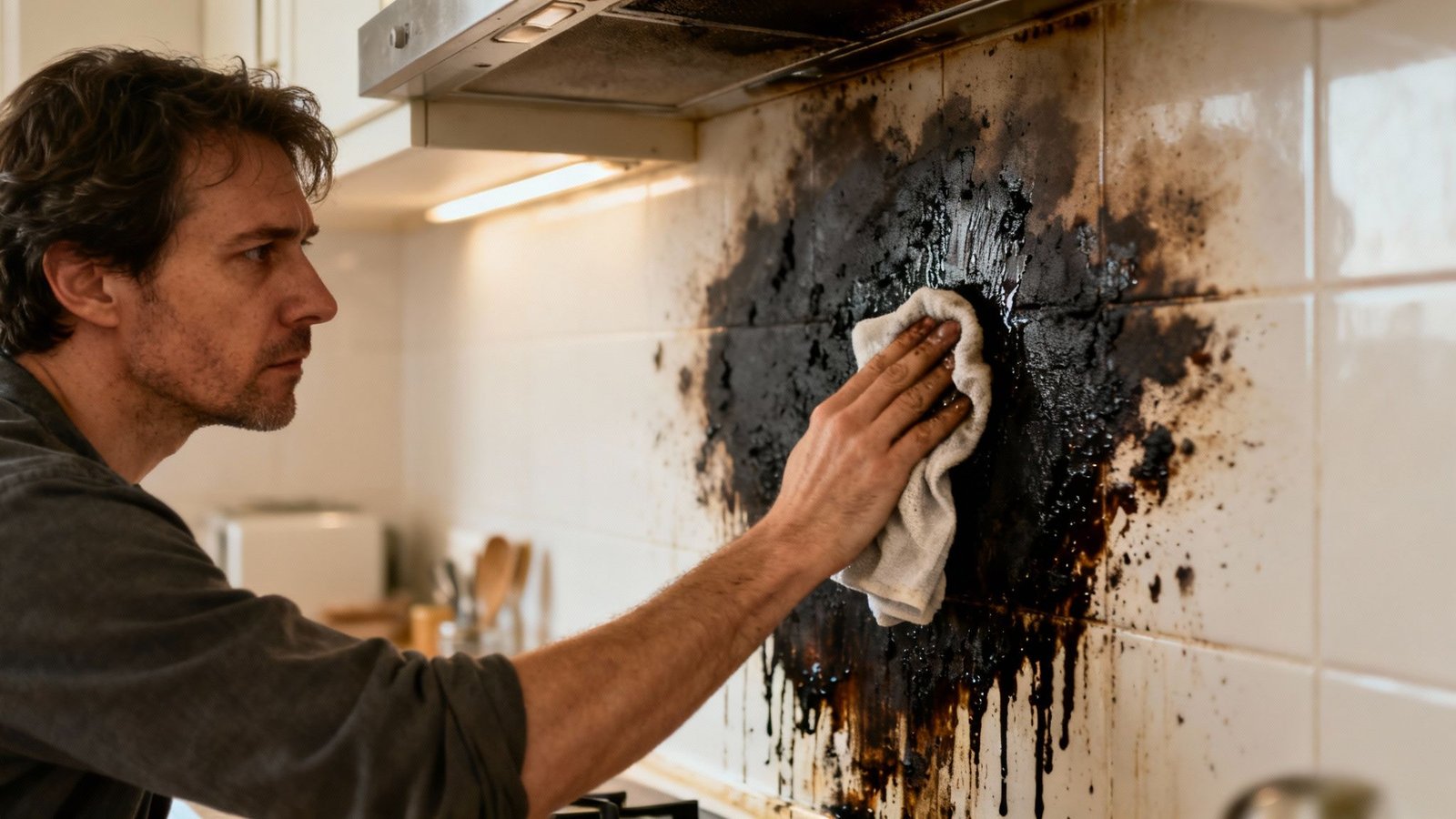
Standard household cleaners just aren't built to handle the complex, corrosive nature of soot. For example, if you use a wet rag on the greasy, oily soot left behind by burned plastics, you won't lift the stain. You'll smear it, pushing those acidic particles deeper into porous materials like drywall, wood, and grout. This can permanently set the stain and odor, making professional restoration much harder—and more expensive.
The Problem with the Wrong Tools
The gap between DIY supplies and professional restoration equipment is massive. What you have under your sink is simply no match for the hazardous aftermath of a fire.
- Household Cleaners: These products don't have the right chemical agents to break down acidic soot. Instead of cleaning, they often cause smearing and permanent discoloration.
- Standard Vacuums: A regular vacuum without a HEPA filter is your worst enemy. It will suck up microscopic soot particles and immediately blast them back into the air, spreading contaminants from one room to another.
- Improper Technique: Without knowing the difference between wet soot, dry soot, and protein soot, you might use a method that permanently locks the stains and odors into your home's structure.
The biggest mistake is underestimating the health risks. Soot isn't just dirt; it contains toxic chemicals and carcinogens that can be inhaled or absorbed through the skin. Without professional-grade personal protective equipment (PPE)—like N95 respirators, gloves, and eye protection—you are exposing yourself to serious, long-term respiratory issues.
Another huge pitfall is incomplete cleaning. You might get a surface to look clean, but countless smoke particles will still be embedded deep inside walls, carpets, and upholstery. Months later, when the humidity or temperature changes, these hidden particles reactivate, and that awful smoke smell comes roaring back.
This problem is only getting worse, especially here in Southern California. The growing threat of wildfires means we're all facing more intense smoke exposure. In fact, recent data shows per-person exposure to harmful wildfire smoke quadrupled in the U.S. between 2020-2024 compared to previous years. Projections now warn of 71,000 excess deaths each year just from smoke inhalation.
For Los Angeles homeowners, this is a serious wake-up call. It highlights why fire and smoke damage demands expert handling to safely eliminate corrosive soot and persistent odors. You can read the full research about these climate change impacts to understand the growing risks.
FAQ: Los Angeles Fire and Smoke Damage
When you're looking at the aftermath of a fire, the questions can feel overwhelming. Here are some clear, straightforward answers to the most common questions we get from Los Angeles homeowners dealing with fire and smoke damage.
Q: How long does fire damage restoration usually take in Los Angeles?
A: It depends entirely on the scale of the damage. A small, contained kitchen fire in a Pasadena home might take just a few days to clean up and repair. But a significant structural fire could easily stretch into several weeks or even months. The timeline is influenced by the extent of water damage, the type of soot, and the level of structural repairs needed. Once we complete a thorough inspection, we provide a detailed, projected timeline.
Q: Is it safe to stay in my home after a small fire?
A: No, you should never stay in your home after any fire until the fire department and a certified restoration expert have officially declared it safe. Even if the flames seemed minor, the hidden dangers are serious. Invisible threats like toxic airborne particles from burnt plastics, compromised structural integrity, and a contaminated HVAC system pose massive health risks that must be professionally assessed.
Q: Can the smoky smell be permanently removed from my property?
A: Yes, but only with professional-grade deodorization. That smoke smell is caused by microscopic particles embedded deep into porous materials like wood, drywall, and fabric. Store-bought sprays only mask the problem. We use advanced equipment like thermal foggers and hydroxyl generators that don't just cover up the smell—they neutralize the odor-causing particles at a molecular level, guaranteeing the smell is gone for good.
Q: Which of my belongings can be saved after a fire?
A: A restoration specialist will walk you through a process called "contents cleaning" to determine what's salvageable. Generally, non-porous items like metal, glass, and some hard plastics can often be fully restored. However, porous items that have absorbed heavy smoke and soot—such as mattresses, upholstered furniture, and most clothing—are often impossible to decontaminate completely and usually need to be replaced. We document these items for your insurance claim.
Don't let fire and smoke damage leave you feeling lost. The expert team at Onsite Pro Restoration is on call 24/7 to secure your property and get the restoration process started. We work directly with your insurance company to make everything as smooth as possible. Call us now for an immediate response.