
When the fire trucks pull away, the silence that follows is often the hardest part. You’re left staring at what used to be your home, a million questions swirling in your mind, but the biggest one is always what to do after a house fire. The most important thing to do right now is also the most difficult: stay out. Even if the flames are gone, the building is not safe. It’s full of hidden dangers, from weakened structures to invisible toxic fumes, and it’s critical to wait until the fire department gives the official all-clear. This initial period is crucial, and taking the right steps can significantly impact your recovery journey, especially in the unique context of Los Angeles County real estate and regulations.
Experiencing a fire in your Sherman Oaks or Beverly Hills home is a devastating event. This guide will walk you through the essential steps to take in the immediate aftermath, from the first 24 hours to navigating the complex insurance and restoration process, ensuring you and your family can recover safely and effectively.
Get a Free Fire Damage Assessment Now
Your First 24 Hours After a House Fire
The first day after a fire is a blur of shock and emotion. Your only goal should be to keep your family safe and start the slow, steady process of recovery. What you do in these first 24 hours is incredibly important—it sets the foundation for a smoother insurance claim and restoration journey. It's about taking calm, deliberate steps to protect what's left and prevent any more damage.
It's natural to want to rush in and see what's salvageable, but that's the worst thing you can do. Instead, focus on a clear plan. Every move you make right now affects your financial and emotional recovery down the road. This is the time to lean on experts who know how to handle the complex mess of fire, smoke, and water damage.
Immediate Safety and Initial Calls
Personal safety is everything. After the fire is out, the structure is still a minefield of hazards. Think weakened floors, live wires, and toxic soot on every surface. Once you and your family are somewhere safe, you have two crucial phone calls to make.
First, call a 24/7 IICRC-certified restoration company. Getting a professional team like Onsite Pro Restoration on-site immediately is a game-changer. They can prevent secondary damage, like the mold that starts growing from firefighting water in as little as 24-48 hours.
Your second call is to your insurance agent. Let them know what happened and get the claims process started right away. This phone call makes the event official and gets the ball rolling on resources for temporary housing and the eventual repairs. To get a better idea of what your policy may cover, check out our detailed guide on how homeowners insurance covers fire damage.
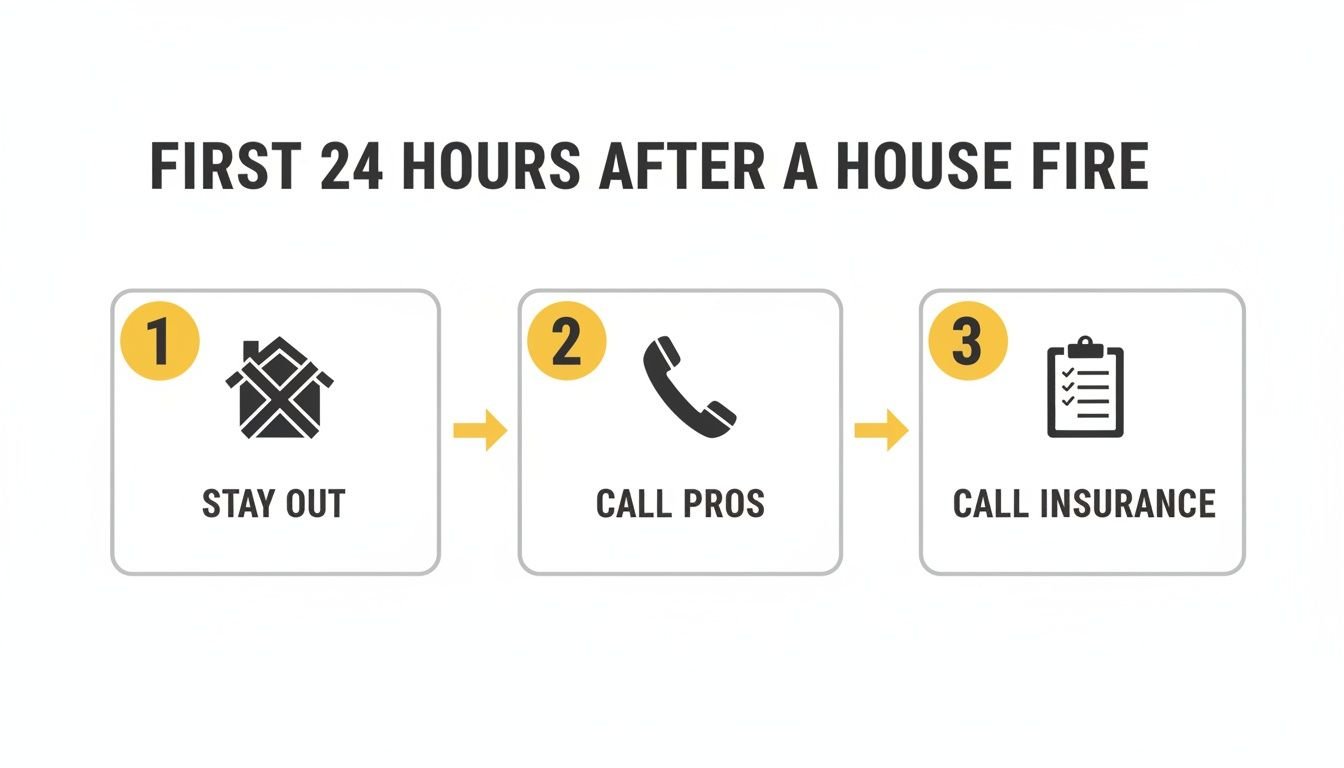
This quick visual guide boils it down to the essentials: stay safe, call the pros, and then notify your insurer to kick off the recovery.
Securing the Property From Further Damage
While you wait for help to arrive, you need to protect your home from a distance. A fire leaves a property exposed to everything from the weather to theft. Broken windows, busted doors, and damaged locks are an open invitation for more problems. If you've lost your keys in the fire or the locks are damaged, calling for emergency lockout services can help secure the property quickly once it's safe to do so.
A house fire is a devastating experience, striking around 344,600 residential buildings across the US each year. The aftermath is just as critical as the event itself; hidden hazards can cause further harm long after the flames are out.
Understanding that you're not alone in this can be a small comfort. In 2023, U.S. fire departments responded to fires that led to thousands of injuries, and tragically, a home fire death occurred every 3 hours. This isn't just a statistic; it's a stark reminder of why professional help isn't just a good idea—it's essential for a safe and complete recovery.
For homeowners navigating this difficult time, a clear checklist can provide much-needed structure. Here is a quick reference for the most important actions to take right away.
Table: Immediate Action Checklist After a House Fire
| Priority Task | Why It's Critical | Who to Contact |
|---|---|---|
| Ensure Personal Safety | The structure may be unstable, and the air can be toxic with soot and chemicals. | Fire department officials will tell you when it's safe. |
| Contact a Restoration Company | A rapid response prevents secondary damage like mold and secures the property. | A 24/7 IICRC-certified company like Onsite Pro Restoration. |
| Notify Your Insurance Agent | This starts your claim, which is necessary for covering temporary housing and repairs. | Your insurance agent or the company's 24/7 claims hotline. |
| Secure the Property | An unsecured home is vulnerable to weather, vandalism, and theft. | Your restoration company or a locksmith for board-ups and lock changes. |
| Arrange Temporary Housing | Your family needs a safe place to stay immediately. | Your insurance agent, American Red Cross, or family/friends. |
| Keep All Receipts | All expenses (lodging, food, clothes) may be reimbursable under your policy. | Keep a dedicated folder or use a mobile app to track them. |
This checklist isn't just a to-do list; it's a roadmap for gaining control in a chaotic situation. By tackling these items first, you build a solid foundation for the recovery process ahead.
Securing Your Property and Documenting the Damage
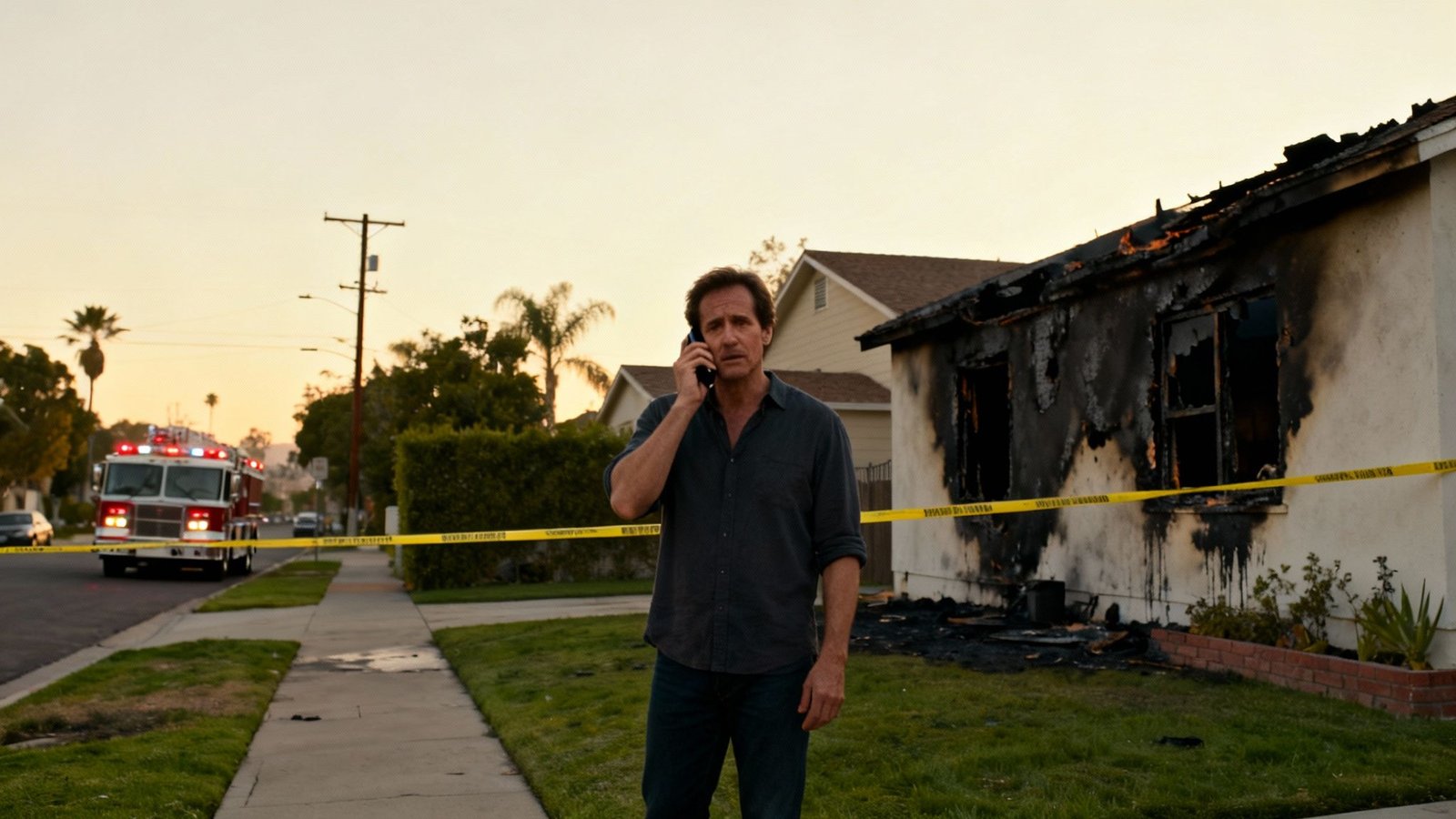
Once everyone is safely out and accounted for, your focus has to shift to protecting what’s left of your home. A fire doesn’t just burn things; it leaves your property completely exposed. Broken windows, busted-down doors, and gaping holes in the roof are an open invitation for vandals, thieves, or even just a sudden rainstorm, which will only make a bad situation worse.
The fire department will handle shutting off the utilities to prevent further danger, but the responsibility of physically securing the site usually lands on your shoulders. This means getting emergency board-up services to cover all those openings and maybe even putting up temporary fencing to keep people out. A professional restoration company can get this done for you right away, protecting your Los Angeles property so you can focus on your family.
Becoming a Damage Detective
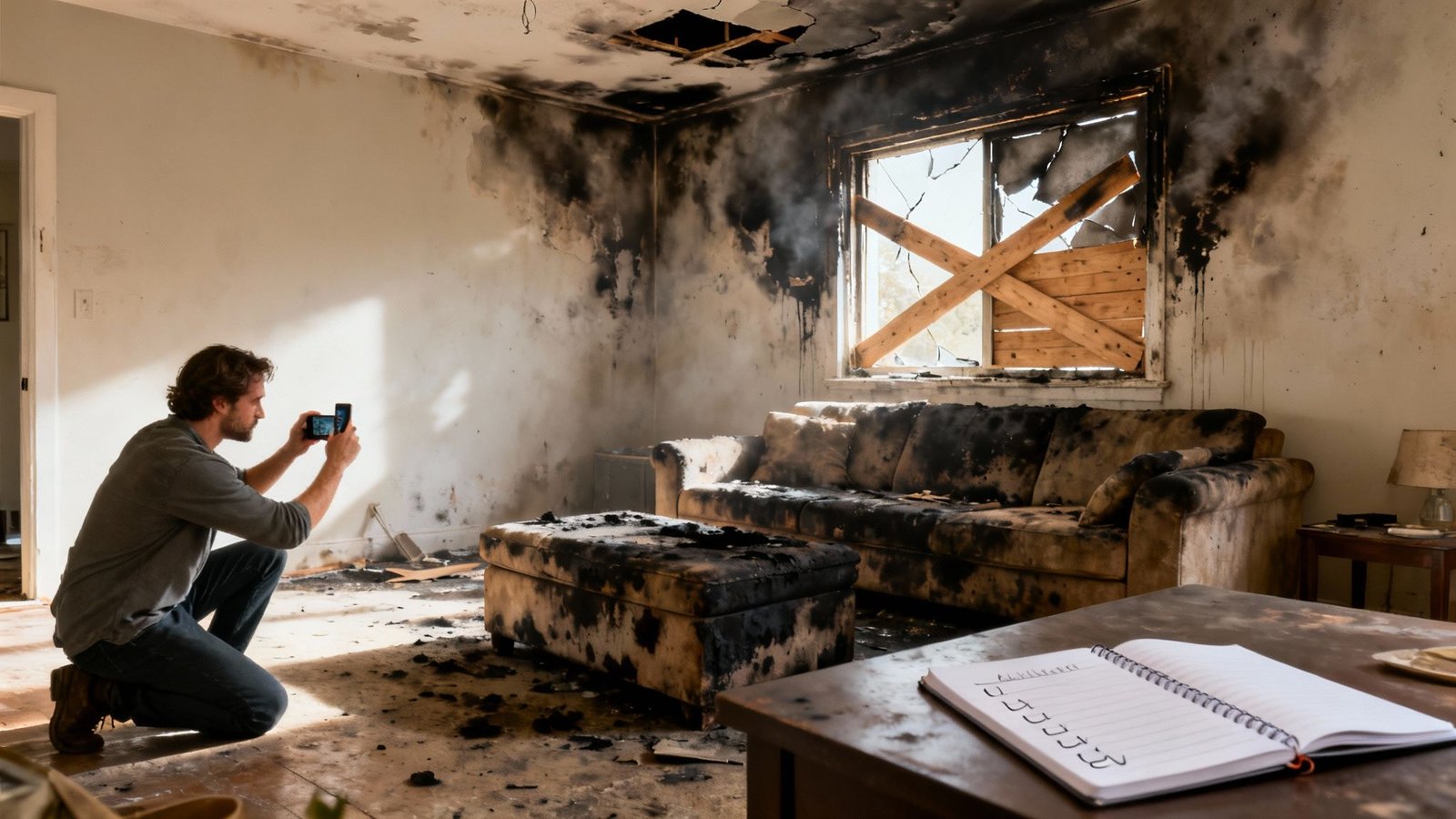
Before anyone starts cleaning or moving a single piece of debris, you need to put on your detective hat. The photos, videos, and notes you take right now will be the most powerful tools you have when you file your insurance claim. Every bit of evidence helps build the case for a fair and complete settlement.
Start by taking wide-angle photos of every single room from a few different corners. Get the big picture first, then zoom in on the details. Document specific things like the patterns of soot on the walls, charred furniture, and any visible structural problems. Don't forget to walk the perimeter and photograph the outside, too—pay close attention to the roof, siding, and windows.
Key Takeaway: Do not throw anything away until it has been documented and your insurance adjuster has seen it. What looks like a pile of junk to you might be a critical piece of evidence for proving the value of your loss.
After you have a solid visual record, it's time to start an inventory of everything that was damaged or destroyed. Yes, it’s a painful process, but it's absolutely essential.
Creating a Comprehensive Inventory
Your insurance company is going to ask for a "proof of loss" form. Think of it as a detailed shopping list of everything that needs to be replaced. For every item, do your best to list the following:
- Item Description: Be specific. Instead of "TV," write "Samsung 55-inch 4K Smart TV."
- Brand and Model Number: If you can find it on the item or remember it.
- Original Purchase Date and Price: Dig through old receipts, bank statements, or even scroll through your phone's photo gallery to jog your memory.
- Estimated Replacement Cost: Do a quick online search to find out what a similar item costs today.
This is going to feel overwhelming, especially if you’ve lived in your home for years. My advice is to tackle it room by room, even if it's just in your mind. Start with the big-ticket items first and work your way down to the smaller things.
The Professional Assessment Uncovers Hidden Damage
Your own documentation is vital, but it only captures the damage you can see with your own eyes. A professional restoration team brings in the tools and expertise to find the hidden damage that can cause major problems down the line.
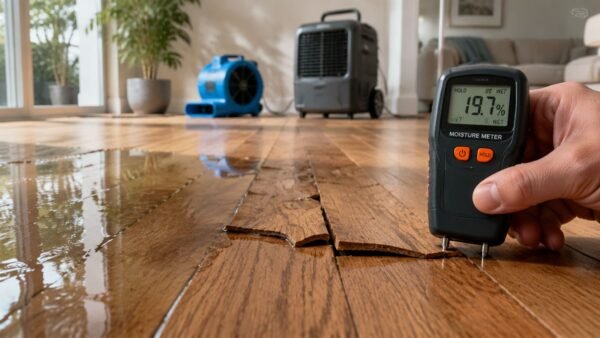
For example, smoke and soot are incredibly invasive. They don't just sit on the surface; they get deep into drywall, insulation, and your entire HVAC system. And all that water used to put out the fire? It gets trapped behind walls and under floors, creating a perfect breeding ground for mold. Technicians use specialized tools, like moisture meters, to find these hidden threats. If you're curious about the tech, you can learn more about how to read moisture meter readings on our blog.
This professional assessment is what allows us to create a complete and accurate scope of work. It ensures the restoration plan deals with everything—not just the obvious charring, but also the hidden smoke, water, and structural issues that could compromise the safety of your Sherman Oaks home for years to come.
How to Navigate the Insurance Claim Process
Filing an insurance claim after a house fire feels less like paperwork and more like taking on a second job. But it’s the financial engine that will power your entire recovery. The key is to approach it like a detailed business transaction, not a battle. Your job is to give the insurance company everything it needs to approve a settlement that truly covers your losses.
The process kicks off the moment you call your agent. You'll need your policy number, the date of the fire, and a quick summary of what happened. From there, your insurer assigns a claims adjuster to your case. This person is now your main point of contact for evaluating the damage and figuring out the payout.
Preparing for the Adjuster's Visit
The on-site visit from the insurance adjuster is a make-or-break moment for your claim. They will walk through what’s left of your home to assess the fire, smoke, and water damage firsthand.
This is where having a professional restoration team on-site with you is a game-changer. We can point out the hidden damage that adjusters often miss—things like soot inside wall cavities, compromised wiring, or structural issues masked by debris. This collaboration ensures the initial scope of work is accurate, which helps prevent frustrating delays and surprise costs down the road.
All the documentation you gathered earlier—your photos, videos, and initial inventory—now becomes powerful evidence to back up your claim.
A huge part of your claim is Additional Living Expenses (ALE), sometimes called Loss of Use coverage. This is the part of your policy designed to cover your costs while you can't live at home.
- Temporary Housing: Covers rent for an apartment or an extended-stay hotel.
- Daily Expenses: Can reimburse the extra costs for restaurant meals (if you have no kitchen), laundry services, and even boarding for your pets.
- Keep Every Receipt: Track every single expense meticulously. Your adjuster will require all of this documentation for reimbursement.
Digging into your homeowners insurance policy can feel overwhelming, but understanding these key parts empowers you to advocate for the support you’re entitled to.
The Role of a Professional Restoration Company
Working with an IICRC-certified restoration company like Onsite Pro Restoration completely changes the dynamic of the claims process. Instead of you playing middleman between contractors and the insurance company, we communicate directly with your adjuster.
We speak their language. We provide the detailed, line-item estimates and technical documentation they require to process your claim without a hitch.
Navigating the insurance and rebuilding process after a fire in a place like Sherman Oaks demands a strategic approach. Delays can compound the $48 billion in annual property losses from residential fires across the U.S. By promptly filing claims with professional documentation, homeowners can accelerate approvals and begin recovery sooner. Learn more about the impact of house fires from recent statistics.
This partnership takes the burden off your shoulders. We submit detailed damage reports, transparent cost estimates using industry-standard software, and photo evidence to justify every part of the restoration plan. This direct communication streamlines approvals and helps secure a fair settlement that covers the full cost of making your home whole again.
Advocating for a Fair Settlement
Even with a great team behind you, it’s important to stay involved in your claim. Carefully review every document the insurer sends, especially the adjuster’s initial report and any settlement offers. If you spot something that seems off or an item is missing from the scope of work, don’t be afraid to speak up and ask questions.
Your restoration company’s estimate is your strongest negotiation tool. It’s an independent assessment from certified experts that details exactly what’s needed to make your home safe. When you combine your personal documentation with our professional assessment, you’re presenting a unified, comprehensive case.
This positions you to secure a complete and fair settlement, giving you the resources you need to rebuild your life in your Beverly Hills or West Hollywood home.
Call (818) 336‑1800 for Insurance Claim Assistance
Understanding the Professional Restoration Process
When a professional restoration team shows up at your door in Los Angeles, you’ll see a highly coordinated, scientific process unfold. It's so much more than a deep clean; it's about systematically mitigating the damage and making your home safe again.
First, they'll do a thorough walk-through. This isn't just a quick look—they're assessing the full scope of the fire, smoke, and water damage, often using specialized tools to see what the naked eye can't.
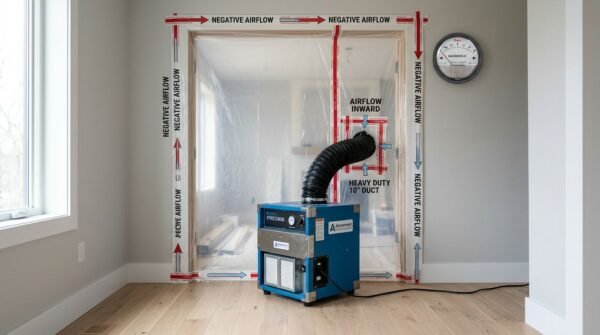
Immediately after, the crew will focus on containment. You'll see them seal off affected rooms with heavy-duty plastic sheeting and set up powerful negative air pressure machines. This is a critical step. It stops the microscopic, acidic soot and smoke particles from contaminating the rest of your house.
First Things First: Water Extraction and Structural Drying
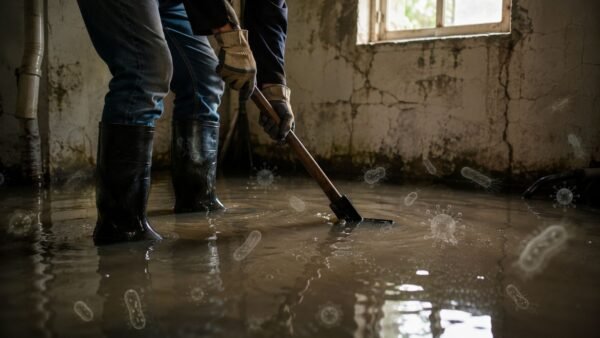
Before anyone can even think about cleaning soot, all the water used by the firefighters has to go. Standing water is a separate disaster waiting to happen. It can cause serious structural damage and, worse, lead to mold growth in as little as 24-48 hours.
Crews bring in the heavy machinery—powerful, truck-mounted extractors to remove the bulk of the water fast. Once that’s done, they set up an arsenal of drying equipment:
- High-Volume Air Movers: These aren't your average fans. They blast high-velocity air across floors, walls, and furniture to speed up evaporation.
- Low-Grain Refrigerant (LGR) Dehumidifiers: These are the industrial workhorses that pull moisture right out of the air, which is absolutely essential in the humid conditions we sometimes get near the coast.
- Moisture Meters and Thermal Imaging Cameras: Techs use these to hunt down hidden moisture pockets behind walls or under flooring, making sure every inch of your home is bone dry.
Skipping this drying phase is a recipe for long-term problems like rotted wood and stubborn mold. It’s non-negotiable.
The Meticulous Job of Soot and Smoke Removal
With the property dry and contained, the real cleanup begins. And let me be clear: this is not a job for household cleaners. Soot is an oily, pervasive residue that requires very specific cleaning agents and techniques, depending on what materials burned.
Technicians will use everything from special dry chemical sponges that lift soot without smearing it to wet cleaning methods with professional-grade detergents. For tough, charred surfaces, they might even use media blasting. Every single surface gets treated—ceilings, walls, light fixtures, even the inside of your kitchen cabinets.
A complete fire damage restoration service is about tackling both the visible grime and the invisible residues that cause lingering odors and serious health risks.
The real goal of smoke remediation isn't just cleaning what you can see. It's about eliminating the microscopic particles and odors that have soaked into porous materials all over your home, ensuring the air you breathe is genuinely safe again.
What Happens to Your Belongings? Content Pack-Out and Cleaning
The good news is that many of your personal belongings can often be saved. But they usually can't be cleaned effectively on-site while major restoration is happening. This is where a "pack-out" service comes in.
A professional team will carefully inventory, photograph, and pack up your salvageable items. They're then moved to a secure, climate-controlled facility for specialized cleaning. Here, they use advanced methods like ultrasonic cleaning for delicate items or ozone treatments to finally get that stubborn smoke smell out of furniture and fabrics. This process gets your things out of harm's way and clears space for the heavy-duty structural work to begin.
To help homeowners get a clearer picture of the entire journey, here’s a breakdown of what a professional restoration project typically looks like from start to finish.
Stages of Professional Fire Restoration
| Restoration Stage | Primary Goal | Key Activities |
|---|---|---|
| Emergency Response & Assessment | Stabilize the site and determine the full scope of damage. | 24/7 callout, board-up, initial safety inspection, damage assessment. |
| Water Extraction & Drying | Prevent secondary damage like mold and structural rot. | Pumping standing water, setting up air movers and dehumidifiers. |
| Soot & Smoke Removal | Clean all surfaces affected by smoke residue and soot. | Using chemical sponges, specialized detergents, and media blasting. |
| Content Pack-Out & Cleaning | Salvage and restore personal belongings. | Inventorying, packing, and moving items to a facility for cleaning. |
| Deodorization | Eliminate all lingering smoke and soot odors. | Thermal fogging, ozone treatments, and using hydroxyl generators. |
| Reconstruction & Repair | Rebuild and restore the property to its pre-fire condition. | Drywall replacement, painting, flooring installation, electrical work. |
This structured approach ensures nothing is missed and your home is restored methodically and safely.
The Final Steps: Deodorization and Putting It All Back Together
Even after every surface has been scrubbed clean, smoke odor can remain trapped deep inside building materials. The last step before any rebuilding is advanced deodorization. This might involve thermal fogging, which releases a vapor that chemically neutralizes odor-causing molecules, or deploying hydroxyl generators that safely break down odors without leaving behind any harsh chemicals.
Only when the property is clean, dry, and free of any odor can the reconstruction begin. This is the part where things start to look like home again—replacing drywall, laying new floors, painting, and handling any electrical or plumbing repairs. When it comes to major electrical work, safety is paramount. Professionals ensure all new wiring complies with strict safety codes, similar to foundational guidelines like the Australian electrical wiring standards, to guarantee your home is safe for the long run.
This final stage transforms a damaged structure back into the safe, familiar home you remember. The whole process is an incredibly coordinated effort to restore not just your property, but your peace of mind.
Protecting Your Health After a House Fire
The fire trucks may be gone, but the danger isn't over. In many ways, the emotional and physical aftermath of a house fire can be just as damaging as the flames themselves. Once the immediate crisis has passed, your focus has to shift to taking care of your family and addressing the invisible threats left behind—from toxic particles in the air to the deep emotional trauma.
Even if you feel perfectly fine, getting a medical check-up for everyone in the household is a non-negotiable first step. Smoke inhalation can trigger delayed respiratory issues, and the sheer stress of the event can have serious physical consequences. It's always better to be cautious, especially when it comes to children and the elderly.
Understanding the Invisible Dangers of Soot and Smoke
That black, grimy residue you see everywhere isn’t just dirt. It’s soot, a toxic cocktail of acids, chemicals, and metals. When the synthetic materials in our modern homes burn, they release a nasty brew of carcinogens that can settle on every surface and hang in the air for weeks.
Inhaling these microscopic particles can lead to serious health problems. This is exactly why you should never re-enter your home until the fire department gives you the official all-clear and you're wearing the right personal protective equipment (PPE).
If you absolutely must go inside for a brief, essential reason (and only after it’s been deemed structurally sound), you have to protect yourself.
- N95 or P100 Respirator: Forget a simple dust mask; it won’t do a thing. You need a respirator designed to filter out fine particulate matter.
- Safety Goggles: Protect your eyes from airborne debris and corrosive soot particles.
- Gloves and Boots: Heavy-duty gloves and sturdy, thick-soled boots are a must to avoid cuts and direct contact with hazardous materials.
- Long Sleeves and Pants: Keep your skin covered to prevent chemical absorption.
That lingering odor is more than just an unpleasant smell; it's a constant sign that airborne contaminants are still present. You can learn more about tackling smoke smell in your house and see why professional deodorization is such a critical part of any real restoration project.
Managing the Emotional Toll of a House Fire
Losing your home, your belongings, and your sense of security is a profound trauma. It is completely normal to feel a flood of intense emotions—shock, anger, grief, anxiety. The first step toward healing is simply acknowledging that these feelings are valid.
Don’t try to power through this alone. Leaning on your support system of family and friends is crucial right now. It's also wise to seek professional help to get the tools you need to process the experience in a healthy way.
Important Takeaway: The emotional recovery from a house fire is a marathon, not a sprint. Be patient with yourself and your loved ones. It’s okay to not be okay.
After a fire in your Glendale or Burbank home, prioritizing health checks is a critical part of the recovery process. The National Safety Council reported that in 2023, home structure fires claimed lives at a rate of 8.7 deaths per 1,000 fires, a significant increase from the previous year. Smoke inhalation often causes invisible injuries, making it vital to get a medical evaluation even if you feel fine, as delayed effects can be severe. These statistics highlight why you should never underestimate the health risks involved. You can find more information about fire-related injury statistics.
Finding Support in the Los Angeles Area
Fortunately, you don't have to navigate this journey by yourself. There are numerous resources available to help families recover, both physically and emotionally.
- American Red Cross: Provides immediate assistance with things like shelter, food, and mental health services.
- LA County Department of Mental Health: Offers access to counseling and support groups for residents dealing with trauma.
- Your Insurance Provider: Many policies actually include coverage for mental health care as part of your recovery, so be sure to ask.
Protecting your well-being is the foundation of your recovery. By addressing both the physical health risks and the emotional impact, you can ensure your family rebuilds on solid ground, ready for a safe and healthy future.
Frequently Asked Questions About What To Do After a House Fire
When the smoke clears, the questions start flooding in. Dealing with the aftermath of a fire in Los Angeles is confusing and stressful, but getting solid answers is the first step toward regaining a sense of control. We’ve been on these calls for years, and here are the questions we hear the most.
How Long Does Fire Damage Restoration Usually Take?
This is always the first question, and the honest answer is: it really depends on how bad the fire was.
If you had a small kitchen fire that was put out fast, we might be looking at a few days of deep cleaning, smoke odor removal, and some minor repairs. But for a fire that caused serious structural damage, the timeline stretches out, often taking several months. The process is a multi-stage marathon—from pumping out firefighter water and drying everything out, to removing soot, cleaning your belongings, and finally, the full reconstruction.
Your restoration company should give you a detailed schedule after they've done a thorough inspection. Just be ready for that timeline to shift a bit. Sometimes, hidden damage pops up once we start opening up walls.
Can I Clean Up Minor Fire Damage Myself?
Even if it looks like just a little bit of soot, please don't try to clean it yourself. We strongly advise against it, and here's why: fire residue isn't just dirt. It's a toxic mess of soot, smoke particles, and chemicals that can be hazardous to your health.
Grabbing a sponge and household cleaner usually makes things worse. You can accidentally smear and permanently embed soot into drywall, wood, or furniture, making the professional's job harder—and more expensive.
Crucial Safety Note: Our certified technicians use specialized gear, from professional-grade cleaning agents to full personal protective equipment (PPE), to handle these materials safely. Your health is the #1 reason to leave this to the pros.
What Should I Do With Smoke-Damaged Belongings?
It's natural to want to start clearing things out, but whatever you do, do not throw anything away until your insurance adjuster has seen and documented it. Every single damaged item is a piece of your insurance claim.
Instead, start making a list. Go room by room and take photos of all the damaged items. A professional restoration company like Onsite Pro Restoration can handle the rest with a service called a "content pack-out." Our specialized crew will carefully inventory, pack, and move everything salvageable to our secure facility.
There, we use advanced tools like ultrasonic cleaners and ozone treatments to restore items you might have thought were lost forever—from electronics and furniture to clothes and sentimental items. This service is almost always covered by your insurance and gives you the best shot at saving your possessions.
Will My Insurance Cover Temporary Housing?
In most situations, the answer is yes. Nearly all standard homeowner's policies have a clause for Additional Living Expenses (ALE), sometimes called "Loss of Use." It's there specifically to cover reasonable costs you rack up while your home is unlivable during repairs.
ALE coverage typically includes:
- Hotel stays or a temporary rental apartment.
- The extra cost of dining out if you don't have a kitchen.
- Expenses for laundry services, boarding your pets, and other daily necessities.
The key is to read your specific policy to understand your coverage limits and how to submit expenses. Keep meticulous records and save every single receipt. Your insurance company will need detailed proof for reimbursement. Knowing what your policy covers will give you the stability you need while we work on bringing your home back.
Walking through the aftermath of a house fire is a tough journey, but you don't have to do it alone. The certified professionals at Onsite Pro Restoration are on call 24/7 to help you with every single step, from securing your property tonight to handling the final restoration and insurance claim paperwork.