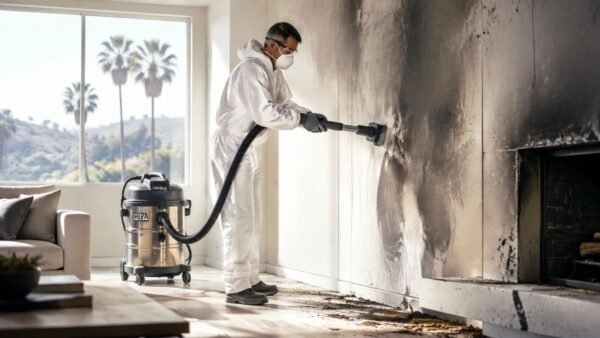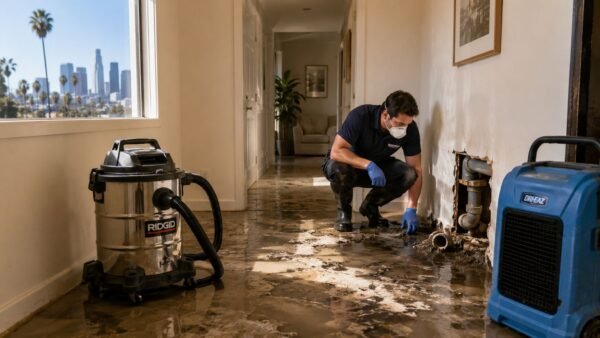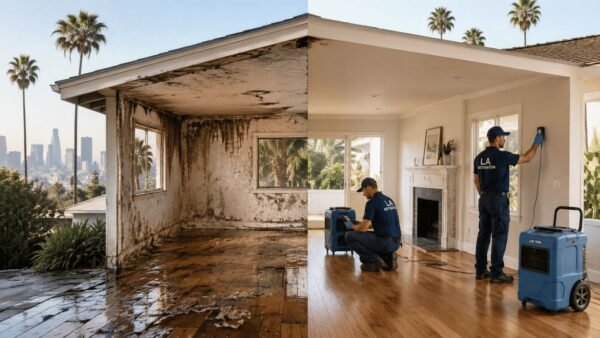

To permanently get rid of that mildew smell, you have to get to the root of the problem: the moisture source that’s feeding it. Just spraying air freshener is like putting a band-aid on a leaky pipe. The only real solution is to play detective and figure out exactly where the dampness is coming from. For homeowners and property managers across Los Angeles, tackling this common issue quickly is key to protecting property value and ensuring a healthy living environment.
If you're dealing with a persistent musty odor, don't wait. Our IICRC-certified team can pinpoint the source and eliminate it for good.
Get a Free Mildew & Odor Assessment Now
The Hidden Dangers: Why That Musty Smell Is a Red Flag
That distinct, earthy smell is your home's way of sending up a flare. It’s a dead giveaway that mildew—which is really just an early-stage mold—has found a nice damp, dark corner to call home. If you don't find and fix the water issue, you'll be stuck in a never-ending cycle of cleaning and deodorizing. For homeowners in Los Angeles, the culprit could be anything from a tiny, slow drip under the bathroom sink to the persistent humidity that rolls in from coastal spots like Santa Monica.
So, before you grab the bleach, you need to do a thorough inspection. This isn't a quick glance; it’s a methodical search of all the usual suspects where moisture loves to hide. When you pinpoint the cause, you're no longer just treating a symptom—you're solving the actual problem. This is how you prevent a small mildew issue from turning into a full-blown mold infestation that can damage your home's structure.
Common Hiding Spots for Mildew in Los Angeles Homes
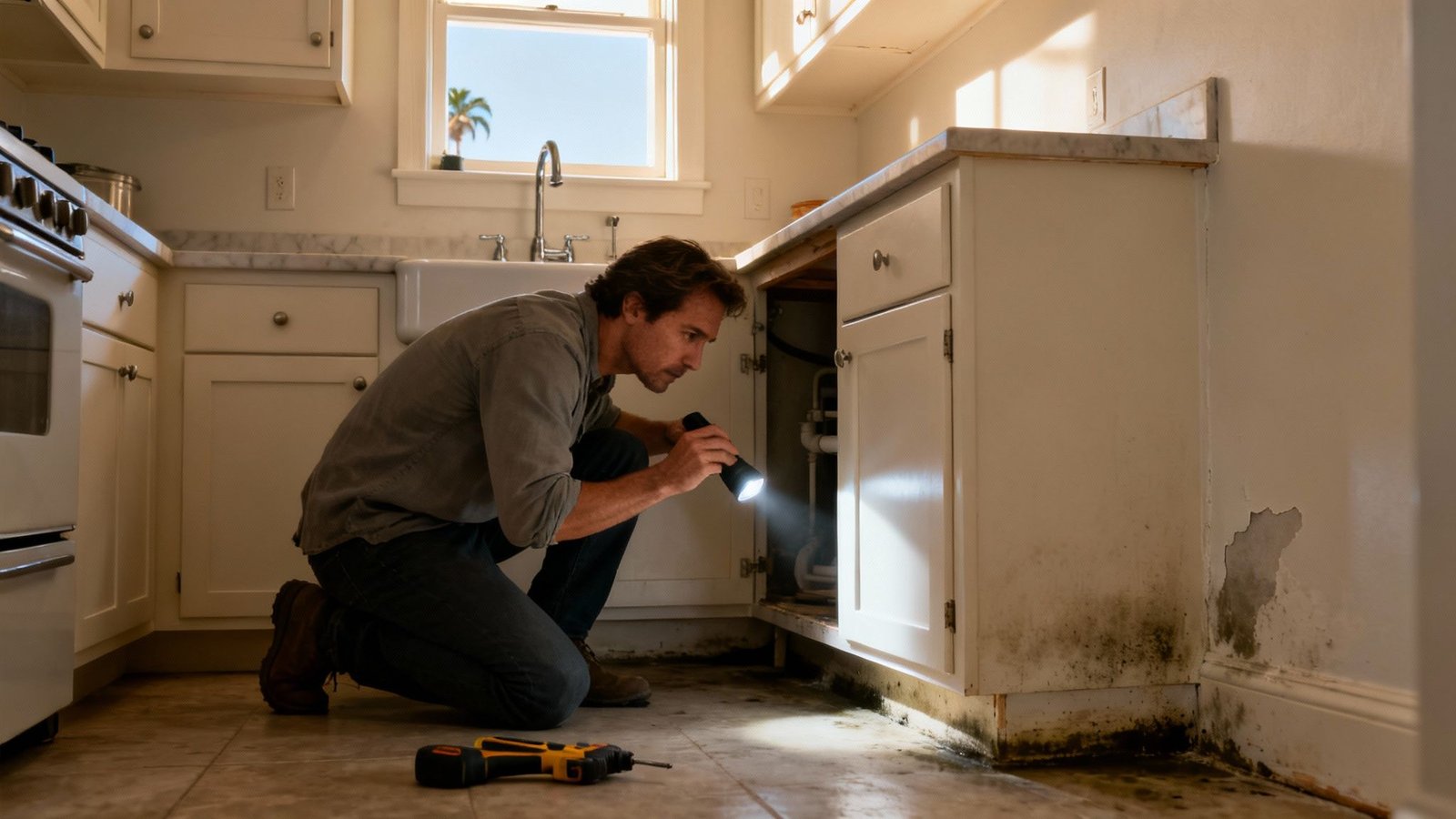
Your best bet is to be systematic. Grab a powerful flashlight and start with the most moisture-prone areas in your house. These are the places where small leaks and bad ventilation can go unnoticed for weeks, even months, until that smell finally gives them away.
- Under Sinks: Get down and check the plumbing in your kitchen and bathrooms. You're looking for slow drips, condensation beading up on pipes, or wood cabinets that feel soft or look discolored.
- Around Toilets and Tubs: Look closely at the base of your toilet for any hints of a leaky wax ring. Check the caulk and grout lines around your tub or shower—if they're cracked or missing, water is getting behind them. Peeling paint or wallpaper nearby is a huge red flag.
- Window Sills and Frames: Condensation builds up fast, especially on older, single-pane windows. Check for dampness, black spots on the wooden frame, or stains on the drywall right below the sill.
- Basements and Crawl Spaces: These spots are naturally damp and cool, making them prime real estate for mildew. Look for efflorescence (that white, chalky powder on concrete walls), musty-smelling boxes, or visibly damp soil in the crawl space.
- Laundry Rooms: Pull the washing machine out and inspect the supply hoses for any leaks. Also, make sure your dryer vent is clear of lint and properly connected to the outside—a clogged vent pumps humid air right back into your home.
Following the Visual and Sensory Clues
Sometimes the source isn't a glaringly obvious leak. That's when you have to tune into the more subtle clues. A moisture problem almost always leaves a trail, you just have to know what to look for.
Pro Tip: Your nose is your best tool here. The musty smell will almost always be strongest right at the source. If one corner of a room smells worse than the rest, that's where you need to focus your investigation.
Keep an eye out for faint discoloration on drywall or ceilings, which often shows up as light yellow or brownish stains. Wallpaper that’s bubbling, peeling, or feels spongy is another tell-tale sign of moisture trapped behind it. A musty odor is often one of the first and most unmistakable signs of mold in your house, so paying attention to these other visual cues is critical.
If you have a strong suspicion but can't find any visible dampness, a moisture meter is a fantastic tool. To get a better handle on what the readings actually mean, take a look at our guide on how to read moisture meter readings. This little device can confirm the presence of water inside materials like drywall and wood, giving you the hard proof you need to pinpoint the problem.
How to Get Rid of Mildew Smell with DIY Methods
When you first catch that musty, damp smell, you’re in a good position. If it’s a minor, surface-level issue, you can often knock it out with things you already have in your kitchen cabinets. Before reaching for harsh chemicals, let's look at some safer household staples that can help you get rid of the mildew smell.
Just remember, these tricks are for the small stuff—not widespread contamination hidden behind a wall.
First things first: safety. Even for a quick cleanup, you need to protect yourself. Grab an N-95 or P-100 respirator, some safety goggles to keep spores out of your eyes, and a pair of non-porous gloves. No excuses.
Natural Cleaning Solutions You Already Own
You don't always need a specialized cleaner from the hardware store. Some of the most effective tools against surface mildew are probably sitting in your pantry right now. They’re simple, non-toxic, and work surprisingly well when you use them correctly.
- White Vinegar: The acetic acid in vinegar is a beast against many types of surface mold and mildew. Just mix it 50/50 with water in a spray bottle.
- Baking Soda: This is your go-to for deodorizing and gentle scrubbing. Mix it with a bit of water to form a paste for scrubbing, or sprinkle it dry on fabrics to soak up odors.
- Tea Tree Oil: As a natural fungicide, this stuff is potent. Mix two teaspoons of tea tree oil with two cups of water and give it a good shake in a spray bottle. The scent is strong, but it fades—and it gets the job done.
A lot of people think bleach is the answer for everything. It's not. While bleach can kill mildew on hard, non-porous surfaces like tile, it's pretty useless on porous materials like wood or drywall. The chlorine just can't get to the mildew's "roots," and the water in the bleach can actually feed the problem, letting it grow right back.
Comparing Common DIY Mildew Cleaning Solutions
When you're deciding what to use, it helps to see your options side-by-side. Each of these common household ingredients has its own strengths and weaknesses. This table breaks down what to use, where to use it, and how to stay safe.
| Cleaning Agent | Best For | Mixing Ratio | Safety Notes |
|---|---|---|---|
| White Vinegar | Hard, non-porous surfaces like tile, countertops, and glass; laundry rinse | Equal parts vinegar and water in a spray bottle | Never mix with bleach (creates toxic chlorine gas). Well-ventilated area is a must. |
| Baking Soda | Deodorizing carpets and upholstery; gentle abrasive for scrubbing surfaces | Create a paste with water, or use dry | Safe for most surfaces, but test a small spot first. Non-toxic, but avoid inhaling large amounts of dust. |
| Tea Tree Oil | Spraying on fabrics, upholstery, and hard-to-reach areas to kill mildew | 2 tsp of oil per 2 cups of water in a spray bottle | Keep away from pets, especially cats, as it can be toxic to them. Has a very strong initial scent. |
While these DIY solutions are excellent for minor issues, always start with a spot test in a hidden area to make sure you don't damage the material. And remember, thorough drying after cleaning is just as important as the cleaning itself.
Treating Different Household Surfaces
The right method really depends on what you're cleaning. What works on your shower tile could completely ruin your favorite armchair. Here’s a quick guide to handling different materials around the house.
Hard, Non-Porous Surfaces
This is the easy stuff—think tile, glass, countertops, and sealed concrete. Since the mildew is just sitting on the surface, it’s much simpler to remove.
- Generously spray the spot with your 50/50 white vinegar and water mix.
- Let it sit for at least an hour. This gives the acid time to work its magic.
- Get in there with a stiff-bristled brush and scrub away the residue.
- Wipe it down with a damp cloth, then dry the surface completely with a clean towel. I can't stress this enough: drying is non-negotiable.
Porous And Semi-Porous Items
This is where it gets a little more challenging. Materials like curtains, carpet, and upholstered furniture can really hang onto mildew spores and that musty smell.
- For washable fabrics (like curtains or bedding): Throw them in the laundry on the hottest setting the fabric can handle. Add a cup of white vinegar or a half-cup of baking soda to the wash along with your detergent.
- For upholstery and carpets: Gently mist the area with your tea tree oil or vinegar solution—but do a spot test somewhere hidden first! Blot the area with a clean cloth, don't rub it in. For odors that just won't quit, sprinkle dry baking soda over the spot, let it sit overnight to absorb the smell, and vacuum it up thoroughly the next day.
The hard truth is that store-bought sprays often just mask the problem. The global market for odor remover sprays hit $1.4 billion in 2023 and is expected to double by 2032, largely because people are dealing with persistent smells after water or fire damage. Here in Los Angeles County, where we see our share of wildfires, restoration pros find that 15-20% of affected homes end up with a nasty combination of smoke and mildew odors.
According to IICRC data, about 40% of DIY attempts to fix these complex smells fail because the sprays can’t break the chemical bond that mildew forms with surfaces. These stats show that while DIY is a great first step, some jobs just need a professional.
Why Drying and Dehumidifying Are Non-Negotiable
Scrubbing away visible mildew feels like a win, but it’s only half the battle. If you don't aggressively get rid of the moisture that fed the mildew in the first place, you're just hitting the snooze button on the problem. That musty smell will find its way back, sometimes worse than before.
Mildew has one simple need: moisture. And here in Southern California, we've got plenty of sources. The marine layer in Santa Monica can keep exterior walls damp for months, while a pinhole leak behind a wall in a classic Burbank home creates a perfect hidden sauna for mildew to thrive. Just wiping a surface down leaves behind microscopic water droplets that those spores are waiting for.
This is why active drying is the make-or-break step. It’s the critical link between cleaning a spot and having a permanently fresh-smelling home. You have to pull the dampness not just out of the air, but from deep inside porous materials like drywall, wood studs, and carpet padding.
Mastering Airflow and Dehumidification
Just cracking a window won't cut it, especially when our coastal humidity is working against you. To truly dry a space, you need a one-two punch: powerful airflow combined with mechanical dehumidification. This combo creates an environment where mildew simply can't survive.
As professionals, we use high-volume fans—what we call air movers—to create a powerful vortex of air. This isn't your average box fan. These machines are engineered to literally pull moisture out of materials and force it into the air.
- Target Your Airflow: Don’t just stick a fan in the middle of the room and hope for the best. Aim it directly at the wettest spot, like the section of wall you just treated or the carpet you cleaned.
- Create a Cyclone: For bigger rooms, use a few fans to get a circular current going. This keeps damp, stagnant air from hiding in the corners.
- Give It Time: Let the fans run for at least 24-48 hours straight after cleaning or a water incident. This is non-negotiable for ensuring materials are bone-dry.
Once that moisture is airborne, a dehumidifier is your workhorse. It acts like a powerful moisture magnet, sucking in the damp air, condensing the water into a collection tank, and pushing drier air back out.
Pro Tip: Your goal is to keep indoor humidity between 30% and 50%. Anything over 60% is an open invitation for mold and mildew. A cheap hygrometer from the hardware store lets you monitor your levels and see if your dehumidifier is keeping up.
Confirming Materials Are Truly Dry
How do you know if a wall or subfloor is really dry? You can't just trust your hands. Moisture loves to hide deep inside materials where you can't feel it. We use professional moisture meters to get exact readings and confirm that wood and drywall are back to their normal, dry state. If you seal up a wall that’s still damp inside, you're trapping the problem and guaranteeing that musty smell will be back with a vengeance.
This simple guide shows the essential flow for tackling mildew yourself, with a big emphasis on that final drying stage.
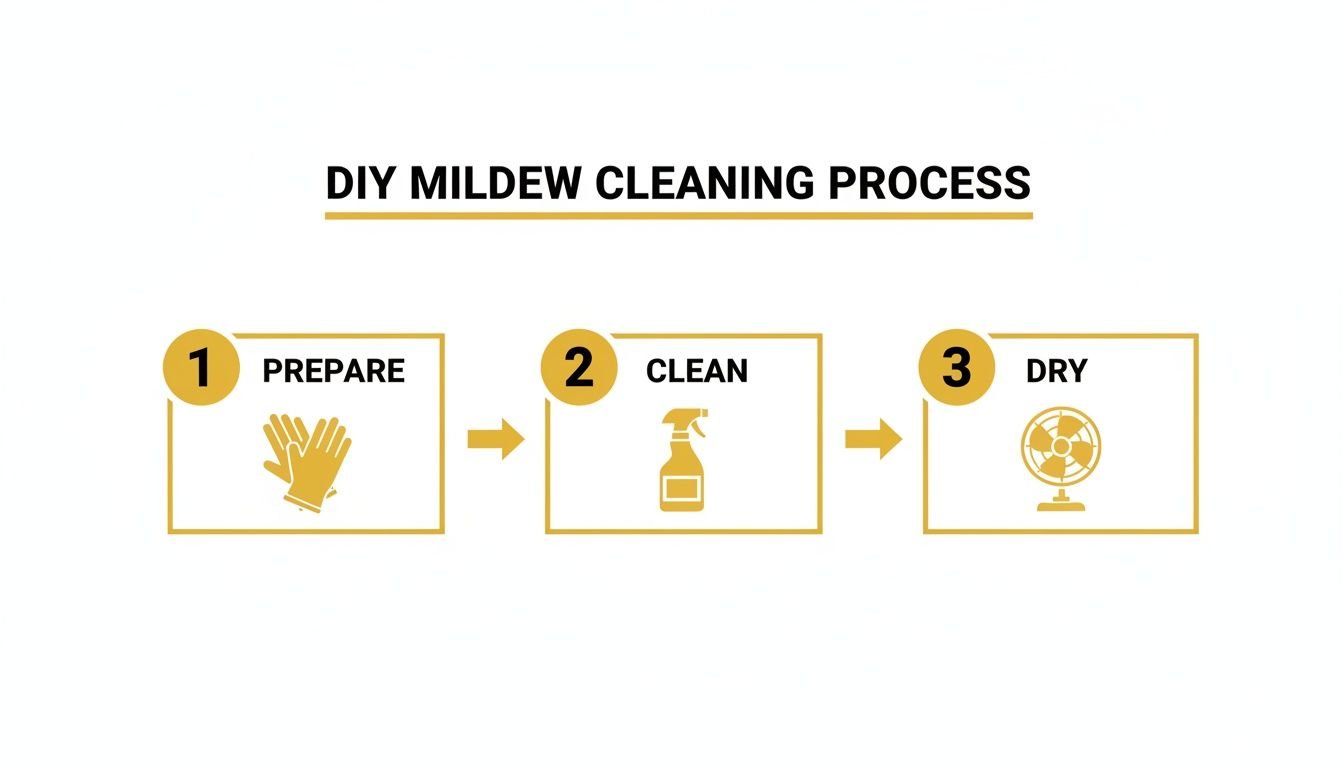
As you can see, preparing and cleaning are just setting the stage. The real, lasting solution comes from making sure everything is thoroughly dried out.
For those persistently damp spots like crawl spaces or basements, you often need a more permanent fix. Installing a dedicated dehumidifier in these areas is the single best way to control moisture long-term. It's a proactive move that stops mildew before it even has a chance to start.
When You Need to Call a Restoration Professional
One of the smartest things you can do as a property owner is know when to put down the sponge and pick up the phone. While DIY cleaning is fine for a little surface mildew on your shower grout, some situations are just too big or too hidden for household solutions.
Trying to handle a serious mildew problem yourself can backfire badly. You might spread spores to other parts of the house or clean the surface while the real moisture source continues to rot things from the inside out. The key is knowing the red flags that mean it's time for a pro.
The Odor Keeps Coming Back
This is the big one. You've scrubbed everything down with vinegar, aired out the bathroom, and for a few days, it seems fine. Then, that musty, damp smell creeps back in.
A recurring odor is a dead giveaway that you've only treated the symptom, not the cause. The mildew you can't see—the growth inside a wall, under the floorboards, or in the ceiling insulation—is still thriving. A persistent smell means there’s a constant water source feeding it, and a professional can get rid of the mildew smell because we don't just clean; we find and fix the hidden leak.
The Smell Comes from Your HVAC System
If you get a blast of that musty, "old basement" smell every time the AC or heat kicks on, you have a serious issue. This points to mildew or mold growing inside your air ducts or on the coils of your HVAC unit.
When this happens, your system is literally blowing microscopic spores into every single room of your home. It’s a fast track to contaminating the entire property and creating major indoor air quality problems. Cleaning HVAC systems requires specialized tools and containment protocols—this is absolutely not a DIY job.
You Find a Large Area of Growth
As a rule of thumb, any patch of mildew or mold bigger than 10 square feet is a job for a certified professional. Large-scale problems demand proper containment to stop spores from spreading to clean areas of your home.
Think about a homeowner in Burbank who decides to do a small kitchen remodel. They pull out an old, water-stained cabinet and find the drywall behind it is covered in fuzzy black growth. This is a classic "stop what you're doing and call for help" moment. Bringing in a restoration pro is the only safe and effective path forward.
The Professional Difference in Mildew Remediation
So, what do we bring to the table that you can’t? It boils down to advanced diagnostic tools, proven drying science, and a guarantee that we’ll solve the problem for good. We don't just mask odors; we eliminate their source.
We recently helped a property manager in West Hollywood who was getting constant complaints about a musty smell in a first-floor apartment. There were no visible leaks, and his maintenance crew was stumped. Using a thermal imaging camera, we found a cold spot inside a wall that pointed to a slow, hidden leak from the apartment above. Without that technology, the source would have remained a mystery.
This level of professional intervention is crucial. Persistent mildew is more than an annoyance; it’s a massive industry. The global odor elimination market is projected to hit over $5 billion by 2025, driven by the clear link between poor indoor air quality and health problems.
In Los Angeles County alone, over 50,000 water damage claims were filed in a single year, with an estimated 60% of them involving mildew odors. For landlords, ignoring these smells can result in fines up to $10,000 per violation under California health codes. Waiting for professional help often lets remediation costs balloon by 2-3 times as the problem worsens. You can discover more about the odor elimination market and see why it's such a critical issue.
Professionals use specialized equipment like commercial-grade dehumidifiers and air scrubbers with HEPA filters to pull spores right out of the air. When materials are soaked, we use tools like injectidry systems that force dry air deep into wall cavities, removing moisture far more effectively than any fan ever could. This is how we ensure the problem is truly solved, protecting your property and restoring healthy air for good.
Long-Term Strategies to Keep Your Home Mildew-Free
Once you’ve finally kicked that mildew smell to the curb, the job isn’t quite done. The focus now shifts from cleanup to prevention. The last thing any of us want is for that musty odor to creep back in, and a proactive maintenance plan is your best defense for keeping your home healthy and fresh. This is especially true here in Los Angeles, where our coastal fog and sudden shifts in weather can create a perfect storm for mildew growth.
The strategy is simple at its core: control moisture. Mildew is powerless without it. By managing your home's humidity, boosting airflow, and doing a few routine checks, you can turn your property into a place where mildew just can't get a foothold. It's about moving from a reactive "what's that smell?" mindset to a protective one.
Master Your Indoor Humidity
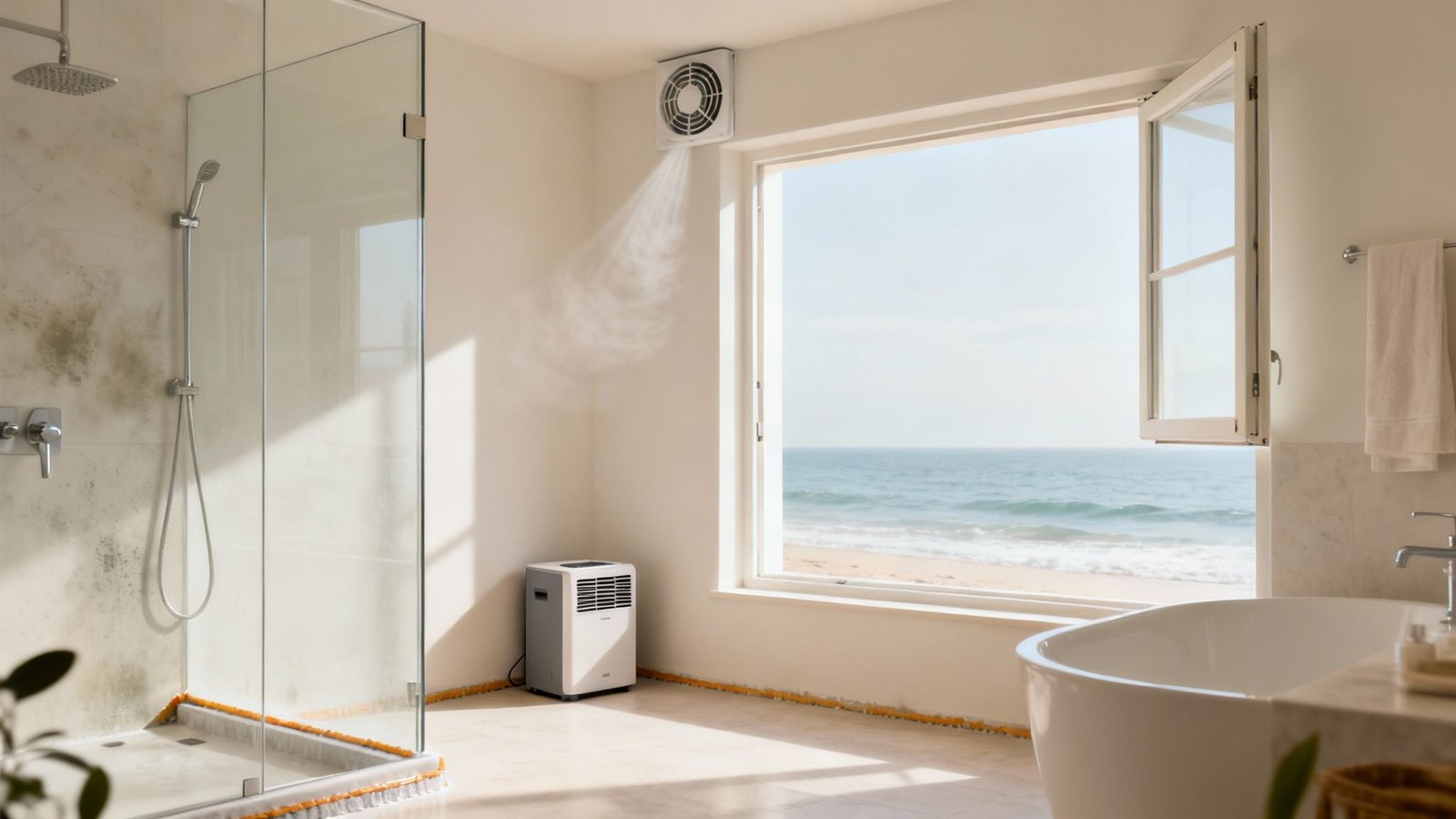
Your first line of defense is keeping your indoor humidity in check. From my experience, mildew really starts to take off when relative humidity gets above 60%, which can easily happen in beachside communities from Santa Monica to Malibu. Your target is the sweet spot: between 30% and 50%.
A cheap digital hygrometer is a great tool for this—place a few around the house to see what’s happening in different rooms. If you see consistently high numbers, especially after showering or cooking, a dehumidifier is a fantastic investment. Just running one in a damp basement or a bathroom without great ventilation can be a total game-changer.
Improve Ventilation in Key Areas
Mildew loves stagnant, damp air. It’s like a welcome mat. Boosting airflow in those moisture-heavy zones is non-negotiable.
- Bathrooms: This is a big one. Always run the exhaust fan during a shower and for at least 20-30 minutes after. No fan? Crack a window to let all that steam find its way outside.
- Kitchens: Get in the habit of using the range hood fan every single time you cook, particularly when you're boiling pasta or making soup. It pulls all that humid, greasy air out instead of letting it coat your cabinets and walls.
- Laundry Rooms: Make sure your dryer vent is clear and properly connected. A clogged or disconnected vent just pumps warm, moist air right back into the room, creating a perfect little incubator for mildew behind the machine.
A Proactive Approach to Home Health: "Thinking about moisture control isn't just about preventing odors; it's about protecting your home's structural integrity and your family's health. Small, consistent habits have a massive long-term impact."
Conduct Regular Property Inspections
Small problems have a nasty habit of becoming big, expensive ones when ignored. A quick walk-around every few months helps you catch potential water issues before they blossom into a full-blown mildew infestation. Just make a simple checklist and stick to it.
Your Seasonal Maintenance Checklist
- Plumbing Check: Peek under every sink. You're looking for slow drips, water stains on the cabinet floor, or mineral buildup on the pipes. Check the supply lines for toilets and the washing machine, too.
- Appliance Watch: Take a look at the drip pan under your fridge and scope out the area around your dishwasher and water heater. Any unexplained dampness is a red flag.
- Exterior Drainage: Before rainy season, make sure your gutters are clean and the downspouts are aimed several feet away from your foundation. Water pooling against the house is one of the biggest risks for leaks.
- Roof and Windows: Scan for damaged shingles or cracked sealant around your windows. These are easy entry points for water during a storm, which is a common issue for homes with flat roofs in places like Sherman Oaks.
By building these habits into your routine, you create a strong defense against moisture. Adopting these long-term strategies ensures that once the mildew smell is gone, it stays gone—protecting both your property and your peace of mind.
Answering Your Questions About Mildew Smell Removal
After you've dealt with a mildew smell, a few questions always seem to pop up. We’ve heard just about all of them from homeowners across Los Angeles, from Burbank to Beverly Hills. Here are some direct, practical answers to the most common things we get asked in the field.
Q: Can a mildew smell in my home actually make me sick?
A: Yes, it absolutely can. That musty odor isn't just annoying; it’s a warning sign that microscopic mold spores are circulating in your air. For a lot of people, these spores are allergens that can trigger a runny nose, a nagging cough, sneezing, and even skin irritation. The problem gets more serious for anyone with pre-existing conditions. If you or a family member has asthma or a compromised immune system, long-term exposure can lead to much more severe respiratory issues. Getting to the source of the mildew is non-negotiable for keeping your indoor air healthy and your family safe.
Q: The whole house smells musty but I can't find a leak. What now?
A: When you have a musty smell everywhere that you just can't pin down, it almost always points to a bigger, hidden moisture issue. The usual suspects in these cases are the HVAC system, a damp crawl space, or moisture that’s gotten trapped inside your walls from a slow, sneaky leak you'd never see. This is exactly when a professional assessment is worth its weight in gold. Instead of tearing into walls and guessing, we use tools like moisture meters and thermal imaging cameras. This tech lets us "see" behind drywall and under floors to pinpoint the exact moisture source without destructive guesswork, making sure we fix the real problem.
Q: Will my homeowners insurance cover removing a mildew smell?
A: Whether your insurance will cover mildew and mold issues really comes down to what caused the moisture in the first place. Most standard policies will cover the cleanup and deodorization if the smell is a direct result of a sudden and accidental event—what insurers call a "covered peril." Think a burst pipe or a washing machine hose that suddenly lets go. However, if that mildew smell is from long-term neglect—like a slow leak you knew about but didn't fix, or high humidity from bad ventilation—the claim is almost certain to be denied. We can help by documenting the source of the damage with clear evidence, which gives you the best shot when you file your claim.
Q: What's the difference between mold and mildew, anyway?
A: This is a great question, and it causes a lot of confusion. The easiest way to think about it is that mildew is just a specific type of mold that grows on surfaces. It usually looks powdery or downy and tends to be gray or white. Other types of mold can be fuzzy, slimy, or velvety and show up in all sorts of colors, like green, black, or even orange. The most important thing to remember is that a mildew smell means mold is present. Both need moisture to grow, so to get rid of the mildew smell, you have to eliminate the underlying mold and its water source.
Dealing with persistent odors is a huge headache for property owners. Imagine coming home after one of those classic Los Angeles downpours to that unmistakable musty odor from water damage. You're not alone—the global market for odor removal services was valued at around $4.2 billion in 2023 and is projected to hit $9 billion by 2033, mostly because people are finally understanding how much indoor air quality impacts health. You can learn more about trends in odor removal services to see just how critical this field is becoming.
Don't let a musty odor compromise your home's health and safety. The IICRC-certified team at Onsite Pro Restoration uses advanced technology to find and eliminate the source of mildew smells for good. If you're struggling with a persistent odor in the Los Angeles area, call us for a free, no-obligation assessment.