
When restoration professionals in Los Angeles talk about Category 3 water damage, they’re referring to the worst-case scenario. This is the most dangerous and contaminated level of water you can have in your home, often called “black water.”
But that name can be misleading. Black water isn't always visibly black—it gets its name from its grossly unsanitary source, making it an immediate biohazard.
The Dangers of Black Water
Forget thinking of this as a simple water spill. A Category 3 event, like a sewer line backing up into a Sherman Oaks basement, is a serious contamination problem. This water is loaded with pathogens, dangerous bacteria, chemicals, and often, human waste. It poses a significant and immediate risk to anyone exposed to it and can quickly compromise your home's structural integrity.
When you're dealing with Category 3 water damage, professional intervention isn’t just a good idea; it's absolutely critical for safety.
The water is considered contaminated from the moment it enters your property. The most common culprits include:
- Sewage Backups: This is the big one. Raw sewage backing up from city lines or a failed septic system is an instant Category 3 disaster. This is precisely why we have such strict protocols for our specialized sewage damage cleanup services.
- Overland Flooding: Water from overflowing rivers, like the Los Angeles River after a major storm, or even heavy ground flooding is always Category 3. It picks up everything in its path—pesticides from lawns, oils from roads, animal feces, and raw sewage from overwhelmed municipal systems.
- Toilet Overflows Containing Feces: A simple toilet overflow with clean water from the tank is one thing. But an overflow from the bowl that contains fecal matter is automatically classified as Category 3.
This flowchart helps visualize where Category 3 sits compared to the other classifications.
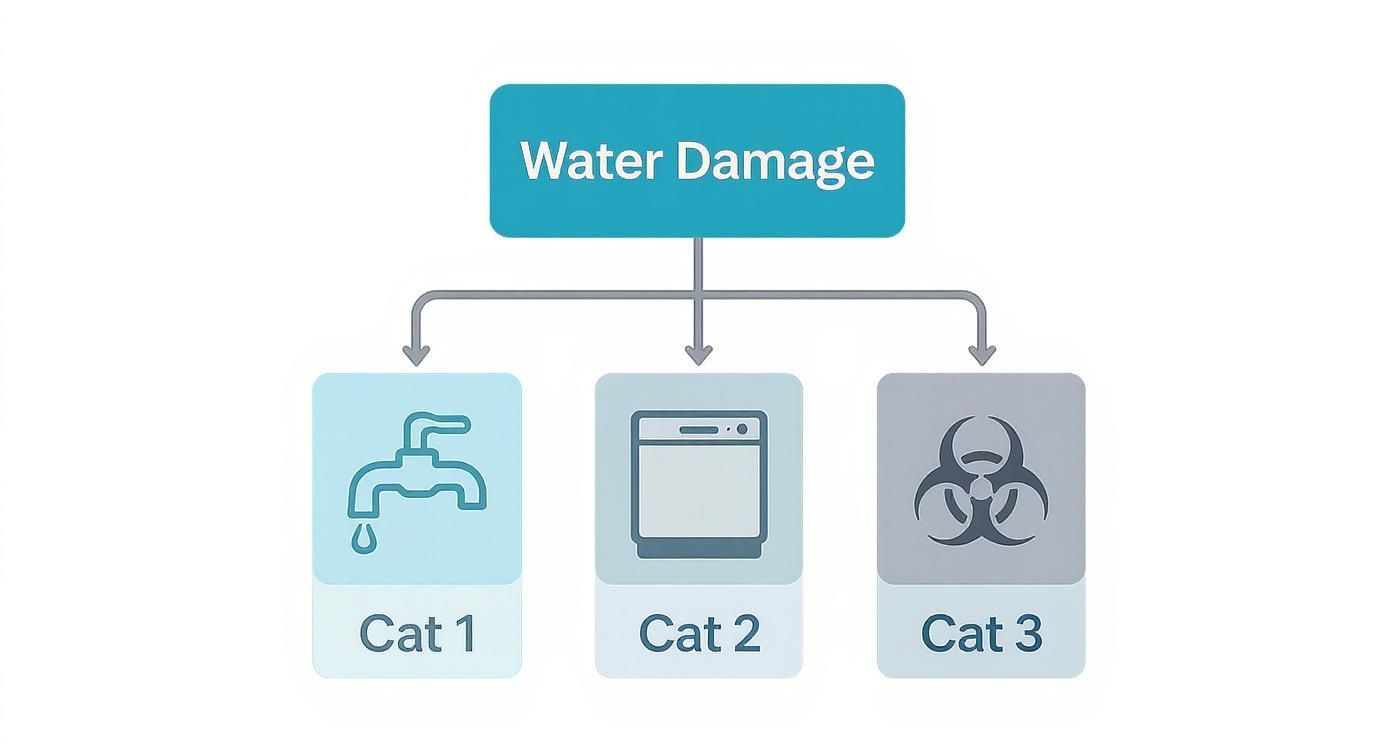
As you can see, the progression is clear. Category 1 is clean, Category 2 (gray water) is somewhat contaminated, but Category 3 is in a league of its own as a biohazard.
If you're facing a water damage emergency in the Los Angeles area, don't wait. The health of your family and the integrity of your home are at stake.
Water Damage Categories At a Glance
To put it all in perspective, here's a quick comparison of the three official categories as defined by the IICRC (Institute of Inspection, Cleaning and Restoration Certification).
| Category | Common Name | Source Examples | Health Risk Level |
|---|---|---|---|
| Category 1 | Clean Water | Broken supply lines, sink overflows, appliance malfunctions | Low |
| Category 2 | Gray Water | Dishwasher discharge, washing machine overflows, sump pump failures | Medium |
| Category 3 | Black Water | Sewage backups, river flooding, toilet overflows with feces | Severe / Biohazard |
The table makes it clear why a Category 3 situation demands an entirely different level of response. The health risks are severe, and the cleanup process is far more intensive than for other types of water damage.
Common Causes of Category 3 Water Damage in Los Angeles Homes
It’s crucial to understand that what is category 3 water damage isn't your average leak. This is a serious biohazard event, and it can happen unexpectedly from sources right inside or around your home. Knowing where this dangerous water comes from is the first step to protecting your family and property.
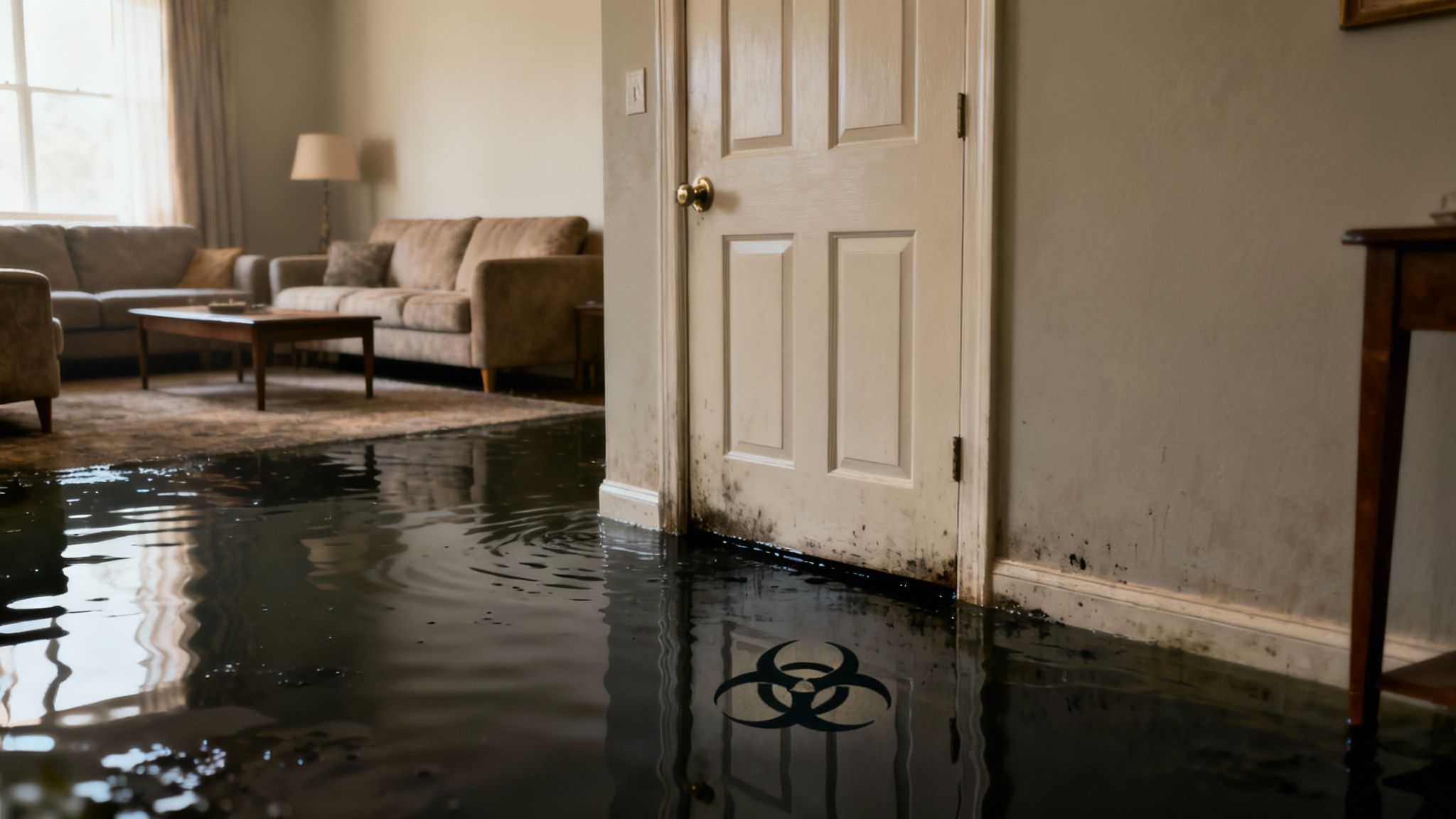
The most notorious cause of black water is a sewage backup. This happens when a city sewer line gets overwhelmed—a common issue in older Los Angeles neighborhoods—or your home’s main drain clogs, forcing raw sewage back up through tubs, toilets, and floor drains. A flooded basement from a sewer backup is an automatic Category 3 crisis. Our guide on handling basement water damage dives deeper into these specific emergencies.
Another common culprit is a toilet overflow, but with a critical distinction. If the toilet bowl contains fecal matter and overflows, that water is immediately classified as black water. The high concentration of bacteria and pathogens makes it a significant health risk, unlike a simple overflow of clean water from the tank.
Natural Disasters and External Sources
Beyond plumbing failures, water entering your home from the outdoors is almost always considered Category 3. These sources are grossly contaminated from the moment they cross your doorstep.
- Overland Flooding: When rivers, streams, or heavy storms push water into your home, it’s carrying a toxic soup of everything it touched along the way—pesticides, animal waste, chemicals, and raw sewage.
- Storm Surges: For coastal homes from Santa Monica to Malibu, water pushed ashore by a major storm is just as bad. It's filled with silt, pollutants, and countless other dangerous contaminants.
Any water that starts on the ground and flows into your home should be treated as a biohazard. Its journey guarantees it has picked up a dangerous cocktail of pollutants that pose a severe health risk.
Recognizing these sources helps you grasp the severity of the situation. It also makes it clear why calling a professional isn't just a good idea—it's absolutely essential for your safety.
The Hidden Health Dangers of Black Water Exposure
Category 3 water is far more than just a mess; it's a serious and immediate health threat. We call it "black water" for a reason—it’s grossly contaminated with a dangerous soup of invisible pathogens that can make you incredibly sick. Trying to clean this up without professional training and gear is a risk no one should ever take.
The danger isn't just about getting your hands dirty. It comes from both direct contact and inhaling contaminated air. Black water is a breeding ground for all sorts of nasty microorganisms.
- Bacteria: Nasty pathogens like E. coli, Salmonella, and Legionella are almost always present. These can lead to severe gastrointestinal illnesses and serious respiratory infections.
- Viruses: You could be dealing with viruses like Hepatitis A and Rotavirus, which pose risks of liver inflammation and other severe conditions.
- Parasites: Microscopic parasites like Giardia and Cryptosporidium are also common, capable of causing debilitating digestive diseases that can last for weeks.
The Dangers You Can’t See
Exposure isn't limited to touching the water. As black water sits and evaporates, it releases contaminated vapor into the air. What started as a flood in one room can quickly become an atmospheric hazard affecting your entire home.
Breathing in these airborne pathogens can lead to lung infections and other systemic health problems. It's not just a water damage problem anymore; it's a biohazard situation that requires specialized hazardous materials cleanup protocols to handle safely.
On top of the immediate threat from pathogens, a second wave of danger appears with alarming speed.
Within just 24-48 hours, all that moisture creates the perfect environment for mold and fungi to explode. This introduces a whole new layer of risk from airborne mold spores, which can trigger allergic reactions, asthma attacks, and even long-term lung issues.
Black water damage almost always leads to a serious mold problem, and getting expert mould remediation services is non-negotiable. If left unchecked, that growth can ruin your home's air quality for years. This one-two punch of contamination and rapid mold growth is exactly why a DIY approach is never a safe answer for what is category 3 water damage.
Why Professional Remediation Is a Non-Negotiable Safety Step
Trying to clean up Category 3 water damage yourself isn’t just a bad idea—it’s extremely dangerous. We're not talking about a simple spill that can be handled with a shop vac and some bleach. This is a biohazard situation, and it demands a scientific, protocol-driven approach to make your property safe again.
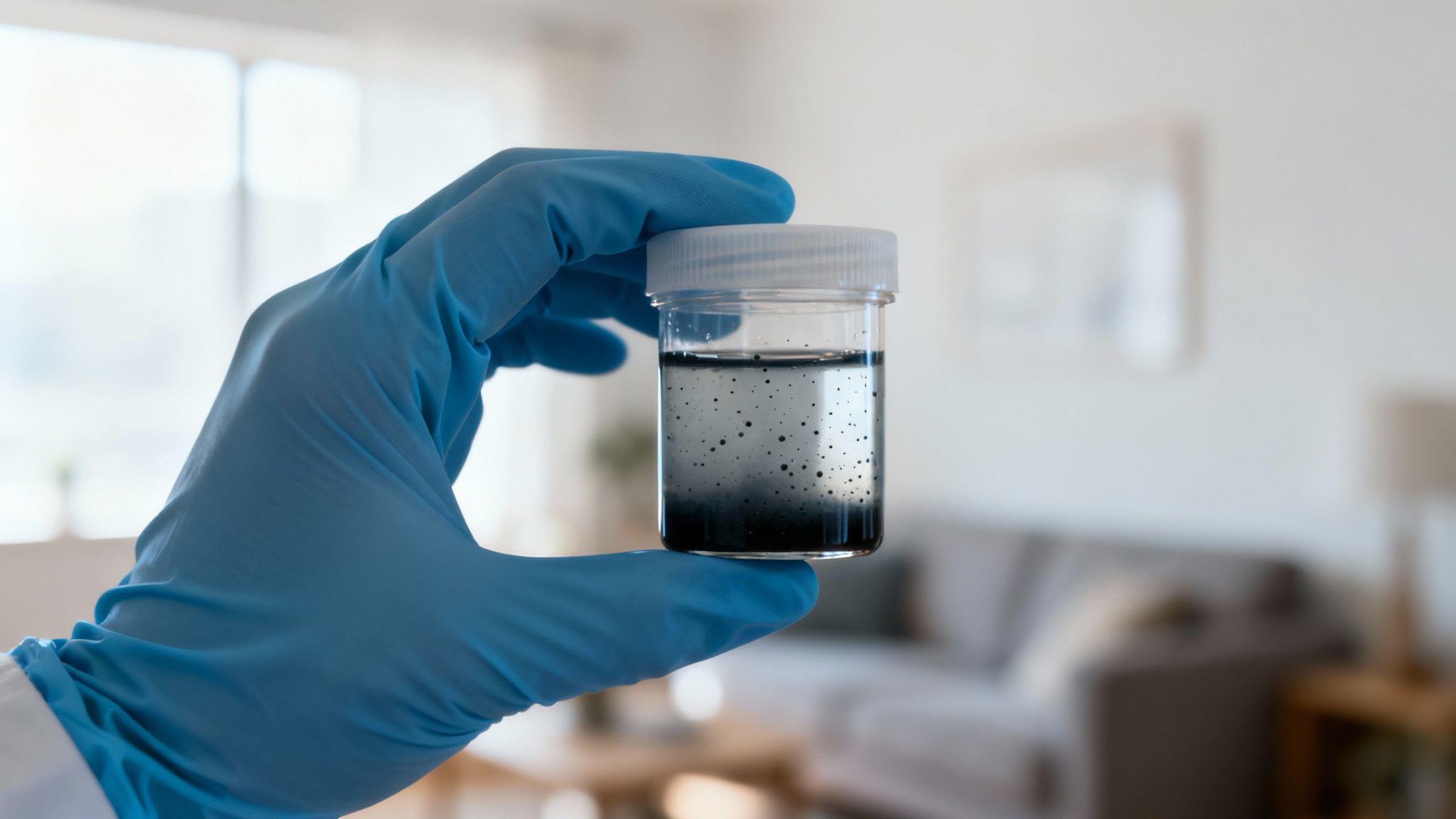
Certified restoration professionals are trained to manage these specific risks using proven industry standards. It's similar to why homeowners recognize the importance of professional services for other complex jobs—experts bring the right tools, training, and safety measures to get the job done right and protect your home's integrity.
The IICRC S500 Standard
The entire restoration industry operates by the IICRC S500 Standard, which is the official playbook for water damage restoration. Think of it as the rulebook that keeps both technicians and homeowners safe.
This standard from the Institute of Inspection, Cleaning and Restoration Certification (IICRC) is crystal clear: Category 3 water requires complete decontamination using specialized processes. It’s not a suggestion; it’s the minimum requirement for a safe environment.
Professional vs. DIY Cleanup
The difference between a pro and a DIY attempt is night and day. A certified team doesn't just show up with mops and buckets; they arrive with an arsenal of specialized equipment designed to handle a biohazard scene safely.
Here’s what that looks like in practice:
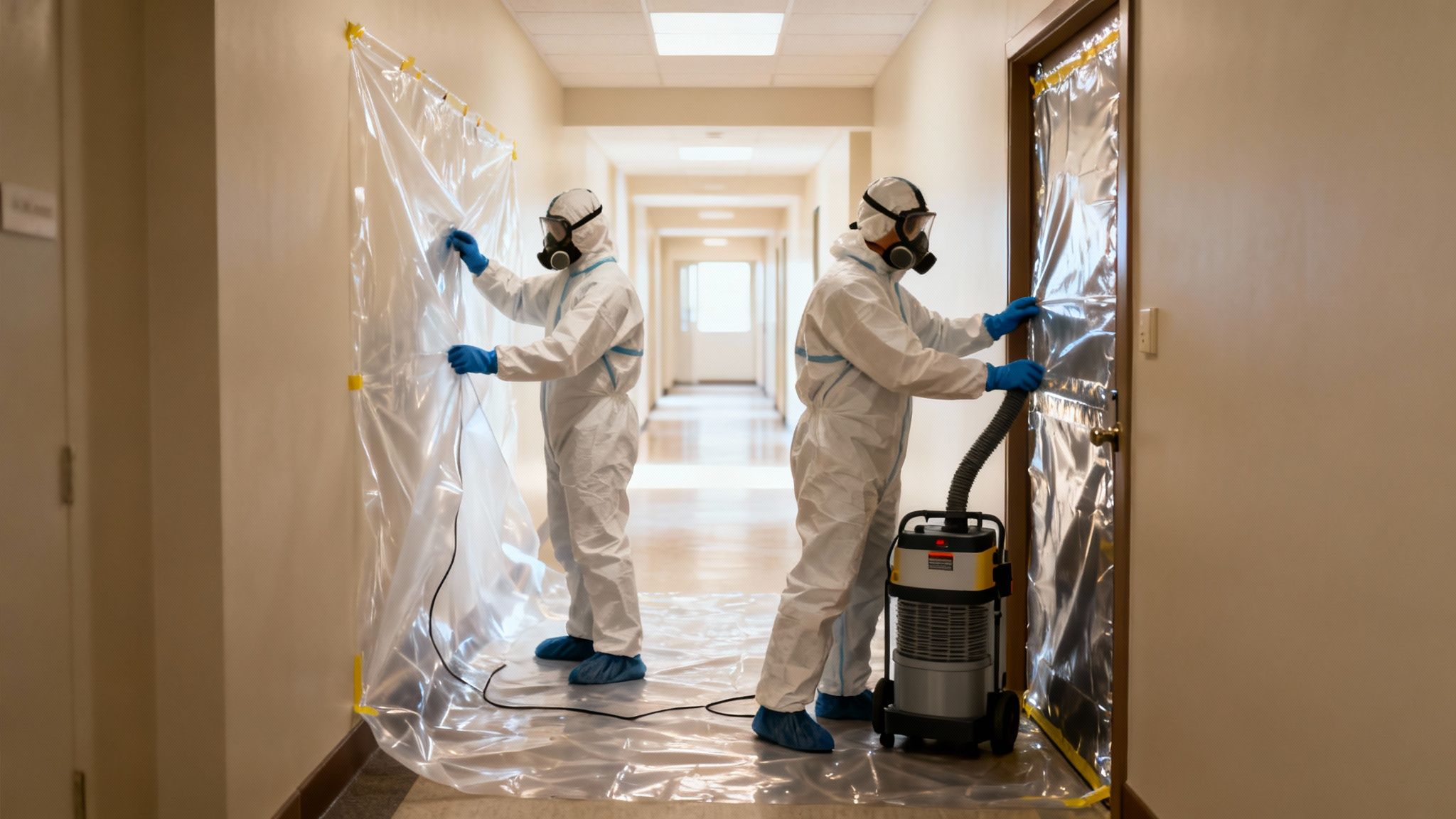
- Personal Protective Equipment (PPE): This isn't just rubber gloves. Pros wear full hazmat-style gear—respirators, waterproof suits, and thick gloves—to create a barrier between them and the pathogens in the water.
- Containment and Air Scrubbing: The first thing a team does is seal off the affected area with heavy plastic sheeting. They then set up industrial-grade air scrubbers with HEPA filters to capture airborne contaminants and stop them from spreading to clean areas of your home.
- Removal of Porous Materials: Here’s a hard truth: anything porous that has touched black water is a lost cause. Drywall, insulation, carpet, and upholstered furniture act like sponges for contaminants. They can't be salvaged and must be carefully removed and disposed of according to biohazard regulations.
- Antimicrobial Application: Once the contaminated materials are gone, the job isn’t done. Technicians apply EPA-registered, hospital-grade antimicrobial agents to sanitize every remaining structural surface, killing any lingering bacteria or viruses.
These steps aren't optional. They are critical for a safe outcome. Understanding what is category 3 water damage means recognizing that it’s a job for a certified restoration pro who can guarantee your home is returned to a safe, sanitary condition.
Navigating Your Insurance Claim for Black Water Damage
Dealing with the aftermath of a Category 3 water event is stressful enough. The last thing you want is a confusing and difficult insurance claim process. Knowing how your policy actually works is the first step toward getting through this and managing your financial expectations.
Here's the hard truth: many standard homeowner’s insurance policies have major limitations when it comes to black water. The biggest factor is where the water came from. Incidents caused by "overland flooding"—like a river overflowing its banks—are almost always excluded and require a separate flood insurance policy to be covered.
Similarly, damage from a sewer backup is often only covered if you have a specific sewer backup endorsement added to your policy. Without these, you could be facing huge out-of-pocket expenses. We break this down even further in our detailed guide on homeowner's insurance coverage for water damage.
Understanding Coverage Limits and Exclusions
It's critical to know that even if you do have coverage, there are usually caps. Property insurance policies frequently limit what they'll pay for Category 3 water losses to around $10,000. Why? Because the widespread bacterial and fungal contamination falls under common mold and microbe exclusions.
Compare that to a dedicated flood insurance policy, which is designed to cover these exact types of losses without those strict limitations. When you consider that commercial restoration costs for a major black water event can average $250,000, that $10,000 cap suddenly looks terrifying. This gap highlights just how important having the right coverage is before disaster strikes.
Documenting Your Claim Effectively
When it's time to file a claim, thorough documentation is your single most powerful tool. As soon as it’s safe to do so, pull out your phone and start recording everything.
- Capture the Source: If you can, get photos or video of where the water originated.
- Show the Scope: Take wide shots of every affected room to show the full extent of the damage.
- Detail the Damage: Get close-up photos of ruined walls, soaked floors, and any personal belongings that were hit.
When you finally speak with your insurance adjuster, be clear, factual, and use the right language. Describe what happened as a "sudden and accidental discharge from a sewer line" or "overland flood." Using their terminology helps them process the claim under the correct part of your policy—assuming that coverage exists in the first place.
Frequently Asked Questions About Category 3 Water Damage
When you're facing black water contamination, a million questions run through your mind. Here are some straightforward answers to the most urgent ones we hear from Los Angeles homeowners.
Q: Can cleaner water turn into Category 3 water?
A: Yes, and this is a critical point many people miss. If Category 2 water—think overflow from a washing machine or dishwasher—sits for more than 48 hours, it’s no longer just "gray water." That stagnant water becomes a perfect breeding ground for bacteria and other microbes, causing it to degrade into dangerous Category 3. At that point, it has to be treated with the same caution and professional techniques as raw sewage.
Q: What are my immediate first steps after a sewage backup in my home?
A: Your absolute first priority is safety. Get all people and pets out of the affected area immediately. Do not, under any circumstances, touch the contaminated water or items it has contacted. If you can get to your home’s main water supply without stepping through the affected zone, shut it off. Then, your very next call should be to a certified water damage restoration company that has experience with Category 3 events. This is not a DIY situation.
Q: Will household bleach work on Category 3 water?
A: Absolutely not. Standard household cleaners like bleach are nowhere near strong enough to handle this level of contamination and can be downright dangerous. Bleach can’t penetrate porous surfaces like wood or drywall to fully kill the pathogens hiding within. Worse, mixing it with other substances in the contaminated water can create hazardous chemical fumes, making a bad situation even more toxic.
Professionals use EPA-registered, hospital-grade antimicrobial agents for a reason. These are the only products proven to neutralize the dangerous bacteria and viruses found in black water and ensure your home is truly sanitized.
Q: What happens to my furniture and belongings after black water damage?
A: This is often the hardest part for homeowners. Unfortunately, any porous item that has soaked up Category 3 water is considered a total loss and must be safely discarded. These items simply cannot be decontaminated. This includes carpets, upholstered furniture, mattresses, books, and soaked drywall. Solid, non-porous items like metal, glass, or hard plastics can often be saved through specialized professional cleaning and sanitization. A good restoration team will help you document every single lost item for your insurance claim, creating a detailed inventory crucial for getting properly compensated.
If you're dealing with a water damage emergency, don't wait. The health of your family and the integrity of your home are at stake.
Contact Onsite Pro Restoration 24/7 for an immediate response in the Los Angeles area. Our certified team will arrive quickly to assess the situation and begin the safe remediation process.