
When you hear the term “structure fire,” it’s easy to picture the most dramatic part: flames tearing through a building. But as restoration professionals who see the aftermath up close in Los Angeles, we know the real damage goes far deeper than what you see on the news. Understanding what is a structure fire is the first step toward a safe and complete recovery.
This guide will walk you through the key aspects of a structure fire, from its definition and common causes to the professional restoration process required to make your property whole again.
If you are facing fire damage now, don't wait. Immediate action is critical to prevent further issues like mold and structural decay.
Call (818) 336-1800 for a Free Damage Assessment
Beyond the Flames: Defining a Structure Fire
A structure fire isn't just a fire in a building; it's a fire that attacks the building itself. It compromises the core components that hold your property together—the walls, floors, roof, and foundation. Whether it's a home in Sherman Oaks or a commercial space in Downtown Los Angeles, a structure fire is a multi-layered crisis that involves fire, smoke, and water damage.
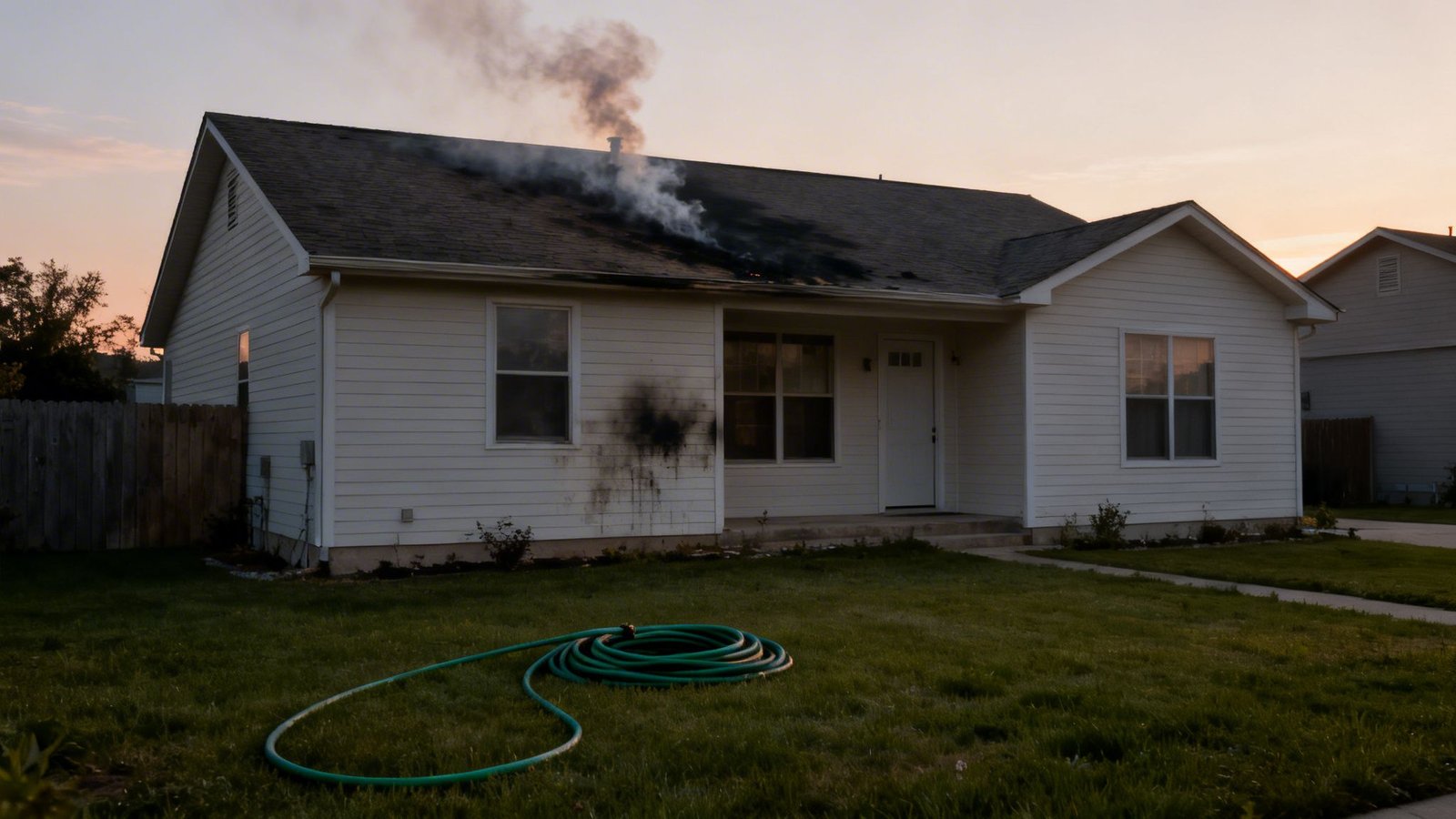
Think of it like a medical emergency for your property. The flames are the initial trauma, but the real challenge lies in treating the complications that follow. Smoke, soot, and the massive amounts of water used for firefighting create a toxic and destructive environment that often causes more widespread issues than the fire itself.
The True Scope of Fire Damage
To really grasp what a structure fire entails, you have to look past the charred wood. According to the U.S. Fire Administration (USFA), the damage is a triple threat, and each element requires a specialized response.
Thermal Damage: This is the direct destruction from heat. It doesn't just burn materials; it weakens steel beams, warps framing, and can make entire sections of a building dangerously unstable.
Smoke and Soot: These aren't just cosmetic stains. Microscopic, acidic particles of soot are forced into every crack and crevice, getting into your walls, HVAC system, and personal belongings. This toxic residue is corrosive and poses a serious health hazard.
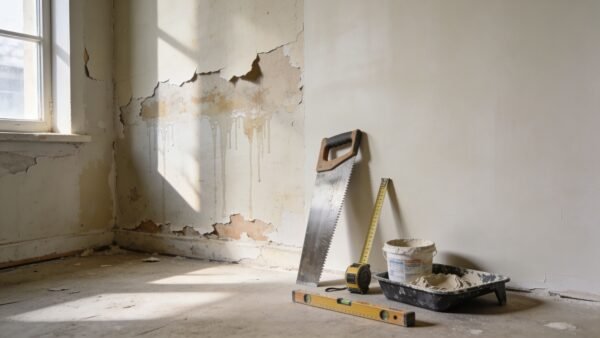
Water Damage: The water needed to save your property can also destroy it. Fire hoses can pump hundreds of gallons per minute, soaking drywall, insulation, and flooring. This sets the clock ticking for mold growth, which can start in as little as 24-48 hours in the warm Southern California climate.
These fires are an unfortunately common threat, especially in residential areas. A staggering 40% of structure fires happen in homes, with the most common time being between 6 PM and 10 PM. This is more than just a statistic; it's a reminder of how quickly a normal evening can turn into a life-altering event.
What Happens After the Fire Department Leaves?
Once the fire is out and you’re cleared to re-enter, the scene can be overwhelming and hazardous. This is where a systematic, professional approach is not just recommended—it's essential for a safe and successful recovery. You need a team that knows how to tackle fire, smoke, and water damage all at once.
The table below outlines the critical first steps you should take. This isn’t a time for DIY; it’s a time for decisive, professional action.
Immediate Steps to Take After a Structure Fire
| Priority Action | Why It's Critical |
|---|---|
| Secure the Property | After a fire, your property is vulnerable. Boarding up windows and doors prevents unauthorized entry and further damage from the elements. |
| Contact Your Insurance | Notify your insurance company immediately to get a claim number. Fast reporting shows you are mitigating damage, which is crucial for coverage. |
| Call a Certified Restoration Pro | An IICRC-certified team can assess all three damage types (fire, smoke, water) and begin emergency mitigation to prevent secondary issues like mold. |
| Document Everything | Take extensive photos and videos of the damage before anything is moved or cleaned. This visual evidence is vital for your insurance claim. |
Navigating the aftermath is a complex process, from securing the site to dealing with insurance and finally, rebuilding. Each step is critical to restoring not just your property, but your peace of mind.
For a comprehensive look at how a professional recovery works from start to finish, you can review our guide on the onsite restoration process. It details how we address every hazard to ensure your property is brought back to a safe, pre-loss condition.
Common Causes of a Structure Fire in Los Angeles
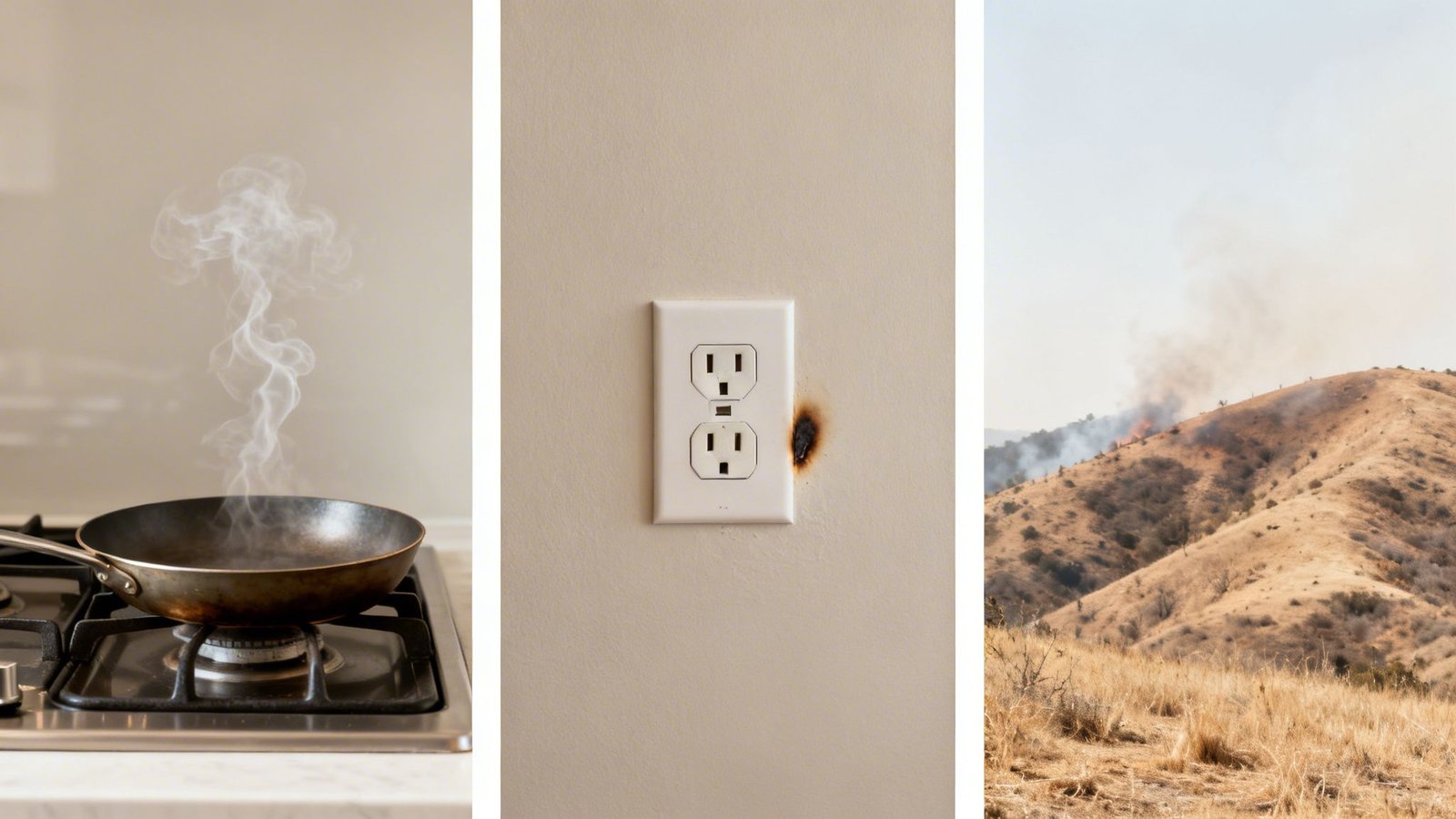
Before you can even begin to think about recovery, it’s essential to understand how a fire started. While no two fires are identical, most trace back to a handful of surprisingly common culprits. For us, knowing the origin is the first step in building a precise restoration plan—after all, the cleanup for a kitchen grease fire is a world away from what's needed after an electrical fire.
Nationally, cooking is the leading cause of home fires. It’s all too easy to picture: a pan of oil left for a moment too long on a hot stove in a Glendale apartment, which then flashes over and ignites. Heating equipment is another frequent offender, especially when space heaters are placed too close to curtains or furniture during our colder winter nights.
These everyday situations show just how quickly a normal activity can turn into a disaster. The damage is often concentrated but incredibly intense, demanding specific cleaning protocols for the unique grease or protein-based soot left behind.
Electrical Systems and Wildfire Risks
Here in Los Angeles, our beautiful, established neighborhoods like Burbank and Pasadena come with a hidden risk: older homes. Their aging electrical wiring often can't handle the demands of our modern lifestyle—the computers, giant TVs, and countless kitchen gadgets.
An overloaded circuit can heat up until it melts the wire's protective insulation, igniting the wood framing or insulation inside your walls. It's a silent danger that can smolder for hours before anyone knows it’s there, eventually erupting into a full-blown blaze.
And, of course, living in Southern California means we face the constant threat of wildfires. For communities in wildland-urban interface zones, like those near the San Fernando Valley or the foothills, a spark from outside can easily become a catastrophe inside. Embers whipped up by Santa Ana winds can travel over a mile, finding their way into attic vents and crawl spaces to ignite a home from within.
Understanding Fire Classifications
Firefighters and restoration professionals don't just see "a fire." We classify them based on the fuel source. This system is critical because it tells us the safest and most effective way to put the fire out and, just as importantly, how to clean up the mess afterward. Knowing the class of fire that hit your property helps our technicians choose the right equipment and cleaning agents for the job.
Here’s a quick breakdown of the fire classes you're most likely to see in a home or business:
Class A Fires: These are the most common in a structure fire. The fuel is ordinary combustibles—things like wood, paper, fabric, and plastics. The soot is usually dark and dry, but the sheer volume of burned materials can create widespread problems.
Class B Fires: This class involves flammable liquids like gasoline, oil, and grease. A kitchen grease fire is a perfect example. These fires produce a sticky, oily soot that is notoriously difficult to remove and requires specialized degreasing solvents.
Class C Fires: These fires are sparked by energized electrical equipment. Think faulty wiring, an overloaded power strip, or a malfunctioning appliance. The immediate risk is electrocution. Once the power is shut off, it often becomes a Class A fire as the flames spread to surrounding materials.
Class D Fires: You're unlikely to see these in a home. They involve combustible metals like magnesium or titanium and are more of a concern in industrial settings.
Class K Fires: This is a special category for commercial kitchen fires fueled by cooking oils and fats. While similar to Class B, they burn at much higher temperatures and require a specific wet chemical agent to extinguish.
Understanding a fire’s origin and class is far more than just a technical detail; it’s the blueprint for a successful restoration. A Class C electrical fire in a Sherman Oaks home office leaves behind entirely different chemical residues and damage patterns than a Class A fire from a cigarette on a Beverly Hills wooden deck. This knowledge is how we move from chaos to a clear, effective path to recovery.
The Three Types of Damage Caused by a Structure Fire
When you see the aftermath of a fire, the first thing you notice is what the flames burned. But that’s just the beginning of the story. The real damage is a triple threat, a combination of issues that go far beyond simple charring. To truly grasp what a fire does to a property, you have to look past the obvious burn marks and see the full picture.
Fire damage really breaks down into three interconnected problems: thermal damage from heat, smoke and soot damage that travels everywhere, and secondary damage from the water used to put the fire out. Each one creates its own set of challenges, and fixing them correctly requires a professional touch.
Call (818) 336-1800 for 24/7 Fire Restoration
Thermal Damage
This is the damage you can see and feel—the direct destruction from intense heat and flames. It’s what everyone pictures when they think of a fire: blackened walls, consumed materials, and charred remains.
But the heat does more than just burn the surface. It attacks the very bones of the building, compromising its structural integrity in ways you might not see.
- It can weaken steel beams, causing them to warp and lose their ability to support weight.
- It turns sturdy wood framing into brittle charcoal, leaving walls and roofs dangerously unstable.
- It melts plastics, vinyl siding, and electrical wiring, which not only creates a mess but also releases toxic fumes.
- It can even cause glass to explode and concrete to spall (chip away), weakening the structure even further.
This is why a professional assessment is so vital. Just replacing what looks burnt isn't enough; the hidden structural weakening is often the much bigger, more dangerous problem.
Smoke and Soot Damage
While the flames might be contained to one area, smoke is an entirely different beast. It’s a relentless invader that travels everywhere, carrying tiny, acidic, and corrosive soot particles with it. In many cases, smoke and soot damage is more widespread and tougher to clean up than the fire itself.
These microscopic particles are pushed by heat and air pressure deep into porous materials like drywall, wood, carpet, and furniture. They worm their way into your HVAC system, behind walls, and throughout your belongings, leaving behind a hazardous residue that sticks around.
Smoke isn't just a smell; it's a physical residue. Those acidic soot particles will continue to eat away at metal, etch glass, and stain surfaces for good if they aren't removed by a professional. Trying to wipe them off with a household cleaner usually just smears the greasy film, making the problem much worse.
This process flow diagram shows how these different damage types feed into each other, creating a cascade of problems.
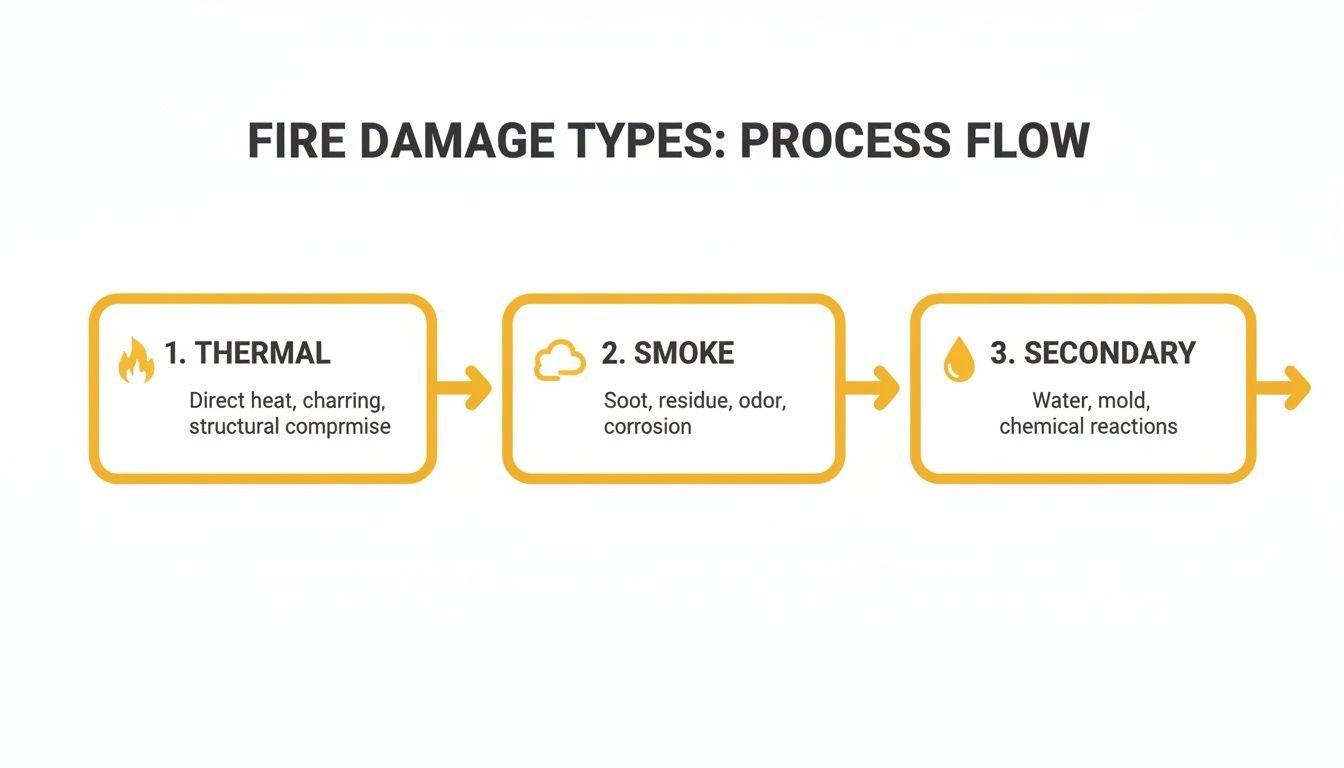
As you can see, a single fire branches out into multiple issues that only get worse over time. The sticky, oily nature of soot demands special cleaning methods. For a closer look at that process, check out our guide on how to clean soot off walls.
Secondary Damage
Finally, we have the damage that wasn't even caused by the fire. Secondary damage is the collateral impact from the water and chemicals used to extinguish the flames. To save a structure, firefighters have to use an immense amount of water—sometimes hundreds of gallons every minute.
While absolutely necessary, this introduces a brand-new water damage problem on a massive scale. Water soaks everything from the attic down to the foundation, saturating insulation, drywall, flooring, and furniture. This creates the perfect environment for mold to grow, especially in the humid coastal air of Santa Monica or the warm climate of the San Fernando Valley.
Mold can start growing in as little as 24 to 48 hours, adding another layer of hazardous contamination to an already overwhelming situation. This is why immediate water extraction and structural drying are top priorities right after the fire is out. Without it, you could be facing a serious mold infestation on top of everything else, making the restoration process much more complicated and costly.
The Professional Fire Damage Restoration Process
When the firefighters leave and the smoke clears, it’s easy to feel overwhelmed. But what happens next is what truly determines your home's recovery. The aftermath of a structure fire isn’t just burnt materials; it’s a toxic combination of heat damage, acidic soot, and the gallons of water used to put it out. Bringing your property back from this brink is what professional fire damage restoration is all about.
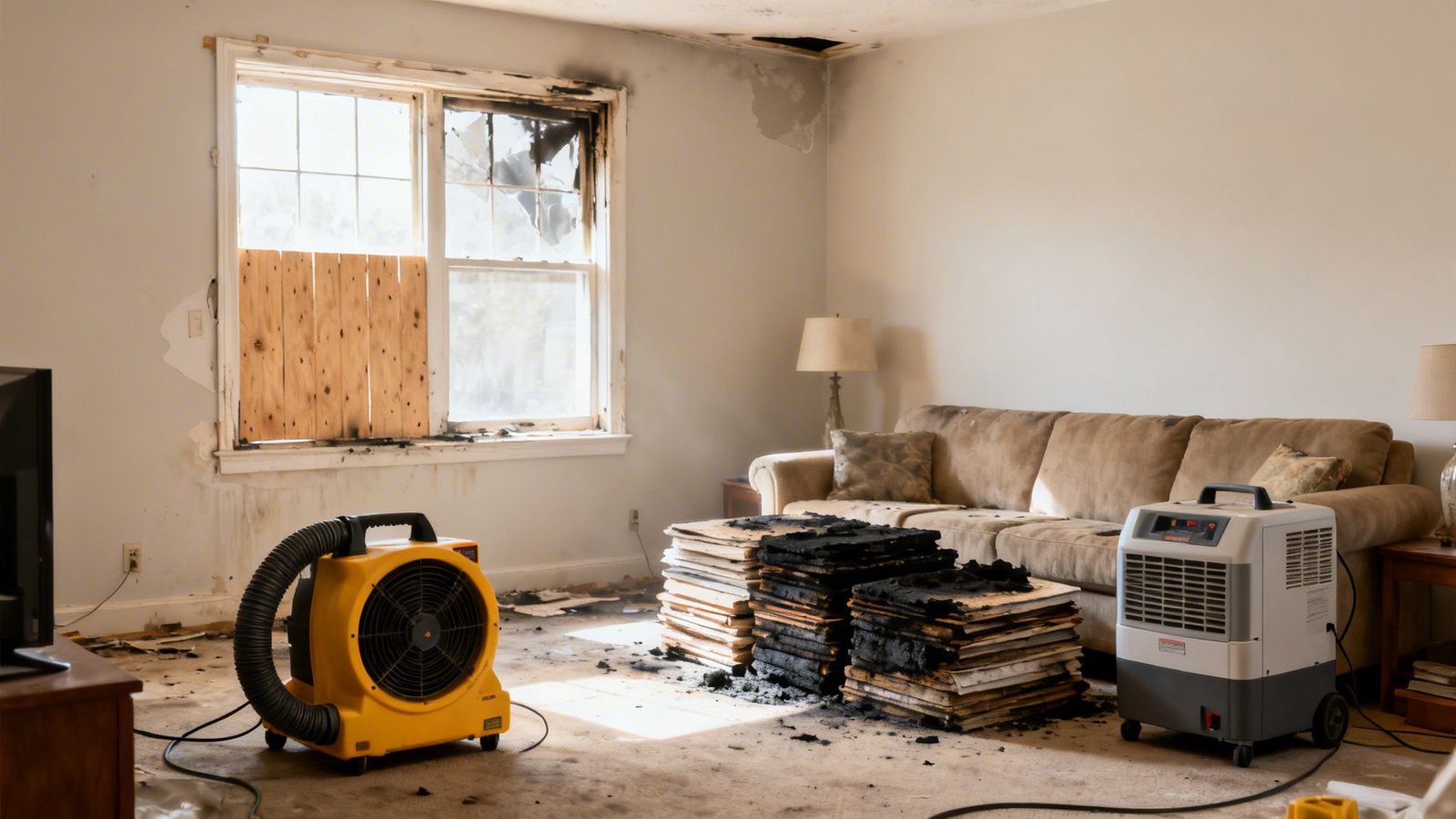
This process is a science, not just a cleanup job. It's about methodically stopping ongoing damage and returning your home to a safe, pre-fire condition. This is absolutely not a DIY project—it takes certified technicians, highly specialized equipment, and a deep, practical knowledge of how fire, smoke, and water behave inside a structure.
Step 1: Emergency Response and Assessment
The moment the fire is out, the clock on secondary damage starts. That's why our 24/7 emergency response is so critical. We get on-site fast to stop the damage from spreading.
First thing we do is a comprehensive assessment to figure out the full extent of the fire, smoke, and water damage. This isn't just a quick look-around; it's a detailed inspection that helps us build a precise scope of work. We document every single thing with photos and moisture readings, which is crucial for both our restoration plan and your insurance claim.
Step 2: Securing the Property and Water Extraction
A fire almost always compromises a building’s security, leaving it open to the elements or intruders. The next immediate job is to secure the site. This involves two key actions:
- Boarding up any broken windows and doors.
- Tarping holes in the roof to stop rain from causing even more water damage.
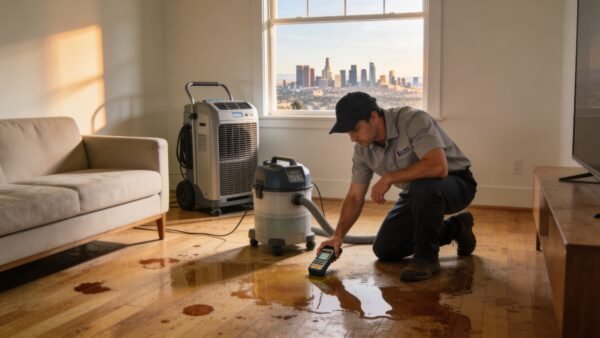
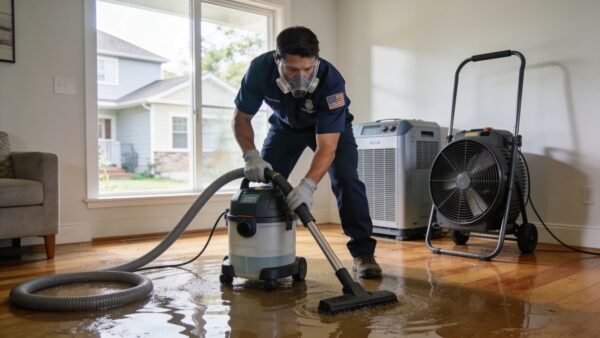
At the same time, we attack the huge volume of water left behind by the firefighting efforts. Using powerful pumps and industrial vacuums, we get all that standing water out. This isn't something that can wait—mold can start to grow in as little as 24-48 hours.
After the bulk water is gone, the real drying begins. We strategically place high-volume air movers and commercial-grade dehumidifiers to pull trapped moisture out of drywall, wood framing, and subfloors. This scientific drying process is vital to stop secondary damage in its tracks.
Step 3: Soot Removal and Deep Cleaning
With the property secure and the drying underway, our focus shifts to the soot and smoke residue. You can’t just wipe this stuff off. Soot is acidic and oily, and trying to clean it with household products will only smear it and push it deeper into your walls and furniture.
Our IICRC-certified technicians use very specific techniques and cleaning agents to remove soot from every surface, including walls, ceilings, and your personal belongings. A critical part of this is cleaning the inside of your HVAC system. If we don't, the moment you turn it on, it will blow soot and that awful smoke smell right back through your home. For a closer look at what this work involves, our fire damage restoration service page goes into more detail.
This sequence of steps is a proven methodology used by pros everywhere. For another perspective, this complete guide to the fire damage restoration process provides an excellent breakdown of each phase.
Step 4: Deodorization and Final Repairs
Finally, we have to deal with the most stubborn souvenir a fire leaves behind: the smell. Smoke particles are microscopic and they get into everything porous, which is why air fresheners just cover it up temporarily.
We use advanced deodorization methods like thermal fogging. This technique creates a heated fog that carries a deodorizing agent into the very same tiny cracks that the smoke penetrated. For tougher jobs, we might use ozone or hydroxyl treatments, which actually neutralize the odor-causing molecules on a chemical level.
This table gives a clear, at-a-glance summary of the restoration journey.
Restoration Phase and Its Primary Goal
The professional restoration process is broken down into distinct phases, each with a specific purpose. Understanding these stages helps homeowners see the logic behind the recovery plan and what to expect as their property is brought back to life.
| Restoration Phase | Primary Objective | Key Action |
|---|---|---|
| Emergency Mitigation | Prevent further damage and secure the property. | Board-ups, water extraction, and structural drying. |
| Soot & Smoke Removal | Eliminate acidic and hazardous residues. | Specialized cleaning of all affected surfaces and HVAC. |
| Deodorization | Permanently remove smoke odors at the source. | Thermal fogging, ozone, or hydroxyl treatments. |
| Repairs & Reconstruction | Rebuild and restore the property to pre-loss condition. | Replacing drywall, painting, and structural repairs. |
Once the property is clean, dry, and free of any smoke odor, the final reconstruction phase begins. This could be as simple as replacing some drywall and painting, or it could involve rebuilding entire sections of your home. The goal is always the same: a complete and total recovery from the structure fire.
How to Prevent Structure Fires in Your Home
While knowing what to do after a structure fire is critical, preventing one from starting in the first place is the real win. Think of it as your first and most powerful line of defense. Proactive safety isn't just about checklists; it's about protecting your family, your property, and your peace of mind.
We see the aftermath of fires all the time, and so many of them could have been avoided with simple habits and routine checks. This is especially true here in Southern California, where our lifestyle and environment throw unique challenges our way—from the aging electrical systems in beautiful historic homes to the constant threat of wildfires.
Master Your Kitchen Safety
Since cooking is the number one cause of home fires, the kitchen is where your focus should be. It only takes a single moment of distraction for a simple pan on the stove to become a full-blown emergency.
- Always stay in the kitchen when you are frying, grilling, or broiling. If you have to step away, even for a second, turn off the stove. No exceptions.
- Keep anything that can burn—oven mitts, wooden spoons, paper towels, even food packaging—at least three feet away from your cooktop.
- If a grease fire ignites in a pan, stay calm. Slide a lid over it to smother the flames and turn off the heat. Never, ever use water. It will cause the burning oil to explode outward, spreading the fire instantly.
Address Electrical Hazards
In many Los Angeles neighborhoods, those charming older homes come with a hidden risk: outdated electrical systems that were never meant to handle our modern demand for power. Overloaded circuits are a silent but deadly fire hazard.
An overloaded circuit is like a traffic jam for electricity. When too much current tries to push through a wire, it gets incredibly hot. That heat can easily melt the wire's plastic coating and ignite the wood studs or insulation hidden inside your walls.
Watch for the warning signs: lights that flicker, outlets that feel warm, or circuit breakers that constantly trip. If you see any of this, it's time to call a licensed electrician for an inspection. In the meantime, stop using extension cords as a permanent solution and never plug major appliances into a power strip.
Create Wildfire Defensible Space
For anyone living in communities that border wildlands—like the foothills of the San Gabriel Mountains or near the Santa Monica Mountains—creating defensible space is not just a suggestion. It is an essential survival strategy. This is the buffer zone you create around your home to slow or even stop a wildfire from reaching it.
Here are the key steps:
- Zone 1 (0-5 feet from your home): This is the non-combustible zone. Use materials like gravel, pavers, or concrete. Clear away all dead plants, leaves, and pine needles, and remove any tree branches that hang over your roof.
- Zone 2 (5-30 feet from your home): Think "lean, clean, and green." Keep your grass mowed down to a maximum of four inches. Instead of dense bushes, create space between shrubs and trees to stop fire from jumping from one plant to the next.
Maintain Your Safety Equipment
Your smoke alarms and fire extinguishers are your silent, 24/7 guardians. They are there to shout a warning at the first sign of danger, but they can't do their job if they're not maintained.
Test your smoke alarms monthly, and make it a habit to replace the batteries at least once a year. If you’ve ever been stumped by a detector that goes off for no reason, you might want to read our guide on what to do when your fire alarm is going off with no smoke. It can help you figure out what's wrong and make sure your system is reliable.
Finally, keep a multi-purpose (ABC) fire extinguisher somewhere you can get to it fast, especially in the kitchen and garage. Get familiar with it—check the pressure gauge every month and know how to use it before an emergency strikes.
FAQ: Your Questions About Structure Fires Answered
Q: What should I do immediately after a structure fire?
A: Once the fire department gives the all-clear, do not re-enter the property. It is still a hazardous zone. Your first two calls should be to your insurance company to start a claim and to a 24/7 IICRC-certified restoration company. A professional team will safely secure the property (board-up, tarping) and begin emergency mitigation to prevent further damage from water and soot, which is critical for your insurance claim.
Q: Is the smoke and soot after a fire dangerous?
A: Yes, it is extremely dangerous. Soot particles are microscopic, acidic, and often carry a toxic cocktail of chemicals from everything that burned. Inhaling these particles can lead to severe respiratory problems. Cleanup should only be handled by trained professionals with the correct personal protective equipment (PPE), including respirators, to safely contain and remove the hazardous materials.
Q: The fire was small but the smoke smell is everywhere. Will it go away?
A: No, that smoke odor will not disappear on its own. Smoke particles are microscopic and burrow deep into porous materials like drywall, wood, carpet, and furniture, where they continuously release odor. The only way to permanently fix it is through professional deodorization techniques like thermal fogging or ozone/hydroxyl treatments, which neutralize the odor-causing molecules at their source.
Q: How do you work with my insurance company?
A: We work directly with all major insurance carriers to make the process as smooth as possible. We provide detailed documentation, including photos, moisture readings, and a precise scope of work that adjusters need. We communicate directly with your adjuster, explaining the technical requirements and justifying the procedures to help expedite claim approval, taking the burden off your shoulders. You can learn more about how homeowners insurance handles fire damage in our detailed guide.
Q: Does renters insurance cover fire damage?
A: Yes, renters insurance typically covers fire damage to your personal belongings. It does not cover damage to the building's structure, as that is the landlord's responsibility. A standard policy also includes "loss of use" coverage, which helps pay for temporary living expenses (like a hotel) if the fire makes your apartment uninhabitable. Reviewing your policy is essential; this guide to renters insurance in California can provide more clarity.
Q: How long does fire damage restoration take?
A: The timeline varies greatly depending on the extent of the fire, smoke, and water damage. A small kitchen fire might take a few days to a week for cleanup and minor repairs. A major structure fire that requires extensive reconstruction could take several months. A professional restoration company can provide a more accurate timeline after a thorough on-site assessment.
The aftermath of a fire is a complicated mess, but getting back on your feet doesn't have to be. Onsite Pro Restoration is here 24/7 to guide you through every step, from the initial emergency board-up to the final coat of paint. If your property has been damaged by a structure fire, don’t wait. Call us now for a fast, free on-site assessment.