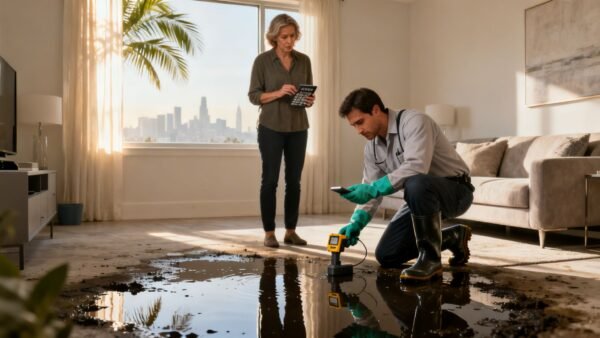

When a sewer line backs up into your Los Angeles home, the first thing that hits you is the smell. The second is the immediate, gut-punching question: "What is this going to cost me?" The short answer is that the sewage backup cleanup cost in Los Angeles can run anywhere from $2,500 for a small, contained mess to over $15,000 for severe blackwater flooding that impacts multiple rooms.
A sewage backup isn't just a mess; it's a biohazard emergency that needs a swift, professional response to protect your health and your home. Understanding the costs upfront is the first step to making the right decisions when you’re under pressure, whether you're dealing with a mainline clog in Van Nuys or an overflowing toilet in Santa Monica.
Struggling with a sewage emergency? Don't wait. Call Onsite Pro Restoration now for immediate, 24/7 help.
Call (818) 336‑1800 Now
Understanding Sewage Backup Cleanup Cost Tiers
In the restoration world, we classify water damage into three categories. The price escalates with the risk, and sewage is always the most severe.
- Category 1 (Clean Water): From a burst supply line. It's the least hazardous and cheapest to fix.
- Category 2 (Gray Water): Water from a washing machine or dishwasher overflow. It has contaminants but isn't raw sewage.
- Category 3 (Blackwater): The worst-case scenario. This is raw sewage from a toilet or main line backup, and it’s loaded with dangerous pathogens like E. coli and Hepatitis A. A blackwater event in a Sherman Oaks home isn't a simple cleaning job; it's a hazardous waste removal project.
A Category 3 blackwater event requires our crew to use full personal protective equipment (PPE), follow specialized sanitation protocols, and legally dispose of any porous materials—like carpet, drywall, and insulation—that it touches. This is why the sewage backup cleanup cost is significantly higher.
This quick overview shows how the costs can stack up.
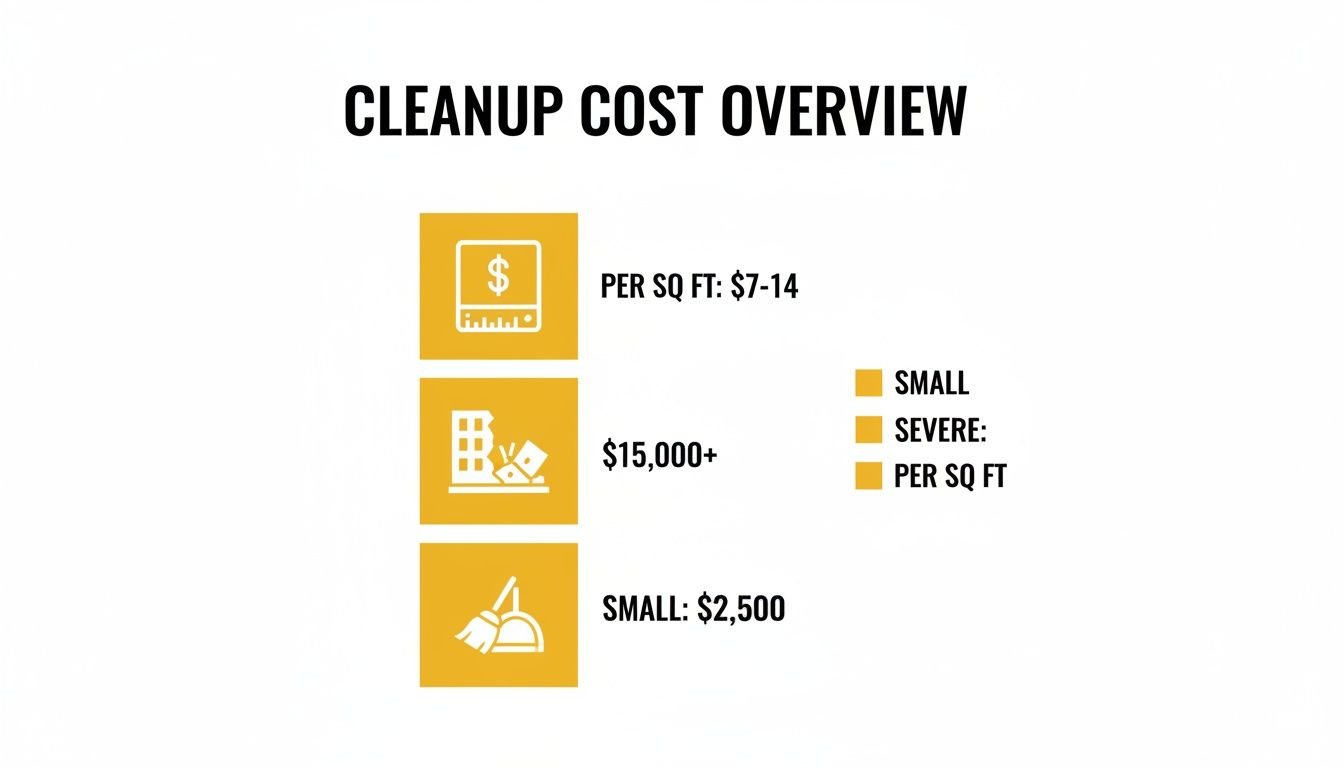
As you can see, what starts as a "small" problem can quickly become a major expense, especially when you start calculating the damage on a square-foot basis.
Estimated Sewage Backup Cleanup Costs in Los Angeles (2026)
To give you a clearer picture, here’s a breakdown of what you might expect to pay in the Los Angeles area. Remember, these are estimates; your actual cost will depend on the unique factors of your situation.
| Contamination Level | Affected Area Size | Estimated Cost Range |
|---|---|---|
| Category 2 (Gray Water) | Single Room (e.g., Laundry) | $2,500 – $5,000 |
| Category 3 (Blackwater) | Single Bathroom, Contained | $3,000 – $7,500 |
| Category 3 (Blackwater) | Multiple Rooms / Basement | $7,500 – $15,000+ |
These figures cover the emergency mitigation—extraction, sanitation, and drying. They don't include the cost of rebuilding, which comes after the cleanup is complete. The per-square-foot cleanup cost for blackwater in Los Angeles County typically translates to $7 to $14, reflecting the intensive labor and equipment needed. This cost structure is similar to other types of water damage, but the serious health risks of sewage put it in a class of its own. You can learn more by reading our guide on the factors that influence the overall water damage cleanup cost.
The Critical Factors Driving Your Final Cleanup Bill
Ever wonder why one sewage backup cleanup costs $3,000 while a seemingly similar job down the street balloons to over $10,000? It’s a valid question, and the sticker shock is real. The final bill isn't arbitrary; it’s a direct reflection of specific, critical variables that restoration pros have to assess on-site.
A small, contained sewage spill on a concrete garage floor in Burbank is one thing. A backup that forces its way through the ground floor of a Pasadena home, soaking drywall and getting under the floorboards, is a completely different beast—a hazardous materials situation with multiple layers of cost.
Contamination Level: Blackwater vs. Greywater
This is the single biggest factor influencing the cost. Raw sewage is classified as Category 3 “blackwater,” a serious biohazard filled with dangerous bacteria and viruses. The moment blackwater is identified, a strict set of safety protocols, mandated by the IICRC (the industry's governing body), kicks in.
- Intensive Labor: Our technicians must wear full Personal Protective Equipment (PPE)—respirators, full-body suits, and multiple layers of gloves—for their own safety.
- Specialized Equipment: We immediately deploy HEPA-filtered air scrubbers to run 24/7, capturing any airborne pathogens.
- Strict Disposal Rules: Anything porous that blackwater touches is considered hazardous waste. Drywall, insulation, carpet, rugs, and upholstered furniture can't be salvaged. They have to be carefully removed, bagged, and disposed of according to biohazard regulations.
Compare that to Category 2 “greywater” from a washing machine overflow. It’s still contaminated and needs professional handling, but it doesn’t always require the total demolition and disposal of every material, which can significantly lower the final bill.
Extent and Type of Damaged Materials
Next, we look at the sheer scope of the damage. This isn’t just about the square footage; it’s about what got wet and how far the contamination spread.
A backup contained to a small, tiled bathroom is a much simpler, less expensive job than one that seeps under the wall and soaks the subfloor of the carpeted bedroom next door. The more materials that have to be torn out and replaced, the higher the cost for both the cleanup and the eventual reconstruction.
The financial toll of a sewage backup goes far beyond the initial cleanup, with the complete restoration often topping $10,000 in severe cases. The per-square-foot rates really highlight the difference: a less-risky greywater job might run $5.25/sq ft, while a hazardous blackwater cleanup starts around $7.50/sq ft. That higher price reflects the mandatory antimicrobial treatments and hazardous material disposal needed to prevent health risks from pathogens like E. coli. While national cleanup averages fall between $2,000 and $7,000, Los Angeles’s higher labor and disposal costs can easily push those figures 20-30% higher.
Time and Accessibility
The moment you spot a backup, a clock starts ticking. The longer sewage sits, the more it spreads and soaks into your home’s structure, leading to deeper, more expensive damage.
- Emergency Service Fees: If you call us at 2 a.m. on a weekend, an emergency dispatch fee will likely apply. This covers the cost of getting a crew and equipment mobilized immediately, no matter the time.
- Secondary Damage: The real cost of waiting comes from secondary damage. Saturated materials quickly become a breeding ground for mold and can lead to structural rot. These issues require their own separate—and costly—remediation process.
This is why a fast response is everything. The first steps we take are called water mitigation—stopping the source, extracting the bulk of the sewage, and setting up professional drying equipment. You can learn more about how this initial phase is designed to prevent costs from spiraling by reading our guide on what water mitigation is. Acting fast minimizes the total damage that needs to be repaired later.
Structural Repairs and Reconstruction
It's absolutely crucial to understand that the initial cleanup price is only for the mitigation phase. That quote covers extracting the sewage, cleaning and sanitizing all salvageable surfaces, and professionally drying the structure. It does not include putting your home back together.
Reconstruction is a separate project with its own estimate. This is the work that happens after the home is clean, dry, and safe.
This phase can include:
- Replacing drywall and insulation
- Installing new carpet, tile, or wood flooring
- Replacing ruined kitchen or bathroom cabinets
- Priming and repainting walls and ceilings
A trustworthy restoration company will always give you a clear, itemized estimate that separates the mitigation costs from the anticipated reconstruction costs. This gives you a complete and honest financial picture before you agree to any work.
Will Insurance Cover My Sewage Backup? A Guide to Claims
Finding a sewage backup is bad enough. Finding out your standard homeowner's policy won't pay for it is a brutal second hit. It’s a painful surprise we see Los Angeles homeowners face all the time. The sewage backup cleanup cost is almost never included in a basic policy, leaving you holding a massive bill.
The only way to be covered is with a specific add-on—usually called a "water backup" or "sewer backup" endorsement. Without that little piece of paper, you could be on the hook for the entire cleanup cost yourself. Knowing how to handle your insurance claim is just as important as the cleanup itself.
The First Steps to a Strong Claim
From the moment you spot the backup, the clock is ticking. What you do next can make or break your insurance claim. Your two most important tools are speed and documentation.
Here's exactly what to do:
- Call Your Insurance Agent Immediately: Before anything else, get on the phone with your agent or the company's 24/7 claims line. Tell them what happened and, most importantly, ask them to confirm if you have a sewer backup endorsement on your policy.
- Document Everything: Grab your phone and take more photos and videos than you think you need. Get wide shots of the entire area, close-ups of the water line on the walls, and pictures of every single item that’s been touched by the water. This visual proof is not negotiable.
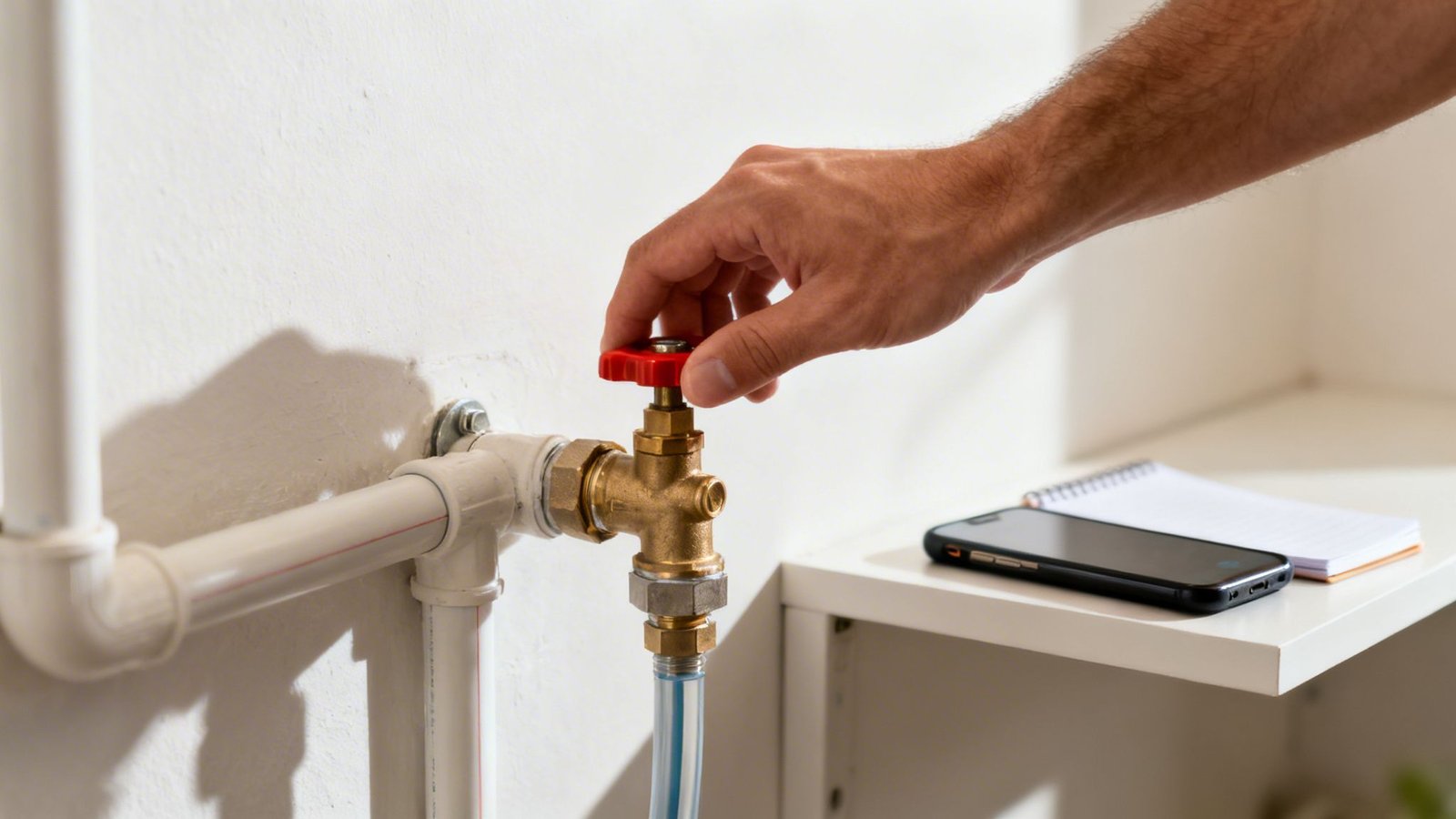
- Mitigate Further Damage (If Safe): If you can get to it safely, turn off the main water valve to your house to keep things from getting worse. But do not start moving items soaked in blackwater—you’ll just spread the contamination.
This is where so many claims get complicated. The insurer needs to see the initial state of the damage. A professional restoration team will then build on your photos with their own expert reports.
Understanding Your Coverage and Its Limits
Even with a sewer backup endorsement, your coverage has a ceiling. Most of these add-ons come with a specific limit, like $10,000 or $25,000. While that’s a huge help, a serious blackwater flood can blast past those numbers, leaving you to pay the rest of the sewage backup cleanup cost out-of-pocket.
Uninsured losses from sewage backups average a staggering $20,000, a figure that hits property managers and commercial building owners especially hard, as nearly 90% of standard policies exclude this specific peril. Partnering with a restoration company that provides comprehensive documentation is essential for supporting claims, especially as flooding incidents rise. Read more about these sewage cleanup cost statistics on wfmrestoration.com.
Working with a company like Onsite Pro gives you a major leg up. We have solid relationships with all the major insurance carriers in Los Angeles because we speak their language. We provide the exact, line-item-level documentation adjusters need to approve and process your claim without delays. You can learn more in our guide on whether homeowners insurance covers sewer backup.
What Happens If Your Claim Is Denied
A claim denial feels final, but it doesn't have to be. If you believe your policy should have covered the damage, you have the right to challenge the decision. The appeals process is tricky and demands clear communication and a rock-solid presentation of your evidence.
If your sewage backup claim gets denied, knowing how to effectively appeal an insurance denial is your next critical move. This usually means writing a formal appeal letter, submitting all your documentation, and pointing out exactly why you believe the denial was wrong based on your policy's language. This is another area where a detailed report from a professional restoration partner can be the key to winning your case.
Why a DIY Cleanup Is a Dangerous & Costly Mistake
When you’re staring down a potential sewage backup cleanup cost, the urge to grab a mop and some bleach is powerful. We get it. The thought of saving a few thousand dollars is tempting. But let’s be very clear: this isn’t just mopping up dirty water. This is a hazardous materials situation. Treating it like a weekend DIY project is one of the most dangerous and costly mistakes a homeowner can make.
In our experience across Los Angeles, a failed DIY attempt almost always leads to far greater expenses and health risks down the road.
The Health Risks Are Not Worth It
Raw sewage is classified as Category 3 water, or "blackwater," for a reason. It’s a toxic brew of human waste, chemicals, and waterborne pathogens. When you try to clean this up without professional training and gear, you're putting your family's health on the line.
These contaminants don't just stay in the water. They become airborne, circulating through your home's HVAC system and settling on every surface.
- Bacteria: Blackwater is loaded with dangerous bacteria like E. coli, Salmonella, and Shigella, all of which can cause severe gastrointestinal disease.
- Viruses: It can carry viruses such as Hepatitis A and Rotavirus, leading to serious infections of the liver and other organs.
- Parasites: Microscopic parasites like Giardia and Cryptosporidium are also common, capable of causing long-term digestive problems.
Even minimal exposure—through a small cut, breathing in aerosols, or accidental ingestion—can cause serious illness. This is precisely why professionals follow such strict biohazard clean up protocols.
The Guarantee of Secondary Damage
The second, and equally dangerous, pitfall of a DIY cleanup is the absolute certainty of leaving hidden moisture behind. A surface might look and feel dry, but water always finds its way into places you can't see or reach, like behind the baseboards of a home in North Hollywood.
We use specialized tools like thermal imaging cameras and non-invasive moisture meters to detect water trapped inside wall cavities, under cabinets, and deep within the subfloor. Without this equipment, you're just guessing.
Trapped moisture is the single biggest cause of secondary damage. Within just 24-48 hours, that hidden dampness becomes a perfect breeding ground for a major mold infestation. A mold problem is often more complicated and expensive to fix than the original sewage backup.
Essentially, a botched DIY job doesn't just fail to solve the first problem. It creates a second, more insidious one.
DIY Cleanup vs. Professional Restoration: A Risk Comparison
So, what really separates a DIY attempt from a professional service? The difference is science versus guesswork. IICRC-certified technicians follow proven protocols to eliminate hazards and restore your home safely. A DIY approach, on the other hand, is a gamble you can't afford to lose.
| Aspect | DIY Approach (High Risk) | Professional Service (Low Risk) |
|---|---|---|
| Safety | High risk of exposure to pathogens; no proper PPE or containment. | Full PPE worn; contaminated area is sealed off to prevent cross-contamination. |
| Sanitation | Household cleaners are ineffective against blackwater pathogens. | Use of EPA-registered, hospital-grade antimicrobial and sanitizing agents. |
| Drying | Relies on air-drying, which leaves moisture trapped in walls and floors. | Utilizes industrial air movers and dehumidifiers; moisture levels are verified with meters. |
| Outcome | Almost guarantees a secondary mold infestation and lingering contamination. | Complete sanitation and drying prevents mold growth and ensures the home is safe. |
At the end of the day, hiring a professional isn't just paying for a service; it's an investment in your family's health and your home's structural integrity. It's the only way to be certain the job is done right.
How to Reduce Your Sewage Cleanup Costs Without Compromising Safety
When you’re staring at a rising tide of contaminated water, it’s easy to feel powerless over the final bill. But while professional help is non-negotiable for safety, you have more control over the sewage backup cleanup cost than you might think. The key is to act decisively to stop secondary damage in its tracks.
The single most critical factor in managing costs is speed. Think of it like a sponge; the longer drywall, insulation, and wood subflooring sit in sewage, the more they absorb. This saturation is what sends repair bills skyrocketing. Calling an emergency restoration company immediately keeps the problem from metastasizing into something far more expensive.
Act Fast to Limit the Damage
Every single minute counts. Taking a few immediate, safe actions can literally save you thousands of dollars by shrinking the scope of the cleanup. As soon as you discover the backup, these are your priorities.
- Shut Off the Water Main: If you can get to it without wading through contaminated water, turn off the main water supply to your home. This stops fresh water from entering the plumbing and making the flood worse.
- Turn Off the Power (If Safe): Water and electricity are a deadly mix. Head to your breaker box and kill the power to the affected areas. This simple step eliminates the very real risk of electrocution.
- Move Untouched Belongings: Get any dry, unaffected furniture, boxes, and personal items away from the edge of the disaster zone. Creating this buffer prevents clean items from getting contaminated as the water spreads.
These actions are your first line of defense. They contain the problem, protect what can be saved, and set the stage for a much more efficient and less costly professional cleanup.
Preventative Measures That Pay Off
Honestly, the best way to save money on a sewage cleanup is to avoid needing one in the first place. Delaying a professional response by just 24 hours can cause a tenfold increase in damage as materials soak up the contamination. Swift professional action, especially structural drying, can head off catastrophic pipe repairs costing over $25,000 and has been shown to slash long-term costs by 40-60%. You can discover more insights about escalating sewage cleanup costs on certifiedwaterandfire.com.
Key Takeaway: Preventing secondary damage is the single most effective way to control your final invoice. Every saturated piece of drywall or warped floorboard adds to both the cleanup and the reconstruction bills. Quick action is your best financial tool.
Another powerful step is to review your insurance policy before a disaster strikes. Confirming you have a specific sewer backup endorsement and understanding its limits will prepare you financially and reduce stress when a crisis hits. Similarly, fast action to dry affected materials is crucial. If a backup only saturates a rug, for example, knowing how to dry wet carpet fast with professional help can mean the difference between saving it and replacing it entirely.
Frequently Asked Questions About Sewage Backup Cleanup
When sewage backs up into your home, the panic is immediate. You're not just dealing with a mess; you're facing a biohazard, and you need clear answers, fast. Let's cut through the confusion and address the most urgent questions Los Angeles homeowners have.
Q: What should I do immediately after a sewage backup?
A: Your only priority is safety. Immediately evacuate everyone, including pets, from the contaminated space. If you can get to your home’s main water valve and breaker box without stepping in the water, shut them off. Your very next call must be to a 24/7 professional restoration company like Onsite Pro. Do not try to move items or start cleaning yourself.
Q: How long does sewage backup cleanup take?
A: The timeline depends entirely on the extent of the damage. A minor, contained backup in a small tiled bathroom might take 1-3 days for extraction, sanitation, and drying. A major flood that has soaked into drywall and subflooring in multiple rooms can take a week or more to allow for safe demolition, a multi-day structural drying process, and initial repairs.
Q: Is it safe to stay in my house during cleanup?
A: Absolutely not. Raw sewage contains dangerous airborne pathogens. For the safety of your family, you must find another place to stay. Professionals create a sealed containment zone with negative air pressure to stop cross-contamination, and it is not safe to remain in the home until the work is complete and the area has been declared safe.
Q: Can I save personal belongings exposed to sewage?
A: It depends on the material. Non-porous items like metal, glass, or hard plastics can often be saved if they are professionally cleaned and disinfected. Unfortunately, anything porous that can absorb the contaminated water—such as carpets, rugs, mattresses, upholstered furniture, and most books—is considered a total loss and must be safely discarded.
Q: What is the average cost of sewage cleanup in Los Angeles?
A: While there is a wide range, the average sewage backup cleanup cost for a residential property in Los Angeles falls between $3,000 and $10,000. A small, contained job might be closer to $3,000, while a severe incident affecting multiple rooms can easily exceed $15,000, not including the cost of reconstruction.
Q: How can I prevent a future sewage backup?
A: Regular plumbing maintenance is key. Have your main sewer line inspected via camera every few years, especially in older Los Angeles homes. Never flush anything other than toilet paper—so-called "flushable" wipes are a primary cause of clogs. Also, be mindful of what you put down kitchen drains; grease and food scraps build up over time and cause blockages.
When a sewage disaster hits, you need a team you can trust to show up immediately and manage the situation with true expertise. Onsite Pro Restoration is IICRC-certified and on call 24/7 to restore your property and your peace of mind.