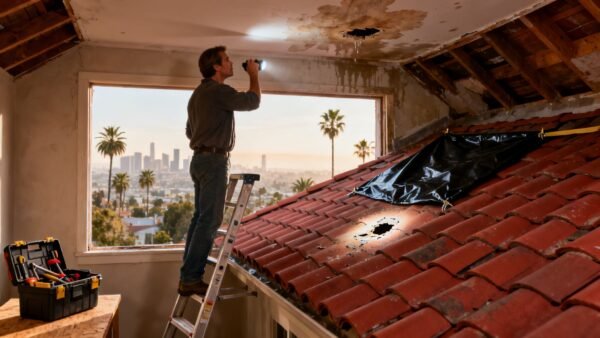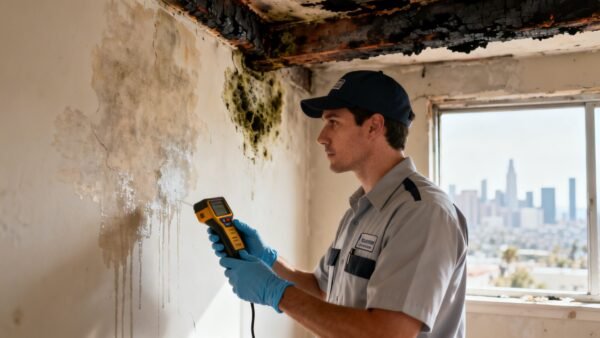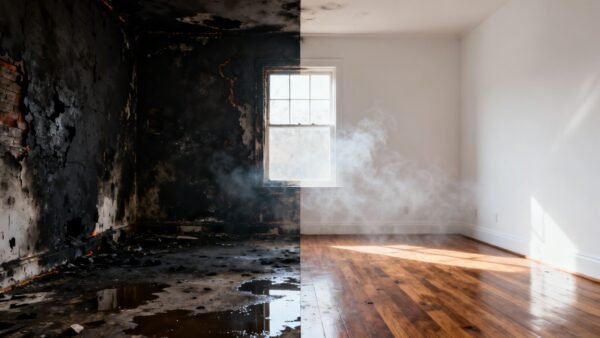

That faint drip from the ceiling or the new, discolored spot you just noticed isn't just an annoyance—it's a critical alarm bell for your entire home. A successful repair leaky roof job is all about speed. Acting fast is the only way to stop a minor water issue from snowballing into thousands of dollars in rotted structural beams, ruined insulation, and a dangerous mold outbreak. Ignoring a leak, especially in the Los Angeles area, is a gamble you can't afford to take.
Need emergency help with a leaky roof? Call (818) 336‑1800 now for a 24/7 response or Schedule your free inspection online.
The Hidden Dangers of a "Minor" Roof Leak
For any Los Angeles homeowner, the sound of dripping water is an urgent call to action. Our climate is famous for long dry spells followed by sudden, heavy downpours, which makes a compromised roof a ticking time bomb. Ignoring a leak isn’t just putting off a repair; it’s practically inviting catastrophic damage into your home.
We see it all the time. A gorgeous Spanish tile roof on a home in Beverly Hills develops a tiny, almost invisible crack. It goes unnoticed for months. By the time a faint stain finally appears on an upstairs ceiling, the real damage is already done. Water has soaked the attic insulation, begun to rot the wooden support joists, and created the perfect dark, damp breeding ground for toxic mold.
The cost to fix that one little tile issue? Maybe a few hundred dollars. The bill for the mold remediation, structural repairs, and drywall replacement that followed? Over $10,000.
The Rapid Escalation of Water Damage
Water is incredibly destructive, and once it gets in, time is absolutely not on your side. The moment water finds a way past your roofing, a chain reaction kicks off:
- Within Minutes: Water starts spreading immediately, following the path of least resistance through your insulation and along wooden framing.
- Within 24-48 Hours: The risk of mold growth skyrockets. In the warm Southern California climate, dormant mold spores can activate and start colonizing damp materials with alarming speed.
- Within a Week: Structural integrity is now at risk. Drywall will start to sag and weaken, wood can warp or rot, and electrical systems could be dangerously compromised.
This is why a leaky roof is never "just a leak." It’s the starting point for a property-wide emergency. That small, dark spot on your ceiling in a Sherman Oaks flat-roof home isn’t the problem itself—it’s the final symptom of a much bigger issue unfolding right above your head.
Why a Leaky Roof Tanks Your Property Value
Your roof is arguably the single most important part of your home when it comes to protecting its value. A solid, well-maintained roof is a huge selling point. On the flip side, any evidence of leaks is a massive red flag for buyers and home inspectors.
Failing to repair leaky roof problems right away can force you into expensive, last-minute repairs before a sale or lead to a serious cut in your home’s market price. Acting fast isn't just about preventing damage; it's about preserving your single biggest investment.
How to Find the Source of Your Roof Leak
Pinpointing a leak's true origin is often the hardest part of any attempt to repair a leaky roof. Water is sneaky; it can travel sideways along rafters, soak into hidden insulation, and follow conduits far from where it first got in. That ugly brown stain on your ceiling might be feet away from the actual hole in your roof.
Finding the source takes a bit of detective work. If it's raining, the most direct method is to get into your attic (safely!) with a good flashlight. Trace any moisture you see on the underside of the roof decking back to its highest point. You're looking for glistening wood, dark water stains, or active drips—that's probably your culprit.
Performing a Controlled Water Test
Of course, in Los Angeles, we can't always wait for rain. You can simulate a downpour with a garden hose, but you’ll need a helper. This is a two-person job: one person on the roof with the hose, and a spotter inside the attic or under the stained ceiling, equipped with a flashlight and a phone to stay in contact.
Start by soaking a small section of the roof, beginning low on the slope just above where you see the damage inside. Have the person on the roof drench that one spot for several minutes. The inside spotter needs to watch carefully for any new drips.
If nothing shows up, move up the roof and soak the next section. Work your way methodically across and up the roof slope. This systematic approach helps you isolate exactly where the water is getting in.
Common Culprits Behind Los Angeles Roof Leaks
From our experience, leaks almost always happen where things penetrate the roof or where different materials meet. These intersections are the weakest links. Getting a solid grasp on How to Find Roof Leaks is the first step to solving the problem for good.
Here are the prime suspects we investigate first on any job:
- Damaged Flashing: This thin metal stripping around chimneys, vents, and skylights is a critical seal. We see cracked or peeling sealant around flashing constantly, and it's a notorious source of leaks, especially on the flat roofs common in places like Sherman Oaks.
- Cracked or Missing Shingles: Those intense Santa Ana winds can easily lift, crack, or just rip shingles clean off. This leaves the underlayment exposed and vulnerable to the next rainstorm.
- Clogged Gutters: When your gutters are packed with leaves and debris, rainwater has nowhere to drain. It pools, backs up under the eaves, and flows right into your attic or wall cavities. It’s one of the most common and easily prevented issues.
- Worn Sealant: The rubberized sealant boots around plumbing vents and exhaust pipes don't last forever. The relentless California sun bakes them until they dry out, crack, and pull away from the pipe, creating a perfect funnel for water.
This infographic shows exactly why you can't ignore a "minor" drip. It quickly becomes a major hazard.
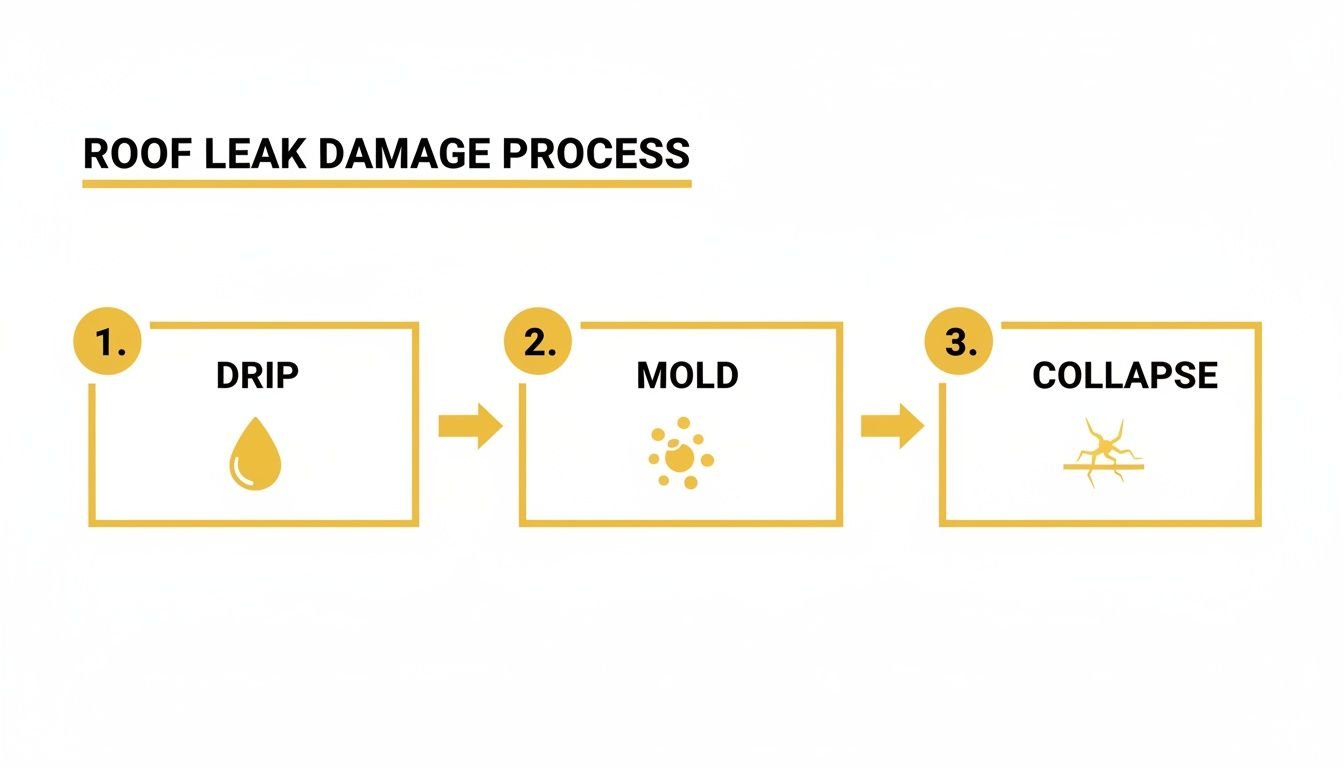
As you can see, a simple leak escalates fast. It leads to hazardous mold and can eventually compromise your home's entire structure.
Immediate Steps to Take After Finding a Leak
The second you see a drip, a dark water spot, or a sagging ceiling, the game changes. Forget finding the source for a moment—your top priority is damage control. Acting fast can be the difference between a small cleanup and a complete catastrophe that takes out your ceiling, floors, and valuables.
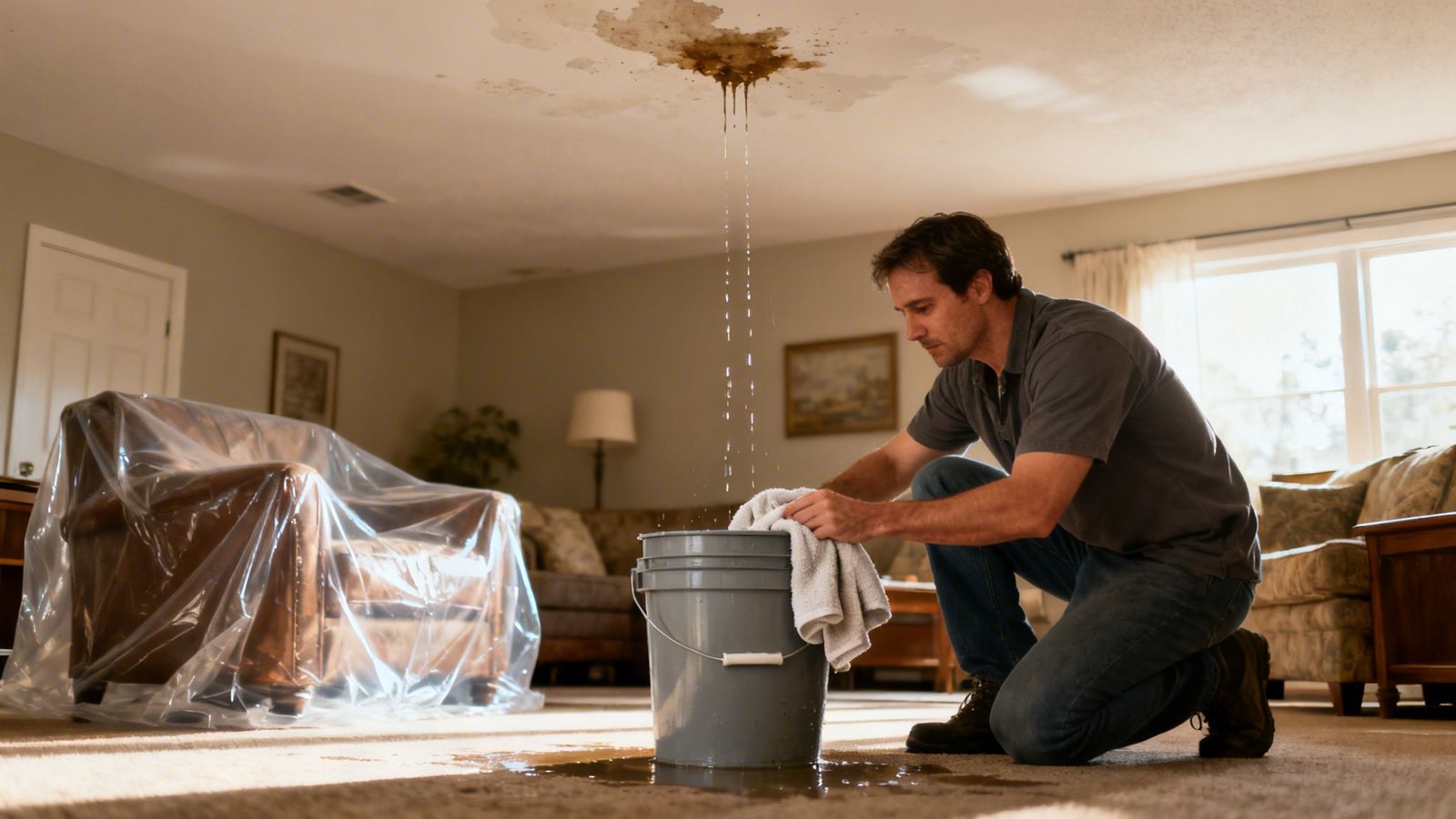
First, contain the water. Grab the biggest bucket or plastic bin you have and get it directly under the leak.
If the ceiling is bulging and looks like a water balloon, you have to release that pressure before it brings down a huge section of drywall. Carefully take a small nail and poke a hole right in the center of the bulge. This gives the water a controlled path into your bucket instead of letting it spread and saturate the surrounding structure. For more tips on what to do in the first few minutes, check out this excellent guide on how to stop a leaky roof.
Protecting Your Property And Mitigating Loss
Once the active drip is contained, it's time to move everything out of harm's way. Get all your furniture, electronics, rugs, and any other belongings out of the affected area. Water ruins these items in minutes, and a soaked carpet becomes a perfect breeding ground for mold.
If you're dealing with wet carpets already, our guide on how to dry wet carpet fast has the crucial next steps you need to take.
For a bad leak happening during a storm, a temporary tarp on the roof can be a real lifesaver. This is just a stopgap measure to keep more water out until a professional can safely get up there. Never, ever go on a roof during a storm, high winds, or if you aren't completely comfortable and secure with heights.
When to Call for Emergency Help: If water is actively flowing, spreading to multiple rooms, or you see it anywhere near electrical outlets or light fixtures, don't hesitate. This is a full-blown emergency. Call a 24/7 restoration service at (818) 336‑1800 immediately.
The Risks of DIY Roof Repair vs. Calling a Professional
So you've found a leak. That voice in your head is probably telling you a quick trip to the hardware store and an afternoon on the roof will solve everything. It's tempting, I get it. But as someone who's spent years fixing the aftermath of well-intentioned DIY repairs, I can tell you it's a path loaded with risks.
Before you even think about grabbing a ladder, let's get real about the dangers. Roofing work is serious business. The roofing industry has one of the highest fatality rates of any profession. Even for seasoned pros with all the right safety gear, it’s risky. For a homeowner, those risks multiply fast.
Why a Professional Assessment Matters
Can a handy homeowner tackle a tiny, easy-to-reach crack in some flashing with a dab of roofing cement? Sometimes. But that's usually where the line for DIY should be drawn.
The real problem isn't just applying a patch; it's what happens when you get it wrong. A failed DIY repair doesn't just fail—it often channels water into new, hidden places. I’ve seen it dozens of times: a simple patch that ends up rotting out an entire wall stud because the water found a new path.
An experienced roofer’s most valuable tool isn’t their nail gun; it’s the ability to see what you can't. They spot the real problem, like poor attic ventilation causing sheathing to rot from the inside out—an issue a homeowner would never connect to a small leak.
When to Call a Pro, No Questions Asked
Some situations are simply not up for debate. If you're dealing with any of these, your first and only call should be to a licensed professional.
- Steep-slope roofs: These require specialized safety harnesses, anchors, and training. A fall is not a matter of if, but when.
- Tile roofs: Extremely common here in Los Angeles, but you can't just walk on them. One wrong step can shatter a dozen tiles, turning one leak into ten.
- Flat roof membranes: These systems need specific welding techniques and materials to create a seamless, waterproof seal. Getting it wrong is a guarantee of a future, much larger leak.
And if that leak has already caused a stain on your ceiling or walls, the problem is now on both sides of your roof. Our guide on repairing a water-damaged ceiling can help you understand what you're up against indoors.
Here’s a quick breakdown to help you decide.
DIY vs Professional Roof Leak Repair
| Leak Scenario | DIY Feasibility | Professional Recommendation | Associated Risks |
|---|---|---|---|
| A single, cracked shingle | Possible | Recommended for proper replacement and sealing. | Improper sealing can trap water; damaging nearby shingles. |
| Loose or cracked flashing | Low | Strongly Recommended. Flashing is a primary failure point. | Incorrect installation guarantees a future leak; high risk of error. |
| Leaks on a tile roof | Not Recommended | Essential. Requires expertise to avoid breaking more tiles. | High risk of causing more widespread damage and personal injury. |
| Ponding water on a flat roof | Not Recommended | Essential. Indicates a structural or drainage system failure. | DIY patches will fail quickly; risk of major structural damage. |
| Widespread or multiple leaks | Not Recommended | Essential. A sign of systemic roof failure. | Patching is a waste of time; the entire roof system needs evaluation. |
Ultimately, a DIY patch might save you $50 in materials today, but it could cost you thousands down the road. A professional repair comes with a warranty and the peace of mind that the job was done right—the first time. It's the difference between a quick fix and a real solution.
How We Address Secondary Damage from a Leaky Roof
A leak stops being a simple roofing problem the moment water gets inside your home. That dark ceiling stain isn't just an eyesore—it's the final warning sign of a crisis that’s been brewing overhead. This is when a job to repair a leaky roof turns into a full-blown water damage emergency.
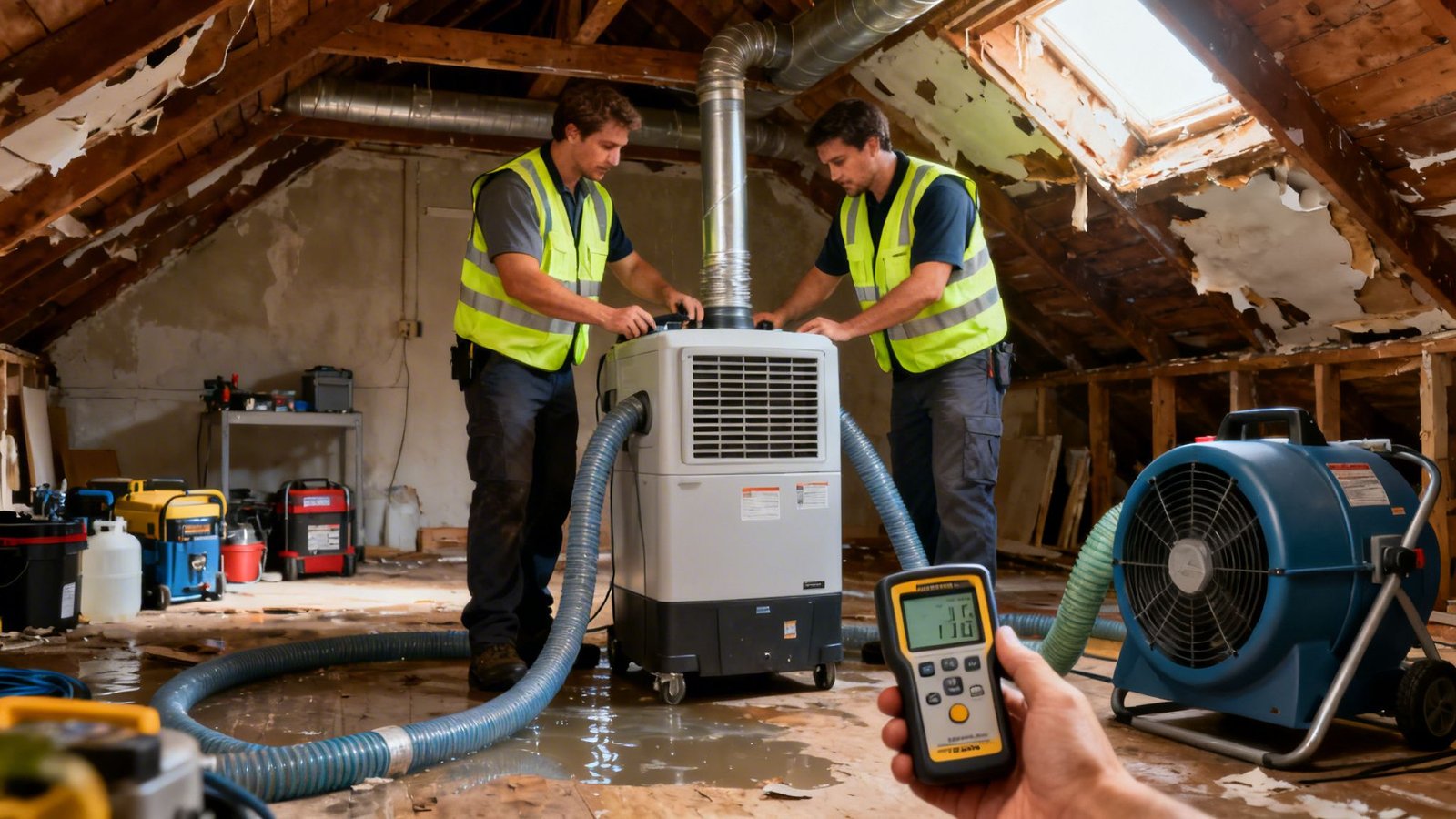
Once water gets past the roof deck, it starts a destructive journey through your house. It soaks drywall until it’s a soggy, unstable mess. It completely saturates attic insulation, making it useless, heavy, and a magnet for mold. From there, it seeps into the wood framing, causing it to swell, warp, and eventually rot.
The Critical 48-Hour Mold Window
In our warm Southern California climate, this water intrusion creates the perfect breeding ground for mold. It takes as little as 24 to 48 hours for mold spores to activate and start colonizing damp materials. This is a serious health hazard that a roofer is simply not equipped to handle.
That’s where a certified restoration company like Onsite Pro Restoration comes in. A roofer’s job is to patch the hole on the outside. Our job is to fix the extensive secondary damage that happened on the inside.
The IICRC-Certified Restoration Process
When you call us for a water damage emergency in Los Angeles, we don't just glance at the roof. We follow a strict, industry-certified protocol to stop the damage and protect your home.
Our process always includes:
- Emergency Water Extraction: Using powerful, truck-mounted extraction units, we immediately pull all standing water from your attic, ceilings, and any affected rooms.
- Structural Drying: We set up industrial-grade air movers and dehumidifiers. This specialized equipment creates a vortex of airflow that pulls trapped moisture out of drywall, wood framing, and subfloors.
- Mold Inspection and Prevention: Because the risk is so high, we conduct thorough mold inspections. We use moisture meters to find hidden damp spots and can perform air quality tests to ensure your home is safe.
A roofer fixes the symptom; a restoration expert cures the disease. We address the water you can't see, preventing the long-term structural rot and mold growth that can destroy a home from the inside out.
Simply patching the roof while leaving behind soaked materials is a recipe for disaster. That trapped moisture will inevitably lead to wood rot and hazardous mold. Professional water damage restoration is the only way to be sure your home is truly dry, safe, and structurally sound after a leak.
Navigating Insurance Claims for Roof Leaks and Water Damage
Finding a leak is stressful. Trying to figure out your insurance policy while water is dripping on your floor is a nightmare. For Los Angeles homeowners, the key to a successful claim isn’t just about fixing the leak—it’s about understanding what your policy actually covers before you even call the adjuster.
Most standard homeowner's policies will cover water damage that is sudden and accidental. Picture this: a heavy Santa Ana wind gust rips a section of shingles clean off, or a tree limb crashes down during a storm. The water damage that follows is almost always a covered event.
However, insurers draw a hard line at damage from neglect. If your roof has been slowly deteriorating for years with cracked shingles and failed flashing, a claim for the final leak will likely be denied due to a lack of routine maintenance.
Documenting Your Claim and Taking Action
The moments right after you spot a leak are the most critical for your insurance claim. Before you do anything else, document everything.
- Photos and Videos Are Your Best Friends: Get clear photos of the water stains on your ceilings and walls, any damaged furniture, and the source of the leak on the roof (but only if it's safe to go up there). An active drip is best captured on video.
- Stop the Damage From Getting Worse: Your policy actually requires you to take “reasonable steps” to mitigate further harm. That means putting out buckets, moving valuables out of the way, and calling an emergency restoration company like Onsite Pro to begin water extraction. This shows the insurance company you acted responsibly.
Working with a restoration company that has experience with major insurers like the EPA can be a game-changer. Adjusters need detailed reports, moisture readings, and professional assessments—documentation we provide to help justify your claim for both the roof repair and the interior restoration.
Partnering With Restoration Professionals
Filing the claim is just the first step. The adjuster will need proof of loss and a professional scope of work to approve payment. This is where a partnership with a team like ours pays off.
We work directly with insurance carriers all the time, providing the exact documentation they need to process your claim without unnecessary delays. We speak their language, which helps maximize the chances of getting the entire job covered—from the initial roof patch to the final coat of paint inside. A well-documented, professionally managed claim takes the stress off your shoulders and gets your home back to normal much, much faster.
Schedule a Free Inspection or Book Water Damage Help
If you're dealing with the aftermath of a roof leak in the Los Angeles area, don't wait for the damage to spread. The certified experts at Onsite Pro Restoration can provide a free assessment and create a plan to get your home back to normal. We handle everything from emergency water extraction to complete structural repairs and mold remediation.
Schedule your free inspection online or call our 24/7 emergency team now at (818) 336‑1800.
Frequently Asked Questions About Leaky Roofs in Los Angeles
Q: What is the first thing I should do when I find a roof leak?
A: First, contain the drip with a bucket. If the ceiling is bulging, carefully poke a small hole in the center of the bulge to release the water pressure into the bucket. This prevents a ceiling collapse. Then, move valuables out of the area and call a professional restoration company to assess the extent of the water damage.
Q: Can I just paint over a ceiling stain from a roof leak?
A: Absolutely not. A water stain indicates that the drywall, insulation, and possibly wood framing are still wet. Painting over it traps moisture, creating a perfect breeding ground for dangerous mold and causing structural rot. The area must be professionally dried and inspected first.
Q: How long does it take for mold to grow after a roof leak?
A: In Southern California's warm climate, mold can begin to grow in as little as 24 to 48 hours. Any delay in addressing the moisture dramatically increases the risk of a widespread mold problem, which is why a rapid response is crucial.
Q: Does my homeowners insurance cover a leaky roof in Los Angeles?
A: It depends on the cause. Insurance typically covers "sudden and accidental" damage, like a leak caused by a tree branch falling during a storm. It generally does not cover leaks resulting from old age, wear and tear, or lack of maintenance. Document everything and work with a professional restoration company that can help you navigate your claim.
Q: Is it safe to stay in a house with a leaking roof?
A: If the leak is minor and contained, it may be safe temporarily. However, if water is near electrical fixtures, causing large parts of the ceiling to sag, or if you smell a strong musty odor (a sign of mold), it's best to vacate the area and call for an emergency assessment.
Q: Should I call a roofer or a water damage company first?
A: If water has entered your home and damaged ceilings, walls, or insulation, call a water damage restoration company first. Their priority is to stop the interior damage and prevent mold. They can handle the immediate crisis and then coordinate with roofers to fix the external source of the leak.