
The onsite restoration visit is a critical emergency response. Think of it as first aid for your property—the immediate goal isn’t rebuilding, but stopping the damage, assessing the situation, and creating a solid plan for recovery. Whether you’re dealing with a burst pipe in your Sherman Oaks home or unexpected flood damage in a Santa Monica business, this initial meeting sets the stage for everything that follows.
This initial visit is all about triage. When our restoration crew arrives at your Los Angeles property, their job is to bring order to the chaos. Forget about repairs for a moment; the focus is on three key actions: making the area safe, understanding the full extent of the damage, and stopping it from getting any worse.
If your property has been damaged, don’t wait. The first few hours are critical to preventing further issues like mold growth or structural decay.
Call (818) 336‑1800 for an Immediate Assessment
What Happens During Your Onsite Restoration Visit
The absolute first priority is always safety. Our technicians will immediately identify and neutralize any hazards, like electrical risks from water or unstable structural components. Once the area is secure, they launch into a full-scale inspection to understand the true scope of the problem, often using specialized equipment to find moisture hidden behind walls or under floors.
The Three Pillars of the First Visit: Secure, Assess, Stabilize
The entire visit boils down to three core actions: Secure, Assess, and Stabilize. Each step builds on the last, creating a methodical approach to what can feel like a completely chaotic situation. By focusing on these priorities, the team effectively stops the clock on escalating damage.
This flowchart illustrates how a technician tackles the initial response.
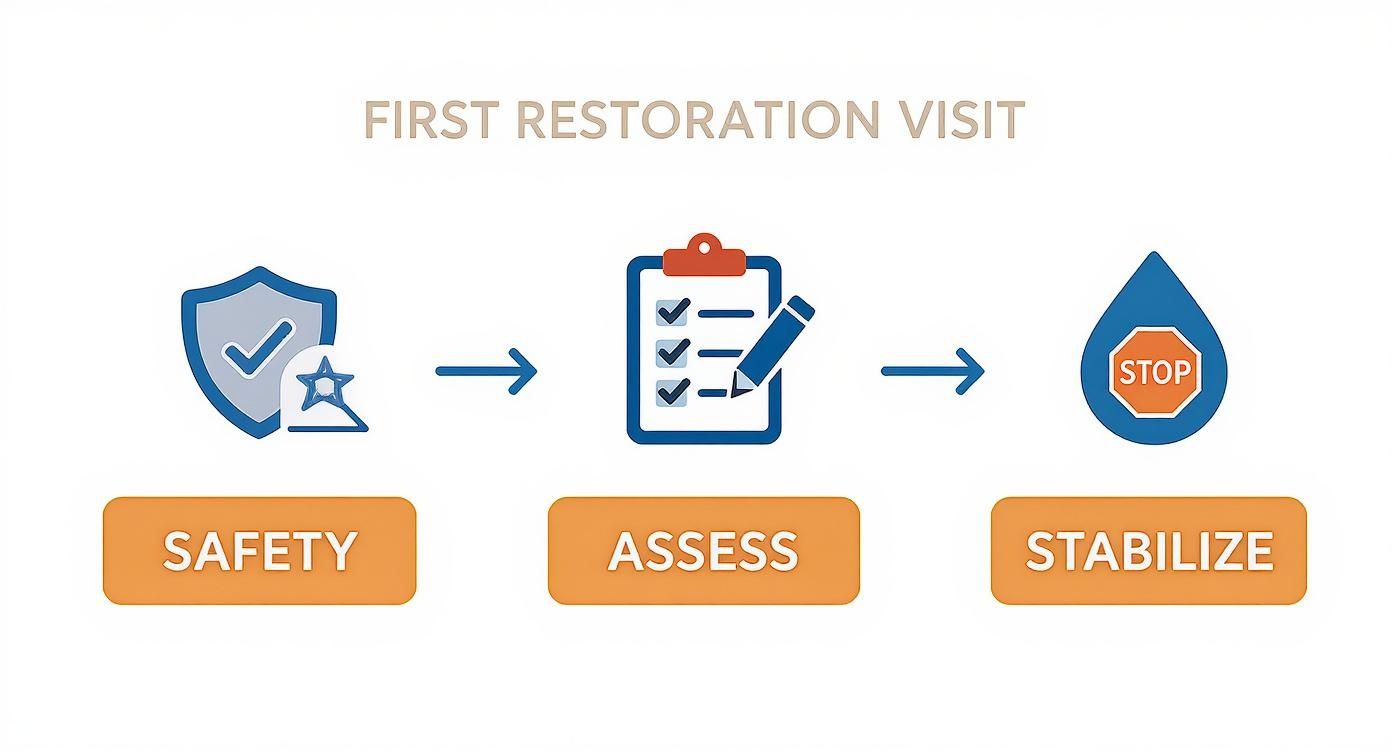
As you can see, every successful restoration starts with securing the site. This is followed by a detailed assessment, which then dictates the right stabilization moves. It’s a proven structure that ensures nothing critical is missed.
To help you understand exactly what to expect, this table breaks down the key phases of that first critical visit.
Key Phases of the Onsite Visit
| Phase | Primary Goal | Typical Actions in a Los Angeles Home |
|---|---|---|
| Safety First | Neutralize immediate hazards. | Shut off power/water, identify structural risks, set up containment. |
| Assess Scope | Determine the full extent of the damage. | Use moisture meters, document affected areas, categorize the water source. |
| Stabilize & Mitigate | Stop the damage from worsening. | Begin water extraction, set up drying equipment, board up openings. |
| Plan & Document | Create a recovery plan and document for insurance. | Take photos, log readings, and outline the next steps for repair. |
Once the situation is under control, the team will begin documenting everything for your insurance claim and walk you through what comes next. The entire process is designed to give you a clear, manageable path forward. To see how professionals adapt to different situations, you can learn more about what a qualified restoration pro can do for your specific needs.
How to Prepare for the Restoration Team’s Arrival
While you’re waiting for the pros to arrive, there are a few small but powerful things you can do to protect your property and help the restoration go smoothly. What you do—and what you don’t do—in this critical window can make a huge difference during the onsite restoration visit.
Think of it like clearing the runway for an emergency landing. The smoother you can make it, the faster and more effective our response will be.
Before anything else, remember: safety first, always. If you can get to it without walking through water, shut off the main water valve and flip the circuit breakers for the soaked rooms. Never, ever try this if you have to stand in water or if the electrical panel looks compromised.
Create a Safe and Clear Path
Once you’ve handled any immediate utility risks, the next job is ensuring our team can get in and get to work safely. A clear path helps them start faster and prevents any accidents on site.
- Move Undamaged Items: If it’s safe, get your unaffected furniture, valuables, and personal items out of the damaged zone. This keeps them safe from secondary damage and gives our crew the space they need.
- Clear Walkways: Make sure hallways, doorways, and any paths leading to the affected rooms are free of clutter.
- Secure Pets: For their safety and ours, keep your pets in a separate, secure room. If possible, arranging for them to stay with a friend is even better, as it keeps them away from the noise and stress.
Document and Gather Important Information
Your next priority is getting the paperwork ready for us and your insurance company. Having this information on hand will seriously speed up the entire claims and restoration process.
Pro Tip: Your smartphone is your best friend right now. Take numerous photos and videos of all the damage from different angles before a single thing is moved or cleaned up. This visual proof is invaluable for your insurance claim.
Find your insurance policy information, especially your policy number and the contact info for your claims department. When our technicians get there, they’ll need this to coordinate directly with your adjuster.
This prep work is a crucial step, particularly for jobs that involve emergency water cleanup, where every second of action—and documentation—counts. Following these steps helps our team work efficiently, stops further damage in its tracks, and helps you stay in control of a tough situation.
The Comprehensive Damage Assessment Process in LA
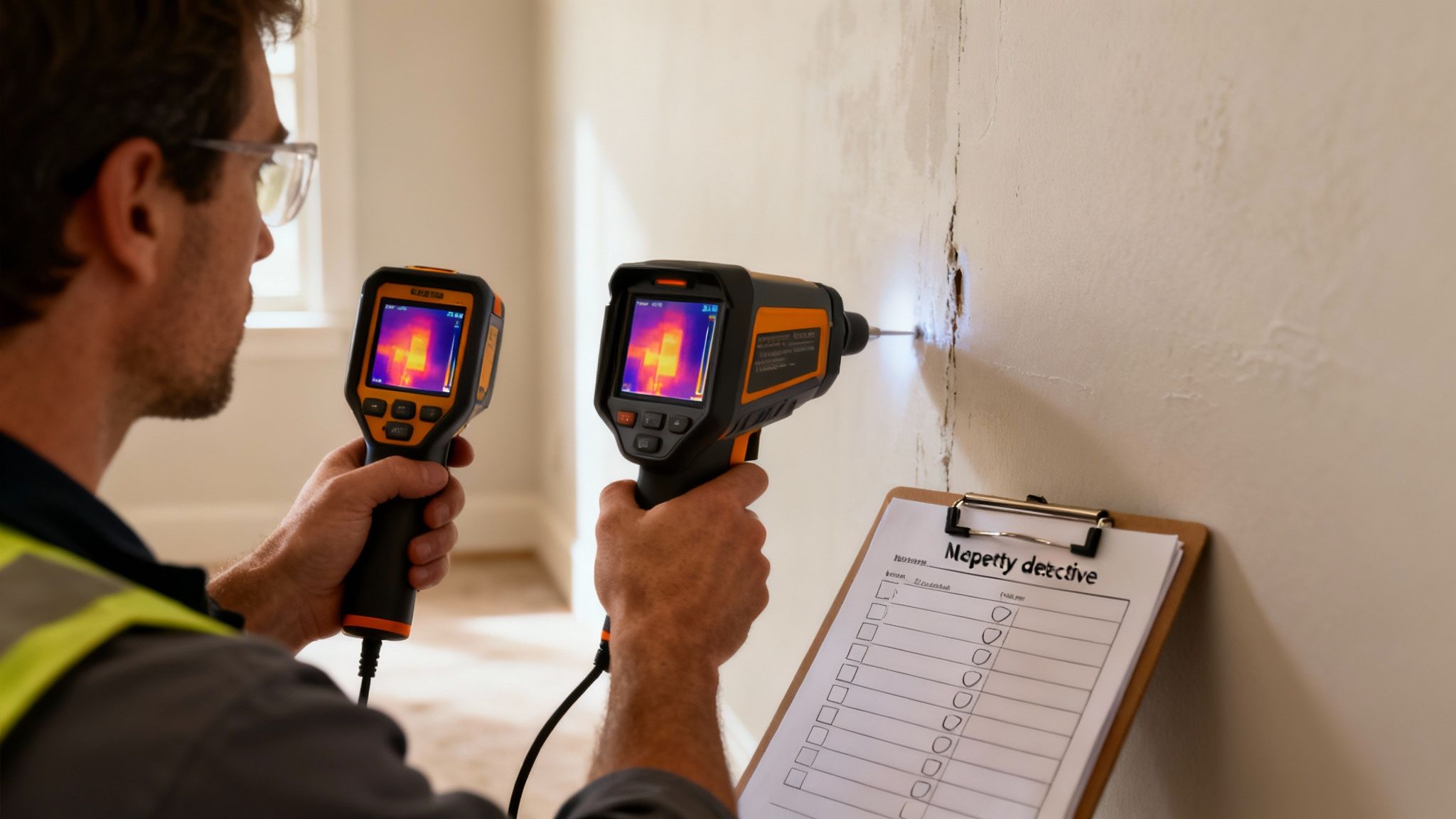
Once the property is safe to enter, the onsite restoration team switches gears into full-on detective mode. To put together a solid recovery plan, our technicians must uncover the full scope of the damage—including everything hidden from plain sight. This isn’t just a quick glance; it’s a deep, forensic investigation into how your property was affected.
Think of the lead technician as a property detective, using specialized tools and years of experience to piece together the story of what happened. They don’t just see a puddle in a living room in Encino; they work backward to find its origin and trace the path it took through your home.
This deep dive is critical. Missing a hidden pocket of moisture behind a wall or a subtle layer of soot in the attic can lead to huge problems down the road, like structural decay, lingering odors, or dangerous mold growth.
Uncovering Hidden Damage with Advanced Tools
For any water-related incident, our technicians rely on much more than just their eyes. They use a combination of technology to see behind walls and under floors without having to tear things apart unnecessarily.
- Moisture Meters: These devices have probes that we press into materials like drywall or wood to get an exact reading of the moisture content. It tells us not just if something is wet, but how wet it is.
- Thermal Imaging Cameras: These cameras are incredible. They detect tiny temperature differences, instantly revealing cold spots that almost always indicate hidden water saturation behind surfaces.
When it comes to fire damage, the assessment is just as detailed. Technicians analyze how far smoke and soot particles traveled, checking inside ventilation systems, attics, and even wall cavities. This ensures the entire affected area is identified for thorough cleaning and deodorization. The complete water damage restoration process always starts with this kind of meticulous assessment to guarantee not a single detail gets missed.
Building a Complete Picture for Recovery
Every reading, photograph, and observation is meticulously documented to build a complete and accurate picture of the damage. This detailed report becomes the foundation of the entire restoration plan, outlining exactly what needs to be done to get your property back to its pre-loss condition.
An experienced restoration company knows that a successful recovery depends entirely on the quality of the initial assessment. Rushing this step is a recipe for failure, every time.
This methodical approach is especially crucial for large-scale events. Companies like First Onsite Property Restoration have a long history of responding to major disasters across North America, from the Fort McMurray wildfire to other catastrophic events. That kind of high-stakes experience reinforces just how important a detailed, evidence-based assessment is to ensure every aspect of the damage is addressed correctly the first time. You can read more about their extensive track record in large-scale disaster response.
Understanding Initial Mitigation and Stabilization
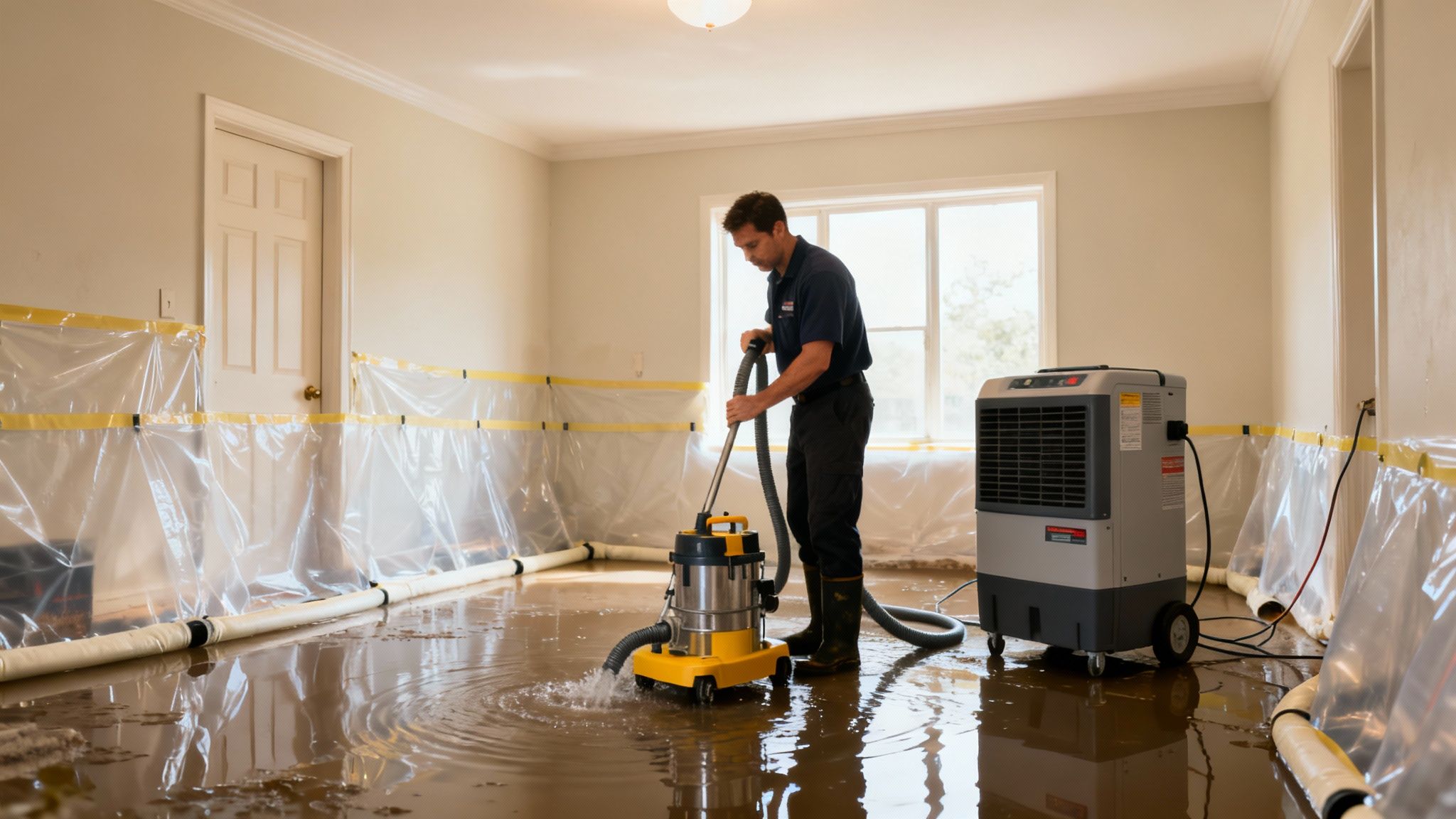
Once the detailed assessment is done, the onsite restoration team immediately pivots to a critical phase called mitigation. Think of it as first aid for your property. The entire goal is to stop the damage right where it is, stabilizing the environment so a bad situation doesn’t spiral into a catastrophe. This isn’t the repair phase; it’s the emergency stopgap that makes a full recovery possible.
Mitigation is all about taking swift, decisive action. It’s like a surgeon stopping the bleeding before they can even think about the complex operation ahead. Without these urgent first steps, secondary damage like mold growth, weakened structures, or stubborn odors can take hold, often within just 24-48 hours.
What Mitigation Looks Like in Action
The specific game plan for mitigation depends entirely on the type of disaster you’re facing. Each scenario calls for a different set of tools and a precise, tactical response.
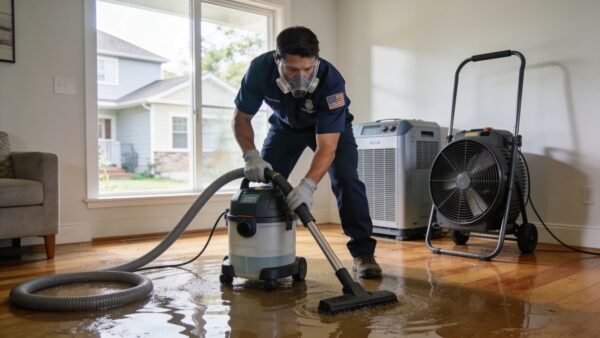
- For Water Damage: The crew’s first move is always to get the standing water out—fast. They’ll use powerful pumps and vacuums to extract every last drop. Once the bulk water is gone, they bring in an arsenal of industrial-grade air movers and dehumidifiers to aggressively dry everything out, hitting hidden spots inside walls and under floors. This rapid drying is non-negotiable, and our guide to emergency water extraction services dives deeper into why that speed is so vital.
- For Fire Damage: Here, the immediate threats are structural integrity and nasty airborne contaminants. Technicians will board up broken windows and doors to secure the site. At the same time, they’ll set up advanced air scrubbers with HEPA filters to pull soot, smoke particles, and other pollutants right out of the air, making the environment safer to breathe.
The Importance of Immediate Action
In those critical moments right after a disaster like a burst pipe, knowing what to do immediately is the key to stopping further damage. Taking the right steps right away can make a huge difference in the final cost and timeline of the restoration. For a closer look, you can review some expert tips on handling bursting pipes and immediate actions to see just how crucial that initial response is.
The core goal of mitigation isn’t to restore your property to its original state—it’s to stop the damage in its tracks so that restoration can begin on a stable foundation.
Ultimately, this stabilization phase is all about regaining control. It protects your property’s value, heads off long-term problems, and creates a safe, predictable worksite for the reconstruction team. By tackling the most urgent threats first, our technicians make sure the path to a full recovery is as smooth and efficient as it can be.
Navigating Insurance Documentation From Day One
Let’s be honest—dealing with your insurance company is probably the last thing you want to do after a property disaster. It’s often the most stressful part of the whole ordeal. That’s why during our onsite restoration visit, our team immediately steps in to become your advocate, taking that burden of complex paperwork right off your shoulders. You need to focus on your family or business, not on learning the ins and outs of insurance claims.
Our technicians are trained to document everything. This isn’t just a few quick snapshots on a phone. We’re talking about a detailed, systematic process using high-resolution photos, comprehensive videos, and precise notes that capture every single angle of the damage. This evidence is what builds a strong, undeniable claim from the very beginning.
Speaking the Language of Insurance Adjusters
To get your claim approved quickly, the estimate needs to be written in a language your insurance company understands and trusts. We use industry-standard software like Xactimate to make that happen. Think of it less like a simple spreadsheet and more like a powerful platform that uses current, localized pricing for every nail, two-by-four, and hour of labor required.
An estimate built in Xactimate translates our on-the-ground findings into the exact format and terminology that insurance adjusters require. This alignment dramatically speeds up the approval process and minimizes the back-and-forth that can lead to disputes or underpayments.
By providing this professional level of documentation, we make sure your claim is processed as smoothly as possible. Our team handles the technical conversations with your insurer, presenting them with a clear, data-backed scope of work that justifies every necessary repair. This direct communication frees you from playing mediator and lets you get back to what matters.
Why This Documentation Matters So Much
The quality of the documentation can literally make or break an insurance claim. A detailed, professionally prepared report shows the true extent of the loss and proves why the restoration work is necessary. The more you understand the specifics of homeowners insurance coverage for water damage, the more empowered you’ll be during this process.
Concerns about property damage from severe weather are completely valid. A recent survey from First Onsite Property Restoration revealed that 50% of Canadians worry about tornadoes impacting their homes. This shows just how important it is for property owners to have expert support when disaster strikes.
Ultimately, our goal during that first visit is to lay a rock-solid foundation for your claim. We’re here to ensure you receive the full and fair settlement you’re entitled to, without the headache.
What to Expect After the Onsite Visit
That initial emergency visit is really just the start of your recovery. Once our team has stabilized the property and handled the immediate threats, we shift gears from reactive damage control to proactive, thoughtful restoration. The road ahead is all about clear communication, detailed planning, and expert work to bring your property back to the way it was before.
After that onsite restoration visit, our team takes all their notes, photos, and measurements and turns them into a comprehensive scope of work. This isn’t some vague guess; it’s a detailed, line-by-line document that maps out every single necessary repair, from replacing a section of drywall to refinishing an entire hardwood floor.
Think of this document as the blueprint for the entire project. We submit it to both you and your insurance adjuster for review and approval before any reconstruction begins.
From Plan Approval to Project Kickoff
Once you and your insurance carrier give the green light on the scope of work, we move into scheduling. You’ll be assigned a dedicated project manager who will coordinate everything—ordering materials, lining up skilled tradespeople like electricians and plumbers, and pulling any permits required by your city or county.
This single point of contact is key. They keep the project running smoothly and make sure you’re kept in the loop every step of the way.
The actual reconstruction work is handled in logical phases to be as efficient as possible. A typical flow might look like this:
- Demolition: Carefully removing any materials that were too damaged to salvage.
- Structural Repairs: Addressing the bones of the building, like framing, subfloors, or other core components that were affected.
- Finishing Touches: This is where it all comes back together—installing new drywall, painting, laying down flooring, and restoring cabinetry.
The goal isn’t just to patch the damage. It’s to make the repairs so seamless that the restored areas blend perfectly with the rest of your property. You shouldn’t be able to tell anything ever happened.
The Power of a Unified Team
Handling a large-scale restoration project requires a massive amount of resources and coordination. This is where working with a major provider really shows its value.
A huge moment in our industry happened on March 29, 2021, when seven of the top restoration companies came together to form First Onsite. This merger created a true powerhouse with over 80 branches across North America. By bringing together legacy companies like Interstate Restoration and Rolyn, we built a unified team with the resources and reach to handle any disaster, anywhere.
If you’re interested in how this collaboration reshaped the industry, you can explore the story behind the brand. This scale ensures that from the first emergency call to the final walkthrough, you have a cohesive, experienced team fully dedicated to your recovery.
Frequently Asked Questions About the Onsite Visit
Dealing with property damage brings up a lot of questions and uncertainty. We get it. To help you feel more prepared, here are straightforward answers to the most common questions homeowners and property managers in Los Angeles ask us about that critical onsite restoration visit.
How Long Will the Onsite Restoration Visit Take?
You can expect the initial visit to last anywhere from one to three hours. The exact time really depends on the size of your property and how complex the damage is. Remember, the goal here isn’t speed—it’s thoroughness. A detailed assessment is the foundation for an effective and accurate recovery plan, ensuring no hidden moisture or damage gets overlooked down the road.
Do I Need to Be Present During the Entire Initial Visit?
It’s a really good idea for you or a trusted representative to be there, especially at the beginning. Our crew needs access to the property and all affected areas. They’ll likely have questions about your home’s layout or exactly what happened. Most importantly, you’ll need to authorize any emergency work—like water extraction—so we can get started right away. Having the property owner on-site can significantly speed up the stabilization process.
Will the Restoration Company Contact My Insurance for Me?
Absolutely. A reputable, professional restoration company will work directly with your insurance adjuster. This is a standard part of our service, designed to take the stress and paperwork off your shoulders. Once we complete the initial assessment, our team puts together a detailed report with photos, moisture readings, and a precise estimate. We send this entire package directly to your insurance provider to help streamline your claim.
When Does the Actual Repair and Rebuilding Work Start?
The first onsite restoration visit is all about emergency mitigation—stopping the damage from getting any worse. The actual rebuilding and repair phase comes later, but only after a few critical steps are completed. Reconstruction can only begin once all emergency mitigation (like water extraction and structural drying) is completely finished, a full scope of work has been written and formally approved by both you and your insurance company, and any necessary building permits have been secured.
If you’re facing property damage and need immediate help, don’t wait. The expert team at Onsite Pro Restoration is available 24/7 to provide a free, no-obligation assessment and get your recovery started. Contact us now to schedule your visit.