Mold Remediation Posts

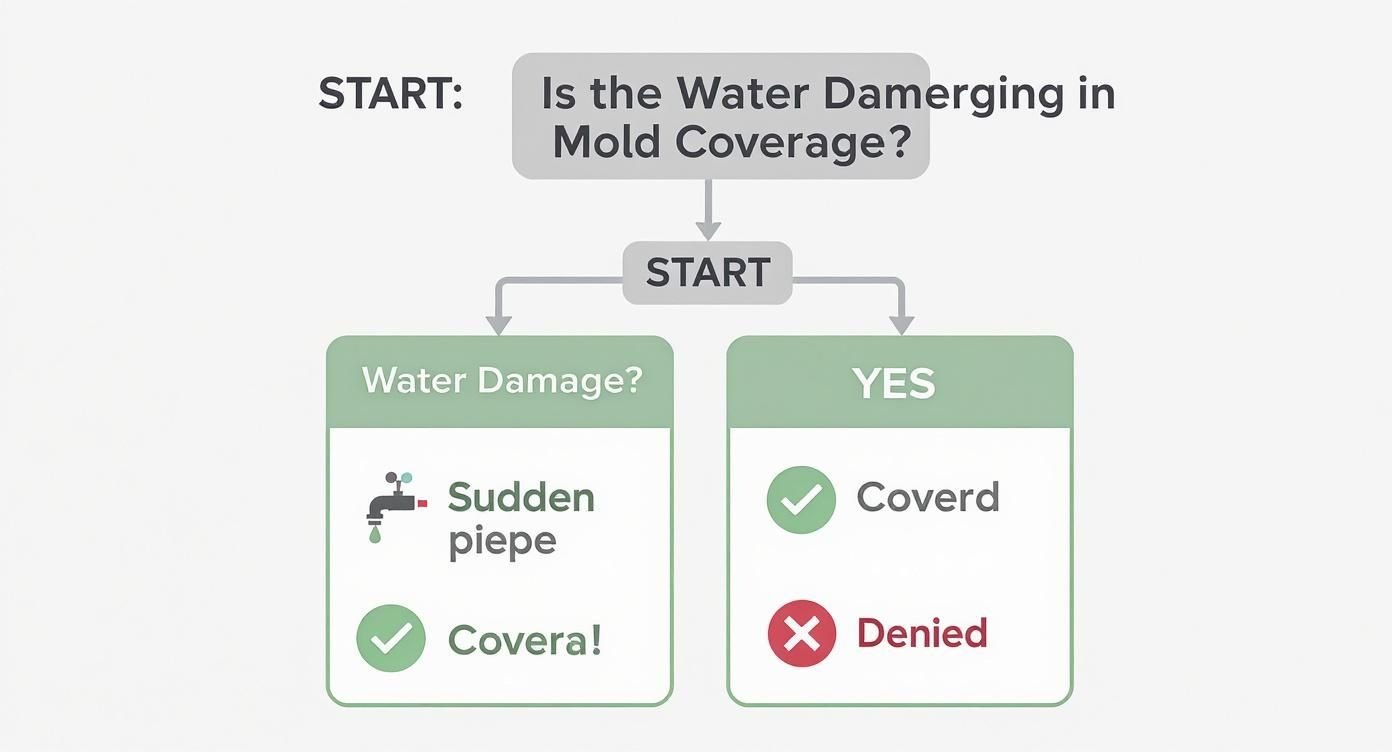
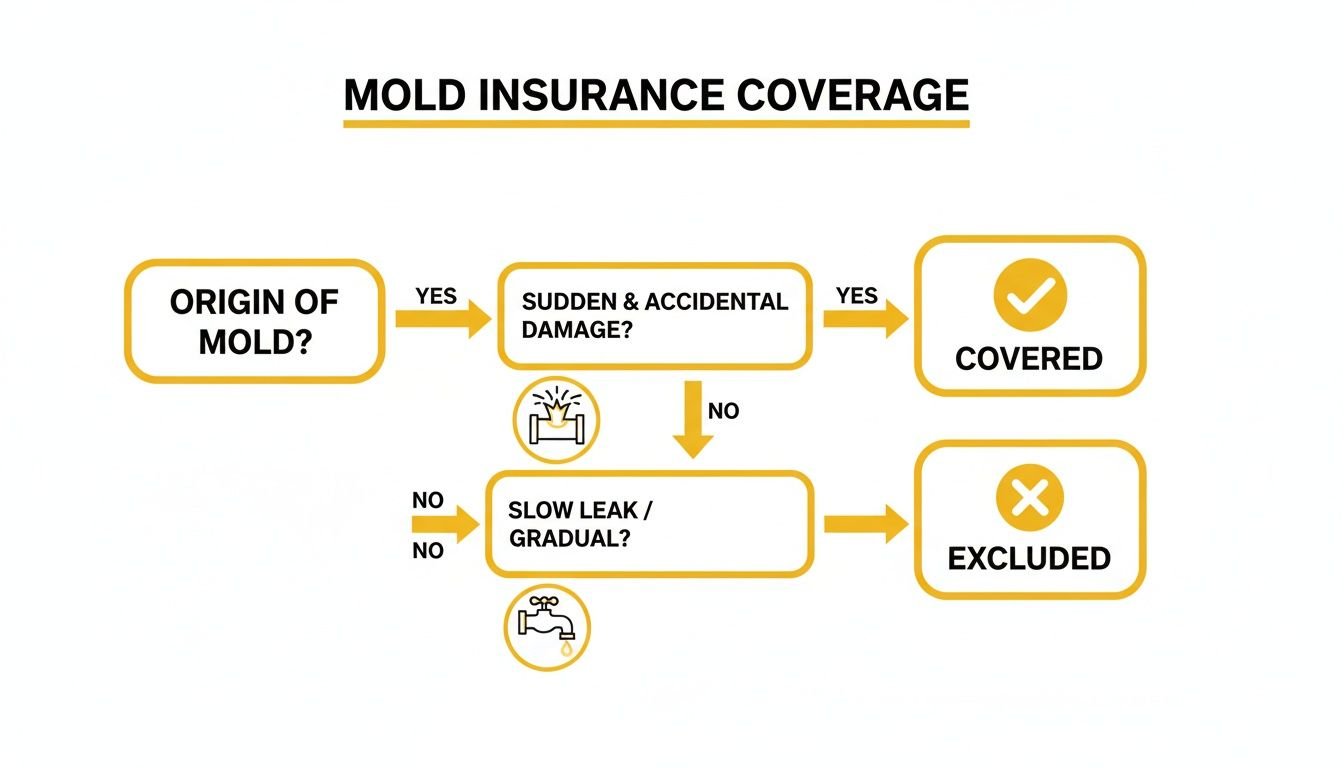
Flowchart explaining mold insurance coverage based on origin and type of water damage, leading to covered or excluded outcomes.
Mold Remediation Posts
Pete M.

Is Mold Damage Covered by Insurance: What Los Angeles Homeowners Need to Know

Homeowners insurance covers mold only when it directly results from a sudden, covered water event — like a burst pipe. It won’t cover mold from slow leaks, poor maintenance, or chronic humidity. Most policies cap mold remediation at $5,000–$10,000. This LA guide explains exactly what triggers coverage, how to file successfully, what documentation adjusters require, and what to do when coverage runs out mid-remediation. Free assessment: (818) 336-1800.
Read More »
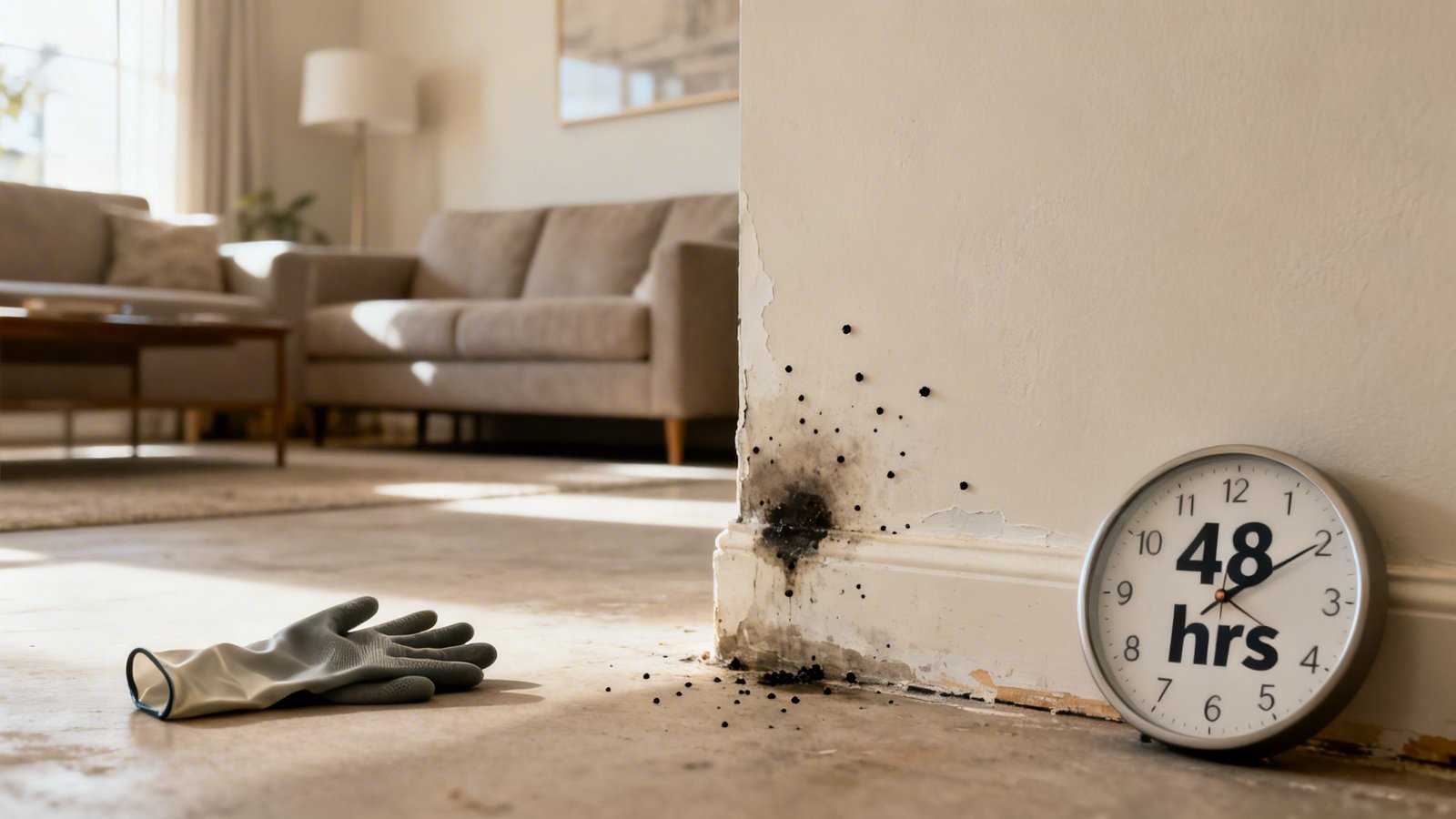
Black mold growing on a home wall with a clock showing 48 hours and work gloves.
Mold Remediation Posts
Pete M.

How Fast Can Black Mold Grow in Your Los Angeles Home?

Black mold can begin growing within 24–48 hours of water damage when temperatures are warm, materials are organic, and humidity exceeds 60% — conditions that develop quickly in a Los Angeles home after a burst pipe or slow leak. This guide covers the growth timeline, what factors accelerate it, how mold spreads through wall cavities and HVAC systems, and the IICRC-certified remediation process. Free assessment: (818) 336-1800.
Read More »
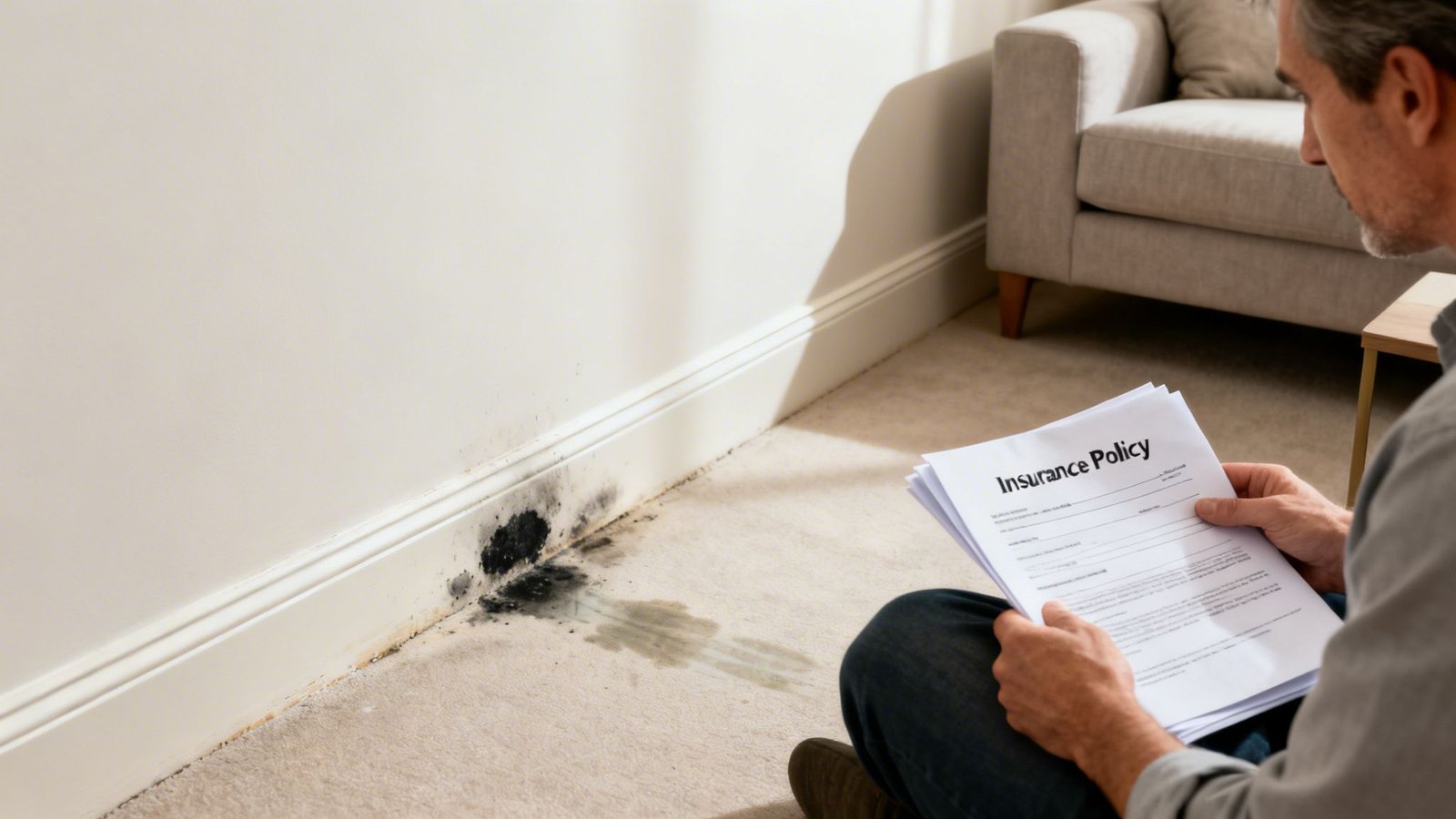
Man reads an insurance policy document while inspecting severe black mold and water damage on a wall and carpet.
Mold Remediation Posts
Pete M.

Your Guide to Mold Remediation Insurance Coverage

Insurance covers mold remediation only when mold directly results from a sudden, covered water event — and that coverage is buried in your policy. Slow leaks, neglect, and chronic humidity aren’t covered. Most policies cap mold payouts at $5,000–$10,000. This LA guide explains exactly when coverage kicks in, how to maximize your claim with the right documentation, and what to do when coverage runs short of the actual remediation cost. Call (818) 336-1800.

Read More »
A person's hand near a dirty air conditioner vent covered in visible mold.
Mold Remediation Posts
Pete M.

Mold in Air Conditioner Ducts: Signs, Dangers, and Removal for Los Angeles Homes

A musty smell when your AC turns on is a clear sign of mold in the ductwork — and every time the system runs, it’s pushing spores through every room. This Los Angeles guide covers how mold gets into ducts (usually from water damage, condensation, or a dirty air handler), why surface cleaning doesn’t work on flex duct or insulation, and what IICRC-certified HVAC mold remediation actually involves. Call (818) 336-1800.

Read More »
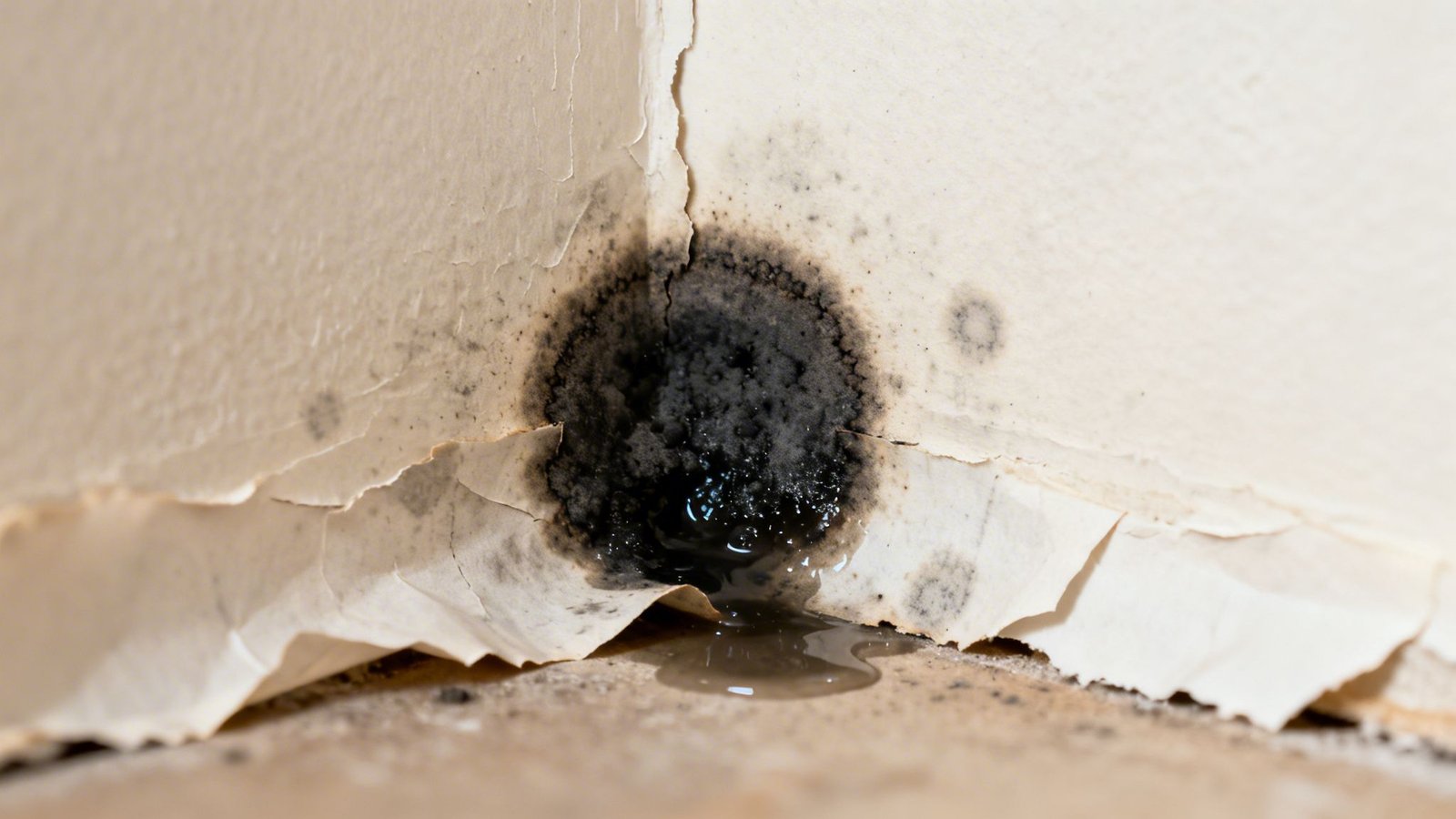
Close-up of severe black mold and water damage in a house corner with peeling paint.
Mold Remediation Posts
Pete M.

What Does Black Mold Look Like? A Guide for Los Angeles Homeowners

Black mold (Stachybotrys chartarum) is dark greenish-black, slimy when wet, and powdery when dry — but many common molds look nearly identical. Color alone can’t confirm black mold. This LA guide covers visual characteristics of the most common mold species found in homes, which surface types each prefers, how to distinguish surface mold from deep growth, and why professional testing is the only reliable identification method. IICRC-certified: (818) 336-1800.

Read More »
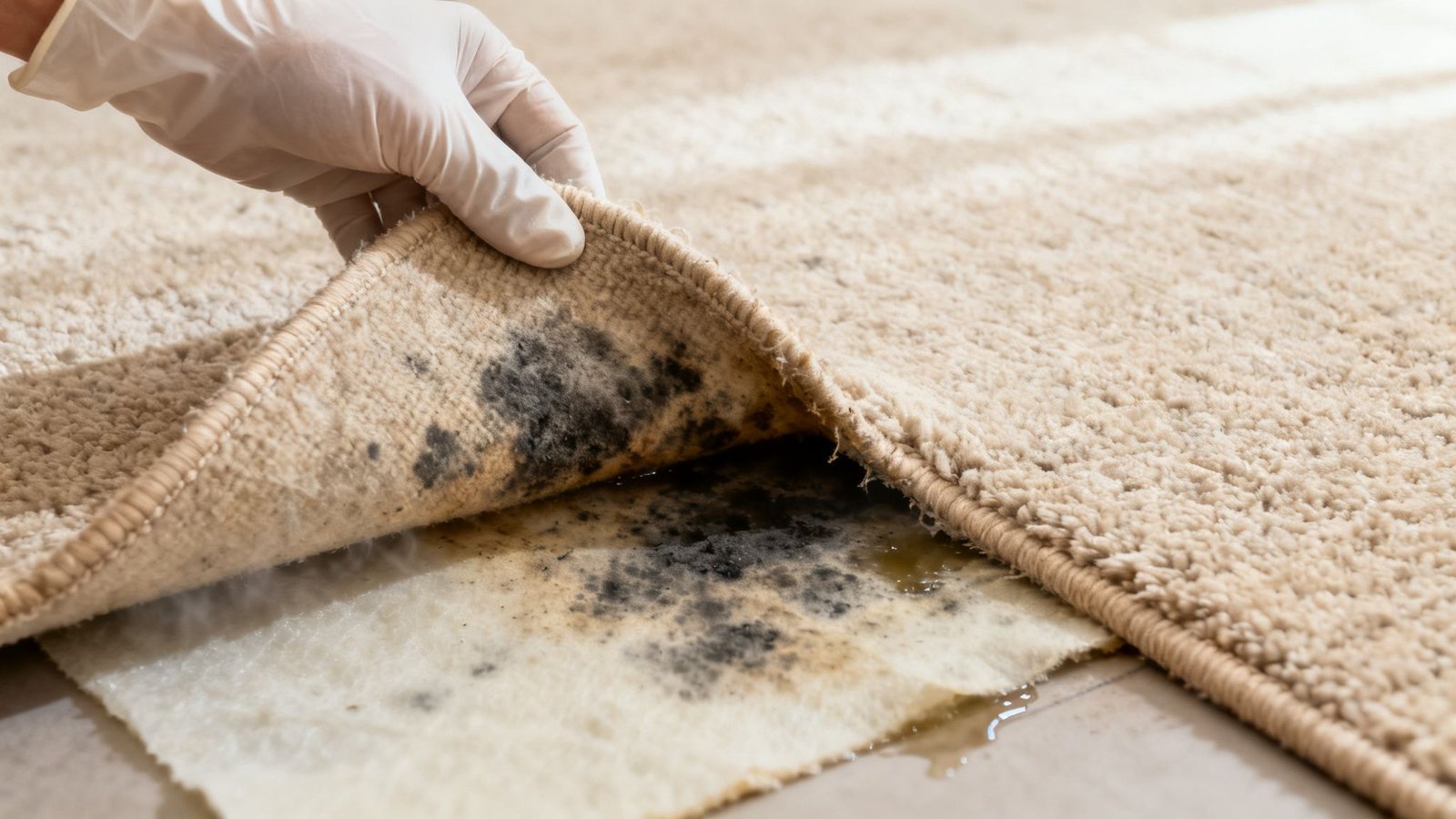
A gloved hand lifts a beige carpet, revealing severe black mold growth and standing water underneath.
Mold Remediation Posts
Pete M.

A Homeowner’s Guide to Mold on Carpet in Los Angeles

Mold on carpet is almost never just a surface issue — by the time you see it, it’s already grown through the backing and into the padding beneath. Shampooing or steam cleaning spreads contamination and adds more moisture, making it worse. This Los Angeles guide covers how mold gets into carpet, how to assess whether it can be saved or must be removed, the IICRC remediation protocol, and when the subfloor also needs treatment. Call (818) 336-1800.

Read More »
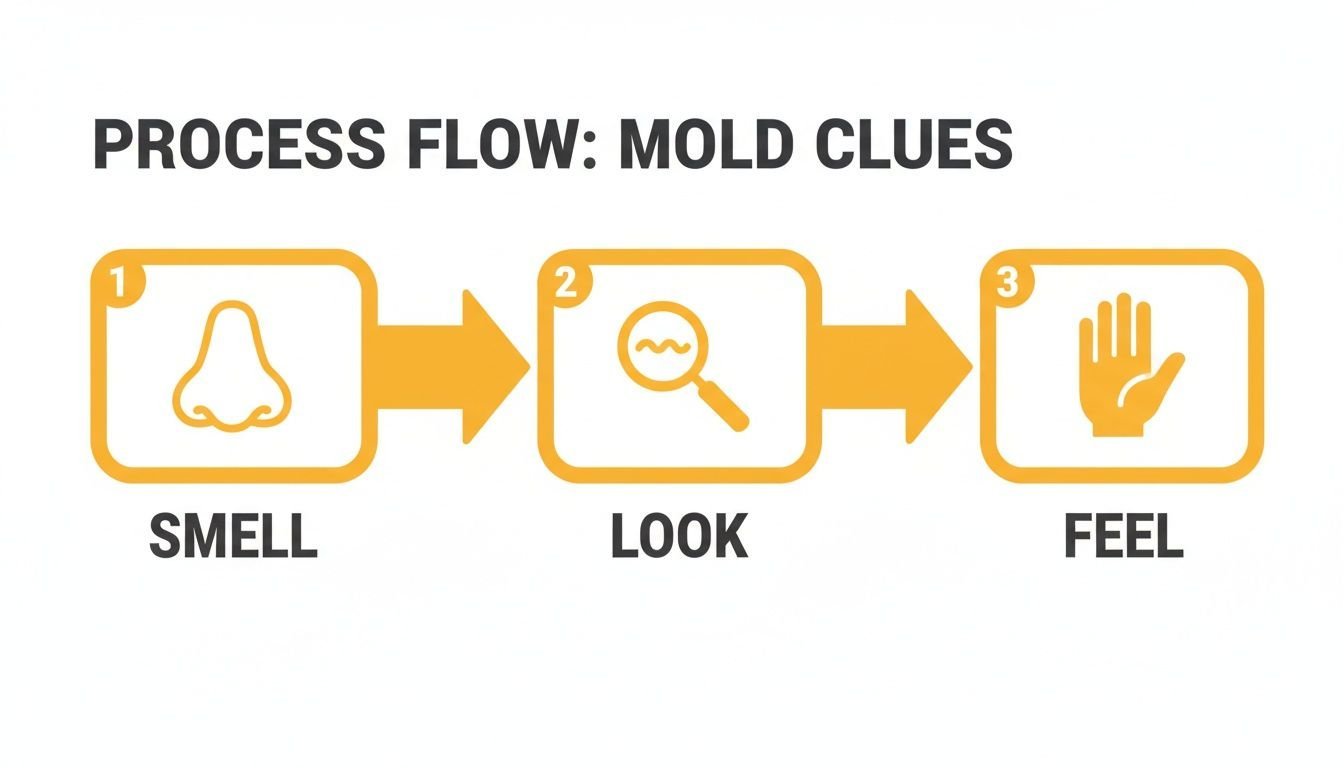
A process flow diagram illustrating three steps to detect mold: smell, look, and feel.
Mold Remediation Posts
Pete M.

How to Detect Mold in a House: A Guide for Los Angeles Homeowners

Detecting mold in a house starts before you see anything — a persistent musty smell, unexplained allergy symptoms, or water stains that keep reappearing are all early signals. By the time mold is visibly discoloring a wall or ceiling, it’s been growing for weeks. This Los Angeles guide covers how to systematically detect mold by room, which materials harbor hidden growth, when a DIY inspection is sufficient vs. when professional testing is needed. IICRC-certified: (818) 336-1800.

Read More »
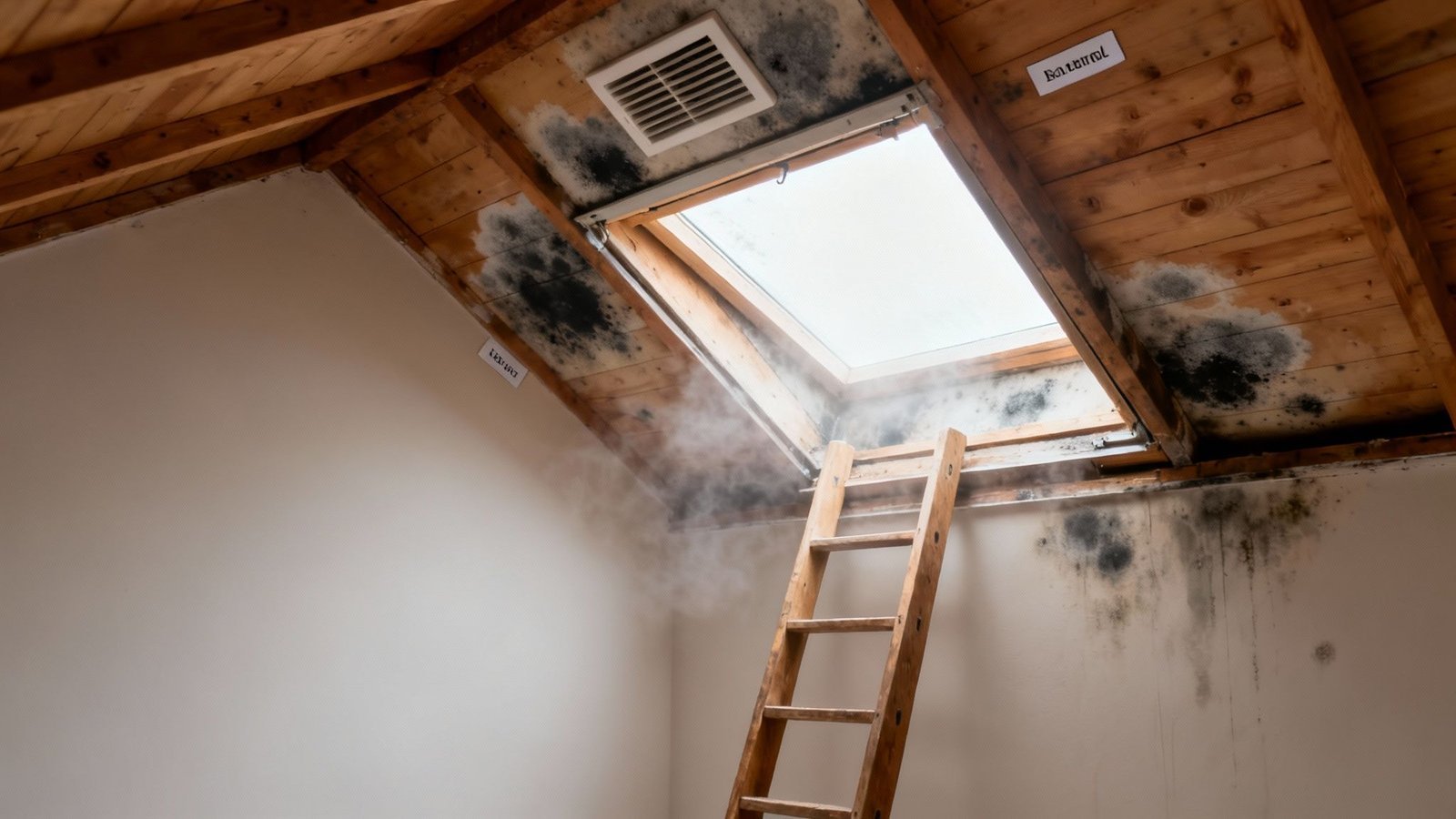
Severe black mold infests a wooden attic ceiling and walls around a skylight and ladder.
Mold Remediation Posts
Pete M.

How to Remove Attic Mold: A Guide for Los Angeles Homes

Attic mold is almost always caused by inadequate ventilation allowing warm, humid air to condense on roof sheathing — and it often goes undetected for months until it’s widespread. This Los Angeles guide covers how to identify the ventilation failure driving the mold, the IICRC-compliant removal process for attic sheathing and framing, why cleaning without fixing airflow always results in recurrence, and when attic mold requires permit-level structural work. Call (818) 336-1800.

Read More »
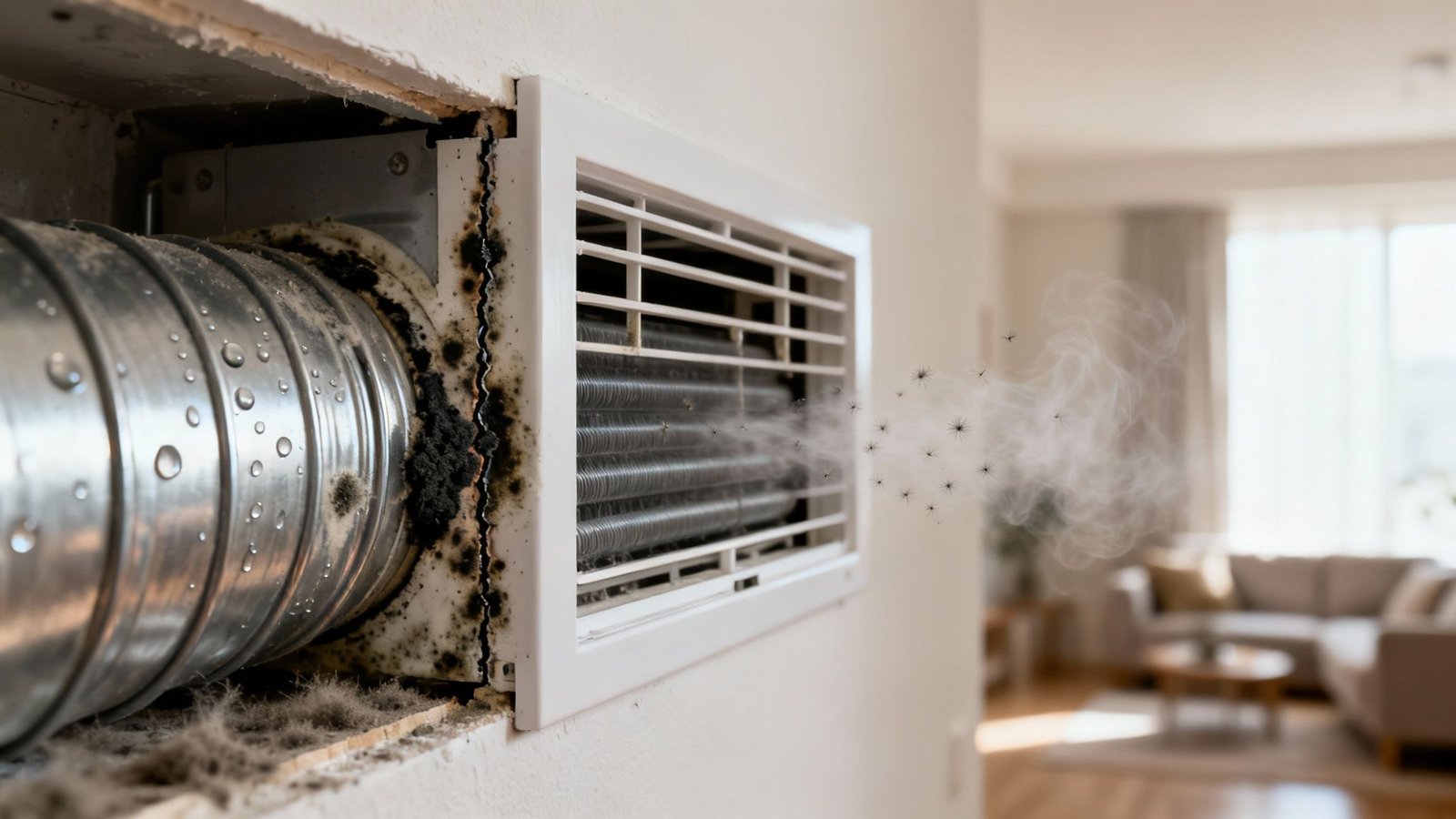
A severely moldy air conditioning vent and ductwork with water droplets and dust, emitting spores.
Mold Remediation Posts
Pete M.

A Homeowner’s Guide to Mold in Air Conditioning Ducts

Mold in air conditioning ducts is a common issue in Los Angeles — condensation forms on cold coils and duct surfaces whenever humid air meets the system, creating the moisture and organic material mold needs. Once established, every time the AC runs it pushes spores through the home. This guide covers how to identify duct mold, why flex duct cannot be cleaned (only replaced), and the professional remediation process for HVAC mold. IICRC-certified: (818) 336-1800.

Read More »
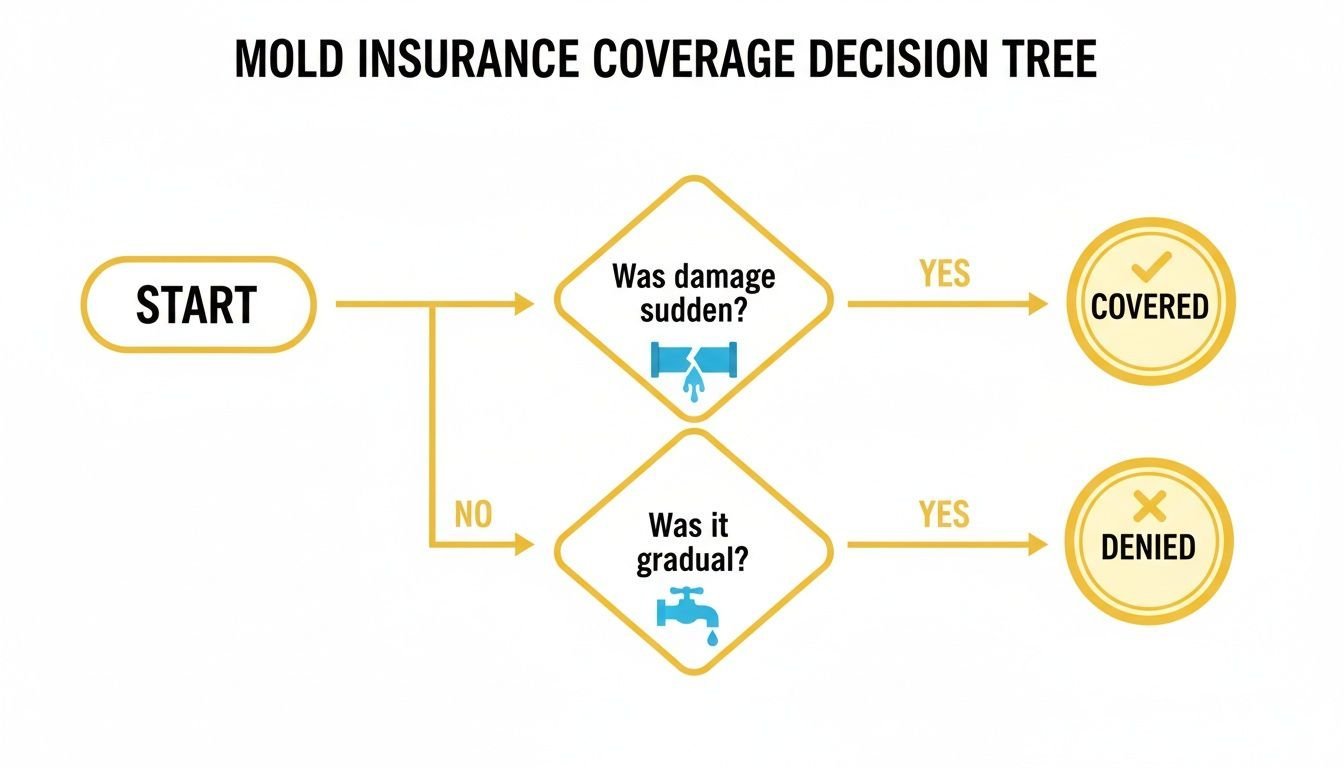
Flowchart depicting mold insurance coverage decisions, showing sudden damage is covered, while gradual damage is denied.
Mold Remediation Posts
Pete M.

Is Mold Removal Covered by Insurance in Los Angeles? A Homeowner’s Guide

Mold removal is covered by insurance in Los Angeles only when the mold results from a sudden, covered water event like a burst pipe or appliance leak — not from slow leaks, humidity, or deferred maintenance. Most policies also cap mold coverage at $5,000–$10,000, well below the cost of significant remediation. This guide covers exactly when coverage applies, how to document the claim to maximize payment, and what to do when the policy falls short. Call (818) 336-1800.

Read More »
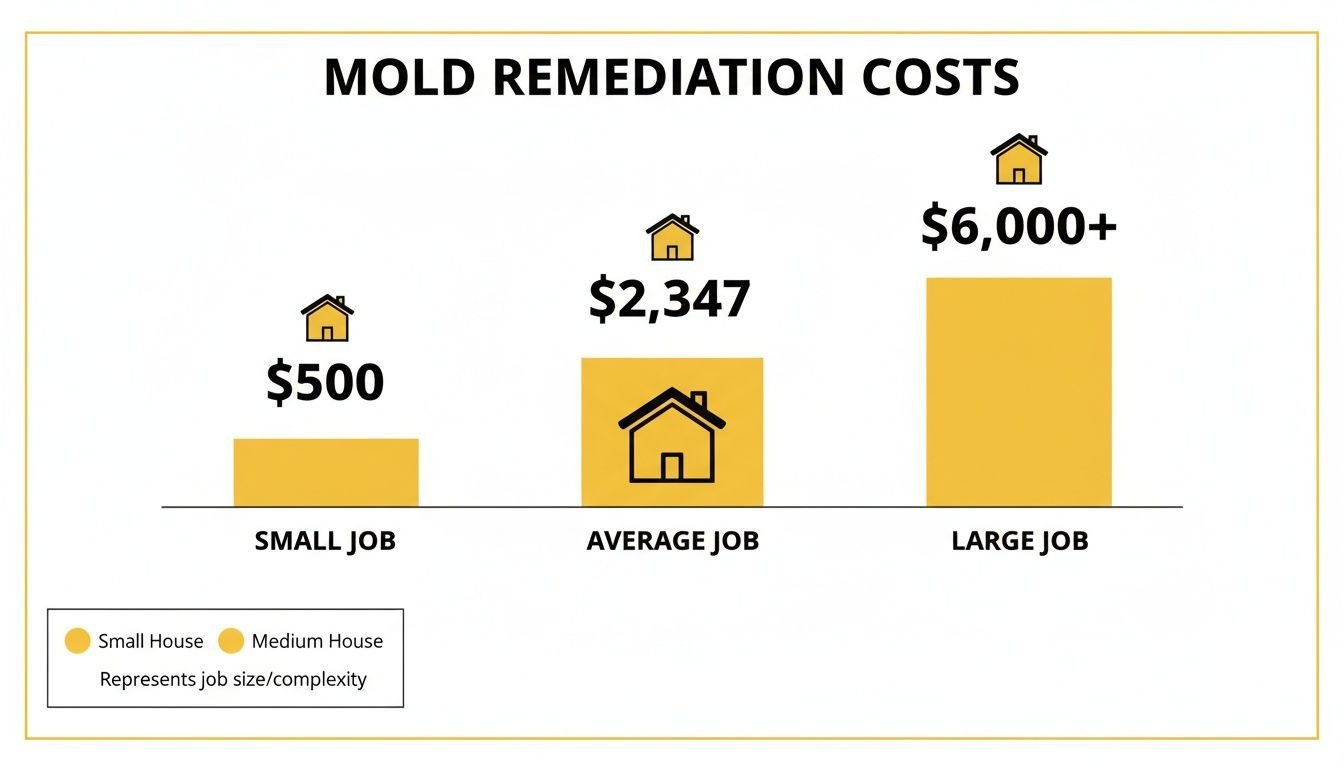
Bar chart showing mold remediation costs: small job $500, average job $2,347, large job $6,000+.
Mold Remediation Posts
Pete M.

What Does Mold Remediation Cost? A Los Angeles Homeowner’s Guide

Mold remediation cost in Los Angeles ranges from $500 for a small contained patch to $10,000–$30,000+ for extensive whole-structure growth — the spread depends on the affected square footage, material type, and whether mold has penetrated framing or HVAC systems. This guide covers the cost factors specific to LA homes, what insurance typically covers vs. excludes, and how to get an accurate estimate before work begins. IICRC-certified free inspection: (818) 336-1800.

Read More »
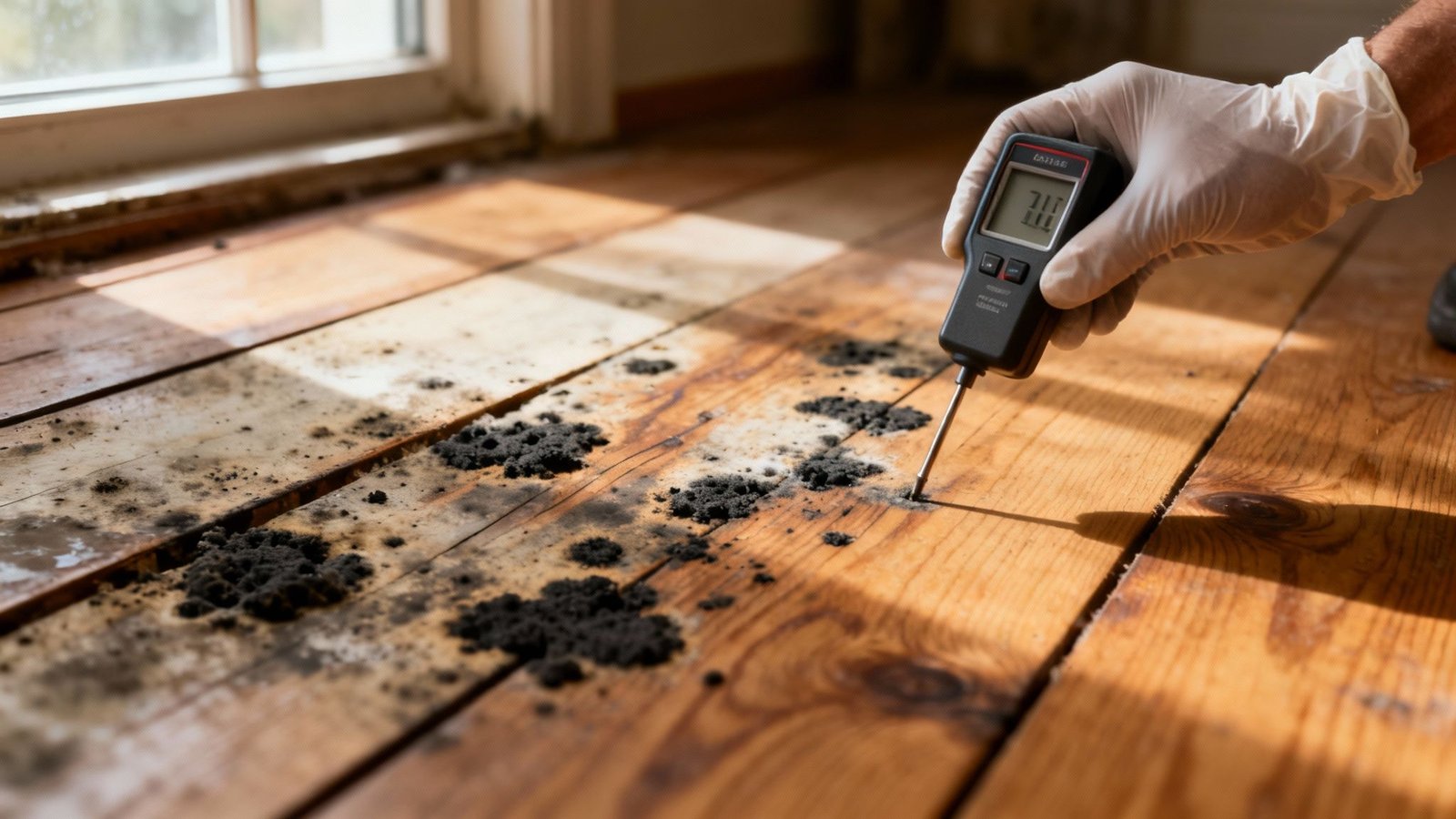
Black Mold Hardwood Floor Mold Inspection
Mold Remediation Posts
Pete M.

Guide to Black Mold on Hardwood Floors: Removal and Repair

Black mold on hardwood floors is almost never just a surface issue — by the time you see dark discoloration, the mold has penetrated the wood grain and often reached the subfloor beneath. Bleaching or surface scrubbing spreads spores and rarely eliminates the growth. This LA guide covers how to assess whether flooring can be salvaged or must be removed, the IICRC remediation protocol for hardwood, and when subfloor replacement is required. IICRC-certified: (818) 336-1800.

Read More »
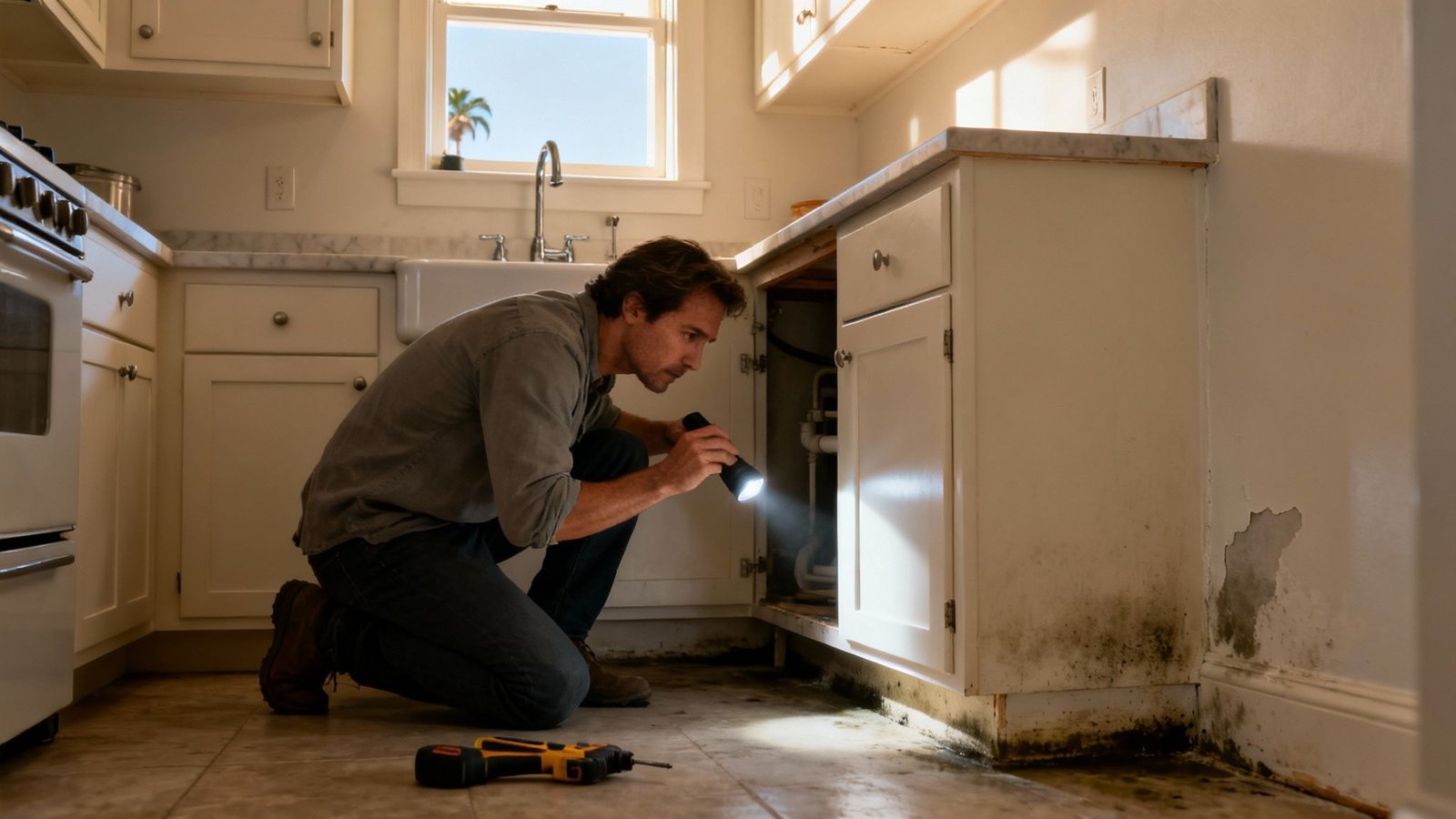
A man inspects severe mold and water damage in a kitchen under the sink with a flashlight.
Mold Remediation Posts
Pete M.

How to Get Rid of Mildew Smell in Your LA Home for Good

Mildew smell in a Los Angeles home is a signal — it means moisture is actively feeding mold or mildew growth somewhere in the structure. Air fresheners mask it briefly while the underlying problem continues. This guide covers how to trace the source (plumbing leaks, poor ventilation, crawl space moisture, condensation), the step-by-step treatment for each scenario, when simple surface cleaning resolves it, and when the odor indicates a professional mold remediation job. IICRC-certified: (818) 336-1800.

Read More »
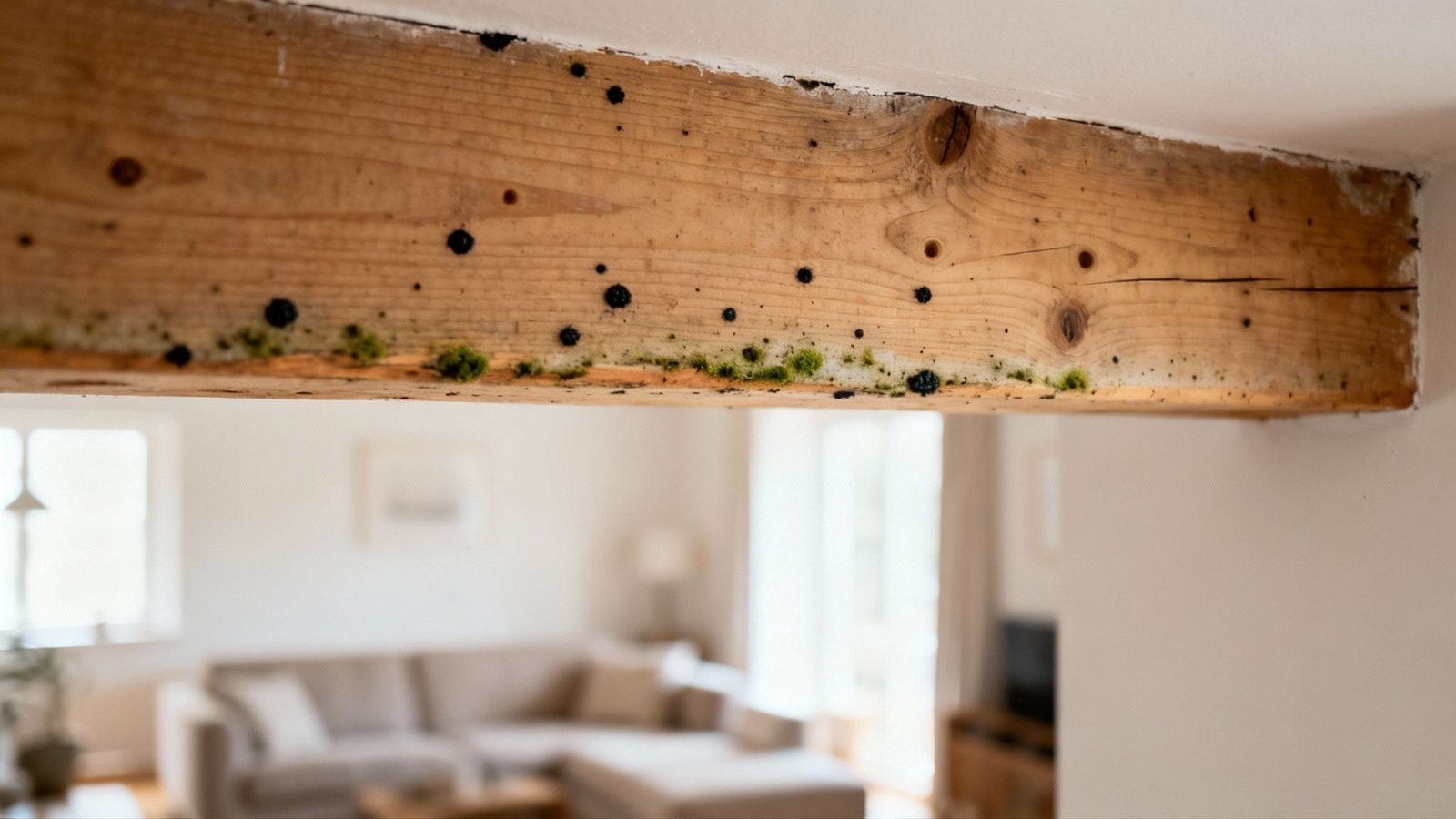
A wooden ceiling beam with significant black mold and green organic growth inside a house.
Mold Remediation Posts
Pete M.

How to Kill Mold on Wood: A Complete Homeowner’s Guide

Killing mold on wood requires eliminating it at the root — surface scrubbing alone doesn’t work because mold hyphae penetrate wood grain and regrow within weeks. The correct approach depends on wood porosity: sealed or painted wood may respond to scrubbing and antimicrobial treatment, while structural framing or unfinished wood often requires sanding or replacement. This LA guide covers IICRC-compliant treatment methods for each wood type and when wood is too compromised to save. IICRC-certified: (818) 336-1800.

Read More »
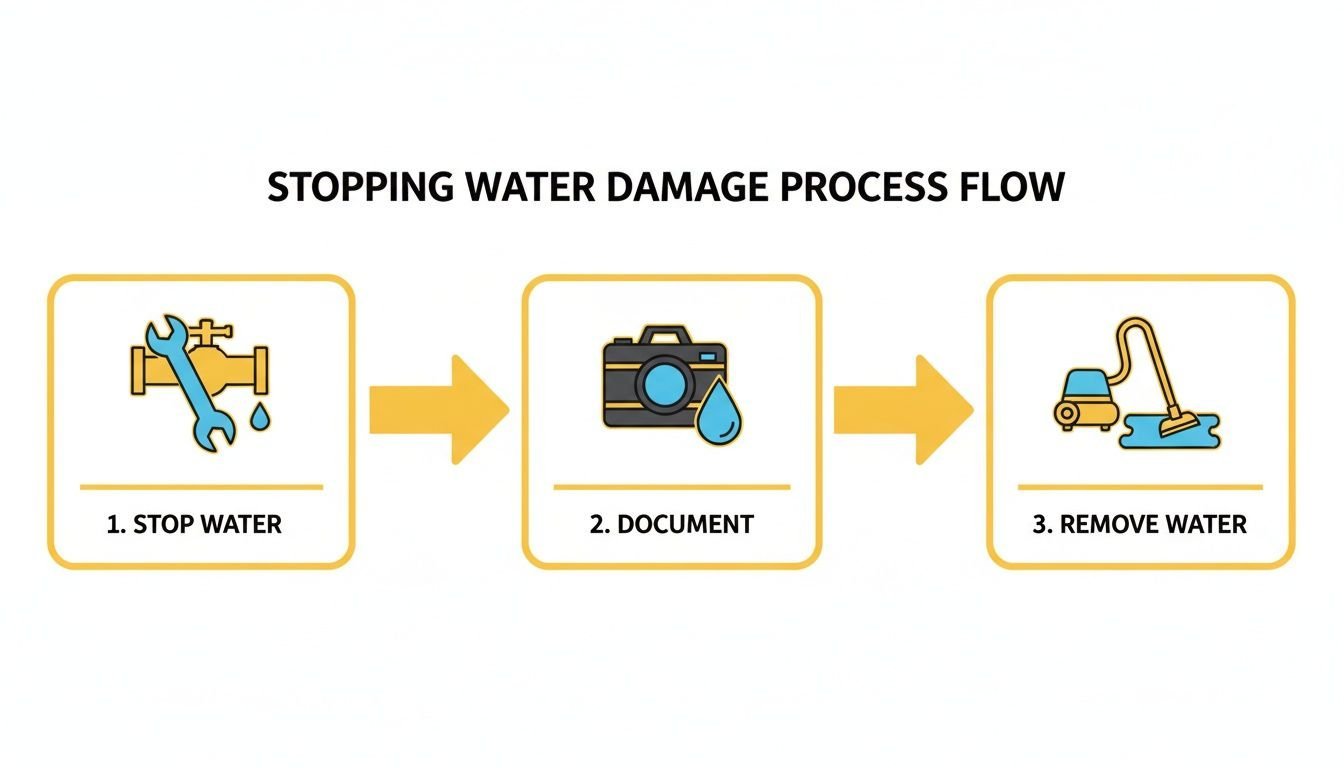
A process flow diagram showing three steps to stop water damage: stop water, document, and remove water.
Mold Remediation Posts
Pete M.

How to Prevent Mold After Water Damage: A Los Angeles Homeowner’s Guide

Mold can begin growing within 24–48 hours of water damage — preventing it requires acting on moisture immediately, not after the visible damage is addressed. The three keys are stopping the water source, extracting standing water, and beginning structural drying before the mold window closes. This LA guide covers the step-by-step process to prevent mold after water damage, material-specific drying requirements, how to verify the structure is dry with moisture meters, and when professional remediation is still needed. Call (818) 336-1800.

Read More »
31250
Mold Remediation Posts
Pete M.

Your Ultimate Guide to Los Angeles Mold Removal

Los Angeles mold removal requires finding and eliminating the moisture source before any remediation begins — otherwise mold returns within weeks. LA’s varied microclimates, aging plumbing, and flat-roof construction create specific risk patterns that differ from other cities. This guide covers the complete IICRC mold removal process for LA homes: moisture source identification, containment, physical removal, air scrubbing, and post-remediation clearance testing to confirm the job is done. Free inspection: (818) 336-1800.

Read More »
31245
Mold Remediation Posts
Pete M.

A Homeowner’s Guide to Safe Removal of Mold in Los Angeles

Safe mold removal starts with assessment — not bleach. Bleach kills surface mold on non-porous materials but doesn’t penetrate porous surfaces like drywall and wood where mold actually grows, and it can spread contamination if containment isn’t established first. This LA guide covers the complete safe mold removal process: size assessment, containment setup, PPE requirements, removal methods by material type, disposal protocols, and clearance testing to confirm remediation success. IICRC-certified: (818) 336-1800.

Read More »
30969
Mold Remediation Posts
Pete M.

Insurance Coverage for Mold: Will Your Policy Pay?

Insurance coverage for mold in Los Angeles depends entirely on the cause — coverage applies when mold results from a sudden, covered water event like a burst pipe or appliance failure, not from slow leaks, chronic humidity, or deferred maintenance. Most policies also cap mold payouts at $5,000–$10,000. This guide covers the specific policy language that determines coverage, how to document the causal water event before cleanup begins, and what to do when your coverage falls short of remediation costs. Call (818) 336-1800.

Read More »
30964
Mold Remediation Posts
Pete M.

LA Mold Testing: Protect Your LA Home Today

LA mold testing identifies what species are present, at what concentration, and whether levels are elevated compared to outdoor baseline — giving you the data needed to make informed remediation decisions. A free visual inspection may spot visible growth, but air and surface sampling finds mold before it’s visible and confirms remediation was successful. This guide covers the types of mold testing used in LA homes, what results mean, and what comes next. Free inspection: (818) 336-1800.

Read More »
30962
Mold Remediation Posts
Pete M.

Mold Testing and Removal: A Homeowner’s Guide for Los Angeles

Mold testing and removal in Los Angeles require two separate but connected steps — testing identifies species, contamination level, and hidden growth; removal eliminates the source. Skipping testing means remediating blind, with no baseline to confirm the job is complete. This guide covers the full process: when to test vs. when visible growth makes testing unnecessary, the IICRC remediation protocol, what clearance testing confirms after removal, and how insurance covers both phases. IICRC-certified: (818) 336-1800.

Read More »