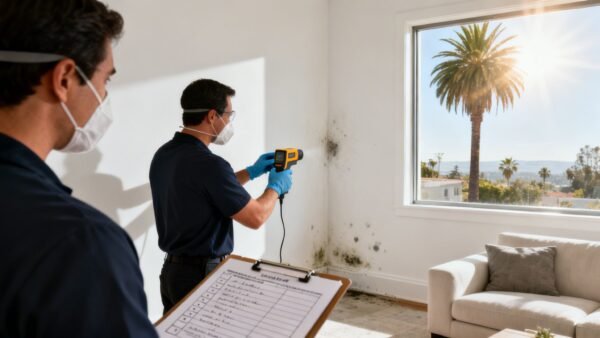

Discovering mold in your Los Angeles home can be alarming. The damp winters and coastal fog common in areas from Santa Monica to the San Fernando Valley create prime conditions for fungal growth, often hidden behind walls or in crawl spaces. This comprehensive mold inspection checklist is your first step toward identifying and addressing potential issues. A musty odor, unexplained allergies, or visible discoloration are all red flags that demand attention. But before you panic, a systematic approach is key.
This guide provides a professional-grade mold inspection checklist, combining expert tools with actionable resources for homeowners and property managers in Los Angeles. We move beyond generic advice to give you the specific resources used by certified experts. You'll learn how to conduct a thorough room-by-room assessment, what moisture detection tools to use, and how to spot the subtle signs of hidden growth like a flat-roof leak in a Sherman Oaks condo.
Need immediate help with a mold problem in Los Angeles? Call Onsite Pro Restoration at (818) 336‑1800 for a free on-site assessment. Our IICRC-certified team is available 24/7.
We will detail the exact checklists and assessment tools from authorities like the EPA and NIOSH, as well as mobile apps that streamline the process. Each entry includes direct links and key details to help you document conditions accurately for insurance claims or to determine when to call in certified experts. Beyond the physical checklist, a primary goal of any mold inspection is to contribute to maintaining good indoor air quality within your Los Angeles property.
Whether you're dealing with a minor leak or managing a larger commercial property in Burbank, this roundup is your first step toward a healthier indoor environment. A thorough inspection is the foundation for effective remediation, and this article provides the framework you need to get started.
What Are the Hidden Dangers of Indoor Mold?
For property owners in Los Angeles, from a coastal home in Santa Monica dealing with persistent fog to a commercial building in Glendale with a flat-roof leak, mold is more than just an unsightly nuisance. The checklists and tools in this guide are designed to help you identify not just visible growth, but the underlying moisture problems that cause it. Understanding the risks is the first step in protecting your property and its occupants.
A diligent mold inspection checklist is your first line of defense. It helps you systematically check for the common culprits: plumbing leaks, roof damage, poor ventilation in bathrooms, and condensation around HVAC systems. Ignoring these signs can lead to significant structural damage as mold breaks down organic materials like wood and drywall. More importantly, it can pose serious health risks. Certain mold types release mycotoxins, which can cause respiratory issues, allergic reactions, and other health problems, making a thorough inspection essential for a safe living environment.
When Should You Call a Professional for a Mold Inspection?
A detailed mold inspection checklist is an indispensable resource for any conscientious property owner in Los Angeles. For minor issues, like small patches of surface mold on a non-porous bathroom tile, your findings might confirm that a simple DIY cleanup is sufficient. However, the true strength of a thorough checklist is its ability to signal when a problem exceeds the scope of a simple fix.
If your completed checklist documents any of the following conditions, it's a definitive sign to contact a certified remediation specialist like Onsite Pro Restoration:
- Widespread Visible Growth: You've identified mold covering an area larger than 10 square feet. This is the industry guideline for a problem that requires professional containment.
- Persistent Musty Odors (No Visible Source): A strong, earthy smell is a classic indicator of hidden mold behind drywall, under flooring, or within an HVAC system.
- Contamination from "Black Water": If the moisture source is a sewage backup or overland flooding, the resulting mold growth is a biohazard that requires professional handling.
- Mold in HVAC Systems: Discovering mold in your air ducts or air handler means spores can be circulated throughout the property, requiring specialized cleaning.
- Compromised Structural Materials: Your checklist notes that porous materials like drywall, wood studs, or insulation are impacted. These often require professional removal.
Don't wait for a small problem to get worse. If your checklist reveals any of these red flags, schedule a free, no-obligation mold inspection with our certified experts today.
A Comprehensive Mold Inspection Checklist: 7 Essential Tools
Here are the top-tier resources used by professionals to conduct thorough mold inspections. Use these to build your own process, from initial visual checks to detailed, data-driven assessments.
1. Onsite Pro Restoration
For Los Angeles property owners who need a professional, full-service response to a suspected mold issue, Onsite Pro Restoration stands out as a premier choice. While this article provides a detailed mold inspection checklist for DIY assessments, Onsite Pro represents the professional end of the spectrum. Their website is more than a simple business card; it’s a resource hub and a direct line to IICRC-certified emergency technicians. It excels by clearly outlining a structured, transparent process that demystifies restoration work, making it an essential bookmark for homeowners, landlords, and real estate professionals in the LA area.
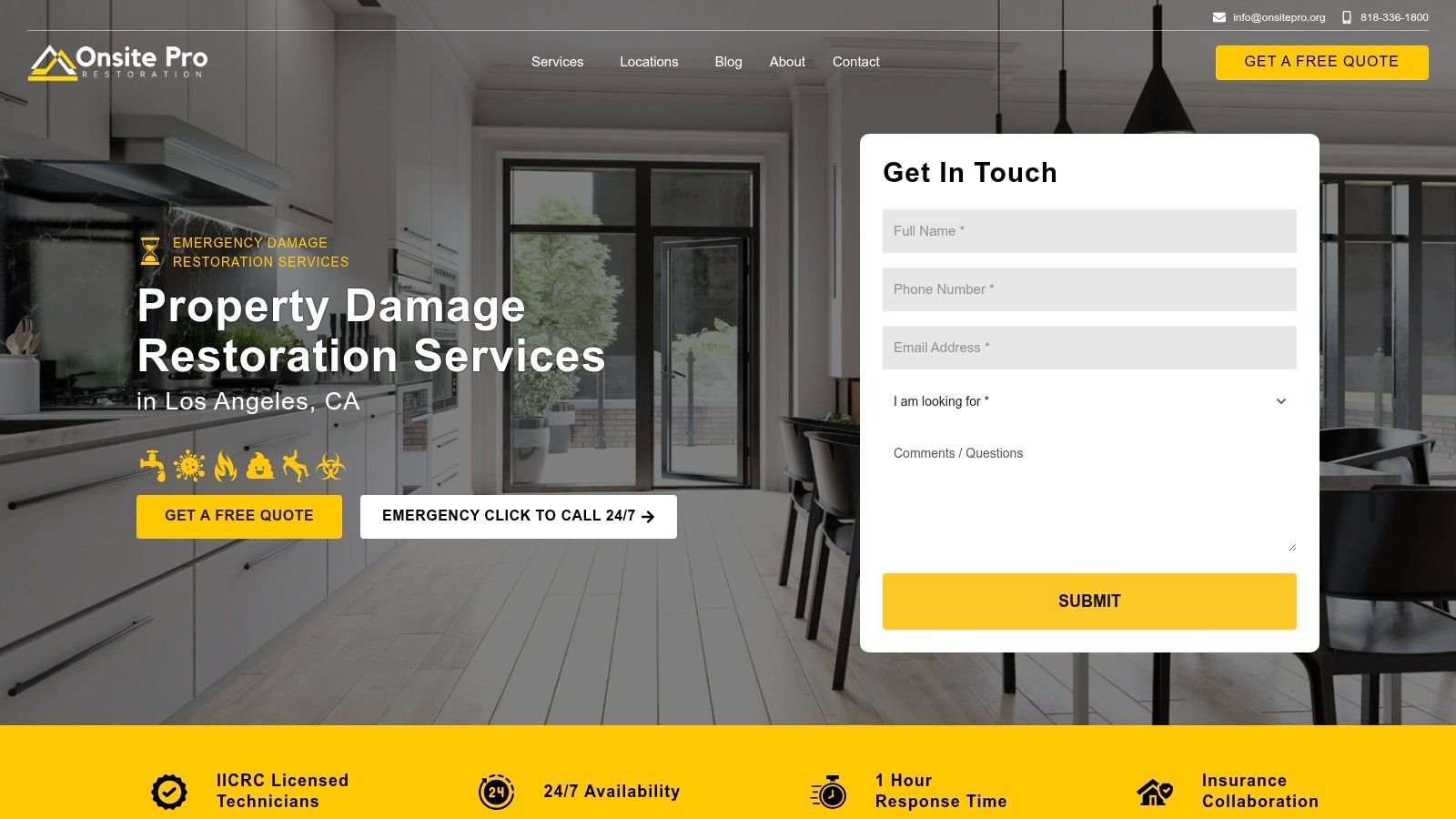
The platform is designed for action. Instead of vague promises, it details a step-by-step customer journey: a free on-site assessment, a formal inspection, a clear work authorization, and thorough documentation. This approach is particularly valuable for insurance claims, as Onsite Pro’s team collaborates directly with major insurers to speed up approvals and minimize out-of-pocket costs and delays for property owners. Their 24/7 availability and rapid response time (often arriving within an hour) are critical when dealing with an active water leak that could lead to mold.
Why It’s Our Featured Choice
Onsite Pro Restoration distinguishes itself by combining rapid emergency services with a methodical, customer-focused approach. Many companies offer one or the other; Onsite Pro delivers both. Their technicians are not just fast, they are certified professionals equipped with industry-grade tools for moisture detection, air quality testing, and containment. This ensures that any mold inspection is not just a surface-level look but a deep, scientific assessment of the property’s health.
The website provides a key tool for initial planning: a remediation cost calculator. While not a final quote, this feature gives property managers and homeowners a realistic budget forecast, something few competitors offer upfront. It helps answer the immediate question of "What might this cost?" before you even pick up the phone. This combination of emergency readiness, technical expertise, and financial transparency makes their service particularly dependable. You can learn more about their mold inspection process and what a professional assessment entails directly on their site.
- Website: https://onsitepro.org
2. EPA Checklist for Mold Remediation (Mold Remediation in Schools and Commercial Buildings)
For property managers and commercial building owners in Los Angeles, credibility is key. Using a document from an authoritative source like the U.S. Environmental Protection Agency (EPA) provides a solid, defensible foundation for your actions. The EPA’s "Checklist for Mold Remediation" is a concise, one-page PDF whose logic is perfectly suited for complex residential situations.
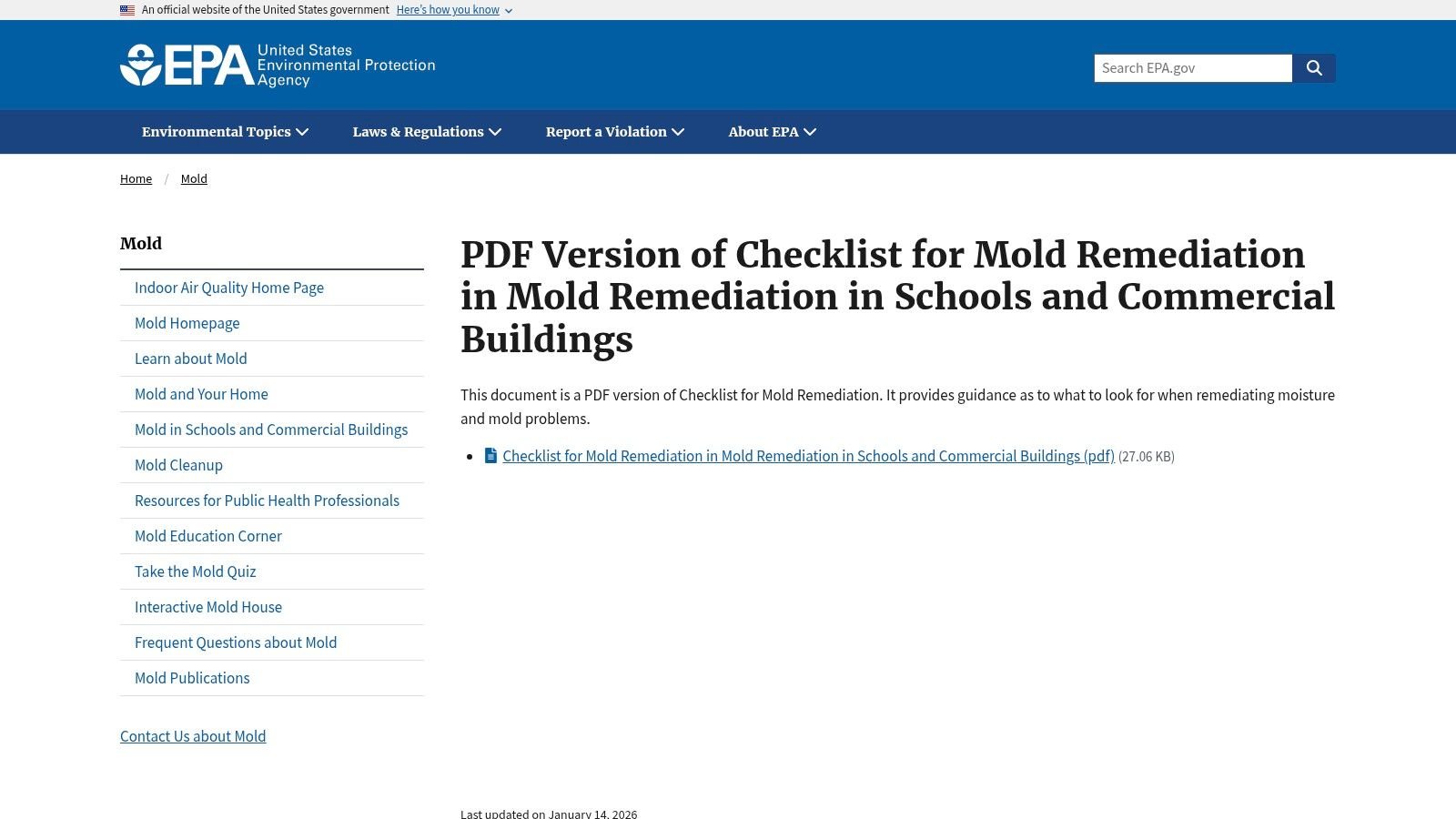
This free resource is not a room-by-room walkthrough. Instead, it serves as a high-level project management and verification tool. Its primary strength lies in its systematic approach, guiding you through the critical phases of a remediation project. This formal structure is invaluable for documenting that you followed a recognized standard of care, which can be critical for liability and insurance purposes. For instance, if you're a landlord in a rent-controlled LA neighborhood addressing a mold complaint, this part of your mold inspection checklist documents your professional response.
- Website: EPA Checklist for Mold Remediation (PDF)
- Pricing: Free
- Best For: Property managers, facility managers, landlords, and homeowners managing a large-scale remediation project who need authoritative documentation.
3. NIOSH Dampness and Mold Assessment Tool (DMAT) – General Buildings
For those in Los Angeles managing multiple properties, a standardized method is essential. The NIOSH Dampness and Mold Assessment Tool (DMAT) provides a structured, evidence-based system for this purpose. Developed by the CDC's National Institute for Occupational Safety and Health, this tool moves beyond a simple "yes/no" inspection and introduces a scoring system to quantify mold and dampness issues objectively.
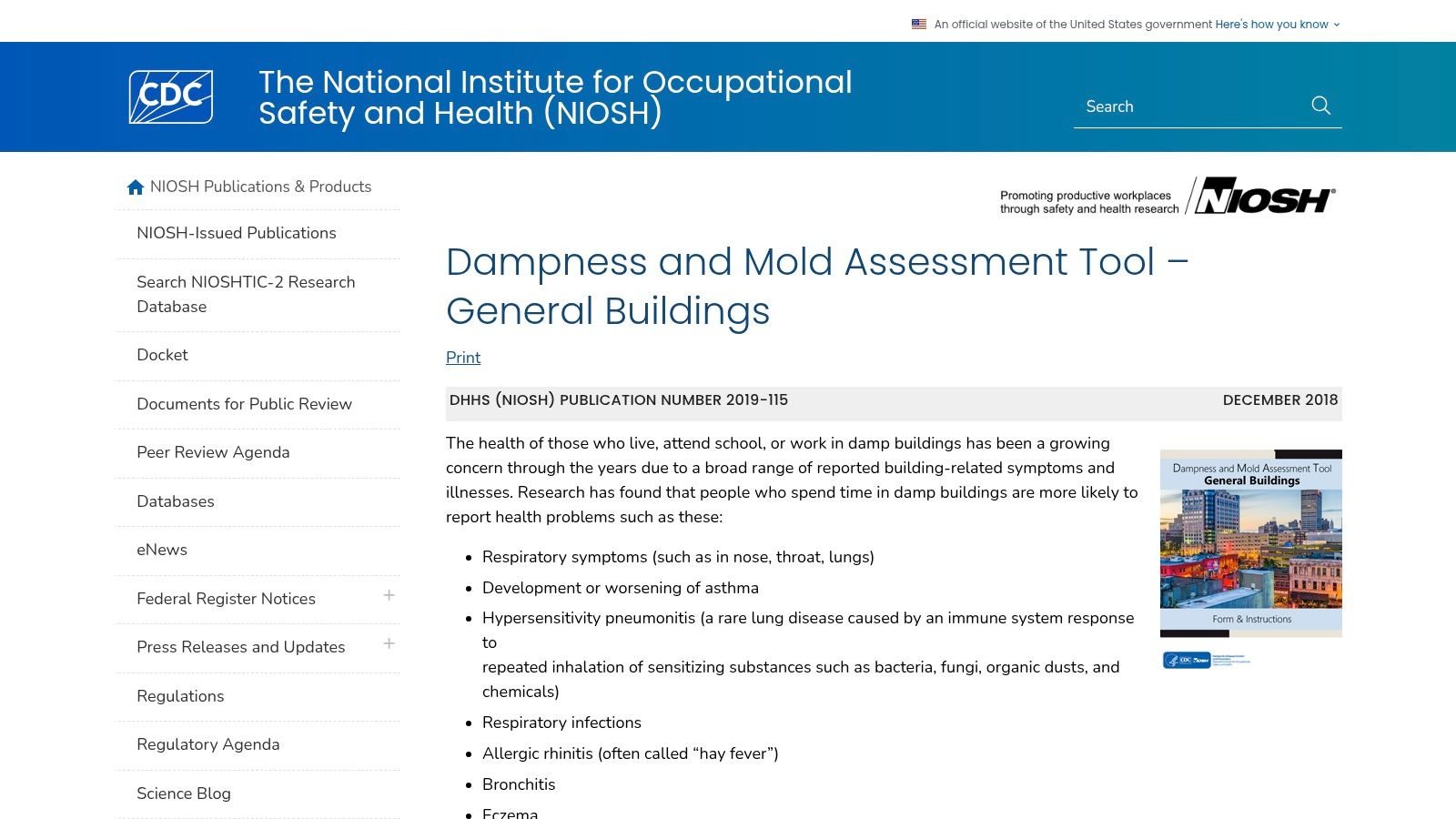
The DMAT uses a fillable PDF form that breaks down each room into its core components like ceilings, walls, floors, and HVAC systems. This organized approach ensures no detail is missed during your mold inspection checklist process. The goal is to create a consistent, repeatable inspection that can be used to baseline a building's condition, track the effectiveness of repairs, or compare the severity of mold issues between a unit in Santa Monica and one in the San Fernando Valley. This objective data is incredibly useful for prioritizing repairs and justifying expenses.
- Website: NIOSH Dampness and Mold Assessment Tool (DMAT)
- Pricing: Free
- Best For: Property managers, facility maintenance staff, and real estate professionals needing to conduct standardized, data-driven assessments across multiple properties or over time.
4. NIOSH Dampness and Mold Assessment Tool (DMAT) – School Buildings
For facility managers and commercial property owners in the Los Angeles area, the NIOSH DMAT for School Buildings offers a structured, data-driven framework for evaluating issues across large facilities. While designed for K-12 environments, its methodology is highly adaptable for office parks or multi-building residential complexes.
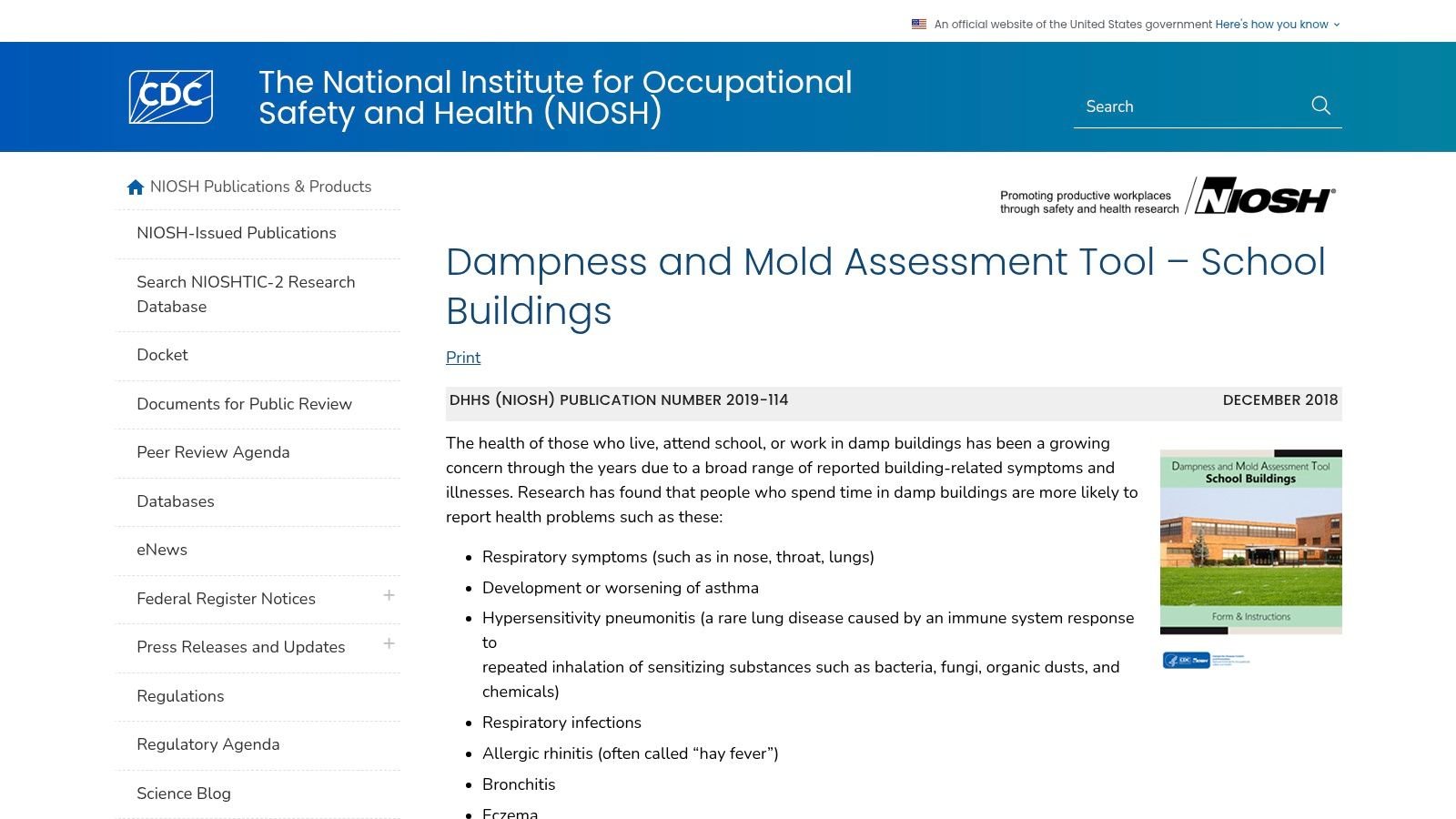
Its strength is standardization. It provides a numerical scoring system to quantify the severity of dampness and mold, allowing managers to prioritize repairs and allocate resources effectively. For a school district in Los Angeles County, this means you can objectively compare a moisture issue in a North Hollywood high school gymnasium to one in a Santa Monica elementary school classroom. The fillable form creates a uniform mold inspection checklist that can be used by staff district-wide.
- Website: NIOSH Dampness and Mold Assessment Tool (DMAT) for School Buildings
- Pricing: Free
- Best For: School district facility managers, commercial property managers with large portfolios, and anyone needing a standardized system to inspect, prioritize, and manage moisture issues across multiple buildings.
5. EPA Indoor Air Quality (IAQ) Tools for Schools – Action Kit Checklists
For those managing larger properties in Los Angeles, preventing mold is about creating systems. The EPA’s Indoor Air Quality (IAQ) Tools for Schools Action Kit offers a powerful, systems-based approach. While designed for schools, its principles of proactive maintenance are directly applicable to any large-scale property management scenario.
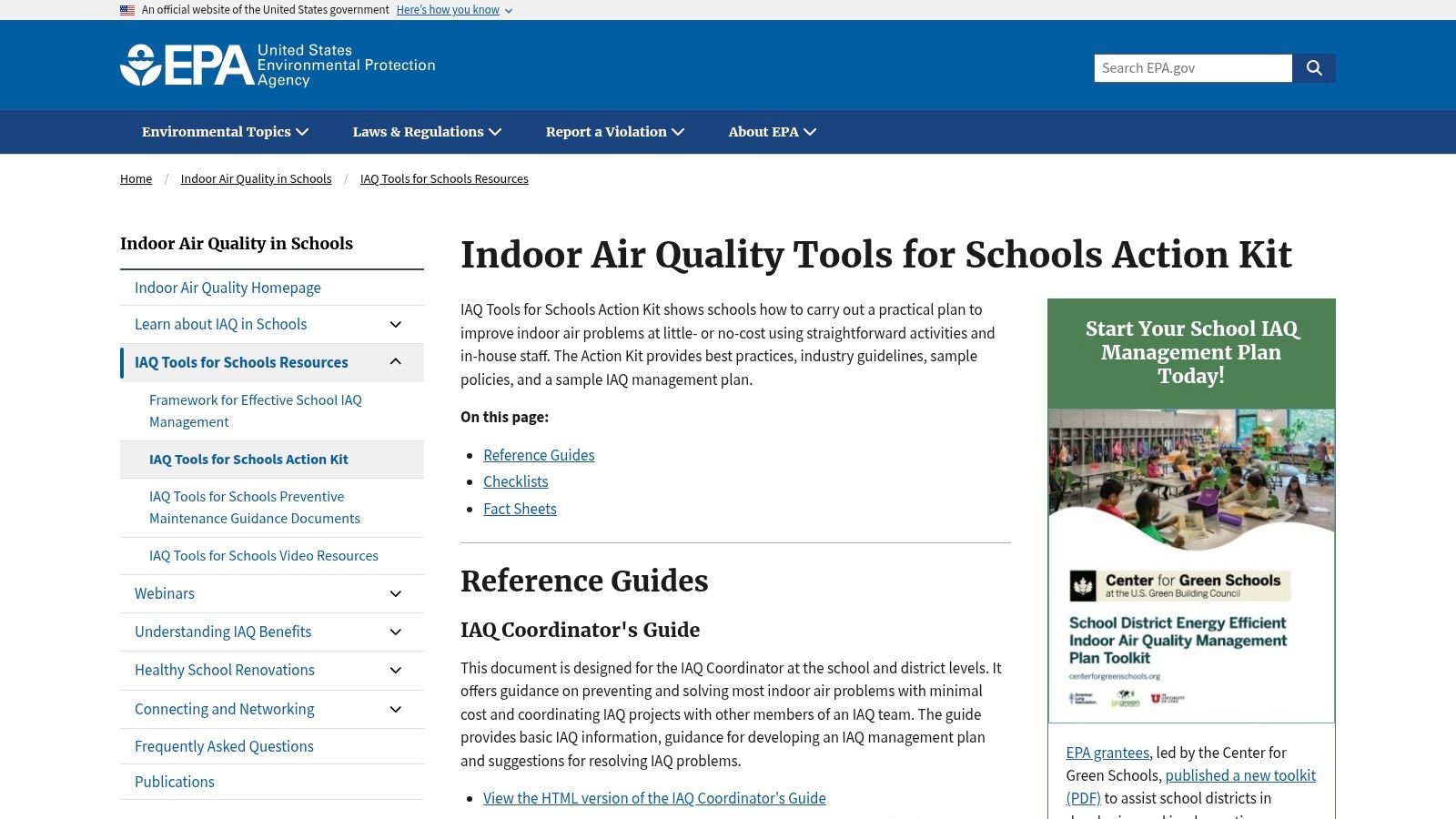
This is a collection of 11 distinct guides and forms. The "Building and Grounds Maintenance" checklist is the most relevant resource for a hands-on mold inspection checklist. It prompts you to look at the big picture of moisture control, encouraging routine checks of roofs, gutters, plumbing fixtures, and HVAC condensate pans. For a property manager in the San Fernando Valley, this means having a defensible, proactive maintenance record—a significant asset for both insurance and liability.
- Website: EPA IAQ Tools for Schools Action Kit
- Pricing: Free
- Best For: Property managers, commercial building owners, and facility managers who want to implement a proactive, system-wide moisture and mold prevention program.
6. InterNACHI Healthy Homes Visual Inspection Checklist
For home inspectors and hands-on property managers in Los Angeles, efficiency during an initial site visit is paramount. The InterNACHI Healthy Homes Visual Inspection Checklist provides a structured, field-ready document that prioritizes speed and documentation. Developed by the International Association of Certified Home Inspectors (InterNACHI), this checklist is respected within the industry and focuses on identifying health and safety issues, with a significant emphasis on moisture and mold indicators.
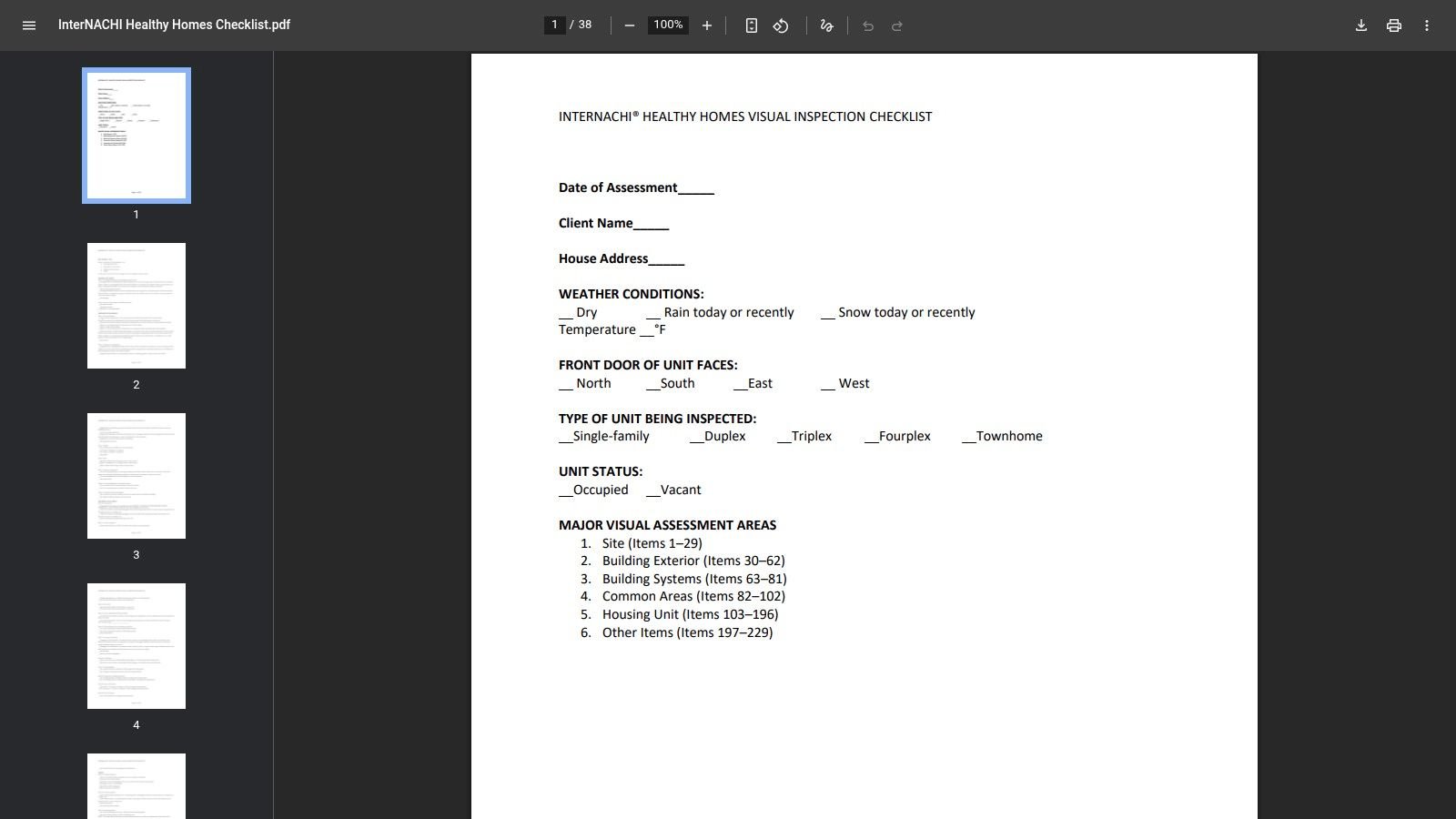
This free PDF is a practical tool for quick assessment. Its simple yes/no format, with space for notes, allows you to move through a property swiftly while capturing critical data. It prompts you to check for specific triggers like musty odors, poor ventilation, and visible water stains, ensuring no common red flags are missed in your mold inspection checklist.
- Website: InterNACHI Healthy Homes Visual Inspection Checklist (PDF)
- Pricing: Free
- Best For: Home inspectors, restoration company estimators, property managers, and proactive homeowners who need a fast, reliable tool for initial visual inspections.
7. SafetyCulture (iAuditor) – Mold Inspection Checklist Templates
For property managers or restoration companies standardizing their process, digital consistency is a game-changer. SafetyCulture (iAuditor) moves the mold inspection checklist from paper to a dynamic, data-capturing tool. It's ideal for creating scalable, uniform inspection processes across multiple properties in Los Angeles, from a duplex in Silver Lake to a commercial complex in Downtown LA.
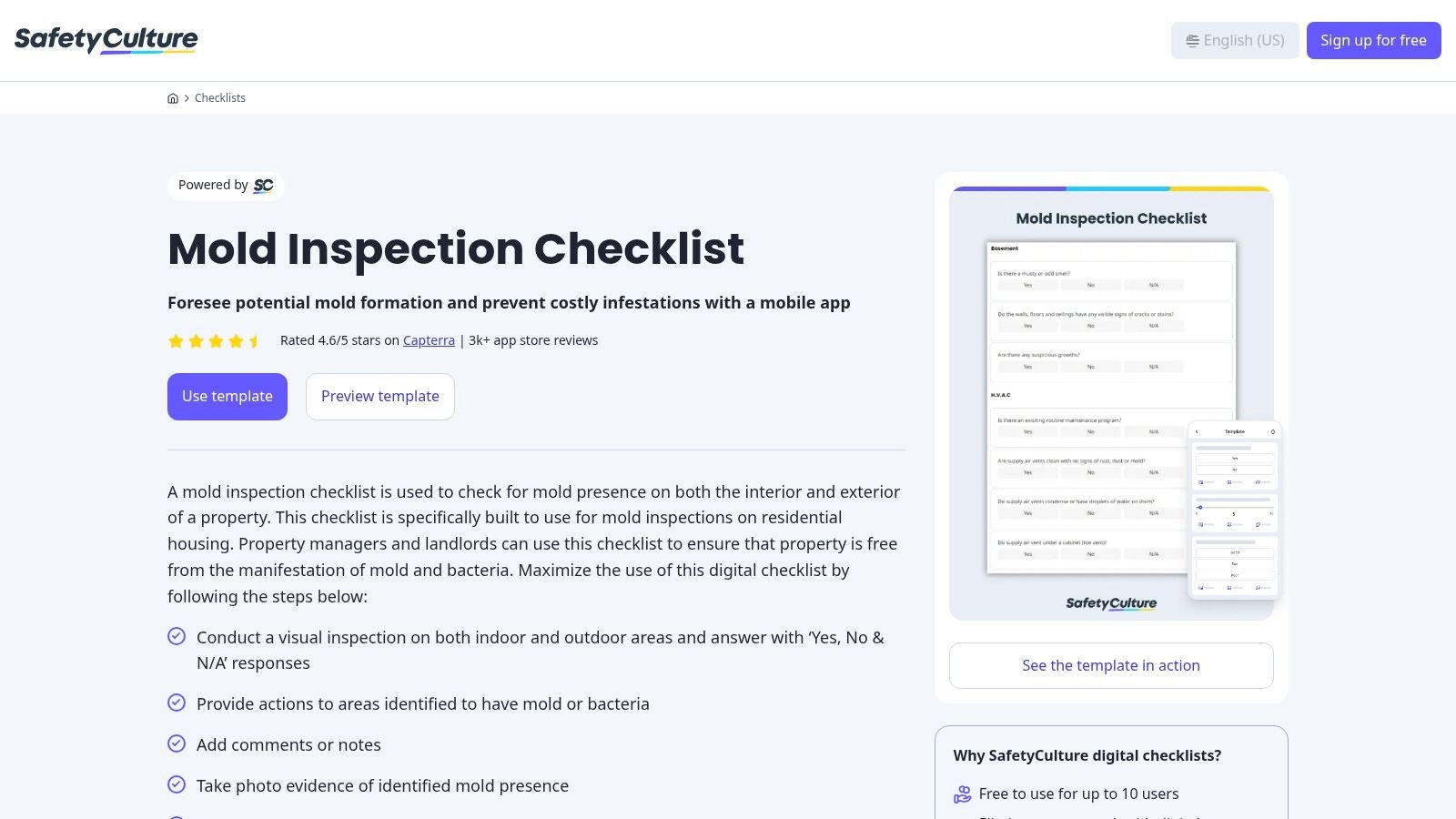
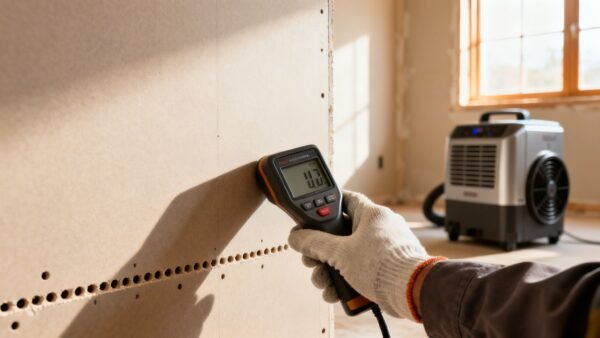
Technicians can perform inspections offline, capture geotagged photos, annotate images to highlight microbial growth, and embed moisture meter readings directly into the report. You can learn more about this by understanding how to read moisture meter readings. This creates a detailed, undeniable record of conditions, which is invaluable for insurance claims or tenant disputes.
- Website: SafetyCulture Mold Inspection Checklists
- Pricing: Free plan available for small teams; paid subscriptions required for advanced features.
- Best For: Property management companies, restoration contractors, and facility managers who need to standardize inspections, manage teams, and create detailed, data-rich documentation.
Conclusion: Take Action on Your Findings
Your diligent work using these checklists provides a clear, evidence-based foundation. For minor issues, like small patches of surface mold on a tile, your findings might confirm that a simple DIY cleanup is sufficient. However, if your comprehensive mold inspection checklist identifies mold growth on your home's exterior, understanding the correct removal procedures is crucial. For instance, this guide on how to remove mold from siding can be a valuable resource.
Completing a checklist is the first, most important step. The next step is acting on those findings. When your inspection points to a larger problem, it’s time to bring in an IICRC-certified expert. A professional can validate your findings, use advanced tools to pinpoint the source, and create a remediation plan that protects your property and its occupants. Your checklist has done its job; now let the professionals do theirs.
Frequently Asked Questions (FAQs)
Q: Can I perform a mold inspection myself?
A: Yes, you can perform a visual inspection using a detailed mold inspection checklist like the ones provided. Look for visible mold, water stains, and musty odors. However, for hidden mold, air quality testing, or large-scale contamination, you should hire a certified professional.
Q: What are the most common places to find mold in a Los Angeles home?
A: In Los Angeles, mold is common in bathrooms (due to steam and poor ventilation), under sinks with slow leaks, in basements or crawl spaces with high humidity, and around windows where condensation collects. Coastal areas like Santa Monica may also experience issues due to the damp, salty air.
Q: How much does a professional mold inspection cost in Los Angeles?
A: The cost can vary. A basic visual inspection might be free or low-cost, while a comprehensive inspection with air and surface sampling can range from $300 to $1,000 or more, depending on the size of the property and the extent of the testing required. Onsite Pro Restoration offers a free on-site assessment to start the process.
Q: Does homeowners insurance cover mold removal?
A: It depends on the source of the mold. If the mold is the result of a covered peril (like a sudden burst pipe), the removal may be covered. Mold from long-term leaks, high humidity, or poor maintenance is typically not covered. Documenting everything with your mold inspection checklist is crucial for an insurance claim.
Don't let your checklist findings become a source of stress. When your mold inspection checklist points to a larger problem, trust Onsite Pro Restoration to provide clarity and a safe resolution. Our IICRC-certified team uses your documented concerns as a starting point for a professional assessment, ensuring your property is restored correctly and completely.
Call (818) 336‑1800 or Book Your Free Mold Inspection Online Now!