
When you find a leak or flood in your Los Angeles home, you’re officially in a race against the clock. The first 48 hours are critical for preventing a minor water issue from becoming a major mold disaster. This guide will walk you through the essential steps, from immediate action to professional remediation, ensuring you protect your property and your family's health.
Dealing with unexpected water damage? Don't wait. Our IICRC-certified team is available 24/7.
Get a Free Mold Inspection
The First 48 Hours After Discovering Water Damage
That slow drip from a pipe in your Burbank kitchen or the damp feeling in a Santa Monica condo from our coastal fog isn't just an annoyance. It's a countdown. The first 24 to 48 hours after water gets in are absolutely critical—this is the window where you either stop a disaster or let one begin.
Your mindset has to shift immediately from “let’s wait and see” to “act now.” In the warm, often humid climate of Southern California, mold spores don't politely wait for an invitation. They're opportunistic, and a damp spot on your drywall is the perfect place for them to start a family.
The Critical Mold Growth Window
Understanding just how fast mold takes over explains the need for an emergency response. This isn't a slow-motion problem; it’s a rapid colonization that starts almost the second things get wet. What begins as an invisible threat can become a visible, property-damaging nightmare in just a few days.
Catching it early is everything. You have to know the common signs of water damage in walls, like peeling paint, faint discoloration, or that unmistakable musty smell. The moment you spot one, the clock is already ticking.
The timeline below shows just how quickly mold spores can turn a simple water problem into a full-blown contamination issue.
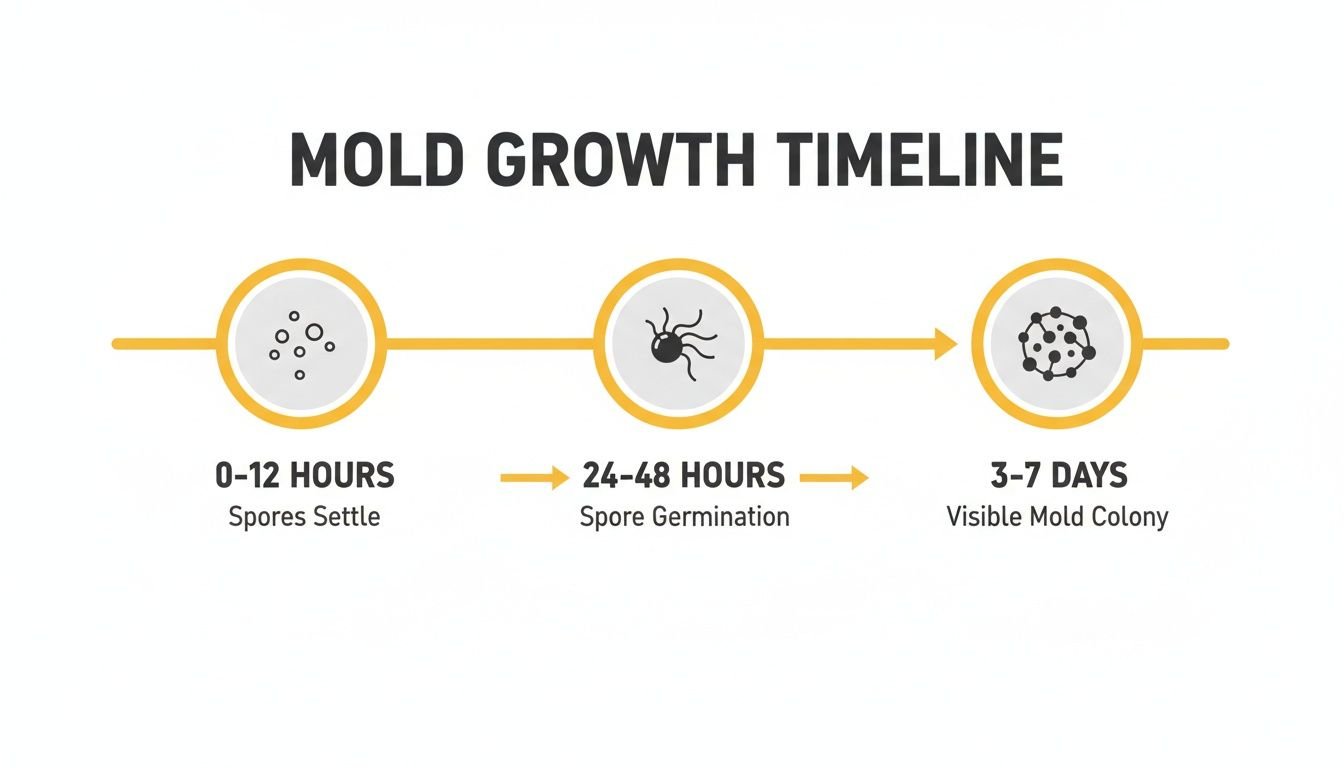
As you can see, that initial 48-hour period is the tipping point where dormant spores wake up and start growing. Acting immediately is non-negotiable.
Why You Can't Afford to Wait
Think about discovering a hidden mold infestation behind a wall after a pipe bursts—it’s a scenario we see all the time in LA County. A staggering 47% of U.S. homes deal with dampness and mold growth, and our local climate makes us prime targets.
This table breaks down why every hour counts.
Water Damage and Mold Growth Timeline
This timeline is a quick reference for how quickly mold develops after water exposure, highlighting the key windows for action.
| Time After Water Exposure | What's Happening | Recommended Action |
|---|---|---|
| 0–12 Hours | Microscopic mold spores, which are always in the air, land and settle on damp surfaces like drywall and wood. | Stop the water source immediately. Begin water extraction and set up air movers. |
| 24–48 Hours | Spores begin to germinate and form hyphae (root structures). This is the point of no return for mold growth. | Crucial drying window. Get professional-grade dehumidifiers running to pull moisture from materials. |
| 3–7 Days | Mold colonies become visible to the naked eye as dark spots or fuzzy patches. A musty odor is often present. | Mold remediation is now required. Simple drying is no longer enough; contaminated materials must be removed. |
| 1 Week+ | Mold spreads rapidly, damaging structural materials and significantly degrading indoor air quality. | Complex remediation and repairs. Costs and health risks increase exponentially. |
Waiting just a few days can turn a straightforward drying job into a complex and expensive remediation project.
The Takeaway: A simple water leak is an emergency in disguise. The goal is to stop the water source immediately and begin the drying process before mold takes root.
The very first step is always to stop the flow of water. If you aren't sure how, take a minute to learn where to find the main water shut-off in your home. This single action can prevent thousands of dollars in damage while you wait for professional help to arrive.
The Hidden Dangers of Indoor Mold to Health and Home
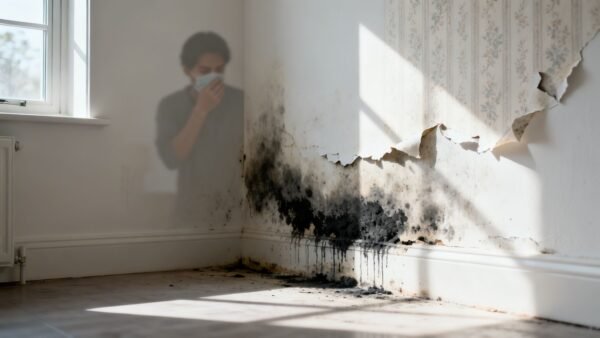
That patch of mold you see on the wall? It’s not just an ugly stain. Think of it as the tip of the iceberg—a visible warning sign of a much deeper problem lurking beneath the surface. The real threat from water damage and mold is the one you can't see, silently chipping away at your family's health and your home's structural integrity.
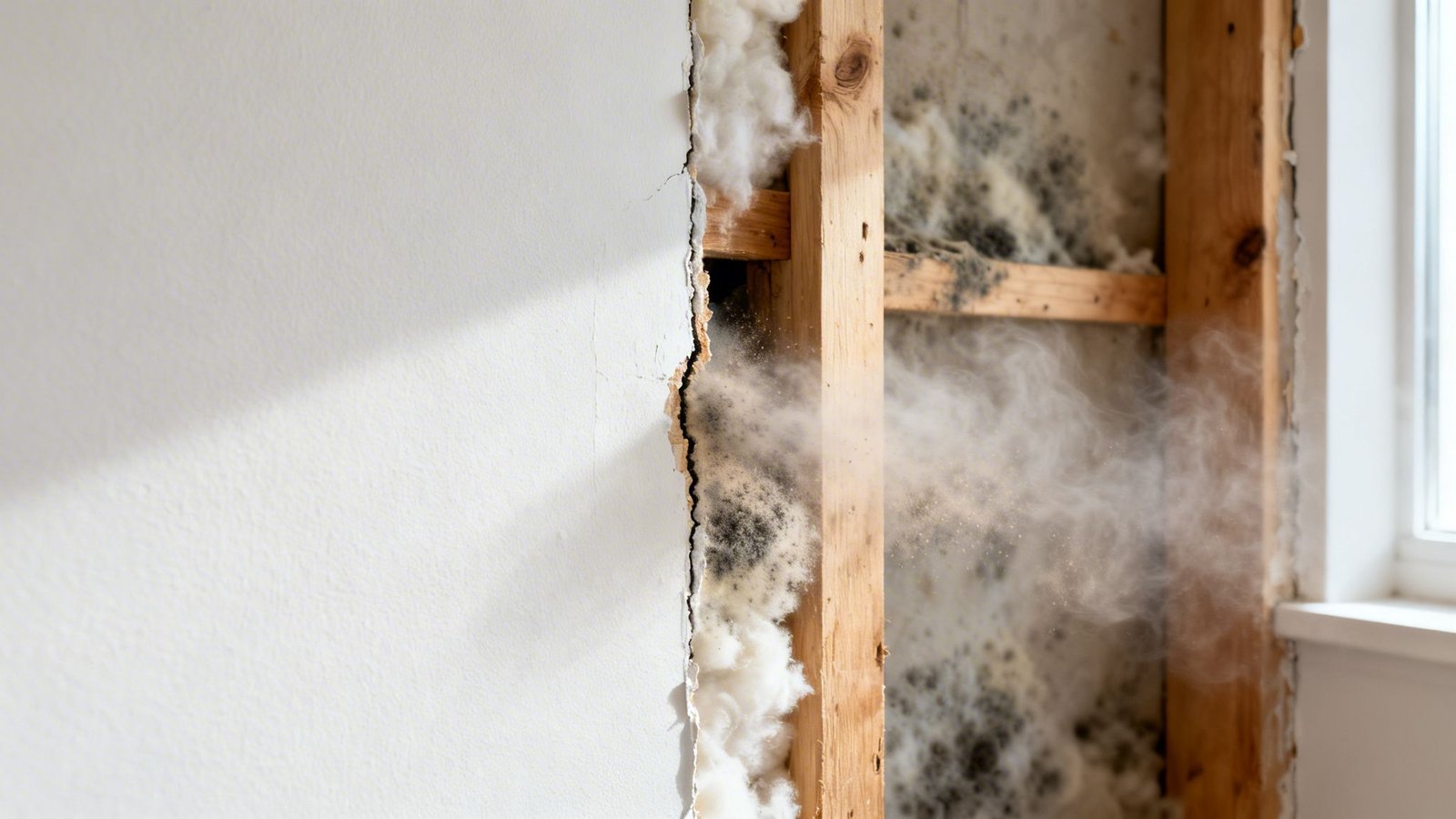
Many homeowners understandably mistake mold for a simple cleaning job. But this overlooks two critical facts: how mold impacts our bodies and how it literally eats our homes. Professional mold and water damage remediation isn't just about appearances; it's an essential health and safety intervention for your family and your property.
The Alarming Impact on Your Family's Health
Mold reproduces by releasing microscopic spores into the air, which you and your family then breathe in. For many, this triggers a host of health problems. The Centers for Disease Control and Prevention (CDC) has clearly linked indoor mold exposure to a range of respiratory issues, particularly for people with existing sensitivities.
It’s like living with a constant, invisible cloud of allergens. Over time, this persistent exposure can lead to:
- Chronic Allergies: Nagging symptoms like a constant runny nose, sneezing, itchy eyes, or skin rashes that just won't clear up.
- Asthma Attacks: For anyone with asthma, mold spores are a well-known trigger, often increasing the frequency and severity of attacks.
- Respiratory Infections: Children, the elderly, and immunocompromised individuals may find themselves getting sick more often with upper respiratory infections.
- Hypersensitivity Pneumonitis: In some cases, people can develop a serious immune reaction to the spores, causing inflammation in the lungs.
The numbers are staggering. Mold isn't just a nuisance; it's a silent threat to public health. The health risks are very real and ignoring them can have long-term consequences.
The Structural Threat to Your Home
Beyond the health risks, mold poses a direct physical threat to your house. It’s a living organism that needs to eat, and its favorite meal is the organic material your home is built from.
Mold doesn’t just stain drywall—it actively consumes the organic materials in your home. This includes the paper backing on drywall, the glue in your carpet, and, most critically, the wood framing that holds your house together.
Picture a slow, undetected flat-roof leak in a Sherman Oaks home after a storm. As mold establishes itself, it releases enzymes that break down the cellulose in the wood studs, essentially rotting them from the inside out. Over time, this silent process can severely weaken structural components, compromising the safety and integrity of the entire building.
This is precisely why professional mold and water damage remediation is so critical. A certified team doesn’t just wipe away the visible spots. They find and fix the moisture source, safely remove all contaminated materials, and verify that the structure is sound. Ignoring the problem only gives the silent destruction more time to spread, guaranteeing far more expensive and complicated repairs down the road.
The Professional Mold and Water Damage Remediation Process
When you’re dealing with a water or mold emergency, your home feels like it's been turned upside down. It’s chaotic, stressful, and you just want it fixed. That’s where a professional mold and water damage remediation company comes in. We don't just clean up the mess; we bring a methodical, science-based process to restore order.
Knowing what to expect can make a huge difference. Let's walk through exactly what our team does from the moment we arrive at your Los Angeles property to the moment we hand it back, safe and sound.
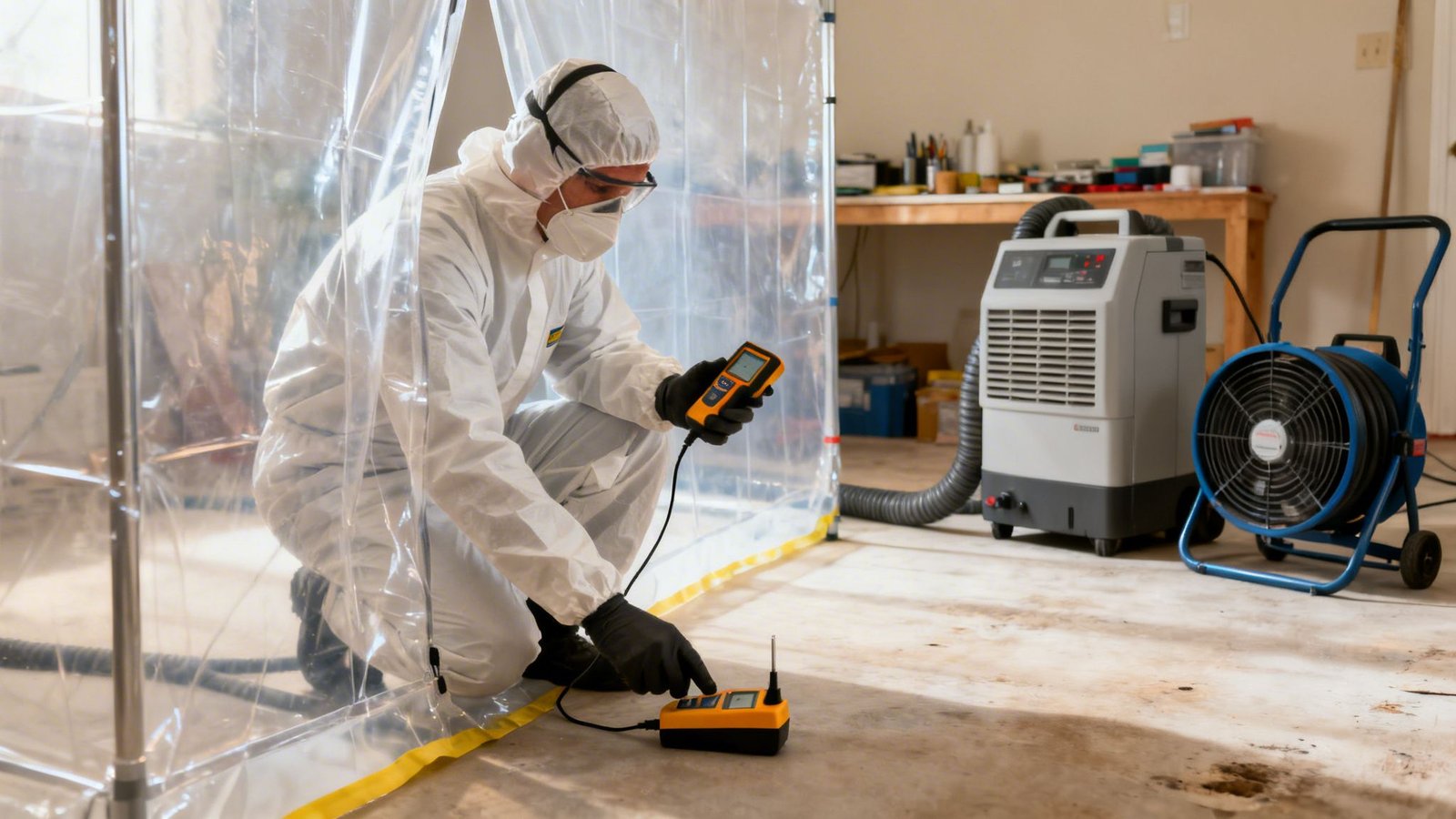
Step 1: Assessment And Containment
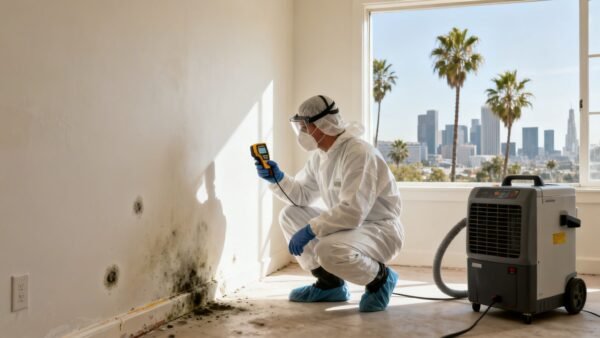
The first priority is to stop the problem from spreading. When our IICRC-certified technicians arrive, they immediately get to work finding the moisture source and figuring out how far the contamination has traveled. We use specialized tools like moisture meters and thermal imaging cameras to see what’s happening behind walls and under floors.
Once we understand the scope, we set up containment. This is non-negotiable for preventing mold spores from contaminating the rest of your home.
Think of it like creating a sterile field in a hospital. We use heavy-duty plastic sheeting and zippers to completely seal off the affected area. Then, we set up negative air pressure machines with HEPA filters. These powerful units act like vacuums, pulling air from the contaminated zone, scrubbing it clean, and ensuring no spores can escape.
Step 2: Water Extraction And Structural Drying
With the area sealed, we get the water out. For any standing water, we use powerful, truck-mounted extraction units that can remove hundreds of gallons in a hurry.
After the puddles are gone, the real science of drying begins. This is where professional equipment is an absolute game-changer. We strategically place a combination of tools to pull moisture from deep inside materials like wood, concrete, and drywall.
- Industrial-Grade Dehumidifiers: These aren’t the small units you buy at a home improvement store. They are powerful machines that pull massive amounts of water vapor from the air, which dramatically speeds up the drying process.
- High-Velocity Air Movers: You’ll see dozens of these fans, all aimed at specific angles. They create a powerful vortex of airflow across wet surfaces, which helps trapped moisture evaporate into the air so the dehumidifiers can capture it.
Throughout this phase, we’re constantly taking readings with our instruments. "Dry to the touch" isn't good enough—we need to see scientific proof that materials have returned to their normal, safe moisture levels to prevent mold from coming back.
A key part of professional service is understanding the complete mold and water damage remediation workflow. While remediation focuses on removing the immediate hazard, restoration brings your property back to its original state. You can learn more about the distinct phases in our detailed guide on the water damage restoration process.
Step 3: Mold Removal And Cleaning
Only when the entire area is verified as completely dry can we start the mold removal. This is a meticulous job that requires full personal protective equipment (PPE) and careful handling to prevent any cross-contamination.
Our technicians will carefully remove any materials that can't be saved. This often includes porous items that have been heavily impacted, such as:
- Drywall and insulation
- Carpeting and its padding
- Baseboards and other trim
For surfaces that can be cleaned, like wood studs or concrete, we use techniques like wire brushing, sanding, or even media blasting (using dry ice or other fine-grit materials) to physically remove all traces of mold. Afterward, every single surface within the contained area is cleaned with an antimicrobial treatment and then HEPA-vacuumed to capture any lingering spores.
Step 4: Restoration And Repair
With the mold gone and the area certified clean, it's time to put your home back together. This is the rewarding part, where things finally start to look normal again.
Our skilled restoration crews take over to seamlessly repair all the damage. This phase can include anything from installing new drywall and laying new floors to hanging new cabinets and painting.
Our promise is simple: we make it look like the damage never happened. We take great care to match all repairs to your home's existing finishes, ensuring a high-quality result you can trust. A final walkthrough with you ensures everything is done to your complete satisfaction.
Call (818) 336-1800 for 24/7 Emergency Service
Navigating Remediation Costs and Insurance Claims
Once the shock of discovering water damage wears off, two questions immediately take over: "How much will this cost?" and "Will my insurance even cover it?" These are the most pressing concerns for any Los Angeles homeowner staring down a water or mold problem.
There’s no single price tag for mold and water damage remediation. The final cost can swing wildly, so it’s critical to understand what drives the price and how a professional team can help you navigate your insurance claim. Think of it less as a fixed number and more of a calculation based on a few key variables. A tiny, contained leak under a sink is a completely different beast than a basement flooded by a burst pipe.
Key Factors That Determine Remediation Costs
To get a realistic idea of what to expect, you need to know what restoration pros look for when they build an estimate. The scope of work really comes down to these factors:
- Size of the Affected Area: This one’s the most straightforward. A 100-square-foot patch of wet drywall is going to be far less expensive to fix than 1,000 square feet of damage spread across multiple rooms.
- Extent of Damage: Did the water just hit surface materials like drywall, or did it soak into the wood studs and subflooring? The deeper the water and mold penetrated, the more labor, equipment, and materials are needed for a proper fix.
- Type of Contaminated Water: The source of the water is a huge cost driver because of the safety protocols involved. This detail alone can dramatically change the price of mold and water damage remediation.
Water damage is an incredibly common and expensive issue. Roughly 14,000 Americans face a water-related emergency every day, and the average insurance payout for these claims can be significant. In fact, about 1 in 60 insured homes files a claim for water or freezing damage each year, making it a top cause of property loss.
The cost per square foot for remediation is directly tied to how clean—or dirty—that water is. Clean water jobs are simpler, but a sewage backup requires a full-blown biohazard cleanup, which significantly raises the cost.
Understanding Water Damage Classes
The IICRC, the industry’s standard-setting body, breaks water damage into three categories. Each one demands a different response.
| Water Category | Description | Example Sources |
|---|---|---|
| Category 1 | Clean Water: This comes from a sanitary source and isn’t a substantial threat if you touch it or inhale its vapors. | Broken supply lines, overflowing sinks (with no soap) |
| Category 2 | Grey Water: This water has significant contamination and can make you sick if you’re exposed to it. | Overflowing dishwashers, washing machine discharge |
| Category 3 | Black Water: Grossly contaminated, this water is filled with pathogens, toxins, and other dangerous agents. | Sewage backflows, water from rivers or streams, flooding |
The cost difference between these categories is huge. Category 1 remediation might just need straightforward drying. Category 3, on the other hand, demands complete removal of all affected porous materials, heavy-duty disinfection, and strict safety protocols, making it by far the most expensive.
Your Remediation Company Is Your Insurance Advocate
Trying to handle an insurance claim on your own can feel like a full-time job, especially when you’re already stressed about the damage. This is where a professional restoration company becomes your most valuable partner.
We don’t just fix the water damage; we build the case for your insurance claim. Our team provides the critical documentation—photo logs, moisture maps, detailed reports, and daily drying logs—that adjusters need to see. We speak their language and can work with them directly, justifying every step of the work. For a deeper dive, check out our guide on how to successfully file an insurance claim for water damage.
Mastering the financial side of a disaster often comes down to mastering the claims process. For more expert tips, especially after a storm, a great resource is Your Guide to Winning a Hail Damage Roof Insurance Claim.
By acting as your advocate, we work to streamline the entire process, cut down on delays, and help ensure you get the full coverage you’re entitled to under your policy. Our goal is to minimize your out-of-pocket costs and get your home back to normal, faster.
How to Choose the Right LA Remediation Contractor
Hiring the right team for mold and water damage remediation is the single most important decision you'll make in this entire process. A qualified professional protects your property’s value and your family’s health. An unqualified handyman, on the other hand, can make the problem dangerously worse.
This isn't a job for a general contractor. It requires specialized training, industry-specific equipment, and an understanding of microbiology that most builders just don't have.
The difference between a pro and an amateur often comes down to one crucial credential: IICRC certification.
Why IICRC Certification Is the Gold Standard
The Institute of Inspection, Cleaning and Restoration Certification (IICRC) is the non-profit organization that sets the global standards for our industry. Think of it like board certification for a doctor or the bar exam for a lawyer.
A contractor with IICRC certification isn't just following best practices—they've been trained on the science-backed protocols for safe and effective remediation.
Choosing an IICRC-certified firm means you’re hiring technicians who understand the science behind:
- Containment: Properly sealing off the work area to prevent microscopic mold spores from traveling through your HVAC system and contaminating the rest of your home.
- Air Scrubbing: Using HEPA filtration to capture and remove airborne contaminants, ensuring the air you breathe is safe once the job is done.
- Moisture Dynamics: Knowing how to find hidden moisture pockets and dry out building materials completely so mold doesn't come right back.
Without this training, a contractor might just tear out contaminated drywall, releasing millions of spores into the air. They can turn a small, localized issue into a whole-house nightmare.
Your Vetting Checklist for Any Contractor
Before you sign any contract, you need to ask the right questions. This checklist will help you separate the true professionals from the rest. A qualified company will have no problem providing clear, direct answers to every one of these questions.
A true professional provides transparent, verifiable credentials. Any hesitation to answer questions about licensing, insurance, or certifications is a major red flag. If they get defensive, end the conversation and find someone else.
This quick comparison highlights what you should be looking for and what you should run from.
Choosing Your Restoration Pro: A Vetting Checklist
| Vetting Question | Ideal Answer from a Certified Pro | Red Flag from an Unqualified Contractor |
|---|---|---|
| "Are you IICRC certified?" | "Yes, our company is an IICRC-certified firm, and our lead technicians hold individual certifications like WRT and AMRT." | "We have years of experience; we don't need a piece of paper for that." |
| "Can you provide proof of licensing and insurance?" | "Absolutely. We are fully licensed in California and carry both general liability and pollution liability insurance." | "We're covered," or being vague about the type and limits of their insurance. |
| "Do you provide detailed documentation for insurance?" | "Yes, we provide photo logs, moisture readings, and a detailed scope of work—everything your adjuster will need." | "You just send them our bill when we're done." |
| "What is your process for containment and air filtration?" | "We use 6-mil poly sheeting to create a containment barrier and run negative air machines with HEPA filters during the entire job." | "We just cover the doorway with some plastic to keep the dust down." |
| "How do you handle local LA building codes and permits?" | "We’re familiar with local requirements and will advise if a permit is needed for any structural repairs after remediation." | "You don't need permits for this kind of work." |
Hiring the right mold and water damage remediation expert is an investment in your peace of mind. For more insights on finding a trustworthy expert, you can review our guide on how to choose reputable mold removal contractors.
Taking the time to properly vet your contractor ensures the job is done right the first time, preventing future issues and protecting the value and safety of your home.
FAQs About Mold and Water Damage Remediation
Even with a clear plan, questions always come up. When you're staring at water damage or a suspicious patch of mold, the situation can feel confusing and stressful. We get it. We've answered these same questions for countless Los Angeles homeowners, so let's tackle them head-on to give you the clarity you need.
Q: Can I just remove a small amount of mold myself?
A: It’s tempting to grab a DIY kit, but it’s a huge gamble. The Environmental Protection Agency (EPA) suggests any mold growth larger than 10 square feet (a 3×3 foot area) requires a professional. Visible mold is often the tip of an iceberg; disturbing it without proper containment can spread spores throughout your home, turning a small problem into a large, expensive one.
Q: What does hidden mold smell like?
A: Hidden mold has a distinct musty, earthy, or damp smell—like a wet basement or damp laundry that has sat too long. This odor is caused by Microbial Volatile Organic Compounds (MVOCs) released as mold grows. If you smell this consistently in one area, it's a strong sign of a hidden moisture problem behind a wall, under flooring, or in your HVAC ducts.
Q: Is all black-colored mold "toxic black mold"?
A: No. The term "toxic black mold" usually refers to Stachybotrys chartarum, but many mold species can appear black. Furthermore, mold can be green, white, or orange, and any color can trigger allergies and health issues. The color is irrelevant; any visible mold growth means there's a moisture problem that requires professional mold and water damage remediation.
Q: How is remediation different from restoration?
A: Remediation is the cleanup phase: containing the area, removing water and contaminated materials, and drying the structure to make it safe. Restoration is the rebuilding phase: it begins after remediation is complete and involves repairing damage, such as installing new drywall, flooring, and paint to return your home to its pre-loss condition.
Q: Does homeowners insurance cover mold and water damage?
A: It depends. Most standard policies cover damage from sudden and accidental events, like a burst pipe. However, damage from slow leaks or poor maintenance is often excluded. A professional remediation company can provide detailed documentation to help you file a successful insurance claim for water damage and navigate your specific coverage.
Q: How long does the mold and water damage remediation process take?
A: The timeline varies greatly depending on the extent of the damage. A small, contained leak might take 1-3 days for drying and repairs. A large-scale project involving significant contamination and structural work could take several weeks. A certified professional can provide a more accurate timeline after a thorough inspection.
Facing water or mold damage can be overwhelming, but you don't have to handle it alone. The certified professionals at Onsite Pro Restoration are available 24/7 to provide a free assessment and guide you through every step of the process.
Don't wait for the problem to get worse. Call (818) 336‑1800 now or get a free estimate online to restore your peace of mind.