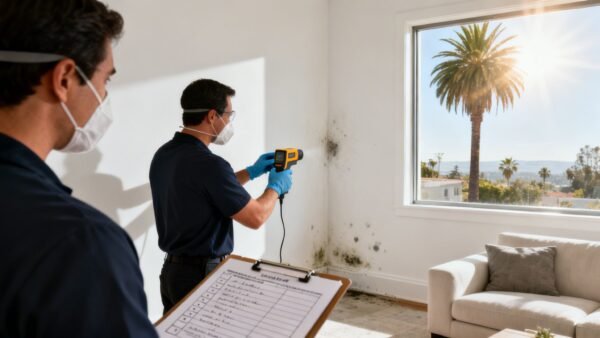

The short answer? Sometimes. Most standard insurance policies will only cover mold if it’s a direct result of a “sudden and accidental” water event that’s already a covered peril—like a burst pipe in your Burbank home. But if the mold comes from a slow leak, poor maintenance, or high humidity from coastal fog in Santa Monica, you’re almost always on your own. For Los Angeles homeowners, understanding this distinction is the key to knowing if is mold damage covered by insurance.
The Hidden Dangers of Indoor Mold
Figuring out if your insurance will pay for mold remediation can feel like a game of chance. But there’s a clear rule that adjusters follow: the key isn't the mold itself, but the water that caused it. Insurance is designed to cover unexpected disasters, not problems that could have been prevented.
The entire decision boils down to whether the water damage was sudden and accidental. This is the single most important factor that determines if your claim gets a green light or a swift denial.
Think of it this way: a water heater that suddenly ruptures and floods your basement in Sherman Oaks is a covered event. The mold that follows is a direct consequence of that event, so it’s likely covered. In contrast, mold growing under a sink from a slow drip that’s been happening for months is seen as a maintenance issue—and that falls squarely on the homeowner’s shoulders.
Sudden and Accidental vs. Gradual and Long-Term
The source of the water creates two completely different paths for your insurance claim.
Sudden & Accidental Water: This is the kind of damage that happens out of the blue, with no warning. We’re talking about a washing machine hose bursting, an ice dam causing a roof to leak overnight, or water used to put out a fire. Mold that grows from these events is often covered, at least up to a specific limit in your policy.
Gradual & Long-Term Water: This damage creeps in over time, usually because of a maintenance oversight. Examples include condensation on windows leading to moldy sills, a poorly sealed shower causing rot in the wall, or a damp basement with persistent high humidity. Insurers view this as preventable and will almost always deny these claims.
The Insurance Adjuster's Viewpoint: An adjuster’s first question will always be, "Where did the water come from?" Your ability to prove the source was sudden and accidental is the foundation of a successful mold claim.
To give you a clearer picture, here’s a quick breakdown of common scenarios.
Mold Coverage Scenarios At a Glance
| Scenario | Example | Typically Covered? | Reason |
|---|---|---|---|
| Burst Pipe | A supply line under your sink suddenly ruptures, flooding the kitchen. | Yes | The water event was sudden and accidental. Mold is a direct result. |
| Slow Leak | A small, unnoticed drip from a faucet pipe causes mold inside a cabinet over months. | No | This is considered a maintenance issue due to a gradual leak. |
| Appliance Failure | Your dishwasher's drain line disconnects during a cycle and floods the floor. | Yes | The failure was unexpected and caused immediate damage. |
| High Humidity | Your basement is consistently damp, leading to mold growth on walls and stored items. | No | Considered a preventable condition related to inadequate ventilation or waterproofing. |
| Storm Damage | Wind rips shingles off your roof, allowing rain to get in and cause mold. | Yes | The opening was created by a covered peril (wind), making the water intrusion sudden. |
| Sewer Backup | A municipal sewer line backs up into your home. | No (Usually) | This is considered a "flood" or backup, which requires a separate endorsement. |
This table shows why immediate action is so critical. Waiting to fix what seems like a small leak can turn a potentially covered problem into a very expensive out-of-pocket repair.
To get ahead of issues, it’s worth understanding the fine print of a typical homeowners insurance policy. Knowing your responsibilities helps you manage expectations and act decisively when damage occurs. Calling a professional restoration company right away not only stops the damage from spreading but also creates a clear timeline that proves the incident was sudden, which is exactly what your insurance company needs to see.
Understanding Covered Perils and Policy Exclusions
If you want to know if insurance will cover your mold damage, you have to learn to think like an adjuster. It’s a hard truth, but the answer has almost nothing to do with the mold itself. It’s all about how it started.
Your entire claim will come down to two fundamental insurance concepts: covered perils and policy exclusions.
A covered peril is the specific, unexpected event your policy agrees to protect you from. Think of it as the green light for your claim. Exclusions are the red lights—the specific situations and causes your policy absolutely will not pay for.
What Is a Covered Peril in Los Angeles?
In the world of insurance, a covered peril is a sudden, accidental event that damages your property. When it comes to mold, this means the water that caused it must have appeared unexpectedly. It can’t be the result of a slow leak you should have fixed or general neglect.
Picture a water heater suddenly giving out in a Burbank home, flooding the floor in minutes. That’s a textbook covered peril. The water damage was abrupt, and the mold that inevitably grows behind the baseboards is a direct result. In this case, the mold cleanup would almost certainly be covered.
Here are a few other classic examples of covered perils that lead to mold:
- A washing machine supply hose suddenly bursting in a Sherman Oaks condo.
- An overflowing toilet or bathtub that happens out of the blue.
- Water damage from firefighters putting out a fire.
- A pipe that freezes and bursts during a rare Southern California cold spell.
The key phrase here is sudden and accidental. That's the story the insurance adjuster needs to see.
The Most Common Mold Coverage Exclusions
Knowing what isn’t covered is just as important. Exclusions are the fine print that can get a claim denied, and for mold, they almost always point back to gradual damage and poor maintenance.
For instance, a slow drip from a pipe under the kitchen sink that goes unnoticed for months is a perfect example of an excluded event. The insurance company will argue that a responsible homeowner would have spotted and fixed the leak long before mold had a chance to grow.
Other common exclusions include:
- Poor Maintenance: Failing to repair a known roof leak or ignoring old, corroded plumbing.
- High Humidity: Mold caused by constant condensation, like from coastal fog in a Santa Monica apartment or a bathroom without a fan.
- Seepage: Water slowly working its way through the foundation of your home.
- Flooding: Damage from rising surface water. This is a big one—it’s only covered by a separate flood insurance policy, not a standard homeowner's policy.
This flowchart breaks down the exact decision-making process an adjuster follows when looking at a mold claim. It's surprisingly simple.

As you can see, your claim’s fate is tied directly to the source of the water. Sudden events open the door to coverage, while slow, gradual problems will get it slammed shut.
A Critical Detail About Mold Sub-Limits
Here’s where it gets tricky. Even when mold is covered, your policy likely has another catch: the sub-limit. Years ago, massive mold claims got so expensive that insurers added specific caps on how much they’ll pay for mold remediation.
This sub-limit typically falls between $5,000 to $10,000. It’s a separate, much lower limit hiding inside your overall policy.
This means if a burst pipe causes $30,000 in damages—split between $15,000 for water damage repairs and $15,000 for mold remediation—your policy might pay the full $15,000 for the water damage but cap the mold payout at just $5,000. That leaves you on the hook for a huge out-of-pocket expense.
This is exactly why you need to understand the fine print. To get a better handle on the root cause of these claims, you can also check out our guide on how homeowners insurance covers water damage.
Why Is Mold Damage Covered by Insurance So Rarely? A History Lesson
Ever wonder why getting your insurance to pay for mold feels like pulling teeth? The strict rules, tiny payout limits, and long list of exclusions you see in policies today weren't always there. The way mold insurance works now was forged in the fire of a few massive, industry-shaking lawsuits back in the early 2000s.
Before that time, mold was barely a blip on the insurance radar. Most adjusters just saw it as a small piece of a bigger water damage claim. Then, everything changed. A perfect storm of high-profile court cases, media hysteria, and growing public fear over mold's health effects created what insurers still refer to as the "mold crisis."
The Lawsuit That Sent Shockwaves Through the Industry
The real tipping point was a landmark case out of Texas. In 2001, a homeowner named Melinda Ballard won a staggering $32 million verdict against her insurance company for a mold-infested mansion. The sheer size of that award sent a tidal wave of panic through the entire insurance world.
Suddenly, executives realized they were facing a completely unpredictable and financially devastating new risk. The Ballard case became the poster child for the industry's newfound, existential fear of mold. What was once a footnote in a water damage claim was now a primary threat that had to be contained—and fast.
This wasn't a shift driven by new science or a better understanding of fungus. It was a reaction to raw financial risk. Insurers saw the potential for unlimited liability and moved aggressively to protect themselves by rewriting the rules of homeowners insurance from the ground up.
This history is absolutely critical to understanding why your policy treats mold so differently from fire or theft. Those strict limitations aren't random; they're a direct business response to a financial crisis that threatened the stability of the entire market.
From Open Coverage to Strict Exclusions
Insurers reacted with a speed never seen before. You can see why when you look at the numbers. In 1998, a grand total of just 129 mold-related claims were filed across the country. By 2001, that number had exploded to 9,563—an insane increase fueled by cases like Ballard's.
From 2001 to 2005, insurance companies added mold exclusions to homeowner policies faster than for any other risk in history, outpacing even terrorism or asbestos. You can dig into the stats yourself with resources from trusted authorities like the Insurance Information Institute (III).
So, what did this reaction look like in your policy?
- Introducing Mold Exclusions: The first and most drastic step was adding new language that specifically excluded coverage for mold, fungus, and rot unless it was the direct result of a specific, covered event.
- Creating Sub-Limits: Even when mold was covered (like from a burst pipe), carriers slapped on low sub-limits, capping payouts at just $5,000 or $10,000.
- Focusing on "Sudden and Accidental": Adjusters were trained to grill policyholders on the water's origin. The distinction between a sudden event and a gradual leak became the absolute cornerstone of any claim decision.
This dramatic pivot forever changed the answer to the question, "is mold damage covered by insurance?" To really get a handle on your coverage, you also need to understand the difference between a standard homeowner's policy and what a home warranty covers. Our guide on how Home Warranty vs Home Insurance differ breaks it down. This history is exactly why proving where the water came from is now the single most important part of your claim.
How to Tell If You Need Professional Remediation
Insurance policies are full of abstract terms. To really understand what gets covered, it helps to walk through a few real-life situations you might face as a Los Angeles homeowner. Let's see how the rules of "sudden" versus "gradual" damage play out in the real world.
Seeing these examples will help you know exactly where you stand if you find mold in your own property.

Scenario 1: The West Hollywood Condo Flood (Covered)
You walk into your West Hollywood condo kitchen one morning and find an inch of water across the floor. A ruptured supply line to your dishwasher burst overnight—it happened suddenly and without any warning.
This is the classic definition of a covered peril. The water damage was sudden and accidental. Because the water event itself is covered, the mold that inevitably starts growing behind your cabinets and under the flooring is also covered.
- Action Taken: You waste no time and call a 24/7 restoration company. They show up, extract the water, place drying equipment, and document the burst pipe.
- Insurance Outcome: The claim is straightforward. Your insurer pays for the water damage repairs and the full cost of mold remediation, right up to your policy's sub-limit. Your fast action and the professional documentation made all the difference.
Scenario 2: The Beverly Hills Bathroom Neglect (Not Covered)
A homeowner in Beverly Hills has been ignoring a musty smell in their guest bathroom for months. They've seen some dark grout around the shower but figured it was just a cleaning issue. After a while, they finally investigate and discover a wall full of black mold behind the tile.
A plumber confirms the cause: a slow, seeping shower valve that's been dripping for almost a year.
This claim is getting denied, plain and simple. The damage wasn’t sudden or accidental. It’s the result of gradual damage from a long-term leak, which an insurer will classify as deferred maintenance. They’ll argue that a responsible homeowner would have investigated the smell and discoloration months ago.
From the insurance company's point of view, the window to prevent this major problem was missed. That leaves the homeowner on the hook for the entire remediation and repair bill, which can easily run into thousands of dollars.
Scenario 3: The Glendale Roof Damage (Partially Covered)
A powerful winter storm blows through LA, and a huge tree branch smashes a hole in the roof of a Glendale home. Rain pours into the attic and ceilings for hours before it can be stopped.
Within a week, mold is blooming on the damp attic insulation and drywall.
This scenario leads to a more complex, but very common, outcome: partial coverage.
- Covered: The roof repair and the initial water damage are fully covered. They were directly caused by a covered peril (the storm).
- Partially Covered: The resulting mold cleanup is also covered, but only up to the policy's specific mold sub-limit. If the policy has a $10,000 mold limit but the total remediation costs $15,000, the homeowner has to pay the remaining $5,000 out of pocket.
These scenarios drive home just how critical it is to know where the water came from. Whether it's a burst pipe or a leaky appliance, acting fast is your best defense against both mold and a denied claim. Spotting an issue like black mold on hardwood flooring demands immediate action to figure out the cause and stop the damage from spreading.
How to File a Successful Mold Claim in Los Angeles
Discovering a serious mold problem is stressful enough, but navigating the insurance claim process on top of it can feel like a nightmare. If you think the mold came from a covered event, like a burst pipe, what you do in the first 24 to 48 hours is absolutely critical.
Acting fast and following a clear plan doesn't just protect your property—it builds the foundation for a successful claim. Here’s your playbook for getting it right from the start.
Step 1: Immediately Stop the Water Source
Your absolute first job is to mitigate further damage. This isn't just a friendly suggestion; it’s a requirement written into nearly every insurance policy. If a pipe burst, find the main water valve and shut it off. If a washing machine is overflowing, stop the cycle immediately.
Failing to do this gives your insurer an easy reason to deny your claim. They'll argue your inaction made the problem worse. By taking swift action, you prove you're a responsible property owner and establish a clear, undeniable start time for the incident.
Step 2: Document Everything Before It's Touched
Before you move, clean, or repair a single thing, pull out your smartphone and start recording. This is the most powerful evidence you will gather, full stop. Your goal is to capture the scene exactly as you found it.
Follow these simple documentation tips:
- Take Wide Shots: Get photos and videos of the entire affected area. This shows the adjuster the full scope of the damage right from the beginning.
- Capture Close-Ups: Zoom in on the source of the water (like the broken pipe fitting), the visible mold growth itself, and any warped or stained materials.
- Narrate Your Video: While recording, talk through what you're seeing. State the date and time, describe the damage out loud, and explain what you believe happened. This adds powerful, personal context that photos alone can't provide.
Crucial Insight: This initial documentation is your unbiased proof that the mold directly resulted from a sudden water event. Without it, your claim quickly turns into a "he said, she said" argument, which rarely ends in your favor.
Step 3: Call a Certified Restoration Professional
Your very next call should be to an IICRC-certified restoration company—not a general contractor or a local handyman. A certified team brings the professional assessment and equipment that are vital for your claim's credibility. They can start emergency water extraction and set up drying equipment to stop mold from spreading further.
This move accomplishes two critical things:
- Damage Control: It stops the problem from getting worse, which fulfills that "duty to mitigate" clause in your policy.
- Professional Evidence: The reports, moisture readings, and photos they generate provide the expert, third-party documentation that insurance adjusters are trained to trust. This is a key part of our guide on handling an insurance claim for water damage.
Step 4: Notify Your Insurance Company Promptly
Once you've stopped the leak and have professional help on the way, it’s time to contact your insurance agent or the carrier's claims department. Let them know you've had a sudden water loss and are already taking steps to mitigate the damage. Have your policy number ready and give them a brief, factual description of what happened. Don't guess or speculate about the extent of the damage—just state the facts you know.
Timely notification is non-negotiable. Water damage and freezing claims, which are the primary source of covered mold events, accounted for a staggering 28.7% of all property damage claims in recent years. This highlights why insurers are so strict: it’s a massive cost for them. For LA homeowners, where burst pipes from aging infrastructure are all too common, any delay in reporting gives the insurer a reason to question the claim’s validity. You can explore more data on these market trends with this in-depth analysis of the remediation insurance market.
Choosing the Right Mold Removal Company

Whether your insurance claim gets approved, denied, or only partially paid, one fact doesn’t change: the mold is still there. Trying to clean it up yourself might seem like a good way to save a few bucks, but it’s one of the biggest mistakes we see homeowners make. It almost always creates a bigger, more expensive disaster.
Hiring a certified remediation company isn't just about scrubbing a stain. It's a critical investment in your property's value and, more importantly, your family's health.
The Dangers of Improper Cleanup
When you disturb mold without the right containment, you can accidentally blast millions of invisible spores into the air. Think of it like trying to sweep a pile of fine dust while a powerful fan is blowing—you don't remove the mess, you just spread it everywhere.
This is what pros call cross-contamination. It can turn a small problem in one corner of a room into a full-blown, property-wide infestation. Those spores travel through your HVAC system, settle into carpets, and start new colonies in hidden areas, making the problem exponentially worse.
A professional’s first job isn’t to scrub, but to contain. They build a sealed work area with negative air pressure, making sure every spore they kick up gets captured and removed—not spread through your home. This is the one step a DIY job almost always misses.
The IICRC-Certified Remediation Process
Certified professionals follow a strict, science-based playbook to guarantee the job is done right. This isn’t about spraying some bleach and hoping for the best. It’s a methodical process that ensures complete removal and safety.
A proper job always includes:
- Assessment and Containment: First, we find the full extent of the mold. Then we set up physical barriers and specialized air filtration machines to stop any spread.
- Safe Removal: We carefully cut out and remove all mold-damaged materials that can't be saved (like drywall and insulation) in sealed disposal bags.
- Thorough Cleaning: Next, we use antimicrobial agents and specialized cleaning techniques on any remaining structural parts, like the wood framing.
- Drying and Dehumidification: Finally, we make sure the area is bone-dry to stop the mold from coming right back.
This is the process that gives you lasting peace of mind. To see exactly how it works, check out our guide to the professional mold remediation service we provide.
Professional Documentation Secures Your Claim
Beyond doing the job safely, a certified remediation company gives you the exact documentation insurance adjusters demand. The detailed reports, moisture readings, and photos create a bulletproof record. It proves the extent of the damage and shows why the work was necessary.
This professional proof can be the single thing that convinces a skeptical adjuster to approve your claim, especially if there's a debate about the cause of the damage.
The global mold remediation market was valued at $1,234.6 million in 2023 and is projected to hit $1,516.8 million by 2030, with North America holding a 39% share. Yet, most insurance policies cap mold payouts at just $1,000-$10,000. This huge gap between the cost of a proper job and what insurance might pay shows why professional help is so critical to manage costs and ensure a safe outcome. You can see more on these trends in this report on hospitality industry mold trends rel="nofollow".
At the end of the day, hiring a pro isn’t an expense—it’s your best defense.
FAQs: Is Mold Damage Covered by Insurance?
Dealing with a potential mold problem brings up a lot of tough questions. Here are the straightforward answers Los Angeles homeowners and property managers need when asking, "is mold damage covered by insurance?"
Q: What should I do if my mold claim is denied?
A: First, don't panic. Take a close look at the denial letter. Your insurer has to give you a specific reason, and it’s usually because they believe the water source was a gradual leak or maintenance issue, not a sudden and accidental event. Your next move is to get a second opinion. Hire a certified mold testing company or an independent public adjuster to get a professional, unbiased assessment. If their findings prove the mold came from a covered event—like a hidden pipe burst—you can appeal the decision with powerful, expert-backed evidence.
Q: Is a special mold endorsement worth the cost?
A: A mold rider, or endorsement, can be a great safety net, but it’s not a blank check. It’s designed to increase the payout limit for mold that results from an already covered event. For example, it might raise your coverage from a standard $5,000 limit to $25,000 or more. Important: This endorsement won’t create coverage out of thin air. It will not pay for mold caused by poor maintenance, high humidity, or slow, long-term leaks. Always read the fine print to see exactly what you’re paying for before adding it to your policy.
Q: Will filing a mold claim increase my insurance premiums?
A: The reality is, filing any property damage claim has the potential to raise your premium when it’s time for renewal. Insurers set rates based on risk, and a claim on your record flags your property as having a higher risk profile. That said, the cost of professional mold remediation can easily run into the tens of thousands, far outweighing a potential premium hike. For a significant, covered event, filing a claim is absolutely the right call to protect your property and your finances from a devastating out-of-pocket expense.
Q: Do I need mold testing before I file an insurance claim?
A: While it’s not always required just to open a claim, independent mold testing gives you undeniable leverage. If there’s any debate about the cause or severity of the mold, a professional lab report can scientifically connect the growth to a specific water event. This hard data can be the final piece of proof that convinces a skeptical adjuster to approve your claim. We highly recommend it in any complex situation. And remember, if mold has gotten into your home’s ventilation system, professional duct cleaning services are often a critical final step in the remediation process to ensure spores aren't just recirculated through your property.
Don't try to navigate a complex mold damage claim by yourself. Onsite Pro Restoration delivers the expert assessment, certified remediation, and detailed documentation you need to support your insurance claim and get your property back to a safe, healthy condition.