
When you discover a fresh pet accident on your carpet, you’re in a race against the clock. Those first few minutes are absolutely critical. Quick, decisive action is the difference between a simple cleanup and a permanent stain with odors that haunt you for years, a common frustration for homeowners from Sherman Oaks to Santa Monica.
What you do right now determines if the urine soaks through the carpet backing, into the pad, and all the way down to the subfloor. Once it’s there, you’ve got a much bigger problem on your hands. If you are struggling with a persistent pet odor or stain that won't go away, don't wait for the damage to get worse.
Call (818) 336-1800 for a Free Assessment
Your Immediate Response to Fresh Urine Stains
The key isn't complicated: get as much of the liquid out as you can, as fast as you can. Forget scrubbing. Your mission is extraction.
The Blotting Technique That Actually Works
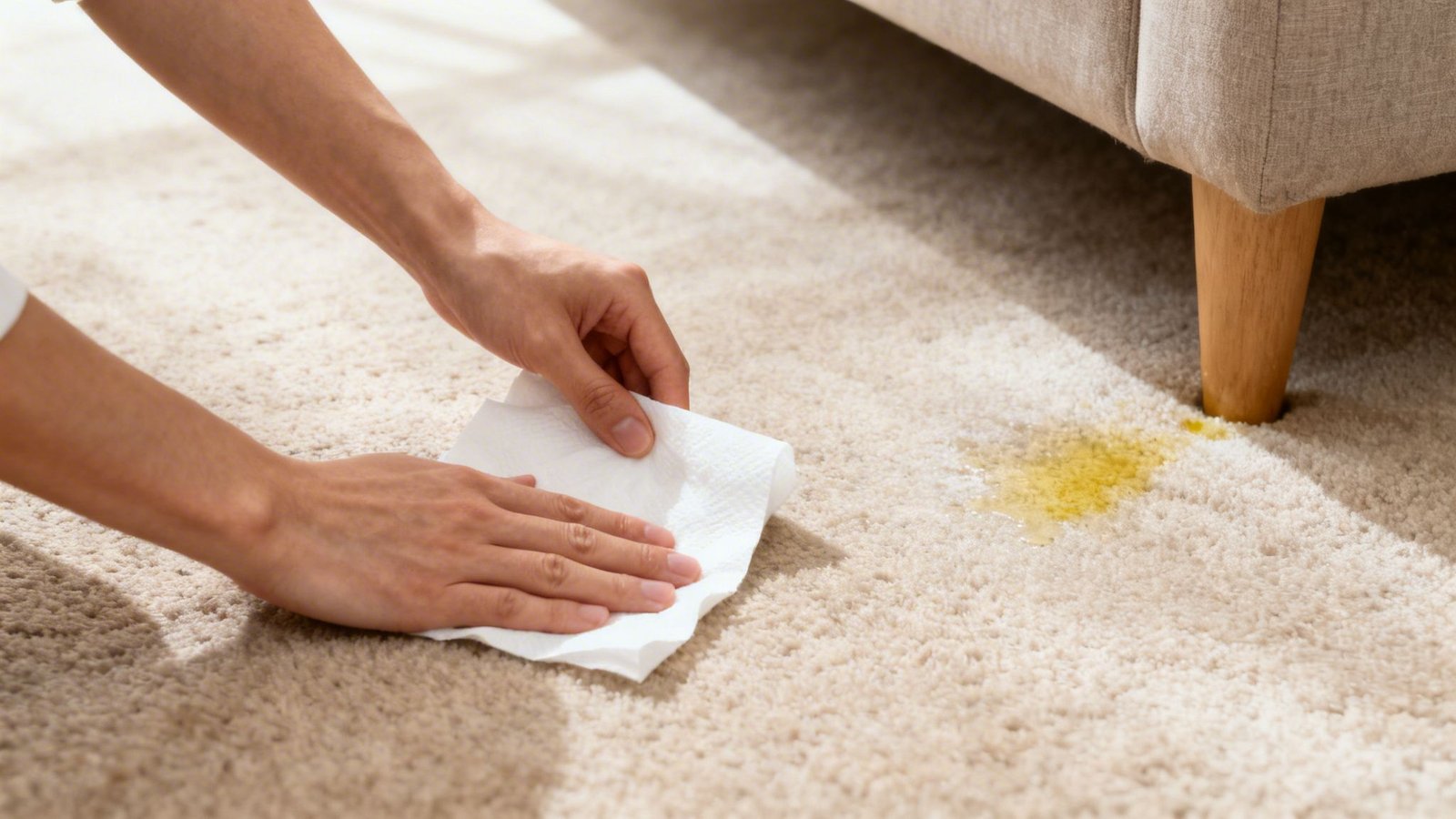
The single most common mistake we see is homeowners grabbing a sponge and scrubbing furiously. All this does is grind the urine deeper into the fibers, permanently damage them, and spread the contamination over a wider area.
Instead, you need to blot.
Grab a thick stack of white paper towels or a clean, white, absorbent cloth. Lay them over the wet spot and apply firm, steady pressure. Don't be shy—stand on the towels (with clean shoes on, of course) to use your body weight. You’ll see the yellow liquid wicking up into the towels.
Lift the soaked towels, replace them with a fresh stack, and repeat. Keep doing this until the new towels come away almost completely dry.
This simple act is incredibly powerful. If you get to it within five minutes, you can pull out 70-80% of the liquid before it has a chance to set. Wait an hour, and that number can drop to 40% or less, making the rest of the job ten times harder.
The First 5 Minutes Emergency Action Plan
What you do in the first few minutes after discovering a pet accident will dictate the success of your entire cleanup effort. Here’s a quick-reference guide to make sure you get it right.
| Action (Do This) | Mistake (Avoid This) | Why It Matters |
|---|---|---|
| Blot with firm pressure using thick, white paper towels. | Scrubbing or rubbing the stain with a brush or sponge. | Blotting lifts liquid out; scrubbing grinds it in, damages fibers, and spreads the spot. |
| Use white towels or cloths that are clean and absorbent. | Using colored or printed towels, or an old, dirty rag. | Dyes from colored towels can transfer to your carpet, creating a new stain. Dirty cloths just spread more bacteria. |
| Work from the outside in to contain the spot. | Starting from the center and wiping outwards. | Working inward prevents the liquid from spreading and making the affected area larger. |
| Apply weight (stand on the towels) to maximize absorption. | Lightly dabbing the surface. | Urine soaks deep. Light dabbing only gets the surface, leaving the majority in the carpet backing and pad. |
This isn't about deep cleaning yet—it’s about damage control. By removing the source (the liquid urine), you make the next steps of cleaning and deodorizing infinitely more effective.
What Comes After Blotting
Once you've blotted the area bone-dry, you can move to the next phase. Lightly dampen a clean cloth with cool water and gently dab the area. The goal here is to dilute the tiny amount of urine that’s left.
Follow this up with one final, thorough blotting session with dry towels. This entire process is designed to prepare the carpet for a targeted cleaning treatment, which we’ll cover next.
Key Takeaway: The immediate goal isn't to clean the stain but to remove the source. By blotting effectively, you're removing the bulk of the urine, which makes the next steps of cleaning and deodorizing much more successful.
If the accident was particularly large, ensuring the area dries completely is your next priority to prevent mildew and secondary damage. For a deep dive on that topic, check out our guide on how to dry wet carpet fast.
Choosing the Right Cleaner for Urine Stains
When you’ve blotted up a fresh urine spot, the first instinct is to grab the all-purpose cleaner from under the sink. Stop right there. When it comes to how to remove urine stains from carpet, not all cleaners are created equal. The wrong choice won’t just fail to work; it can set the stain permanently and make the odor even worse.
To win this battle, you have to understand the enemy. Fresh urine starts as an acid. But as it dries and bacteria go to work, it becomes alkaline and forms stubborn uric acid crystals. These sharp, salt-like crystals aren't water-soluble and lock onto carpet fibers, creating that unmistakable ammonia smell that always seems to come back on humid days.
DIY Solutions vs. Professional Formulas
Many homeowners in places like Glendale and Burbank understandably reach for pantry staples first. Vinegar and baking soda have their place, but it's critical to know what they can and can't do.
White Vinegar: Because it’s acidic, a diluted vinegar solution can help counter the alkaline salts in a dried stain. It’s decent for a rinse, but it does not break down the uric acid crystals. That’s the most important part.
Baking Soda: This is a great odor absorber. Sprinkling it over a damp area can pull out some moisture and temporarily neutralize surface smells. But it’s a band-aid solution that does nothing for the chemical source of the odor.
Key Insight: Most common household cleaners, especially those with ammonia, are completely ineffective. They don't touch the uric acid. Worse, ammonia-based cleaners actually attract pets back to the same spot because the scent is so similar to urine itself.
Why Enzymatic Cleaners Are the Gold Standard for Pet Stains
The only real solution for DIY urine removal is an enzymatic cleaner. These aren't just soaps. They are advanced, bio-active formulas loaded with beneficial bacteria and enzymes specifically designed to digest the components of urine.
Here’s a simple breakdown of how they work:
- Targeted Action: The enzymes are engineered to hunt down and attack specific organic matter.
- Digestion Process: Once they find the urine, the enzymes act as catalysts, breaking down the proteins, lipids, and—most critically—the uric acid crystals into simple, harmless elements like carbon dioxide and ammonia gas that can evaporate away.
- Odor Elimination: By completely digesting the source of the smell, enzymatic cleaners don't just cover it up. They eliminate it on a molecular level.
The difference in effectiveness is night and day. Saturating a stain with a quality enzymatic product and giving it 24-48 hours to work can result in up to 95% odor elimination in surface-level cases. Compare that to vinegar, which might only neutralize 50-60% of the urine salts and leaves the odor-causing crystals completely untouched.
Making the Right Choice for Your Situation
So, what should you use? For a tiny, fresh accident that you blotted up within seconds, a quick vinegar-and-water rinse might get you by.
However, for any stain that has already dried, comes from a repeat offender, or has any noticeable odor, an enzymatic cleaner is non-negotiable. It’s the only tool that gives you a fighting chance.
To effectively tackle lingering pet odors and stains, it's crucial to select an appropriate cleaner. For a comprehensive guide on choosing the right product, including enzymatic cleaners specifically designed for pet messes, consult this helpful article on finding the best pet stain remover for carpets.
Ultimately, understanding the science behind the stain helps you make a smarter cleaning choice. While DIY methods have a place, only enzymatic cleaners have the power to truly break down the compounds that cause lasting stains and odors. If you are struggling with persistent smells even after using these cleaners, it's a sign the contamination has reached the carpet pad, a topic we cover in our guide to help you eliminate urine odor permanently.
DIY methods not working? Our professional-grade solutions can permanently remove deep-set stains. Schedule a Free Inspection today.
How to Treat Old, Set-In Urine Stains
Fresh stains are one thing, but what about the accidents you only find days or weeks later? A set-in urine stain is a much bigger challenge. By this point, the liquid has dried, crystallized, and bonded deep within your carpet fibers. It’s a stubborn problem, but with the right strategy and a bit of patience, you can still get great results.
The first hurdle is often just finding the source of the smell. Old stains can be totally invisible to the naked eye, which leads to that frustrating, phantom odor that seems to come from nowhere. This is where a trick we use in the field becomes invaluable, especially for property managers in places like West Hollywood who need to prep a rental unit for a new tenant.
Locate Every Hidden Stain with a UV Light
To actually solve the problem, you have to find every single affected area. No guesswork. The most effective way to do this is with a UV blacklight.
In a darkened room, turn on the blacklight and slowly scan your carpet. Old urine stains are packed with phosphorus and proteins that will glow a distinct yellow-green color under the UV light.
Take a moment to mark the outer edges of each glowing spot with a small piece of painter's tape. You might be shocked to find more spots than you suspected, or that a single spot is much larger than you thought. Trust me, this step is non-negotiable for a thorough cleanup.
This flowchart shows the ideal progression when selecting your cleaning agent for these tough, dried-on spots.
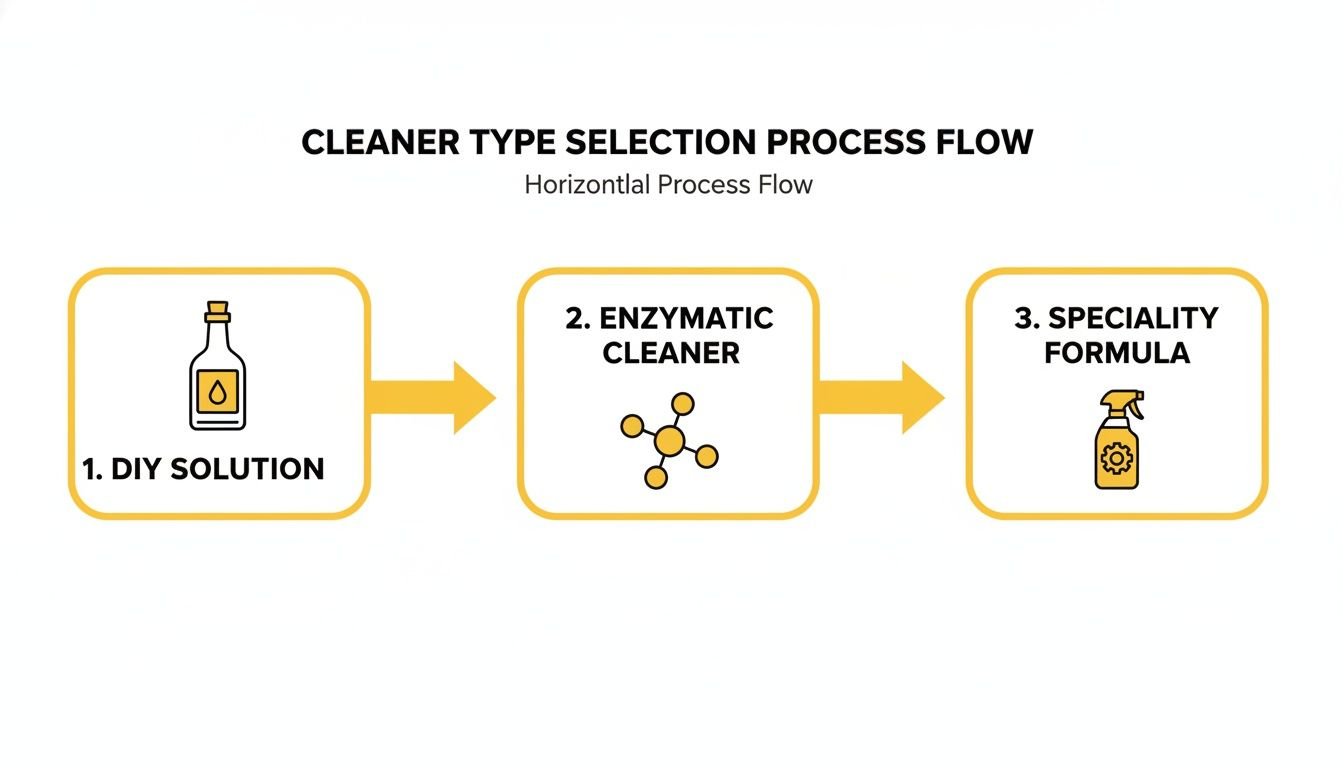
As you can see, while a simple DIY solution is a starting point for fresh messes, enzymatic cleaners are a necessary upgrade for tackling the complex chemical compounds in dried urine.
Saturate and Dwell the Right Way
Once you’ve marked all the problem areas, it’s time to bring in your enzymatic cleaner. Don't be shy with the product. For dried stains, you need to use enough cleaner to fully saturate the carpet fibers, the backing, and even the top layer of the padding underneath. The goal here is to match the original volume of the accident so the cleaner can reach everywhere the urine did.
Pour the enzymatic solution directly onto the marked areas, working from the outside edge inward to keep the stain from spreading. You want the area to be very damp, but not a soupy, puddled mess.
Pro Tip: For the enzymes to work their magic, the area has to stay damp. Simply spraying the surface and walking away won't cut it—the cleaner will dry out before it can finish breaking down the uric acid.
To prevent the cleaner from drying out too fast, cover the treated area with a piece of plastic wrap or an upside-down laundry basket. This traps moisture and gives the enzymes the time they need—often 12 to 24 hours—to fully digest the uric acid crystals causing the stain and odor.
The Critical Rinse and Extraction Process
After the dwell time is up, you need to get the cleaner and all that broken-down urine residue out of your carpet. If you leave cleaner behind, it will attract dirt like a magnet and leave your carpet feeling stiff and crunchy.
Start by removing the plastic wrap and blotting the area with thick, clean towels to soak up as much liquid as you can. Then, pour a small amount of cool, clean water directly onto the area. You’re essentially rinsing the carpet fibers from the inside out.
Now, use a wet/dry vacuum to extract the water and residue. If you don't have one, you can go back to the blotting method—place a thick stack of towels on the spot and stand on it, repeating with dry towels until you can't pull up any more moisture. This extraction step is absolutely crucial for removing the source of the problem for good.
Ensure Thorough Drying to Prevent Mildew
Finally, you have to make sure the carpet dries completely. A damp carpet is a perfect breeding ground for mildew, which is a constant concern in coastal areas like Santa Monica. Point a fan directly at the spot to boost air circulation. You can also run a dehumidifier in the room to speed up the process even more.
The carpet and, more importantly, the pad beneath it must be bone-dry. If you're unsure how to tell, you can learn more about how professionals verify dryness by exploring our guide on how to read moisture meter readings. Taking this final step ensures all your hard work pays off, leaving you with a stain-free and—most importantly—odor-free carpet.
Deciding whether to tackle a tough stain yourself or call in professionals often comes down to weighing the potential outcomes. Here's a realistic comparison based on our years of experience in the field.
DIY vs Professional Stain Removal Outcomes
| Factor | DIY Method | Professional Service (Onsite Pro) |
|---|---|---|
| Initial Cost | Low (cost of cleaner & towels) | Higher initial investment |
| Effectiveness | Varies; may lighten surface stains but often leaves deep residue | High; removes deep-set stains and odors from pad and subfloor |
| Odor Removal | Often temporary; odor may return as residue resurfaces | Complete; neutralizes odor at the source using advanced chemicals |
| Time & Effort | High; requires multiple applications and significant manual labor | Low; technicians handle all steps, from detection to drying |
| Risk of Damage | Moderate; potential for over-wetting, color bleeding, or leaving residue | Low; certified technicians use pH-balanced solutions and controlled drying |
| Long-Term Result | Stain may reappear; lingering odors attract pets to the same spot | Permanent removal; restores carpet and padding to pre-loss condition |
While a DIY approach can work for minor, fresh accidents, set-in urine contamination almost always requires professional-grade equipment and expertise to fully resolve. Calling a certified restoration company ensures the problem is handled correctly the first time, preventing long-term damage and recurring odors.
Recognizing When DIY Carpet Cleaning Isn't Enough
You’ve scrubbed that stain until your arms ache, and it looks perfect. Then, two days later, a faint shadow reappears. It’s frustrating, and you’re not going crazy. This is a classic sign that your DIY efforts, while admirable, are only cleaning the surface. The real problem is much deeper.
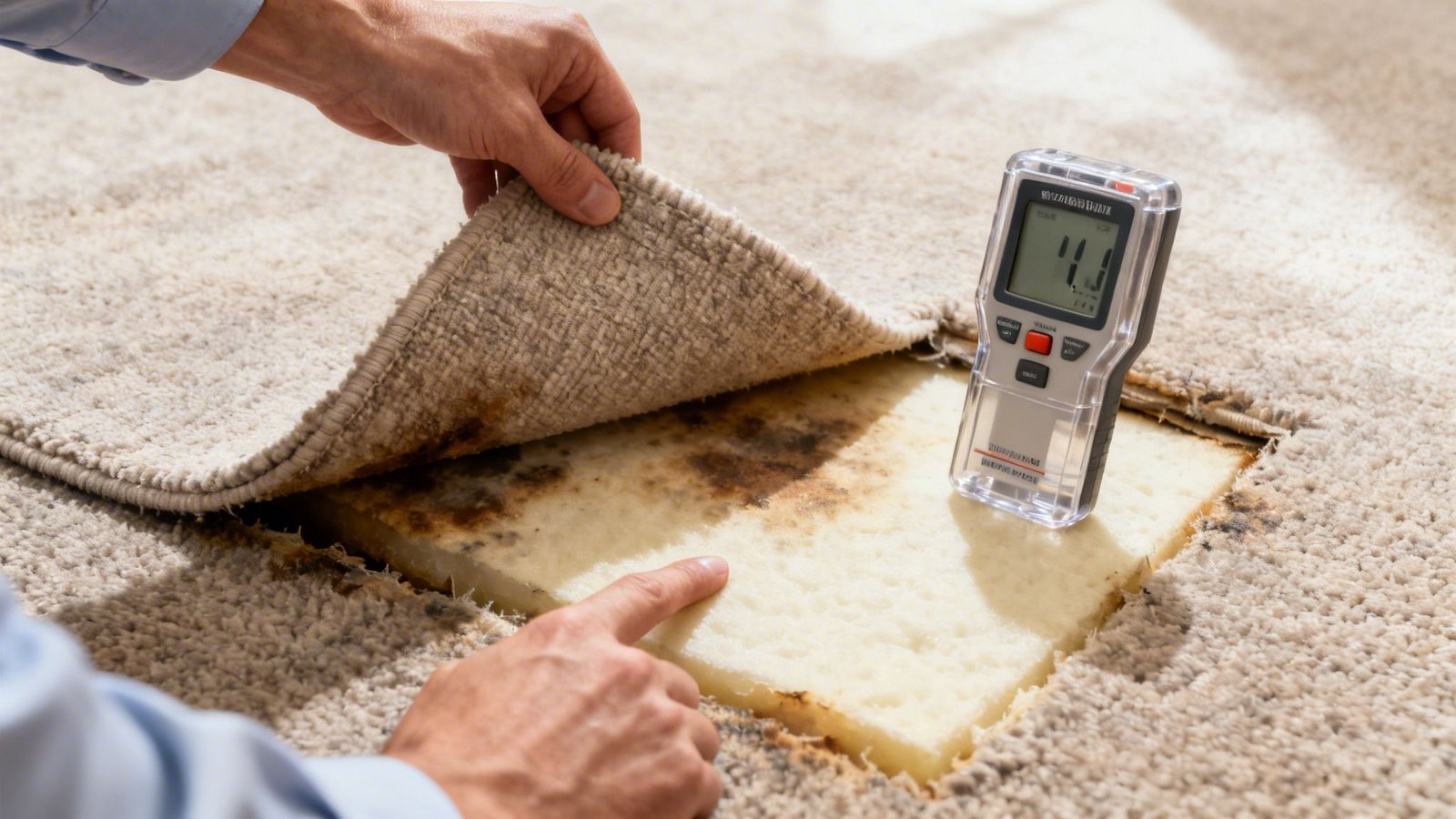
The simple truth is that topical treatments can only go so far. When urine seeps past the carpet fibers and soaks into the thick, sponge-like padding underneath, you’re now dealing with subsurface contamination. This is the exact point where most store-bought cleaners and home remedies fail.
The Problem of Wicking and Reappearing Stains
Ever cleaned a spot perfectly, only to watch it materialize again a few days later, sometimes looking even worse? This is a process called wicking, and it’s the bane of carpet cleaning. It happens because even though you cleaned the surface fibers, a reservoir of urine residue is still trapped in the padding or subfloor.
As the top of the carpet dries, moisture from deep within the padding gets drawn up to the surface, a bit like a candle wick pulls up wax. It brings all the dissolved urine salts and bacteria right back with it, redepositing them on the visible fibers. You’re left with a zombie stain that just won’t stay gone.
Key Takeaway: If a stain keeps coming back after you've cleaned it, the contamination source is almost certainly in the carpet padding. No amount of surface scrubbing will fix it; the problem has to be addressed from below.
Signs That Urine Has Reached the Padding
Learning to spot the signs of deep contamination is the key to breaking the cycle of endless cleaning. If you see any of these red flags, it’s time to admit defeat and call for professional backup.
- A Persistent Ammonia Odor: You've hit the area multiple times with a good enzymatic cleaner, but that sharp ammonia smell comes right back, especially on humid days. That’s moisture in the air reactivating the uric acid crystals hiding in the pad.
- Stains in a Vacant Home: You're moving into a new place or managing a rental property and notice faint, yellowed stains. These are almost always ghost stains from old pet damage where the padding was saturated months or even years ago.
- Repeat Accidents in the Same Spot: If your pet keeps going back to the same area no matter how much you clean, it’s not out of spite. Their powerful nose is detecting the deep-set odors in the padding that you can no longer smell.
- Large Volume Accidents: A single big accident from a large dog or a tipped-over potty-training toilet is enough to immediately overwhelm the carpet and soak straight through to the padding.
We see this all the time. We recently helped a property manager in North Hollywood who couldn’t get rid of a "mystery smell" in a townhouse. We brought in a UV light, and what looked like a few small surface spots was actually a huge area of contamination along an entire wall. The padding was completely saturated from a previous tenant's pet.
In a situation like that, surface cleaning is useless. The padding is like a sponge full of urine. The only real solutions are to treat the pad directly with specialized sub-surface extraction tools or, in severe cases, remove and replace the contaminated carpet and padding altogether. Knowing these limits is crucial to understanding how to remove urine stains from carpet effectively and when it's time to call in the pros.
For extensive saturation, you're moving beyond simple carpet cleaning and into bio-remediation. You can learn more about how we handle severe biological contaminants in our overview of professional biohazard cleanup services.
When to Call the Pros for Deep Pet Stain Restoration
There comes a point where you’ve tried every spray, every home remedy, and every trick you’ve read online, but that stubborn stain or lingering smell just won’t give up. That’s your sign. It means the problem isn’t just on the surface anymore—it has worked its way deep into the flooring, the padding, and maybe even the subfloor.
When you're dealing with severe, deep-set urine contamination, DIY methods are simply outgunned. This is the moment where professional restoration isn't just an option; it's the only way to truly solve the problem and protect your home's value and air quality.
A homeowner might pour a bottle of cleaner on a spot and hope for the best. A certified technician, on the other hand, arrives with a plan rooted in building science. We don’t guess; we diagnose and treat the problem at its source.
The Initial Assessment: Finding the Hidden Damage
The first thing we do is map out the full extent of the contamination, most of which is completely invisible to the naked eye. Using professional tools like moisture meters and thermal imaging cameras, we can see exactly where urine has spread.
This isn't just for show. This diagnostic step reveals how far the liquid has wicked through the carpet padding and—most critically—if it has saturated the subfloor, whether it’s plywood or concrete. Without this assessment, any cleaning attempt is just a shot in the dark, and you can bet the stain and smell will be back.
Sub-Surface Extraction: The Professional Difference
Here’s the technique that truly separates what we do from any rental machine you can find. We use a specialized tool designed specifically to flush contaminants from below the carpet's surface. This tool injects a high-flow stream of a professional-grade, pH-balanced cleaning solution directly into the padding and even the subfloor.
At the same time, a high-powered vacuum is pulling all of that liquid—and the years of embedded urine salts—right back out. It's like power washing your floor's foundation from the inside out. No shop vac or carpet cleaner from the grocery store can even come close to this process.
Key Insight: Sub-surface extraction isn't about cleaning the carpet fibers; it's about rescuing the padding and subfloor. By aggressively flushing the source, we remove the deeply embedded uric acid crystals that cause stains to reappear and odors to bloom on humid days.
Why IICRC-Certified Techniques Matter
When you hire an IICRC-certified firm, you're getting a team that follows a proven, industry-vetted standard of care. This certification means the technicians are trained not just to remove the urine but to do it in a way that prevents long-term, collateral damage to your home.
Untreated urine saturation is a ticking time bomb for serious issues:
- Mold Growth: The constant moisture from urine trapped in padding is a perfect recipe for mold, creating a significant health hazard.
- Wood Rot: If you have a wooden subfloor, the ammonia and moisture will slowly eat away at the wood, compromising its structural integrity.
- Permanent Odors: If the uric salts aren't completely removed, the smell becomes a permanent part of your home, tanking your property value and air quality.
Certified techniques ensure the right chemistry is used for the job and that the structure is dried correctly, neutralizing these risks entirely. You can learn more about the advanced methods used by certified techs in our guide on what makes a true restoration pro.
Emergency Response and Insurance Help
Sometimes the problem isn’t a single spot but a massive, overwhelming discovery, like finding widespread pet damage after moving into a new-to-you home in Los Angeles. Our 24/7 emergency response means we can get on-site fast to start mitigating the damage before it gets any worse.
We also know that navigating an insurance claim can be a headache. Many homeowner policies may cover "sudden and accidental" damage. Our team is well-versed in providing the detailed documentation—including moisture maps, photos, and professional reports—that insurance adjusters require to process a claim. We help streamline the process to get your home, and your life, back to normal as quickly as possible.
Frequently Asked Questions About Urine Stain Removal
Q: Can I use a steam cleaner on a urine stain?
A: Absolutely not. You should never use a steam cleaner or any form of heat on a pet urine stain, no matter how tempting it seems. It feels like it should sanitize the area, but it's one of the worst mistakes you can make. The intense heat from the steam literally "cooks" the proteins found in urine, bonding them chemically to your carpet fibers. This process permanently sets the stain and locks in the odor, making it nearly impossible for even a professional to remove. Always, always stick to cool water and the right cleaning solutions.
Q: Why does the urine smell return on humid days?
A: This is an incredibly common and frustrating problem, and it's a dead giveaway that the cleaning job wasn't complete. That recurring smell means the source—the uric acid crystals—was never truly eliminated. These microscopic, salt-like crystals don't dissolve in water and can linger deep in the carpet padding and even the subfloor. When humidity rises, those crystals absorb moisture from the air, reactivating them and causing them to release that foul ammonia gas all over again. If you notice the smell comes back on a damp day in a coastal area like Santa Monica, it’s a sure sign the contamination has reached the pad and needs a professional sub-surface extraction to be fully removed.
Q: Are pet urine stains a health hazard?
A: Yes, they absolutely can be, especially in homes with children, elderly family members, or anyone with respiratory issues. The danger comes from two places: bacteria, which multiply in the warm, moist environment, and ammonia gas released from old urine. This gas is a powerful respiratory irritant that can trigger asthma and allergies. Proper professional cleaning and sanitization are about neutralizing these bio-contaminants to make your home’s air safe and healthy again.
Q: Will baking soda and vinegar permanently remove the odor?
A: While this popular DIY trick has its place, it is not a permanent solution for pet urine odor. Vinegar (an acid) can help neutralize the alkaline salts in a dried urine spot, and baking soda is great for absorbing surface odors. However, neither of them can break down or "digest" the stubborn uric acid crystals that cause the smell. They might cover up the odor for a little while, but since the chemical source is still there, it's guaranteed to come back. Only a high-quality enzymatic cleaner can truly digest those odor-causing compounds.
Q: What should I do if my pet has repeated accidents in the same spot?
A: A pet returning to the same spot is a sign that their powerful sense of smell is detecting lingering odor compounds that are undetectable to you. Even after thorough cleaning, residue can remain in the carpet padding. The only way to break the cycle is to completely eliminate the odor at its source using a professional-grade enzymatic cleaner or sub-surface extraction. It's also wise to consult a veterinarian to rule out any underlying health issues that could be causing the behavior.
Q: Is it worth replacing the carpet if the urine damage is severe?
A: In cases of severe, widespread, or long-term saturation, replacement is often the most cost-effective solution. If urine has soaked the padding and subfloor across a large area, the cost and effort to decontaminate may exceed the cost of new carpet and padding. A professional assessment can help you make this decision by determining the depth of contamination. Of course, cleaning is only half the battle. Preventing accidents is just as important. If this is a recurring issue, you might want to look into the best carpet for pet owners, many of which are designed with stain-resistant technology.
If you're dealing with stubborn odors that just won't quit or stains that keep reappearing, it’s time to call in the experts. The team at Onsite Pro Restoration uses advanced sub-surface extraction technology to pull contamination directly from the padding and subfloor, guaranteeing the problem is gone for good.