
If you're trying to figure out how to remove musty smell, the first step is always to find the source. That unmistakable, damp odor is a clear signal of excess moisture, which creates a perfect breeding ground for mold and mildew. Simply spraying air fresheners is like putting a bandage on a broken arm—it won’t solve the underlying issue. In this guide, we'll walk through how to locate the source, DIY solutions for minor odors, and when it’s time to call in the professionals for your Los Angeles property.
If you suspect a hidden leak or persistent odor, don't wait for it to get worse.
Get a Free Odor Inspection Now
The Hidden Dangers: Why Musty Smells Are a Major Warning Sign
That earthy, damp smell is more than just unpleasant; it’s a warning sign from your house. Think of yourself as a detective. The odor is your primary clue, and your job is to trace it back to its origin. Ignoring it allows the real issue—typically water intrusion—to worsen, leading to potential structural damage, rot, and poor indoor air quality.

This investigation must be methodical. You'll need to go room by room, using your eyes, nose, and even your hands to feel for dampness. Here in Los Angeles, the culprit could be anything from a slow-leaking pipe under a kitchen sink in a Sherman Oaks home to persistent dampness from coastal fog seeping into a Santa Monica property.
To streamline this process, we've created a quick reference table breaking down the usual suspects and where you'll most likely find them.
Common Musty Odor Sources and Locations
| Area of Home | Potential Source | What to Look For |
|---|---|---|
| Bathrooms | Leaky pipes, bad grout, poor ventilation | Dampness under sinks, dark spots on grout, water stains on the ceiling below. |
| Kitchens | Appliance leaks (dishwasher, fridge), sink drain issues | Warped cabinet floors, water spots behind the refrigerator, a damp smell near the dishwasher. |
| Basements/Crawl Spaces | Foundation cracks, condensation, poor drainage | Water stains on concrete walls, peeling paint, a generally "damp" feel in the air. |
| Laundry Rooms | Leaky washing machine hoses, clogged dryer vents | Puddles behind the washer, musty smell when the dryer runs, high humidity. |
| Attics | Roof leaks, poor insulation, improper venting | Water-stained insulation, dark spots on the underside of the roof sheathing, damp wood. |
This table should give you a solid starting point, but remember that water can travel in unexpected ways.
Common Hotspots for Moisture and Odors
Your search should always begin in the wettest areas of your house. Don't just look—get hands-on. Feel for damp spots on drywall, carpets, and wood flooring. A powerful flashlight is your best friend for checking dark corners, behind appliances, and inside cabinets.
Here's a quick checklist of where to focus:
- Bathrooms: Check under the sink, around the base of the toilet, and inspect the tile grout for any dark, mildewy spots. Showers without proper ventilation are a prime suspect for moisture buildup.
- Kitchens: The cabinet under the sink is a classic hotspot. Also, pull the refrigerator out to check the icemaker line and look around the dishwasher for signs of slow leaks.
- Basements and Crawl Spaces: These areas are notorious for dampness. Look for a chalky white residue (efflorescence) on foundation walls, feel for moisture on the floor, and check for condensation dripping from pipes.
- Laundry Rooms: Inspect washing machine hoses for bulges or drips. Ensure the dryer vent isn't clogged and is venting moist air outside, not into a wall cavity.
Subtle Signs of a Hidden Problem
Sometimes, the source isn't an obvious puddle. The clues are more subtle. Have you noticed warped baseboards? Paint that's starting to peel or bubble? A faint, yellowish stain on the ceiling? These are all red flags signaling a hidden water issue that is contributing to the musty smell. These small signs often point to a much bigger problem behind the scenes.
You're not alone in this fight. The market for mildew removers saw a 6.8% growth rate from 2019 to 2023, largely because homeowners are increasingly concerned about hygiene and moisture problems. It’s a widespread issue that reflects just how common—and frustrating—these hidden moisture problems can be.
DIY Methods for How to Remove Musty Smell at the Surface
Once you've located a minor source of musty smell, you can often neutralize it with items you already have at home. These simple DIY solutions work wonders on surface-level mildew and lingering dampness, allowing you to freshen things up without resorting to harsh chemicals.

The key to these methods is that they neutralize odors, not just cover them up. Unlike scented sprays that merely mask the problem for a few hours, natural cleaners and absorbers get to the root of the issue by eliminating the odor-causing particles.
Harnessing Natural Deodorizers
Two of the most effective and accessible odor fighters are white vinegar and baking soda. Their natural properties are perfect for breaking down the compounds that create that telltale musty funk.
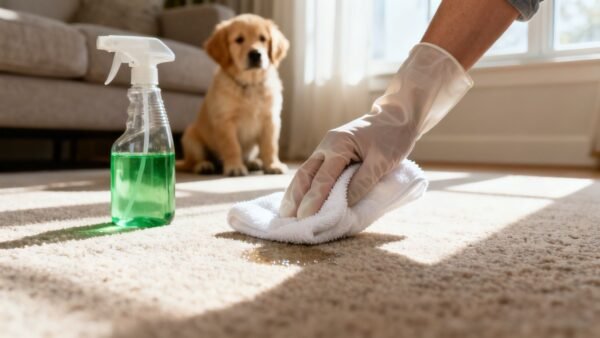
- White Vinegar Solution: Mix equal parts white vinegar and water in a spray bottle. Lightly mist musty carpets, upholstery, or hard surfaces. The vinegar scent will be strong at first, but it dissipates as it dries—taking the musty smell with it.
- Baking Soda Power: For fabrics like carpets or rugs, sprinkle a generous layer of baking soda over the entire area. Let it sit for several hours (overnight is ideal) to absorb moisture and odors. Then, vacuum it up thoroughly. If the carpet still feels damp deep down, more serious steps are needed to prevent mold.
Using Activated Charcoal for Absorption
Activated charcoal is another powerful tool for your odor-fighting arsenal. It is incredibly porous, giving it a massive surface area to trap and lock away odor molecules from the air.
This is a passive, set-it-and-forget-it solution. Place small bags or an open bowl of activated charcoal in damp, enclosed areas like closets, basements, or under sinks. They will work silently to clean the air and absorb the moisture that mildew thrives on. Recharge the charcoal every few months by setting it in the sun for a few hours.
Important Limitation: Remember, DIY methods are your first line of defense for surface-level problems. If you clean an area and the musty smell returns within a few days, it's a major red flag. This indicates the moisture source is hidden somewhere you can't reach—inside a wall, under the floorboards, or deep within your HVAC system.
Improving Overall Air Quality
Sometimes, tackling stale air requires more than just spot treatments. Improving the general air quality in your home can make a significant difference. You might be surprised how much dust contributes to a stuffy, smelly environment.
For example, learning how to clean ceiling fan blades the right way prevents them from circulating dust and allergens that can trap odors. It's a small task that improves air circulation and helps maintain a fresh environment.
Think of these DIY fixes as your rapid response team. They are perfect for small incidents—a damp towel forgotten in a hamper or a closet that got stuffy during a rainy Los Angeles week. They are cheap, safe, and effective. But it’s just as important to know their limits and recognize when a persistent odor signals a larger problem that requires a professional eye.
Improving Airflow and Moisture Control to Prevent Musty Smells
Figuring out how to remove musty smell is a two-part mission. Getting rid of the current odor is the first battle, but ensuring it never comes back is how you win the war. Proactive moisture control and proper airflow are your best allies, creating an environment where mold and mildew simply cannot get a foothold.
This is especially important in Southern California. Our climate is tricky—we experience bone-dry Santa Ana winds one month and then coastal humidity from "June Gloom" the next. This swing can create unexpected moisture pockets inside a home. The non-negotiable goal is to keep your indoor humidity consistently below 50%. Anything higher is an open invitation for mold growth.
Strategic Ventilation Is Your First Line of Defense
Stagnant, damp air is the primary cause of musty odors. The solution is often as simple as moving stale air out and pulling fresh, dry air in.
- Bathroom Exhaust Fans: This is non-negotiable. Run your fan during every shower and let it continue for at least 20-30 minutes afterward. This pulls steam out before it can condense on walls and ceilings.
- Kitchen Ventilation: Use your range hood every time you cook, especially when boiling water. It removes steam, grease, and moisture, preventing it from settling elsewhere in your kitchen.
- A Good Cross-Breeze: Whenever the weather permits, open windows on opposite sides of the house to create a natural cross-breeze. This simple trick can dramatically reduce indoor humidity and flush out stale, smelly air in minutes.
The Role of Dehumidifiers and Gutters
For stubborn areas with poor airflow—like basements, walk-in closets, or laundry rooms—you may need mechanical help. A portable dehumidifier is a game-changer, actively pulling excess moisture from the air. Set it to maintain a relative humidity between 30% and 50%.
Don't forget to look outside your house. How water behaves around your foundation is absolutely critical. Rainwater needs to flow away from your home, not pool against it. Improper landscape grading is a huge source of crawl space and foundation moisture, especially during L.A.'s rainy season.
On that note, ensure your gutters are clean and direct water several feet away from the foundation. Clogged gutters dump water right next to your home, saturating the ground. For more serious or ongoing dampness, professional solutions might be needed; this UK damp proofing cost guide offers insight into more intensive options.
By managing moisture both inside and out, you build a powerful defense system against musty odors and mold growth.
When DIY Fails: Calling a Professional for Odor Removal
While DIY methods are great for minor, surface-level musty smells, the real skill is knowing when to put down the spray bottle and pick up the phone. A musty odor that persists is almost always a symptom of a larger, hidden problem that surface cleaning cannot fix.
Ignoring these signals is a huge gamble. What starts as an annoying smell can quickly spiral into serious structural damage and legitimate health concerns. If you notice any of the signs below, it's time to stop your DIY efforts and call a certified restoration company. These are red flags that the issue has gone far beyond a simple weekend project.
Clear Warning Signs You Need an Expert
Some clues are impossible to ignore. They indicate that moisture has penetrated deep into your home's structure, and you need professional equipment and expertise to address it.
- The Smell Comes Roaring Back: You cleaned with vinegar, used baking soda, and aired out the room. But within a few days, that damp, earthy smell returns. This is the classic sign that the moisture source is trapped where you can't see or reach it, like inside a wall cavity, under the subfloor, or in a damp crawl space.
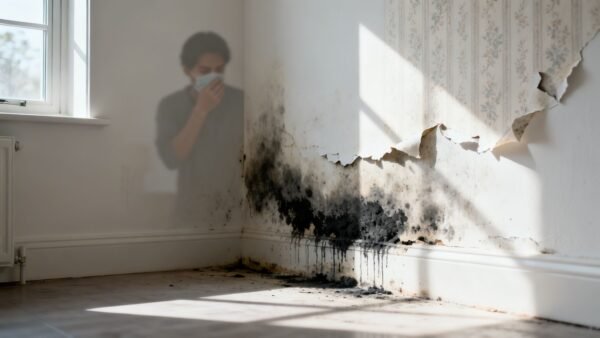
- You Can See Mold Growth: If you spot a patch of mold larger than a small area—the industry rule of thumb is roughly a 3×3 foot area—stop immediately. Attempting to clean a large mold colony yourself can release millions of spores into the air, cross-contaminating other areas of your home.
- Warped Floors or Stained Ceilings: Physical damage like buckling hardwood, bubbling paint, or yellowish-brown water stains on the ceiling are undeniable proof of a significant water issue. The visible stain is often just the tip of the iceberg; the hidden damage is usually far more extensive.
Taking a few proactive steps can often stop these problems before they even start.
As the chart shows, simple things like improving airflow and running a dehumidifier are your first line of defense against musty odors.
Why Professional Intervention Is Necessary
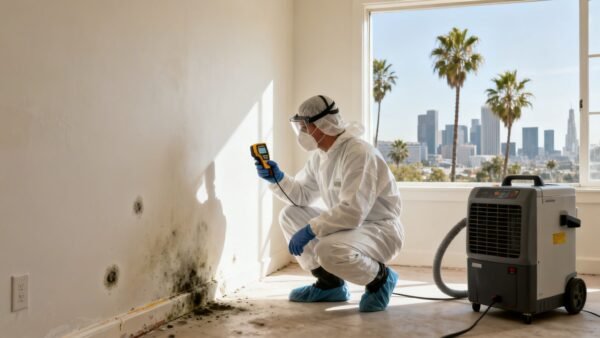
A professional restoration team doesn't just mask the smell; they eliminate the source. Certified technicians come equipped with specialized tools like thermal imaging cameras and non-invasive moisture meters. This gear allows them to find the origin of the water without having to punch "test" holes in your walls.
Key Insight: A persistent musty smell is a warning. Ignoring it can turn a small, manageable issue into a massive mold remediation project that costs thousands and compromises your home's integrity. Calling an expert early isn't an expense—it's an investment in saving money down the road.
Homeowners and property managers are catching on. The global market for odor removal services was valued at around $4.2 billion in 2023 and is projected to more than double to $9 billion by 2033. This surge shows a clear trend: people understand that just covering up a smell solves nothing. You can read the full research about the odor removal services market to see the data for yourself.
When you're dealing with an issue that keeps coming back, you need to bring in someone who can end it for good. You can learn more about what a licensed and experienced restoration pro brings to the table and why their expertise is so critical.
Choosing a Professional Odor Removal Company in Los Angeles
Deciding to call a professional to figure out how to remove musty smell for good is often the smartest move. When certified technicians arrive, they don’t just spray air fresheners; they launch a full-scale investigation to find and eliminate the root cause of the odor. The process is far more science than guesswork, ensuring the problem is truly solved, not just masked.

This process begins with a thorough inspection, where specialists use advanced technology to see what the naked eye cannot.
The Initial Inspection and Assessment
The first thing a professional team does is a deep-dive assessment of your property. This isn’t a quick walk-through. Technicians come equipped with specialized tools to pinpoint the exact source and scope of the moisture problem that’s feeding that musty smell.
- Moisture Meters: These devices have probes that can measure moisture levels deep inside materials like drywall, wood framing, and carpet padding. They tell us precisely which areas are damp, even if they look and feel completely dry on the surface.
- Thermal Imaging Cameras: An infrared camera is a game-changer. It shows temperature differences across surfaces. Wet spots are almost always cooler, appearing as distinct blue or purple blotches on the screen. This is crucial for finding hidden leaks inside walls or ceilings without destructive testing.
This data-driven approach is what separates a professional service from a simple cleaning job. It guarantees we understand the full extent of the problem before any work begins.
Containment and Air Filtration
Once the source is identified, the next priority is to prevent it from spreading. If mold spores or other airborne contaminants are present, technicians will set up containment barriers. This typically involves using thick plastic sheeting and negative air pressure machines to isolate the affected area completely.
This step is critical for protecting the rest of your home from cross-contamination. From there, we use high-efficiency particulate air (HEPA) filters and industrial-strength air scrubbers to capture microscopic particles—including mold spores and odor-causing bacteria—directly from the air.
Key Takeaway: Professional odor removal is a multi-step mission focused on eliminating the source, not just masking the scent. It involves finding hidden moisture, containing the area, and physically removing the odor-causing agents from both surfaces and the air itself.
Advanced Deodorization Techniques
After the moisture source is fixed and any compromised materials are dried or removed, the final step is to neutralize any stubborn, lingering odors. This is where professionals use advanced techniques that are far beyond anything available at a retail store.
- Thermal Fogging: This process heats a powerful deodorizing agent into an ultra-fine mist. This fog penetrates deep into porous materials like wood and drywall, neutralizing odor molecules on contact.
- Ozone or Hydroxyl Generation: For the toughest jobs, these powerful oxidizing agents can be used in unoccupied spaces. They chemically break down stubborn odor molecules, leaving nothing behind.
This comprehensive approach is becoming more common as homeowners realize that complex odor issues need more than an off-the-shelf spray. The global market for odor eliminators was valued at USD 6.2 billion in 2023, with North America holding a 38% share due to high hygiene awareness. Yet, for true, lasting restoration, nothing beats professional services. You can discover more insights about the odor eliminators market on dataintelo.com.
For more details on what to expect, check out our guide on professional odor removal services and frequently asked questions.
Schedule a Free Inspection or Book Odor Testing
Even after you think you’ve beaten a musty smell, some questions always seem to pop up. As restoration pros working across Los Angeles, we get these calls every day from homeowners who are worried, confused, and just want their homes to feel clean again. Here are the straight answers to the questions we hear most often.
What's the difference between a musty smell and a mold smell?
A musty smell is often the first sign of mildew, which is an early-stage mold. It's that damp, old-attic scent. A true mold smell is often stronger, more earthy, and more pungent. Both indicate a moisture problem, but a stronger smell can suggest a more established mold colony that needs immediate professional attention.
Can a musty smell in my house make me sick?
Yes, absolutely. That musty odor is caused by microbial volatile organic compounds (MVOCs), which are gases released by mold and mildew. Inhaling these compounds and associated spores can cause allergic reactions (sneezing, runny nose, rashes), trigger asthma attacks, and lead to respiratory irritation like a chronic cough, headaches, and fatigue.
Will my homeowners insurance cover odor removal?
It depends on the cause. If the musty odor is a direct result of a "covered peril"—like a sudden pipe burst or water damage from a storm—your policy will likely cover the entire job, including professional odor removal. However, if the smell is from a gradual issue like a slow leak or poor maintenance, it is almost always excluded. We work with all major insurance carriers in Los Angeles and provide the documentation needed to support your claim.
How long does professional odor removal take?
The timeline depends on the severity of the problem. A minor surface mildew issue might only take a few hours to treat. However, if the musty smell is linked to significant hidden water damage or a serious mold infestation, the process could take several days for proper structural drying, material removal, and deep deodorization. We provide a clear timeline after the initial inspection.
What's the difference between masking and eliminating an odor?
Masking an odor with candles or air fresheners only covers up the smell temporarily. The odor-causing molecules are still present. Professional odor elimination uses scientific processes like thermal fogging or hydroxyl generation to physically attack and neutralize these molecules at their source, permanently removing the odor and restoring a healthy indoor environment.
If you're battling a stubborn musty smell that won't quit, don't let the problem get any worse. Contact Onsite Pro Restoration for a free, no-obligation assessment. Our IICRC-certified technicians are on call 24/7 to help you pinpoint the source and bring fresh, clean air back to your Los Angeles home.