
A pipe lets go under the sink in the middle of the night. Water runs across the kitchen, into the hallway, and under the cabinets before you fully understand what happened. Or you come home to a smoky odor after a small appliance fire. Or you spot dark staining around a window and realize a slow leak has been active longer than you thought.
That is when many homeowners search home restoration services near me.
In Los Angeles, the first problem is rarely the last problem. Water becomes swelling wood, wet insulation, and hidden moisture behind drywall. Smoke becomes odor inside porous materials and HVAC pathways. A small patch of visible mold can point to a larger moisture issue you cannot see yet. The right response is not panic. It is sequence.
If you are dealing with damage now, focus on safety first, documentation second, and professional assessment third. Once those are handled, the situation usually feels far more manageable because the path forward becomes clear.
Need immediate help? Call for an emergency assessment and get the damage documented before it spreads.
Facing Property Damage? Your First Hour Action Plan
The first hour matters because it affects safety, damage spread, and your insurance file. In a Sherman Oaks burst-pipe situation, the homeowners who do best are usually not the ones who know the most about restoration. They are the ones who do the basic steps in the right order.
Secure the property first
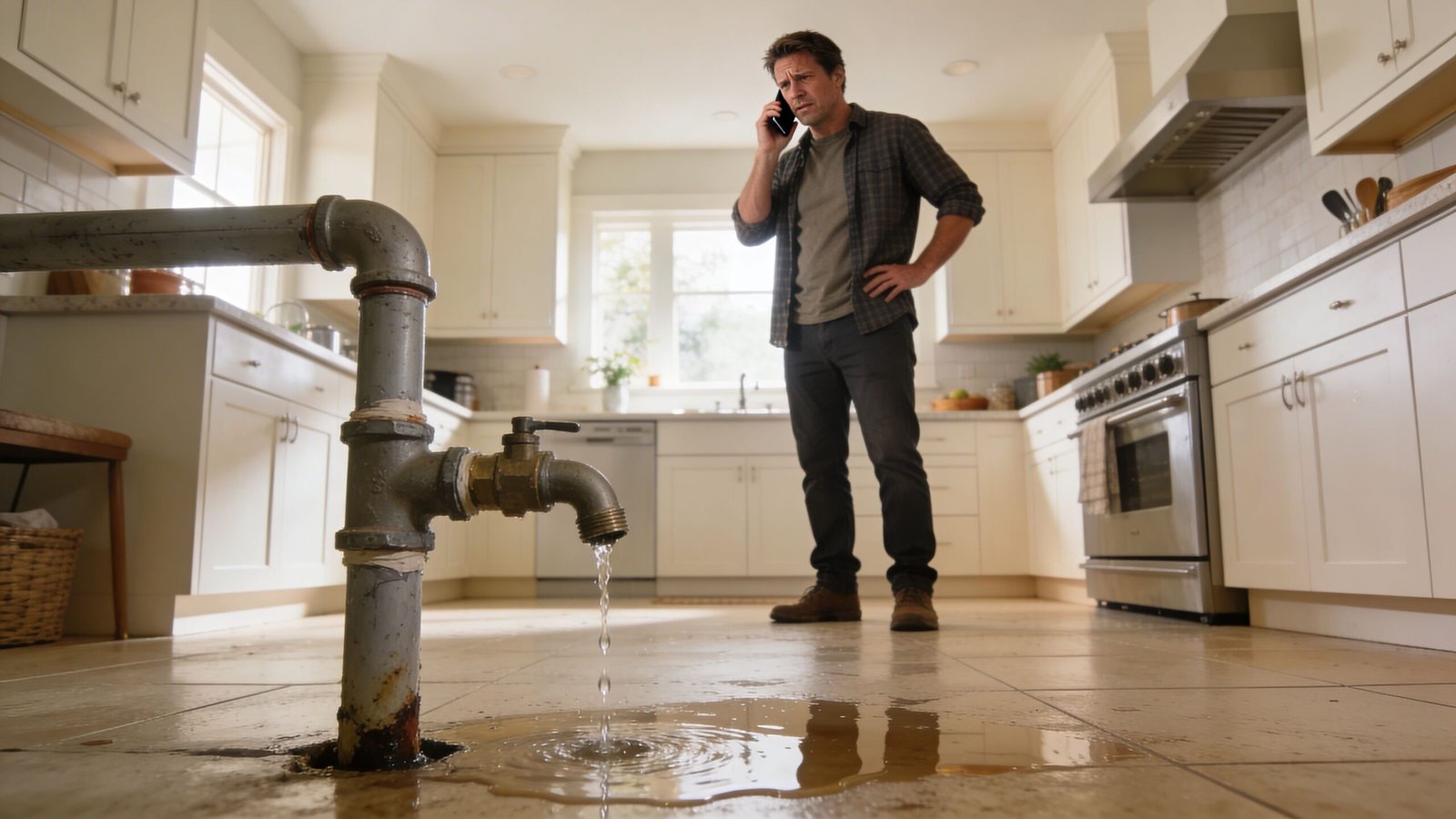
If water is active, shut off the main water supply. If there is fire damage, soot, or water near outlets, leave electrical systems alone unless you can safely isolate power from the breaker without entering a wet or unsafe area. If sewage is involved, keep people and pets out immediately.
If you are not sure where the main shutoff is, this guide to the main water shut-off location is worth saving before you need it.
Document before moving too much
Use your phone. Take wide shots of each affected room, then closer photos of flooring, baseboards, cabinets, ceilings, and personal property. A short video walkthrough helps too.
Do this before heavy cleanup if the area is safe enough to enter. Early images often answer later questions from adjusters.
Stop simple secondary damage
Move loose items out of wet areas if you can do it safely. Place foil, blocks, or plastic barriers under wood furniture legs. Pick up rugs if they are not contaminated. Open cabinet doors if water reached sink bases or vanities.
Do not tear out drywall or rip up flooring on impulse. Premature demolition can make it harder to identify the moisture path and can complicate the claim record.
Tip: Tell the restoration company what happened, when you discovered it, whether the source has been stopped, and whether power or sewage is involved. That short summary helps dispatch the right equipment and crew.
Make the first emergency call count
When you call, give five things clearly:
- Cause of loss such as burst pipe, roof leak, overflow, fire, smoke, or sewer backup
- When it started or when you first noticed it
- Areas affected such as kitchen, hallway, bathroom, attic, garage
- Current hazards including no power, contaminated water, strong odor, or ceiling sagging
- Insurance status if you have already notified the carrier
Avoid the common mistakes
The wrong first-hour moves create bigger headaches later. The most common ones are using household fans on contaminated water, painting over stains, staying inside a smoky environment too long, and assuming a dry surface means the structure underneath is dry.
A calm first hour provides an advantage. It protects your family, it preserves evidence, and it gives the restoration team a cleaner starting point.
Understanding What Home Restoration Services Include
Homeowners often use the phrase home restoration services near me when they really mean one of three things. Stop the damage. Make the house safe again. Get it back to pre-loss condition without turning the process into a second crisis.
That broad need is why the field is so large. The U.S. Damage Restoration Services industry is projected to reach $7.1 billion over the five years to 2024 and supports over 60,000 businesses, with demand influenced by coastal flooding and California wildfires in areas such as Los Angeles, according to IBISWorld’s damage restoration industry overview. A market that large includes excellent operators and weak ones. Certification, process, and documentation matter.
Water mitigation is not the same as cleanup
People often think water restoration means mopping up puddles. That is only the surface layer. Water mitigation is the part that stops further damage.
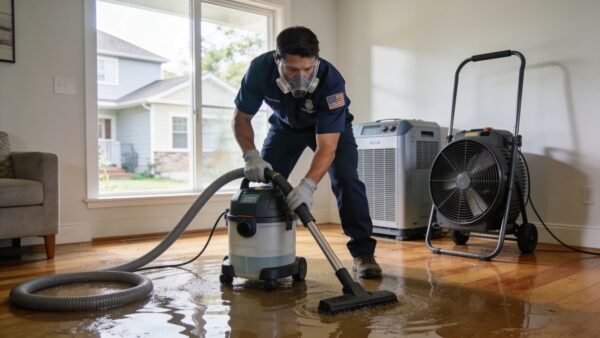
It usually includes extracting standing water, identifying how far moisture has traveled, setting drying equipment, monitoring materials, and deciding what can be saved versus what should be removed. In many Los Angeles homes, the visible water is only part of the issue. Moisture can move under flooring, into toe-kicks, wall cavities, and subfloors before staining appears.
Fire and smoke restoration addresses what remains after flames are gone
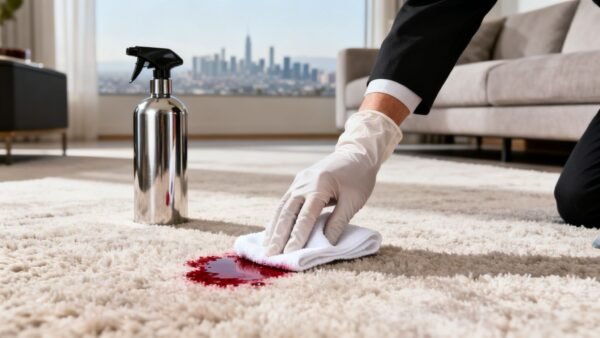
A small kitchen fire may leave limited burn damage but broad smoke impact. Soot settles differently depending on what burned and how hot the fire was. Smoke odor can cling to drywall, insulation, upholstery, and HVAC systems.
The job is not just cleaning black residue. It is identifying the smoke path, selecting the right cleaning method for each material, removing odor sources, and restoring indoor air quality without spreading residue to unaffected areas.
Mold remediation is a moisture problem first
Mold removal done without solving the water source usually fails. The visible growth may be only the symptom. The problem could be a plumbing leak, roof intrusion, shower failure, window leak, or poor drying after a prior water loss.
That is why professional remediation focuses on containment, controlled removal, and moisture correction. If a contractor sprays and wipes visible areas, the house may look better for a short time while the underlying issue continues.
Contents work and reconstruction complete the job
Many homeowners do not realize contents restoration is often its own phase. That includes cleaning salvageable belongings, documenting non-salvageable items, packing out certain contents, and protecting unaffected possessions during demolition or drying.
Then comes reconstruction. Drywall, baseboards, insulation, flooring, cabinetry, and paint may need repair or replacement once mitigation is complete. A practical overview of those phases appears in this restoration service guide.
Key takeaway: Restoration is not one task. It is a chain of decisions. Extraction, drying, cleaning, containment, documentation, and rebuilding all have to line up in the right order.
A Detailed Look at Key Restoration Processes
The difference between a rushed cleanup and a proper restoration job is process control. A trained crew is not guessing. They are measuring, isolating, and documenting each stage so the house does not look fine on the surface while hidden damage keeps developing.
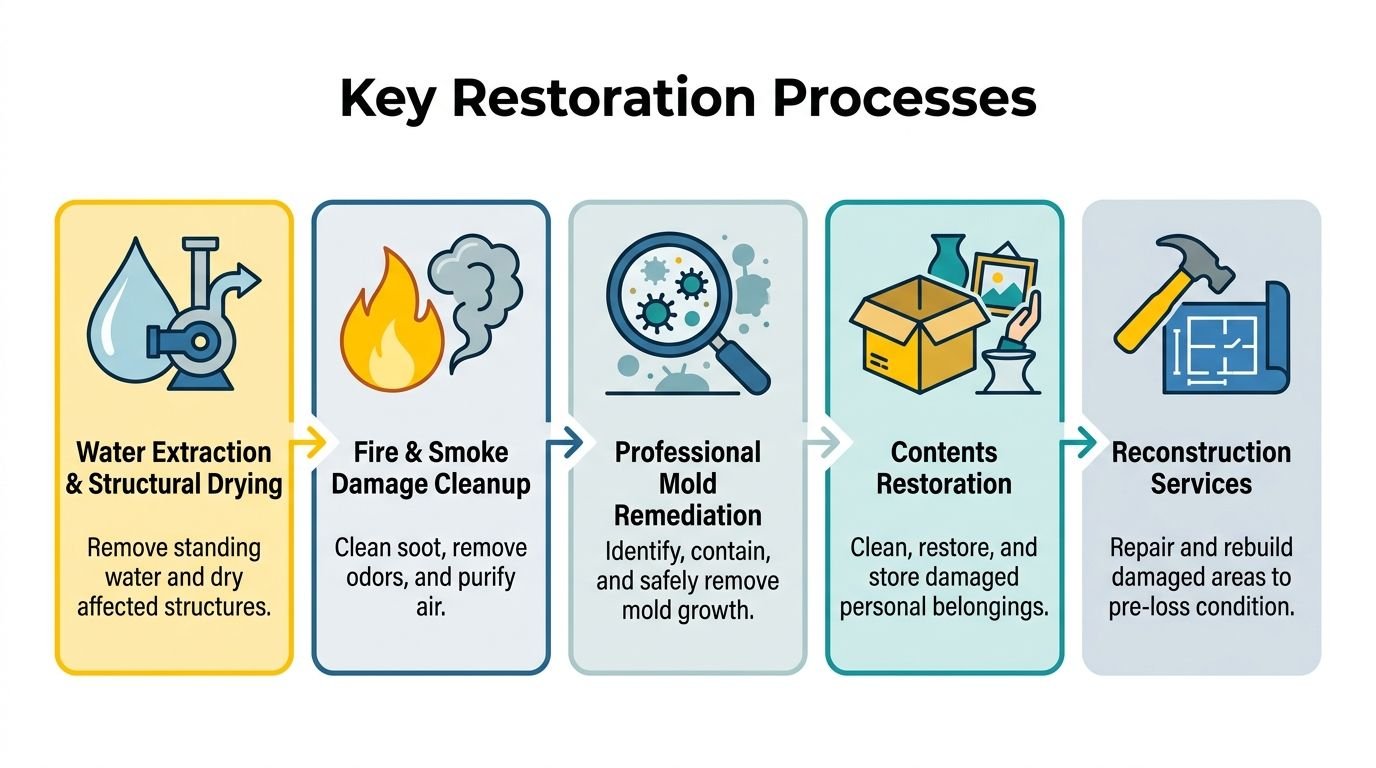
Water extraction and structural drying
Water work starts with finding the full footprint of the loss. That means checking not only the wet room but adjacent walls, cabinet bases, flooring transitions, and lower sections of nearby rooms. Moisture follows gravity, capillary action, and material seams. It does not stay where you first noticed it.
Psychrometry drives the drying plan. In water damage restoration, psychrometry is the science of air-moisture interactions, and it is used to reduce structural drying times from weeks to 3 to 5 days while cutting mold risk by 85% compared with DIY methods, according to this water damage restoration explanation citing IICRC S500 standards. That is why professional drying uses monitored dehumidifiers and air movers instead of relying on open windows and box fans.
Three things happen at once:
- Extraction comes first: Standing water is removed so evaporation can begin from the structure, not from puddles.
- Airflow is directed, not random: Equipment placement targets wet materials and controlled evaporation.
- Moisture readings guide the job: Drying is adjusted based on measurements, not appearance.
A wet laminate floor can feel dry on top while the underlayment remains saturated. A painted wall can look normal while insulation behind it is still holding moisture. This is why the drying log matters. It shows whether the building materials are returning to dry standards.
If you are trying to understand the difference between visible cleanup and full mitigation, this breakdown of the water damage restoration process is useful.
Tip: If someone says the room is dry after a quick extraction but cannot show material readings or explain their drying setup, keep asking questions.
Fire and smoke damage cleanup
Smoke damage varies more than people expect. Dry soot, oily residue, and protein-based smoke all behave differently. The wrong cleaning method can smear residue deeper into surfaces or permanently damage finishes.
A good fire cleanup plan separates affected areas, removes loose soot carefully, cleans structural surfaces with appropriate agents, and addresses the odor source rather than masking it. HVAC pathways need attention because smoke can travel farther than the burn area.
The practical trade-off is speed versus precision. Homeowners often want the smell gone immediately. Crews who rush to deodorize before thorough cleaning can leave residues in place. The better sequence is source removal first, odor treatment second, verification last.
Professional mold remediation
Mold work succeeds when containment is tight and moisture correction is real. It fails when people treat it like surface cleaning.
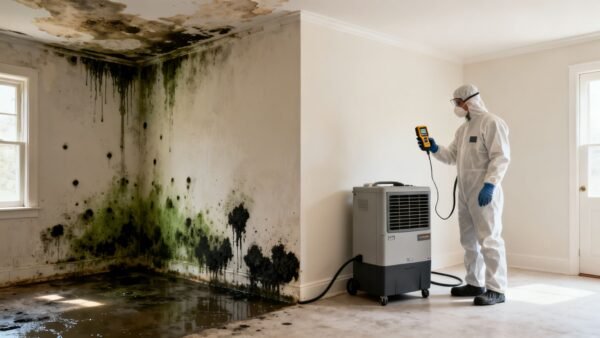
A proper mold response usually includes isolating the work zone, controlling air movement, removing affected porous materials when needed, cleaning remaining structural surfaces, and correcting the moisture source. In Los Angeles homes, common triggers include bathroom leaks, window intrusion, slab-related moisture, and prior water losses that never fully dried.
Exterior growth can be a different category entirely. For homeowners dealing with visible contamination outdoors, this guide on how to remove mold from house siding is helpful for understanding when surface cleaning may be enough and when moisture or drainage issues need more attention.
What does not work? Spraying bleach into a wall cavity and hoping the problem is solved. Painting over staining. Running a household dehumidifier in an open-plan home and assuming the hidden moisture source has been addressed.
Sewer and biohazard cleanup
Sewer losses are less forgiving than clean-water events. The focus shifts from drying alone to containment, removal, sanitation, and exposure control.
Porous materials that contacted contaminated water often cannot be safely kept. Flooring, drywall, insulation, cabinetry toe-kicks, and contents near the floor line may all need evaluation. Crews should isolate the area, wear proper protective equipment, remove affected materials in a controlled way, and clean the remaining structure thoroughly before drying continues.
This is one category where DIY attempts often create a larger contamination footprint. Walking contaminated water through the house, using the wrong vacuum, or setting standard fans can spread the problem.
Contents restoration and reconstruction
Homeowners tend to focus on walls and floors because they are obvious. But contents decisions shape both cost and disruption. Some belongings can be cleaned and returned. Others should be documented and set aside. High-sentiment items usually need careful handling early so they are not lost in demolition.
Reconstruction starts only after mitigation targets are met. That order matters. Rebuilding too early traps moisture and turns a fixable loss into a repeat claim.
A sound process feels methodical because it is. Fast response matters. Controlled sequencing matters more.
Navigating Your Insurance Claim for Restoration Work
Insurance stress often lasts longer than the drying job. The damage may be obvious to you, but carriers still need a documented cause, a clear scope, and support for why the work was necessary.
The phrase that matters in many claims is sudden and accidental. A burst supply line usually fits that framing more cleanly than a leak that has been active for months. That distinction becomes especially important with mold. According to 2025 California insurance reports, 40% of LA homeowners face claim denials for mold remediation due to pre-existing conditions or improper documentation, as noted in this discussion of insurance issues around restoration claims.
What your insurer wants to see
Adjusters are looking for consistency. The story of the loss, your photos, the affected materials, and the professional documentation should all point in the same direction.
A strong claim file usually includes:
- Initial evidence: Photos and videos taken close to discovery
- Cause information: What failed, overflowed, leaked, or burned
- Mitigation records: Readings, equipment logs, containment notes, and demolition rationale
- Itemized scope: Room-by-room description of work performed or required
Why professional documentation changes the outcome
Professional crews document differently than homeowners do. They identify affected categories, record material conditions, and track progress in a format claims teams can review without guesswork. That does not guarantee coverage, but it removes many avoidable disputes.
Industry-standard estimate platforms matter here too. They help scope work in line-item detail rather than broad, vague descriptions.
If you want a plain-language overview of what to gather and how claims are typically handled after a loss, this page on an insurance claim for water damage is practical.
Common points of friction
Claims slow down for predictable reasons. Missing early photos. Unclear dates. No proof the source was corrected. Mold discovered later without a clear link to the original event. Cleanup started without enough documentation.
Homeowners who want to understand those pressure points better can review these common insurance claim denial reasons. Use it as a checklist for questions, not as a substitute for your policy language.
Tip: Ask your restoration company to explain what they will document for the insurer before work begins. If they cannot describe the paperwork and photo trail clearly, you may feel that gap later in the claim.
Need help organizing the claim side of the job? Get help with your insurance claim before missing documentation turns into a coverage dispute.
Choosing the Right Restoration Company in Los Angeles
The fastest company is not always the right company. The cheapest estimate is not always a complete estimate. In Los Angeles, the better question is this: who can respond quickly, diagnose accurately, document thoroughly, and manage a job from containment through final repair without losing control of the details?

Ask direct questions before authorizing work
A reliable company should answer these without hedging.
| What to ask | What a solid answer sounds like |
|---|---|
| Are your technicians IICRC-certified? | They can state the certification clearly and explain how it applies to water, mold, fire, or odor work. |
| How do you inspect hidden damage? | They mention moisture meters, thermal imaging, containment planning, and documented readings. |
| How do you handle insurance paperwork? | They explain photos, scope notes, and itemized estimating. |
| Do you provide emergency response after hours? | They can describe actual dispatch and arrival expectations, not just say they are available. |
| Who performs reconstruction after mitigation? | They can outline whether repairs are coordinated in-house or through trade partners. |
One local option homeowners compare is this water damage restoration company near me page, which lays out the type of response and service scope you should expect from a restoration provider.
Documentation is a real differentiator
The paperwork side often separates experienced firms from cleanup crews. Expert restoration firms use industry-standard software like Xactimate to create detailed, line-item estimates that align with what over 95% of insurance carriers expect, according to this explanation of restoration estimating and insurance documentation. That matters because vague estimates create delays, revisions, and avoidable conflict.
This short video gives homeowners a helpful sense of what to look for when comparing providers.
Local experience matters in Los Angeles homes
LA properties are not uniform. A North Hollywood single-family home, a Glendale hillside property, a Beverly Hills high-finish interior, and a West Hollywood multifamily building all present different access, material, and moisture-path issues.
A company that knows local housing stock tends to ask better early questions. Flat roof or pitched roof? Slab-on-grade or raised foundation? Older galvanized lines or newer plumbing? Shared walls? Past smoke exposure from wildfire seasons? These details shape containment, drying, and repair decisions.
One factual mention belongs here. Onsite Pro Restoration is a licensed, IICRC-certified option serving Los Angeles-area properties with emergency mitigation, mold, fire, smoke, sewer, and odor response. That is useful if you are comparing firms, but apply the same checklist to any provider you interview.
Our Promise to North Hollywood and Surrounding Areas
Most restoration calls are local because urgency is local. The homeowner in Burbank with a washing machine overflow does not need a national slogan. They need a crew that can get there, identify what is wet beyond the laundry room, and explain the next steps without adding confusion.
North Hollywood is a practical hub for surrounding neighborhoods because the calls come from every direction. Sherman Oaks sees supply-line leaks, shower failures, and attic-related issues. Glendale properties often need fast response in occupied homes where limiting disruption matters as much as the technical work. Beverly Hills and West Hollywood jobs can require tighter content handling and more documentation because finishes and fixtures are more sensitive.
The service area within a 25-mile radius of North Hollywood matters because drive time affects containment time. A quick arrival often means water is extracted before it reaches another room, or smoke residue is isolated before foot traffic spreads it.
Here is a typical local scenario. A commercial sewer backup in West Hollywood affects a restroom corridor and starts spreading into adjacent flooring. The first priorities are restricting access, identifying the contamination path, removing compromised materials, and documenting everything for ownership and insurance. The work is technical, but the homeowner or property manager experience is simple when communication stays clear. What is unsafe. What can be saved. What happens today. What happens after drying and cleaning are complete.
Demand for this kind of response is not niche. Eighty percent of the U.S. population lives in urban areas, and 80% of American households require professional help at least once a year, according to this look at the home services market and urban demand. In a dense region like Los Angeles County, that is why 24/7 restoration response matters. Leaks spread into neighboring units. Appliance failures hit busy households at inconvenient hours. Property managers need someone who can move from emergency assessment to controlled restoration without delay.
Key takeaway: “Near me” should mean more than proximity. It should mean familiarity with local building types, local urgency, and the practical reality of getting a damaged property back to normal quickly.
Frequently Asked Questions About Home Restoration
Some of the most important decisions happen after the initial emergency. These are the questions homeowners usually ask once the water is out, the smell is lower, and they want to know what comes next.
Practical answers homeowners ask for most
A common but under-discussed issue is post-restoration verification. EPA studies have shown that without proper post-remediation testing and addressing sources such as hidden HVAC contamination, up to 30% of remediated homes can redevelop mold within 12 months, which is why third-party clearance testing can be a valuable last step, as discussed in this overview of post-restoration mold recurrence and verification.
| Question | Answer |
|---|---|
| Should I stay in the house during restoration? | It depends on the damage type and the work area. Clean-water drying in a contained area may allow occupancy, while heavy demolition, sewer contamination, smoke residue, or mold containment can make portions of the property unsuitable to use normally. Ask specifically whether the work zone, adjacent rooms, and HVAC system are safe to occupy. |
| What should I do with wet belongings? | Do not pile them together. Move salvageable items to a dry area if safe, and photograph them first. Soft goods, papers, electronics, and sentimental items all need different handling. The goal is to prevent secondary damage and preserve a record before cleaning starts. |
| How do I know the house is dry? | Ask for readings, not reassurance. A professional should be able to explain what materials were monitored and how they determined drying was complete. Dry appearance alone is not enough. |
| Will the odor go away on its own? | Usually not if the source remains. Water odor, smoke odor, and microbial odor each behave differently. Odor removal works when crews eliminate the source, clean affected materials, and treat the air and surfaces in the correct order. |
| Do I need mold testing after remediation? | Not every job needs the same level of testing, but verification can be useful when there was significant contamination, a real estate transaction, occupant health concerns, or prior failed cleanup. Independent clearance testing can add confidence that the work addressed the issue. |
| What if damage shows up again after the job? | Report it immediately and ask whether the issue is recurrence, missed hidden damage, or a new source. Fast follow-up matters. Small return signs such as odor, staining, or elevated humidity are easier to investigate early than after they spread. |
A final word on what works
What works is early control, measured drying, proper containment, clean documentation, and a provider who can explain decisions in plain language.
What does not work is waiting for visible damage to “air out,” trusting smell as proof of cleanliness, or assuming every contractor who offers emergency cleanup is doing restoration to the same standard.
If you searched for home restoration services near me, you are probably trying to solve two problems at once. The damage itself, and the uncertainty around it. A good restoration process handles both.
If your home or building has water, mold, fire, smoke, sewer, or odor damage, Onsite Pro Restoration provides 24/7 emergency response across Los Angeles and nearby communities within a 25-mile radius of North Hollywood. Reach out for an assessment, clear next steps, and documentation that helps move the restoration and insurance process forward.