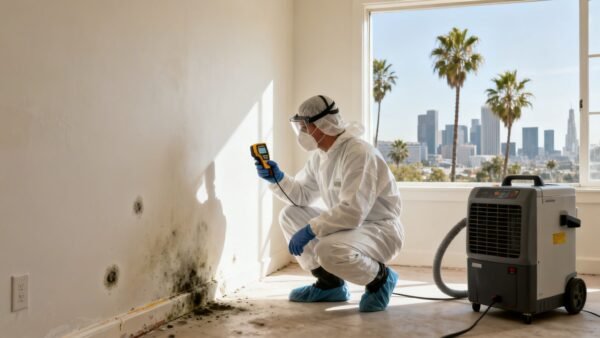

When you hear the term hazardous materials cleanup, it's easy to picture a team in full-body suits dealing with a dramatic chemical spill. And while that’s part of it, the reality is much broader for Los Angeles property owners. At its core, this is the expert process of identifying, containing, and safely removing any substance that poses a real threat to people or the environment.
This is worlds away from standard cleaning. Think of it less like mopping a floor and more like performing a surgical procedure on your property. For threats like chemical spills, hidden asbestos in a Sherman Oaks home, or biological contaminants from a sewage backup, regular cleaning methods don't just fail—they can actually make a dangerous situation much worse. Neutralizing these risks requires professional training, specialized gear, and strict protocols. The first 100 words of this guide will explain why professional hazardous materials cleanup is non-negotiable.
Get a Free Hazardous Material Inspection
What Is Hazardous Materials Cleanup?
When we’re called to a site with a dangerous substance, our goal isn't just to make the area look clean. It’s to make it scientifically safe. The entire process is built on a foundation of strict regulations from agencies like the Environmental Protection Agency (EPA) and Cal/OSHA. These rules aren't just red tape; they're there to protect everyone involved, from our technicians to your family or employees.
This is the kind of specialized service needed for situations involving materials that are toxic, flammable, corrosive, or infectious—things your average cleaning crew is completely unequipped to handle.
The Core Principles of Remediation
At its heart, professional cleanup boils down to three critical actions that restore safety and ensure you're in compliance with the law. These principles guide every single decision we make on-site.
- Identification and Assessment: Before anyone touches anything, our certified technicians have to figure out exactly what we're dealing with. This starts with a visual inspection but often requires scientific testing to identify the material and map out how far it has spread. You can't fix a problem until you understand its full scope.
- Containment: The immediate priority is to stop the hazard in its tracks. We use physical barriers, specialized sealants, and controlled air filtration systems to completely isolate the contaminated zone. This is crucial for preventing cross-contamination to other parts of your property, whether it's a home in Pasadena or a commercial building in Burbank.
- Removal and Disposal: Once the area is secure, our team uses the proper personal protective equipment (PPE) to safely remove all hazardous materials. What happens next is one of the most critical steps: compliant disposal. You can't just toss hazardous waste in a regular dumpster. It has to be transported to designated facilities according to strict federal and California state laws.
The aftermath of events like wildfires often leaves behind a complex mix of hazardous waste, from asbestos in older buildings to chemicals released during the blaze. According to CalEPA, proper handling is essential to prevent long-term health risks and environmental damage.
Understanding the difference between simple cleaning and true remediation is key. For a closer look at our specific services, you can explore our approach to hazardous waste and spill cleanup for Los Angeles properties. This professional oversight ensures your property is not just visually restored but verifiably safe for everyone to re-enter.
Recognizing Different Types of Hazardous Materials
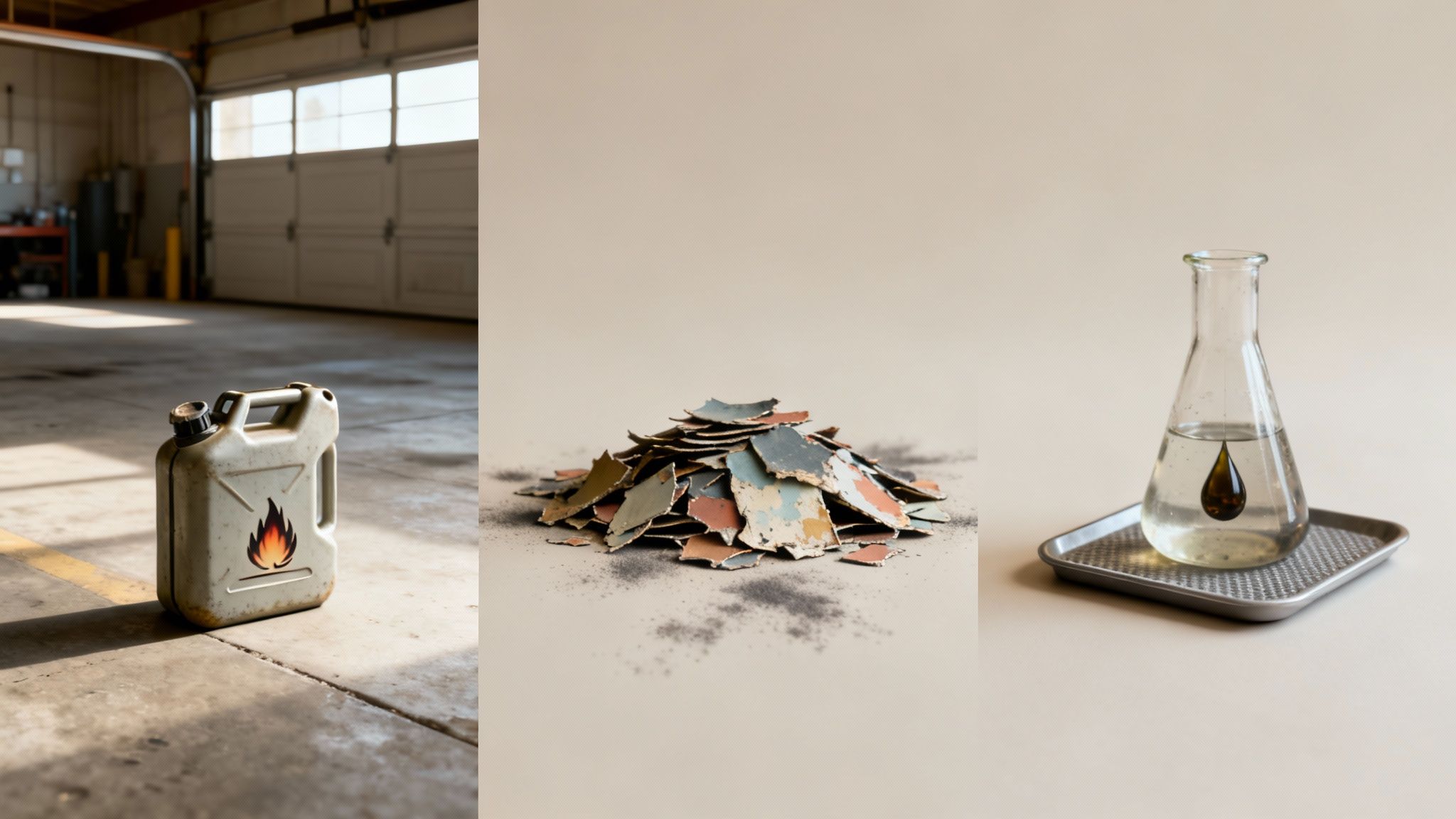
To understand hazardous materials cleanup, you first need to know what you’re up against. Government agencies have complex classification systems, but you don't need to be a chemist to recognize danger. It’s far more practical to think in terms of the threat a material poses to your property and your family’s health.
Forget the jargon. Let's break down the common hazardous materials by the real-world risks they create. This approach will help you spot dangers, whether it’s a sudden chemical spill in a Burbank workshop or the quiet, creeping threat of lead dust in a historic Pasadena home.
Flammable and Combustible Materials
This is the stuff that can easily catch fire or explode. It’s one of the most common hazards we find in both homes and businesses, creating an immediate and serious risk.
- Flammable Liquids: Think gasoline, paint thinners, and certain solvents. Even a small leak in a poorly ventilated garage can create an invisible cloud of flammable vapor, just waiting for a spark from a water heater or power tool to ignite.
- Combustible Solids: This includes things that can catch fire from heat or friction, like certain industrial dusts or chemicals that haven't been stored properly.
Proper hazardous materials cleanup for these isn't just about wiping up the spill. It involves tackling the unseen explosive vapors that have built up. That requires specialized ventilation and spark-proof equipment to prevent a disaster.
Toxic and Infectious Substances
These materials are a direct threat to your health. You can be harmed by breathing them in, ingesting them, or even just touching them. The effects can be instant or build up slowly over years of low-level exposure.
- Chemical Toxins: This is a wide category covering everything from lead in old paint and mercury from a broken thermometer to asbestos fibers hidden in insulation. A simple renovation project in an older Sherman Oaks home can release lead dust, which is incredibly dangerous for children.
- Infectious Biohazards: These are biological materials that carry diseases. The most common example is a raw sewage backup, which floods your property with bacteria, viruses, and parasites. This kind of mess requires a very specific approach, which you can learn about in our guide to sewage damage cleanup.
The key difference here is simple: toxic materials poison you with chemicals, while infectious materials make you sick with living organisms like bacteria. Both are serious and demand professional remediation right away.
Corrosive and Reactive Materials
This group includes substances that cause immediate, visible damage. They can burn skin, eat through metal, and destroy surfaces on contact through a chemical reaction.
Corrosive Substances are acids or bases that can literally dissolve materials. This includes things like powerful drain cleaners, battery acid, and certain industrial chemicals. A spill can ruin flooring, compromise pipes, and cause severe chemical burns.
Reactive Substances, on the other hand, are unstable. They can react dangerously—sometimes explosively—when they touch water, heat, or other chemicals. While less common in homes, they are a significant risk in industrial settings.
To make this even clearer, we’ve put together a simple table that breaks down these hazard categories with everyday examples.
Common Hazardous Materials and Their Dangers
This quick-glance table helps you connect the official hazard classes with the things you might actually see on your property and the risks they carry.
| Hazard Class | Primary Risk | Common Examples |
|---|---|---|
| Flammable | Can easily ignite, causing fire or explosions. | Gasoline, paint thinner, solvents, certain aerosols, industrial dust. |
| Toxic | Causes illness or death through ingestion, inhalation, or contact. | Lead paint chips, mercury, asbestos fibers, pesticides, chemical waste. |
| Infectious | Contains pathogens that can cause disease. | Raw sewage, medical waste, bloodborne pathogens, mold colonies. |
| Corrosive | Chemically destroys materials and human tissue on contact. | Strong acids, battery acid, industrial-strength drain cleaners, rust removers. |
| Reactive | Can explode or release toxic gas when exposed to heat or water. | Certain industrial chemicals, old munitions, some laboratory waste. |
Knowing these categories is the first step to staying safe. If you ever come across a substance you suspect is hazardous, the rule is always the same: keep your distance, warn others to stay away, and call a certified professional immediately.
The True Cost of Mishandling Hazardous Waste
Trying to clean up hazardous materials on your own isn't just a calculated risk—it’s a guaranteed misstep with severe, often irreversible, consequences. The real cost isn't just about the cleanup; it's measured in permanent health damage, environmental ruin, and financial penalties that can be absolutely staggering.
For homeowners and property managers here in Los Angeles, truly understanding what’s at stake is the first, most critical step toward making a safe and responsible decision.
The human cost is always the most immediate and tragic. Exposure can trigger a whole spectrum of health problems, from chemical burns and respiratory failure in the short term to chronic, life-altering conditions down the road. Just think about asbestos fibers—they can lead to aggressive cancers years after someone was first exposed. This isn't just a hypothetical; it's a grim reality for people who underestimate these materials.
A Common Scenario with Devastating Results
Picture this: a well-meaning property manager in a West Hollywood apartment building finds a small mercury spill from an old, broken thermostat. Thinking it’s no big deal, they grab a broom and a vacuum to clean it up. In that single moment, a contained problem explodes into a building-wide crisis.
Sweeping breaks the mercury into thousands of tiny, invisible droplets. Worse, the vacuum’s heat vaporizes it, pumping toxic fumes directly into the building's HVAC system. What was a localized spill is now an airborne poison, silently exposing every single tenant to the risk of neurological damage. It’s a perfect example of a brutal truth: with hazardous materials, it’s what you don’t know that does the most harm.
Environmental Contamination and Its Ripple Effect
The environmental fallout from improper disposal is just as severe. A single barrel of industrial solvent dumped behind a commercial property in Glendale doesn't just vanish. It seeps deep into the ground, poisoning the soil and, eventually, the groundwater that serves the entire community.
This contamination creates a devastating ripple effect that can last for generations:
- Water Contamination: Toxic chemicals can make local water sources unsafe for drinking, farming, and recreation for decades.
- Soil Degradation: The soil becomes sterile and unusable, killing off plant life and creating barren patches where nothing can grow.
- Wildlife Impact: Animals that drink the tainted water or live on the poisoned land suffer from sickness, birth defects, and collapsing populations.
The cleanup for this kind of environmental disaster is exponentially more complex and expensive than calling a professional in the first place. It can take years—and millions of dollars—to even begin to undo the damage.
When hazardous waste is mishandled, the financial liability extends far beyond the initial cleanup costs. Regulatory fines, civil lawsuits from affected parties, and a permanent drop in property value create a financial burden that can bankrupt individuals and businesses alike.
Legal and Financial Ruin
Beyond the health and environmental nightmare, the legal consequences are swift and severe. Agencies like Cal/OSHA and the EPA have strict regulations for hazardous materials cleanup and disposal for a reason. Failing to comply isn't a slap on the wrist; it's a serious offense with heavy penalties.
Violations can lead to crippling fines that easily climb into the tens or even hundreds of thousands of dollars. If negligence is proven, criminal charges aren't off the table. To avoid this, organizations must implement crucial risk management best practices. It's the only way to prevent a minor incident from becoming a catastrophe.
The stakes are simply too high to consider any alternative to a professional, certified, and compliant response.
Why Professional Hazmat Cleanup Is Essential
Trying to clean up a hazardous material spill yourself is a bit like trying to perform surgery after watching a few episodes of a medical drama. You might recognize some of the tools, but the potential for making things catastrophically worse is incredibly high. When it comes to hazardous materials cleanup, hiring a certified professional team isn’t just a good idea—it's an absolute necessity for safety, legal protection, and your own peace of mind.
Certified pros don't just "clean up." They operate within a strict framework of federal and state regulations, especially those laid out by the Environmental Protection Agency (EPA) and Cal/OSHA. These aren't just guidelines; they are legally mandated rules designed to protect everyone involved—workers, building occupants, and the entire community.
Call (818) 336‑1800 Now For Immediate Help
Navigating the Complex Web of Regulations
The biggest reason to bring in the experts is legal and regulatory compliance. The laws that govern how hazardous waste is handled, transported, and disposed of are notoriously strict, and the penalties for getting it wrong are severe. One misstep can lead to crippling fines and legal liabilities that can follow a property owner for years.
This web of regulations is exactly why the professional hazmat industry exists and is growing so rapidly. The global hazardous waste management market was valued at approximately USD 52.94 billion in 2025, with the U.S. market alone accounting for over USD 12 billion. This growth is fueled by stringent EPA rules and the needs of industries that require compliant cleanup services.
A certified hazardous materials cleanup company does more than just remove the problem; they provide the documentation and chain of custody records needed to prove you handled the situation legally, protecting you from future liability.
This isn't just about avoiding a fine. It’s about doing the job correctly to prevent long-term environmental contamination and the serious health risks that come from improper disposal.
Specialized Equipment and Advanced Training
The second critical piece of the puzzle is having the right tools and the knowledge to use them. The equipment used in professional hazardous materials cleanup is far more advanced than anything you can buy at a hardware store and is essential for keeping everyone safe.
- Personal Protective Equipment (PPE): We're not talking about simple gloves and a dust mask. Professionals use non-porous, fully encapsulated suits, often with a self-contained breathing apparatus (SCBA), to create a complete barrier against dangerous substances.
- Advanced Containment Systems: Technicians use tools like negative air pressure machines and specialized sealants to build a totally isolated work zone. This is crucial for stopping toxic dust, chemical fumes, or biological agents from escaping and contaminating the rest of your property.
- Specialized Removal Tools: From HEPA-filtered vacuums designed to capture microscopic asbestos fibers to non-sparking tools required for flammable environments, professionals have a specific tool for every unique hazard.
Beyond the high-tech gear, certified technicians go through intense, ongoing training. They’re trained to identify unknown substances, understand how chemicals might react with each other, and follow precise decontamination steps. This level of expertise, which we detail in our approach to professional restoration, is what separates a successful cleanup from a widespread disaster.
Guaranteeing Complete and Verified Remediation
Finally, and perhaps most importantly, hiring professionals is the only way to guarantee complete remediation. Hazardous materials rarely stay put. Chemicals can seep deep into porous materials like concrete and drywall, toxic dust can settle into your HVAC system, and invisible vapors can linger long after you think the spill is gone.
A DIY cleanup might get rid of the visible mess, but it almost always leaves hidden contamination behind. A professional team, on the other hand, is trained to trace the contamination all the way to its source and eliminate it completely.
This process involves:
- Thorough Site Assessment: Using scientific instruments to map out the full extent of the contamination, including areas that look perfectly clean to the naked eye.
- Meticulous Decontamination: Applying the correct neutralizing agents and cleaning protocols to every single affected surface.
- Post-Remediation Verification: Taking air and surface samples after the cleanup is finished and sending them to a lab for testing. This step provides scientific proof that the area is truly safe and has been restored to a habitable state.
Without that final verification, you’re just guessing. Professional hazardous materials cleanup doesn't just give you a clean space—it gives you documented certainty that your property is safe for your family, employees, or tenants. It’s an investment in health, safety, and total peace of mind.
Our Step-by-Step Hazmat Remediation Process
When you're dealing with a hazardous materials cleanup, you need clarity and a team you can trust. We don’t just show up and start working; we follow a proven, multi-stage process designed to methodically get rid of the threat, meet every legal requirement, and make your property safe again. You'll know exactly what's happening from the moment we arrive until the job is done right.
Our entire approach is built on three core pillars: compliance, safety, and remediation.
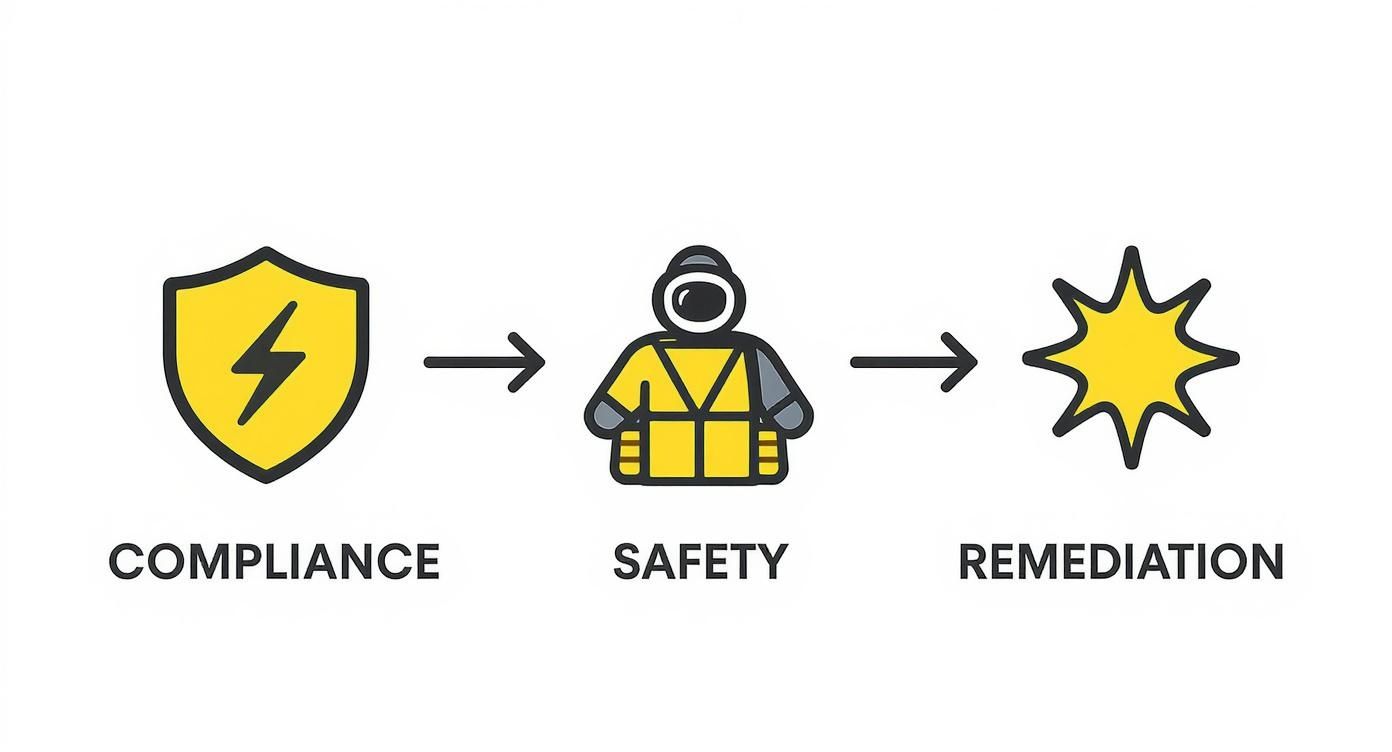
This workflow isn't just a diagram; it's our promise. Every successful cleanup starts with strict regulatory adherence and rock-solid safety protocols, which is the only way to reach a fully restored and verified site.
Step 1: Meticulous Site Assessment And Planning
The second we get your call, our job has already started. The first and most critical step is a thorough site assessment. We don't just glance at the visible spill; our goal is to understand the full, often hidden, scope of the contamination.
Our technicians arrive with calibrated instruments to test the air and surfaces, which lets us pinpoint the exact substance we're up against. This scientific approach is vital. A chemical spill requires a completely different strategy than friable asbestos fibers, so getting it right from the start is non-negotiable. From there, we map out the contamination zone and build a detailed cleanup plan specifically for your property.
Step 2: Strict Containment Protocols
Before a single contaminated item is moved, our number one priority is to stop the problem from spreading. We immediately set up a strict containment zone using physical barriers, heavy-duty plastic sheeting, and specialized sealants. This is far more than just shutting a door—it’s about creating a completely sealed-off environment.
To trap any airborne contaminants, we often set up negative air pressure systems. These machines use powerful fans and HEPA filters to make sure air flows into the contaminated area, not out. This tech is crucial for capturing microscopic particles like asbestos fibers or chemical vapors, protecting the rest of your property from cross-contamination.
Ensuring the safety of all personnel involved is paramount; therefore, a crucial step in any hazmat remediation process involves understanding the correct use of Personal Protective Equipment (PPE). This knowledge is non-negotiable for anyone entering a hazardous environment.
Step 3: Safe Removal And Decontamination
Once the site is fully contained and secure, the real work of the hazardous materials cleanup begins. Our IICRC-certified technicians gear up in the correct PPE and enter the containment zone to systematically remove every trace of the hazardous materials.
The methods we use depend entirely on the substance we're dealing with:
- For chemical spills: We apply specialized absorbents and neutralizing agents that render the material inert before it's safely removed.
- For asbestos: We rely on wet methods to keep fibers from going airborne, along with HEPA-filtered vacuums built specifically for asbestos abatement.
- For biohazards: We use EPA-approved hospital-grade disinfectants and properly remove all contaminated porous materials that can't be saved.
After the source material is gone, we begin a deep decontamination of every single surface inside the contained area. This makes absolutely certain that no hazardous residue is left behind.
Step 4: Compliant Transportation And Disposal
Getting the hazardous waste off your property is only half the job. What happens next is controlled by a dizzying maze of local, state, and federal laws. You can’t just toss this stuff in a regular dumpster—the liability for that is enormous.
We carefully package and label all hazardous waste according to strict Department of Transportation (DOT) regulations. Our team then manages the fully compliant transport of the materials to a licensed disposal facility. We provide you with a complete chain of custody documentation, which is the official record you need to prove the waste was handled legally from start to finish. That paperwork is your shield against any future liability.
This disciplined, step-by-step approach is central to all our emergency services. For example, the detailed documentation and containment strategies are very similar to how we manage our water damage restoration process.
Step 5: Post-Remediation Verification
Our work isn't done just because the last bag of waste has been hauled away. The final, and arguably most important, step is giving you scientific proof that your property is safe again. We believe in verification, not just a visual thumbs-up.
For most projects, we bring in an independent, third-party industrial hygienist to conduct post-remediation testing. They take air and surface samples from the area we just cleaned and send them to an accredited lab for analysis.
Only when those lab results come back confirming that contaminant levels are at or below safe, acceptable limits do we officially call the project complete. This final step in our hazardous materials cleanup gives you documented peace of mind that your property has been truly restored.
Common Questions About Hazardous Materials Cleanup
When you're facing a potential hazmat situation, confusion and stress can set in fast. Property owners call us with urgent questions every day, and we believe in giving clear, direct answers. This section tackles some of the most common queries we get about hazardous materials cleanup, so you can make informed, safe decisions when it counts.
Q: How can I tell if a substance is hazardous?
A: When in doubt, the golden rule is to treat any unknown substance as if it’s hazardous. Never touch, taste, or inhale something you can't identify. Look for red flags like sharp chemical smells, visible labels on containers (e.g., flammable, corrosive), or the known presence of older materials in Los Angeles buildings, like asbestos insulation or lead paint. The only way to be 100% certain is to call a certified professional for an assessment.
Q: What is the difference between hazmat and biohazard cleanup?
A: While both are specialized, they address different threats. Hazardous materials (hazmat) cleanup focuses on chemical, industrial, or radiological waste like fuel spills, solvents, and asbestos. The danger is chemical toxicity or flammability. Biohazard cleanup deals with biological materials posing an infection risk, such as blood, raw sewage, or viruses, where the goal is to kill pathogens.
Q: Is it safe to clean a small chemical spill myself?
A: Absolutely not. Even a small spill can release invisible, toxic fumes or cause severe skin damage. Without professional-grade personal protective equipment (PPE), neutralizing agents, and proper ventilation, you risk immediate harm. Furthermore, disposing of cleanup materials in regular trash is often illegal in California and can lead to steep fines from agencies like Cal/OSHA.
Q: What does professional hazmat cleanup cost in Los Angeles?
A: The cost of a professional hazardous materials cleanup varies significantly based on the specific situation. Key factors include the type and quantity of the material, the size and accessibility of the contaminated area, the specific risks involved (like flammability), and the legally required disposal methods. We provide a detailed, transparent quote after a thorough on-site inspection.
Q: Does my insurance cover hazardous materials cleanup?
A: Coverage depends entirely on your policy and the cause of the contamination. A standard homeowner's policy might cover cleanup from a covered event, like a fire releasing toxic materials. However, many policies exclude pollution or long-term contamination. It’s crucial to review your policy and consult your agent. Our team has experience working with all major carriers and can provide the necessary documentation. You can learn more in our guide to insurance claims for restoration.
Don't take chances with your health or your property. For certified, compliant, and immediate assistance with hazardous materials, contact the experts at Onsite Pro Restoration.