
To truly get rid of dog smell, you have to go beyond surface cleaning and attack odors at their source. This means washing all pet bedding, deep-cleaning carpets and furniture with powerful enzymatic cleaners, and circulating fresh air to clear out airborne dander and oils. For stubborn, widespread odors that have seeped into your home's structure, professional intervention may be the only permanent solution.
If you’re fighting a persistent pet odor that just won’t quit, our IICRC-certified technicians can help. Onsite Pro Restoration uses advanced technology to find and destroy odors at the molecular level.
Get Your Free Odor Assessment Today
Why Your Home Still Smells Like Dog
Let's be honest. Your standard cleaning routine isn't cutting it against that stubborn dog smell. You scrub the floors, spray air freshener, and light a candle, but that familiar "wet dog" or musty scent always returns. This isn't a knock on your cleaning skills; it's because you're fighting an invisible, deeply embedded enemy. The real problem isn't the surface dirt you can see but the microscopic particles that have made a home deep within your porous surfaces.
You're not alone in this battle. With roughly 90 million dogs in the United States, millions of homeowners are trying to figure out how to manage pet odors. According to World Population Review, the U.S. has more dogs than any other country, which means countless people are dealing with the exact same frustrating smells. In a place like Los Angeles County, where homes are often close together and indoor-outdoor living is common, these odors can become especially concentrated.
The Problem of Odor Reservoirs
The main reason those smells won't leave is because of what restoration professionals call "odor reservoirs." These are the hidden spots where smells collect, concentrate, and fester over months or even years. Think of these reservoirs as sponges, constantly soaking up and holding onto odor molecules. They are almost always porous materials that have been compromised.
- Carpet Padding and Subfloors: Urine, dander, and oils don't just sit on top of the carpet. They seep right through the fibers, soaking into the pad and sometimes even the wood subfloor underneath, a common issue in older Sherman Oaks homes.
- Upholstery and Furniture: The foam cushions in your sofa and chairs are perfect sponges for dander, drool, and body oils.
- Drywall and Baseboards: When accidents happen near a wall, urine can wick up into the drywall and baseboards, which are extremely porous and will hold onto odor indefinitely.
- HVAC Systems: Your heating and air conditioning system is an expert at circulating air. Unfortunately, that means it's also circulating pet dander, hair, and odor particles to every single room in your house, from the living room to the bedrooms.
Before you start tearing things apart, it's a good idea to get familiar with the general strategies for how to eliminate pet odors so you can build a solid plan.
Immediate Actions vs. Deep Cleaning Methods
To help you decide where to begin, it's useful to separate the quick fixes from the real solutions. Quick actions provide immediate but temporary relief, while deep cleaning methods deliver lasting results by eliminating the source.
| Action Type | Method | Effectiveness | Best For |
|---|---|---|---|
| Immediate Actions | Ventilation, Washing Bedding, Quick Vacuuming | Temporary Odor Reduction | Getting immediate relief before guests arrive; clearing the air for deeper cleaning. |
| Deep Cleaning | Enzyme Cleaners, Steam Cleaning, Ozone/Hydroxyl Treatment | Long-Term Odor Elimination | Tackling the root cause of smells in carpets, upholstery, and subfloors. |
| Immediate Actions | Air Fresheners, Scented Candles | Masking Only | Covering up smells for a very short period. Does not remove the source. |
| Deep Cleaning | Professional Deodorization, HVAC Cleaning | Whole-Home Odor Removal | Eliminating pervasive, house-wide odors that have penetrated the structure. |
This table shows there’s a time and place for both approaches. Immediate actions make the house livable, while deep cleaning is what truly solves the problem for good.
Your Quick-Start Action Plan
If you need immediate relief, focus on these three things first. This initial push clears the air of the worst offenders and sets you up for the deeper cleaning that needs to happen next. It's a similar principle to how you'd get rid of mildew smell, where getting air moving and removing the most obvious source is always the first step.
First, ventilate the entire house. Seriously. Open every window and door you can for at least 30-60 minutes. Turn on ceiling fans, get box fans blowing out the windows, and create a strong cross-breeze to physically push the stale, smelly air outside.
Next, wash all pet bedding. Gather up every single pet bed, blanket, towel, and washable toy. Run them through the washing machine on the hottest setting the fabric can handle, using a heavy-duty detergent to break down the oils and bacteria causing the smell.
Finally, do a thorough vacuuming. Don't just do a quick pass. Use a vacuum with a HEPA filter, which is critical for trapping the microscopic dander particles that trigger allergies and cause odors. Go over all carpets, rugs, and upholstered furniture slowly, making multiple passes in different directions to pull up as much embedded hair and dander as possible.
A Room-by-Room Guide to Get Rid of Dog Smell
To really get rid of dog smell for good, you have to think like a restoration pro. You need a targeted plan. A generic air freshener won't cut it because that lingering odor embeds itself differently into everything—carpets, sofas, and even hard floors. Let's walk through how to tackle dog odors in every part of your home, so it smells fresh, not just "pet-friendly."
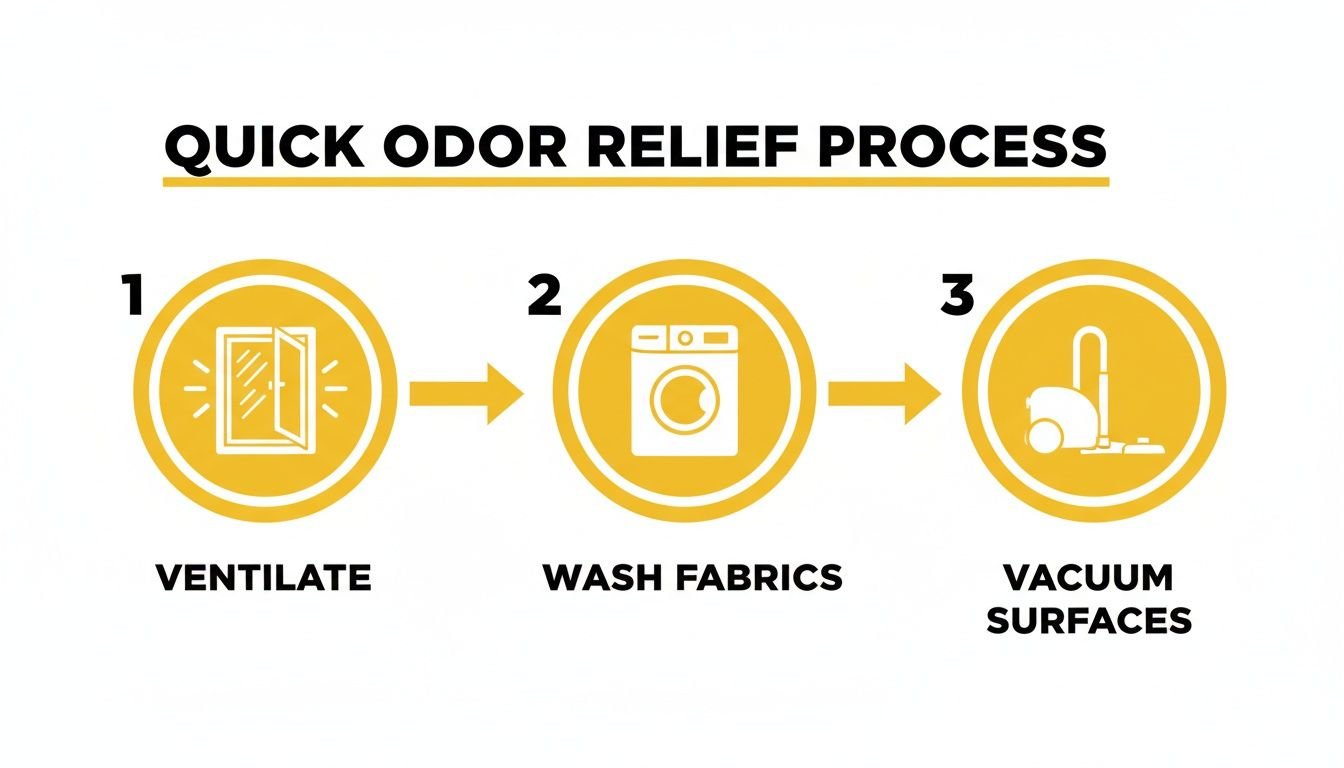
Ventilating, washing fabrics, and vacuuming are your first line of defense. They get rid of the loose dander and airborne particles, which sets the stage for the deep cleaning that actually solves the problem.
Carpets and Rugs
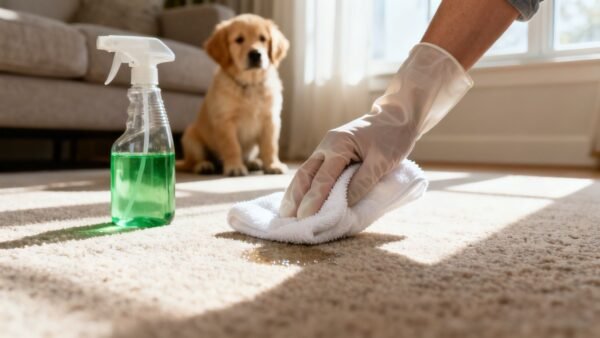
Carpet is almost always the biggest odor sponge in a home. Its fibers are perfect for trapping pet dander, body oils, and—worst of all—urine crystals that keep releasing odor every time humidity rises. For a small, fresh accident, your go-to tool is a good enzymatic cleaner. These aren't just soaps; they use specific enzymes that literally digest the uric acid and proteins in urine, breaking the smell down at a molecular level.
But if the smell is everywhere or has been there for a while, you may need professional steam cleaning. I'm not talking about a rental unit from the grocery store. Professional hot water extraction equipment uses much higher heat and far more powerful suction, which is the only way to pull contaminants out from deep in the carpet padding. If an accident has truly soaked the floor, you also have a water damage situation. Our guide on how to dry wet carpet fast explains the critical steps to prevent mold from becoming your next big problem.
Key Takeaway: When you use an enzyme cleaner, follow the directions exactly. This means completely saturating the spot and the area around it—urine spreads out underneath the surface. Then you must let it sit, sometimes for hours, to give the enzymes time to work before you blot it up. If you rush it, you've wasted your time and money.
Upholstery and Fabric Deep Cleaning
That favorite spot on the sofa where your dog naps? It's holding onto the same oils and dander as your carpet. Before you try to clean any furniture, find the fabric care tag and look for a cleaning code.
- W: You can use water-based cleaners.
- S: You must use a solvent-based cleaner. Water will likely leave a stain.
- W/S: Either water or solvent-based cleaners are safe.
- X: Do not use water or solvents. You can only vacuum this fabric.
For any fabric tagged with a "W" or "W/S," you can usually get good results with a high-quality upholstery shampoo mixed with water. Pet accidents in the bedroom are a whole other challenge, especially on porous surfaces. For those situations, knowing the right steps is essential, and guides on how to get urine smell out of a mattress can be a lifesaver for keeping your bedroom fresh.
Hard Surfaces and Hidden Culprits
Don't assume your hard floors are safe. Urine is acidic and can seep into the grout between tiles, tiny scratches in a hardwood floor's finish, and the unsealed edges of laminate. Even the concrete slab foundations common in the San Fernando Valley are porous enough to absorb odors.
Start by cleaning these surfaces with a pH-neutral floor cleaner. Then, go back and spot-treat any grout lines, seams, or visible cracks with an enzymatic solution. And don't forget to look up—washable curtains and even the walls themselves can collect a film of dander and oil over time. A quick wipe-down with a gentle cleaner can make a surprising difference.
Choosing the Right Products to Defeat Dog Smell
To permanently get rid of dog smell, you need to stop thinking like a homeowner and start thinking like a restoration pro. The cleaning aisle is a minefield of products that promise a fresh-smelling home, but most of them are just masking agents. They cover up odors with heavy perfumes.
This is the equivalent of painting over a water stain. It looks better for a little while, but it does absolutely nothing to fix the leak causing the problem. The moment the perfume fades, the original dog smell comes roaring back because the source is still there.
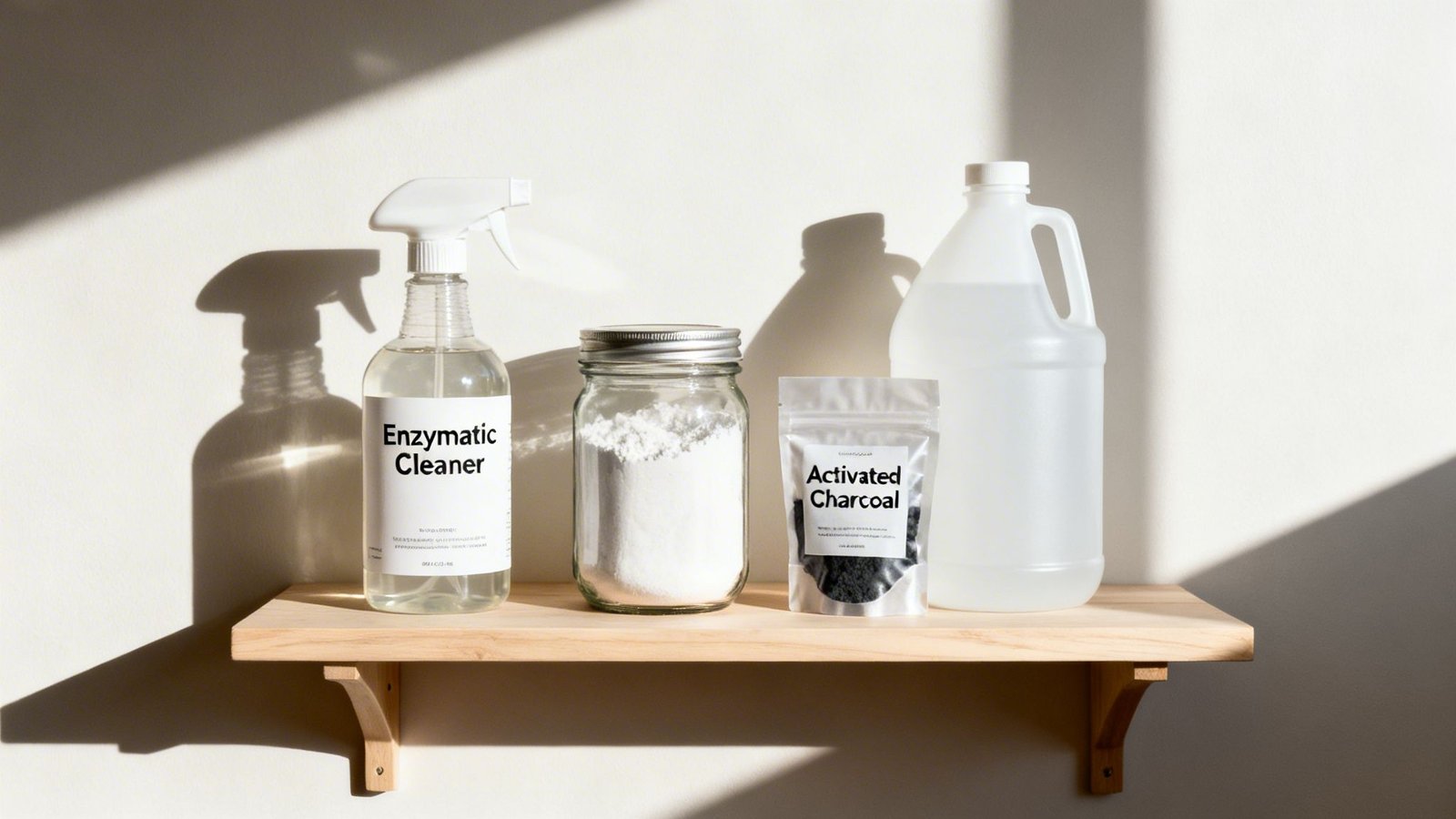
The Power of Enzymatic Cleaners
True odor neutralization means breaking down the offending molecules on a microscopic level. This is where enzymatic cleaners become the most important tool in your arsenal. These aren't just soaps; they're biological formulas packed with beneficial bacteria and specific enzymes that target organic waste.
When you saturate a urine spot with an enzymatic cleaner, you're deploying a microscopic cleanup crew to literally digest the source of the smell.
- Protease: This enzyme is the heavy lifter, breaking down the complex proteins found in urine and feces.
- Amylase: This one goes to work on the starches that are often part of pet-related messes.
- Lipase: This enzyme targets and dissolves the fats and oils from your dog’s skin and coat that get embedded in fabrics and carpet fibers.
These cleaners effectively eat the odor source, leaving behind only harmless water and carbon dioxide. This is the only method that will truly stop old urine spots from "reactivating" and smelling awful again on a humid day, especially during the "June Gloom" we get in coastal areas like Santa Monica.
Natural Deodorizers for Specific Jobs
While enzyme cleaners are your go-to for organic stains, a few household staples are phenomenal for handling general, ambient odors.
Pro Tip: Don't ever mistake "natural" for "weak." When used correctly, baking soda, white vinegar, and activated charcoal are absolute powerhouses for odor control.
Sprinkling baking soda on your carpet and letting it sit overnight before vacuuming is a perfect example. It works by absorbing those lingering, oily dog odors from dander that have settled into the fibers.
White vinegar's acidic properties make it fantastic for neutralizing the alkaline ammonia in urine, especially on hard surfaces. A 50/50 mix of white vinegar and water in a spray bottle is a great first-response tool for accidents on tile or sealed hardwood.
Activated charcoal is another excellent, low-effort deodorizer. Placing bags of charcoal near pet beds, inside closets, or in your car works wonders by passively trapping airborne odor molecules. For a large area or a truly stubborn, whole-house smell, however, you may need to bring in the big guns like an air scrubber rental to professionally filter all the air in the space.
Advanced Techniques to Get Rid of Dog Smell That Won't Go Away
So you’ve tried every spray, scrubbed with enzyme cleaners, and even rented a steam cleaner, but that dog smell just won’t quit. When the basics fail, it’s a sure sign the problem has gone far beyond the surface. That lingering odor means microscopic molecules have worked their way deep into everything porous in your home—your subfloor, the drywall, even the insulation and HVAC system.
At this point, you're past the stage of manual cleaning. You need to call in the heavy-duty tech that restoration professionals use to destroy odors at the molecular level, everywhere, all at once.
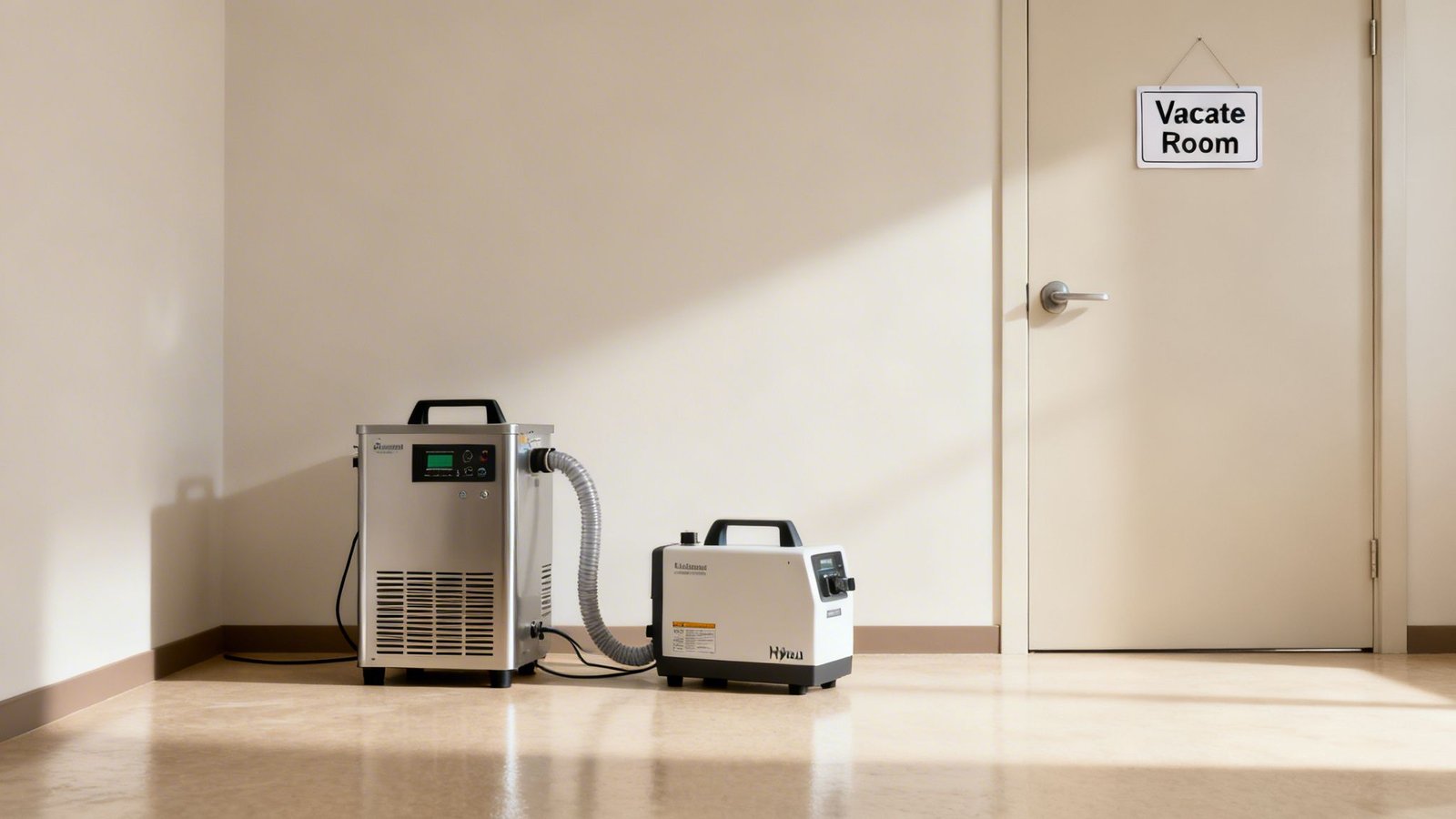
This is where true deodorization equipment comes in, like ozone generators and hydroxyl machines. These aren't just glorified air fresheners. They’re powerful tools that generate and push oxidizing molecules throughout your home to find and shatter the chemical bonds of odor compounds in the air and on every surface.
Ozone Generators for Severe Odor Removal
Ozone (O₃) is a highly reactive gas that is ruthlessly effective at destroying stubborn smells. When we deploy an ozone generator, it floods an enclosed, sealed space with this gas. The ozone then attacks and neutralizes odor-causing compounds on a chemical level. Think of it as a hard reset for a room with severe, embedded odors.
However, that power comes with a major catch.
CRITICAL SAFETY NOTE: High concentrations of ozone are harmful to all living things. An ozone treatment requires the property to be 100% vacated by all humans, pets, and even houseplants for the entire treatment and ventilation period. This is absolutely a job for IICRC-certified professionals who follow strict safety protocols.
Hydroxyl Treatments for Occupied Spaces
What if vacating the property isn't an option? A hydroxyl treatment is the answer. It’s a powerful alternative that is completely safe to use in occupied spaces. Hydroxyl generators use UV light to create hydroxyl radicals (·OH), the same molecules that naturally scrub the Earth's atmosphere.
These radicals are pros at breaking down odors and volatile organic compounds (VOCs), but they pose no risk to people, pets, or plants. This makes them perfect for a home where the family can't leave or in an active business. While the process is gentler and can take longer than an ozone shock treatment, it provides continuous, safe odor elimination.
For LA homeowners from Glendale to West Hollywood, professional restoration may even be covered by insurance if the damage is linked to a covered event like a pipe leak. Professional systems like ozone and hydroxyl can neutralize over 99% of odors, a world away from what DIY methods can achieve. According to the EPA, these advanced oxidizers are effective at destroying a wide range of airborne pollutants.
If you're fighting stubborn urine smells in particular, our guide on how to eliminate urine odor from deep within carpets and subfloors is a must-read.
DIY vs. Professional Deodorization Methods
When deciding between a DIY approach and calling in the pros, it helps to see the methods side-by-side. The right choice depends on the severity of the odor, your budget, and how deep the smell has penetrated your home's materials.
| Method | How It Works | Best For | Limitations |
|---|---|---|---|
| DIY Enzyme Cleaners | Uses beneficial bacteria to produce enzymes that break down organic waste (urine, feces). | Fresh, localized pet accidents on carpets and upholstery. | Ineffective on old, widespread, or deeply set-in odors. Can't treat airborne smells. |
| DIY Deodorizing Powders | Typically baking soda-based; absorbs surface-level odors from carpets before being vacuumed up. | Light, general mustiness or refreshing a carpet between deep cleans. | Only masks or absorbs surface odors; does not eliminate the source. Messy cleanup. |
| Professional Ozone | An O₃ gas generator fills a sealed space, chemically altering and destroying odor molecules. | Severe, persistent odors that have penetrated an entire structure (smoke, decay, pet). | Extremely hazardous. Requires full evacuation of people, pets, and plants. Can damage rubber and plastics. |
| Professional Hydroxyl | A generator uses UV light to create hydroxyl radicals that safely break down odors and VOCs. | Widespread odors in occupied spaces where evacuation is not possible. Continuous air scrubbing. | Slower acting than ozone. May require longer treatment times for severe odors. |
Ultimately, while store-bought products have their place for minor incidents, they can't compete with the molecular-level destruction that professional equipment provides for stubborn, widespread dog smells.
Keeping Dog Smells from Coming Back for Good
Getting rid of dog odors is one thing; making sure they don't creep back in is the real win. To keep your home smelling fresh, you have to move from just reacting to messes to actively preventing them. This isn't about spending your entire weekend scrubbing. It's about building a few smart, consistent habits that stop odors before they even start.
Think of it as maintenance. A little effort on a regular basis prevents the deep-seated smells that force you into a massive deep-cleaning project later on.
A Realistic Cleaning Schedule is Your Best Defense
A manageable routine is your secret weapon against the constant buildup of pet dander, hair, and oils. Instead of letting it all accumulate, you stay ahead of the game with a few key tasks.
- Vacuum High-Traffic Zones Twice a Week: Hit the areas where your dog hangs out the most—the entryway, their favorite corner of the living room, and right by their bed. A vacuum with a HEPA filter is non-negotiable here; it’s what actually traps the microscopic dander that causes allergies and smells.
- Wash Pet Bedding Every Week: Your dog's bed is ground zero for that "dog smell." It's packed with body oils and bacteria. Tossing it in the wash weekly with hot water and a good, heavy-duty detergent is the only way to break all that grime down.
- Mop Hard Floors Weekly: Don't forget the floors. Dander and dried drool settle on tile, hardwood, and laminate. A weekly mop gets rid of that sticky residue, especially along baseboards where dust and smells love to hide.
This consistent rhythm is what stops the problem from becoming overwhelming.
Use Protective, Washable Covers
Here’s one of my top tips for every single dog owner: make cleaning easier on yourself. Go find some machine-washable covers, throws, or even just stylish blankets for the furniture your dog claims as their own.
These create a simple barrier, catching almost all the hair, dander, and dirt. Instead of facing a full-on upholstery deep-clean, you just strip the cover off and throw it in the laundry. This one move makes a massive difference in how much odor gets absorbed into your sofa cushions.
Deal With Accidents Immediately
When it comes to pet urine, speed is everything. The longer an accident sits, the deeper it penetrates. Once urine soaks through the carpet and into the padding or subfloor, it becomes a major project that's often impossible for a homeowner to fix completely.
Pro Tip: Build a "pet accident kit" and keep it handy. All you need is a roll of paper towels, a quality enzymatic cleaner, and a few clean rags. The second you spot an accident, blot—never rub!—to soak up the liquid. Then, completely saturate the spot with the enzyme cleaner. It needs to sink in just as deep as the urine did to actually destroy the odor molecules.
Upgrade Your Home’s Air Quality
Finally, you have to manage what you can't see. The odors floating in the air are a huge part of the problem. A high-quality air purifier with both a HEPA filter and an activated carbon filter is a total game-changer for pet owners.
The HEPA filter grabs the airborne pet dander, while the activated carbon filter literally absorbs the odor-causing molecules from the air.
Putting one in your main living area or bedroom creates a constant, passive odor-control system. It's a huge help for Los Angeles homeowners, especially when it’s too hot to just open the windows. This is how you proactively get rid of dog smell and keep it gone.
When to Call a Professional Restoration Company
Let's be honest. Sometimes, despite your best efforts, the dog smell wins. You've scrubbed, sprayed, and aired out every room, but a stubborn, musty odor just won't quit. This is the point where a DIY approach hits its limit.
When a smell persists, it’s a major red flag. It tells you the source isn’t just on the surface anymore. The odor has likely soaked deep into the carpet padding, the subfloor, or even wicked up into your home’s drywall and settled inside the HVAC system.
Signs You Need an Expert
Some situations are simply too complex or hazardous for a homeowner to tackle alone. If you're facing any of these scenarios, it's time to pick up the phone.
- Odor Mixed with Water Damage: A leaky pipe that soaks an old urine spot is a recipe for disaster. The moisture reactivates the urine salts and creates a perfect breeding ground for bacteria and mold.
- Smell After a Sewer Backup: This is a non-negotiable call to a professional. Raw sewage contains dangerous pathogens that pose serious health risks and require specialized biohazard cleanup protocols.
- The Smell You Can’t Pinpoint: You've cleaned every visible surface, but a funky odor still hangs in the air. This almost always means the problem is structural, hiding in wall cavities, under flooring, or deep within your ductwork.
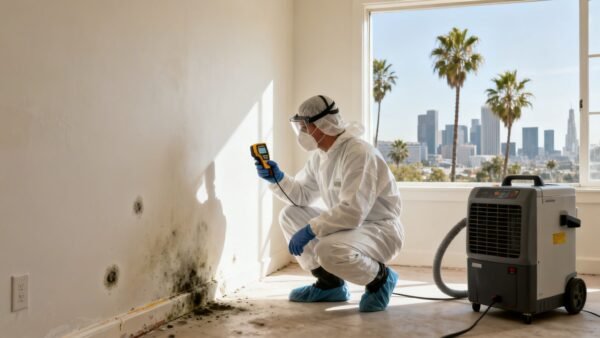
An IICRC-certified technician doesn't just mask odors; they hunt them down. Using tools like moisture meters and thermal cameras, they can trace an odor to its hidden source. This is the only way to permanently get rid of dog smell that has deeply penetrated your home.
If you're dealing with a smell that just won't go away, you can find more answers in our odor removal service FAQ. Protecting your property's value and ensuring healthy indoor air quality sometimes means knowing when to call for professional backup.
Frequently Asked Questions About Dog Odor Removal
After you’ve scrubbed the carpets and washed the dog beds, some of the toughest odor questions still remain. These are the specific, practical concerns we hear from homeowners who are at their wits' end with lingering dog smells.
Can I really get rid of dog urine smell from a wood subfloor?
Honestly, this is almost impossible for a homeowner to do effectively. Even if you clean the surface, urine soaks deep into porous wood. The real problem is the uric acid crystals left behind, which keep releasing that sharp ammonia smell every time humidity levels rise. The only true professional fix is to sand the subfloor down to remove the contaminated layer, then apply a specialized odor-blocking primer. For severe, long-term saturation, the affected section of the subfloor often has to be cut out and completely replaced. A restoration professional can use moisture meters to determine just how deep the damage goes.
Will my homeowners insurance cover the cost to get rid of dog smell?
In most cases, no. Standard homeowners policies view pet odors as a routine maintenance issue, which isn't covered. Insurance is designed for sudden and accidental events, not gradual problems. However, if the odor is a direct result of a covered event—say, a burst pipe soaks a carpet that was already urine-stained—then the deodorization process might be included as part of the water damage claim. We have experience helping Los Angeles clients navigate these tricky claims.
How do I know if the dog smell is coming from my HVAC system?
The biggest clue is a house-wide odor that suddenly gets much stronger the moment your heat or air conditioning kicks on. You might also notice a distinct musty or "stale dog" scent coming straight from the air vents themselves. This is a classic sign that years of pet dander, hair, and dust have built up in your ductwork. That buildup becomes a constant source of odor that gets circulated everywhere. Professional duct cleaning is the only way to resolve this and stop your HVAC from spreading the smell.
Are ozone treatments safe for my home and pets?
Ozone treatments are incredibly effective at destroying odor molecules, but they demand strict, professional safety protocols. The high concentrations of ozone gas required for the job are harmful to all living things, including people, pets, and even houseplants. A certified technician will ensure the home is completely vacant during the treatment. Afterward, they use sophisticated monitoring tools to confirm the ozone has dissipated and the air is safe before anyone is allowed to return. This is a powerful method to get rid of dog smell, but it should never be attempted as a DIY project.
If you're facing a stubborn odor you just can't beat in your Los Angeles home, Onsite Pro Restoration is ready to help 24/7. Our IICRC-certified technicians use advanced tools to find and eliminate odors at their source.