
When the sirens fade and the fire is out, the real work of recovery begins. The first 24 to 48 hours after a fire are the most critical for mitigating long-term damage from smoke, soot, and the water used by firefighters. Understanding and initiating the fire damage restoration process immediately can save you thousands in secondary damages and unnecessary stress.
For homeowners in Los Angeles and the San Fernando Valley, the aftermath can be particularly overwhelming. This guide breaks down each step, so you know exactly what to expect and how to protect your property.
Get a Free Fire Damage Assessment Now
What to Do Immediately After a Fire
The moments after the fire department leaves are chaotic and emotional. Your first instinct might be to rush inside and assess the damage, but this is one of the most dangerous things you can do. The aftermath of a fire is a minefield of hidden hazards, from compromised structures to toxic air.
Even without visible flames, the property is not safe. Intense heat can weaken floors, walls, and ceilings, compromising the building's structural integrity. Damaged electrical systems pose a severe shock risk, and the air is often filled with invisible soot particles and combustion byproducts that can cause serious respiratory issues.
The Critical First 24-48 Hours
Time is your enemy in a post-fire scenario. In that initial two-day window, acidic soot begins to permanently etch and corrode surfaces. Smoke odors penetrate deeper into porous materials like drywall, wood, and upholstery, making them significantly harder to remove later.
On top of that, water from firefighting efforts introduces a secondary threat. If not addressed immediately, it will cause materials to swell and warp, leading to a serious mold problem in no time. Acting fast isn't just about cleanup; it's about aggressive damage control. This is why having a 24/7 emergency response team is vital. For a homeowner dealing with a flat-roof leak in Sherman Oaks that caused an electrical fire, or a kitchen fire in a Glendale apartment, a professional crew can arrive quickly to begin these essential first steps.
Securing Your Property and Preventing Further Damage
After ensuring everyone is safe, your first call should be to a certified restoration company. Upon arrival, their top priorities are safety and security. They will first assess immediate hazards to ensure the site is safe for entry.
Next comes the board-up and tarping services—a non-negotiable step in the fire damage restoration process. This protects your vulnerable property from weather, prevents vandalism, and secures it from unauthorized entry. A properly boarded-up window or a tarp over a damaged roof stops rain from creating more water damage and keeps your home from becoming an easy target.
The initial emergency response isn't just about stopping the immediate threat; it's about creating a controlled environment where the rest of the fire damage restoration process can unfold effectively and safely.
This simple infographic breaks down how a professional team tackles those first critical actions.

As you can see, a systematic approach—safety first, then securing the property, then assessing the damage—is the foundation for a successful recovery. These decisive actions prevent a terrible situation from spiraling into something far worse. For a deeper dive into these initial steps, check out our detailed guide on what to do after a house fire.
The scale of fire incidents really drives home the need for this rapid, professional approach. Projections for 2026 estimate the U.S. will see over 1.3 million fires, causing tragic fatalities and property losses exceeding $23 billion. These staggering numbers are exactly why a swift and organized fire damage restoration process is a necessity, not just a recommendation. For instance, knowing the local requirements for systems like Interconnected Smoke Alarms QLD is critical knowledge that can make all the difference.
The Professional Inspection and Damage Assessment Process
Once your property is secure and immediate dangers are mitigated, the real detective work begins. A professional inspection is not a quick walkthrough; it's a deep, systematic dive into every layer of damage. This assessment becomes the blueprint for the entire fire damage restoration process, providing the hard data needed for a solid action plan and a much smoother insurance claim.

This step goes far beyond what the eye can see. IICRC-certified technicians use their training and specialized equipment to uncover the full extent of the fire's impact, which is almost always a combination of three damage types: fire, smoke, and water.
Uncovering Hidden Damage with Specialized Tools
Visible charring is just the tip of the iceberg. The intense heat from a fire can weaken structural components without leaving a burn mark, and the water used to extinguish it can soak deep into walls and floors.
To find this hidden damage, technicians employ advanced technology:
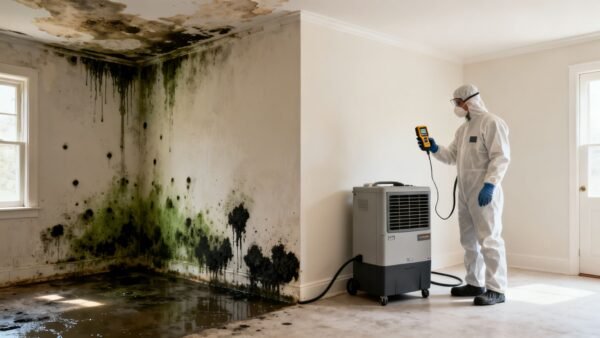
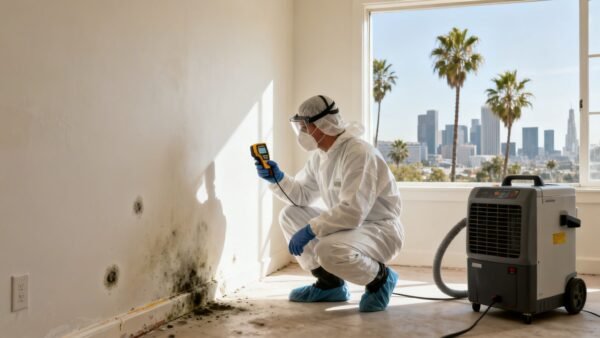
- Thermal Imaging Cameras: These cameras detect temperature differences, allowing us to spot hidden moisture pockets behind drywall or under flooring. Finding this moisture is critical for preventing mold, which can start growing in as little as 48 hours.
- Moisture Meters: We use both penetrating and non-penetrating meters to get precise moisture readings in materials like wood studs, drywall, and concrete. This tells us exactly what is saturated and needs to be either dried or removed.
- Hygrometers: These tools measure the humidity in the air, providing a baseline for the entire drying operation and helping us monitor progress effectively.
Without this technology, restoration would be guesswork. Guesswork leads to incomplete drying and creates a perfect breeding ground for long-term problems like rot and mold.
Assessing the Scope of Smoke and Soot
Not all smoke damage is the same. The materials that burned determine the type of smoke residue left behind, and each type requires a different cleaning strategy. A professional assessment will identify:
- Wet Smoke: From slow, smoldering fires (e.g., plastics, rubber). It leaves a sticky, smeary film that is challenging to clean.
- Dry Smoke: Produced by fast-burning, high-temperature fires (e.g., wood, paper). It leaves a powdery residue that is more manageable.
- Protein Residue: The invisible result of a kitchen fire involving organic matter. It's not visible but leaves a powerful, pungent odor.
We also inspect the HVAC system. If it was running during the fire, it almost certainly circulated smoke and soot particles throughout the ductwork. If not addressed, the system will re-contaminate the house every time it is turned on.
The final product of this assessment is a detailed scope of work. This document is a transparent roadmap, listing every single action required—from demolition to deodorization—for both you and your insurance adjuster to follow.
The last part of the inspection is sorting through your personal belongings. The goal is always to restore, not replace, whenever possible. A professional restoration service can quickly triage items: what’s salvageable, what needs specialized cleaning, and what is unfortunately a total loss. This level of detail is crucial for managing your insurance claim for personal property.
Deciding what to keep can be overwhelming. This table offers a general guide.
Identifying Salvageable vs. Non-Salvageable Items
| Item Category | Often Salvageable (With Professional Cleaning) | Often Non-Salvageable |
|---|---|---|
| Furniture | Hardwood furniture, metal items, some upholstered pieces with minor smoke damage. | Particle board furniture, heavily saturated upholstery, mattresses, plastic items. |
| Electronics | TVs, computers, and appliances if only affected by light, dry soot (requires expert testing). | Any electronic device directly exposed to heat, flames, or significant water. |
| Clothing & Linens | Most fabrics can be restored with specialized soot removal and deodorization techniques. | Items with severe charring, heavy wet smoke residue, or synthetic fabrics that have melted. |
| Documents & Photos | Can sometimes be restored through freeze-drying and careful cleaning if not charred. | Burned, charred, or completely saturated paper goods. |
| Food & Medicine | Canned or sealed glass-jarred goods from a cool, dry area. | All perishable food, packaged food in cardboard/plastic, and all medications. |
This is just a starting point. A professional assessment is the only way to be certain, as factors like heat intensity and soot type can change the outcome.
Soot Removal and Smoke Deodorization
Once the property is safe and the water is gone, you're left with the two most stubborn reminders of the disaster: soot and smoke. This isn't just about aesthetics. Soot is acidic and corrosive, while smoke odor permeates everything. This is where the fire damage restoration process becomes highly technical, shifting from emergency stabilization to a deep, scientific cleaning.

That fine black powder is soot, and its acidic nature means it can permanently stain or etch surfaces in just a few hours. The smell comes from microscopic smoke particles that have worked their way deep into porous materials. A little scrubbing and air freshener won't make a dent.
The Science Behind Soot Cleanup
You can't clean all soot the same way. A professional will first determine the type of soot they're dealing with—whether it's dry, powdery soot from a fast-burning wood fire or a wet, smeary mess from a slow, smoldering plastic fire. The answer dictates the entire strategy.
From there, the methods are incredibly specific:
- Dry Sponges: On delicate surfaces like painted drywall, technicians use special chemical sponges (often called "chem sponges" or "soot sponges"). These lift away fine, dry soot without water, which would just smear it and make things worse. This is always the first step before any wet cleaning.
- Media Blasting: For tough jobs like charred wood beams or smoke-damaged brick, gentle media blasting with materials like dry ice or soda can strip off the damaged top layer without harming the structure.
- Ultrasonic Cleaning: For items with intricate nooks and crannies like blinds, electronics, or fine china, ultrasonic baths use sound waves to create microscopic bubbles that gently dislodge soot from impossible-to-reach spots.
- Specialized Wet Cleaning: For non-porous surfaces like countertops and tile, pros use special cleaning agents designed to break down specific types of soot residue without causing damage.
One of the biggest mistakes we see is a homeowner trying to wipe down a sooty wall with a wet rag. This almost always grinds the acidic soot deeper into the paint, creating a permanent stain and making our job much harder—and more expensive.
Neutralizing Smoke Odor for Good
Smoke odor doesn't just hang in the air; it embeds itself deep inside your drywall, wood framing, carpets, and even insulation. This is why spraying an air freshener is like trying to fix a broken bone with a band-aid. To truly eliminate the smell, you have to neutralize the odor molecules themselves. Mastering the art of deodorization is what makes a house feel like a home again. To really understand what it takes, you can learn more about how to remove smoke smell for good.
Advanced Deodorization Technologies
To permanently kill the odor, professionals use powerful equipment you won't find at a hardware store.
- Ozone Generators: These machines create ozone (O3), a highly reactive molecule that chemically alters smoke particles, destroying them completely. The property must be entirely vacant of people, pets, and plants during treatment, as ozone is harmful to breathe.
- Hydroxyl Generators: A safer alternative that's becoming more popular. Hydroxyl generators use UV light to create hydroxyl radicals, nature's own "air scrubbers." They are safe to use in occupied areas and are fantastic at breaking down odors and other volatile organic compounds (VOCs).
- Thermal Fogging: This machine heats a solvent mixed with a deodorizer, creating a thick fog that mimics the behavior of smoke, seeping into every crack and porous surface. As the fog settles, it bonds with and neutralizes smoke particles.
The demand for these advanced solutions is growing fast. The restoration industry is seeing a 4-6% CAGR in fire and smoke services, largely because climate-related events are on the rise and insurance claims are getting more complex.
Water Mitigation and Structural Repairs
A fire is often just the opening act. The second, and sometimes equally destructive, part arrives with the thousands of gallons of water used to extinguish the flames. That water saturates everything, creating an immediate and serious secondary problem that kicks off a critical phase of the fire damage restoration process.
The clock starts ticking the moment the fire is out. In the warm, humid conditions common across Los Angeles County, mold can take hold in as little as 24 to 48 hours. This is why professional water mitigation isn't just another cleanup step; it's an emergency intervention to stop a much bigger problem before it starts.
The Science of Structural Drying
Removing visible standing water is only the beginning. The real challenge is extracting the moisture that has soaked deep into porous materials like wood studs, drywall, and subflooring. This is where professional-grade equipment is non-negotiable.
Our IICRC-certified technicians use a strategic combination of tools to create a balanced drying environment:
- Commercial-Grade Air Movers: These aren't your average fans. Dozens are positioned to create a vortex of airflow across wet surfaces, dramatically speeding up evaporation and pulling moisture out of materials into the air.
- Low-Grain Refrigerant (LGR) Dehumidifiers: These are the heavy lifters of the drying world. They work tirelessly to pull that evaporated moisture from the air, condensing it back into water that can be pumped away.
This balanced system of high-speed evaporation and aggressive dehumidification is the only way to ensure a structure is dried completely, from the inside out. We track progress daily with moisture meters and thermal imaging cameras to confirm when every material has returned to its safe, pre-loss dry standard. To dive deeper into the technical side, you can learn more about the essentials of water mitigation in our detailed article.
Shifting from Mitigation to Reconstruction
Once the last bit of moisture is gone and the property is officially declared dry, our focus pivots from cleanup and stabilization to rebuilding. The structural repair phase is where your home truly begins to come back to life.
This is far more than cosmetic touch-ups. It involves the meticulous removal and replacement of any materials compromised by the fire, smoke, or water—from charred wooden beams and framing to ruined drywall, warped flooring, and damaged electrical systems.
A common mistake homeowners make is assuming that any general contractor can handle the entire job. The reality is that fire restoration requires a unique blend of skills: emergency mitigation, specialized cleaning, and expert construction.
Choosing a single, integrated company to manage the entire project—from the initial board-up to the final coat of paint—offers a massive advantage. It streamlines communication with your insurance company and ensures a seamless transition between each critical phase.
Rebuilding Your Home Stronger
The reconstruction phase can also be an opportunity. While our primary goal is to return your property to its exact pre-loss condition, many homeowners use this moment to make desired upgrades. Whether it's installing new, more durable flooring or reconfiguring a layout, this can be a silver lining.
A qualified restoration company like ours handles every aspect of the rebuild:
- Structural Repairs: Replacing framing, subfloors, and roofing.
- System Installations: New electrical, plumbing, and HVAC systems.
- Interior Finishing: Hanging and finishing new drywall, painting, and installing flooring.
- Final Touches: Fitting new cabinets, countertops, doors, and trim.
By integrating the mitigation and reconstruction phases, the fire damage restoration process becomes more efficient, less stressful for you, and ultimately more successful.
Navigating the Insurance Claim Process
Dealing with an insurance claim after a fire can feel like a second disaster. It's confusing, stressful, and involves a mountain of paperwork. This is where the careful documentation from the initial inspection pays off, providing the evidence needed to build a solid case and get every penny you're owed.
A professional restoration team does more than just clean up and rebuild. We become your advocate, working directly with the insurance adjuster. We provide them with clear, industry-standard estimates and undeniable proof of the damage, which cuts through the red tape and helps get your claim approved much faster.
Decoding Your Insurance Policy
When you review your policy, you’ll encounter key terms that determine your payout. Understanding these is critical for managing expectations.
Here are the two most important terms to know:
- Replacement Cost Value (RCV): This is the best-case scenario. RCV coverage pays the full amount to replace or repair your property with new, similar materials, with no deduction for depreciation. Most modern policies are RCV.
- Actual Cash Value (ACV): This is trickier. ACV pays you for the replacement cost minus depreciation. So, if your 10-year-old roof is destroyed, an ACV policy gives you what a decade-old roof is worth, not the cost of a brand-new one.
Knowing which policy you have is step one. For a deeper dive, you can learn more about how homeowners insurance covers fire damage. A certified restoration pro can help you review your policy and ensure our work plan aligns with your coverage.
Pro Tip: Never sign off on anything from your insurance company until you've had an independent restoration expert do a full assessment. The adjuster's first estimate often misses hidden damage that an IICRC-certified technician is trained to spot.
The Pack-Out: Saving Your Belongings
Your personal belongings are covered under the "contents" portion of your policy. As part of the fire damage restoration process, we handle a careful content pack-out.
It's a meticulous system:
- Full Inventory: We photograph, catalog, and document every single item before it leaves your home. This digital inventory is shared with you and your adjuster.
- Safe Transport: Salvageable items are professionally packed and moved to our secure, climate-controlled facility for specialized cleaning.
- Advanced Cleaning: We use high-tech methods like ultrasonic cleaning, ozone treatments, and special laundry processes to restore items you might think are a total loss.
This detailed approach ensures everything is accounted for and professionally restored, helping you get the maximum payout for your personal property. The global damage restoration market is expected to hit $35 billion by 2033, and the U.S. market alone is projected to grow from $42.93 billion in 2025 to $55.53 billion by 2030. This growth means experienced companies are better equipped than ever to handle the complex documentation your claim demands.
The Final Walkthrough: Closing the Claim
Once all repairs and content restoration are complete, we conduct a final walkthrough with you and your insurance adjuster. This is our chance to confirm that every item in the approved scope of work has been completed to your satisfaction. After you give the final sign-off, we submit the final paperwork to the insurance company, and the claim is officially closed.
FAQs About the Fire Damage Restoration Process
After a fire, you’re left with a mountain of questions. To give you some clarity during a tough time, here are straightforward answers to the questions we hear most often from homeowners.
How long does the fire damage restoration process typically take?
The timeline depends entirely on the extent of the damage. For a minor kitchen fire contained quickly, the process might take a few days to a week for cleanup and minor repairs. However, for a significant structural fire, the timeline can stretch to several months. Key factors include the amount of water damage, the extent of smoke and soot spread (especially in the HVAC system), and the complexity of structural repairs. We provide a detailed project timeline after the initial inspection.
Is it safe to clean up fire damage myself?
No, you should never attempt to clean up fire damage yourself. The soot and residue left behind are a toxic cocktail of chemicals and carcinogens from burned materials. Without professional-grade personal protective equipment (PPE), you risk serious health hazards. Furthermore, improper cleaning techniques, like using a wet rag on a sooty wall, can permanently set stains and make professional restoration more difficult and expensive.
Will my homeowners insurance cover the entire cost of restoration?
In most cases, yes. A standard homeowners policy typically covers damage from fire and smoke. However, your coverage depends on your specific policy limits and your deductible. We work directly with your insurance adjuster, providing comprehensive documentation, photos, and detailed estimates using industry-standard software. Our goal is to advocate for you and help you get the maximum coverage you're entitled to under your policy.
What should I do with my personal belongings after a fire?
It's best to wait for professionals. Trying to clean smoke-damaged items without the right techniques can cause permanent damage, especially to sensitive items like photos, electronics, or upholstered furniture. We offer a professional content pack-out and cleaning service where we inventory, pack, and transport salvageable items to our facility for specialized restoration using advanced techniques like ultrasonic cleaning and ozone deodorization.
Don't let the stress of the unknown add to your burden. The expert team at Onsite Pro Restoration is on call 24/7 to provide a free assessment and guide you through every step. We’ll handle the entire fire damage restoration process—from cleanup and repairs to the insurance claim—so you can focus on what matters most: your family.