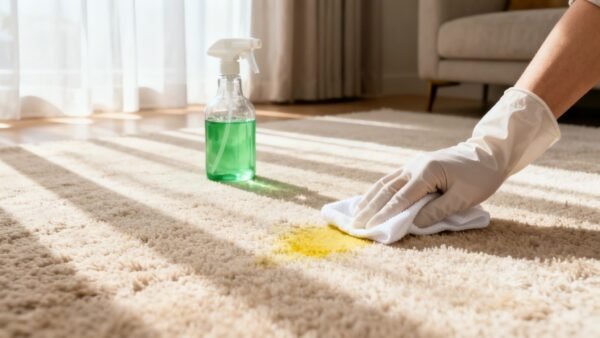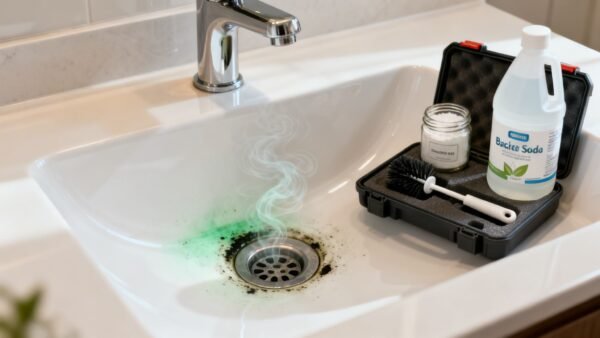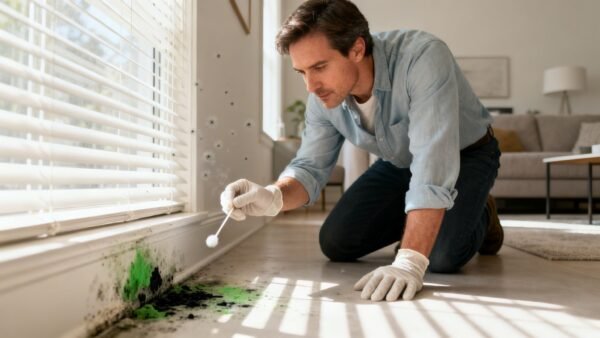

An enzyme cleaner for urine is your best weapon against pet accidents and lingering odors in your Los-Angeles home. It's a bio-based formula that doesn't just cover up stains and odors—it biologically destroys the uric acid crystals that cause the persistent smell. While standard cleaners only mask the odor temporarily, enzyme solutions break down the source, ensuring the odor never comes back. For homeowners struggling with stubborn pet smells, understanding how these cleaners work is the first step toward a fresh-smelling home.
If you're dealing with a persistent odor that DIY solutions can't fix, Onsite Pro is here to help. Our IICRC-certified technicians offer professional odor removal services across the greater Los Angeles area.
Why Enzyme Cleaners Are Essential for Urine Odor Removal
Let's be honest, that lingering pet urine smell is more than just an annoyance. It’s a persistent science problem that the usual household cleaners just aren't built to handle. When a pet has an accident, the urine is more than just water. The real culprit behind that stubborn, recurring odor is uric acid.
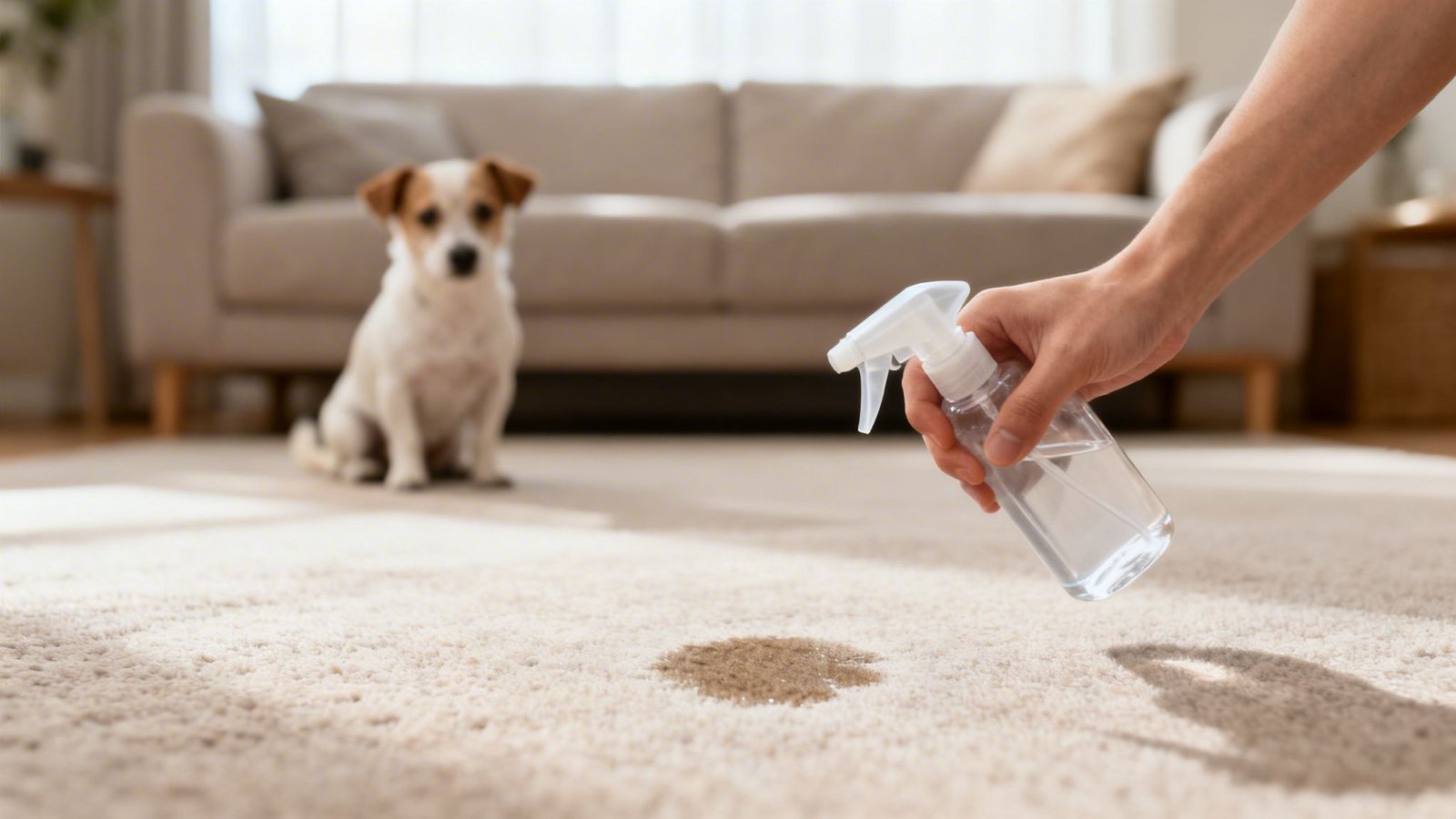
The Stubborn Science of Uric Acid
Uric acid is made of non-soluble crystals, meaning they don’t dissolve in water. This is exactly why your go-to cleaner, soap, or even a mix of vinegar and baking soda will always fall short. They might clean the visible liquid stain, but they leave the uric acid crystals behind, embedded deep in carpet fibers, upholstery, or the pores of your hardwood floors.
Think of it this way: trying to clean uric acid with soap and water is like trying to wash a rock away with a garden hose. You might get the surface dust off, but the rock itself isn’t going anywhere.
Key Takeaway: The odor you smell isn't from the liquid part of urine; it's from the uric acid crystals left behind. These crystals reactivate with humidity, causing the smell to return long after you thought the spot was clean. This is why a homeowner in Sherman Oaks might suddenly notice a pet smell resurfacing on a humid day, weeks after the initial accident.
How Enzyme Cleaners Work Differently
This is where an enzyme cleaner for urine changes the game. It doesn't just cover up the smell. It unleashes a microscopic army of beneficial bacteria and enzymes that act as biological catalysts, specifically targeting and "eating" the organic matter causing the problem.
- Protease: This enzyme breaks down the tough, protein-based components in urine.
- Amylase: This one goes after the starches within the stain.
- Lipase: This enzyme is responsible for digesting the fats.
Together, these enzymes dismantle the complex uric acid crystals, breaking them down into simple, odorless compounds like carbon dioxide and water. The stain and the odor aren't just masked—they are completely eliminated at a molecular level.
This is the exact same principle we restoration professionals at Onsite Pro Restoration rely on for complex biohazard jobs. When we’re called to a scene in Los Angeles with severe contamination, we use this biological process to guarantee complete deodorization and sanitation.
Enzyme Cleaners vs. Traditional Cleaners for Urine
| Feature | Enzyme Cleaner | Traditional Cleaner (Ammonia/Bleach-based) |
|---|---|---|
| Odor Removal | Biologically digests and eliminates uric acid crystals. | Masks odors with strong fragrances; smell often returns. |
| Stain Removal | Breaks down organic matter, removing the stain at its source. | May lighten or bleach the surface, but can leave residue. |
| Mechanism | Uses beneficial bacteria and enzymes to "eat" the waste. | Uses harsh chemicals to disinfect or bleach the area. |
| Long-Term Effect | Permanently removes the source, preventing re-soiling. | Leaves uric acid behind, encouraging pets to mark the same spot. |
| Surface Safety | Generally safe for most water-safe surfaces when used as directed. | Can discolor fabrics, damage wood finishes, or be toxic. |
The takeaway is clear: for a permanent solution, you need a cleaner that works on a biological level, not just a chemical one.
The Growing Demand for Effective Solutions
The power of these cleaners hasn't gone unnoticed. The market for pet urine removers, which is dominated by enzyme-based products, was valued at USD 1.85 billion in 2024 and is projected to hit USD 3.5 billion by 2033.
Why the huge jump? Because enzyme cleaners can reduce odor recurrence by up to 95% compared to standard chemical cleaners. This makes them the top choice for homeowners and property managers, especially in pet-loving communities like Los Angeles. For property owners dealing with this, exploring strategies for effective pet odor removal from wood floors can be a lifesaver.
The data confirms what we in the restoration business have known for years: when it comes to urine odors, enzyme cleaners aren't just another option—they're a necessity.
How to Choose an Effective Enzyme Cleaner for Urine
Walking down the cleaning aisle can feel overwhelming. You're faced with dozens of products all promising to be the magic bullet for pet stains. But here’s the truth from someone who deals with this professionally: not all bottles labeled "pet stain remover" are the same. Choosing the right enzyme cleaner for urine is about understanding what’s in the bottle, not just the marketing on the front.
Making the wrong choice means you’re not just wasting money. You’re wasting time and setting yourself up for that frustrating moment when the smell comes back. A generic cleaner might make a stain disappear visually, but if it lacks the right biological horsepower, the odor will return. I guarantee it.
Decoding the Product Label
The first thing you need to do is become a label detective. The real power of an enzyme cleaner comes down to its specific blend of enzymes. Urine isn't a simple liquid; it’s a complex mix of proteins, lipids, and other organic gunk. To break it all down, you need a formula armed with a team of different enzymes.
Look for these three key players on the ingredient list:
- Protease: This is your MVP for urine stains. Protease specifically targets and digests the protein-based compounds that are the main source of that awful, sharp odor.
- Amylase: This enzyme gets to work on breaking down the starches and carbohydrates that are part of the stain’s structure.
- Lipase: Absolutely essential for breaking down the fats and oils (lipids) found in urine. It helps completely dismantle the stain so nothing is left behind.
If a product just lists "enzymes" without getting specific, it's likely not potent enough for a serious urine problem. A multi-enzyme formula is always the superior choice.
Professional Grade vs. Store Brands
You’re going to see a huge performance gap between professional-grade formulas and the standard stuff you grab off the shelf. While a generic cleaner might handle a tiny, fresh spill on a hard surface, it’s going to fail when you’re up against older, concentrated urine stains that have soaked deep into porous materials like carpet padding, subfloors, or upholstery foam.
Professional-grade cleaners, like the ones we rely on at Onsite Pro, contain a much higher concentration of active enzymes. They’re also formulated for deeper penetration because they’re designed for the worst-case scenarios we see every day in Los Angeles homes, not just little surface spots.
When you're dealing with a recurring odor that comes back after you've already cleaned, that's your sign. It means the product you used wasn't strong enough. It didn't fully digest the uric acid, leaving behind crystals that reactivate every time the coastal fog rolls into Santa Monica.
The Crucial Pre-Treatment Checklist
Before you even think about pouring an enzyme cleaner for urine on a stain, you need to do some prep work. This is the step that separates a successful cleanup from a costly mistake, like discoloring your entire couch or realizing you only cleaned half the problem.
1. Find the Hidden Spots with a Blacklight
Once urine dries, it’s often completely invisible to the naked eye. A UV blacklight isn't just a cool gadget; it's a non-negotiable tool for seeing the true scope of the contamination. We use this exact technique on professional inspections across Beverly Hills to map out every single affected area.
Just turn off the lights and slowly scan the blacklight over your carpets, furniture, and even the baseboards. Old urine stains will glow a distinct yellowish-green, showing you exactly where the problem is. I recommend marking the outlines with a bit of chalk or small pieces of painter's tape so you know precisely where to treat.
2. Perform a Spot Test
Never, ever skip this step. This is especially true for colored carpets, delicate upholstery fabrics, or hardwood floors. Some cleaners can react badly with certain dyes or finishes, and you don’t want to find that out the hard way.
- Pick a small, hidden spot to test—like the inside of a sofa skirt, a corner of the rug that’s normally under furniture, or a floorboard inside a closet.
- Apply a small amount of the enzyme cleaner just as the directions say.
- Let it sit for the recommended dwell time, then blot it dry.
- Wait a full 24 hours to check for any color bleeding, fading, or damage to the material.
If the test spot looks perfect, you’re good to go. This simple five-minute test can save you from an absolute disaster. For more detailed answers to common questions about product safety and application, you can also read our comprehensive odor removal FAQ.
Applying Enzyme Cleaner on Different Surfaces
You’ve picked out a good enzyme cleaner and used a blacklight to find every last spot. Now for the make-or-break step: application. Just spraying the top of a stain is a waste of time and money. To permanently get rid of urine odor, you have to apply the cleaner using a method that matches the surface you’re treating.
Every material—from deep carpet pile to porous grout—absorbs liquid differently. The goal is to make sure your enzyme cleaner for urine penetrates just as deeply as the urine did. This is the only way to reach and neutralize the uric acid crystals hiding below the surface.
This flowchart breaks down the simple but critical process for getting started right.
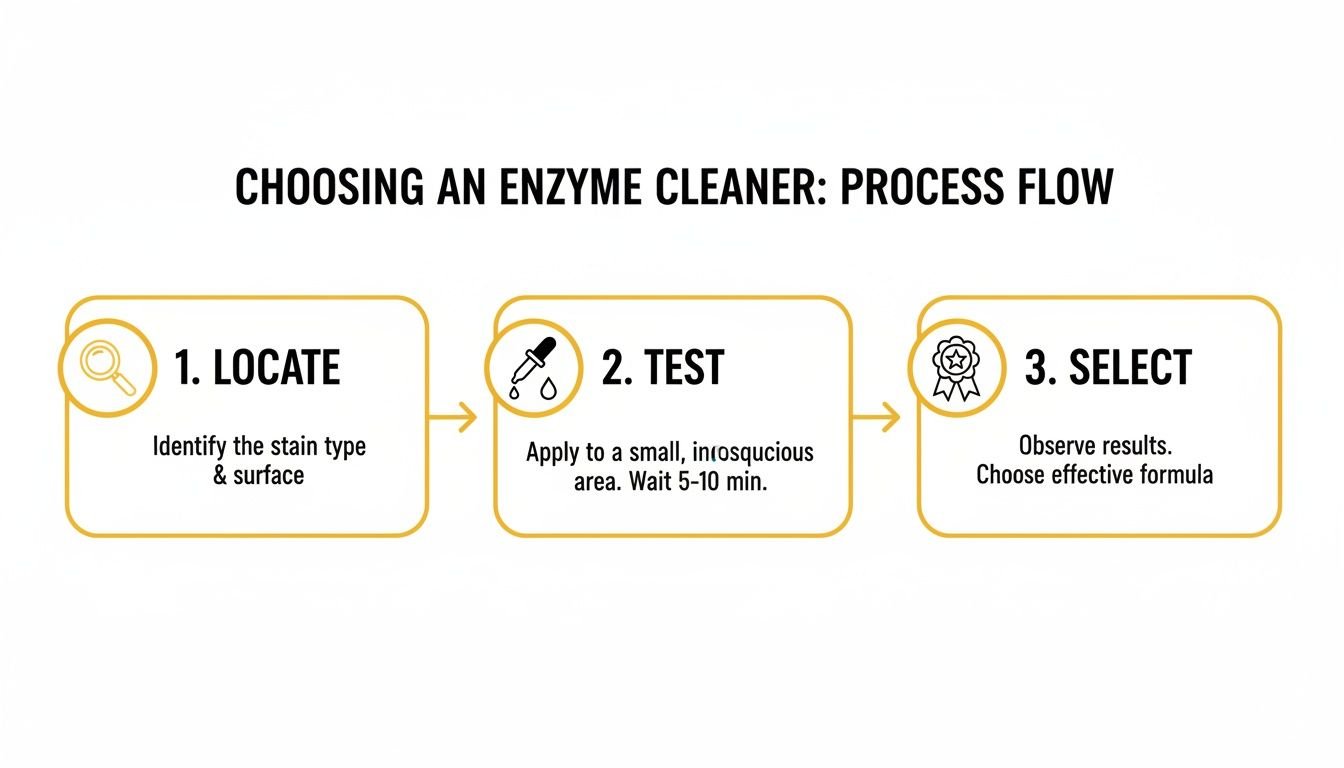
As you can see, the workflow is straightforward: find the full contamination zone, test your product in a hidden spot, and then apply it thoroughly for effective, damage-free results.
Treating Deep Carpet and Rug Stains
Carpet acts like a giant sponge. When a pet has an accident, urine doesn't just sit on the surface; it soaks through the fibers, into the backing, and often deep into the carpet pad underneath. If you only clean the top layer, the odor will always come back.
To succeed, you need to fully saturate the area. The rule of thumb is to use at least as much enzyme cleaner as the original volume of urine. Don't be shy here.
- Saturate the Entire Spot: Start pouring the cleaner from the outside edge of the stain and work your way in. This prevents the stain from spreading. The area needs to be soaked, not just damp.
- Work it In: Put on some gloves and use your fingers or a soft-bristled brush to gently work the solution deep into the carpet fibers. You want to feel it reaching the carpet backing and pad.
- Give it Dwell Time: This is the most important part. The enzymes need time to work. Cover the wet area with plastic wrap or a damp towel to stop it from drying out, which keeps the enzymes active. For new stains, a few hours might do, but for old or severe odors, let it sit for at least 12-24 hours.
- Blot and Dry: Once the dwell time is up, remove the cover. Blot the area with thick, clean towels to soak up as much liquid as you can. Lay a fresh, dry towel over the spot and put something heavy on it (like a stack of books) to help wick out the remaining moisture from the padding.
Finally, let the spot air-dry completely. For really saturated carpets, professional drying techniques can be a huge help. You can learn more from our guide on how to dry wet carpet fast to speed things up.
Salvaging Upholstery and Fabrics
Urine on a sofa or chair is tricky because the liquid dives straight into the foam cushions. Just like with carpet, a surface spray won't cut it.
First, always check the cleaning code on the furniture’s tag (it will say 'W', 'S', 'W/S', or 'X'). Only use a water-based product like an enzyme cleaner for urine on fabrics coded 'W' or 'W/S'.
Expert Tip: If you can, take the cushion off the sofa. Lay it on a plastic sheet and slowly pour the cleaner onto the stain, letting it soak deep into the foam. You’ll need to treat both sides of the cushion to ensure you’ve gotten all of it.
For stains on the sofa frame or on non-removable cushions, use a spray bottle to saturate the fabric and a syringe (without a needle) to inject the cleaner directly into the padding. Let it dwell for several hours, then blot it thoroughly with clean towels. While enzyme cleaners are miracle workers for urine, knowing general cleaning methods helps too. For more tips, check out this excellent guide on how to remove stains from a sofa.
Decontaminating a Mattress
A urine stain on a mattress can feel like a total loss, but the right enzyme cleaner can absolutely save it. The approach is the same as with a sofa cushion: deep saturation is key.
- Saturate Generously: Pour the cleaner directly onto the spot. Don't hold back—you need it to sink in.
- Allow a Long Dwell Time: Mattresses are thick. Cover the area to keep it moist and let the enzymes work for at least 8-12 hours.
- Blot, Don't Rub: Press down hard with clean towels to absorb the liquid. Rubbing can fray or damage the mattress fabric.
- Dry it Completely: Stand the mattress on its side to let air circulate on both the top and bottom. Pointing a fan at it will speed up the drying, which could take a day or two.
Tackling Hard Surfaces Like Wood, Tile, and Grout
You'd think hard surfaces are easy, but they have their own challenges. Excess moisture can ruin a hardwood floor, and porous materials like grout or unsealed concrete will absorb urine and lock in the smell.
- Hardwood Floors: Wipe up the puddle immediately. Lightly spray the enzyme cleaner, let it sit for the recommended time (usually 10-15 minutes), and wipe it dry. The key is to never let liquid pool on a wood floor for too long.
- Tile and Grout: Grout is the real culprit here—it's incredibly porous. After wiping the tile, pour the enzyme cleaner directly onto the grout lines. Let it soak in for a few hours to penetrate, then scrub the lines with a brush before wiping clean. For a persistent smell in a Glendale bathroom, this is often the one step people miss.
- Sealed Concrete: This is a common surface in basements and garages. You can mop or spray the enzyme solution over the entire area, let it dwell, and then rinse or mop it away. The cleaner will break down uric acid that has seeped into the concrete's pores.
When to Call a Professional for Urine Odor Removal
You did everything by the book. You bought a good enzyme cleaner, saturated the stain, and gave it time to work. But a few days later, that stubborn urine smell is creeping back. It’s one of the most frustrating problems we see, and it’s a sure sign the contamination runs deeper than you think.
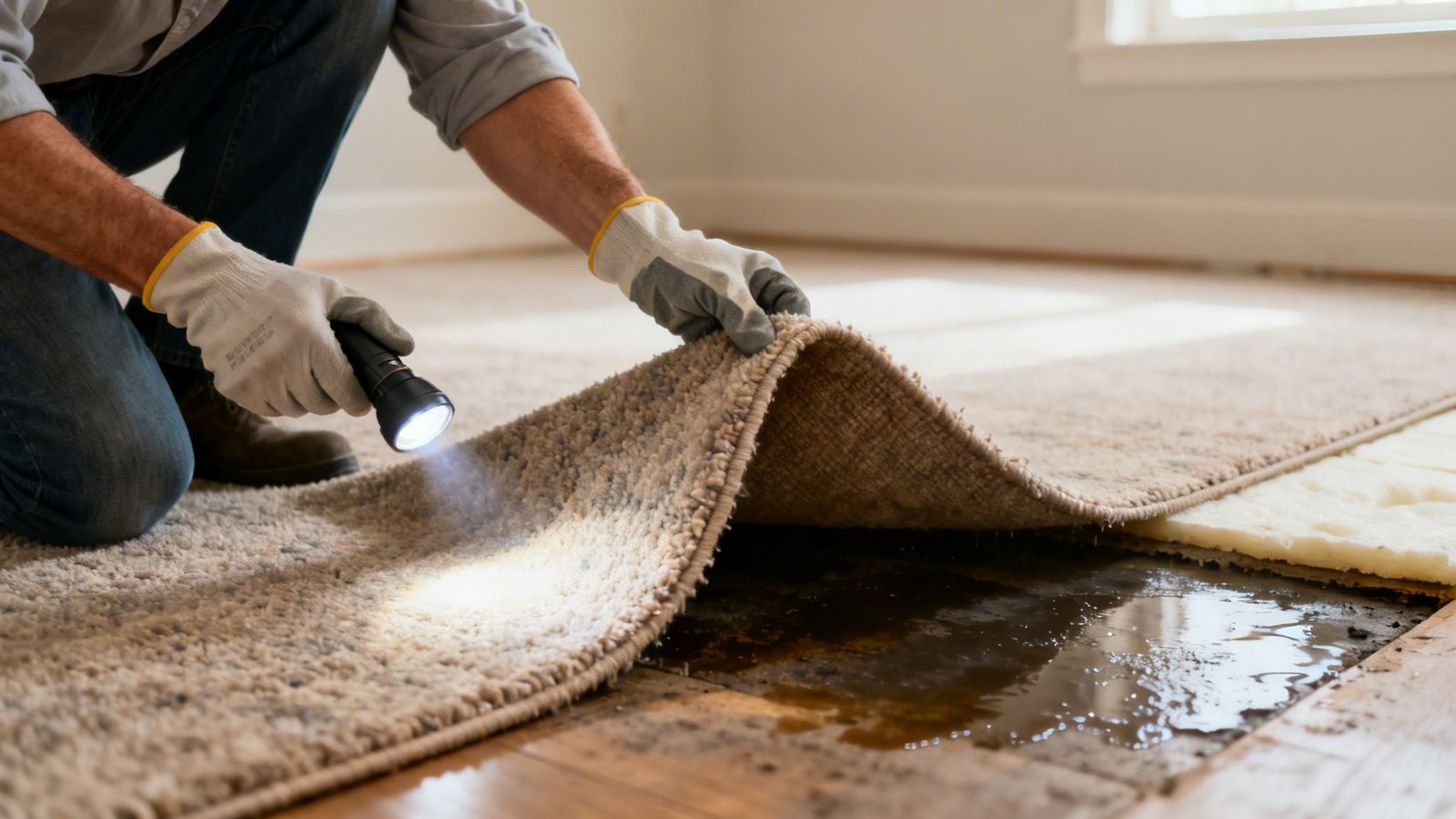
When an odor persists, it’s not because the enzyme cleaner for urine didn't work. It’s because the treatment didn't reach the entire problem. Let’s dig into why those smells linger and when it's time to call in a professional.
Common Reasons for Lingering Urine Odors
If you’re still smelling urine after a thorough cleaning, one of these issues is almost always the culprit. Understanding the "why" is the key to finally solving it.
- Insufficient Product: You probably didn't use enough cleaner. The rule is simple: the volume of cleaner must match or exceed the volume of urine. A light surface spray on a deep stain is like trying to put out a house fire with a water pistol—it just won’t work.
- Inadequate Dwell Time: Enzymes need time to break down and "eat" the uric acid crystals. If you blot the cleaner up too soon or let it dry out, the biological process grinds to a halt. Patience is everything here.
- Deep Contamination: This is the number one reason for failure. The urine has soaked past the carpet fibers and into the padding, the subfloor, and sometimes even the baseboards and drywall. A surface treatment will never reach those deeply embedded crystals.
We see this all the time in Los Angeles properties where pets repeatedly use the same corner. Over time, the urine creates a saturated column of contamination that travels straight down to the subfloor. No amount of topical cleaning will ever fix that kind of problem.
Why Odors 'Reactivate' and When DIY Isn't Enough
Ever notice that urine smell suddenly returns on a humid day? That "reactivation" happens because any uric acid crystals you missed absorb moisture from the air, releasing a fresh wave of odor-causing gas. It’s definitive proof the initial cleaning didn’t get everything.
While consumer-grade products are great for many situations, they have their limits. A severe contamination—like one from a burst pipe or a sewer backup where waste has soaked into the very structure of your home—is far beyond a DIY fix. In those scenarios, you’re not just dealing with an odor; you’re facing a significant biohazard. That’s when it’s time to call in professionals who have the right equipment and safety training to handle the job correctly.
If your urine odor problem feels bigger than you can handle, don't keep fighting a losing battle.
Get a Free Odor Inspection
When an Odor Becomes a Biohazard
A major event, like a sewage backup or any significant water intrusion involving urine, elevates the issue from a simple odor problem to a serious health risk. We're no longer just talking about a bad smell; we're talking about a legitimate biohazard clean-up situation.
This type of contamination can be loaded with dangerous bacteria, viruses, and pathogens. Tackling it without the right training and personal protective equipment (PPE) is a risk you should never take.
A Pro’s Insight: Once urine has saturated structural components like the subfloor, baseboards, or drywall, it creates a persistent biohazard. IICRC-certified technicians are trained not just to clean but to safely remove contaminated materials and sanitize the structure, guaranteeing the property is returned to a safe, healthy state.
Trying to handle this level of contamination on your own can expose your family to serious illness.
The Limits of DIY vs. Professional-Grade Equipment
Consumer enzyme cleaners are great first-aid tools, but they’re no match for the technology professional restoration companies use. When we get a call for severe odor in Los Angeles, we don't just bring spray bottles. We bring an arsenal of equipment designed to destroy odor molecules at their source.
This includes highly specialized machines like:
- Ozone Generators: These powerful machines create ozone (O3), a reactive gas that permeates the entire space and oxidizes odor-causing compounds in the air and on every surface. It’s a hard reset for your indoor environment.
- Thermal Foggers: We use these to heat a deodorizing agent into a super-fine fog. This fog penetrates into the same tiny cracks and crevices that the odor did, neutralizing it everywhere.
- Hydroxyl Machines: This is cutting-edge tech that's safe to use in occupied areas. Hydroxyl generators use UV light to create hydroxyl radicals, which are "odor assassins" that actively hunt down and break apart odor molecules in the air.
These tools, combined with the right expertise, do what a DIY product simply can't: they permanently eradicate odors from the very structure and air of your home.
Frequently Asked Questions About Using an Enzyme Cleaner for Urine
When you're dealing with stubborn urine odors, a lot of questions come up. As restoration pros in Los Angeles, we hear the same ones all the time. Here’s some direct, no-fluff advice to clear up the confusion and help you get real results with an enzyme cleaner for urine.
Q: Can I just use vinegar and baking soda instead?
A: We get this question a lot. While vinegar and baking soda are popular for general cleaning, they're simply not up to the task of eliminating urine odors for good. They might mask the smell for a little while through a basic chemical reaction, but they can't touch the source: non-soluble uric acid crystals. It’s like putting a bandage on a problem that needs stitches. The surface might seem clean, but the underlying issue is still there, waiting to reappear.
Q: Are enzyme cleaners safe around my kids and pets?
A: One of the best things about a quality enzyme cleaner is how much safer it is compared to harsh chemical alternatives. Most professional-grade formulas are non-toxic, pH-neutral, and biodegradable, making them an excellent choice for homes with curious kids and pets. That said, safety always comes down to using the product correctly. The most important rule is to keep children and pets away from the treated area while it's still wet. Once it has dried completely, the area is generally safe for everyone.
Q: How long does an enzyme cleaner really need to sit?
A: This is where most DIY efforts fail. The "dwell time"—how long the cleaner stays wet and active—is absolutely critical. This isn't a quick spray-and-wipe job. For a fresh, minor spot, you might get away with 30-60 minutes. For older, set-in odors, the area needs to stay saturated for much longer, often between 8 and 24 hours. For deep-set odors, cover the saturated area with plastic wrap to stop evaporation and give the enzymes the extended time they need to work.
Q: Will an enzyme cleaner get the smell out of my concrete garage floor?
A: Yes, absolutely. Enzyme cleaners are perfect for porous surfaces like concrete, which is a notorious spot for trapped odors in garages and basements. Concrete acts like a sponge, pulling urine deep into its pores where a simple mop can never reach. When treating concrete, you need to apply the cleaner liberally enough to completely saturate the stain. Let it dwell for several hours, making sure it stays moist so the enzymes can work their way down.
If you’ve tried everything and the smell still lingers, don't let the problem get worse. Onsite Pro provides professional, IICRC-certified odor and biohazard remediation services across Los Angeles.
Contact Us Today for a Free Assessment or call us 24/7 at (818) 336-1800.